Introduction
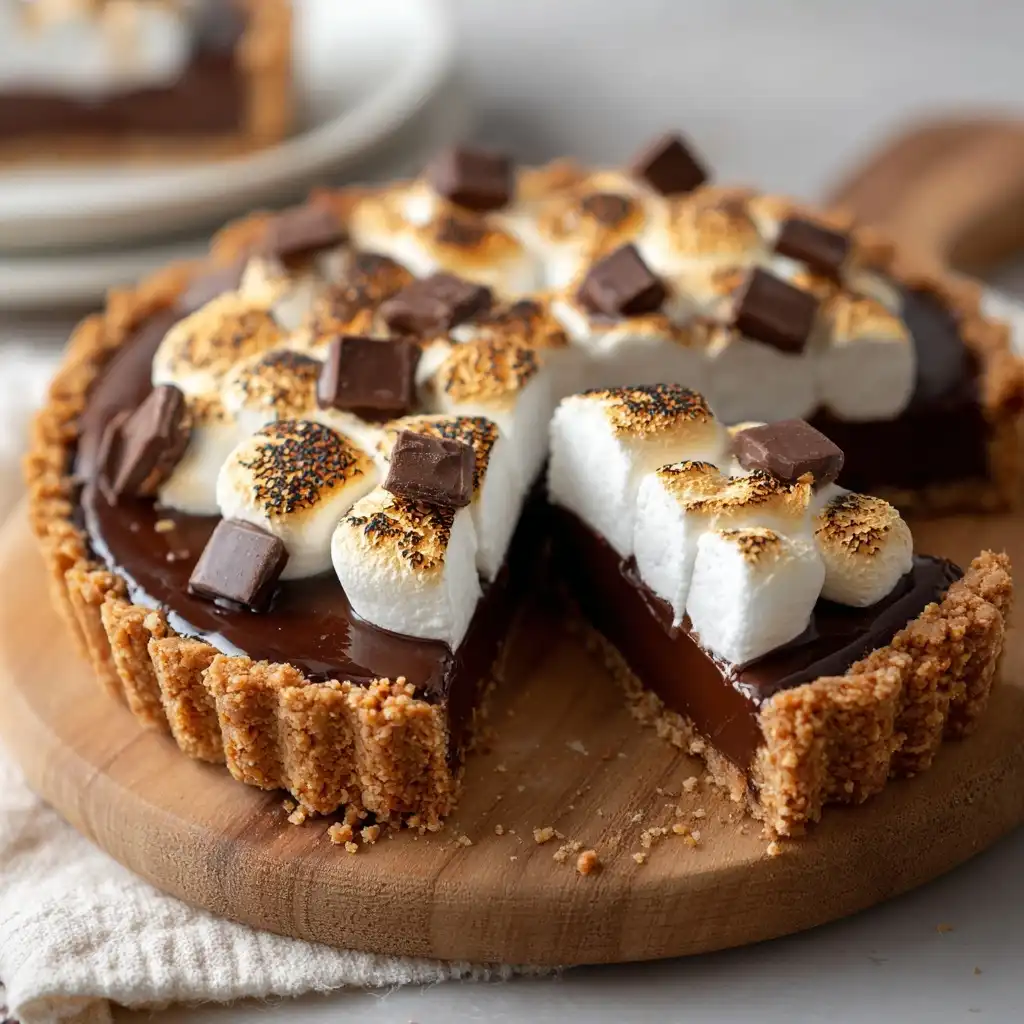
The S’mores Chocolate Tart is a luxurious, modern reimagining of the beloved campfire classic—elevated from gooey graham cracker squares roasted over open flames to an elegant, no-bake (or lightly baked) dessert that dazzles on any table. Combining the nostalgic trio of toasted marshmallow, rich dark chocolate, and buttery graham cracker crust, this tart delivers layered textures and deep, balanced flavors in every bite. Whether served at a summer barbecue, holiday gathering, or as a sophisticated after-dinner treat, it bridges childhood joy with gourmet craftsmanship—offering visual appeal, textural contrast (crisp crust, velvety ganache, airy torched meringue), and deeply comforting flavor notes that resonate across generations.
The History
The origins of the s’more trace back to early 20th-century America, with the earliest known printed recipe appearing in the 1927 Girl Scouts handbook *Tramping and Trailing with the Girl Scouts*, where it was called “Some More”—a playful pun that quickly stuck as “s’more.” Originally built around graham crackers, milk chocolate bars, and hand-toasted marshmallows, the treat embodied simplicity, portability, and communal joy around the campfire. As American baking evolved, home cooks began adapting s’mores into pies, bars, cookies, and cakes—but it wasn’t until the 2010s that pastry chefs and food media embraced the concept of the *s’mores tart*: a refined, restaurant-worthy iteration featuring a structured tart shell, tempered or ganache-based chocolate layer, and delicately torched Italian meringue standing in for the melted marshmallow. This evolution reflects broader culinary trends—elevating nostalgia through technique, emphasizing visual storytelling (especially for social media), and honoring ingredient integrity while amplifying sensory experience. The S’mores Chocolate Tart thus honors over a century of shared ritual while asserting its place in contemporary dessert culture as both homage and innovation.
Ingredients Breakdown
Every element of this tart serves a precise functional and sensory role—no ingredient is arbitrary. Let’s explore them in detail:
- Graham Cracker Crust Base: Whole-grain graham crackers provide structure, subtle honeyed sweetness, and gentle cinnamon-nutmeg warmth. Their natural fiber and whole-wheat content lend earthiness that balances the richness ahead. Finely ground, they bind seamlessly with melted unsalted butter (for clean dairy flavor and optimal crispness) and a touch of brown sugar (for molasses depth and caramelized crunch).
- Chocolate Ganache Filling: A 2:1 ratio of high-quality dark chocolate (68–72% cacao) to heavy cream ensures lush viscosity, glossy sheen, and clean snap when set. The chocolate must be couverture-grade for superior cocoa butter content and smooth mouthfeel. Optional additions include a pinch of flaky sea salt (to heighten chocolate’s complexity), a teaspoon of pure vanilla extract (for aromatic lift), or a tablespoon of bourbon (for warm, oaky nuance that echoes campfire smoke).
- Marshmallow Layer: Rather than store-bought marshmallow fluff—which can weep, deflate, or taste overly sweet—we use a stabilized Italian meringue: egg whites whipped to soft peaks, then gradually infused with a boiling sugar syrup (240°F / soft-ball stage). This yields a cloud-like, heat-resistant, and ethically stable topping that holds its shape beautifully under the torch. A small amount of cream of tartar or corn syrup prevents graininess and adds stability; gelatin (bloomed and folded in warm) is optional for extra resilience in humid climates or multi-day service.
- Torching & Garnish: A butane culinary torch caramelizes the meringue’s surface, creating delicate golden-brown peaks and nuanced toasty-sweet notes reminiscent of real campfire roasting. For finishing, crushed graham cracker crumbs, flaky sea salt, edible gold dust, or even a whisper of freeze-dried raspberry powder add visual drama and flavor counterpoints.
Step-by-Step Recipe
- Prepare the Graham Cracker Crust: Preheat oven to 350°F (175°C). Pulse 1 ½ cups (150g) finely crushed graham crackers, 3 tbsp (38g) light brown sugar, and ¼ tsp fine sea salt in a food processor until uniform. Add 6 tbsp (85g) melted unsalted butter and pulse until mixture resembles wet sand. Press firmly and evenly into a 9-inch (23cm) fluted tart pan with removable bottom, using the back of a spoon or flat-bottomed cup to compact the base up the sides (¼ inch thick on bottom, ½ inch up the walls). Bake for 10–12 minutes until fragrant and lightly golden. Cool completely on a wire rack—do not skip cooling, or the ganache will melt unevenly.
- Make the Dark Chocolate Ganache: Chop 12 oz (340g) high-cocoa dark chocolate into small, even pieces. Heat 1 cup (240ml) heavy cream (36% fat minimum) in a saucepan over medium-low heat until steaming and tiny bubbles form at the edges—do not boil. Pour hot cream over chocolate in a heatproof bowl. Let sit undisturbed for 2 minutes, then gently whisk from center outward until smooth, glossy, and fully emulsified. Stir in 1 tsp pure vanilla extract and ¼ tsp flaky sea salt. Strain through a fine-mesh sieve into a clean bowl to remove any unmelted particles or air bubbles. Allow to cool slightly (5–7 minutes), then pour into the cooled crust. Tap pan gently on counter to release air pockets. Refrigerate uncovered for at least 2 hours—or preferably overnight—for perfect set and clean slicing.
- Prepare the Italian Meringue: In a stand mixer bowl, combine 4 large pasteurized egg whites, ¼ tsp cream of tartar, and a pinch of salt. Whip on medium speed until soft, billowy peaks form (~3–4 minutes). Meanwhile, combine 1 cup (200g) granulated sugar and ¼ cup (60ml) water in a small, heavy-bottomed saucepan. Clip on a candy thermometer. Heat over medium-high without stirring until syrup reaches 240°F (115°C)—soft-ball stage. Immediately reduce mixer speed to low and carefully stream hot syrup down the side of the bowl (avoiding whisk wires). Once all syrup is added, increase speed to medium-high and whip until meringue is voluminous, glossy, and cooled to lukewarm (~7–10 minutes total). Optional stabilization: Bloom ½ tsp unflavored gelatin in 1 tbsp cold water; microwave 5 seconds until liquid, then fold gently into warm meringue just before piping.
- Assemble & Torch: Remove chilled tart from refrigerator. Using an offset spatula or piping bag fitted with a large star tip, spread or pipe meringue evenly over ganache, swirling decoratively and building peaks for maximum surface area. Use a kitchen torch on medium flame, holding 4–6 inches away, moving steadily in circular motions to toast peaks until golden brown—not blackened. Work quickly and evenly to avoid melting the ganache beneath. Optional: Lightly sprinkle with crushed graham cracker crumbs and flaky salt immediately after torching while meringue is still tacky.
- Chill & Serve: Refrigerate assembled tart for 30–45 minutes to allow meringue to fully set and ganache to firm. Slice with a hot, dry knife (dip blade in hot water and wipe dry between cuts) for clean, glossy slices. Serve chilled—but not ice-cold—to preserve meringue texture and chocolate bloom.
Tips
- Crust Consistency is Crucial: Over-pressing creates a brick-hard base; under-pressing leads to crumbling. Aim for “firm enough to hold its shape when tapped” — think damp sandcastle, not concrete.
- Chocolate Quality Dictates Flavor: Avoid chocolate chips—they contain stabilizers that inhibit proper ganache emulsion. Opt for bar chocolate with cocoa butter listed first in ingredients.
- Cream Temperature Matters: Too-hot cream can seize chocolate; too-cool cream won’t melt it fully. Steam = ideal. If cream cools before pouring, gently rewarm.
- Patience with Ganache Setting: Rushing refrigeration causes condensation, dulling the finish and risking weeping. Overnight chilling yields professional-level sheen and clean release from the pan.
- Meringue Timing: Make Italian meringue just before assembly—it deflates faster than Swiss or French versions. If making ahead, refrigerate in an airtight container for up to 4 hours, then re-whip briefly before use.
- Torch Technique: Never hold the flame in one spot. Keep moving—golden color develops in seconds. If you see browning too fast, pull back and slow down. A second, lighter pass often improves depth without bitterness.
- Slicing Success: Warm knife + dry wipe = flawless cuts. Wipe *after* each slice—not before—to avoid dragging meringue.
- Humidity Hack: On rainy or humid days, add ½ tsp corn syrup to the sugar syrup for enhanced meringue stability and resistance to weeping.
- No-Torch Alternative: Broil on low for 60–90 seconds—watch constantly. Rotate pan halfway. Not ideal for peak control, but functional in a pinch.
- Storage Wisdom: Keep covered loosely with parchment (not plastic wrap, which traps moisture and melts meringue) in the fridge for up to 2 days. Do not freeze—the meringue becomes rubbery and the crust soggy upon thawing.
Variations and Customizations
This tart is a canvas for creativity—rooted in tradition but endlessly adaptable. Here are thoughtfully tested variations that maintain structural integrity and flavor harmony:
- Decadent Salted Caramel Swirl: After pouring ganache, drizzle ⅓ cup homemade salted caramel (cooled to room temp) over surface. Use a toothpick to marble gently before chilling. Adds buttery depth and glossy contrast.
- Smoky Chipotle Infusion: Steep ½ tsp finely ground ancho or chipotle powder in warm cream for 5 minutes before straining and pouring over chocolate. Imparts subtle heat and campfire-smoke resonance—ideal for adventurous palates.
- White Chocolate & Toasted Coconut: Replace dark chocolate ganache with white chocolate version (same ratio, but use 12 oz high-quality white chocolate + 1 cup cream). Top with toasted coconut flakes before torching for tropical nuance and crunch.
- Espresso-Glazed Ganache: Dissolve 1 tbsp instant espresso powder in the hot cream before pouring over chocolate. Enhances bitterness and adds aromatic complexity that complements the meringue’s sweetness.
- Ginger-Spiced Crust: Add 1 tsp finely grated fresh ginger + ½ tsp ground ginger to graham cracker crumbs before mixing with butter. Offers bright, warming lift against rich chocolate.
- Vegan Adaptation: Use vegan graham crackers (check for honey-free), coconut oil–based “butter,” full-fat coconut cream (chilled, solid part only) for ganache, and aquafaba meringue (3/4 cup chickpea brine + 1 cup sugar, whipped to stiff peaks) stabilized with ¼ tsp cream of tartar and ½ tsp agar agar dissolved in 1 tbsp water.
- Gluten-Free Version: Substitute certified GF graham-style crackers (like Schär or Kinnikinnick) and verify all other ingredients (vanilla, chocolate) are GF-certified. Texture remains nearly identical.
- Mini Tartlets: Press crust into 3-inch tartlet pans. Reduce ganache to ⅔ cup and meringue to 1 cup. Torch individually. Perfect for plated desserts or wedding favors.
- Boozy Upgrade: Fold 2 tbsp bourbon, rum, or amaretto into the warm ganache before pouring—or brush chilled ganache layer with 1 tsp spirit before applying meringue for subtle aroma without altering texture.
- Seasonal Fruit Accent: Just before serving, scatter fresh raspberries, blackberries, or fig halves over torched meringue. Their acidity and juiciness cut richness beautifully—especially in spring and summer.
Health Considerations and Nutritional Value
While inherently indulgent, this tart can be contextualized within a balanced dietary pattern—with mindful modifications and realistic portion awareness. A standard slice (1/12 of the full tart) contains approximately:
- Calories: ~380–420 kcal (varies by chocolate % and butter content)
- Fat: ~24–28g (15–18g saturated; primarily from cocoa butter and dairy—nutrient-dense fats with antioxidant properties when sourced from quality chocolate)
- Carbohydrates: ~38–42g (28–32g sugars; largely from brown sugar in crust and natural sugars in chocolate/meringue)
- Protein: ~4–5g (from egg whites and trace dairy)
- Fiber: ~1.5–2g (from whole-grain graham crackers—enhance with 1 tbsp ground flaxseed blended into crust for +2g fiber)
- Key Micronutrients: Magnesium (dark chocolate), calcium (graham crackers, dairy), selenium (egg whites), and polyphenols (cocoa flavanols shown to support vascular health when consumed regularly in moderation).
Dietary Notes:
- Lower-Sugar Option: Reduce brown sugar in crust to 1 tbsp; use 85% dark chocolate (naturally lower in sugar); omit added sugar in meringue and stabilize with aquafaba + erythritol syrup (though texture differs).
- Lactose Sensitivity: Substitute lactose-free heavy cream and dairy-free chocolate. Butter in crust can remain (naturally low-lactose) or be replaced with refined coconut oil.
- Allergen Awareness: Contains eggs, dairy, wheat/gluten (unless substituted), and soy (in most chocolate—look for soy-free brands like Taza or Alter Eco). Always verify labels for cross-contamination if severe allergy exists.
- Portion Mindfulness: Serving size matters—presenting as 12 slices (rather than 8) encourages moderate intake without sacrificing satisfaction. Pair with herbal tea or sparkling water to enhance satiety.
- Functional Upgrades: Add 1 tsp matcha powder to ganache for antioxidants and calm energy; infuse crust with ground almonds for extra protein and healthy fats.
Remember: Dessert is part of holistic well-being—not just calories. Enjoyment, social connection, and mindful presence during eating activate parasympathetic relaxation, enhancing digestion and satisfaction more than any macro count ever could.
Ingredients
- For the Graham Cracker Crust:
- 1 ½ cups (150g) finely crushed graham crackers (about 12 full sheets)
- 3 tablespoons (38g) light brown sugar, packed
- ¼ teaspoon fine sea salt
- 6 tablespoons (85g) unsalted butter, melted and slightly cooled
- For the Dark Chocolate Ganache:
- 12 ounces (340g) high-quality dark chocolate (68–72% cacao), finely chopped
- 1 cup (240ml) heavy cream (minimum 36% fat)
- 1 teaspoon pure vanilla extract
- ¼ teaspoon flaky sea salt (such as Maldon)
- For the Italian Meringue:
- 4 large pasteurized egg whites (room temperature)
- ¼ teaspoon cream of tartar
- Pinch of fine sea salt
- 1 cup (200g) granulated sugar
- ¼ cup (60ml) water
- (Optional) ½ teaspoon unflavored gelatin + 1 tablespoon cold water, bloomed
- For Garnish & Finishing:
- 2–3 tablespoons crushed graham crackers
- Flaky sea salt, for sprinkling
- Butane culinary torch
Directions
- Preheat oven to 350°F (175°C). Grease a 9-inch fluted tart pan with removable bottom lightly with butter or nonstick spray.
- In a food processor, pulse graham crackers until finely ground (no visible chunks). Add brown sugar and salt; pulse to combine. Drizzle in melted butter and pulse until mixture resembles wet sand and clumps when squeezed. Transfer to prepared tart pan and press evenly into bottom and up sides using the back of a measuring cup or flat-bottomed glass. Bake for 10–12 minutes, until fragrant and edges are lightly golden. Cool completely on a wire rack—minimum 45 minutes.
- Place chopped chocolate in a medium heatproof bowl. In a small saucepan, heat cream over medium-low heat until steaming and small bubbles appear at edges (do not boil). Pour hot cream over chocolate. Let stand 2 minutes. Gently whisk from center outward until smooth and glossy. Stir in vanilla and flaky salt. Strain through fine-mesh sieve into clean bowl. Pour into cooled crust, tap pan gently to level, and refrigerate uncovered for at least 2 hours—or ideally overnight.
- Fit stand mixer with whisk attachment. Add egg whites, cream of tartar, and salt. Whip on medium speed until soft, billowy peaks form (3–4 min). Meanwhile, combine sugar and water in small heavy-bottomed saucepan. Attach candy thermometer. Heat over medium-high, without stirring, until syrup reaches 240°F (115°C) — soft-ball stage. Immediately reduce mixer speed to low and slowly drizzle hot syrup down side of bowl, avoiding whisk. Once all syrup is added, increase speed to medium-high and whip until meringue is thick, glossy, and cooled to lukewarm (~7–10 min). If using gelatin, gently fold in now.
- Remove chilled tart from fridge. Spread or pipe meringue evenly over ganache, building peaks. Use kitchen torch to toast meringue until golden brown—keep moving, 4–6 inches away. Immediately sprinkle with crushed graham crackers and flaky salt.
- Refrigerate for 30–45 minutes to set meringue fully. Slice with hot, dry knife (dip in hot water, wipe dry between cuts). Serve chilled.
FAQ
- Can I make this tart ahead of time?
- Yes! The crust can be baked and stored airtight at room temperature up to 3 days. Ganache-filled tart keeps refrigerated (uncovered) up to 2 days before adding meringue. Assembled tart (with meringue) is best served within 24 hours for optimal texture—but holds well for 48 hours if loosely covered with parchment paper (never plastic wrap).
- Why does my ganache look grainy or separated?
- Graininess usually occurs from overheating the cream (causing cocoa butter to seize) or introducing water or cold spots. Ensure cream is steaming—not boiling—and chocolate is completely dry. If separation happens, add 1 tsp warm cream and whisk vigorously; or strain and reheat gently while whisking.
- Can I use store-bought marshmallow fluff instead of Italian meringue?
- Technically yes—but not recommended. Fluff lacks structure, melts easily, doesn’t torch well, and contains corn syrup and artificial flavors that clash with premium chocolate. Italian meringue offers elegance, stability, clean flavor, and authentic “toasted marshmallow” aroma.
- My meringue collapsed after piping—what went wrong?
- Most likely causes: egg whites were cold or contaminated with yolk/fat; sugar syrup didn’t reach 240°F; or meringue was overwhipped before adding syrup. Always use room-temp pasteurized whites, ensure bowl and whisk are grease-free, and verify thermometer accuracy.
- Can I bake the meringue instead of torching?
- You can broil for 60–90 seconds on low—but torching gives superior control, deeper caramelization, and avoids heating the entire tart (which risks melting the ganache layer). If broiling, watch continuously and rotate pan halfway.
- Is there a nut-free version?
- Absolutely. This recipe contains no nuts by default. Just verify your chocolate and graham crackers are processed in nut-free facilities if required for allergies.
- How do I prevent the crust from sticking to the pan?
- Always use a tart pan with a removable bottom. Lightly grease *before* pressing in crust—even with butter-based crusts, greasing ensures clean release. Chill crust 15 minutes before baking to set butter, then cool completely before filling.
- Can I use milk or white chocolate for the ganache?
- You can—but adjust ratios. Milk chocolate requires 1:1 chocolate-to-cream (less fat needs less liquid); white chocolate needs 3:1 (due to higher cocoa butter and no cocoa solids). Dark chocolate provides best contrast and balance for s’mores authenticity.
- What if I don’t have a candy thermometer?
- You can test syrup using the cold-water method: drop ½ tsp syrup into icy water. It should form a soft, pliable ball that flattens when removed—that’s soft-ball stage. But a calibrated thermometer is strongly advised for consistent meringue success.
- Can kids help make this tart?
- Yes—with supervision! Children can crush graham crackers (in a zip-top bag with rolling pin), stir ganache (once cooled slightly), spread meringue, and sprinkle garnishes. Torch use is adult-only—but kids love watching the magic happen!
Summary
The S’mores Chocolate Tart is a masterful fusion of nostalgic Americana and modern patisserie precision—transforming campfire simplicity into an elegant, texturally dynamic dessert anchored by a buttery graham cracker crust, luxuriously smooth dark chocolate ganache, and ethereally toasted Italian meringue.
With meticulous attention to ingredient quality, temperature control, and technique—and endless possibilities for customization—it delivers profound comfort, visual grandeur, and unforgettable flavor balance, making it as suitable for a backyard bonfire gathering as it is for a Michelin-starred dining room.