Introduction
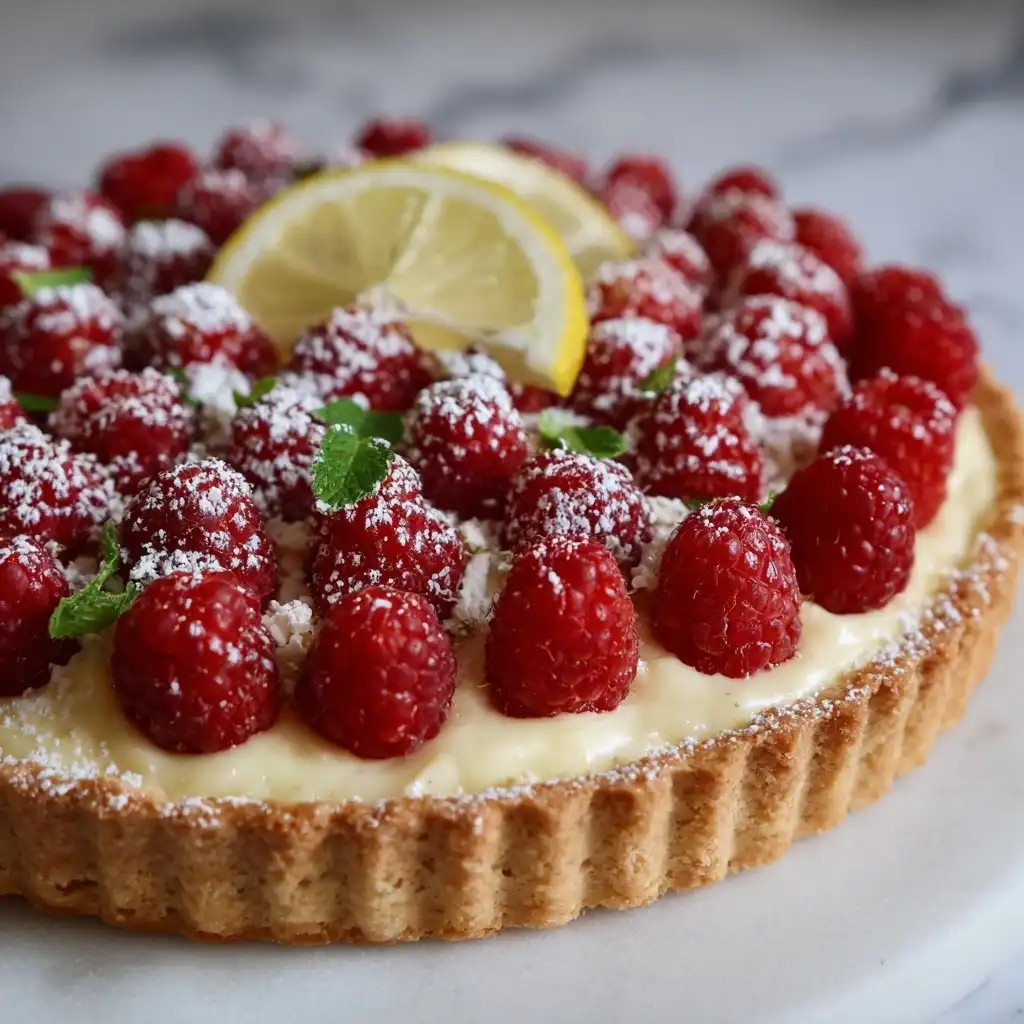
Indulge in the perfect harmony of tart and creamy with the Raspberry Lemon Cheesecake Tart—a stunning, restaurant-worthy dessert that balances zesty brightness with luxuriously smooth richness. Unlike traditional baked cheesecakes, this no-bake tart features a crisp, buttery shortbread crust, a velvety lemon-infused cream cheese filling, and a vibrant, jewel-toned raspberry layer that adds both visual drama and a refreshing fruity counterpoint. Elegant yet approachable, it’s ideal for summer gatherings, bridal showers, holiday dessert tables, or simply treating yourself to something effortlessly sophisticated. With its clean flavors, striking layered appearance, and make-ahead convenience, this tart bridges the gap between classic American cheesecake and modern European patisserie—offering bold taste without overwhelming sweetness.
The History
The Raspberry Lemon Cheesecake Tart is a contemporary evolution born from centuries of dessert lineage. Its roots stretch back to ancient Mediterranean cheese-based sweets—think Roman placenta cakes made with ricotta and honey—then through medieval European curd tarts and 18th-century English cheesecakes, which were often baked in pastry shells and flavored with citrus or dried fruit. In the 19th century, American adaptations embraced cream cheese (commercially popularized by William Lawrence in 1872), leading to the dense, baked New York style. Meanwhile, French and British patisseries refined the “tart” format—open-faced, chilled, and often composed of multiple delicate layers—emphasizing texture contrast and bright acidity. The fusion of lemon and raspberry gained traction in the late 20th century as chefs sought palate-cleansing pairings; lemon’s citric acid cuts through fat, while raspberries contribute natural pectin, subtle tannins, and floral top notes. Today’s Raspberry Lemon Cheesecake Tart reflects a global, health-conscious sensibility: lighter than its baked counterpart, dairy-forward but not cloying, and designed for visual storytelling—making it a staple on food blogs, gourmet bakery menus, and social media–driven baking culture since the early 2010s.
Ingredients Breakdown
Every element of this tart plays a precise functional and flavor role—no ingredient is arbitrary. Let’s explore them in depth:
- Shortbread Crust: Butter provides richness and flakiness; granulated sugar adds caramelization and crispness; all-purpose flour delivers structure and tenderness; a pinch of sea salt enhances all other flavors and balances sweetness. Optional additions include finely ground toasted almonds (for nutty depth) or lemon zest (for aromatic lift).
- Cheesecake Filling: Full-fat brick-style cream cheese is non-negotiable—it must be softened to room temperature for seamless blending and maximum smoothness. Sour cream contributes tang, moisture, and a subtle lactic softness; heavy cream (or crème fraîche) enriches mouthfeel and prevents graininess. Freshly squeezed lemon juice and finely grated lemon zest deliver volatile citrus oils essential for brightness—bottled juice lacks complexity and can introduce off-flavors. Powdered sugar (not granulated) dissolves instantly and yields a silkier texture; vanilla extract (preferably Madagascar bourbon) rounds out acidity with warm, floral undertones.
- Raspberry Layer: Fresh, ripe raspberries offer superior flavor, aroma, and natural pectin content—critical for setting the gel layer without excessive thickener. Frozen raspberries (unsweetened, thawed and well-drained) are a reliable year-round alternative, though they yield slightly more liquid. Granulated sugar here isn’t just for sweetness—it draws out juices, aids in maceration, and supports proper gel formation. Lemon juice again reinforces acidity balance, while a touch of cornstarch or agar-agar (for vegan versions) ensures a glossy, stable, sliceable finish. Optional enhancements include a splash of Chambord (raspberry liqueur) for depth or a few crushed freeze-dried raspberries stirred in at the end for intense color and flavor punch.
- Garnishes & Finishing Touches: Whole fresh raspberries provide freshness and visual appeal; edible flowers (like pansies or violets) add elegance; a dusting of powdered sugar lends delicacy; micro mint leaves introduce herbal contrast; a drizzle of seedless raspberry coulis or lemon curd offers extra dimension; flaky sea salt crystals elevate the entire flavor profile through controlled salinity.
Step-by-Step Recipe
- Prepare the Shortbread Crust (30 minutes + chilling): Pulse 1 ½ cups all-purpose flour, ⅓ cup granulated sugar, and ¼ tsp fine sea salt in a food processor until combined. Add ¾ cup cold, unsalted butter (cut into ½-inch cubes) and pulse in 1-second bursts until the mixture resembles coarse, pea-sized crumbs with some larger flakes remaining. Add 1 large egg yolk and 1 tsp cold water; pulse just until the dough begins to clump together. Turn out onto a lightly floured surface, gather into a disk, wrap in plastic, and refrigerate for at least 30 minutes (or up to 2 days). Preheat oven to 350°F (175°C). Roll dough to ⅛-inch thickness between two sheets of parchment paper. Carefully transfer to a 9-inch fluted tart pan with removable bottom, pressing gently into edges and up sides. Trim excess, prick base with fork, and chill 15 minutes. Line with parchment and pie weights (or dried beans), then bake for 18 minutes. Remove weights and parchment; bake 8–10 minutes more until golden and dry to the touch. Cool completely in pan on wire rack—minimum 45 minutes.
- Make the Lemon Cheesecake Filling (15 minutes + chilling): Using a stand mixer fitted with paddle attachment (or hand mixer), beat 16 oz full-fat cream cheese (room temperature) on medium speed for 2 minutes until ultra-smooth and airy. Scrape bowl. Add ⅔ cup sour cream, ¼ cup heavy cream, 1 tbsp freshly squeezed lemon juice, 1 tsp finely grated lemon zest, 1 tsp pure vanilla extract, and ¼ tsp fine sea salt. Beat on medium-low for 1 minute until incorporated. Gradually add ¾ cup powdered sugar in three additions, beating on low after each until fully dissolved (do not overmix). Increase speed to medium and beat 1 minute more until light and fluffy. Pour into cooled crust, smoothing top with offset spatula. Refrigerate uncovered for at least 3 hours—or preferably overnight—to fully set and develop flavor.
- Prepare the Raspberry Layer (20 minutes + cooling): In a medium saucepan, combine 2 cups fresh or thawed frozen raspberries, ⅓ cup granulated sugar, 1 tbsp fresh lemon juice, and 1 tsp cornstarch (mixed with 1 tsp cold water into slurry). Cook over medium heat, stirring constantly, until berries break down and mixture bubbles gently (~5–7 minutes). Reduce heat to low and simmer 2 minutes more, stirring, until thickened and glossy. Remove from heat; stir in 1 tsp lemon zest (optional, for brightness). Strain through fine-mesh sieve into a clean bowl to remove seeds—press solids with back of spoon to extract maximum pulp. Discard seeds. Let cool 15 minutes at room temperature, then refrigerate uncovered 30 minutes until lukewarm (not cold—otherwise it may crack the cheesecake layer).
- Assemble & Set (4+ hours chilling): Gently spoon or pour the cooled raspberry mixture over the chilled cheesecake layer. Tilt pan slightly to encourage even flow; use an offset spatula to guide and level if needed. Refrigerate uncovered for minimum 4 hours—but ideally 8–12 hours—for complete firm set and optimal sliceability. For cleanest cuts, dip knife in hot water and wipe dry between each slice.
- Finish & Serve: Carefully release tart from pan onto serving platter. Garnish with fresh raspberries, mint, edible flowers, and a light dusting of powdered sugar. Optional: serve with lemon curd, whipped cream infused with lemon verbena, or a drizzle of reduced balsamic vinegar for sophisticated contrast.
Tips
- Room Temperature Is Non-Negotiable: Cream cheese, sour cream, and eggs (if used in crust) must be truly at room temperature—not just “out of the fridge for 10 minutes.” Cold dairy causes lumps, air pockets, and uneven texture. Plan ahead: leave cream cheese out for 2–3 hours.
- Straining Is Essential: Never skip straining the raspberry layer—even “seedless” raspberries contain tiny, gritty seeds that compromise mouthfeel and aesthetics. A fine-mesh sieve and patience yield silky, professional results.
- Chill Between Layers: Always ensure the cheesecake layer is thoroughly chilled (minimum 3 hours) before adding the raspberry topping. Warm fillings cause melting, sliding, or separation.
- Prevent Cracking: Avoid overmixing the filling—once sugar is incorporated, stop mixing. Also, do not rush the raspberry layer cooling: pouring it too hot will melt the surface; too cold (chilled solid) creates thermal shock and cracks.
- Crust Perfection: Blind-baking with weights prevents puffing and shrinkage. For extra crispness, brush baked crust with beaten egg white and return to oven for 2 minutes—this creates a moisture barrier against the creamy filling.
- Knife Technique: Use a long, thin, sharp knife (like a chef’s or offset palette knife). Heat under hot tap water, wipe completely dry, cut firmly in one motion, then repeat—never saw. Wipe knife clean after every slice for pristine edges.
- Make-Ahead Mastery: This tart shines when prepared 1–2 days ahead. The flavors meld beautifully, textures stabilize, and stress vanishes. Store covered tightly in refrigerator (avoid plastic wrap directly on raspberry layer—use parchment or toothpick-supported foil).
- Freezing Friendly: Un-garnished tart freezes exceptionally well for up to 3 weeks. Wrap tightly in plastic, then foil. Thaw overnight in refrigerator—never at room temperature—to preserve texture and prevent condensation.
Variations and Customizations
This tart is a canvas—adaptable for dietary needs, seasonal ingredients, and creative flair:
- Vegan Version: Substitute dairy-free cream cheese (Kite Hill or Miyoko’s), coconut cream (chilled, solid part only), and vegan butter. Use agar-agar instead of cornstarch for raspberry layer (1 tsp agar boiled 2 min in ¼ cup water, then mixed into warm purée). Add 1 tsp apple cider vinegar for tang.
- Gluten-Free: Replace shortbread crust with GF graham cracker or almond flour crust (1 ¼ cups GF almond flour, ¼ cup coconut sugar, 6 tbsp melted butter, pinch salt). Ensure all other ingredients are certified GF (especially cornstarch—opt for tapioca or arrowroot).
- Lower-Sugar / Keto-Friendly: Use erythritol or monk fruit blend (1:1 ratio) in both crust and filling; replace raspberry layer sugar with allulose (behaves like sugar when heated); add ½ tsp xanthan gum to raspberry mixture for stability. Note: tartness intensifies—balance with extra lemon zest.
- Flavor Twists: Add 2 tbsp lavender honey to raspberry layer; fold ¼ cup crushed pistachios into crust; swirl 2 tbsp blueberry compote into cheesecake layer; infuse cream cheese with 1 tsp rosewater and cardamom; top with candied lemon slices.
- Texture Play: Add a hidden layer of lemon curd beneath the cheesecake; sprinkle toasted coconut or crushed amaretti cookies between layers; incorporate a thin layer of white chocolate ganache under raspberry topping.
- Mini-Tart Format: Press crust into 12 standard muffin tin cups lined with parchment. Fill, chill, top, and garnish individually—perfect for parties or portion control.
- Seasonal Swaps: In fall: substitute blackberries or cran-raspberry blend; in spring: use strawberries or rhubarb-lemon; in winter: pomegranate molasses drizzle + orange zest.
Health Considerations and Nutritional Value
While undeniably indulgent, this Raspberry Lemon Cheesecake Tart offers meaningful nutritional benefits when enjoyed mindfully—and several smart modifications can enhance its wellness profile:
- Nutrient Highlights: Raspberries are exceptionally rich in dietary fiber (8g per cup), vitamin C (54mg, ~60% DV), manganese (0.8mg, 36% DV), and potent antioxidants like ellagic acid and anthocyanins—linked to reduced inflammation and improved cardiovascular health. Lemon zest contains limonene (a bioactive compound with anticancer potential) and flavonoids that support liver detoxification. Greek yogurt (as a partial sour cream substitute) boosts probiotics and protein (17g/cup).
- Sugar Awareness: Traditional versions contain ~28g added sugar per slice (based on 12 servings). Reducing crust sugar by 25%, using powdered erythritol in filling, and relying on raspberry’s natural sweetness can lower added sugars to ~12g/slice without sacrificing enjoyment.
- Fat Profile: Cream cheese and butter provide saturated fat—but also essential fat-soluble vitamins (A, D, K2) and conjugated linoleic acid (CLA), shown in studies to support metabolic health. Opting for grass-fed dairy increases omega-3s and CLA concentration.
- Digestive Notes: The high-fiber raspberry layer promotes satiety and gut motility. However, those with fructose malabsorption may experience discomfort—cooking raspberries reduces free fructose, making them gentler. Lactose-intolerant individuals often tolerate baked or strained dairy products better; for strict avoidance, vegan alternatives work seamlessly.
- Portion Guidance: A modest 1/12th slice (approx. 180–200 calories) fits comfortably within balanced eating patterns. Pair with green tea (rich in catechins) or a small handful of walnuts for synergistic antioxidant effects.
- Allergen Transparency: Contains dairy, gluten, and eggs. Easily adaptable for top-9 allergen exclusions—just verify labels on all packaged items (e.g., cornstarch, vanilla, cream cheese brands).
Ingredients
For the Shortbread Crust:
- 1 ½ cups (180g) all-purpose flour (or gluten-free 1:1 blend)
- ⅓ cup (67g) granulated sugar
- ¼ teaspoon fine sea salt
- ¾ cup (170g) cold unsalted butter, cubed
- 1 large egg yolk
- 1 teaspoon ice-cold water
For the Lemon Cheesecake Filling:
- 16 oz (454g) full-fat brick-style cream cheese, room temperature
- ⅔ cup (150g) full-fat sour cream
- ¼ cup (60ml) heavy cream (or crème fraîche)
- 1 tablespoon (15ml) freshly squeezed lemon juice
- 1 teaspoon finely grated lemon zest (from 1 large lemon)
- 1 teaspoon pure vanilla extract
- ¼ teaspoon fine sea salt
- ¾ cup (90g) powdered sugar, sifted
For the Raspberry Layer:
- 2 cups (250g) fresh or unsweetened frozen raspberries
- ⅓ cup (67g) granulated sugar
- 1 tablespoon (15ml) fresh lemon juice
- 1 teaspoon cornstarch (or ½ tsp agar-agar powder for vegan)
- 1 teaspoon cold water (for slurry)
- 1 teaspoon additional lemon zest (optional, for brightness)
For Garnish (Optional but Recommended):
- Fresh raspberries
- Edible flowers (pansies, violets, borage)
- Fresh mint leaves
- Light dusting of powdered sugar
- Flaky sea salt (Maldon or fleur de sel)
Directions
- Make the Crust: In a food processor, combine flour, sugar, and salt; pulse to mix. Add cold butter; pulse in 1-second bursts until mixture resembles coarse crumbs with visible butter flakes. Add egg yolk and cold water; pulse just until dough begins to clump. Turn onto floured surface, gather into disk, wrap in plastic, and chill 30 minutes.
- Bake the Crust: Preheat oven to 350°F (175°C). Roll chilled dough between parchment to ⅛-inch thickness. Fit into 9-inch fluted tart pan with removable bottom; trim edges. Prick base. Chill 15 minutes. Line with parchment and pie weights; bake 18 minutes. Remove weights and parchment; bake 8–10 minutes more until golden. Cool completely on wire rack (45+ minutes).
- Prepare Cheesecake Filling: Beat cream cheese with paddle attachment on medium 2 minutes until airy. Scrape bowl. Add sour cream, heavy cream, lemon juice, zest, vanilla, and salt; beat 1 minute on medium-low. Gradually add powdered sugar in 3 parts, beating on low until incorporated. Increase to medium 1 minute more. Pour into cooled crust; smooth top. Refrigerate uncovered ≥3 hours (overnight preferred).
- Cook Raspberry Layer: In saucepan, combine raspberries, sugar, lemon juice, and cornstarch slurry. Cook over medium heat, stirring constantly, until bubbling and thickened (~6 minutes). Simmer 2 more minutes. Remove from heat; stir in optional zest. Strain immediately through fine-mesh sieve into bowl. Cool 15 minutes room temp, then refrigerate 30 minutes until lukewarm.
- Assemble & Chill: Gently pour raspberry layer over chilled filling. Tilt pan to spread evenly; smooth with spatula. Refrigerate uncovered ≥4 hours (ideally 8–12 hours).
- Release & Garnish: Run thin knife around edge. Release ring. Slide offset spatula under crust to loosen from base. Transfer to serving plate. Garnish as desired. Slice with hot, wiped knife.
FAQ
- Can I use low-fat cream cheese?
- No—low-fat or neufchâtel will yield a watery, unstable filling that weeps and lacks richness. Full-fat cream cheese is essential for structure, flavor, and mouthfeel.
- Why does my raspberry layer slide off or look cloudy?
- Cloudiness indicates undercooking or insufficient cornstarch activation (must bubble for 2 full minutes). Sliding means the cheesecake layer wasn’t cold enough—or the raspberry layer was too warm when poured. Always chill filling thoroughly and cool raspberry mixture to lukewarm.
- How do I prevent a soggy crust?
- Blind-bake thoroughly until deep golden and dry. Brush baked crust with egg white and bake 2 more minutes to seal. Also ensure raspberry layer is fully strained and not overly liquid.
- Can I make this ahead for a party?
- Absolutely—this tart improves with time. Assemble up to 48 hours ahead. Keep covered tightly (foil propped with toothpicks over raspberry layer) and refrigerated. Add fresh garnishes just before serving.
- What if I don’t have a tart pan?
- You can use a 9-inch springform pan (line bottom with parchment), or press crust into a 9×13-inch pan for bars. Adjust chilling time accordingly—bars set faster but require longer initial chill (5+ hours).
- Is there a way to reduce the tang without losing lemon flavor?
- Yes—reduce lemon juice by ½ tsp and increase zest to 1 ½ tsp. Zest delivers aromatic oils without acidity. You can also add 1 tsp honey to the filling for rounded sweetness.
- Can I freeze individual slices?
- Yes! Freeze un-garnished slices on parchment-lined tray until solid (2 hours), then wrap each tightly in plastic + foil. Freeze up to 3 weeks. Thaw overnight in fridge—do not microwave.
- My filling is lumpy—what went wrong?
- Lumps mean cream cheese wasn’t soft enough or was over-chilled. Always bring to true room temperature (soft to gentle finger press). If lumps appear, strain filling through fine-mesh sieve before pouring.
- Can I use blackberries or strawberries instead?
- Yes—with adjustments: blackberries need same treatment as raspberries. Strawberries lack pectin—add ½ tsp extra cornstarch and cook 1 minute longer. Their milder flavor benefits from ½ tsp balsamic vinegar in the purée.
- How do I scale this for a crowd?
- Double the recipe for a 10-inch tart (add 5–10 minutes bake time) or make two 9-inch tarts. For 24 servings, use a 12-inch tart pan and increase crust ingredients by 50%, filling by 75%, raspberry by 100%.
Summary
The Raspberry Lemon Cheesecake Tart is a masterclass in balance—where the bright, floral tartness of fresh raspberries and zesty lemon elevates the lush, velvety richness of a perfectly textured no-bake cheesecake, all anchored by a buttery, crisp shortbread foundation.
Effortlessly elegant, deeply flavorful, and remarkably versatile, it’s a make-ahead dessert that delivers gourmet impact with accessible technique—proving that sophistication and simplicity can coexist in every stunning, sliceable bite.