Introduction
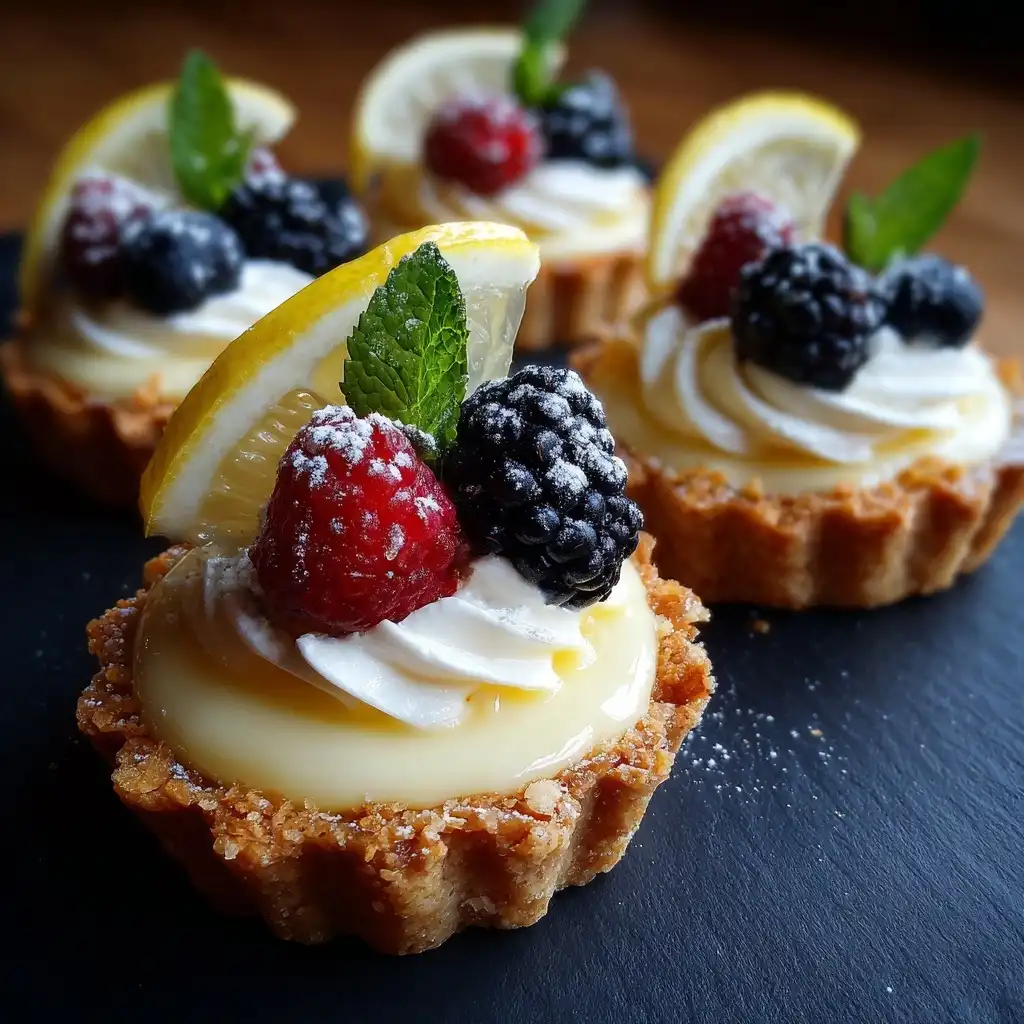
Mini Lemon Tartlets are the quintessential embodiment of bright, zesty elegance—bite-sized bursts of sunshine that balance tartness with sweetness, buttery richness with refreshing acidity. These delicate, individual-sized desserts captivate with their vibrant golden filling nestled in crisp, flaky shortcrust shells, crowned optionally with a whisper of whipped cream, a dusting of powdered sugar, or a delicate curl of lemon zest. Far more than just a dessert, they represent culinary precision and seasonal celebration—ideal for spring brunches, summer garden parties, afternoon tea service, bridal showers, or as an elegant finale to any refined meal. Their miniature scale invites indulgence without overwhelm, while their bold citrus character awakens the palate and lingers memorably. Whether served at a Michelin-starred patisserie or baked lovingly in a home kitchen, Mini Lemon Tartlets evoke nostalgia, sophistication, and the pure joy of well-balanced flavor.
The History
The lineage of lemon tarts traces back centuries through the confluence of Mediterranean citrus cultivation, French pâtisserie innovation, and British baking traditions. Lemons—originally native to Southeast Asia—reached the Middle East by 700 CE and entered Europe via Arab traders and the Crusades. By the 12th century, lemons were cultivated in Southern Italy and Spain, prized both for medicinal use and culinary brightness. In France, the *tarte au citron* emerged as a refined evolution of medieval fruit tarts, gaining prominence in the 19th century alongside the rise of professional pastry schools like Le Cordon Bleu. The classic version—featuring a rich, velvety lemon curd made with eggs, butter, sugar, and fresh juice—was codified during the Belle Époque, when chefs like Auguste Escoffier championed technique-driven desserts. Meanwhile, across the Channel, British bakers developed their own interpretations, often incorporating shortbread-style bases and meringue toppings. The “mini” adaptation is a distinctly modern refinement—accelerated by the 20th-century proliferation of muffin tins and specialty tartlet pans, the rise of plated desserts in fine dining (popularized in the 1980s–90s by chefs like Joël Robuchon and Thomas Keller), and the contemporary demand for portion-controlled, visually dynamic, and Instagram-worthy treats. Today’s Mini Lemon Tartlets honor this layered heritage: French curd technique, British crumb structure sensibility, global citrus appreciation, and modern presentation ethos—all distilled into a single, perfect two-bite experience.
Ingredients Breakdown
Every exceptional Mini Lemon Tartlet rests on the intentional synergy of six core components—each selected not just for function, but for quality, origin, and sensory contribution:
- Shortcrust Pastry (Tart Shell): All-purpose flour provides structure; unsalted butter (preferably European-style, 82–84% fat) delivers flakiness, richness, and melt-in-the-mouth tenderness; granulated sugar adds subtle sweetness and aids browning; a pinch of fine sea salt enhances all other flavors; ice-cold water or sometimes egg yolk binds without activating gluten excessively. Optional enhancements include a touch of lemon zest (for aromatic lift) or toasted almond flour (for nutty depth and texture).
- Lemon Curd Filling: Freshly squeezed lemon juice is non-negotiable—bottled juice lacks volatile top notes and introduces preservatives that dull flavor and destabilize emulsion. Finely grated lemon zest contributes essential citrus oils and aromatic complexity. Granulated sugar balances acidity while aiding thickening; large egg yolks (not whole eggs) create luxurious silkiness and stability; unsalted butter, added off-heat, imparts gloss, mouthfeel, and rounds out sharpness. Some artisanal versions include a small amount of crème fraîche or mascarpone for extra creaminess and subtle tang.
- Finishing Accents (Optional but Recommended): A light dusting of confectioners’ sugar offers visual contrast and delicate sweetness; softly whipped cream (infused with lemon verbena or vanilla bean) adds airy contrast; edible flowers (such as violets or pansies) elevate aesthetic appeal; microplaned lemon zest provides aromatic punctuation; a single fresh raspberry or blueberry adds color, acidity, and textural surprise.
Crucially, ingredient temperature matters: cold butter ensures flaky pastry; room-temperature egg yolks incorporate smoothly into warm curd; freshly squeezed, chilled lemon juice prevents premature cooking of eggs during curd preparation.
Step-by-Step Recipe
- Prepare the Shortcrust Pastry (at least 1 hour ahead, preferably overnight): In a food processor, pulse 1 ¼ cups (160g) all-purpose flour, ¼ cup (50g) granulated sugar, and ¼ tsp fine sea salt until combined. Add ½ cup (115g) very cold, cubed unsalted butter and pulse in 1-second bursts until mixture resembles coarse breadcrumbs with some pea-sized butter pieces remaining. Drizzle in 3–4 tbsp ice-cold water (or 2 tbsp water + 1 tbsp egg yolk for richer dough), pulsing just until clumps begin to form. Turn dough onto parchment, gather gently, flatten into a 1-inch-thick disc, wrap tightly, and refrigerate for ≥1 hour (or freeze for up to 3 months).
- Preheat & Prep Pans: Position oven rack in center position. Preheat oven to 375°F (190°C). Lightly grease a 24-cup mini muffin tin or line with parchment paper mini-tartlet cups (preferred for easy release). Set aside.
- Roll & Line Tartlet Shells: On a lightly floured surface, roll chilled dough to ⅛-inch thickness. Using a 3-inch round cutter (or inverted 3-inch ramekin), cut discs. Gently press each into muffin cups, ensuring even thickness and no air pockets. Trim excess dough flush with rims using a bench scraper or knife. Prick bases 3–4 times with a fork. Freeze shells for 15 minutes (critical for preventing shrinkage).
- Bake Blind (Part 1): Line frozen shells with parchment and fill with pie weights or dried beans. Bake for 14 minutes. Carefully remove weights and parchment. Return shells to oven and bake 6–8 more minutes, until pale gold and dry to the touch. Cool in pan for 5 minutes, then transfer to wire rack to cool completely (≈30 mins). Reduce oven temp to 325°F (160°C) for curd baking.
- Make the Lemon Curd: In a heavy-bottomed, non-reactive saucepan (stainless steel or enamel), whisk together ¾ cup (180ml) fresh lemon juice, ¼ cup (30g) finely grated lemon zest, 1 cup (200g) granulated sugar, and a pinch of salt. Whisk in 4 large egg yolks until fully combined. Place over medium-low heat. Cook, stirring constantly with a silicone spatula in slow, figure-eight motions, until mixture thickens enough to coat the back of the spoon (≈170°F / 77°C; 8–12 minutes). Do NOT boil—curdling occurs above 180°F. Immediately strain through a fine-mesh sieve into a clean bowl to remove zest solids and any potential curdled bits.
- Emulsify with Butter: While still hot, add ½ cup (115g) cold, cubed unsalted butter, one piece at a time, whisking vigorously after each addition until fully melted and glossy. Continue whisking for 1–2 minutes off heat to cool slightly and stabilize emulsion. Let curd cool to lukewarm (≈100°F / 38°C) before filling—prevents condensation and shell sogginess.
- Fill & Bake Curd (Optional Baking Step for Set Stability): Spoon cooled curd (≈1 heaping tsp per shell) into each cooled tartlet shell, smoothing tops with an offset spatula. For firmer set and longer shelf life (especially for catering), bake filled tartlets at 325°F (160°C) for 10–12 minutes, until curd is just set with slight jiggle in center. For ultra-creamy, custard-like texture, skip baking and refrigerate unfilled shells, then fill and chill ≥4 hours (or overnight) before serving.
- Chill & Finish: Refrigerate filled tartlets, uncovered, for minimum 4 hours (ideally overnight) to allow curd to fully set and flavors to harmonize. Just before serving, dust lightly with confectioners’ sugar using a fine mesh sieve, garnish with zest or berries, and serve chilled.
Tips
- Butter Temperature is Paramount: Butter must be cold (35–45°F) for pastry—too warm = greasy, tough shells; too cold = shattering. Cube and chill 15 minutes before use if room-temp.
- Don’t Overwork Dough: Gluten development = toughness. Pulse, don’t blend; gather with fingertips, not palms. Chill thoroughly before rolling.
- Zest Before Juicing: Rolling lemons on counter before zesting yields more oil; zest only yellow part—white pith is bitter.
- Strain the Curd—Always: Removes zest bits and ensures velvety texture. Use a chinois or fine-mesh strainer lined with cheesecloth for ultimate smoothness.
- Low & Slow Curd Cooking: High heat causes scrambling. Stir constantly with attention—watch for ribbon stage, not bubbles.
- Cool Curd Before Filling: Warm curd softens crust. Let it reach ~100°F; test with instant-read thermometer or wrist-test (should feel warm but not hot).
- Prevent Soggy Bottoms: Fully pre-bake shells until dry and golden. Brush warm, baked shells with beaten egg white and return to oven 1 minute for moisture barrier.
- Storage Wisdom: Unfilled shells freeze beautifully for 3 months. Filled tartlets keep 3 days refrigerated (covered loosely with parchment, not plastic—traps moisture). Do not freeze filled tartlets—curd weeps and separates.
- Consistency Control: Too runny? Simmer curd 1–2 more minutes. Too thick? Whisk in 1 tsp warm water or lemon juice. Too grainy? Re-strain while hot.
- Serving Temp Matters: Serve chilled—but not straight from freezer. 10 minutes at room temp softens texture and heightens aroma.
Variations and Customizations
Mini Lemon Tartlets serve as a brilliant canvas for creative reinterpretation—respecting the core structure while inviting seasonal, cultural, and dietary innovation:
- Lime or Yuzu Tartlets: Substitute equal volume of fresh lime juice/zest for a sharper, more tropical profile—or yuzu for complex floral-citrus notes (reduce sugar by 10% due to yuzu’s intensity).
- Berried Brightness: Swirl 1 tsp seedless raspberry or blackberry coulis into each tartlet before chilling; or layer ½ tsp jam beneath curd for jewel-toned contrast.
- Herbal Infusion: Steep lemon zest and 2 sprigs of fresh thyme or rosemary in warm lemon juice for 20 minutes before making curd; strain thoroughly. Adds sophisticated earthiness.
- Coconut-Lime Fusion: Replace 2 tbsp butter in curd with coconut oil; use toasted coconut flakes in pastry; garnish with candied lime peel.
- Earl Grey Elegance: Infuse warm cream (used in some enriched curd recipes) with 1 tbsp loose-leaf Earl Grey tea for 5 minutes; strain before adding to curd base.
- Gluten-Free Option: Substitute pastry with 1:1 GF flour blend + 1 tsp xanthan gum; add 1 tbsp almond flour for binding. Ensure all other ingredients are certified GF.
- Vegan Adaptation: Pastry: Use vegan butter + ice water. Curd: Replace eggs with ¼ cup silken tofu + 2 tbsp cornstarch; use coconut cream instead of butter; add 1 tsp agar-agar for set. Requires precise tempering.
- Nutty Crust Upgrade: Toast ¼ cup sliced almonds or pistachios; grind coarsely and replace 3 tbsp flour in pastry. Adds crunch and marries beautifully with lemon.
- Meringue-Topped: Pipe Swiss or Italian meringue onto chilled tartlets and torch lightly for dramatic, airy contrast (best served same-day).
- Chocolate-Dipped: Dip bottom ¼-inch of chilled tartlets in tempered white, dark, or ruby chocolate; sprinkle with fleur de sel or crushed freeze-dried raspberries.
Health Considerations and Nutritional Value
A single Mini Lemon Tartlet (approx. 2.5″ diameter, 1.5 oz / 42g) contains roughly 140–165 calories, with variations depending on butter content, sugar level, and crust thickness. Nutritionally, it offers notable benefits alongside mindful considerations:
- Vitamin C Powerhouse: One tartlet delivers ≈15–20mg vitamin C (25–33% DV), supporting immune function, collagen synthesis, and iron absorption—thanks to fresh lemon juice and zest.
- Antioxidant-Rich Zest: Lemon peel contains limonene, flavonoids (hesperidin, naringin), and polyphenols linked to anti-inflammatory and cardiovascular benefits.
- Healthy Fats (in Moderation): Butter provides fat-soluble vitamins A, D, E, and K, plus butyrate—a gut-supportive short-chain fatty acid—when consumed as part of balanced diet.
- Low in Sodium: Naturally low (<50mg per tartlet), especially when using unsalted butter and minimal added salt.
- Dietary Considerations: Naturally cholesterol-free? No—egg yolks contain ~35mg cholesterol per tartlet (still within daily limits for most). Contains gluten, dairy, and eggs—major allergens. High glycemic load due to refined sugar (≈10g per tartlet); consider reducing sugar by 15–20% or substituting 1–2 tbsp erythritol for lower-GI option (adjust liquid accordingly).
- Mindful Enjoyment: Portion control is inherent in the mini format—making it easier to savor intentionally. Pairing with herbal tea or sparkling water enhances satiety. For metabolic health, enjoy earlier in the day and balance with protein/fiber at adjacent meals.
While not a “health food,” Mini Lemon Tartlets exemplify the principle of *nutrient density within indulgence*—delivering potent phytonutrients and culinary joy in a modest, celebratory package.
Ingredients
For the Shortcrust Pastry (Makes 24 tartlets)
- 1 ¼ cups (160g) all-purpose flour, plus extra for dusting
- ¼ cup (50g) granulated sugar
- ¼ teaspoon fine sea salt
- ½ cup (115g) unsalted butter, very cold and cubed
- 3–4 tablespoons ice-cold water (or 2 tbsp water + 1 tbsp egg yolk for richer dough)
For the Lemon Curd Filling (Makes ~2 cups, fills 24 tartlets)
- ¾ cup (180ml) freshly squeezed lemon juice (from ~4–5 medium lemons)
- ¼ cup (30g) finely grated lemon zest (from same lemons)
- 1 cup (200g) granulated sugar
- Pinch of fine sea salt
- 4 large egg yolks (reserve whites for meringue or omelets)
- ½ cup (115g) unsalted butter, cold and cubed
For Finishing (Optional)
- Confectioners’ sugar, for dusting
- Fresh lemon zest, for garnish
- Fresh raspberries or blueberries
- Edible flowers (violets, pansies, borage)
- Lightly sweetened whipped cream or crème fraîche
Directions
- Make the Pastry: In a food processor, combine flour, sugar, and salt. Pulse to mix. Add cold butter; pulse in 1-second bursts until mixture resembles coarse crumbs with visible pea-sized butter pieces. Drizzle in 3 tbsp ice water; pulse 4–5 times. If dough doesn’t clump, add remaining water ½ tsp at a time. Pinch dough—if it holds, it’s ready. Turn onto parchment, gather into disc, wrap, refrigerate ≥1 hour (or up to 3 days).
- Preheat & Prepare Pans: Preheat oven to 375°F (190°C). Lightly grease or line 24-cup mini muffin tin.
- Roll & Line: Roll dough to ⅛-inch thickness on floured surface. Cut 3-inch circles. Press gently into cups, trimming excess. Prick bases. Freeze 15 min.
- Blind Bake: Line shells with parchment + pie weights. Bake 14 min. Remove weights/parchment. Bake 6–8 min more until pale gold. Cool 5 min in pan, then transfer to rack. Cool completely (≈30 min). Reduce oven to 325°F (160°C).
- Make Curd: In saucepan, whisk lemon juice, zest, sugar, salt, and egg yolks. Cook over medium-low heat, stirring constantly, until thickened and coats spoon (8–12 min, 170°F). Strain immediately into bowl.
- Finish Curd: Whisk in cold butter, one piece at a time, until glossy and smooth. Cool to 100°F (38°C)—≈20 min.
- Fill & Set: Spoon 1 heaping tsp curd into each cooled shell. For baked set: bake 10–12 min at 325°F until center jiggles slightly. For chilled set: refrigerate uncovered ≥4 hours (overnight preferred).
- Finish & Serve: Dust with confectioners’ sugar using fine sieve. Garnish with zest, berries, or flowers. Serve chilled.
FAQ
- Can I make the pastry ahead?
- Yes! Dough discs freeze beautifully for up to 3 months. Thaw overnight in fridge before rolling. Baked, unfilled shells keep 5 days airtight at room temp or 1 month frozen.
- Why did my curd curdle?
- Most common causes: heat too high (causes egg proteins to seize), inadequate stirring (creates hot spots), or adding cold butter to overly hot curd. Always cook low-and-slow, stir constantly, and let curd cool slightly before adding butter.
- Can I use bottled lemon juice?
- Not recommended. Bottled juice lacks volatile citrus oils (zest essence), contains preservatives (sodium benzoate) that inhibit proper thickening, and has inconsistent acidity—leading to unpredictable set and flat flavor. Fresh is non-negotiable for excellence.
- My tartlets are soggy on the bottom—what went wrong?
- Under-baked shells or warm curd poured into warm shells are the culprits. Ensure shells are fully baked until dry and golden, cooled completely, and curd is lukewarm—not hot—when filled. Brushing warm shells with egg white creates an effective moisture barrier.
- How do I prevent cracks in the curd surface?
- Avoid rapid temperature shifts. Don’t refrigerate warm tartlets—cool to room temp first. Cover loosely with parchment (never plastic wrap directly on curd) to prevent condensation. Gentle chilling is key.
- Can I make these dairy-free?
- Yes—with caveats. Use vegan butter in pastry and coconut oil or refined coconut butter in curd. Replace egg yolks with a blend of silken tofu, cornstarch, and agar-agar—but expect texture differences. Test one batch first.
- What’s the best way to transport them?
- Use a rigid, lidded container with layers separated by parchment. Chill thoroughly before packing. Keep cold with gel packs during transit. Avoid stacking; arrange in single layer.
- Can I double the recipe?
- Absolutely—but prepare pastry and curd in separate batches. Doubling curd increases risk of scorching and uneven cooking. Use two saucepans if possible. Chill dough between batches to maintain cold integrity.
- Why does my curd taste eggy?
- Overcooking or using older eggs can intensify sulfurous notes. Use very fresh eggs, cook only to 170°F, and always strain. Adding a tiny pinch of turmeric (¼ tsp) can neutralize sulfur without affecting color.
- How do I get perfectly smooth, glossy curd every time?
- Strain twice—once hot, once after butter incorporation. Whisk vigorously for full emulsification. Let rest 10 minutes before filling to allow bubbles to rise and pop. Tap filled tartlets gently on counter to release air pockets.
Summary
Mini Lemon Tartlets are a masterclass in balance—where crisp, buttery shortcrust embraces a luminous, silky lemon curd forged from fresh juice, fragrant zest, and slow-cooked perfection.
They honor centuries of pastry tradition while inviting endless creativity, offering vibrant nutrition, mindful indulgence, and unforgettable sensory joy—all in an impossibly elegant, bite-sized package.