Introduction
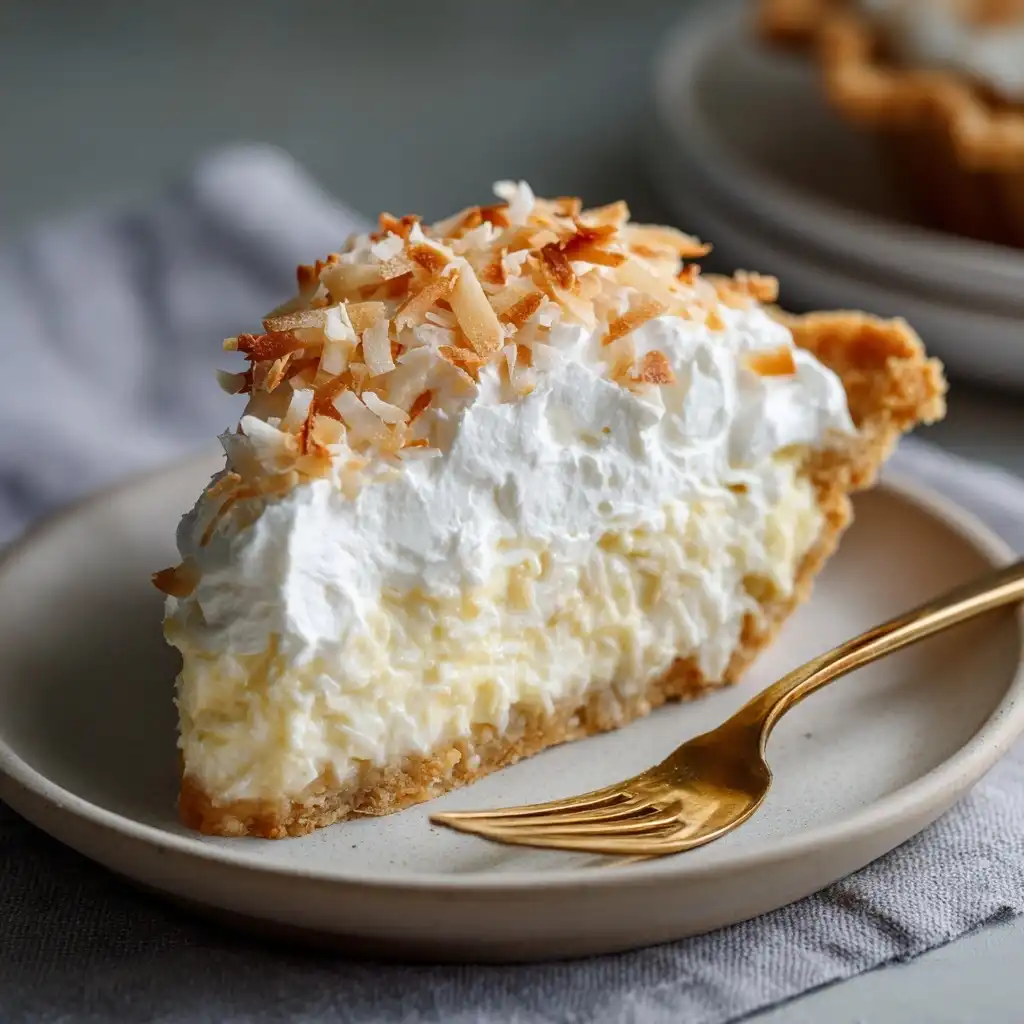
Welcome to the luscious, velvety world of Vegan Coconut Cream Pie—a decadent, dairy-free, egg-free, and compassionately crafted dessert that delivers all the nostalgic richness of the classic American favorite—without a single animal-derived ingredient. This pie is more than just a sweet treat; it’s a celebration of plant-based ingenuity, tropical flavor, and mindful indulgence. Silky coconut custard, crowned with billowy coconut whip and toasted flakes, cradled in a buttery, flaky vegan shortcrust—every bite is an invitation to slow down, savor, and reconnect with simplicity and intentionality in baking. Whether you’re a lifelong vegan, transitioning to plant-based eating, managing dietary restrictions, or simply seeking a refreshingly creamy, naturally aromatic dessert, this recipe meets you with warmth, depth, and unmistakable coconut soul.
The History
The origins of coconut cream pie trace back to mid-20th-century American home kitchens, where canned coconut milk and evaporated milk became pantry staples following World War II. Early versions—often baked and enriched with eggs and dairy—gained popularity in Southern and Floridian cookbooks for their tropical flair and make-ahead convenience. As coconut gained global culinary prominence—from Thai curries to Caribbean tarts—the pie evolved into a symbol of sun-drenched comfort. The vegan adaptation emerged much later, gaining momentum in the 2000s alongside innovations in plant-based thickening (like cornstarch, arrowroot, and tapioca), cultured coconut yogurt, and refined coconut oil-based crusts. Pioneering vegan bakers and food justice advocates reimagined the pie not only as a technical challenge but as an act of inclusion—ensuring celebrations, holidays, potlucks, and family dinners remained joyful and accessible for everyone, regardless of ethics, allergies, or health needs. Today’s vegan coconut cream pie honors that lineage while embracing modern nutritional science, regenerative agriculture principles (e.g., fair-trade, organic coconut sourcing), and zero-waste kitchen practices—such as repurposing coconut pulp from homemade milk or using aquafaba from chickpea brine in meringue-style toppings.
Ingredients Breakdown
Every element of this pie has been thoughtfully selected for function, flavor synergy, and ethical integrity:
- Vegan Shortcrust Pastry: All-purpose organic flour provides structure; cold, refined coconut oil (or a blend of coconut and sunflower oil) delivers flakiness and richness without trans fats; apple cider vinegar tenderizes gluten for melt-in-the-mouth tenderness; cold plant-based milk (oat or soy) hydrates without activating excess gluten; a pinch of Himalayan pink salt balances sweetness and enhances aroma.
- Coconut Custard Filling: Full-fat canned coconut milk (not “light” or “beverage”) supplies natural fat, creaminess, and authentic coconut essence—look for BPA-free cans with no gums or stabilizers; raw cane sugar or organic coconut sugar contributes caramelized depth and lower glycemic impact; cornstarch (or arrowroot for grain-free) creates a glossy, stable, spoonable texture without cooking out; turmeric (a whisper—not for color, but for subtle earthy complexity that rounds out coconut’s brightness); pure vanilla extract (alcohol-based, not synthetic vanillin) and high-quality coconut extract (cold-pressed, alcohol-free) deepen aromatic layers; a touch of lemon zest brightens richness and prevents cloying.
- Vegan Coconut Whipped Topping: Chilled, full-fat coconut cream (the solidified top layer skimmed from refrigerated cans) forms the base—its natural lauric acid content ensures stability and airy lift when whipped; powdered organic cane sugar adds sweetness without graininess; a splash of lemon juice balances fat; optional additions include soaked cashew cream for extra silkiness or a teaspoon of agar-agar infused in warm coconut water for heat-stable hold.
- Garnishes & Finishing Touches: Unsweetened toasted coconut flakes (baked at low temp for nutty aroma and crunch); edible dried lavender buds (culinary-grade, pesticide-free) for floral contrast; micro mint leaves for freshness; a delicate dusting of toasted coconut sugar for visual elegance and textural intrigue.
Step-by-Step Recipe
- Prepare the Crust (Minimum 1 hour ahead, preferably overnight): In a large bowl, whisk together 1 ¼ cups organic all-purpose flour, ½ tsp fine sea salt, and 1 tbsp organic cane sugar. Cut in ½ cup very cold refined coconut oil (solid, not melted) using a pastry cutter or two forks until the mixture resembles coarse crumbs with some pea-sized pieces remaining. Stir in 2–3 tbsp ice-cold unsweetened oat milk, one tablespoon at a time, just until the dough begins to clump. Gather into a disc, wrap tightly in unbleached parchment paper, and refrigerate for at least 60 minutes—or freeze for 20 minutes if short on time. This chilling step is non-negotiable: it prevents shrinkage, ensures flakiness, and allows gluten relaxation.
- Roll & Blind-Bake: Preheat oven to 375°F (190°C). Lightly flour a clean surface and roll the chilled dough into a 12-inch circle, rotating and lifting frequently to prevent sticking. Gently transfer to a 9-inch standard pie plate; trim edges to ½-inch overhang, fold under, and crimp decoratively. Prick bottom and sides with a fork. Line with parchment and fill with ceramic pie weights or dried beans. Bake for 18 minutes. Carefully remove weights and parchment, then bake 10–12 more minutes until golden and dry to the touch. Cool completely on a wire rack—do not skip cooling; residual heat will cause custard weeping.
- Make the Coconut Custard: In a heavy-bottomed saucepan, whisk together 1 cup full-fat canned coconut milk (well-stirred), ½ cup organic cane sugar, 3 tbsp cornstarch, ¼ tsp ground turmeric, and a pinch of salt until completely smooth—no lumps. Add 1 tsp pure vanilla extract, ½ tsp pure coconut extract, and the finely grated zest of ½ organic lemon. Place over medium-low heat. Stir constantly with a silicone spatula, scraping the bottom and corners, until the mixture thickens and begins to bubble gently at the edges—about 8–10 minutes. Once it reaches a full, sustained bubble (not just simmering), continue cooking for exactly 1 minute more—this fully activates the starch and eliminates any raw taste. Remove from heat immediately.
- Temper & Set: Let the hot custard cool slightly (2 minutes), then pour it through a fine-mesh strainer directly into the cooled crust to ensure ultra-smooth texture. Smooth the top with an offset spatula. Press a piece of parchment or plastic wrap directly onto the surface (to prevent skin formation), and refrigerate for *at least 4 hours*, preferably overnight. For best slice integrity and flavor development, chill for 8–12 hours.
- Whip the Coconut Cream: At least 12 hours before serving, refrigerate two 13.5-oz cans of full-fat coconut milk (unopened, no shaking). When ready, open cans and scoop out only the solid, creamy layer (discard or reserve the watery liquid for smoothies). Place solids in a chilled stainless-steel bowl with 2 tbsp powdered sugar and ½ tsp lemon juice. Using a hand mixer on medium-high speed, whip for 2–3 minutes until light, fluffy, and holding soft peaks. Avoid over-whipping—coconut cream can separate into oil and graininess if pushed too far.
- Assemble & Garnish: Just before serving, spread the whipped coconut cream evenly over the chilled custard. Use an offset spatula or piping bag for elegant swirls. Toast ⅓ cup unsweetened coconut flakes in a dry skillet over medium-low heat for 3–4 minutes, stirring constantly until golden and fragrant—cool completely. Sprinkle generously over the top. Finish with lemon zest curls, a pinch of edible lavender, and mint leaves. Serve chilled—but never frozen, as freezing disrupts starch gelation and causes syneresis (weeping).
Tips
- Coconut Milk Matters: Always use full-fat canned coconut milk, not carton “coconut milk beverage.” Shake the can vigorously before opening only if you want uniform fat distribution—but for whipping, you need separation, so refrigerate unshaken.
- Chill Everything: Cold bowls, cold beaters, cold coconut cream—and even a chilled pie plate during assembly—make whipping dramatically easier and more stable.
- Starch Substitutions: Arrowroot yields a glossier, more delicate set (ideal for warmer climates); tapioca gives chewier resilience; potato starch offers neutral flavor but less sheen. Never substitute 1:1 without adjusting liquid—each starch has different absorption rates.
- No-Crust Option: For a gluten-free, grain-free, or no-bake variation, pour the cooked custard into individual ramekins and chill. Top with coconut whip and toasted flakes—serving becomes elegant and portion-controlled.
- Prevent Weeping: Overcooking the custard (beyond 1 minute at full bubble) or under-chilling leads to water release. Also, avoid covering with plastic wrap while still warm—it traps steam and condensation.
- Flavor Layering: Bloom your coconut extract in the warm (not hot) custard off-heat—heat degrades volatile aromatic compounds. Similarly, add citrus zest at the end of cooking to preserve its bright top notes.
- Crust Success Secret: If your dough cracks while rolling, don’t panic—dab with cold plant milk and press gently. Patch imperfections—they’ll vanish once filled and chilled.
- Storage Wisdom: Store assembled pie covered in the refrigerator for up to 3 days. Do not freeze the finished pie—though unbaked crust discs and pre-portioned custard (frozen in jars) keep beautifully for 3 months.
Variations and Customizations
This recipe is a canvas—designed to adapt joyfully to seasons, pantries, and palates:
- Tropical Fusion: Fold ½ cup finely diced fresh mango or passionfruit pulp into the cooled custard before chilling. Garnish with toasted macadamia nuts and edible orchid petals.
- Chocolate-Coconut Swirl: Melt ¼ cup vegan dark chocolate (70%+ cacao) and swirl into the warm custard just before pouring into the crust—creates stunning marbling and bittersweet contrast.
- Matcha-Infused: Whisk 1 tsp ceremonial-grade matcha (sifted) into the dry cornstarch-sugar mixture before adding liquids. Adds earthy umami, vibrant green hue, and gentle caffeine lift.
- Spiced Chai Version: Infuse the coconut milk with 1 cinnamon stick, 4 cardamom pods (crushed), 3 whole cloves, and 1 star anise for 20 minutes over low heat—strain before proceeding. Omit turmeric; add ¼ tsp freshly ground ginger.
- Raw & No-Bake: Replace cooked custard with a cashew-coconut blend: soak 1 cup raw cashews (8 hrs), drain, blend with ¾ cup coconut cream, ⅓ cup maple syrup, 3 tbsp lime juice, 1 tsp coconut extract, and pinch of salt until glassy smooth. Pour into pre-made date-walnut crust and chill 6+ hours.
- Gluten-Free Crust: Swap all-purpose flour for a 1:1 GF blend containing xanthan gum—or make a nut-based crust: 1 ½ cups almond meal + ¼ cup tapioca starch + 3 tbsp melted coconut oil + 1 tbsp maple syrup + pinch salt.
- Savory-Sweet Herb Twist: Add 1 tbsp finely chopped fresh lemongrass (tender inner core only) to the custard while heating—infuse and strain. Finish with kaffir lime leaf garnish.
- Kid-Friendly Fun: Pipe coconut whip into cloud shapes, embed mini vegan chocolate chips or rainbow sprinkles, and top with fun-shaped toasted coconut “confetti.”
Health Considerations and Nutritional Value
This Vegan Coconut Cream Pie is intentionally formulated with nourishment in mind—not just restriction. While undeniably indulgent, it prioritizes whole-food ingredients, functional fats, and mindful processing:
- Fat Profile: Coconut oil contains medium-chain triglycerides (MCTs), metabolized differently than long-chain fats—potentially supporting sustained energy and satiety. Though high in saturated fat, emerging research suggests context matters: when consumed as part of a whole-food, plant-forward diet low in refined sugars and ultra-processed items, coconut’s fatty acids may support healthy lipid metabolism and gut microbiome diversity.
- Sugar Consciousness: Organic cane sugar is used sparingly (only ½ cup in the entire custard), and its caramel notes allow for perceptual sweetness enhancement—meaning less is needed for satisfaction. For lower-glycemic alternatives, swap in coconut sugar (same volume) or date paste (reduce liquid by 1 tbsp per ¼ cup used).
- Fiber & Phytonutrients: The crust’s whole-grain potential (via partial substitution with oat or brown rice flour), plus lemon zest (rich in polyphenols and limonene), turmeric (curcumin), and toasted coconut (lignans and ferulic acid), contribute antioxidant activity and digestive support.
- Allergen Transparency: Naturally free from dairy, eggs, soy (if soy-free milk is used), and gluten (with GF modifications). Always verify labels on extracts and coconut milk—some brands contain sulfites or carrageenan, which may irritate sensitive guts.
- Nutrition Snapshot (Per Standard Slice, 1/8 of 9″ pie): Approx. 320 kcal | 22g total fat (18g saturated) | 29g carbohydrates (17g sugars) | 2g protein | 1g fiber | 45mg sodium | 0mg cholesterol | Rich in manganese, copper, and iron from coconut and whole grains.
- Mindful Enjoyment Guidance: This pie shines brightest as part of a balanced pattern—not daily fare, but a meaningful, celebratory choice. Pair with a leafy green salad dressed in lime-tahini or a cup of ginger-turmeric tea to enhance digestion and nutrient absorption. Listen to your body: savor slowly, stop at satisfaction—not fullness—and honor what truly nourishes you.
Ingredients
For the Vegan Shortcrust Pastry:
- 1 ¼ cups (160g) organic all-purpose flour (or certified gluten-free 1:1 blend)
- ½ teaspoon fine sea salt
- 1 tablespoon organic cane sugar
- ½ cup (115g) refined coconut oil, very cold and solid
- 2–3 tablespoons ice-cold unsweetened oat milk (or soy milk)
For the Coconut Custard Filling:
- 1 (13.5 oz / 400ml) can full-fat coconut milk, well stirred
- ½ cup (100g) organic cane sugar (or coconut sugar)
- 3 tablespoons cornstarch (or arrowroot/tapioca starch)
- ¼ teaspoon ground turmeric (optional, for depth)
- Pinch of fine sea salt
- 1 teaspoon pure vanilla extract (alcohol-based)
- ½ teaspoon pure coconut extract (alcohol-free preferred)
- Zest of ½ organic lemon
- 1 tablespoon fresh lemon juice (optional, for brightness)
For the Vegan Coconut Whipped Topping:
- Contents of 2 (13.5 oz / 400ml each) cans full-fat coconut milk, refrigerated overnight (unshaken)
- 2 tablespoons organic powdered cane sugar
- ½ teaspoon fresh lemon juice
For Garnish:
- ⅓ cup unsweetened coconut flakes
- Extra lemon zest curls
- Few sprigs of fresh mint
- Pinch of culinary-grade edible lavender (optional)
- Light dusting of toasted coconut sugar (optional)
Directions
- Make the Crust: In a large mixing bowl, whisk together flour, salt, and sugar. Add cold coconut oil and cut in with a pastry cutter or fork until mixture resembles coarse crumbs with visible pea-sized bits. Gradually add ice-cold oat milk, 1 tablespoon at a time, mixing gently with a fork just until dough begins to clump. Gather into a cohesive disc, wrap in parchment, and refrigerate for at least 1 hour (or up to 3 days) or freeze for up to 1 month.
- Roll & Blind-Bake: Preheat oven to 375°F (190°C). On a lightly floured surface, roll chilled dough into a 12-inch circle (~⅛-inch thick). Transfer to a 9-inch pie plate; trim excess to ½-inch overhang, fold under, and crimp edges. Prick base and sides with a fork. Line with parchment and fill with pie weights. Bake 18 minutes. Remove weights and parchment; bake 10–12 more minutes until golden and dry. Cool completely on a wire rack—minimum 1 hour.
- Prepare Custard: In a heavy-bottomed saucepan, whisk coconut milk, sugar, cornstarch, turmeric, and salt until completely lump-free. Stir in vanilla, coconut extract, and lemon zest. Cook over medium-low heat, stirring constantly with a heatproof spatula, until mixture thickens and bubbles gently at edges—about 8–10 minutes. Once at a full, steady bubble, cook exactly 1 more minute. Remove from heat immediately.
- Strain & Chill: Strain hot custard through a fine-mesh sieve into the cooled crust. Smooth surface. Cover directly with parchment or plastic wrap (touching custard) and refrigerate for minimum 4 hours—ideally 8–12 hours for optimal texture and flavor meld.
- Whip Coconut Cream: Open chilled coconut milk cans without shaking. Scoop out only the thick, solid cream (reserve water for smoothies). Place in a chilled bowl with powdered sugar and lemon juice. Whip with electric mixer on medium-high for 2–3 minutes until light, fluffy, and holding soft peaks. Refrigerate until ready to use (up to 24 hours).
- Toast Coconut: In a dry skillet over medium-low heat, toast coconut flakes 3–4 minutes, stirring constantly, until golden and fragrant. Cool completely on parchment.
- Assemble: Just before serving, spread or pipe coconut whip over chilled custard. Garnish generously with toasted coconut, lemon zest, mint, and optional lavender. Slice with a sharp knife dipped in hot water for clean cuts. Serve immediately.
FAQ
- Can I make this pie nut-free?
- Yes! Ensure your plant milk is nut-free (oat, coconut, or soy), and avoid nut-based crust variations. All core ingredients are naturally nut-free—just double-check extract labels for almond-derived carriers.
- Why did my custard turn out runny?
- Most common causes: insufficient cooking time (must reach full bubble + 1 minute), under-measuring starch, using “light” coconut milk, or not chilling long enough. Also check expiration—old cornstarch loses thickening power.
- Can I use coconut cream instead of coconut milk?
- Yes—but reduce by 2 tablespoons, as coconut cream is thicker and higher in fat. You may need an extra ½ tsp cornstarch to compensate for reduced liquid.
- Is there a soy-free version?
- Absolutely. Use oat, coconut, or almond milk in the crust—and ensure your sugar and extracts are soy-free (many vanilla extracts use soy lecithin as emulsifier).
- Can I make this gluten-free?
- Yes—substitute a reliable 1:1 gluten-free flour blend (with xanthan gum) in the crust, and confirm your cornstarch is GF-certified (most are, but always verify). For added insurance, use certified GF oats in oat milk.
- How do I prevent the crust from getting soggy?
- Blind-baking until deeply golden and fully dry is essential. Also, let custard cool 2 minutes before pouring—too-hot filling steams the crust. A thin brush of melted coconut oil on the baked crust before filling adds extra moisture barrier.
- Can I prepare components ahead?
- Yes! Crust dough keeps refrigerated 3 days or frozen 3 months. Baked crust stays crisp in an airtight container 2 days. Cooked custard (cooled) lasts refrigerated 3 days. Whipped coconut cream holds 24 hours. Assemble no more than 2 hours before serving.
- What if I don’t have coconut extract?
- You can omit it—but the flavor will be milder. Enhance with an extra ¼ tsp vanilla and 1 tsp toasted coconut butter, melted and whisked in at the end of cooking.
- Can I freeze the finished pie?
- We strongly advise against freezing the assembled pie—custard weeps, crust softens, and whip deflates. However, unbaked crusts, cooked-and-cooled custard (in sealed jars), and whipped coconut cream (in portions) all freeze beautifully for up to 3 months.
- Is this pie suitable for Passover or other religious observances?
- With certified kosher-for-Passover coconut milk, cornstarch (check kitniyot status per tradition), and sugar, yes—it can be adapted. Always consult your rabbi or spiritual authority for specific guidelines.
Summary
This Vegan Coconut Cream Pie is a masterclass in compassionate baking—melding time-honored technique with plant-powered innovation to deliver silken, aromatic luxury that honors both palate and planet. Every component, from the flaky, golden crust to the cloud-like coconut whip, is crafted with intention, integrity, and deep respect for flavor, texture, and inclusivity.
Whether served at holiday tables, shared at community gatherings, or enjoyed as a quiet moment of self-care, this pie doesn’t just satisfy a craving—it affirms that kindness, creativity, and joy can be deliciously, unapologetically embodied in every golden, coconut-kissed bite.