Introduction
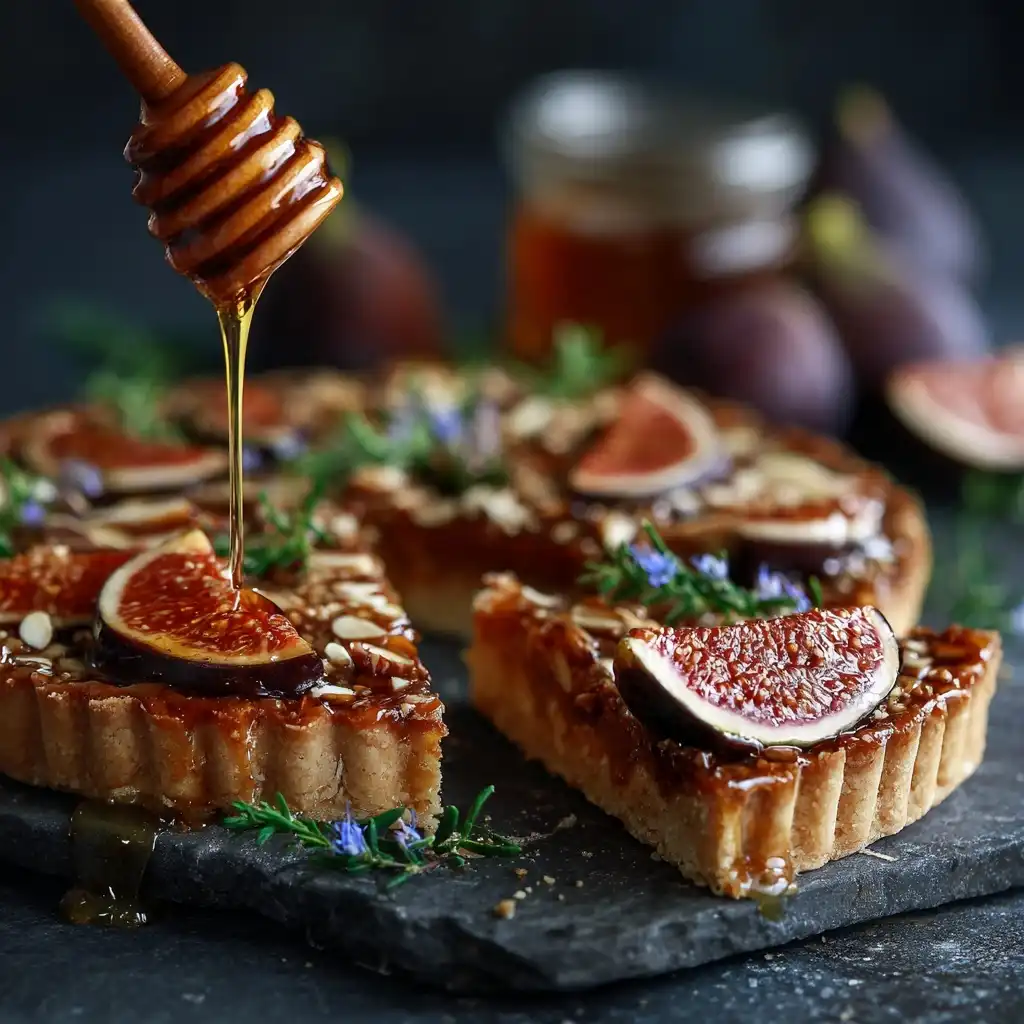
The Fig Honey Almond Tart is a sublime marriage of rustic elegance and Mediterranean-inspired simplicity—a dessert that whispers sophistication while delivering deep, nuanced flavor in every bite. With its buttery shortcrust base, luxuriously creamy almond frangipane, jewel-toned fresh or dried figs arranged with artisanal care, and a glistening veil of warm wildflower honey, this tart bridges tradition and modernity. It’s equally at home on a sun-dappled Provencal table, a chic urban brunch spread, or as the crowning finale to an intimate dinner party. More than just a pastry, it’s a sensory experience—earthy, floral, nutty, sweet, and subtly tangy—crafted to honor seasonal abundance and time-honored baking techniques.
The History
The origins of the Fig Honey Almond Tart are deeply rooted in the culinary crossroads of the Mediterranean Basin, where figs, almonds, and honey have been cultivated and revered for over 5,000 years. Ancient Sumerians, Egyptians, and Greeks celebrated these three ingredients not only as staples but as sacred symbols of fertility, wisdom, and divine sustenance—figs appearing in Homer’s Odyssey, almonds in biblical parables, and honey in Egyptian tomb offerings. In medieval Andalusia under Moorish rule, Arab bakers fused Persian nut pastes (like marzipan) with local Iberian fruits, pioneering early versions of frangipane-filled tarts. By the 17th century, French pâtissiers refined the technique, naming the almond-cream filling “frangipane” after Marquis de Frangipani, who allegedly created a jasmine-scented almond perfume that inspired perfumed pastries. Meanwhile, Italian nonne across Puglia and Sicily baked crostata di fichi, layering stewed figs over ricotta or almond paste. The contemporary Fig Honey Almond Tart emerged organically in the late 20th-century artisanal baking renaissance—championed by chefs like Alice Waters, Yotam Ottolenghi, and Claire Ptak—as a celebration of terroir-driven, minimally manipulated desserts. Its rise coincided with renewed interest in heirloom fig varieties (Black Mission, Kadota, Calimyrna), raw local honeys, and stone-ground almond flour—transforming a humble trio of pantry staples into a globally beloved, seasonally adaptive masterpiece.
Ingredients Breakdown
Every element of this tart plays a distinct, intentional role—no ingredient is merely decorative or conventional. Understanding their function elevates both execution and appreciation:
- Unbleached All-Purpose Flour (plus optional 10–15% whole wheat or spelt): Provides gluten structure and tender crumb; higher protein flours yield sturdier crusts, while whole grains add nuttiness and fiber.
- European-Style Unsalted Butter (82–84% fat, e.g., Plugrá or Kerrygold): Higher fat content yields unparalleled flakiness and rich mouthfeel; cold temperature is non-negotiable for lamination.
- Fine Sea Salt: Enhances sweetness, balances richness, and amplifies all other flavors—even in small amounts, it’s foundational.
- Powdered Sugar (not granulated): Dissolves instantly into the dough, contributing tenderness without grit; also helps inhibit gluten development.
- Almond Extract (pure, not imitation): Concentrated essence that intensifies the natural marzipan notes of ground almonds—use sparingly (¼ tsp max) to avoid bitterness.
- Blanched, Skinless Almond Flour (super-fine, not almond meal): Critical for smooth frangipane texture; retains natural oils for richness and moisture; coarse meal yields grainy, dry filling.
- Granulated Caster Sugar (superfine): Dissolves rapidly into eggs and butter, ensuring silky frangipane without air pockets or graininess.
- Large Eggs (room temperature): Act as emulsifiers and leaveners—temperature affects incorporation speed and final set; cold eggs can cause curdling.
- Heavy Cream or Full-Fat Greek Yogurt: Adds moisture, tenderness, and subtle acidity to balance frangipane’s density; cream yields richer results; yogurt adds brightness and slight tang.
- Fresh Figs (Black Mission, Brown Turkey, or Adriatic): Chosen for high sugar content, tender skin, and jammy interior when baked; peak ripeness is essential—slightly soft, fragrant, with a faint bend at the stem.
- Dried Figs (Calimyrna or Turkish): Used in variations for concentrated molasses-like sweetness and chewy contrast; must be plumped in warm orange juice or tea before use.
- Raw, Unfiltered Wildflower or Orange Blossom Honey: Not just a glaze—its enzymatic complexity and floral terroir define the tart’s aromatic signature; heat gently to preserve beneficial compounds and volatile aromatics.
- Flaky Sea Salt (Maldon or Fleur de Sel): Sprinkled post-bake for textural contrast and savory counterpoint that makes sweetness resonate more profoundly.
- Optional Garnishes: Toasted slivered almonds (for crunch and visual rhythm), edible violets or borage flowers (for color and delicate perfume), micro mint (for freshness), or a dusting of freeze-dried raspberry powder (for vibrant acidity).
Step-by-Step Recipe
- Prepare the Pâte Sucrée (Sweet Shortcrust Dough): In a food processor, pulse 1 ¼ cups (160g) chilled, cubed European butter with ¼ cup (30g) powdered sugar and ½ tsp fine sea salt until sandy. Add 1 ¾ cups (220g) unbleached all-purpose flour and 1 tbsp almond extract; pulse 4–5 times until just combined. Drizzle in 2–3 tbsp ice water, 1 tsp at a time, pulsing only until dough begins to clump. Turn onto parchment; press into a 6-inch disc, wrap tightly, and chill for *at least 2 hours* (preferably overnight) to fully hydrate flour and relax gluten.
- Roll & Blind-Bake the Crust: Preheat oven to 375°F (190°C). On a lightly floured surface, roll chilled dough to ⅛-inch thickness, ~12 inches in diameter. Gently transfer to a 9-inch tart pan with removable bottom. Trim excess, crimp edges, and prick base with fork. Freeze for 15 minutes. Line with parchment and pie weights (or dried beans); bake 20 minutes. Remove weights and parchment; bake 8–10 more minutes until golden and dry. Cool completely on wire rack—*do not skip cooling*, or frangipane will melt on contact.
- Make the Frangipane Filling: Using stand mixer fitted with paddle attachment, beat ½ cup (115g) softened butter on medium until creamy (~1 min). Gradually add ½ cup (100g) caster sugar; beat 3–4 mins until pale and fluffy. Scrape bowl. Add 1 large room-temp egg + 1 yolk (reserve white for glaze); beat 2 mins until fully emulsified. Reduce speed to low; gradually add 1 cup (95g) super-fine blanched almond flour, 1 tbsp all-purpose flour, ¼ tsp almond extract, and 2 tbsp heavy cream (or Greek yogurt). Beat just until homogeneous—*overmixing incorporates air, causing puffing or cracking*. Refrigerate filling 30 mins to thicken.
- Arrange the Figs: While frangipane chills, wash and pat dry 10–12 fresh figs. Slice each in half vertically; if very ripe, gently scoop out excess seedy pulp with teaspoon to prevent sogginess. Arrange cut-side up in concentric circles over cooled crust, slightly overlapping. For deeper flavor, brush fig cut surfaces lightly with 1 tsp lemon juice and ½ tsp honey before arranging.
- Fill & Bake: Spoon chilled frangipane into center of tart; using an offset spatula, gently spread outward, stopping ½ inch from fig edges—*do not cover figs*. Smooth top. Optional: Brush exposed crust edge with reserved egg white for extra shine. Bake at 350°F (175°C) for 38–45 minutes—rotating halfway—until frangipane is puffed, deeply golden, and springs back when lightly pressed (center should jiggle *very slightly*; residual heat finishes cooking). Figs will caramelize at edges and soften beautifully.
- Honey Glaze & Finish: Cool tart in pan on wire rack for 20 minutes. Meanwhile, gently warm 3 tbsp raw honey with ½ tsp lemon juice and pinch of salt in small saucepan over lowest heat (do not boil) until fluid (~95°F/35°C). Strain through fine-mesh sieve. Using pastry brush, delicately coat figs and exposed frangipane. Sprinkle immediately with flaky sea salt and toasted almonds. Cool completely (at least 2 hours) before removing ring—this ensures structural integrity and clean slicing.
Tips
- Butter Temperature Is Everything: Butter must be *cold* for dough (40–45°F / 4–7°C) and *softened but cool* for frangipane (65–68°F / 18–20°C). Use an instant-read thermometer for precision—too warm = greasy crust; too cold = broken frangipane.
- Chill Between Every Stage: Dough after mixing, after rolling, after shaping in pan, frangipane before spreading—all benefit from cold rest. This prevents shrinkage, ensures clean layers, and controls spread during baking.
- Prevent Soggy Bottoms: Always blind-bake crust until *fully dry and golden*, not just set. A thin layer of apricot jam (warmed and strained) brushed inside the baked crust creates a moisture barrier before adding frangipane.
- Fresh Fig Selection Wisdom: Choose figs that yield *slightly* to gentle pressure near the stem, emit a honeyed fragrance, and have no bruising or fermentation odor. Overripe figs release too much liquid; underripe ones lack sweetness and remain rubbery.
- Frangipane Consistency Check: Ideal texture is thick but spoonable—like softened cream cheese. If too runny, chill longer. If too stiff, fold in ½ tsp warm cream. Never re-soften in microwave—it cooks egg proteins prematurely.
- Oven Thermometer Required: Most home ovens fluctuate ±25°F. An accurate oven thermometer prevents underbaking (gummy frangipane) or overbaking (cracked, dry filling).
- Cooling Is Non-Negotiable: Cutting while warm causes collapse and smearing. Allow full 2–3 hour cool-down—frangipane sets as it cools, and figs release steam slowly for ideal texture.
- Storage Mastery: Store uncovered at cool room temperature for up to 24 hours (ideal for flavor melding). Refrigerate up to 3 days—bring to room temp 45 mins before serving. Freeze unbaked assembled tart (without glaze) for up to 2 months; bake from frozen, adding 8–10 mins.
- Slicing Like a Pro: Use a long, thin, *warm* knife—dip in hot water and wipe dry between each cut. A serrated knife works best for clean fig separation without crushing.
- Reviving Leftovers: Gently re-warm individual slices in a 300°F oven for 8–10 minutes—restores frangipane silkiness and re-caramelizes fig edges.
Variations and Customizations
This tart is a canvas for creativity—rooted in tradition but endlessly adaptable to seasons, dietary needs, and regional pantries:
- Vegan Version: Replace butter with cultured vegan butter (e.g., Miyoko’s); use flax egg (1 tbsp ground flax + 2.5 tbsp water per egg); substitute almond milk + ½ tsp apple cider vinegar for cream; glaze with warmed maple syrup infused with lavender buds instead of honey.
- Gluten-Free Adaptation: Swap flour blend (1:1 GF all-purpose + 2 tbsp almond flour + 1 tsp xanthan gum); ensure oat-based flours are certified GF; increase chilling time to 3 hours for dough stability.
- Herb-Infused Luxury: Steep 1 tbsp fresh rosemary or thyme in warm honey for 20 minutes, strain, and use for glaze. Add ½ tsp finely minced herb to frangipane for earthy complexity.
- Spiced Autumn Twist: Fold ½ tsp ground cardamom + ¼ tsp black pepper into frangipane; replace 2 tbsp almond flour with toasted walnut flour; top with poached quince slices alongside figs.
- Chocolate-Date Fusion: Swirl 2 tbsp melted 70% dark chocolate into frangipane; replace ¼ cup almond flour with date paste (blended Medjool dates + water); garnish with cocoa nibs.
- Summer Berry Interlude: Layer ½ cup macerated raspberries or blackberries *under* frangipane before adding figs; reduce honey glaze by half to balance acidity.
- Provençal Olive Oil Crust: Substitute ¼ cup high-quality arbequina olive oil for 3 tbsp butter in pâte sucrée for fruity, savory depth—reduce water by 1 tsp.
- Nut Alternatives: Replace almond flour with equal parts hazelnut flour (toasted for depth) or pistachio flour (vibrant green hue, delicate sweetness)—adjust sugar down by 1 tbsp due to natural nut sugars.
- Decadent Breakfast Tart: Add 2 tbsp orange zest to frangipane; top with candied orange peel and crème fraîche dollops instead of honey glaze.
- Mini Individual Tarts: Press dough into 4-inch tartlet pans; fill with 2 tbsp frangipane + 1–2 fig halves each; bake 22–26 minutes at 350°F. Perfect for portion control or elegant dessert service.
Health Considerations and Nutritional Value
While undeniably indulgent, the Fig Honey Almond Tart offers meaningful nutritional benefits when crafted mindfully—especially compared to highly processed commercial desserts. A standard slice (1/12 of 9-inch tart) contains approximately:
- Calories: ~320–360 kcal (varies with honey quantity and crust thickness)
- Healthy Fats: ~18g total fat, of which ~11g are monounsaturated (from almonds and olive oil options) and ~4g polyunsaturated—supporting cardiovascular health and satiety.
- Dietary Fiber: ~4–5g (2g from figs, 1.5g from whole grain flour options, 0.5g from almond flour)—aids digestion, stabilizes blood sugar, and promotes gut microbiome diversity.
- Plant-Based Protein: ~5–6g (primarily from almonds)—supports muscle maintenance and provides sustained energy.
- Vitamins & Minerals: Rich in vitamin E (antioxidant), magnesium (nerve/muscle function), potassium (electrolyte balance), calcium (bone health), and B vitamins (energy metabolism) — especially when using whole-grain flours and raw honey.
- Phytonutrients: Figs contain ficin (digestive enzyme), anthocyanins (anti-inflammatory pigments), and prebiotic oligosaccharides; raw honey boasts over 200 bioactive compounds including flavonoids, hydrogen peroxide, and methylglyoxal (MGO) with antimicrobial properties.
- Glycemic Impact: Moderate—despite natural sugars, the high fiber and fat content significantly slow glucose absorption. Pairing with plain Greek yogurt lowers glycemic load further. Avoid ultra-refined sugars; opt for raw honey (lower GI than table sugar) and minimal added sweeteners.
- Dietary Notes: Naturally cholesterol-free; easily adapted for vegan, gluten-free, or dairy-free diets (see Variations). Contains tree nuts—clear allergen labeling essential. Low in sodium (<120mg/slice) when using minimal salt.
- Mindful Enjoyment Principle: This tart exemplifies the “whole food, minimally processed” philosophy—no artificial preservatives, colors, or emulsifiers. Its richness encourages slower, more intentional eating—a practice linked to improved digestion and satiety signaling.
That said, moderation remains key. Those managing diabetes, insulin resistance, or specific digestive conditions (e.g., fructose malabsorption—figs and honey are high-FODMAP) should consult a registered dietitian for personalized guidance. Choosing organic, pesticide-free figs and raw, local honey further enhances nutritional integrity and environmental stewardship.
Ingredients
Makes one 9-inch tart (12 servings)
- For the Pâte Sucrée (Sweet Shortcrust Dough):
– 1 ¼ cups (160g) unsalted European-style butter, very cold, cubed
– ¼ cup (30g) powdered sugar
– ½ tsp fine sea salt
– 1 ¾ cups (220g) unbleached all-purpose flour
– 1 tbsp pure almond extract
– 2–3 tbsp ice water - For the Frangipane Filling:
– ½ cup (115g) unsalted butter, softened to 65–68°F (18–20°C)
– ½ cup (100g) caster (superfine) sugar
– 1 large egg + 1 egg yolk, room temperature
– 1 cup (95g) super-fine blanched almond flour
– 1 tbsp all-purpose flour
– ¼ tsp pure almond extract
– 2 tbsp heavy cream or full-fat Greek yogurt - For Assembly & Finish:
– 10–12 fresh ripe figs (Black Mission or Brown Turkey preferred), stems removed
– 3 tbsp raw, unfiltered wildflower or orange blossom honey
– ½ tsp fresh lemon juice
– Pinch of fine sea salt (for honey glaze)
– Flaky sea salt (Maldon or Fleur de Sel), for finishing
– ¼ cup (25g) sliced almonds, toasted
Directions
- In a food processor, combine cold cubed butter, powdered sugar, and fine sea salt. Pulse 8–10 times until mixture resembles coarse sand with pea-sized butter pieces.
- Add flour and almond extract. Pulse 4–5 times until just incorporated—no visible dry flour remains.
- Drizzle in ice water, 1 tsp at a time, pulsing briefly after each addition, until dough begins to clump together when pinched. Do not over-process.
- Turn dough onto a sheet of parchment paper. Press into a 6-inch disc, wrap tightly, and refrigerate for at least 2 hours or overnight.
- Preheat oven to 375°F (190°C). Roll chilled dough on lightly floured surface to ⅛-inch thickness, ~12 inches wide. Gently drape into 9-inch tart pan with removable bottom. Trim excess, crimp edges, and prick base with fork. Freeze 15 minutes.
- Line chilled crust with parchment and fill with pie weights. Bake 20 minutes. Remove weights and parchment; bake 8–10 minutes more until golden and dry. Cool completely on wire rack.
- Reduce oven to 350°F (175°C). In stand mixer, beat softened butter on medium until creamy (~1 minute). Gradually add caster sugar; beat 3–4 minutes until pale and fluffy.
- Add egg and yolk; beat 2 minutes until fully emulsified and glossy.
- On low speed, add almond flour, 1 tbsp all-purpose flour, almond extract, and cream (or yogurt). Mix just until smooth—about 30 seconds. Scrape bowl. Refrigerate frangipane 30 minutes.
- Wash and dry figs. Slice in half vertically. Gently arrange cut-side up in concentric circles over cooled crust, slightly overlapping.
- Spoon chilled frangipane into center. Using offset spatula, carefully spread outward, stopping ½ inch from fig edges—do not cover figs.
- Bake 38–45 minutes, rotating halfway, until frangipane is puffed, deeply golden, and springs back when lightly pressed. Edges of figs should be caramelized.
- Cool in pan on wire rack for 20 minutes. Meanwhile, gently warm honey, lemon juice, and pinch of salt in small saucepan over lowest heat until fluid (~95°F). Strain.
- Brush figs and exposed frangipane evenly with warm honey glaze. Immediately sprinkle with flaky sea salt and toasted almonds.
- Cool completely (minimum 2 hours) before carefully removing outer ring. Serve at room temperature.
FAQ
- Can I make the dough ahead?
- Absolutely. Dough keeps refrigerated for up to 3 days or frozen for 3 months. Thaw overnight in fridge before rolling.
- Why does my frangipane crack while baking?
- Most commonly caused by overmixing (traps air), oven too hot, or cooling too quickly. Ensure proper chilling, use oven thermometer, and cool gradually.
- Can I use dried figs instead of fresh?
- Yes—but rehydrate first: Simmer ½ cup dried figs in ½ cup orange juice + 1 tsp honey for 10 minutes. Cool, chop, and drain well. Reduce honey glaze by half.
- What if I don’t have almond extract?
- Omit it—the frangipane will still be delicious, though less intensely aromatic. A drop of pure orange blossom water is a lovely alternative.
- My crust shrunk during baking. What went wrong?
- Insufficient chilling (gluten relaxed too quickly), overworking dough, or stretching dough while fitting into pan. Always chill thoroughly and ease—not pull—dough into place.
- Can I freeze the baked tart?
- Yes—wrap tightly in plastic + foil once fully cooled. Freeze up to 2 months. Thaw overnight in fridge, then bring to room temp 1 hour before serving. Re-crisp crust at 325°F for 5 minutes if needed.
- Is raw honey safe to use in baking?
- Yes—while heat diminishes some enzymes, raw honey retains antioxidants, flavor complexity, and antimicrobial compounds even after gentle warming. Avoid boiling or prolonged high-heat exposure.
- How do I prevent figs from bleeding purple juice everywhere?
- Use less juicy varieties (Kadota or Calimyrna), avoid overripe fruit, and gently pat figs dry before arranging. A light dusting of cornstarch under frangipane also absorbs excess moisture.
- Can I make this dairy-free?
- Easily—substitute high-fat coconut cream for heavy cream, and use vegan butter. Ensure almond flour is certified dairy-free (some brands process on shared lines).
- What’s the best way to serve leftovers?
- Room temperature is ideal. For extra luxury, warm slices gently and serve with crème fraîche, vanilla bean ice cream, or a drizzle of reduced balsamic vinegar.
Summary
The Fig Honey Almond Tart is a timeless, terroir-driven confection that honors ancient Mediterranean ingredients—figs, almonds, and raw honey—with modern precision and mindful artistry. Its layered textures, balanced sweetness, and profound depth make it far more than dessert: it’s a celebration of seasonality, craftsmanship, and the quiet joy of simple things, exquisitely elevated.
Whether you’re a novice baker seeking approachable elegance or a seasoned pâtissier exploring nuance, this tart rewards attention to detail, celebrates ingredient integrity, and delivers unforgettable flavor—slice after thoughtful slice.