Introduction
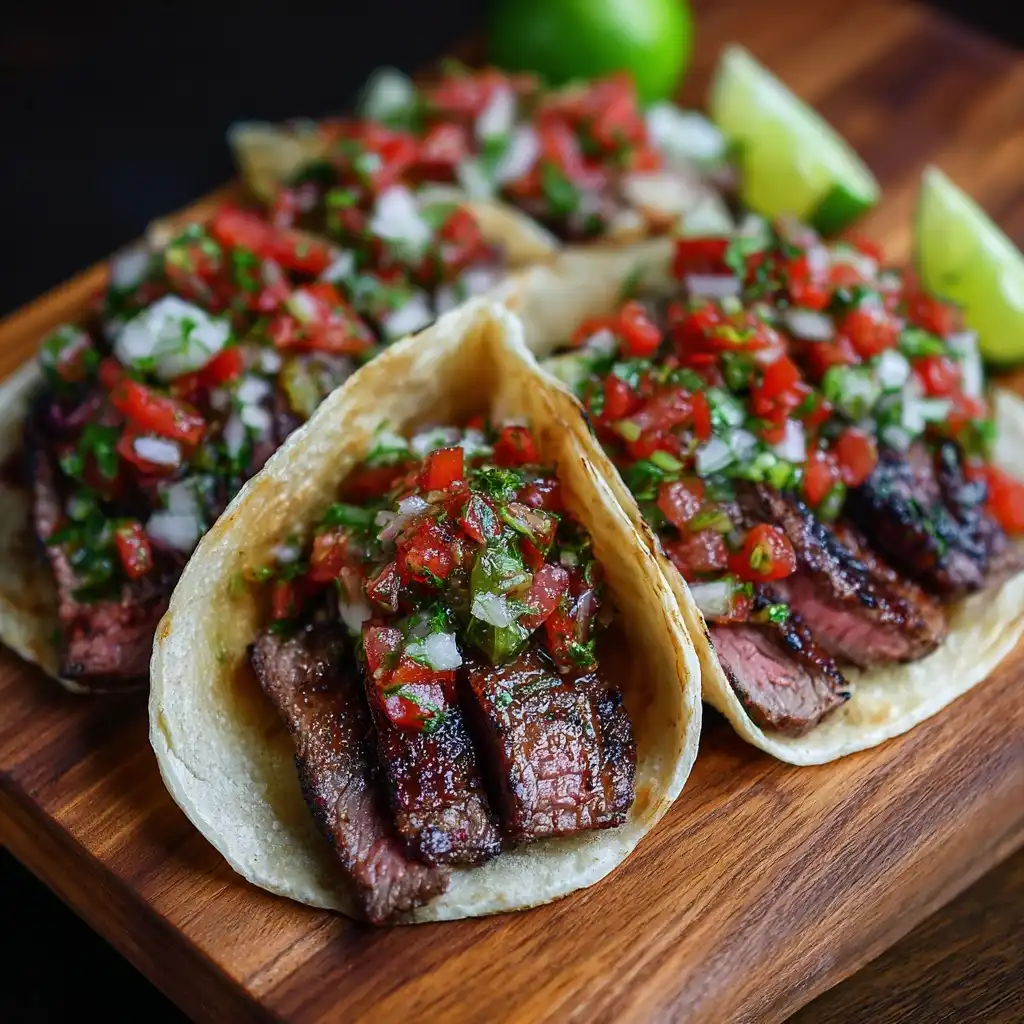
Carne Asada Tacos with Fresh Pico de Gallo represent the vibrant soul of Mexican street food—bold, smoky, tender, and explosively fresh. These tacos are more than just a meal; they’re a celebration of tradition, craftsmanship, and balance: the deep umami richness of marinated, grilled skirt or flank steak harmonizes perfectly with the bright acidity, crunch, and herbal brightness of house-made pico de gallo—all nestled in soft, warm, hand-pressed corn tortillas. Whether served at a bustling taquería in Guadalajara, a backyard grill in San Antonio, or your own kitchen on a weeknight, carne asada tacos embody authenticity, versatility, and joyful simplicity. This guide goes beyond the basics to give you a deeply researched, chef-informed, culturally grounded, and practically actionable roadmap—from historical roots and ingredient science to pro-level grilling techniques, nutritional insights, and dozens of customizable variations—all designed to help you craft restaurant-quality carne asada tacos with fresh pico de gallo, every single time.
The History
Carne asada—literally “grilled meat” in Spanish—has its origins in the cattle-rich regions of northern Mexico, particularly Sonora, Chihuahua, and Coahuila, where ranching culture flourished under Spanish colonial influence beginning in the 16th century. Indigenous communities had long practiced open-fire cooking, but the introduction of cattle by Spanish conquistadors catalyzed a culinary evolution: tough, lean cuts like skirt steak (arrachera) and flank steak were transformed through marination and high-heat grilling over mesquite or oak coals—a technique born from necessity and refined into artistry. By the early 20th century, carne asada became central to regional fiestas, family gatherings, and weekend “asaderos” (grilling spots), often accompanied by handmade corn tortillas and simple salsas. Its migration across the U.S.–Mexico border—especially during the Bracero Program (1942–1964) and later waves of Mexican immigration—cemented its place in American Southwest cuisine. In cities like Los Angeles, San Diego, and Austin, taco trucks and backyard cookouts elevated carne asada into an icon of cross-cultural exchange. The pairing with pico de gallo—whose name translates to “rooster’s beak,” possibly referencing its sharp, pecking flavor or the traditional mortar-and-pestle “molcajete” preparation—dates back centuries to pre-Hispanic salsas made with tomatoes (tomatl), chiles, onions, and epazote. Spanish colonization introduced garlic and lime, while African and Caribbean influences may have contributed cilantro’s widespread adoption in the region. Today, carne asada tacos with fresh pico de gallo stand as a living testament to layered history: Indigenous ingenuity, colonial agriculture, immigrant resilience, and modern culinary innovation—all served on a six-inch circle of masa.
Ingredients Breakdown
Understanding each component—not just *what* goes in, but *why*—is essential to mastering this dish. Below is a meticulous, science- and tradition-informed analysis:
For the Carne Asada Marinade
- Skirt Steak (Arrachera) or Flank Steak: Preferred for intense beefy flavor and porous texture that absorbs marinade deeply. Skirt steak (outside skirt) has more marbling and tenderness; flank is leaner but more uniform. Both benefit from proper slicing *against the grain* post-grill. Note: Avoid pre-sliced “fajita strips”—they lack structural integrity and dry out easily.
- Fresh Lime Juice: Not just for acidity—it contains citric acid that gently denatures surface proteins, aiding tenderness without turning meat mushy (unlike excessive vinegar or pineapple enzymes). Use key limes (Mexican limes) when possible for higher acidity and floral notes.
- Orange Juice (Navel or Valencia): Adds natural sugars for caramelization and subtle citrus complexity. Its milder acidity complements lime without overwhelming.
- Garlic (Fresh, Minced or Crushed): Releases allicin—a volatile compound that peaks 10 minutes after crushing and imparts pungent, savory depth. Never use jarred garlic; it lacks enzymatic activity and introduces off-flavors.
- Ground Cumin: Toast whole cumin seeds in a dry skillet until fragrant (30–45 seconds), then grind. This unlocks essential oils (cuminaldehyde) responsible for earthy, warm, slightly nutty aroma—pre-ground cumin loses >70% of volatile compounds within weeks.
- Smoked Paprika (Pimentón Dulce or Agridulce): Adds subtle smokiness that echoes traditional mesquite grilling—critical when using gas or indoor grills. Avoid “regular” paprika; it lacks depth and smoke.
- Chipotle en Adobo (Minced): Provides layered heat (capsaicin), smokiness (from dried, smoked jalapeños), and tangy-sweet complexity from the adobo sauce (vinegar, tomato, spices). One teaspoon delivers more dimension than a full tablespoon of plain chili powder.
- High-Quality Avocado Oil or Grapeseed Oil: High smoke point (520°F/271°C) ensures marinade doesn’t burn on the grill. Olive oil’s low smoke point and strong flavor interfere with meat’s natural taste.
- Sea Salt (Kosher or Flaky): Enhances all other flavors via sodium ion interaction with taste receptors. Salt early (in marinade) to season throughout, not just on the surface.
- Freshly Ground Black Pepper: Contains piperine, which boosts absorption of other antioxidants (e.g., curcumin in cumin) and adds spicy warmth without heat.
For the Fresh Pico de Gallo
- Roma Tomatoes (Vine-Ripened): Low water content and dense flesh prevent sogginess. Never substitute beefsteak or heirloom tomatoes—they release too much liquid and dilute flavor.
- Sharp sulfur compounds (alliinase enzymes) mellow slightly when cut and exposed to air—but retain bite essential for contrast. Soaking in cold water for 5 minutes reduces harshness while preserving crunch.
- Fresh Jalapeño (Seeds & Ribs Removed for Mildness): Capsaicin resides primarily in the white ribs and seeds; removing them tames heat while keeping vegetal, grassy flavor. For authentic heat, include ½ rib—or swap in serrano for brighter, sharper fire.
- Hand-Chopped Fresh Cilantro (Stems Included): Stems contain higher concentrations of aromatic terpenes (e.g., limonene, pinene) than leaves alone—adding citrusy, peppery complexity. Chop just before mixing to prevent oxidation and browning.
- Real Mexican Lime Juice (Not Bottled): Volatile esters (e.g., limonene, γ-terpinene) deliver unmistakable floral-citrus top notes lost in pasteurized juice. Always juice limes at room temperature for maximum yield.
- Himalayan Pink Salt or Sea Salt: Trace minerals subtly round out acidity without masking brightness.
- Optional—Roasted Garlic Paste: Adds deep, sweet umami that bridges steak and salsa—especially effective if grilling over charcoal.
For Assembly & Serving
- Double-Heated 6-Inch Corn Tortillas: Authenticity demands 100% masa harina (not Maseca “instant” unless no alternative exists), pressed thin and cooked on a comal or cast-iron skillet until lightly blistered and pliable. Double-heating (grill → steam towel wrap) gelatinizes starch for superior flexibility and chew.
- Crumbled Queso Fresco or Cotija: Salty, milky, crumbly—adds textural contrast and cooling richness without melting into grease.
- Sliced Radishes & Pickled Red Onions: Provide refreshing, peppery crunch and acidity to cut through fat—classic accompaniments in central Mexican taquerías.
- Charred Scallions or Grilled Cilantro Stems: Smoky aromatics that echo the steak’s grill marks—often overlooked but transformative.
Step-by-Step Recipe
Step 1: Prepare the Marinade (30 Minutes Before Grilling)
In a non-reactive bowl (glass, stainless steel, or ceramic), combine ¼ cup fresh lime juice, ¼ cup fresh orange juice, 4 minced garlic cloves, 1 tbsp toasted & ground cumin, 1 tsp smoked paprika, 1 tbsp minced chipotle in adobo, ¼ cup avocado oil, 1½ tsp kosher salt, and 1 tsp freshly ground black pepper. Whisk vigorously for 60 seconds to emulsify—this suspends oil droplets and ensures even coating. Taste marinade (discard after tasting); it should be bold, balanced, and slightly spicy—not overly salty.
Step 2: Marinate the Steak (Minimum 2 Hours, Up to 12 Hours)
Pat 1.5 lbs skirt or flank steak *very dry* with paper towels—moisture prevents marinade adhesion. Score the surface lightly (¼-inch deep, diagonal cuts) to increase surface area. Place steak in a heavy-duty resealable bag or glass dish; pour marinade over, pressing out all air. Refrigerate flat, turning once halfway. Do not exceed 12 hours: prolonged acid exposure breaks down muscle fibers excessively, yielding mushy texture.
Step 3: Grill to Perfection (15 Minutes Active Time)
Remove steak from fridge 30 minutes pre-grill. Scrape off excess marinade (prevents flare-ups) but leave a light film. Preheat grill to 450–500°F (use infrared thermometer). For charcoal: arrange coals for two-zone fire (hot direct, cooler indirect). Clean and oil grates thoroughly. Place steak diagonally across grates for signature sear marks. Grill 3–4 minutes per side for medium-rare (internal temp 130–135°F), rotating 90° halfway through first side for crosshatch marks. Resist pressing! Let rest on a wire rack (not plate) for 10 minutes—this allows juices to redistribute; cutting too soon loses up to 40% moisture.
Step 4: Slice Against the Grain (Critical Step)
Identify grain direction (long parallel muscle fibers). Position knife perpendicular to grain and slice into ¼-inch thick strips. For skirt steak, cut across the shorter width; for flank, cut along the length but *still against the grain*. Thin, angled slices maximize tenderness and mouthfeel.
Step 5: Make Fresh Pico de Gallo (10 Minutes, Best Served Within 2 Hours)
Core and finely dice 4 medium Roma tomatoes (about 2 cups, seeds and excess gel removed with a spoon). Combine in a chilled bowl with ½ cup finely diced white onion (soaked 5 min, drained), 1–2 finely minced jalapeños (seeded), ⅓ cup chopped cilantro (leaves + tender stems), 2 tbsp fresh lime juice, and ¾ tsp flaky sea salt. Gently fold with a rubber spatula—never stir aggressively. Let sit 5 minutes for flavors to marry. Do not refrigerate pico: cold dulls aromatics and makes tomatoes weep.
Step 6: Warm & Char Tortillas (5 Minutes)
Heat a cast-iron comal, skillet, or grill to medium-high. Pass each 6-inch corn tortilla over heat for 30–45 seconds per side until puffed, lightly blistered, and pliable. Stack in a cloth-lined tortilla warmer or foil packet to steam gently. For extra depth, lightly char one side over open flame for 2 seconds.
Step 7: Assemble with Intention
Place 2–3 warm tortillas on a plate. Top each with 3–4 oz sliced carne asada. Spoon 1½ tbsp pico de gallo evenly over meat. Garnish with 1 tsp crumbled queso fresco, 2 thin radish slices, and a pinch of pickled red onion. Serve immediately with lime wedges, extra pico, and a small bowl of warm consommé (optional but traditional—sip between bites to cleanse palate).
Tips
- Grill Temperature is Non-Negotiable: Under 400°F = steamed meat, not seared. Use an infrared thermometer—visual cues (blue flame, glowing coals) aren’t precise enough.
- Salt Early, Salt Often: Season steak generously *before* marinating (dry brine for 45 min), then again in marinade. Surface salt draws out moisture, then reabsorbs seasoned liquid—deep seasoning wins over surface-only.
- Resting Isn’t Optional—It’s Biochemical: During rest, actin and myosin proteins relax, trapping juices. Cutting at 135°F yields juicier results than waiting for 145°F.
- Pico Timing Matters: Make pico no more than 2 hours before serving. After 3 hours, tomatoes release water, onions turn harsh, and cilantro oxidizes—flavor collapses.
- Tortilla Texture Science: Double-heating (grill → steam wrap) rehydrates starch granules, transforming brittle tortillas into pliable, slightly chewy vessels that hold fillings without tearing.
- Resist the “Extra Sauce” Trap: Authentic carne asada tacos need no bottled salsa or sour cream. The pico *is* the sauce—its acidity balances fat, its crunch contrasts tenderness. Let the ingredients shine.
- Clean Your Grill Grates Mid-Cook: After first steak batch, scrape grates with a brass brush and wipe with oiled paper towel. Prevents carbon buildup that imparts bitter, acrid notes.
- Freeze Leftover Marinated Steak: Portion in vacuum-sealed bags for up to 3 months. Thaw overnight in fridge—never at room temperature—to preserve texture and safety.
- Use the “Finger Test” for Doneness: Press center of steak: soft = rare, springy = medium-rare, firm = medium. More reliable than color alone, especially with marinated meat.
- Save the Juices: Pour resting juices into a small saucepan, add 1 tsp lime juice and ½ tsp chipotle, reduce 2 minutes. Drizzle over assembled tacos for glossy, intense finish.
Variations and Customizations
Dietary & Lifestyle Adaptations
- Keto/Low-Carb: Serve carne asada over grilled romaine hearts or jicama slaw instead of tortillas. Boost fat with sliced avocado and crema made from full-fat coconut milk + lime.
- Gluten-Free: Naturally compliant—just verify all packaged ingredients (adobo sauce, tortillas) are certified GF. Many “masa harina” brands contain wheat; opt for Bob’s Red Mill or Masiello.
- Vegan “Carne Asada”: Use thick-cut king oyster mushrooms or marinated, grilled seitan. Mimic marinade with liquid smoke, tamari, lime, chipotle, and toasted cumin. Finish with smoked salt.
- Low-Sodium: Reduce salt by 50%, boost flavor with extra lime zest, roasted garlic, and a dash of Mexican oregano (more potent than Mediterranean).
Regional & Creative Twists
- Sonoran Style: Add grilled green onions and a spoonful of machaca-style shredded beef (simmered in broth with chiles) alongside carne asada.
- Baja California: Top with creamy avocado crema (avocado + sour cream + lime + garlic) and crispy fried capers for briny pop.
- Oaxacan Fusion: Swap pico for a rustic salsa negro (charred pasilla chiles, garlic, sesame, plantain) and garnish with stringy quesillo.
- Texas-Mex: Add a swipe of chipotle aioli and pickled jalapeño rings. Serve with crispy potato straws.
- Breakfast Carne Asada: Fill warm tortillas with carne asada, scrambled eggs, refried beans, and pickled red onions—topped with pico and crumbled bacon.
- “Taco al Pastor” Hybrid: Add 1 tsp achiote paste and ½ tsp pineapple juice to marinade; garnish with grilled pineapple chunks and a sprinkle of dried oregano.
Protein Swaps
- Grilled Chicken Thighs: Marinate same way, grill 6–8 min/side. More forgiving than breast; stays juicy.
- Shrimp or Scallops: Skewer jumbo shrimp or dry-packed scallops; marinate 15–20 min only. Grill 2 min/side—delicate texture demands precision.
- Grass-Fed Lamb: Use leg or shoulder cut. Replace orange with pomegranate molasses and add mint to pico.
- Wagyu Flat Iron: Ultra-marbled, rich. Reduce marinade sugar (omit orange), shorten marinate to 45 min, and serve rare (125°F).
Health Considerations and Nutritional Value
A single serving (2 tacos: 4 oz steak, 2 corn tortillas, ¼ cup pico, 1 tsp queso fresco) provides approximately:
- Calories: 420–480 kcal
- Protein: 32–38 g (complete, bioavailable; rich in iron, zinc, B12)
- Fat: 18–22 g (mostly unsaturated from avocado oil and lean beef; minimal saturated fat in skirt/flank)
- Carbohydrates: 32–36 g (complex, fiber-rich from whole-grain corn tortillas; low glycemic index)
- Fiber: 4–5 g (from tomatoes, onions, corn)
- Vitamin C: 45–55 mg (100%+ DV from lime, tomatoes, jalapeños—boosts iron absorption)
- Lycopene: ~8 mg (potent antioxidant in cooked tomatoes; enhanced by healthy fats in marinade)
- Nitrates: Naturally occurring in vegetables—support nitric oxide production for vascular health
Health Highlights:
- No Added Sugars: Authentic marinades rely on fruit juice—not honey, brown sugar, or agave—keeping glycemic load low.
- Anti-Inflammatory Profile: Garlic (allicin), lime (hesperidin), cilantro (dodecenal), and chiles (capsaicin) collectively modulate inflammatory pathways.
- Gut-Friendly: Fermented corn tortillas (traditionally nixtamalized) contain prebiotic fiber; fresh pico supplies raw enzymes and polyphenols.
- Iron Absorption Optimized: Vitamin C in lime and tomatoes increases non-heme iron bioavailability from beef by up to 300%.
- Mindful Sodium: At 520–650 mg/serving, well below FDA’s 2,300 mg daily limit—and naturally sourced, not processed.
Cautions: Those with GERD may find lime-heavy pico irritating—reduce to 1 tbsp and add 1 tsp roasted pepitas for alkalizing effect. For histamine sensitivity, omit aged cheeses and use fresh goat cheese instead of cotija.
Ingredients
For the Carne Asada
- 1.5 lbs skirt steak (outside) or flank steak, trimmed of excess fat
- ¼ cup fresh lime juice (about 4–5 Mexican limes)
- ¼ cup fresh orange juice (about 1 navel orange)
- 4 large garlic cloves, minced
- 1 tbsp ground cumin (toasted & freshly ground preferred)
- 1 tsp smoked paprika (pimentón dulce)
- 1 tbsp chipotle peppers in adobo sauce, finely minced
- ¼ cup avocado oil or grapeseed oil
- 1½ tsp kosher salt (or 1 tsp flaky sea salt)
- 1 tsp freshly ground black pepper
For the Fresh Pico de Gallo
- 4 medium ripe Roma tomatoes (about 2 cups, seeded and finely diced)
- ½ cup finely diced white onion (soaked in cold water 5 minutes, drained)
- 1–2 jalapeños, finely minced (seeds and ribs removed for mild heat)
- ⅓ cup fresh cilantro leaves and tender stems, finely chopped
- 2 tbsp fresh lime juice (about 1 lime)
- ¾ tsp flaky sea salt (like Maldon or Jacobsen)
For Assembly & Serving
- 12 (6-inch) fresh corn tortillas (100% masa harina)
- ½ cup crumbled queso fresco or cotija cheese
- 6–8 thin radish slices
- ¼ cup quick-pickled red onions (see note)
- Lime wedges, for serving
- Optional: charred scallions, avocado slices, crema
Directions
- Make the marinade: In a medium bowl, whisk together lime juice, orange juice, minced garlic, cumin, smoked paprika, chipotle, avocado oil, salt, and black pepper until fully emulsified. Set aside.
- Prepare steak: Pat steak completely dry with paper towels. Lightly score both sides with shallow diagonal cuts. Place in a large resealable bag or shallow dish. Pour marinade over steak, ensuring full coverage. Seal bag, press out air, and massage gently. Refrigerate 2–12 hours (4 hours ideal).
- Preheat grill: Heat charcoal or gas grill to 450–500°F. Clean grates thoroughly and oil with folded paper towel dipped in neutral oil.
- Grill steak: Remove steak from marinade; scrape off excess. Place on hottest part of grill. Cook 3–4 minutes undisturbed. Rotate 90°, cook 1 minute more. Flip, repeat (3–4 min total second side for medium-rare). Use instant-read thermometer: 130–135°F for medium-rare. Transfer to wire rack; rest 10 minutes.
- Slice steak: Identify grain direction. Using a sharp knife, slice thinly *against the grain* into ¼-inch strips.
- Make pico: In a chilled bowl, combine tomatoes, drained onion, jalapeño, cilantro, lime juice, and salt. Gently fold 3–4 times. Let sit 5 minutes.
- Warm tortillas: Heat comal or skillet over medium-high. Cook each tortilla 30–45 sec per side until puffed and flecked with char. Stack in clean kitchen towel inside foil or tortilla warmer.
- Assemble: Place 2 warm tortillas on plate. Top with 3–4 oz carne asada slices. Spoon 1½ tbsp pico over meat. Garnish with queso fresco, radish, and pickled onions. Serve immediately with lime wedges.
FAQ
- Q: Can I make this indoors if I don’t have a grill?
- A: Absolutely. Use a cast-iron grill pan or heavy skillet over high heat (smoke alarm warning!). Preheat 5+ minutes until smoking lightly. Sear steak 3–4 min/side, pressing gently with spatula for contact. Finish under broiler 1–2 min for char if needed.
- Q: Why is my pico watery?
- A: Likely due to using high-moisture tomatoes (beefsteak), skipping seed/gel removal, or refrigerating after mixing. Always use Romas, scoop out seeds, and serve at room temperature within 2 hours.
- Q: Can I use frozen steak?
- A: Yes—but thaw slowly in fridge (24–36 hrs) and pat *extremely* dry before marinating. Never microwave-thaw; uneven heating creates gray, mushy zones.
- Q: What’s the best way to reheat leftover carne asada?
- A: Briefly sear in hot skillet (30 sec/side) or microwave covered with damp paper towel (20 sec). Avoid slow reheating—it dries out. Slice *after* reheating to retain juices.
- Q: Are corn tortillas gluten-free?
- A: 100% masa harina tortillas are naturally GF—but verify packaging for cross-contamination warnings. Avoid “multigrain” or “wheat-added” varieties.
- Q