Introduction
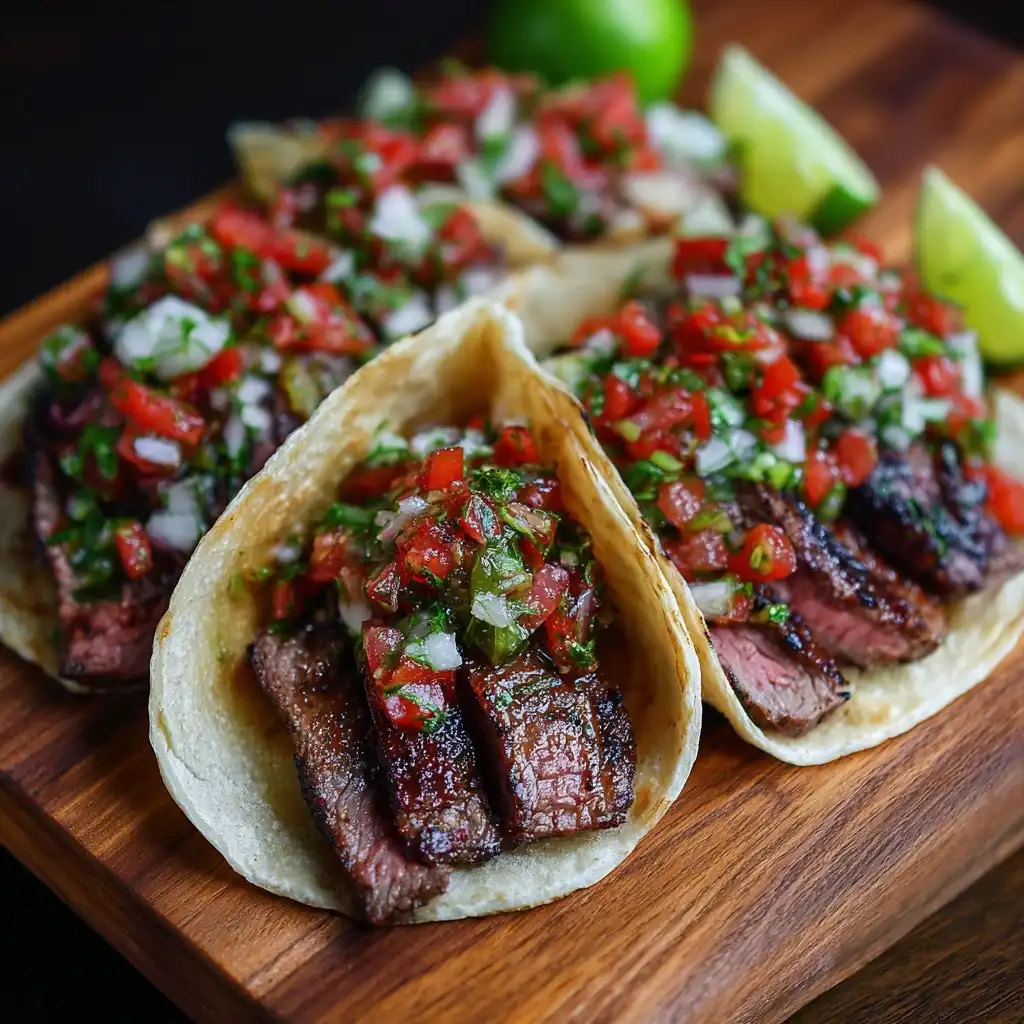
Carne Asada Tacos with Fresh Pico de Gallo represent the vibrant soul of Mexican street food—bold, rustic, and deeply satisfying. More than just a meal, they embody a celebration of fire-kissed beef, hand-pressed corn tortillas, and the bright, zesty counterpoint of freshly made pico de gallo. This dish bridges tradition and accessibility: it’s as much at home on a bustling taquería counter in Guadalajara as it is on a backyard grill in San Diego or a weeknight dinner table in Chicago. With its layered textures—tender yet chewy marinated steak, soft-yet-toasty warm tortillas, and the crisp, juicy pop of tomatoes, onions, cilantro, and lime—the Carne Asada Taco delivers an unforgettable sensory experience rooted in simplicity, authenticity, and intentionality.
The History
Carne asada—literally “grilled meat” in Spanish—originated in the cattle-rich northern regions of Mexico, particularly in states like Sonora, Chihuahua, and Nuevo León, where ranching culture thrived for centuries. Historically, families would gather around open flames to cook thin cuts of beef over wood or charcoal, often using inexpensive but flavorful cuts like skirt or flank steak. The practice evolved from necessity into ritual: weekend barbecues, family reunions, and village festivals all centered around shared carne asada. By the mid-20th century, as migration patterns shifted and Mexican communities flourished across the U.S. Southwest, carne asada became a culinary anchor—transforming from regional specialty to national icon. Tacos emerged as the natural vessel: portable, customizable, and deeply personal. Meanwhile, pico de gallo—a fresh, uncooked salsa with pre-Hispanic roots—has been part of Mesoamerican cuisine for over 2,000 years, with early versions featuring native tomatoes (tomatillos), chiles, and wild onions. Its modern incarnation—with ripe red tomatoes, white onion, jalapeño, cilantro, and lime—crystallized in central and southern Mexico and was later paired with grilled meats to create the perfect balance of richness and brightness. Today, Carne Asada Tacos with Fresh Pico de Gallo stand as a delicious testament to cultural continuity, adaptation, and the universal joy of cooking over fire.
Ingredients Breakdown
Understanding each ingredient’s role deepens both appreciation and execution. In Carne Asada Tacos, every component serves a purpose—not just flavor, but function:
- Skirt Steak (or Flank Steak): Preferred for its intense beefy flavor and porous texture that readily absorbs marinade. Skirt steak’s long muscle fibers benefit from quick, high-heat cooking and slicing against the grain—a technique essential for tenderness.
- Orange Juice & Lime Juice: Provide acidity to tenderize connective tissue while adding brightness. Orange contributes subtle sweetness and depth; lime adds sharp, clean tang that cuts through fat.
- Garlic & Fresh Cilantro Stems: Garlic infuses savory umami; cilantro stems (often overlooked) contain even more aromatic oils than leaves—ideal for marinades.
- Ground Cumin & Dried Oregano (Mexican variety): Warm, earthy spices that echo traditional Northern Mexican seasoning profiles. Mexican oregano is citrusy and floral—distinct from Mediterranean oregano—and crucial for authenticity.
- Chipotle in Adobo (optional but recommended): Adds smoky heat and complexity. A small amount goes a long way—its slow-smoked jalapeño essence bridges the gap between marinade and char.
- High-Smoke-Point Oil (avocado or grapeseed): Ensures proper sear without burning—critical for developing the Maillard reaction that yields rich, caramelized crust.
- Double-Stacked Corn Tortillas: Authentic taquerías use two small (4–5 inch) 100% masa harina tortillas per taco. This prevents tearing, adds structural integrity, and creates a uniquely soft-chewy texture when lightly toasted.
- Fresh Pico de Gallo Ingredients: Ripe Roma or vine-ripened tomatoes (low moisture, firm flesh), sweet white onion (soaked briefly to mellow bite), serrano or jalapeño (seeds and membranes removed for controlled heat), freshly chopped cilantro leaves and tender stems, and generous fresh-squeezed lime juice—never bottled. Each element must be impeccably fresh; pico de gallo is not a make-ahead condiment—it’s a living, breathing garnish meant to be assembled minutes before serving.
- Optional Enhancements: Crumbled queso fresco (milky, mild, slightly salty), pickled red onions (for vinegar tang and color), avocado slices or crema (cooling contrast), and a sprinkle of flaky sea salt or smoked paprika for finishing flair.
Step-by-Step Recipe
- Marinate the Steak (Minimum 2 hours, ideally overnight): In a large non-reactive bowl or resealable bag, combine ½ cup fresh orange juice, ¼ cup fresh lime juice, 6 minced garlic cloves, ¼ cup finely chopped cilantro stems, 2 tsp ground cumin, 1½ tsp dried Mexican oregano, 1 tsp kosher salt, 1 tsp black pepper, 1 tbsp avocado oil, and 1–2 tsp finely minced chipotle in adobo (adjust to taste). Whisk until fully emulsified. Pat 1.5 lbs skirt or flank steak dry with paper towels, then score both sides diagonally with shallow cuts (¼ inch deep) to help marinade penetrate. Submerge steak completely in marinade, seal, and refrigerate. Flip once halfway through.
- Prepare the Pico de Gallo (30 minutes before serving): Finely dice 2 cups seeded, deseeded Roma tomatoes (blot excess juice with paper towel). Soak ½ cup finely diced white onion in cold water with 1 tsp vinegar for 5 minutes, then drain and pat dry. Mince 1–2 serranos (or jalapeños), removing seeds and membranes. Chop ½ cup fresh cilantro (leaves + tender stems). In a medium bowl, gently combine tomatoes, onion, chile, cilantro, 2 tbsp fresh lime juice, ½ tsp fine sea salt, and a pinch of black pepper. Do NOT refrigerate—let sit at room temperature to allow flavors to bloom. Stir gently every 10 minutes.
- Fire Up the Grill or Skillet: For best results, use a charcoal grill (preferably with mesquite or oak) or cast-iron skillet over high heat. Preheat grill grates or skillet until smoking hot (about 500°F/260°C). Lightly oil grates or pan with high-heat oil using tongs and folded paper towel.
- Grill the Steak (2–3 minutes per side): Remove steak from marinade and shake off excess (do not rinse). Season both sides generously with additional kosher salt. Place on hottest part of grill or skillet. Press gently with spatula for full contact. Cook undisturbed until deep mahogany sear forms (~2.5 minutes). Flip and repeat. For medium-rare, internal temp should reach 125–130°F (52–54°C) when measured with instant-read thermometer at thickest part. Remove and rest on wire rack (not plate) for 10 minutes—this allows juices to redistribute and prevents dryness.
- Warm the Tortillas (Critical Step): Heat a dry comal, cast-iron skillet, or griddle over medium-high heat. One at a time, heat each 4-inch corn tortilla for ~30 seconds per side until pliable, slightly puffed, and marked with light golden speckles. Stack wrapped in a clean kitchen towel or cloth-lined tortilla warmer to retain steam and softness.
- Slice & Assemble: Against the grain, slice rested steak into thin (¼-inch) strips. Arrange 2–3 oz per taco. Place two warm tortillas stacked together on plate or board. Top with sliced carne asada, 1–2 tbsp pico de gallo, optional crumbled queso fresco, and a final squeeze of lime. Serve immediately.
Tips
- Pat the Steak Dry Before Marinating AND Before Cooking: Surface moisture inhibits browning—always blot thoroughly before applying marinade and again right before grilling.
- Score Strategically: Make shallow diagonal cuts in a crosshatch pattern—not deep enough to cut through, but sufficient to increase surface area for marinade absorption and faster, more even cooking.
- Don’t Skip the Rest: Cutting into steak too soon releases precious juices. Resting for 10 minutes ensures maximum tenderness and juiciness.
- Use a Meat Thermometer—Every Time: Visual cues are unreliable. Skirt and flank steaks go from perfect to tough in under 30 seconds past ideal doneness.
- Toast Tortillas Just Before Serving: Cold or soggy tortillas ruin the taco. Reheat them seconds before assembly—even if you warmed them earlier, give them one last 10-second toast.
- Chop Pico de Gallo Just Before Serving: Letting it sit too long causes tomatoes to weep and dilute flavors. If prepping ahead, store components separately and combine no more than 30 minutes prior.
- Char Your Limes: For extra dimension, halve limes and place cut-side down on hot grill for 1–2 minutes until lightly caramelized—adds smoky-sweet acidity to finishing squeeze.
- Clean Grates Mid-Cook: After first steak batch, scrape grates with a stiff wire brush and re-oil to prevent sticking and ensure consistent sear on subsequent batches.
- Freeze Leftover Marinated Steak: Portion into vacuum-sealed or freezer-safe bags with marinade for up to 3 months. Thaw overnight in fridge—no need to discard marinade.
- Repurpose Leftovers Creatively: Dice leftover carne asada for breakfast tacos with scrambled eggs and roasted potatoes, fold into enchilada fillings, toss into salads with black beans and avocado, or blend into taco soup broth.
Variations and Customizations
Carne Asada Tacos are wonderfully adaptable—honoring tradition while inviting personal expression. Here are thoughtfully curated variations grounded in regional authenticity and modern creativity:
- Northern Mexican Style (Sonoran): Use cabeza de res (beef head meat) or arrachera (skirt steak) marinated only with coarse salt, garlic, and lime. Serve with handmade flour tortillas, grilled green onions, and a simple salsa verde made with tomatillo and serrano.
- Baja California Coastal Twist: Add 1 tbsp minced fresh mint and 1 tsp fish sauce to marinade for umami depth. Top tacos with pickled cucumber ribbons, crushed pepitas, and a drizzle of creamy avocado-lime crema.
- Vegetarian “Carne Asada” Option: Replace steak with thick-cut portobello caps or king oyster mushrooms. Marinate same as beef, then grill until deeply caramelized. Add smoked paprika and liquid smoke to marinade for meaty resonance.
- Breakfast Carne Asada Tacos: Fill warm tortillas with scrambled eggs, diced carne asada, crumbled cotija, roasted poblano strips, and chipotle hollandaise.
- Gluten-Free & Grain-Free: Ensure tortillas are certified GF (many corn tortillas are naturally GF—but verify no shared equipment). For grain-free, try cassava or almond flour tortillas—or serve carne asada and pico in crisp lettuce cups.
- Smoky Indoor Version: Use a grill pan with a smoking gun or add a small foil packet of soaked mesquite chips to stovetop burner beneath pan for authentic smoke infusion.
- Spice-Lover’s Upgrade: Infuse marinade with 1 tsp ancho chile powder + ½ tsp guajillo powder (toasted and blended). Finish tacos with habanero-pineapple pico or pickled jalapeños.
- Wine-Paired Gourmet Version: Substitute ¼ cup dry red wine (like Tempranillo) for part of orange juice. Serve with grilled scallions, manchego shavings, and a reduction of balsamic and orange zest.
- Kid-Friendly Mild Version: Omit chiles entirely from pico; use roasted red bell peppers instead. Swap chipotle for ½ tsp smoked paprika. Offer shredded mild cheddar and sour cream on the side.
- Meal-Prep Friendly Batch: Double marinade and portion into individual servings. Grill steak in batches, slice, and freeze in airtight containers for up to 4 weeks. Reheat gently in skillet with splash of broth before assembling.
Health Considerations and Nutritional Value
A single serving (two tacos with 3 oz carne asada, 2 small corn tortillas, and ¼ cup pico de gallo) offers a balanced, nutrient-dense profile—especially when prepared mindfully:
- Protein Powerhouse: Skirt steak provides ~45g high-quality complete protein per 3 oz serving—rich in iron (heme form, highly absorbable), zinc, B12, and creatine for muscle support and cognitive health.
- Low-Carb & Naturally Gluten-Free: Corn tortillas contain ~20g net carbs per two-taco serving—far less than flour tortillas—and are inherently GF when made from 100% masa harina (check labels for additives).
- Antioxidant-Rich Pico: Tomatoes supply lycopene (enhanced by light cooking—but preserved raw in pico), a potent antioxidant linked to heart and prostate health. Onions and garlic offer quercetin and allicin, supporting immune and cardiovascular function. Cilantro aids heavy metal detoxification and digestion.
- Healthy Fats: Avocado oil in marinade and optional avocado topping provide monounsaturated fats—associated with reduced inflammation and improved cholesterol ratios.
- Digestive Benefits: Lime juice stimulates gastric acid production, aiding protein digestion. Fermented options like pickled onions introduce beneficial probiotics.
- Considerations for Specific Diets:
- Hypertension: Reduce added salt by 50% and rely on citrus, herbs, and smoked spices for flavor. Avoid pre-salted cheeses.
- Diabetes: Prioritize leaner cuts (trimmed flank), control portion size (2 oz steak max), and pair with fiber-rich black beans or grilled vegetables to moderate glycemic response.
- Keto: Replace corn tortillas with grilled portobello “shells,” low-carb almond flour tortillas, or serve open-faced on lettuce. Increase healthy fat with avocado or crema.
- Pregnancy/Nursing: Ensure steak is cooked to at least 145°F (63°C) internal temp and held for 3 minutes. Avoid unpasteurized cheeses unless clearly labeled safe.
- Calorie Estimate (per two-taco serving): ~420–480 kcal (varies based on oil use, cheese, and toppings). Macronutrient breakdown: ~38g protein, ~32g carbohydrates (12g fiber), ~18g fat (4g saturated). Rich in potassium, magnesium, folate, and vitamin C.
Ingredients
For the Carne Asada Marinade & Steak:
- 1.5 lbs (680 g) skirt steak or flank steak, trimmed of excess fat
- ½ cup (120 ml) fresh orange juice (from 2–3 navel oranges)
- ¼ cup (60 ml) fresh lime juice (from 2–3 key limes or 1 large Persian lime)
- 6 large garlic cloves, minced
- ¼ cup (15 g) fresh cilantro stems, finely chopped (reserve leaves for pico)
- 2 tsp ground cumin
- 1½ tsp dried Mexican oregano
- 1 tsp kosher salt (plus more for finishing)
- 1 tsp freshly ground black pepper
- 1 tbsp avocado oil or grapeseed oil
- 1–2 tsp chipotle in adobo sauce, finely minced (adjust to heat preference)
For the Fresh Pico de Gallo:
- 2 cups (300 g) finely diced Roma tomatoes, seeds and excess juice removed
- ½ cup (75 g) finely diced white onion
- 1–2 serrano chiles or jalapeños, finely minced (seeds and membranes removed)
- ½ cup (15 g) fresh cilantro leaves and tender stems, roughly chopped
- 2 tbsp (30 ml) fresh lime juice
- ½ tsp fine sea salt (or to taste)
- Pinch of freshly ground black pepper
For Assembly & Serving:
- 16–20 (4-inch) 100% stone-ground corn tortillas (preferably fresh, not shelf-stable)
- 2 tbsp (30 ml) neutral high-heat oil (for tortilla warming)
- Crumbled queso fresco or cotija (¼ cup, optional)
- Lime wedges, for serving
- Extra virgin olive oil or crema (optional drizzle)
- Flaky sea salt (Maldon or similar), for finishing
Directions
- Marinate the Steak: In a large glass or ceramic bowl (or heavy-duty resealable bag), whisk together orange juice, lime juice, minced garlic, chopped cilantro stems, cumin, oregano, 1 tsp kosher salt, black pepper, avocado oil, and chipotle. Add steak, turning to coat thoroughly. Cover or seal and refrigerate for minimum 2 hours—or preferably 8–24 hours—flipping once halfway.
- Prepare the Pico de Gallo: About 30 minutes before serving, prepare all pico ingredients. Place diced tomatoes on paper towels to absorb excess moisture. Soak diced onion in cold water with 1 tsp apple cider vinegar for 5 minutes; drain well and pat dry. In a medium non-reactive bowl, gently combine tomatoes, drained onion, minced chile, cilantro, lime juice, ½ tsp sea salt, and black pepper. Stir gently and set aside at room temperature—do not refrigerate.
- Preheat Cooking Surface: Heat charcoal grill to high heat (500–550°F / 260–290°C) or cast-iron skillet over highest stove setting until smoking. Clean and oil grates or pan thoroughly.
- Grill the Steak: Remove steak from marinade and shake off excess. Pat *very* dry with paper towels. Season both sides generously with additional kosher salt. Place on hottest part of grill/skillet. Press lightly with spatula and cook undisturbed for 2–3 minutes until deeply seared and release easily. Flip and cook opposite side 2–3 minutes for medium-rare (125–130°F internal temp). Transfer to wire rack; rest 10 minutes.
- Warm the Tortillas: Heat dry comal or skillet over medium-high heat. Lightly brush one tortilla with oil, place on hot surface, and cook 30–45 seconds until edges lift and surface shows light golden spots. Flip and repeat. Stack in cloth-lined tortilla warmer or wrapped in clean kitchen towel.
- Slice & Assemble: Slice rested steak thinly *against the grain*. Place two warm tortillas stacked on plate. Top with 2–3 oz sliced carne asada, 1–2 tbsp pico de gallo, crumbled cheese (if using), and a final squeeze of fresh lime. Sprinkle with flaky salt. Serve immediately with extra lime wedges and optional crema or olive oil.
FAQ
- Q: Can I use flank steak instead of skirt steak?
- A: Absolutely—and many chefs prefer flank for its uniform thickness and ease of slicing. Just reduce marinating time to 4–6 hours (flank is less porous) and monitor closely during grilling, as it cooks slightly faster.
- Q: Why do I need to soak the onion in vinegar?
- A: Vinegar tempering mellows raw onion’s harsh sulfur compounds while enhancing sweetness and crunch—without diluting flavor like plain water soaking. It also helps stabilize the pico’s pH for food safety.
- Q: Can I make this recipe indoors without a grill?
- A: Yes! A heavy-bottomed cast-iron skillet delivers exceptional sear and fond. For smoke, use a stovetop smoker or add a few drops of liquid smoke to marinade (sparingly). Broiling is acceptable but lacks depth—flip frequently and watch closely.
- Q: How do I prevent my corn tortillas from cracking?
- A: Cracking signals dryness or cold. Always warm tortillas *immediately* before serving. Keep them wrapped in a damp (not wet) cloth or insulated warmer. If using store-bought, spritz lightly with water before heating. Never microwave uncovered.
- Q: Is carne asada traditionally made with lime juice?
- A: While lime appears in modern U.S. adaptations, traditional Northern Mexican marinades emphasize salt, garlic, and sometimes beer or cola—not citrus. However, lime is now widely embraced for its balancing acidity and is considered standard in most contemporary recipes—including this one.
- Q: Can I freeze leftover cooked carne asada?
- A: Yes—store in airtight container or freezer bag with a splash of reserved marinade or broth for up to 3 months. Thaw overnight in fridge. Reheat gently in skillet with 1 tsp oil over medium-low heat—do not overcook.
- Q: What’s the difference between pico de gallo and salsa?
- A: Pico de gallo (“rooster’s beak”) is a fresh, chunky, uncooked table salsa with minimal liquid—meant to be eaten within hours. Salsa typically includes cooked or blended ingredients, added vinegar or tomato paste, and is designed for longer shelf life. Texture, preparation method, and water content define the distinction.
- Q: Can I make this low-sodium?
- A: Yes—omit added salt from marinade and rely on citrus, herbs, smoked paprika, and toasted cumin for flavor. Use low-sodium broths if deglazing, and skip salted cheeses. Tomato and lime naturally enhance perception of saltiness.
- Q: Why does my carne asada turn out chewy?
- A: Most commonly due to slicing *with* the grain (follows muscle fibers) or overcooking. Always slice *across* the grain (perpendicular to long striations) and pull apart a piece—if fibers separate easily, it’s cut correctly. Also verify internal temperature—medium-rare is ideal.
- Q: Are corn tortillas healthier than flour?
- A: Generally yes—they’re lower in calories and sodium, higher in fiber and calcium (if made with lime-treated masa), naturally gluten-free, and have a lower glycemic index. Look for “100% masa harina” and avoid preservatives or hydrogenated oils.
Summary
Carne Asada Tacos with Fresh Pico de Gallo are a masterclass in balance—fiery yet refreshing, rich yet vibrant, rustic yet refined—anchored by time-honored techniques and uncompromising freshness.
From marinating flank or skirt steak in citrus-spiced aromatics to crafting pico de gallo moments before serving, every step honors the integrity of ingredients, celebrates Mexican culinary heritage, and invites joyful customization for every palate and occasion.