Introduction
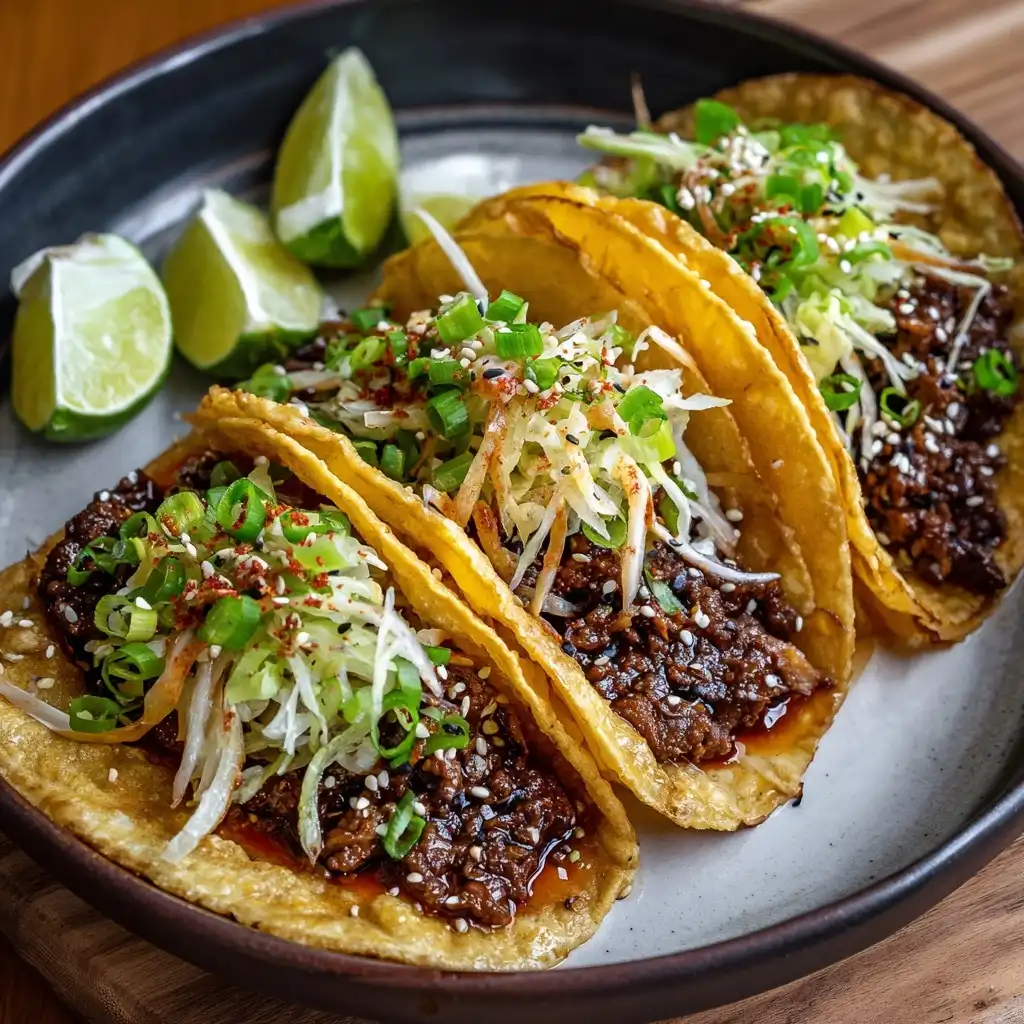
Welcome to the vibrant, bold, and deeply satisfying world of Korean-Inspired Beef Tacos — a masterful fusion dish that bridges the fiery umami richness of Korean barbecue with the fresh, handheld joy of Mexican street food. These aren’t just tacos with a splash of gochujang; they’re thoughtfully engineered plates where every element sings in harmony: tender, caramelized bulgogi-style beef marinated for hours in a complex blend of soy, ginger, garlic, pear, and toasted sesame; crisp, cooling toppings like quick-pickled daikon radish and spicy kimchi slaw; soft, warm corn or flour tortillas kissed with toasted sesame oil; and bright, herbaceous finishes of cilantro, scallions, and lime. Whether you’re hosting a backyard fiesta, seeking weeknight dinner inspiration with global flair, or simply craving something deeply flavorful yet approachable, Korean-Inspired Beef Tacos deliver excitement in every bite — honoring tradition while joyfully breaking boundaries.
The History
The story of Korean-Inspired Beef Tacos is rooted not in ancient lineage, but in the dynamic, delicious evolution of culinary migration and cultural cross-pollination. Its origins trace back to the early 2000s Los Angeles food truck scene — most notably, the groundbreaking Kogi BBQ truck founded by Roy Choi in 2008. Choi, a Korean-American chef trained in classical French techniques and raised on both Seoul-style home cooking and LA’s taco culture, recognized an untapped synergy: the sweet-savory depth of Korean bulgogi and galbi, combined with the accessible, communal format of the taco. At a time when food trucks were redefining American street food, Kogi’s “Korean BBQ tacos” — featuring marinated short rib on warm corn tortillas, topped with salsa roja, cilantro, and onions — became an overnight sensation, sparking a national movement. This wasn’t appropriation; it was authentic cultural dialogue — informed by generations of Korean immigrants adapting recipes with available ingredients (like American-grown pears for tenderizing meat), and second-generation chefs expressing bicultural identity through flavor. The trend rapidly spread from LA to Portland, Austin, Chicago, and beyond, inspiring chefs and home cooks alike to experiment with gochujang-glazed proteins, kimchi salsas, and sesame-lime crema. Today, Korean-Inspired Beef Tacos represent more than a trendy mashup — they’re a testament to how immigration, innovation, and shared love of great food can create entirely new traditions, served one irresistible taco at a time.
Ingredients Breakdown
Every exceptional Korean-Inspired Beef Taco relies on layered, intentional ingredients — each playing a distinct role in balancing heat, sweetness, acidity, umami, texture, and freshness. Below is a detailed functional breakdown:
- Beef (Flank Steak, Skirt Steak, or Thinly Sliced Ribeye): Chosen for its robust flavor and ability to absorb marinade quickly. Flank and skirt offer excellent marbling and chew; ribeye delivers unparalleled tenderness. Thin slicing *against the grain* is non-negotiable for tenderness after high-heat cooking.
- Soy Sauce (Low-Sodium Preferred): Provides foundational saltiness and deep umami. Korean-style soup soy sauce (guk-ganjang) adds nuanced complexity, but Japanese shoyu or premium low-sodium tamari work beautifully.
- Brown Sugar & Honey: Deliver balanced sweetness that caramelizes during cooking. Brown sugar contributes molasses depth; honey adds floral notes and helps glaze the meat.
- Fresh Asian Pear (or Fuji Apple): A traditional Korean tenderizer rich in natural enzymes (proteases) that gently break down muscle fibers without mushiness — far superior to acidic tenderizers like vinegar or citrus juice alone.
- Fresh Ginger & Garlic: Grated finely to release volatile oils — ginger brings bright, peppery warmth; garlic offers pungent, savory backbone. Toasting the ginger lightly before grating enhances its aroma.
- Gochujang (Fermented Korean Chili Paste): The soul of the marinade — a complex, sticky, fermented condiment made from red chili, glutinous rice, soybeans, and salt. It delivers layered heat (moderate Scoville), deep funk, subtle sweetness, and rich umami. Look for brands like Chung Jung One, Sunchang, or Pulmuone for authenticity.
- Rice Vinegar & Lime Juice: Provide essential acidity to cut through fat and balance sweetness. Rice vinegar offers clean, mild tang; lime juice adds aromatic citrus brightness and freshness.
- Toasted Sesame Oil: Added *at the end* of marinade prep (never cooked at high heat) — imparts nutty, fragrant depth and signature Korean aroma.
- Sesame Seeds (White & Black): Used both in marinade and as garnish — white seeds offer delicate nuttiness; black seeds add visual contrast and earthier flavor.
- Green Onions (Scallions): Used raw as garnish — their sharp, grassy bite and crisp texture cut through richness and add freshness.
- Fresh Cilantro: A point of personal preference, but highly recommended — its citrusy, herbal lift complements both Korean and Mexican profiles.
- Quick-Pickled Daikon Radish: Thinly julienned daikon soaked briefly in rice vinegar, sugar, salt, and gochugaru (Korean chili flakes). Adds crunch, cooling acidity, subtle heat, and beautiful pink hue.
- Kimchi Slaw: Not just store-bought kimchi — a finely chopped, lightly dressed version blended with shredded cabbage, carrot, lime zest, sesame oil, and a touch of fish sauce for extra savoriness. Offers fermented tang, probiotic benefits, and textural interest.
- Warm Corn or Flour Tortillas: Corn tortillas provide authentic, earthy structure and hold up well to juicy fillings; flour tortillas offer pliability and subtle sweetness. Lightly charring them on a dry skillet enhances flavor and prevents tearing.
- Sesame-Lime Crema: A cooling counterpoint — sour cream or Mexican crema blended with lime juice, zest, toasted sesame oil, and a whisper of gochujang or gochugaru. Creamy, tangy, nutty, and just-spicy-enough.
- Lime Wedges & Extra Gochujang: For serving — allows diners to adjust acidity and heat to taste.
Step-by-Step Recipe
- Prepare the Marinade (15 minutes, plus chilling time): In a high-speed blender or food processor, combine ½ cup low-sodium soy sauce, ¼ cup brown sugar, 2 tbsp honey, ½ medium Asian pear (peeled, cored, roughly chopped), 3 large garlic cloves (peeled), 1½-inch piece fresh ginger (peeled, roughly chopped), 3 tbsp gochujang, 2 tbsp rice vinegar, 1 tbsp fresh lime juice, 1 tsp toasted sesame oil, 1 tsp black sesame seeds, and ½ tsp freshly ground black pepper. Blend until completely smooth and emulsified — about 60–90 seconds. Taste and adjust: add more lime for brightness, honey for sweetness, or gochujang for depth/heat. Transfer to a large bowl or resealable gallon bag.
- Marinate the Beef (Minimum 2 hours, ideally 12–24 hours): Slice 1.5 lbs flank steak *very thinly against the grain* (partially freeze for 20 minutes first for easier slicing). Add beef to marinade, ensuring every piece is fully coated. Seal and refrigerate. For best results, flip or stir halfway through. Do NOT marinate longer than 36 hours — the pear enzymes will begin to over-tenderize, making the beef mushy.
- Prepare Quick-Pickled Daikon (20 minutes active + 1 hour minimum rest): Using a mandoline or sharp knife, julienne 1 large daikon radish (about 1½ cups). In a small saucepan, combine ½ cup rice vinegar, 3 tbsp sugar, 1 tsp kosher salt, and ½ tsp gochugaru. Heat over medium until sugar/salt dissolve (do not boil). Pour hot liquid over daikon in a heatproof jar or bowl. Cool to room temperature, then refrigerate for at least 1 hour (up to 1 week).
- Make Kimchi Slaw (10 minutes): Finely chop 1 cup well-drained, traditional napa cabbage kimchi (not overly vinegary). In a bowl, combine with ½ cup shredded green cabbage, ¼ cup shredded carrot, 1 tsp lime zest, 1 tbsp lime juice, 1 tsp toasted sesame oil, ½ tsp fish sauce (optional but recommended), and a pinch of black sesame seeds. Toss and chill.
- Prepare Sesame-Lime Crema (5 minutes): In a small bowl, whisk together ¾ cup full-fat sour cream or Mexican crema, 2 tbsp fresh lime juice, 1 tsp lime zest, 1 tsp toasted sesame oil, ½ tsp gochujang (or to taste), and a pinch of flaky sea salt. Cover and refrigerate until serving.
- Cook the Beef (8–10 minutes): Heat 1 tbsp neutral oil (like grapeseed or avocado) in a heavy-bottomed cast-iron skillet or wok over medium-high heat until shimmering. Remove beef from marinade, shaking off excess (reserve marinade). Cook in a single layer without overcrowding — work in batches if needed. Sear 2–3 minutes per side until deeply caramelized and just cooked through (flank steak should reach 130–135°F internal for medium-rare). Transfer to a plate; tent loosely with foil.
- Reduce the Marinade (3–4 minutes): Pour reserved marinade into the same hot skillet. Bring to a vigorous simmer and cook, stirring occasionally, until thickened to a glossy, syrupy glaze — about 3–4 minutes. Watch closely to avoid burning. Remove from heat and stir in 1 tsp cold butter for extra sheen and richness (optional but luxurious).
- Glaze & Finish (2 minutes): Return beef to skillet with reduced glaze. Toss gently over low heat for 60–90 seconds until evenly coated and heated through. Remove from heat and stir in 1 tbsp sliced green onions and 1 tsp toasted white sesame seeds.
- Warm the Tortillas (3–4 minutes): Heat a dry cast-iron skillet or comal over medium heat. Warm corn tortillas one at a time for 30–45 seconds per side until pliable and lightly blistered. Stack in a clean kitchen towel-lined basket or tortilla warmer to keep steamy and soft. For flour tortillas, warm similarly but reduce time to 15–20 seconds per side.
- Assemble & Serve Immediately: Spoon 2–3 tbsp of glazed beef onto center of each warm tortilla. Top generously with pickled daikon, kimchi slaw, a generous drizzle of sesame-lime crema, extra sliced scallions, fresh cilantro leaves, and a final sprinkle of black and white sesame seeds. Serve with lime wedges and extra gochujang on the side.
Tips
- Freeze for Precision Slicing: Place flank or skirt steak in the freezer for 20–30 minutes before slicing. This firms up the meat, allowing for paper-thin, uniform cuts that cook evenly and stay tender.
- Resist Overcrowding the Pan: Crowding lowers the pan temperature, causing the beef to steam instead of sear. This leads to gray, tough meat and prevents proper caramelization — the hallmark of bulgogi flavor. Use two skillets or cook in strict batches.
- Don’t Skip the Glaze Reduction: The reserved marinade is raw and contains uncooked garlic, ginger, and pear enzymes. Simmering it transforms it into a safe, concentrated, glossy glaze that clings beautifully to the beef and intensifies all the flavors.
- Balance Your Heat: Gochujang varies widely in spice level. Start with 2 tbsp in the marinade and taste the blended mixture before adding beef. You can always add more gochujang to the reduced glaze at the end, but you can’t take it out. For milder heat, substitute 1 tbsp gochujang + 1 tsp gochugaru.
- Texture is Everything: Layer contrasting textures deliberately: tender beef, crunchy daikon, creamy crema, chewy kimchi, crisp lettuce (if using), and soft tortilla. If your daikon isn’t crunchy enough, soak it in ice water for 10 minutes before pickling.
- Tortilla Temperature Matters: Cold or stiff tortillas crack and leak filling. Always warm them thoroughly and keep them covered in a cloth to trap steam. For extra luxury, brush warmed tortillas lightly with toasted sesame oil before filling.
- Prep Components Ahead: Marinate beef overnight. Make pickled daikon up to 1 week ahead. Kimchi slaw keeps 3 days refrigerated. Sesame-lime crema lasts 5 days. Assemble only just before serving to maintain optimal texture and temperature.
- Rest the Beef Briefly: Let glazed beef sit off heat for 2 minutes before assembling. This allows juices to redistribute, preventing soggy tortillas and ensuring each bite is succulent.
- Acid is Your Friend — And Your Safety Net: If the marinade tastes overly salty or sweet before adding beef, add more lime juice or rice vinegar, ½ tsp at a time. Acidity balances and brightens — never skip this step.
- Embrace Imperfection: Authentic Korean cooking values heart and harmony over precision. If you don’t have Asian pear, use grated apple. No gochujang? Blend 1 tbsp tomato paste + 1 tsp chipotle in adobo + ½ tsp miso + ½ tsp brown sugar. Flavor evolves — trust your palate.
Variations and Customizations
Korean-Inspired Beef Tacos are gloriously adaptable — a canvas for seasonal produce, dietary needs, pantry limitations, and personal passion. Here’s how to make them uniquely yours:
Dietary Adaptations
- Vegan/Vegetarian: Substitute thinly sliced king oyster mushrooms, marinated tofu “steak,” or tempeh. Use tamari instead of soy sauce and maple syrup instead of honey. Boost umami with 1 tsp nutritional yeast or ½ tsp white miso in the marinade.
- Gluten-Free: Use certified gluten-free tamari or coconut aminos instead of soy sauce. Ensure gochujang is GF-certified (many traditional brands contain wheat — look for Chung Jung One GF or Mother-in-Law’s). Serve with 100% corn tortillas.
- Low-Carb/Keto: Skip tortillas entirely and serve as “taco bowls” over cauliflower rice, shredded lettuce cups, or butter lettuce leaves. Increase healthy fats with avocado slices and extra sesame oil in crema.
- Pescatarian: Swap beef for marinated and grilled salmon fillet (skin-on, scored) or seared ahi tuna. Reduce marinating time to 30 minutes to prevent “cooking” the fish with acid.
Protein Swaps
- Spicy Pork Bulgogi: Use ground pork or thinly sliced pork shoulder. Add 1 tsp ground Sichuan peppercorns to the marinade for numbing heat.
- Chicken “Dakgangjeong” Style: Use boneless, skinless chicken thighs. Double the gochujang and add 1 tbsp rice syrup for extra sticky-sweet crunch. Toss cooked chicken in glaze with toasted sesame seeds and crushed peanuts.
- Shrimp or Scallop Tacos: Use large, deveined shrimp or dry-packed scallops. Marinate only 15–20 minutes. Sear 1–2 minutes per side. Pair with mango-jalapeño slaw and yuzu kosho crema.
Flavor Twists
- Smoky Chipotle-Gochujang: Add 1 tsp adobo sauce + ½ tsp smoked paprika to marinade for deep, campfire-like complexity.
- Yuzu-Infused: Replace half the lime juice with yuzu juice and add 1 tsp yuzu zest to crema and glaze for elegant, floral-citrus brightness.
- Black Garlic Umami Bomb: Substitute 1 tbsp black garlic paste for 1 clove fresh garlic in marinade — adds balsamic-like sweetness and profound savoriness.
- Herbaceous Korean-Mexican: Stir 1 tbsp finely chopped shiso leaf and 1 tsp toasted nori flakes into kimchi slaw; garnish with micro shiso and epazote.
Topping Innovations
- Roasted Sweet Potato & Scallion: Toss 1-inch cubes of sweet potato in gochujang glaze, roast until caramelized, and layer under beef.
- Kimchi Fried Rice “Taco Salad”: Serve components over a base of kimchi fried rice with crispy shallots and furikake.
- Asian Pear & Arugula Salad: Top tacos with a simple salad of thinly sliced raw Asian pear, baby arugula, lemon vinaigrette, and shaved manchego.
- Seaweed “Taco Shells”: For ultra-low-carb, bake nori sheets into taco-shaped cones — crisp, savory, and ocean-fresh.
Global Fusion Inspirations
- Korean-Tex-Mex: Add crumbled queso fresco, pickled jalapeños, and a drizzle of chipotle crema.
- Korean-Japanese: Use shiso-infused crema, garnish with bonito flakes, and serve with pickled ginger instead of daikon.
- Korean-Peruvian: Incorporate aji amarillo paste into the glaze and top with roasted corn kernels and huacatay (black mint) oil.
Health Considerations and Nutritional Value
Korean-Inspired Beef Tacos can be a nutrient-dense, balanced meal when prepared mindfully — offering high-quality protein, beneficial fermented foods, antioxidant-rich vegetables, and heart-healthy fats. Here’s a detailed nutritional and wellness perspective:
Nutritional Profile (Per Serving, approx. 2 tacos with corn tortillas)
- Calories: ~480–550 kcal (varies with beef cut, tortilla type, and crema amount)
- Protein: 32–38g (Excellent source — supports muscle maintenance, satiety, and metabolic health)
- Fat: 22–28g (Predominantly unsaturated — from sesame oil, beef marbling, and crema; includes omega-6 and modest omega-3 if grass-fed beef used)
- Carbohydrates: 32–40g (Mostly complex from corn tortillas and vegetables; fiber ~6–8g from daikon, kimchi, cabbage, and cilantro)
- Sodium: ~750–950mg (Moderate — significantly lower than takeout versions; controlled by using low-sodium soy and limiting added salt)
- Vitamins & Minerals: Rich in Vitamin C (lime, daikon, cilantro), Vitamin K (cabbage, scallions), Iron (beef), Selenium (beef, sesame), and B Vitamins (beef, sesame).
Key Health Benefits
- Fermented Food Powerhouse: Kimchi slaw delivers live probiotics (Lactobacillus species) linked to improved gut microbiome diversity, enhanced digestion, immune modulation, and even mood regulation via the gut-brain axis.
- Antioxidant & Anti-Inflammatory Compounds: Gochujang contains capsaicin (metabolism-boosting, pain-modulating); ginger provides gingerols (potent anti-inflammatories); garlic offers allicin (cardiovascular support); sesame oil contributes sesamin and sesamol (liver-protective antioxidants).
- Low-Glycemic Impact: When built with corn tortillas and abundant vegetables, the meal has a moderate glycemic load — ideal for blood sugar stability, especially compared to refined flour-based alternatives.
- Phytonutrient Diversity: Daikon radish contains glucosinolates (precursors to cancer-fighting isothiocyanates); cilantro is rich in quercetin and kaempferol; lime zest provides limonene (digestive aid and antioxidant).
Considerations & Mindful Modifications
- Sodium Awareness: While soy sauce is essential for flavor, those on strict low-sodium diets (e.g., hypertension, kidney disease) can reduce soy by 25% and compensate with extra ginger, garlic, toasted sesame oil, and a splash of coconut aminos for depth.
- Heat Sensitivity: Capsaicin in gochujang and gochugaru may trigger reflux or IBS symptoms in sensitive individuals. Start with half the recommended amount and increase gradually. Cooling agents like sesame crema and daikon help mitigate irritation.
- Food Safety with Ferments: Store-bought kimchi is generally safe, but ensure it’s refrigerated and within date. Homemade kimchi must undergo proper fermentation (minimum 3 days at room temp, then refrigeration) to develop safe pH levels.
- Beef Quality Matters: Opt for grass-fed, pasture-raised, or organic beef when possible — higher in omega-3s, CLA (conjugated linoleic acid), and vitamin E. Trim visible fat if reducing saturated fat intake.
- Portion Awareness: While nutrient-rich, the glaze and crema contribute calories. For weight management, focus on generous vegetable toppings and slightly leaner beef cuts (like top round) — the flavor remains intense thanks to the marinade.
Why This Beats Traditional Takeout
Homemade Korean-Inspired Beef Tacos avoid the excessive sodium, hidden sugars (often in commercial gochujang and marinades), low-quality oils, and preservatives common in restaurant or pre-packaged versions. You control every ingredient — maximizing whole foods, minimizing processing, and prioritizing freshness and fermentation. It’s nourishment that excites the palate *and* supports long-term vitality.
Ingredients
For the Beef & Marinade
- 1.5 lbs flank steak or skirt steak, partially frozen and sliced paper-thin against the grain
- ½ cup low-sodium soy sauce (or tamari for GF)
- ¼ cup packed light brown sugar
- 2 tbsp raw honey
- ½ medium Asian pear (about ½ cup grated; Fuji apple works too)
- 3 large garlic cloves, peeled
- 1½-inch piece fresh ginger, peeled and roughly chopped
- 3 tbsp authentic gochujang (check label for gluten if needed)
- 2 tbsp unseasoned rice vinegar
- 1 tbsp fresh lime juice
- 1 tsp toasted sesame oil (added last, not for cooking)
- 1 tsp black sesame seeds
- ½ tsp freshly ground black pepper
For the Quick-Pickled Daikon
- 1 large daikon radish (about 12 oz), peeled and julienned (~1½ cups)
- ½ cup unseasoned rice vinegar
- 3 tbsp granulated sugar
- 1 tsp kosher salt
- ½ tsp Korean chili flakes (gochugaru)
For the Kimchi Slaw
- 1 cup well-drained traditional napa cabbage kimchi (no added vinegar)
- ½ cup shredded green cabbage
- ¼ cup shredded carrot
- 1 tsp finely grated lime zest
- 1 tbsp fresh lime juice
- 1 tsp toasted sesame oil
- ½ tsp fish sauce (optional, for umami depth)
- Pinch of black sesame seeds
For the Sesame-Lime Crema
- ¾ cup full-fat sour cream or Mexican crema
- 2 tbsp fresh lime juice
- 1 tsp lime zest
- 1 tsp toasted sesame oil
- ½ tsp gochujang (or to taste)
- Pinch of flaky sea salt
For Assembly & Garnish
- 12–16 small (6-inch) corn tortillas or flour tortillas
- 3–4 green onions (scallions), thinly sliced (white and green parts)
- ½ cup fresh cilantro leaves, stems removed
- 1 tbsp toasted white sesame seeds
- 1 tsp toasted black sesame seeds
- 6–8 lime wedges, for serving
- Extra gochujang, for serving
Directions
- Make the marinade: In a blender or food processor, combine soy sauce, brown sugar, honey, grated Asian pear, garlic, ginger,