Thai Peanut Chicken: A Flavorful Journey Through Taste and Tradition
Introduction
Thai Peanut Chicken is a beloved dish that captures the essence of Thai cuisine—bold, aromatic, and perfectly balanced. With its rich, creamy peanut sauce, tender pieces of chicken, and vibrant mix of vegetables, this dish has become a global favorite among food lovers seeking comfort with an exotic twist. Whether served over steamed jasmine rice, rice noodles, or zucchini noodles for a low-carb option, Thai Peanut Chicken delivers a satisfying meal that’s both quick to prepare and deeply flavorful.
This fusion-friendly recipe blends traditional Southeast Asian ingredients with modern cooking convenience, making it accessible even to novice cooks. Its popularity in Western homes and restaurants speaks to its universal appeal—a harmonious blend of sweet, salty, sour, and spicy elements that dance on your palate with every bite. Let’s dive into the world of Thai Peanut Chicken, exploring its origins, components, preparation techniques, and everything you need to recreate this masterpiece at home.
The History
The roots of Thai Peanut Chicken can be traced back to the culinary traditions of Thailand, where peanuts have been used in savory dishes for generations. While there isn’t a single “authentic” historical recipe named exactly “Thai Peanut Chicken,” the use of peanut-based sauces in Thai cooking is well-documented, especially in southern Thai cuisine and regional street food specialties.
Peanuts were introduced to Southeast Asia by Portuguese traders in the 16th century and quickly became a staple ingredient due to their rich texture and ability to enhance flavor. Over time, Thai chefs incorporated peanuts into curries, salads, dipping sauces, and stir-fries. Dishes like Gai Pad Med Mamuang (chicken with cashews) inspired similar variations using more accessible nuts like peanuts.
In Western countries, particularly the United States, Thai Peanut Chicken emerged as part of the broader popularity of Thai takeout and fusion cuisine during the late 20th century. Restaurants began offering peanut sauce-based entrees that combined familiar proteins like chicken with exotic seasonings such as coconut milk, lime juice, and red curry paste. This adaptation made the dish more approachable while preserving its signature complexity.
Today, Thai Peanut Chicken stands as a symbol of cross-cultural culinary evolution—a dish born from tradition but shaped by global tastes and ingredient availability. It reflects how food transcends borders, adapting and evolving while still honoring its core identity.
Ingredients Breakdown
The magic of Thai Peanut Chicken lies in its sauce, which balances multiple taste profiles. Each ingredient plays a crucial role in building depth, richness, and harmony. Below is a detailed breakdown of key components:
- Chicken Breast or Thighs: Boneless, skinless chicken breasts are commonly used for their lean texture, though thighs offer more juiciness and flavor. Cut into thin strips or bite-sized cubes for even cooking.
- Peanut Butter: Smooth, unsweetened natural peanut butter forms the base of the sauce. Avoid brands with added sugar or hydrogenated oils to maintain authentic flavor balance. Almond butter can be substituted for allergy concerns.
- Coconut Milk: Full-fat canned coconut milk adds creaminess and helps mellow out spices. Light coconut milk may be used, but the sauce will be less rich.
- Fresh Garlic and Ginger: Minced garlic and grated fresh ginger bring aromatic warmth and pungency essential to Thai flavor profiles.
- Soy Sauce or Tamari: Provides saltiness and umami depth. Tamari is a gluten-free alternative with a richer taste.
- Fish Sauce: A quintessential Thai ingredient that enhances savoriness without tasting fishy when cooked. Use sparingly—it’s potent!
- Rice Vinegar or Lime Juice: Adds brightness and acidity to cut through the richness of the sauce. Fresh lime juice is preferred for its citrusy zing.
- Maple Syrup, Brown Sugar, or Honey: A touch of sweetness balances the heat and salt. Adjust according to desired sweetness level.
- Sriracha or Red Curry Paste: Introduces controlled heat. Sriracha offers garlicky spice, while red curry paste brings additional herbs and complexity.
- Vegetables: Common additions include bell peppers, broccoli florets, snap peas, carrots, mushrooms, and green onions. These add color, crunch, and nutrition.
- Cooking Oil: Neutral oil like avocado, grapeseed, or vegetable oil is ideal for sautéing without overpowering flavors.
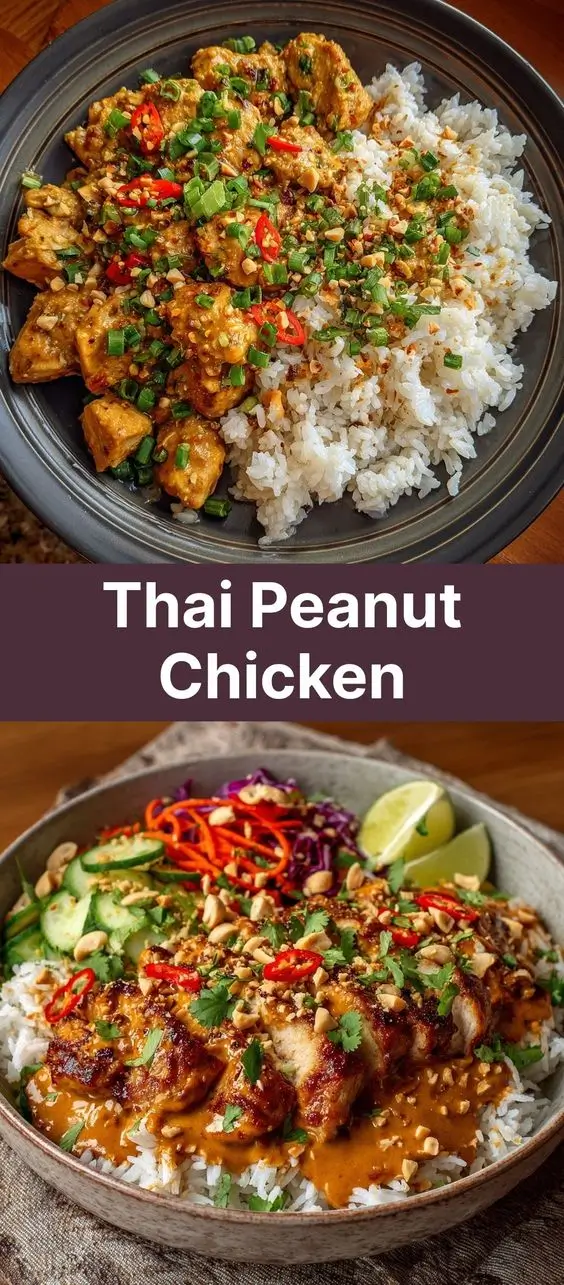
- Garnishes: Chopped peanuts, fresh cilantro, sliced red chili, and lime wedges elevate presentation and add finishing textures and notes.
Step-by-Step Recipe
Follow these detailed steps to create a restaurant-quality Thai Peanut Chicken right in your kitchen:
- Prepare Ingredients: Slice 1.5 lbs (700g) of chicken into uniform pieces. Chop all vegetables and have them ready near the stove. Mince 3 cloves of garlic and grate 1 tablespoon of fresh ginger.
- Make the Sauce: In a bowl, whisk together ½ cup smooth peanut butter, ¾ cup full-fat coconut milk, 3 tablespoons soy sauce, 1 tablespoon fish sauce, 2 tablespoons lime juice, 1 tablespoon maple syrup, 1 teaspoon sriracha (adjust to taste), the minced garlic, and grated ginger until smooth. Set aside.
- Cook the Chicken: Heat 1–2 tablespoons of oil in a large skillet or wok over medium-high heat. Add the chicken in a single layer and cook for 5–7 minutes, stirring occasionally, until golden brown and cooked through. Remove chicken and set aside.
- Sauté Vegetables: In the same pan, add another drizzle of oil if needed. Toss in 1 chopped bell pepper, 1 cup broccoli florets, ½ cup sliced carrots, and any other vegetables of choice. Stir-fry for 4–5 minutes until crisp-tender.
- Combine Everything: Return the cooked chicken to the skillet with the vegetables. Reduce heat to low and pour in the prepared peanut sauce. Stir gently to coat all ingredients evenly. Simmer for 3–5 minutes to allow flavors to meld and sauce to thicken slightly.
- Taste and Adjust: Sample the dish and adjust seasoning as needed—add more lime for acidity, soy sauce for saltiness, honey for sweetness, or sriracha for heat.
- Serve Immediately: Spoon the Thai Peanut Chicken over steamed jasmine rice, brown rice, quinoa, or noodles. Garnish generously with chopped roasted peanuts, fresh cilantro leaves, sliced green onions, and lime wedges on the side.
Tips
- Use Natural Peanut Butter: Ensure it’s stirred well before measuring, as oil separates. Avoid “no-stir” varieties with stabilizers that can alter texture.
- Don’t Overcook the Chicken: To keep it tender, avoid overcrowding the pan and let it sear properly before flipping.
- Bloom the Aromatics: For deeper flavor, briefly sauté garlic and ginger in oil before adding liquids—just 30 seconds to prevent burning.
- Thicken the Sauce: If the sauce seems too thin, let it simmer longer. Alternatively, mix 1 tsp cornstarch with 1 tbsp water and stir in to thicken quickly.
- Prevent Curdling: Coconut milk can separate if boiled aggressively. Keep heat low when combining with peanut butter.
- Meal Prep Friendly: This dish reheats beautifully. Store sauce separately if prepping ahead to prevent sogginess.
- Double the Batch: The sauce freezes well and can be used later for noodles, salads, or grain bowls.
- Add Texture: Top with crispy fried shallots or wonton strips just before serving for extra crunch.
Variations and Customizations
One of the greatest strengths of Thai Peanut Chicken is its adaptability. Here are some popular twists to suit different diets, preferences, and occasions:
- Vegetarian/Vegan: Replace chicken with tofu, tempeh, or seitan. Use maple syrup instead of honey and ensure fish sauce is replaced with vegan fish sauce or omitted (use extra soy sauce + a pinch of seaweed for umami).
- Gluten-Free: Use tamari or a certified gluten-free soy sauce. Verify that all other ingredients (like peanut butter and sriracha) are GF-safe.
- Low-Carb/Keto: Skip rice and serve over cauliflower rice or spiralized zucchini. Reduce sweeteners and use erythritol or monk fruit blend instead of honey/maple syrup.
- Spicier Version: Increase sriracha or add sliced fresh bird’s eye chilies. You can also stir in a spoonful of chili crisp for bold heat and texture.
- Nut-Free Option: Substitute sunflower seed butter or tahini (sesame paste) for peanut butter. Note: Tahini has a stronger flavor, so start with less and adjust.
- Different Proteins: Try shrimp, beef strips, pork, or even hard-boiled eggs for variation.
- Noodle Bowl Style: Toss with cooked rice noodles or soba noodles for a pad Thai-inspired version. Add bean sprouts and crushed peanuts.
- Baked Version: Marinate chicken in diluted peanut sauce and bake at 375°F (190°C) for 25 minutes. Broil briefly to caramelize edges.
- Slow Cooker Method: Combine all ingredients (except garnishes) in a slow cooker and cook on low for 4–6 hours. Stir well before serving.
- Grilled Skewers: Thread marinated chicken onto skewers and grill. Serve with warm peanut dipping sauce.
Health Considerations and Nutritional Value
While undeniably delicious, it’s important to consider the nutritional profile of Thai Peanut Chicken, especially when enjoyed regularly or in large portions.
Nutritional Highlights (per serving, approx. 1.5 cups with chicken and vegetables over ½ cup rice):
- Calories: ~450–550 kcal depending on ingredients and portion size
- Protein: ~30–35g (excellent source from chicken and peanuts)
- Fat: ~20–25g (mostly healthy unsaturated fats from peanut butter and coconut milk)
- Carbohydrates: ~35–45g (varies based on sweetener and grain choice)
- Fiber: ~4–6g (from vegetables and whole grains)
- Sodium: ~800–1200mg (can be high due to soy sauce and fish sauce—opt for reduced-sodium versions if concerned)
Health Benefits:
- Rich in Protein: Supports muscle repair and satiety.
- Healthy Fats: Peanuts and coconut provide monounsaturated and medium-chain triglycerides (MCTs), beneficial for heart and brain health.
- Antioxidant-Rich: Garlic, ginger, and chili contain compounds with anti-inflammatory properties.
- Vitamins & Minerals: Bell peppers (vitamin C), broccoli (vitamin K, folate), and sesame (copper, manganese) contribute valuable micronutrients.
Considerations:
- Allergens: Contains peanuts and possibly tree nuts, soy, and fish—common allergens. Always label accordingly.
- High Calorie Density: Due to nut butter and coconut milk, this dish is energy-dense. Portion control is advised for weight management.
- Sodium Content: Can exceed daily recommendations if not monitored. Use low-sodium soy sauce and limit added salt.
- Balanced Meal: Pair with extra vegetables and whole grains to increase fiber and reduce glycemic load.
Ingredients
- 1.5 lbs (700g) boneless, skinless chicken breasts or thighs, sliced
- 3 tablespoons neutral cooking oil (avocado, grapeseed, or vegetable)
- 1 red bell pepper, sliced
- 1 cup broccoli florets
- ½ cup sliced carrots
- 3 cloves garlic, minced
- 1 tbsp fresh ginger, grated
- ½ cup smooth natural peanut butter (unsweetened)
- ¾ cup full-fat coconut milk
- 3 tbsp soy sauce (or tamari for gluten-free)
- 1 tbsp fish sauce (optional or substitute with soy sauce)
- 2 tbsp fresh lime juice
- 1 tbsp maple syrup (or honey)
- 1 tsp sriracha (adjust to taste)
- Salt and pepper to taste
- For serving: steamed jasmine rice, chopped peanuts, fresh cilantro, sliced green onions, lime wedges
Directions
- In a large mixing bowl, prepare the sauce by whisking together peanut butter, coconut milk, soy sauce, fish sauce, lime juice, maple syrup, sriracha, garlic, and ginger until completely smooth. Set aside.
- Heat 1 tablespoon of oil in a large skillet or wok over medium-high heat. Add chicken pieces in a single layer and season lightly with salt and pepper. Cook for 5–7 minutes, stirring occasionally, until fully cooked and lightly browned. Transfer to a plate and set aside.
- Add another teaspoon of oil to the same pan. Sauté garlic and ginger for 30 seconds until fragrant, taking care not to burn.
- Add bell pepper, broccoli, and carrots. Stir-fry for 4–5 minutes until vegetables are bright in color and crisp-tender.
- Return the cooked chicken to the pan with the vegetables. Pour in the peanut sauce and stir thoroughly to coat everything evenly.
- Reduce heat to low and simmer for 3–5 minutes, allowing the sauce to thicken slightly and flavors to meld. Do not boil vigorously to prevent separation.
- Taste and adjust seasoning—add more lime for tang, soy for salt, or sweetener for balance.
- Serve hot over steamed rice or noodles. Garnish with chopped peanuts, cilantro, green onions, and lime wedges.
- Enjoy immediately, or store leftovers in an airtight container in the refrigerator for up to 4 days.
FAQ
- Can I make Thai Peanut Chicken ahead of time?
- Yes! The sauce can be made 3–4 days in advance and stored in the fridge. Reheat gently with a splash of water or coconut milk to restore consistency. Assembled dishes reheat well in a skillet or microwave.
- Is Thai Peanut Chicken gluten-free?
- It can be! Use tamari instead of soy sauce and verify that your peanut butter, sriracha, and other condiments are certified gluten-free.
- How do I store leftovers?
- Store in an airtight container in the refrigerator for up to 4 days. Freeze for up to 3 months (thaw overnight in fridge). Reheat on the stove with a little liquid to loosen the sauce.
- Why did my sauce separate?
- This usually happens from overheating or using cold ingredients. Always warm the sauce gradually and ensure peanut butter and coconut milk are at room temperature before mixing.
- Can I use chunky peanut butter?
- You can, but smooth peanut butter creates a silkier sauce. If using chunky, blend it first or strain for smoother texture.
- What can I substitute for coconut milk?
- Full-fat dairy cream or cashew cream can work in a pinch, though flavor and authenticity will vary. Avoid low-fat milk alternatives as they won’t emulsify properly.
- Is this dish spicy?
- Only as much as you make it. Sriracha and red curry paste control the heat—start mild and adjust to preference.
- Can I make it nut-free for school lunches?
- Yes—use sunflower seed butter and omit garnish peanuts. Be sure to check school policies regarding seeds.
Summary
Thai Peanut Chicken is a vibrant, creamy, and aromatic dish that blends sweet, salty, sour, and spicy flavors into one unforgettable meal. Easy to customize and packed with protein and healthy fats, it’s perfect for weeknight dinners or meal prep.