Introduction
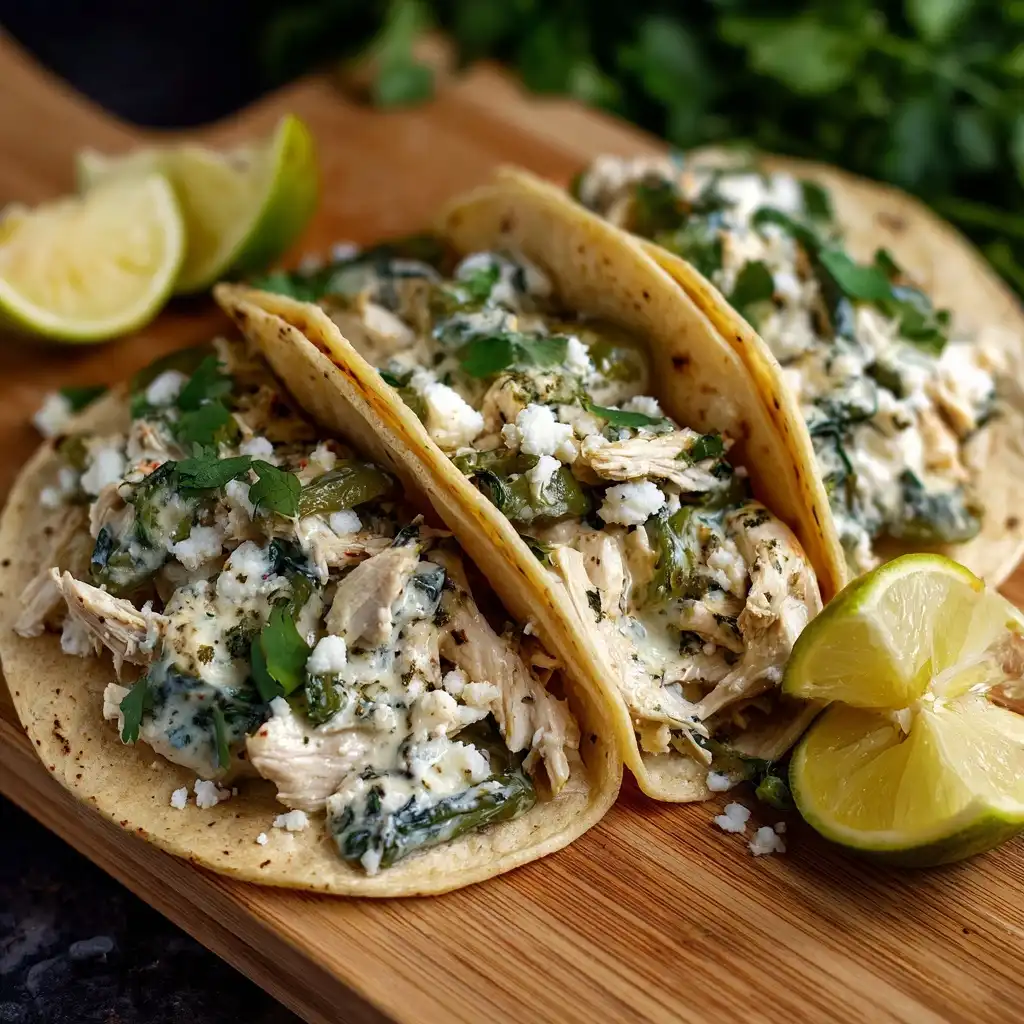
Creamy Poblano Chicken Tacos are a vibrant, soul-satisfying fusion of Mexican tradition and modern comfort food sensibility—where smoky-sweet roasted poblano peppers meet tender, herb-infused shredded chicken, all enveloped in a luxuriously velvety sauce that balances tang, heat, and richness. These tacos transcend the ordinary: they’re not just a weeknight dinner but an experience—earthy yet bright, mildly spicy yet deeply soothing, rustic yet refined. Whether served on warm handmade corn tortillas or gluten-free alternatives, each bite delivers layers of complexity: the vegetal whisper of charred poblano, the savory depth of slow-simmered chicken, the creamy silkiness of roasted garlic and cotija-kissed crema, and the fresh counterpoint of pickled red onions and cilantro. Designed for both novice cooks and seasoned home chefs, this recipe honors authenticity while embracing flexibility—making it as adaptable for a casual Tuesday taco night as it is for impressing guests at a summer gathering.
The History
The origins of Creamy Poblano Chicken Tacos trace back to the rich culinary crossroads of central Mexico—particularly the states of Puebla and Tlaxcala—where poblano peppers (named after Puebla) have been cultivated for over 3,000 years. Historically, poblanos were revered not only for their mild heat and thick, glossy flesh ideal for roasting and stuffing, but also for their cultural symbolism: they appear in pre-Hispanic codices and later became central to colonial-era dishes like chiles en nogada and rajas con crema. The “creamy” evolution emerged more recently—in the late 20th and early 21st centuries—as Mexican home cooks and chefs began reinterpreting classic rajas (strips of roasted poblano in cream or cheese sauce) by integrating shredded chicken for added protein and heartiness, inspired by regional tacos de tinga and tacos al pastor techniques. The rise of food media, social platforms, and Tex-Mex innovation further catalyzed the dish’s popularization—especially in California and the Southwest—where chefs fused traditional roasting methods with French-influenced cream-based reductions and artisanal dairy elements like queso fresco and aged crema. Today, Creamy Poblano Chicken Tacos stand as a testament to culinary continuity: ancient ingredients, time-honored fire-roasting, and contemporary cravings for creamy, balanced, and texturally dynamic street-food elegance—all wrapped in a humble tortilla.
Ingredients Breakdown
Every element in this recipe serves a precise sensory and functional purpose—no ingredient is arbitrary. Below is a detailed breakdown of why each component matters:
- Poblano Peppers (4–6 medium): The soul of the dish. Their thick walls hold up beautifully to charring, yielding a complex flavor profile—grassy, earthy, subtly fruity, with gentle heat (1,000–2,000 SHU). Roasting removes bitterness, deepens sweetness, and loosens the skin for easy peeling. Always choose firm, glossy, dark green poblanos with taut skin—avoid wrinkled or soft ones.
- Chicken Thighs (1.5 lbs boneless, skinless, preferably organic or pasture-raised): Chosen over breasts for superior moisture retention, richer flavor, and forgiving texture during slow simmering. Thighs contain more intramuscular fat, which melts into the sauce, lending natural silkiness and preventing dryness—even if slightly overcooked.
- Yellow Onion (1 large, diced): Provides aromatic sweetness and foundational umami when sautéed low and slow. Its sulfur compounds caramelize beautifully, building depth without overpowering.
- Garlic (6 cloves, roasted & minced): Roasting transforms raw garlic’s pungency into mellow, nutty, almost buttery sweetness—essential for balancing the poblano’s vegetal notes and enriching the cream base.
- Fire-Roasted Tomatoes (1 (14.5 oz) can, with juices): Adds acidity, subtle smoke, and body—acting as a natural emulsifier and pH balancer for the cream. Opt for brands with minimal additives; avoid tomato puree or paste alone, which lack brightness.
- Heavy Cream (¾ cup): The luxurious backbone of the “creamy” element. Its high fat content (36–40%) ensures stability when heated and prevents curdling. For lighter versions, full-fat coconut milk or Mexican crema (slightly tangier, lower fat) may substitute—but never skim or low-fat dairy.
- Queso Fresco (½ cup crumbled): A fresh, mild, slightly salty Mexican cheese with a delicate, moist crumble. It adds saline contrast and a refreshing coolness without melting into goo—crucial for textural interest. Cotija may be used for sharper saltiness, but it’s drier and saltier; adjust sodium accordingly.
- Chipotle in Adobo (1–2 tsp finely minced + 1 tsp adobo sauce): The secret layer of warmth and complexity. Smoked jalapeños contribute deep, leathery smoke, tangy vinegar notes, and controlled heat—acting as a bridge between the poblano’s earthiness and the cream’s richness.
- Dried Oregano (1 tsp Mexican variety preferred): Earthy, citrus-tinged, and subtly floral—distinct from Mediterranean oregano. Toasted lightly before use, it unlocks volatile oils that enhance aroma and tie herbal notes together.
- Chicken Stock (1 cup, low-sodium, preferably homemade): Not just liquid—it’s flavor architecture. Homemade stock contributes gelatin for mouth-coating body; low-sodium store-bought avoids oversalting given the cheese and adobo sauce.
- Fresh Lime Juice (2 tbsp, plus zest of 1 lime): Brightens every other flavor, cuts through fat, and lifts the entire profile. Lime zest adds essential citrus oil fragrance—never skip.
- Avocado Oil or Light Olive Oil (2 tbsp): High smoke point and neutral flavor make avocado oil ideal for roasting poblanos and sautéing aromatics without imparting bitterness.
- Sea Salt & Freshly Ground Black Pepper (to taste): Sea salt enhances mineral nuance; freshly cracked pepper adds floral heat and aroma—added in stages (early for infusion, late for freshness).
Optional but highly recommended garnishes include pickled red onions (for acidity and crunch), radish ribbons (peppery crispness), micro cilantro (intense herbal lift), and toasted pepitas (nutty, earthy crunch).
Step-by-Step Recipe
- Roast & Peel the Poblanos (20–25 min, plus cooling): Preheat broiler to high. Place whole poblanos on a foil-lined baking sheet. Broil 6–8 inches from heat, turning every 4–5 minutes with tongs, until skins are blistered, blackened, and fully charred (no green patches remain). Transfer to a paper bag or bowl covered tightly with plastic wrap; steam 15 minutes. Rub off skins under cool running water using fingers or a soft towel—do not rinse excessively, as flavorful char residue remains beneficial. Stem, seed, and slice into ¼-inch strips (rajas). Set aside.
- Roast the Garlic (15 min): While poblanos steam, trim tops off whole garlic head to expose cloves. Drizzle with 1 tsp oil, wrap tightly in foil, and roast at 400°F for 15 minutes—or until cloves are soft, golden, and fragrant. Cool slightly, then squeeze roasted cloves into a small bowl; mash into a smooth paste with a fork.
- Sauté Aromatics (8–10 min): In a heavy-bottomed Dutch oven or large skillet over medium-low heat, warm 1 tbsp oil. Add diced onion; cook gently 6–7 minutes until translucent and starting to soften—not browned. Stir in minced roasted garlic, dried oregano, and ½ tsp salt; cook 1 minute until fragrant. Add chipotle and adobo sauce; stir 30 seconds to bloom spices.
- Simmer the Chicken (25–30 min): Add chicken thighs in a single layer. Cook undisturbed 3 minutes to lightly sear. Flip, add chicken stock and fire-roasted tomatoes with juices. Bring to a gentle simmer, reduce heat to low, cover, and cook 20 minutes—or until chicken reaches 165°F internally and shreds easily with two forks. Remove chicken to a cutting board; reserve broth.
- Shred & Reduce (10 min): Using two forks, shred chicken into thin, even strands—discarding any visible tendons. Strain reserved broth through a fine-mesh sieve into a measuring cup; you’ll need ~¾ cup. Skim excess fat from surface if desired. Return broth to pot. Stir in poblano strips and shredded chicken. Simmer uncovered 5 minutes to meld flavors.
- Enrich with Cream (5–7 min): Reduce heat to lowest setting. Whisk in heavy cream gradually, stirring constantly. Simmer gently—do not boil—for 4–5 minutes until sauce thickens slightly and coats the back of a spoon. Stir in lime zest and juice. Taste and adjust: add salt if needed (remember queso fresco is salty), more chipotle for heat, or lime for brightness.
- Finish & Rest (5 min): Remove from heat. Gently fold in crumbled queso fresco—do not stir vigorously; let it melt softly into ribbons. Cover and rest 5 minutes—this allows flavors to harmonize and sauce to settle into ideal consistency. Stir once more before serving.
- Warm Tortillas (2–3 min): Heat corn tortillas individually on a dry cast-iron comal or skillet over medium-high heat for 30–45 seconds per side until pliable, puffed slightly, and lightly speckled. Stack in a cloth-lined basket or tortilla warmer to keep steamy and flexible.
Tips
- Pepper Prep Pro-Tip: Wear gloves when handling poblanos—and especially chipotles—to avoid capsaicin transfer to eyes or skin. If gloves aren’t available, wash hands thoroughly with vinegar or whole milk (not water) if irritation occurs.
- Cream Stability Secret: To prevent splitting, ensure cream is at room temperature before adding, and never bring the finished sauce to a full boil after cream is incorporated. Gentle simmer = silky texture.
- Tortilla Integrity: Corn tortillas tear when cold or dry. Steam them properly: wrap in a damp (not dripping) kitchen towel and microwave 30 seconds, or heat directly on flame for 2–3 seconds per side until pliable and slightly blistered.
- Make-Ahead Magic: This taco filling tastes even better the next day. Cool completely, refrigerate in an airtight container up to 4 days. Reheat gently on stove with a splash of broth or water to restore creaminess—never in the microwave uncovered, as it may separate.
- Char Control: For maximum smoky flavor without bitterness, don’t rush the roasting—let the skins blister deeply, but avoid burning the flesh underneath. A gas flame works beautifully: hold peppers with tongs and rotate constantly over open flame.
- Texture Tuning: Prefer chunkier chicken? Hand-tear instead of shredding with forks. Want ultra-smooth rajas? Pulse roasted poblanos briefly in a food processor before adding—just 2–3 pulses.
- Freezer-Friendly: Portion cooled filling into freezer-safe bags (remove air), freeze up to 3 months. Thaw overnight in fridge; reheat slowly with 1–2 tbsp broth and extra lime juice to refresh brightness.
- Broth Boost: Elevate store-bought stock by simmering it 10 minutes with a smashed garlic clove, 2 peppercorns, and a bay leaf—then strain before using.
- No-Waste Poblanos: Save roasted poblano stems and seeds (if not too charred) to blend into a smoky poblano vinaigrette or freeze in ice cube trays with olive oil for future soups and stews.
- Serving Temperature Nuance: Serve filling warm—not piping hot—so cream stays lush and cheese retains slight texture. Cold toppings (pickled onions, radishes, cilantro) should be chilled for optimal contrast.
Variations and Customizations
This recipe is inherently versatile—designed to adapt to dietary needs, pantry availability, seasonal produce, and personal preference—without sacrificing authenticity or satisfaction.
Dietary Adaptations
- Gluten-Free: Naturally compliant—just verify all canned goods (tomatoes, chipotle) and broth are certified GF. Serve with certified GF corn tortillas (many masa harina brands like Maseca or Bob’s Red Mill are GF-certified).
- Dairy-Free/Vegan: Substitute heavy cream with full-fat canned coconut milk (stir well before using); replace queso fresco with crumbled tofu feta (marinated in lime juice, nutritional yeast, and salt) or soaked cashew “queso.” Use vegetable stock and omit chicken—substitute king oyster mushrooms (shredded and sautéed until meaty) or young green jackfruit (canned in brine, drained and simmered in same spices).
- Keto/Low-Carb: Skip tortillas entirely—serve as a creamy poblano chicken bowl over cauliflower rice, zucchini noodles, or butter lettuce cups. Increase healthy fats with extra avocado slices and pumpkin seed garnish.
- Paleo/Whole30: Omit cream and cheese. Replace with blended roasted cauliflower (½ head, steamed and puréed with roasted garlic and broth) for creaminess. Use coconut aminos instead of soy-based adobo if strict Whole30; confirm chipotle in adobo is compliant (some contain sugar or vinegar not approved).
Flavor & Heat Variations
- Mild & Mellow: Omit chipotle entirely; add ¼ tsp ground cumin and 1 tsp smoked paprika for depth without heat. Increase roasted poblano to 8 peppers for vegetal sweetness.
- Smoky & Bold: Add ½ tsp mesquite or oakwood liquid smoke (sparingly) with the broth—or char corn kernels alongside poblanos and fold in at the end for grilled sweetness.
- Herb-Forward: Stir in 2 tbsp chopped epazote (traditional Mexican herb with citrusy, medicinal notes) or fresh marjoram at the end for an aromatic twist.
- Umami Bomb: Add 1 tsp tamari or coconut aminos + ½ tsp white miso paste (dissolved in 1 tbsp warm broth) with the cream for profound savoriness.
Protein Swaps
- Shrimp Version: Sauté peeled, deveined shrimp (1 lb) in garlic oil 2–3 minutes until pink; fold in at the very end—do not simmer further to avoid rubberiness.
- Beef Tinga Style: Replace chicken with 1.5 lbs lean ground beef or shredded cooked brisket; brown well and drain fat before proceeding. Add 1 tsp ground cumin and ½ tsp cinnamon with oregano.
- Jackfruit-Poblano (Vegan “Carnitas”): Use young green jackfruit in brine (2 cans), rinsed and shredded. Simmer in broth and adobo 15 minutes before adding poblanos and cream alternative.
Global Twists
- Tex-Mex Fusion: Stir in ¼ cup crushed Fritos or toasted tortilla strips at the end for crunch; top with melted sharp cheddar and pickled jalapeños.
- Mediterranean Infusion: Swap queso fresco for feta; add 1 tbsp chopped Kalamata olives and ½ tsp lemon zest in place of lime.
- Asian-Mex Hybrid: Add 1 tsp grated fresh ginger with garlic; finish with toasted sesame oil and scallion greens instead of cilantro.
Health Considerations and Nutritional Value
Creamy Poblano Chicken Tacos offer surprising nutritional merit when prepared mindfully—balancing indulgence with whole-food integrity. A standard serving (⅓ cup filling + two 6-inch corn tortillas) contains approximately:
- Calories: ~420–480 kcal (varies by cream/cheese quantity and tortilla size)
- Protein: 28–32g (high-quality complete protein from chicken thighs, supporting muscle maintenance and satiety)
- Fat: 22–26g (predominantly monounsaturated and saturated from avocado oil, cream, and cheese—moderate intake supports hormone health and nutrient absorption; saturated fat kept in check by leaner prep methods)
- Carbohydrates: 32–38g (mostly complex carbs from corn tortillas and fiber-rich poblanos; low glycemic impact due to high fiber and fat content)
- Fiber: 6–8g (from roasted poblanos—1 medium pepper contains ~2.5g fiber—and whole-grain or sprouted corn tortillas)
- Vitamins & Minerals: Exceptionally high in Vitamin C (poblanos contain more than oranges per gram), Vitamin A (as beta-carotene), folate, potassium, and magnesium. Roasting enhances antioxidant bioavailability (e.g., lutein, zeaxanthin).
Functional Health Highlights:
- Anti-Inflammatory Powerhouse: Poblanos contain capsaicin (even mild amounts support metabolism and circulation), quercetin (a flavonoid with antihistamine properties), and apigenin (linked to reduced oxidative stress).
- Gut-Friendly: Fermented garnishes like pickled red onions provide live probiotics; lime juice stimulates digestive enzymes; fiber feeds beneficial gut microbiota.
- Blood Sugar Balance: Low glycemic load, high protein/fat/fiber triad slows glucose absorption—ideal for metabolic health and sustained energy.
- Heart-Conscious Notes: Using avocado oil (rich in oleic acid) instead of lard or butter reduces LDL impact. Opting for pasture-raised chicken increases omega-3s and vitamin D.
Considerations for Sensitivity: Those with lactose intolerance may tolerate queso fresco (very low lactose) and cultured crema better than mozzarella or cheddar—but for strict avoidance, use dairy-free alternatives. Chipotle may irritate GERD or IBS—reduce or omit based on individual tolerance. Always source organic or pesticide-free poblanos when possible, as peppers rank high on the Environmental Working Group’s “Dirty Dozen” list.
Ingredients
- 4–6 medium poblano peppers (about 1 lb)
- 1.5 lbs boneless, skinless chicken thighs (with or without bone-in for deeper flavor—remove bones before shredding)
- 1 large yellow onion, finely diced
- 6 cloves garlic, roasted (see Step-by-Step)
- 2 tbsp avocado oil or light olive oil, divided
- 1 (14.5 oz) can fire-roasted diced tomatoes, with juices
- 1 cup low-sodium chicken stock (preferably homemade)
- ¾ cup heavy cream (or full-fat coconut milk for dairy-free)
- ½ cup crumbled queso fresco (or cotija, feta, or dairy-free alternative)
- 1–2 tsp minced chipotle in adobo sauce + 1 tsp adobo sauce (adjust to heat preference)
- 1 tsp Mexican dried oregano, preferably toasted
- 2 tbsp fresh lime juice (plus zest of 1 lime)
- 1 tsp sea salt, plus more to taste
- Freshly ground black pepper
- 12–16 small (6-inch) corn tortillas, warmed
- Garnishes: pickled red onions, sliced radishes, fresh cilantro leaves, avocado slices, lime wedges, toasted pepitas
Directions
- Preheat broiler to high. Place poblanos on a foil-lined baking sheet. Broil 6–8 inches from heat, turning every 4–5 minutes, until evenly blistered and blackened. Transfer to a paper bag or bowl; cover tightly and steam 15 minutes. Rub off skins under cool water; stem, seed, and slice into ¼-inch strips. Set aside.
- While poblanos steam, roast garlic: Trim top off garlic head, drizzle with ½ tsp oil, wrap in foil, and roast at 400°F for 15 minutes. Cool, then squeeze cloves into a bowl; mash into paste.
- In a large Dutch oven or heavy skillet over medium-low heat, warm 1 tbsp oil. Add onion; cook 6–7 minutes until soft and translucent. Stir in roasted garlic, oregano, and ½ tsp salt; cook 1 minute. Add chipotle and adobo; stir 30 seconds.
- Add chicken thighs in single layer. Cook undisturbed 3 minutes. Flip, add chicken stock and tomatoes with juices. Bring to gentle simmer, cover, reduce heat to low, and cook 20 minutes—or until chicken reaches 165°F and shreds easily.
- Remove chicken; cool slightly. Shred with two forks. Strain cooking liquid into a measuring cup; reserve ¾ cup. Skim excess fat if desired.
- Return broth to pot. Add poblano strips and shredded chicken. Simmer uncovered 5 minutes.
- Reduce heat to lowest setting. Gradually whisk in heavy cream. Simmer gently 4–5 minutes until thickened and cohesive. Stir in lime zest and juice.
- Remove from heat. Gently fold in queso fresco. Cover and rest 5 minutes.
- Warm tortillas individually on dry comal or skillet over medium-high heat 30–45 seconds per side until pliable and lightly speckled.
- Assemble tacos: Spoon warm filling onto tortillas. Top generously with pickled onions, radishes, cilantro, avocado, lime wedges, and pepitas.
FAQ
- Can I use poblano powder instead of fresh roasted peppers?
- No—poblano powder lacks the essential roasted, smoky, vegetal depth and moisture that define the dish. It’s useful for seasoning but cannot replicate texture or layered flavor. Frozen roasted poblanos (unsalted, no additives) are an excellent backup.
- Why not use chicken breast?
- Chicken breast dries out quickly during simmering and lacks the collagen and fat that create the signature succulence and mouthfeel. Thighs yield tender, juicy shreds that absorb sauce without becoming stringy or tough—even with longer cook times.
- My sauce broke—what went wrong?
- Most commonly caused by boiling after adding cream, using cold cream, or vigorous stirring. Fix it: remove from heat, whisk in 1 tsp cold cream or broth, then slowly reheat while whisking constantly. Next time, keep heat low and cream at room temp.
- How do I store leftovers safely?
- Cool completely within 2 hours. Refrigerate in airtight container up to 4 days. Freeze up to 3 months in portioned, sealed bags. Never leave at room temperature >2 hours.
- Are corn tortillas necessary—or can I use flour?
- Corn tortillas are traditional, gluten-free, and provide earthy, slightly sweet contrast to the creamy filling. Flour tortillas work in a pinch but mute the authentic profile and add gluten. For best results, stick with 100% masa harina corn tortillas.
- Can I make this in a slow cooker or Instant Pot?
- Yes—with adjustments. For Instant Pot: Sauté aromatics using Sauté mode, add chicken, stock, tomatoes, and spices; pressure cook 12 minutes, natural release 10 min. Shred, then switch to Sauté mode to reduce liquid before adding cream and poblanos. For slow cooker: Brown chicken first, then cook on LOW 4–5 hours. Finish on stove with cream and poblanos to preserve texture and prevent separation.
- What’s the best way to char poblanos without a broiler or gas stove?
- Use a cast-iron grill pan over medium-high heat—press peppers down firmly and rotate frequently until blistered. Or roast on a charcoal or gas grill, turning with tongs. Electric coil stoves work too—place peppers directly on burner grate (turned off), using residual heat and rotating often.
- Is there a low-sodium version?
- Absolutely. Use no-salt-added fire-roasted tomatoes, unsalted chicken stock, omit added salt until final tasting, and rely on lime, herbs, and chipotle for flavor. Queso fresco is naturally lower in sodium than aged cheeses—still check label.
- Can kids eat these? How spicy are they?
- Mildly—poblanos average 1,000–2,000 SHU (comparable to a bell pepper), and chip