Introduction
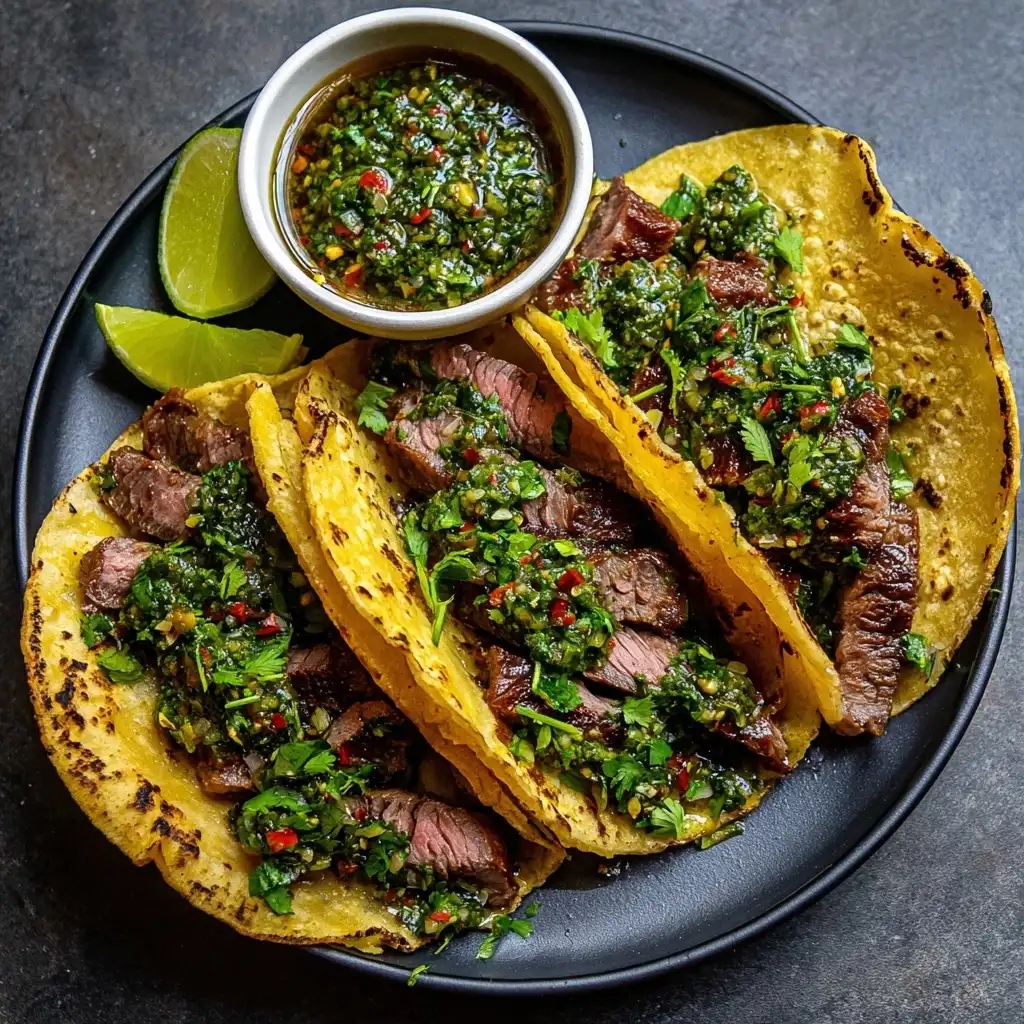
Chimichurri Steak Tacos are a vibrant, bold, and deeply satisfying fusion of Argentine and Mexican culinary traditions—where the herbaceous, garlicky punch of authentic chimichurri meets the smoky richness of perfectly grilled flank or skirt steak, all nestled in warm, pliable corn tortillas. This dish transcends typical taco fare by elevating simplicity into sophistication: no heavy sauces or cheese overload, just clean, bright, grassy, tangy, and savory layers that dance on the palate with every bite. Whether served at a backyard barbecue, a weeknight dinner with minimal fuss, or an impressive yet approachable centerpiece for entertaining, Chimichurri Steak Tacos deliver restaurant-quality flavor with home-kitchen accessibility. They’re more than food—they’re a celebration of fresh herbs, fire-kissed meat, and cultural cross-pollination done right.
The History
The origins of Chimichurri Steak Tacos lie not in a single documented moment, but in the delicious, inevitable convergence of two iconic culinary legacies. Chimichurri itself hails from the pampas of Argentina and Uruguay, where gauchos (South American cowboys) first combined chopped parsley, garlic, vinegar, oil, and dried oregano to create a zesty, uncooked condiment that both tenderized and enlivened their open-fire-grilled beef. Its name may derive from the Basque word *tximitxurri* (“a mixture of many things”) or be a playful nod to British expatriates mispronouncing “Jimmy’s curry”—but its purpose has always been elemental: to honor the integrity of high-quality meat with acidity, aroma, and texture. Meanwhile, tacos trace back millennia to pre-Hispanic Mesoamerica, where indigenous peoples used soft, hand-pressed maize tortillas as edible utensils for beans, squash, insects, and later, post-colonial meats. The modern steak taco emerged prominently in northern Mexico—especially in states like Nuevo León and Coahuila—where cattle ranching thrived and thin-cut, marinated beef (like arrachera) became street-food royalty. The fusion into “Chimichurri Steak Tacos” gained momentum in the early 2000s among U.S.-based chefs and home cooks seeking bolder, less dairy-dependent taco profiles. Food trucks in cities like Austin, Los Angeles, and Portland began spotlighting chimichurri as a brilliant alternative to traditional salsa verde or crema—its vibrant green hue, herb-forward character, and natural acidity cutting through richness without masking flavor. Today, this hybrid is celebrated across cookbooks, viral social media reels, and supper clubs as a testament to how global flavors can harmonize without dilution—honoring tradition while boldly reimagining it.
Ingredients Breakdown
Every exceptional Chimichurri Steak Taco rests on three foundational pillars: the steak, the chimichurri, and the supporting cast—all of which must be thoughtfully selected and balanced. Let’s dissect each component in granular detail:
- Steak: Flank steak and skirt steak are the gold standards—both lean, fibrous cuts with intense beefy flavor that respond beautifully to quick, high-heat cooking and benefit immensely from marinades and slicing against the grain. Flank offers slightly more tenderness and uniform thickness; skirt (especially outside skirt) delivers unparalleled chew and char potential. Alternative options include hanger steak (rich, tender, “butcher’s steak”), flat iron (incredibly tender, well-marbled), or even thinly sliced ribeye cap for luxury indulgence. Avoid thick, slow-cooked cuts like chuck or round—they lack the necessary texture and will overcook before developing proper crust.
- Chimichurri Base: Authentic Argentine chimichurri relies on fresh flat-leaf parsley (never curly—it lacks depth and can taste bitter), raw garlic (minced fine, not pressed, to preserve aromatic complexity), red wine vinegar (for bright, rounded acidity—not distilled white, which is harsh), extra-virgin olive oil (fruity, peppery, cold-pressed; avoid bland “light” oils), and dried oregano (preferably Mediterranean or Mexican—avoid Italian blends with basil). Optional but traditional: a pinch of crushed red pepper flakes for subtle heat and a splash of fresh lemon juice for brightness lift.
- Marinade Elements: While chimichurri doubles as a finishing sauce, a brief (30–90 minute) marinade ensures deeper flavor penetration. Key components include additional olive oil, minced garlic, cumin (toasted and ground for earthy warmth), smoked paprika (for gentle smokiness—complementing grill marks), lime zest and juice (bright citrus notes that mirror chimichurri’s acidity), and a touch of honey or brown sugar (to aid caramelization without sweetness). Salt and freshly cracked black pepper are non-negotiable—and should be applied generously at least 45 minutes pre-grill to season deeply.
- Taco Assembly Essentials: Double-warmed 6-inch corn tortillas (preferably handmade or locally sourced for superior pliability and maize flavor) form the structural and textural backbone. Complementary garnishes include crumbled queso fresco or cotija (salty, milky, non-melting), thinly sliced radishes (crisp, peppery counterpoint), pickled red onions (tangy-sweet acidity to echo chimichurri), fresh cilantro leaves (for herbal continuity), and wedges of lime (for final acid adjustment). Optional upgrades: grilled scallions, charred corn kernels, avocado slices (not guac—too creamy), or microgreens for refined freshness.
Step-by-Step Recipe
- Prepare the Chimichurri (30+ minutes ahead): In a medium non-reactive bowl, combine 1 cup finely chopped fresh flat-leaf parsley (stems removed), ¼ cup finely minced red onion, 4–5 garlic cloves (minced, not pasty), 2 tbsp fresh oregano leaves (or 1 tbsp dried), ½ tsp crushed red pepper flakes, 1 tsp kosher salt, and ½ tsp freshly ground black pepper. Whisk together ⅓ cup red wine vinegar and 1 tbsp fresh lemon juice, then slowly drizzle in ¾ cup extra-virgin olive oil while whisking constantly to emulsify. Stir gently to combine—do not overmix, or parsley will bruise. Cover and refrigerate for minimum 30 minutes (ideally 2 hours) to allow flavors to meld. Stir before using.
- Marinate the Steak (45 minutes–2 hours): Pat 1.5 lbs flank or skirt steak *very dry* with paper towels. Place on a rimmed baking sheet or shallow dish. In a small bowl, whisk together 3 tbsp olive oil, 3 minced garlic cloves, 1 tbsp lime juice, 1 tsp lime zest, 1 tsp ground cumin, 1 tsp smoked paprika, 1 tsp honey, 1½ tsp kosher salt, and 1 tsp black pepper. Rub mixture evenly over both sides of steak. Refrigerate uncovered for 45 minutes (max 2 hours—longer may begin to “cook” surface with acid).
- Preheat Grill or Skillet: Heat a charcoal or gas grill to high heat (450–500°F), or a heavy cast-iron skillet over medium-high until smoking lightly. Clean grates/skillet and oil generously with high-smoke-point oil (avocado or grapeseed).
- Grill the Steak: Remove steak from fridge 10 minutes before cooking. Place directly over hottest part of grill or skillet. Cook undisturbed for 4–5 minutes per side for medium-rare (internal temp 130–135°F), depending on thickness—skirt cooks faster than flank. Rotate 90° halfway through each side for diamond sear marks. Use tongs—never pierce with fork—to avoid juice loss.
- Rest and Slice: Transfer steak to a cutting board and tent loosely with foil. Rest for *full 10 minutes*—this allows juices to redistribute. Using a very sharp knife, slice *thinly against the grain* at a 45° angle. For flank, identify grain direction first (long parallel lines); for skirt, it’s unmistakably long and fibrous—cut perpendicular to those fibers.
- Warm Tortillas: Stack 8–12 corn tortillas, wrap tightly in damp paper towels, and microwave for 45 seconds. Alternatively, heat individually over open flame (gas stove) for 10–15 seconds per side until puffed and pliable. Keep wrapped in a cloth-lined tortilla warmer or foil.
- Assemble Tacos: Place 2–3 oz sliced steak down center of each warm tortilla. Spoon 1–2 tbsp chilled chimichurri generously over meat. Top with 1 tsp crumbled queso fresco, 2–3 thin radish slices, 1 tsp pickled red onions, and a few fresh cilantro leaves. Serve immediately with lime wedges on the side.
Tips
- Dry the Steak Thoroughly: Moisture is the enemy of crust. After marinating, blot steak aggressively with paper towels—even re-dry after removing from marinade if needed.
- Chimichurri Texture Matters: Chop parsley by hand with a sharp knife—food processors create a muddy, oxidized paste. Aim for small, uniform pieces, not purée.
- Don’t Skip the Rest: Cutting too soon releases up to 40% of precious juices. Resting is non-negotiable for tenderness and flavor retention.
- Slice Against the Grain—Always: This shortens tough muscle fibers, transforming chewy cuts into melt-in-your-mouth tenderness. If unsure, look for the direction of the lines and cut perpendicular.
- Warm Tortillas Twice: First over flame or skillet for char and flexibility, then wrapped and held warm—cold tortillas crack and leak filling.
- Acid Balance Is Key: Taste chimichurri before serving. If too sharp, add ½ tsp honey. Too oily? Add ½ tsp more vinegar. Too flat? A pinch of flaky sea salt or extra lemon zest wakes it up.
- Grill Timing Precision: Use an instant-read thermometer. Flank and skirt go from perfect to tough in 30 seconds—set timer and trust your probe, not color alone.
- Make Ahead Smartly: Chimichurri keeps 5 days refrigerated (flavor improves on Day 2). Marinated steak maxes out at 2 hours. Cooked steak reheats poorly—slice and store separately, then reassemble cold or room-temp.
- Embrace Char, Not Burn: A little blackened edge adds depth—but if flare-ups occur, move steak to cooler zone briefly. Skirt especially benefits from “hot-fast” technique.
- Season Early, Season Well: Salt isn’t just for flavor—it helps break down proteins for tenderness. Apply coarse salt 45+ minutes pre-grill for optimal results.
Variations and Customizations
Chimichurri Steak Tacos are gloriously adaptable—ideal for dietary needs, seasonal produce, pantry constraints, or pure creative impulse. Here’s how to make them your own:
- Vegetarian/Vegan Version: Replace steak with grilled portobello caps (marinated in same spices + tamari), smoky grilled cauliflower steaks, or marinated & pan-seared tempeh strips. Use vegan queso or cashew crema, and ensure chimichurri oil is plant-based (it already is!).
- Gluten-Free & Grain-Free: Naturally compliant! Just verify all labels (e.g., tamari in marinade if using, vinegar sources). Serve with jicama or plantain chips instead of flour tortillas if avoiding corn.
- Spice-Lover’s Upgrade: Add 1 tsp chipotle powder to marinade, stir 1 diced jalapeño (seeds removed) into chimichurri, or top with pickled habaneros. For heat *and* fruitiness, add 1 tbsp mango puree to chimichurri.
- Herb Variations: Swap ¼ of parsley with fresh mint (bright, cooling), cilantro (for Mexican accent), or basil (sweet, summery—but add only at serving to prevent browning).
- Seafood Twist: Substitute grilled shrimp, swordfish, or mahi-mahi. Reduce marinade time to 15 minutes (seafood absorbs quickly) and chimichurri pairs brilliantly—add 1 tsp orange zest for brightness.
- Breakfast Tacos: Use leftover steak + chimichurri in breakfast format: scrambled eggs, roasted potatoes, avocado, and a fried egg. Drizzle extra chimichurri on top.
- Meal Prep Friendly: Cook steak Sunday, slice, and store chilled. Make chimichurri ahead. Assemble tacos fresh each day—or prep “taco kits” with portioned components in jars.
- Low-Carb/Keto: Serve steak and chimichurri over romaine cups, grilled zucchini noodles, or cauliflower rice. Skip tortillas entirely—or use low-carb almond-flour tortillas.
- Global Fusion Riffs: Korean-inspired: add gochujang to marinade + sesame oil to chimichurri + toasted sesame seeds. Mediterranean: add chopped kalamata olives + lemon thyme + feta instead of queso fresco.
- Smoked Version: For deep, complex flavor, smoke steak at 225°F until 115°F internal, then finish with 60-second sear. Chimichurri cuts through smoke beautifully—add ½ tsp smoked salt to blend.
Health Considerations and Nutritional Value
When prepared mindfully, Chimichurri Steak Tacos offer a nutritionally robust, balanced, and functional meal—far exceeding typical fast-food or heavily processed taco alternatives. Let’s examine the science-backed benefits and mindful adaptations:
- High-Quality Protein: A 3-oz serving of grilled flank steak delivers ~23g complete protein—rich in leucine (critical for muscle synthesis), iron (heme-iron, highly bioavailable), zinc (immune support), and B12 (neurological health). Choosing grass-fed or pasture-raised enhances omega-3s and conjugated linoleic acid (CLA), linked to reduced inflammation.
- Antioxidant Powerhouse Chimichurri: Parsley is exceptionally rich in vitamin K (100% DV per ¼ cup), apigenin (anti-cancer flavonoid), and volatile oils like eugenol (anti-inflammatory). Garlic contains allicin (cardio-protective, antimicrobial), while olive oil contributes oleocanthal (natural NSAID-like compound) and polyphenols. Red wine vinegar supports blood sugar regulation via acetic acid.
- Smart Fat Profile: Extra-virgin olive oil provides monounsaturated fats (heart-healthy), while steak contributes balanced saturated/unsaturated ratios. Avoid excessive added oils or frying—grilling preserves integrity.
- Fiber & Phytonutrients: Corn tortillas (especially blue or heirloom) offer resistant starch (gut-health fuel) and carotenoids. Radishes and onions add prebiotic fiber (inulin) and quercetin (allergy-modulating flavonoid).
- Sodium & Moderation Notes: Traditional preparations are naturally lower in sodium than restaurant tacos—no broths, brines, or MSG-laden seasonings. Control salt by using kosher or sea salt mindfully (1½ tsp total for 1.5 lbs steak = ~2,200mg sodium—well within daily limits for most). Those with hypertension may reduce salt by 25% and boost herbs/spices for flavor compensation.
- Considerations for Specific Diets: Low-FODMAP: Omit garlic/onion in chimichurri (use garlic-infused oil + chives); choose firm corn tortillas (small portions tolerated). Low-Histamine: Avoid aged cheeses (cotija); use fresh mozzarella or omit dairy; serve chimichurri within 24 hours (histamines increase with storage). Kid-Friendly: Reduce red pepper flakes; add roasted sweet potato cubes or black beans for volume and nutrients.
- Nutrition Snapshot (per taco, assuming 3 tacos per serving): Approx. 320–360 kcal | 24g protein | 18g fat (mostly unsaturated) | 16g carbs (4g fiber, 2g natural sugars) | 420mg sodium | Rich in Vitamins A, C, K, B6, Iron, Zinc, and Polyphenols.
Ingredients
For the Chimichurri Sauce:
- 1 cup fresh flat-leaf parsley, finely chopped (stems removed)
- ¼ cup finely minced red onion
- 4–5 large garlic cloves, minced (about 1½ tbsp)
- 2 tablespoons fresh oregano leaves, chopped (or 1 tablespoon dried oregano)
- ½ teaspoon crushed red pepper flakes (adjust to taste)
- 1 teaspoon kosher salt (plus more to taste)
- ½ teaspoon freshly ground black pepper
- ⅓ cup red wine vinegar
- 1 tablespoon fresh lemon juice
- ¾ cup extra-virgin olive oil (high quality, fruity)
For the Steak & Marinade:
- 1.5 pounds flank steak or skirt steak (trimmed of excess fat)
- 3 tablespoons extra-virgin olive oil
- 3 large garlic cloves, minced
- 1 tablespoon fresh lime juice
- 1 teaspoon lime zest
- 1 teaspoon ground cumin (toasted beforehand for best flavor)
- 1 teaspoon smoked paprika
- 1 teaspoon honey or pure maple syrup
- 1½ teaspoons kosher salt
- 1 teaspoon freshly ground black pepper
For Assembly & Serving:
- 8–12 (6-inch) double-warmed corn tortillas (white or blue)
- ½ cup crumbled queso fresco or cotija cheese
- 1 bunch radishes, very thinly sliced
- ½ cup quick-pickled red onions (see note below)
- ¼ cup fresh cilantro leaves
- Lime wedges, for serving
Note: Quick-Pickled Red Onions – Thinly slice 1 small red onion. Submerge in ½ cup apple cider vinegar + 1 tsp sugar + 1 tsp salt. Refrigerate 30+ minutes. Drain before using.
Directions
- Make the Chimichurri: In a medium non-reactive bowl, combine parsley, red onion, garlic, oregano, red pepper flakes, salt, and black pepper. In a small bowl, whisk together red wine vinegar and lemon juice. Slowly drizzle in olive oil while whisking continuously until emulsified. Pour over herb mixture and stir gently to combine. Cover and refrigerate for at least 30 minutes—or up to 5 days.
- Marinate the Steak: Pat steak completely dry with paper towels. Place on a rimmed baking sheet. In a small bowl, whisk together olive oil, garlic, lime juice, lime zest, cumin, smoked paprika, honey, salt, and pepper. Rub mixture evenly over both sides of steak. Refrigerate uncovered for 45 minutes (no longer than 2 hours).
- Preheat Cooking Surface: Heat grill or cast-iron skillet to high heat (450–500°F). Clean and oil grates or pan thoroughly.
- Grill the Steak: Remove steak from fridge; let sit 10 minutes. Grill or sear 4–5 minutes per side for medium-rare (130–135°F internal temperature), rotating 90° halfway through each side for crosshatch marks. Do not press down.
- Rest and Slice: Transfer steak to cutting board; tent loosely with foil. Rest 10 minutes. Slice thinly *against the grain* into ¼-inch strips.
- Warm Tortillas: Heat tortillas individually over open flame or in dry skillet until soft, pliable, and lightly blistered (10–15 sec/side). Stack and wrap in a clean kitchen towel or foil to keep warm.
- Assemble Tacos: Place 2–3 oz steak slices down center of each tortilla. Top with 1–2 tablespoons chimichurri, 1 tsp cheese, 2–3 radish slices, 1 tsp pickled onions, and a few cilantro leaves. Serve immediately with lime wedges.
FAQ
- Can I make chimichurri in advance?
- Absolutely—and you should! Chimichurri tastes even better after 12–24 hours as the flavors marry. It keeps well refrigerated for up to 5 days in an airtight container. Stir before serving, and add a tiny splash of vinegar or olive oil if it separates.
- Why does my chimichurri taste bitter?
- Bitterness usually comes from using curly parsley (which contains more bitter compounds), over-blending (releasing chlorophyll bitterness), or letting it sit too long with garlic (which turns acrid). Stick to flat-leaf parsley, chop by hand, and use within 3–4 days. Also, avoid stems—they’re fibrous and bitter.
- Can I use a different cut of steak?
- Yes—with caveats. Flank and skirt are ideal for texture and value. Hanger, flat iron, or tri-tip work beautifully. Avoid thick, slow-cooking cuts like chuck or round—they’ll be tough and dry. For budget-friendly swaps, try thinly sliced London broil (top round) *if* marinated 4+ hours and sliced ultra-thin against the grain.
- My tortillas keep cracking—what’s wrong?
- Cold, dry, or low-quality tortillas crack easily. Always warm them twice: first over flame/skillet for flexibility and char, then wrapped in a towel or foil to hold steam and moisture. Store unused tortillas in a sealed bag with a damp paper towel.
- Is chimichurri spicy?
- Traditional chimichurri is not inherently spicy—it’s bright and herbaceous. The red pepper flakes provide optional, adjustable heat. Omit them entirely for mild versions, or add ½ tsp chipotle powder for smoky heat. Remember: acidity (vinegar) enhances perception of spice, so balance matters.
- Can I cook the steak in the oven or air fryer?
- Yes—but with adjustments. For oven: broil on high rack 4–5 inches from element, 4–5 min/side. For air fryer: preheat to 400°F, cook 6–8 minutes total (flip halfway), checking temp frequently. Both methods work but won’t replicate grill’s caramelization—compensate with extra chimichurri and charred garnishes.
- How do I store leftovers?
- Store components separately: sliced steak in airtight container (3 days refrigerated), chimichurri (5 days), tortillas (room temp 2 days or freeze). Never assemble ahead—the tortillas will get soggy. Reheat steak gently in skillet with 1 tsp water or broth to retain moisture.
- Can I freeze chimichurri?
- Technically yes—but not recommended. Freezing breaks down parsley’s cell structure, resulting in dull color, muted flavor, and watery texture upon thawing. It’s so quick to make fresh that freezing defeats its purpose. Freeze the marinade base (oil/vinegar/spices) instead for future use.
- What if I don’t have a grill?
- No problem! A ripping-hot cast-iron or stainless-steel skillet delivers excellent crust and fond (those delicious browned bits). Preheat until smoking, oil generously, and avoid overcrowding. Deglaze with 1 tsp water or broth after cooking to capture flavor for drizzling.
- Are corn tortillas gluten-free?
- 100% stone-ground corn tortillas made with only masa harina and water are naturally gluten-free. However, many commercial brands contain wheat flour, preservatives, or are processed on shared equipment. Always read labels and seek certified GF brands (like Mi Rancho GF or Siete Grain-Free) if sensitivity is a concern.
Summary
Chimichurri Steak Tacos unite the bold, herbaceous soul of Argentine chimichurri with the rustic authenticity of Mexican street-style steak tacos—creating a vibrant, nutrient-dense, and deeply flavorful dish that celebrates fire, freshness, and cultural synergy. With simple techniques, whole-food ingredients, and endless customization potential, they deliver gourmet satisfaction without complexity, making them as perfect for Tuesday night dinners as they are for weekend gatherings and culinary exploration.