Introduction
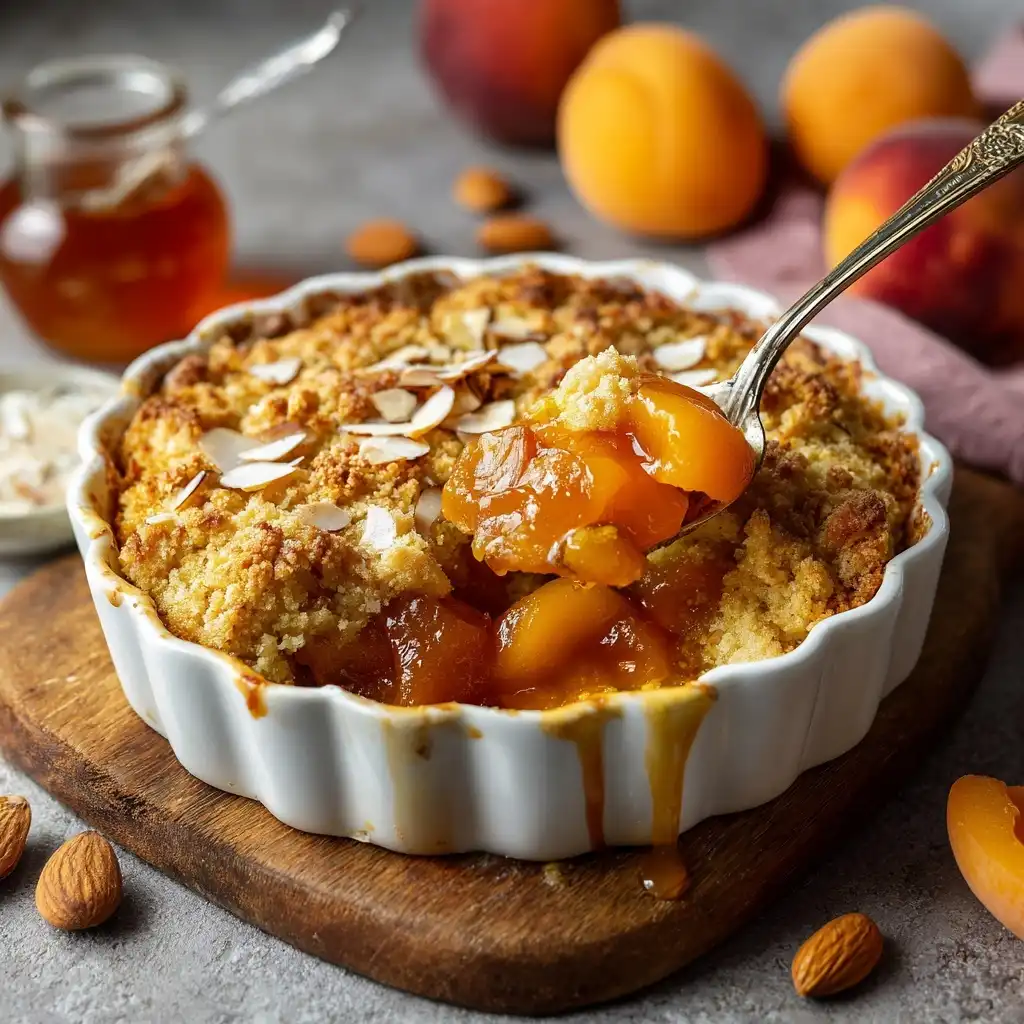
Apricot Almond Cobbler is a timeless, rustic American dessert that marries the bright, tangy sweetness of ripe apricots with the rich, nutty warmth of toasted almonds and a tender, golden-brown biscuit-like topping. Evoking the comfort of sun-drenched orchards and cozy farmhouse kitchens, this cobbler strikes a perfect balance between elegance and ease—elegant in its layered flavors and textural contrasts, yet approachable enough for weeknight baking or Sunday brunch alike. Unlike pies that demand precise crusts or crisps reliant on oat-heavy streusels, the cobbler’s signature lies in its soft, cakey, slightly domed topping that bakes up airy and moist—almost like a cross between a skillet cake and a fruit-forward shortcake. The subtle marzipan-like essence of almond extract, amplified by slivered or sliced almonds, deepens the apricot’s natural floral notes, while a whisper of citrus (often lemon zest or juice) lifts the entire dish, preventing cloying sweetness. Whether served warm from the oven with a scoop of vanilla bean ice cream melting into its juicy filling, or chilled and enjoyed with Greek yogurt for breakfast, Apricot Almond Cobbler is more than dessert—it’s a multisensory experience steeped in nostalgia, seasonal abundance, and thoughtful layering of flavor and texture.
The History
The origins of the cobbler trace back to 17th-century England, where early versions—known as “cobblers” or “cobleys”—were simple baked fruit dishes topped with dumplings or dough, designed to stretch limited pantry staples and make use of seasonal produce. When English settlers arrived in colonial America, they adapted the concept using native fruits and available grains, eventually substituting biscuit-style dough for heavier pastry due to the scarcity of refined flour and butter. By the mid-1800s, cobblers had become fixtures in American cookbooks and household lore, especially across the South and Midwest, where stone fruits like peaches, plums, and apricots thrived. Apricots themselves were introduced to California by Spanish missionaries in the late 1700s, and by the early 20th century, California’s Central Valley emerged as the nation’s leading producer—fueling a surge in apricot-based desserts, including cobblers, crisps, and preserves. The addition of almonds, native to the same region and cultivated extensively since the Gold Rush era, was a natural evolution: local ingredients converging on one baking dish. Almonds lent not only crunch and richness but also cultural resonance—echoing Mediterranean and Middle Eastern traditions where apricots and almonds have long been paired in confections like ma’amoul and Turkish apricot-almond bars. Over time, the Apricot Almond Cobbler evolved beyond regional specialty status into a beloved staple at potlucks, church suppers, and holiday tables—its enduring appeal rooted in simplicity, versatility, and the harmonious duality of tart-sweet fruit and earthy-nutty depth. Modern iterations reflect contemporary sensibilities—whole-grain flours, reduced sugar options, vegan substitutions—but the soul of the dish remains unchanged: a humble celebration of fruit, nut, and hearth-baked love.
Ingredients Breakdown
Every exceptional Apricot Almond Cobbler begins with intentionality—not just in measurement, but in understanding how each component functions within the whole:
- Fresh or Frozen Apricots: The star of the filling. Ripe, slightly soft apricots deliver optimal juiciness and complex flavor—notes of peach, honey, and faint almond. Their natural pectin helps thicken the syrup without excessive cornstarch. If using frozen (unsweetened), thaw and drain excess liquid to prevent a soggy cobbler. Dried apricots may be used in combination (rehydrated in warm tea or orange juice), adding concentrated intensity and chewy contrast—but never as the sole fruit base.
- Granulated Sugar: Provides sweetness, aids caramelization of the topping, and balances apricot’s acidity. Adjust based on apricot ripeness—underripe fruit may need +1–2 tbsp; very sweet varieties may need less. Consider organic cane sugar for nuanced molasses undertones.
- Light Brown Sugar: Adds moisture, subtle caramel notes, and enhances browning. Its molasses content reacts with baking soda (if used) for lift and tenderness in the biscuit layer.
- Lemon Juice & Zest: Non-negotiable. Lemon juice brightens and stabilizes color; zest contributes volatile citrus oils that cut through richness and amplify fruit aroma. Bottled juice lacks brightness—always use fresh.
- Cornstarch (or Tapioca Starch): Acts as a heat-activated thickener. Cornstarch yields a glossy, clear syrup; tapioca creates a more gel-like, jewel-toned filling that holds shape beautifully when scooped. Arrowroot works but can turn slimy if overcooked.
- Unsalted Butter (Cold, for Topping): Creates flakiness and richness in the biscuit layer. Cold butter melts slowly during baking, generating steam pockets that yield a tender, layered crumb. Salted butter risks oversalting—control is key.
- All-Purpose Flour: Provides structure. For gluten-free versions, a 1:1 blend with xanthan gum is recommended; almond flour alone lacks binding power and yields crumbly results unless combined with starches.
- Baking Powder & Baking Soda: Leavening agents work synergistically—baking powder provides consistent lift, while baking soda (activated by acid from lemon or brown sugar) adds extra rise and tenderness. Never substitute one for the other without reformulation.
- Salt: Enhances all flavors—even sweetness—and controls gluten development. Fine sea salt integrates evenly; flaky salts are best reserved for finishing.
- Heavy Cream or Whole Milk: Adds fat and moisture for a luxuriously tender topping. Buttermilk introduces acidity for extra lift and subtle tang—ideal for balancing sweetness.
- Pure Almond Extract: The aromatic cornerstone. Use only pure (not imitation)—it contains benzaldehyde, the compound responsible for true almond fragrance. Too much overwhelms; ½ tsp is ideal. Combine with toasted almonds for dimensional nuttiness.
- Sliced or Slivered Almonds: Provide textural contrast, visual appeal, and toasted depth. Toasting beforehand (3–5 minutes in a dry skillet over medium-low heat until fragrant and golden) unlocks oils and intensifies flavor dramatically. Blanched almonds offer milder flavor; skin-on add rustic bite.
- Vanilla Extract: Complements almond and rounds out the profile—especially effective when paired with Madagascar bourbon vanilla.
- Optional Enhancers: A pinch of cardamom (0.125 tsp) adds floral warmth; a splash of Amaretto deepens almond notes; a drizzle of local honey stirred into the filling lends terroir-driven complexity.
Step-by-Step Recipe
- Preheat & Prep: Position oven rack in the lower third. Preheat oven to 375°F (190°C). Generously butter a 9×13-inch ceramic or glass baking dish (or two 8-inch square dishes for even baking). Line a rimmed baking sheet with parchment—this catches potential bubbling over.
- Prepare the Filling: In a large non-reactive bowl, gently combine 6 cups (about 1.5 lbs) pitted, halved fresh apricots (or thawed, well-drained frozen), ¾ cup granulated sugar, ¼ cup light brown sugar, 2 tbsp fresh lemon juice, 1 tbsp finely grated lemon zest, 3 tbsp cornstarch (or 2½ tbsp tapioca starch), and ¼ tsp fine sea salt. Fold with a silicone spatula until evenly coated—avoid crushing fruit. Let macerate 15–20 minutes at room temperature; juices will pool and thicken slightly.
- Toast the Almonds: While fruit macerates, place ½ cup raw sliced almonds in a dry skillet over medium-low heat. Stir constantly for 3–4 minutes until fragrant and lightly golden. Immediately transfer to a cool plate to halt cooking. Set aside.
- Make the Biscuit Topping: In a food processor (or large bowl), pulse 2 cups all-purpose flour, ¼ cup granulated sugar, 1 tbsp baking powder, ½ tsp baking soda, and 1 tsp salt until combined. Add ½ cup cold unsalted butter, cut into ½-inch cubes. Pulse (or cut in with pastry blender) until mixture resembles coarse crumbs with some pea-sized butter pieces remaining. Transfer to a bowl; stir in 1 tsp pure almond extract and 1 tsp pure vanilla extract. Gradually pour in ¾ cup cold heavy cream (or buttermilk), stirring with a fork just until a shaggy dough forms—do not overmix. Dough should hold together when pinched but remain slightly tacky.
- Assemble the Cobbler: Pour macerated apricot mixture into the prepared baking dish, spreading evenly. Using a ¼-cup cookie scoop or spoon, drop 8–10 generous mounds of biscuit dough over the fruit, spacing them evenly. Gently press each mound to about ½-inch thickness—do not flatten completely; air pockets are essential for rise. Sprinkle toasted almonds evenly over dough. Optional: brush tops lightly with cream and sprinkle with turbinado sugar for sparkle and crunch.
- Bake with Precision: Place dish on prepared baking sheet. Bake 45–55 minutes—until filling is bubbling vigorously at edges and biscuit topping is deeply golden brown, springy to touch, and a toothpick inserted into center of a mound comes out clean (no wet batter). Rotate pan halfway through for even browning. If topping browns too quickly, tent loosely with foil after 30 minutes.
- Cool & Set: Remove from oven and place on a wire rack. Let rest undisturbed for *at least 30 minutes*. This crucial step allows the filling to thicken fully and prevents scalding bites or collapsed topping. Resist cutting in early—the starch needs time to set.
- Serve: Scoop warm (not hot) with a sturdy spoon—filling should cling luxuriously to biscuit. Ideal accompaniments: house-made vanilla bean ice cream, crème fraîche whipped with a hint of almond, or honey-sweetened Greek yogurt.
Tips
- Select Apricots Wisely: Look for fruit with golden-orange skin blushed with red, yielding slightly to gentle palm pressure—not mushy, not rock-hard. Greenish apricots lack sugar development and will taste sour even after baking.
- Don’t Skip the Maceration: This draws out juices and begins flavor infusion. Skipping it leads to uneven syrup distribution and under-seasoned fruit.
- Butter Temperature is Critical: Cold butter = flaky, tender topping. Warm or melted butter creates greasy, dense biscuits. Chill butter cubes for 10 minutes before cutting in if your kitchen is warm.
- Mix Topping Just Until Combined: Overmixing develops gluten → tough, chewy biscuits. Shaggy dough with visible butter flecks = tender result.
- Use a Light-Colored Pan: Glass or ceramic distributes heat gently. Dark metal pans accelerate browning and may burn the bottom before center cooks—unless you reduce temp by 25°F and extend time.
- Test Doneness Correctly: Visual cues matter most—vigorous bubbling at edges + deep gold topping. Toothpick test is secondary. Underbaked topping sinks; overbaked topping dries out.
- Cooling Isn’t Optional: Cutting too soon releases steam, causing filling to flood and topping to disintegrate. Patience ensures structural integrity.
- Enhance Texture Contrast: For extra crunch, fold 2 tbsp toasted almonds directly into the biscuit dough before dropping.
- Prevent Soggy Bottoms: Ensure fruit is well-drained (especially frozen), and avoid overloading the dish. A shallow 2-quart oval or 9×13 dish provides ideal surface-to-volume ratio.
- Make-Ahead Friendly: Assemble filling and topping separately up to 1 day ahead; refrigerate covered. Bring topping to cool room temp (15 min) before assembling and baking. Do not assemble fully ahead—dough will absorb moisture and lose lift.
- Freeze for Later: Fully baked, cooled cobbler freezes well for up to 3 months. Wrap tightly in foil + freezer bag. Thaw overnight in fridge, then reheat covered at 325°F for 25–30 minutes, uncovering last 10 minutes to crisp top.
Variations and Customizations
- Gluten-Free Apricot Almond Cobbler: Substitute 2 cups certified GF all-purpose blend (with xanthan gum) for flour. Increase baking powder to 1¼ tbsp. Add 1 tbsp ground almonds to boost structure and nuttiness. Use GF cornstarch or tapioca.
- Vegan Version: Replace butter with cold vegan butter sticks (e.g., Miyoko’s or Melt); use full-fat coconut milk (canned, shaken well) instead of cream; swap almond extract for maple extract + 1 tsp almond butter blended into wet mix. Ensure sugar is vegan (many beet sugars are).
- Whole Grain & Higher Fiber: Substitute ½ cup of flour with white whole wheat flour or oat flour. Add 2 tbsp ground flaxseed to dry ingredients. Compensate with +1 tbsp liquid to maintain moisture.
- Low-Sugar / Diabetic-Friendly: Reduce total sugar to ⅓ cup (split between granulated and brown). Use monk fruit-erythritol blend (1:1 ratio) and increase lemon zest to 2 tbsp for brightness. Thicken with 1 tbsp chia seeds soaked in 2 tbsp water (let sit 5 min).
- Spiced Apricot-Almond: Add ¼ tsp ground cardamom + ⅛ tsp freshly grated nutmeg to dry topping ingredients. Infuse filling with 1 star anise pod (remove before baking) or ½ tsp orange blossom water.
- Protein-Packed Breakfast Cobbler: Fold ¼ cup almond flour + 2 tbsp hemp hearts into biscuit dough. Top with Greek yogurt instead of ice cream. Reduce sugar to ¼ cup; add 1 tsp cinnamon to filling.
- Boozy Upgrade: Stir 2 tbsp Amaretto or Apricot Brandy into macerating fruit. Brush baked topping with glaze made from 2 tbsp warmed honey + 1 tsp liqueur.
- Mini Individual Cobblers: Use six 6-oz ramekins. Divide filling and topping equally. Bake 28–32 minutes. Perfect for portion control and elegant presentation.
- Apricot-Almond Crumble Hybrid: Skip biscuit dough. Instead, make a crumble topping: 1 cup oats, ½ cup flour, ⅔ cup brown sugar, 6 tbsp cold butter, ½ cup toasted almonds, 1 tsp cinnamon. Sprinkle over fruit and bake 40–45 min.
- Deconstructed “Cobbler Parfait”: Layer chilled apricot compote (simmered with lemon and thickeners), almond cake crumbles, toasted almonds, and vanilla mascarpone in glasses. Serve immediately.
Health Considerations and Nutritional Value
Apricot Almond Cobbler, when prepared mindfully, offers surprising nutritional merit beyond indulgence. Apricots are rich in provitamin A (beta-carotene), supporting eye health and immune function; they provide potassium for blood pressure regulation and dietary fiber (2g per ½ cup fresh) for digestive regularity and satiety. Almonds contribute heart-healthy monounsaturated fats, plant-based protein (6g per ¼ cup), vitamin E (a potent antioxidant), magnesium, and prebiotic fiber that feeds beneficial gut bacteria. The cobbler’s overall profile depends heavily on preparation choices:
- Sugar Awareness: Traditional recipes may contain 12–16g added sugar per serving. Reducing sugar by 25–30% rarely compromises texture or flavor, especially with ripe fruit. Natural sweetness amplifiers—vanilla, almond extract, lemon zest, and cinnamon—reduce reliance on sucrose.
- Whole Grain Benefits: Swapping part of the flour for whole grain options increases fiber (supporting glycemic control) and B-vitamins. Oat flour adds beta-glucan, linked to cholesterol reduction.
- Healthy Fat Integration: Using almond butter in small amounts (1 tbsp in topping) or replacing half the butter with avocado oil (in liquid form) maintains richness while introducing phytosterols.
- Glycemic Impact: Despite fruit sugar, the combination of fiber, fat, and protein slows glucose absorption. Pairing with Greek yogurt or cottage cheese further lowers glycemic load.
- Portion Intelligence: A standard serving is ¾ cup—roughly 320–380 calories depending on butter/cream volume. Serving alongside protein-rich sides (e.g., ricotta toast or turkey sausage) transforms it into a balanced brunch.
- Allergen Notes: Naturally nut-free? Substitute sunflower seed butter and pumpkin seeds. For gluten sensitivity, GF flour blends work well—but verify cross-contamination protocols. Always label clearly for guests.
- Antioxidant Synergy: Apricots (carotenoids), almonds (vitamin E, flavonoids), lemon (vitamin C, hesperidin), and optional spices (cinnamon’s polyphenols) create a powerful antioxidant matrix shown to combat oxidative stress and inflammation.
While not a “health food” per se, Apricot Almond Cobbler exemplifies how traditional desserts can be nutrient-dense, satisfying, and aligned with holistic wellness when crafted with whole ingredients, mindful proportions, and respect for seasonal, real-food foundations.
Ingredients
For the Apricot Filling:
- 6 cups fresh apricots (about 1.5 lbs), pitted and halved (or 5 cups thawed, unsweetened frozen apricots, well-drained)
- ¾ cup granulated sugar (adjust ±2 tbsp based on fruit ripeness)
- ¼ cup light brown sugar, firmly packed
- 2 tablespoons fresh lemon juice
- 1 tablespoon finely grated lemon zest
- 3 tablespoons cornstarch (or 2½ tablespoons quick-cooking tapioca starch)
- ¼ teaspoon fine sea salt
For the Almond Biscuit Topping:
- 2 cups all-purpose flour (or certified gluten-free 1:1 blend)
- ¼ cup granulated sugar
- 1 tablespoon baking powder
- ½ teaspoon baking soda
- 1 teaspoon fine sea salt
- ½ cup (1 stick) cold unsalted butter, cut into ½-inch cubes
- 1 teaspoon pure almond extract
- 1 teaspoon pure vanilla extract
- ¾ cup cold heavy cream or full-fat buttermilk
For Finishing:
- ½ cup raw sliced or slivered almonds
- Optional: 1 tablespoon turbinado sugar or coarse sanding sugar
- Optional: 1 tablespoon cold heavy cream (for brushing)
Directions
- Preheat oven to 375°F (190°C). Position rack in lower third. Butter a 9×13-inch baking dish (or two 8-inch square dishes). Line a rimmed baking sheet with parchment paper and set aside.
- In a large bowl, gently combine apricots, granulated sugar, brown sugar, lemon juice, lemon zest, cornstarch, and salt. Fold until evenly coated. Let macerate at room temperature for 15–20 minutes, stirring once halfway.
- While fruit rests, toast almonds: Heat a dry skillet over medium-low heat. Add almonds and stir constantly until fragrant and golden (3–4 minutes). Transfer immediately to a plate to cool.
- In a food processor, combine flour, ¼ cup sugar, baking powder, baking soda, and salt. Pulse 3 times to blend. Add cold butter cubes. Pulse 8–10 times until mixture resembles coarse crumbs with visible pea-sized butter pieces. Transfer to a bowl.
- Add almond extract and vanilla to the flour mixture. Stir with a fork to distribute. Gradually pour in cold cream, stirring gently with fork just until shaggy dough forms—about 12–15 seconds. Do not overmix; dough should hold together when squeezed but remain slightly tacky.
- Pour macerated apricot mixture into prepared baking dish, spreading evenly. Using a ¼-cup scoop or spoon, drop 8–10 mounds of dough over fruit, spacing evenly. Gently press each mound to ~½-inch thickness—do not flatten completely.
- Sprinkle toasted almonds evenly over dough. For extra sparkle and crunch, optionally brush tops lightly with cream and dust with turbinado sugar.
- Place dish on prepared baking sheet. Bake 45–55 minutes—until filling bubbles vigorously around edges and biscuit topping is deeply golden brown, springy to touch, and a toothpick inserted into center of a mound comes out clean.
- Rotate pan halfway through baking. If topping browns too quickly, tent loosely with aluminum foil after 30 minutes.
- Remove from oven and place on wire rack. Let cool undisturbed for at least 30 minutes to allow filling to fully set.
- Serve warm (not hot) with vanilla ice cream, crème fraîche, or honey-sweetened Greek yogurt.
FAQ
- Can I use canned apricots?
- Yes—but choose apricots packed in 100% fruit juice (not syrup), drain *thoroughly*, and reduce added sugar in filling by ¼ cup. Canned fruit is softer and higher in moisture, so increase cornstarch to 3½ tbsp. Avoid “light” or “diet” syrups—they contain artificial sweeteners that break down under heat.
- Why did my topping sink into the fruit?
- Most commonly caused by assembling too far in advance (dough absorbs moisture), overmixing the biscuit batter (gluten development), or insufficient leavening (expired baking powder). Also check oven temperature with an oven thermometer—low heat prevents proper rise.
- Can I make this dairy-free?
- Absolutely. Substitute cold vegan butter (stick format, not tub) and full-fat canned coconut milk (shake well before measuring) for cream. Ensure almond extract is alcohol-based (not glycerin-based) for best flavor release.
- My filling is runny—what went wrong?
- Undercooking (filling must bubble vigorously for 5+ minutes), using underripe fruit (low natural pectin), skipping maceration (less juice extraction upfront), or using too much liquid (e.g., excess lemon juice or un-drained frozen fruit). Next time, add ½ tsp extra cornstarch or simmer filling 3 minutes on stove before baking.
- How do I store leftovers?
- Cool completely, cover tightly with plastic wrap or transfer to an airtight container, and refrigerate up to 5 days. Reheat individual portions in microwave (45–60 sec) or full dish covered at 325°F for 20 minutes. Do not freeze assembled unbaked cobbler—butter separates.
- Can I add other fruits?
- Yes—pair apricots with complementary stone fruits: 1 cup pitted cherries (fresh or frozen, unsweetened) or 1 cup sliced peaches adds complexity. Avoid watery fruits like berries unless reduced first (simmer 5 min to evaporate excess juice).
- Is there a way to reduce the almond flavor for sensitive palates?
- Reduce almond extract to ¼ tsp and omit toasted almonds from topping. Instead, add 1 tsp vanilla and 2 tbsp chopped pecans for nutty depth without pronounced almond notes.
- What’s the best way to pit apricots quickly?
- Wash and dry apricots. Slice around the seam with a paring knife, twist halves apart, and pop out the pit with your thumb. For large batches, use a cherry pitter—works surprisingly well on apricots. Save pits to infuse simple syrup for cocktails (crack shells gently first).
- Can I prepare this for Passover?
- Yes—with adaptations: Use matzo cake meal (1 cup) + potato starch (1 cup) for topping flour. Replace baking powder with 1½ tsp baking soda + 1 tbsp vinegar (add vinegar to cream before mixing). Use kosher-for-Passover almond extract and ensure sugar is certified. Serve with coconut milk “ice cream.”
- Why does my cobbler taste bland?
- Underseasoning is common. Apricots need salt to sing—don’t skip the ¼ tsp. Also, underripe fruit, old spices (check baking powder expiration!), or skipping lemon zest (where volatile oils live) dull flavor. Try adding a pinch of freshly ground black pepper—it enhances fruit sweetness without detectable heat.
Summary
Apricot Almond Cobbler is a luminous fusion of sun-ripened fruit, toasted nuttiness, and tender, golden biscuit—honoring centuries of American baking tradition while inviting modern, health-conscious adaptations. With careful attention to ingredient quality, temperature discipline, and patient resting, it delivers unparalleled depth, texture, and comfort in every spoonful.
Whether baked in a family heirloom dish or prepped ahead for effortless