Introduction
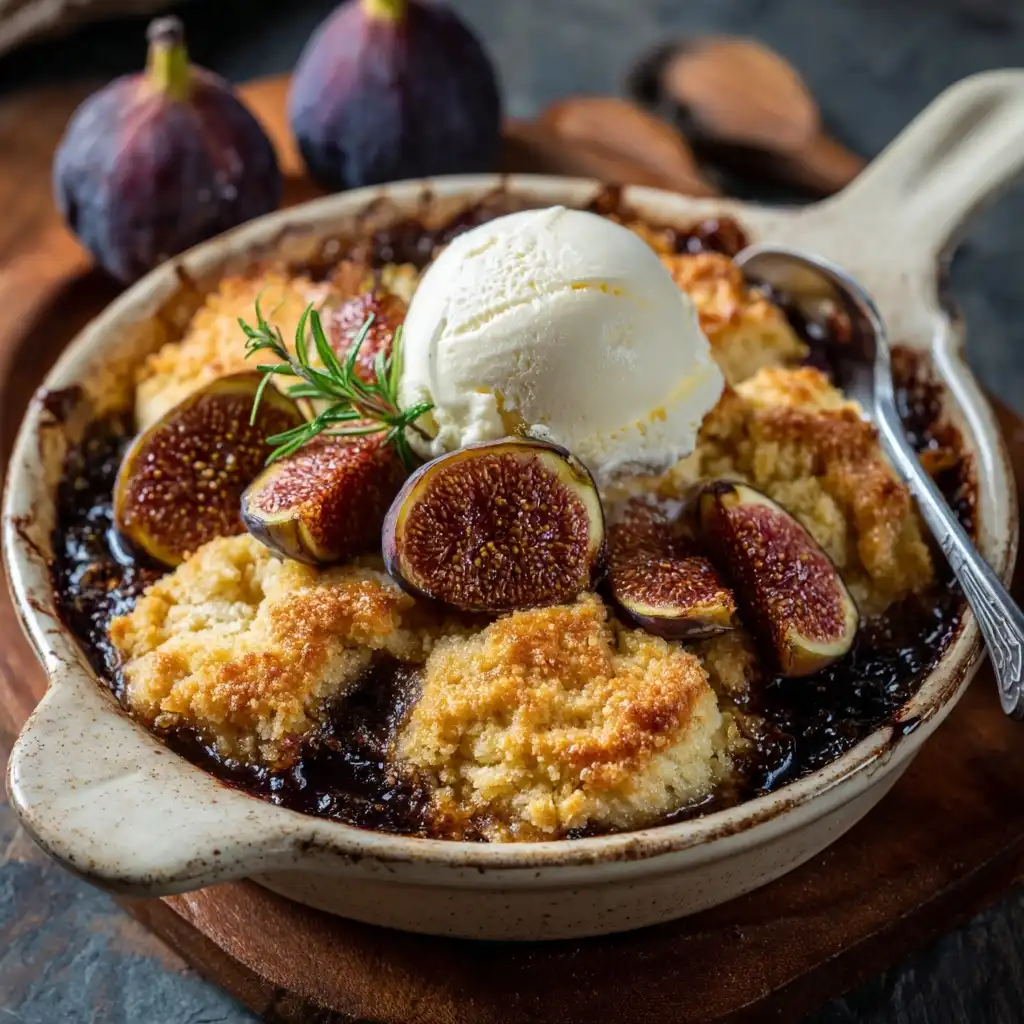
Indulge in the timeless charm and rustic elegance of a Fresh Fig Cobbler—a dessert that marries the delicate, honeyed sweetness of ripe, in-season figs with the comforting warmth of a buttery, golden-brown biscuit or cake-like topping. Unlike its berry or stone-fruit counterparts, fig cobbler celebrates the unique texture and nuanced flavor profile of fresh figs: floral, earthy, subtly jammy, and luxuriously tender when baked. This dessert is more than just a treat—it’s a celebration of summer’s fleeting abundance, a nod to Southern hospitality, and a canvas for culinary creativity. Whether served warm from the oven with a scoop of vanilla bean ice cream, drizzled with local honey, or paired with crème fraîche for a sophisticated finish, Fresh Fig Cobbler delivers an unforgettable balance of tart, sweet, floral, and buttery notes in every bite.
The History
The origins of the cobbler stretch back centuries, with roots deeply embedded in early American colonial cooking—born not from gourmet ambition, but from necessity, resourcefulness, and ingenuity. Early settlers adapted English “cobblers” (a term likely derived from the word “cobbled,” referencing the rough, uneven, stone-like appearance of the biscuit topping) using native fruits and available pantry staples like flour, lard or butter, sugar, and baking powder (after its 19th-century invention). Figs, however, bring a far older lineage: cultivated for over 11,000 years, they were revered in ancient Mesopotamia, Egypt, Greece, and Rome—symbolizing fertility, prosperity, and wisdom. In the American South, figs thrived in USDA Zones 8–10, particularly along the Gulf Coast and in California, where varieties like Brown Turkey, Celeste, and LSU Purple flourished in home gardens and orchards. By the late 1800s, fig cobblers appeared in regional community cookbooks—often handwritten, passed down through generations—and were featured at church suppers, county fairs, and harvest festivals. Unlike canned or dried fig desserts, the *fresh* fig cobbler emerged as a seasonal hallmark, honoring the fruit’s brief, vibrant peak—typically mid-June through early October, depending on climate and cultivar. Its enduring popularity speaks to both its humble accessibility and its remarkable ability to transform simple ingredients into something profoundly soul-satisfying.
Ingredients Breakdown
Understanding each component—not just what goes into a Fresh Fig Cobbler, but *why*—elevates your results from good to extraordinary. Below is a meticulous, chef-level breakdown of every ingredient, including functional roles, sourcing tips, and substitutions grounded in food science:
For the Fresh Fig Filling:
- Fresh Figs (2–2.5 lbs / ~1 kg, stems removed, quartered): Opt for fully ripe but firm figs—plump, slightly soft to gentle pressure, with rich purple, green, or amber skin (depending on variety) and a subtle, sweet perfume. Underripe figs lack depth and release insufficient natural pectin; overripe ones disintegrate. Brown Turkey offers balanced sweetness and mild acidity; Black Mission delivers intense jamminess; Kadota provides a refreshing, less sweet, almost pear-like nuance. Always wash gently and pat dry—excess moisture dilutes flavor and hinders caramelization.
- Granulated Sugar (½–¾ cup / 100–150 g): Adjust based on fig ripeness and personal preference. Ripe figs need less; tarter varieties benefit from more. Sugar isn’t just for sweetness—it draws out juices, aids in syrup formation, and contributes to the glossy, clingy consistency of the filling via osmosis and controlled evaporation.
- Light Brown Sugar (¼ cup / 50 g, packed): Adds molasses-derived depth, caramel notes, and moisture retention. Its acidity helps brighten the fig’s earthiness and balances richness in the topping.
- Lemon Juice (2 tbsp / 30 ml, freshly squeezed): A non-negotiable acidulant. It preserves the figs’ vibrant color (inhibiting enzymatic browning), enhances aromatic volatility (releasing esters and terpenes), and cuts through sweetness—creating dynamic contrast. Bottled lemon juice lacks brightness and introduces off-notes.
- Lemon Zest (from 1 lemon, finely grated): Contains aromatic citrus oils (limonene, γ-terpinene) that amplify floral top notes in figs without adding liquid. Never skip—zest is concentrated flavor magic.
- Cornstarch (3 tbsp / 24 g) or Tapioca Starch (2 tbsp / 16 g): Cornstarch yields a clear, glossy, moderately firm set; tapioca creates a more elastic, jewel-toned, “jammy” texture ideal for figs’ delicate structure. Both prevent a watery bottom layer while allowing gentle bubbling at the edges.
- Unsalted Butter (2 tbsp / 28 g, cold, diced): Swirled in *after* thickening, it enriches mouthfeel, adds luxurious sheen, and rounds out sharp acidity. Cold butter ensures even dispersion without greasiness.
- Pinch of Fine Sea Salt (⅛ tsp): Heightens all other flavors—a critical background note that prevents cloying sweetness.
- Optional Enhancers: 1 tsp pure vanilla extract (added off-heat), ¼ tsp ground cardamom (complements fig’s floral notes), 1 tbsp orange blossom water (for Provence-inspired elegance), or 2 tbsp coarsely chopped toasted walnuts or pistachios (added pre-baking for textural intrigue).
For the Biscuit-Topping Batter:
- All-Purpose Flour (1 ½ cups / 188 g) + 1 tbsp for dusting: Provides gluten structure for lift and tenderness. For extra tenderness, substitute up to ¼ cup with cake flour; for rustic chew, add 2 tbsp whole-wheat pastry flour.
- Baking Powder (2 tsp) and Baking Soda (¼ tsp): Dual-leavening system: baking powder provides consistent lift; baking soda reacts with acidic components (lemon juice, brown sugar, buttermilk) for extra rise and browning via Maillard reaction.
- Granulated Sugar (¼ cup / 50 g) + 1 tbsp for sprinkling: Sweetens the topping, promotes browning, and contributes to crispness.
- Fine Sea Salt (¾ tsp): Balances sweetness and strengthens gluten network—essential for cohesive, shaggy biscuits.
- Cold Unsalted Butter (½ cup / 113 g, cubed): The cornerstone of flakiness. Must be very cold (even chilled 15 mins prior) to create steam pockets during baking. Use European-style butter (82–84% fat) for superior flavor and browning.
- Buttermilk (¾ cup / 177 ml, well-shaken): Acidic, tangy, and viscous—activates leaveners, tenderizes gluten, and imparts subtle complexity. Full-fat buttermilk yields richer texture; low-fat works but sacrifices depth. No buttermilk? Make DIY: ¾ cup whole milk + 1 tbsp white vinegar or lemon juice, rest 5 mins.
- Heavy Cream (2 tbsp / 30 ml, for brushing): Encourages deep golden-brown color and satiny crust. Egg wash (1 egg + 1 tsp water) is an alternative but yields glossier, slightly denser surface.
- Raw Turbinado Sugar (2 tbsp, for finishing): Adds delightful crunch, sparkle, and subtle molasses flavor—textural contrast essential against tender figs.
Step-by-Step Recipe
Follow this precise, tested method for foolproof, restaurant-quality results—each step calibrated for optimal texture, flavor development, and visual appeal:
- Prep & Preheat: Position oven rack in the lower third. Preheat oven to 375°F (190°C). Generously butter a 9×13-inch (23×33 cm) ceramic or metal baking dish (or two 8-inch round cast-iron skillets for rustic presentation). Line a wire rack over parchment paper for cooling.
- Prepare Figs: Rinse figs gently under cool water; pat *thoroughly* dry with clean towels. Trim stem nubs. Quarter each fig lengthwise (smaller figs may halve). Place in a large non-reactive bowl (glass or stainless steel).
- Macenate Filling: Add granulated sugar, brown sugar, lemon juice, lemon zest, cornstarch (or tapioca), and salt to figs. Gently fold with a silicone spatula until evenly coated. Let sit 20 minutes at room temperature—this draws out juices and begins natural syrup formation. Stir once halfway.
- Thicken & Enrich: Pour fig mixture into a medium saucepan. Cook over medium-low heat, stirring constantly with a heat-resistant spatula, until juices bubble gently and thicken to a loose, translucent syrup (~6–8 minutes). Do not boil vigorously—this breaks down figs. Remove from heat. Stir in cold butter pieces until melted and emulsified. Fold in optional vanilla or spices. Transfer to prepared baking dish. Spread evenly; let cool 10 minutes (prevents soggy topping).
- Make Biscuit Topping: In a large bowl, whisk flour, baking powder, baking soda, ¼ cup sugar, and ¾ tsp salt. Add cold cubed butter. Using a pastry cutter, two forks, or fingertips, work butter into flour until mixture resembles coarse crumbs with some pea-sized pieces remaining (≈2–3 mins). Avoid overworking—heat from hands melts butter prematurely.
- Hydrate & Mix: Make a well in center. Pour in buttermilk. Using a fork, stir *just* until a shaggy, slightly sticky dough forms—about 12–15 strokes. Do not knead or overmix; lumps are desirable. Dough should hold together when pinched but not be wet or runny. If too dry, add 1 tsp buttermilk; if too wet, dust with 1 tsp flour.
- Portion & Place: Scoop dough with a ¼-cup measuring cup or ice cream scoop. Drop 8–10 mounds evenly over hot fig filling, leaving small gaps between for steam escape and even baking. Gently press each mound to flatten slightly (½-inch thick). Do not spread or smooth—rustic peaks ensure maximum surface area for browning.
- Finish & Bake: Brush tops lightly with heavy cream. Sprinkle generously with turbinado sugar. Place dish on center oven rack. Bake 45–55 minutes, rotating halfway, until topping is deep golden brown, edges bubble vigorously, and center registers 205–210°F (96–99°C) on an instant-read thermometer. A skewer inserted into topping (not filling) should emerge with moist crumbs—not wet batter.
- Cool & Set: Remove from oven. Place dish on wire rack. Cool *at least* 45 minutes before serving—critical for filling to fully set and thicken. Serving too soon yields runny syrup and collapsed topping. For best texture, cool 1.5 hours.
- Serve: Scoop generous portions into bowls. Serve warm, never hot. Accompany with premium vanilla ice cream, crème fraîche, whipped coconut cream (vegan), or a drizzle of local honey and flaky sea salt.
Tips
Master the nuances with these professional insights, troubleshooting guides, and pro-level refinements:
- Ripeness is Non-Negotiable: Squeeze figs gently—they should yield like a ripe avocado, not an apple. Check the eye (bottom): it should be slightly open and exude a drop of nectar. Store ripe figs stem-side down on a single layer in the fridge for up to 3 days; bring to room temp before baking.
- Prevent Soggy Bottoms: Always macerate *and* cook the filling first—raw figs release unpredictable amounts of water. Cooling the filling 10 minutes before topping application creates a thermal barrier. Also, avoid overfilling the dish—leave 1-inch headspace.
- Butter Temperature Matters: Cube butter and freeze for 10 minutes before cutting in. Warm butter coats flour particles, inhibiting gluten development and steam pockets—leading to dense, greasy topping.
- Don’t Overmix the Dough: Overmixing develops gluten, resulting in tough, chewy biscuits instead of tender, flaky ones. Stop as soon as the dough holds together.
- Steam Vents Are Essential: Those gaps between dough mounds allow steam to escape, preventing a steamed, gummy underside and ensuring even browning. Never crowd or connect mounds.
- Oven Thermometer Required: Most home ovens run hot or cold. An oven thermometer ensures accuracy—underbaking leaves raw dough; overbaking dries out figs and burns topping.
- Resting Time = Texture Magic: That 45-minute minimum rest allows pectin to fully set and starches to retrograde, transforming runny syrup into luscious, spoon-coating consistency. Patience rewards.
- Golden Rule of Browning: If topping browns too fast, tent loosely with foil after 30 minutes. If under-browned, increase oven temp to 400°F (200°C) for final 5–8 minutes—but watch closely.
- Batch Scaling: For larger crowds, double the recipe—but bake in two separate dishes. Crowding lowers oven temp and causes uneven cooking.
- Freeze for Later: Assemble unbaked cobbler (filling cooked and cooled, topping dolloped); cover tightly with plastic wrap + foil. Freeze up to 3 months. Bake frozen—add 15–20 minutes to time, tenting foil if browning too fast.
Variations and Customizations
Let your pantry, season, and palate guide creative reinvention—while preserving the cobbler’s soul:
Regional & Cultural Twists:
- Provençal Fig & Lavender Cobbler: Infuse 1 cup of the buttermilk with 1 tsp culinary-grade dried lavender (steep 10 mins, strain) + add ½ tsp lemon verbena to filling.
- Lebanese-Inspired: Replace brown sugar with date syrup (½ cup) + add 1 tsp rose water to filling + top with crushed pistachios and a sprinkle of cinnamon.
- California Mission Style: Use only Black Mission figs + add 2 tbsp Amontillado sherry to filling + garnish with candied ginger.
Dietary Adaptations:
- Gluten-Free: Substitute 1:1 GF flour blend (with xanthan gum) + add ½ tsp psyllium husk powder to dough for elasticity. Ensure cornstarch is certified GF.
- Vegan: Use plant-based butter (Miyoko’s or Earth Balance) + replace buttermilk with ¾ cup unsweetened almond milk + 1 tbsp apple cider vinegar + 1 tsp maple syrup. Top with coconut whipped cream.
- Lower-Sugar: Reduce total sugar by ⅓; boost flavor with 1 tsp vanilla bean paste, extra lemon zest, and a pinch of black pepper (enhances sweetness perception).
- Grain-Free/Paleo: Topping made with 1 cup almond flour + ½ cup coconut flour + ¼ cup arrowroot + ¼ cup coconut sugar + ¼ cup cold ghee + ⅓ cup full-fat coconut milk. Requires careful moisture adjustment.
Texture & Flavor Boosters:
- Crunch Factor: Fold ⅓ cup toasted pecans, hazelnuts, or pepitas into the biscuit dough before scooping.
- Herbal Brightness: Stir 1 tbsp finely chopped fresh thyme or basil into the filling just before baking.
- Spice Spectrum: Add ¼ tsp freshly grated nutmeg, ⅛ tsp ground clove, or a 1-inch piece of fresh ginger (grated) to the filling.
- Boozy Depth: Deglaze the cooked fig mixture with 2 tbsp bourbon, brandy, or port before adding butter.
Format Variations:
- Individual Servings: Bake in six 6-oz ramekins (reduce time to 30–35 mins). Perfect for dinner parties.
- Skillet Cobbler: Use a 10-inch cast-iron skillet—preheat skillet in oven, then pour in filling and dollop topping. Creates ultra-crispy, caramelized edges.
- Drop-Biscuit vs. Rolled: For elegant presentation, roll dough ½-inch thick on parchment, cut into rounds with a 3-inch cutter, and layer overlapping like tiles.
- Crisp Hybrid: Replace biscuit topping with 1 cup rolled oats + ½ cup chopped almonds + ¼ cup melted butter + 3 tbsp maple syrup + ½ tsp cinnamon—bake same time.
Health Considerations and Nutritional Value
A Fresh Fig Cobbler isn’t just delicious—it’s nutritionally resonant when approached mindfully. Here’s a detailed, evidence-based analysis per standard serving (1/12 of recipe, approx. 1 cup with topping):
Nutritional Profile (Approximate):
- Calories: 320–380 kcal
- Total Carbohydrates: 48–54 g (including 28–32 g naturally occurring sugars from figs + added sugars)
- Dietary Fiber: 5–7 g (figs provide soluble fiber—pectin—which supports gut health, cholesterol management, and satiety)
- Protein: 4–5 g (from flour, dairy, and figs’ modest protein content)
- Fat: 12–15 g (primarily unsaturated from figs and butter; includes heart-healthy oleic acid)
- Vitamins & Minerals: Excellent source of Vitamin K (bone health), Potassium (blood pressure regulation), Magnesium (muscle/nerve function), and Calcium (especially with dairy-based topping). Figs contain antioxidant polyphenols (quercetin, anthocyanins) linked to reduced inflammation.
Health-Conscious Strategies:
- Sugar Intelligence: Ripe figs are naturally high in fructose—reduce added sugar by 25% without sacrificing satisfaction. Use monk fruit or allulose blends for further reduction without aftertaste.
- Fat Quality: Choose grass-fed butter (higher CLA, omega-3s) or cultured ghee. Replace half the butter in topping with mashed ripe banana or unsweetened applesauce for moisture and fiber.
- Whole Grain Upgrade: Substitute ⅓ of all-purpose flour with white whole wheat or oat flour—adds B vitamins and sustained energy without heaviness.
- Gut-Friendly Boost: Stir 1 tbsp ground flaxseed or chia seeds into the biscuit dough for omega-3s and prebiotic fiber.
- Mindful Pairings: Serve with plain Greek yogurt (probiotics, protein) instead of ice cream. Drizzle with a tablespoon of raw honey (antimicrobial properties) rather than refined syrup.
Considerations for Special Diets:
- Diabetes-Friendly: Monitor portion size strictly (½ cup max). Prioritize low-GI accompaniments (unsweetened yogurt, nuts). Emphasize fiber-rich variations.
- Low-FODMAP (Modified): Fresh figs are high-FODMAP in >1/2 cup servings. For strict elimination, use ¼ cup figs + bulk with low-FODMAP fruits like strawberries or rhubarb. Avoid honey, agave, and high-fructan sweeteners.
- Allergen Note: Naturally nut-free and soy-free (if using dairy butter). Always verify labels on baking powder and starches for gluten/cross-contamination.
Ingredients
Makes 12 servings
For the Fresh Fig Filling:
- 2 ½ pounds (about 1.1 kg) fresh ripe figs (Brown Turkey, Black Mission, or Kadota), stems removed, quartered
- ⅔ cup (135 g) granulated sugar (adjust ±2 tbsp based on fig sweetness)
- ¼ cup (50 g) light brown sugar, packed
- 2 tablespoons (30 ml) fresh lemon juice
- 1 tablespoon (6 g) finely grated lemon zest
- 3 tablespoons (24 g) cornstarch or 2 tablespoons (16 g) quick-cooking tapioca starch
- 2 tablespoons (28 g) cold unsalted butter, diced
- ⅛ teaspoon fine sea salt
- Optional: 1 teaspoon pure vanilla extract, ¼ teaspoon ground cardamom, or 1 tablespoon toasted walnuts
For the Buttermilk Biscuit Topping:
- 1 ½ cups (188 g) all-purpose flour, plus 1 tablespoon for dusting
- 2 teaspoons aluminum-free baking powder
- ¼ teaspoon baking soda
- ¼ cup (50 g) granulated sugar
- ¾ teaspoon fine sea salt
- ½ cup (113 g) cold unsalted butter, cubed
- ¾ cup (177 ml) full-fat buttermilk, well shaken
- 2 tablespoons (30 ml) heavy cream or whole milk (for brushing)
- 2 tablespoons (20 g) raw turbinado sugar (for sprinkling)
Directions
- Preheat oven to 375°F (190°C). Generously butter a 9×13-inch (23×33 cm) baking dish. Set aside.
- In a large bowl, combine quartered figs, granulated sugar, brown sugar, lemon juice, lemon zest, cornstarch (or tapioca), and salt. Gently toss to coat evenly. Let macerate at room temperature for 20 minutes, stirring once halfway.
- Pour macerated fig mixture into a medium heavy-bottomed saucepan. Cook over medium-low heat, stirring constantly with a heatproof spatula, until juices bubble gently and thicken to a translucent, syrupy consistency—about 6–8 minutes. Do not boil rapidly. Remove from heat and stir in cold butter until melted and glossy. Stir in optional vanilla or spices. Carefully pour into prepared baking dish. Let cool 10 minutes.
- While filling cools, make topping: In a large bowl, whisk together flour, baking powder, baking soda, ¼ cup sugar, and ¾ tsp salt. Add cold cubed butter. Using a pastry cutter or two knives, cut butter into flour until mixture resembles coarse crumbs with some pea-sized butter pieces remaining (2–3 minutes).
- Make a well in center. Pour in buttermilk. Stir with a fork just until a shaggy, slightly sticky dough forms—about 12–15 strokes. Do not overmix; lumps are desirable.
- Using a ¼-cup measure or cookie scoop, portion dough into 8–10 mounds. Drop evenly over warm fig filling, leaving small gaps between mounds. Gently press each mound to flatten slightly to about ½-inch thickness.
- Brush tops lightly with heavy cream. Sprinkle generously with turbinado sugar.
- Bake on center oven rack for 45–55 minutes, rotating dish halfway through, until biscuit topping is deep golden brown, edges bubble vigorously, and internal temperature reaches 205–210°F (96–99°C). A toothpick inserted into topping (not filling) should come out with moist crumbs.
- Remove from oven. Place dish on a wire rack and cool for at least 45 minutes—ideally 1.5 hours—to allow filling to fully set.
- Serve warm, scooped into bowls. Accompany with vanilla ice cream, crème fraîche, or a drizzle of honey and flaky sea salt.
FAQ
- Can I use dried figs instead of fresh?
- No—dried figs lack the necessary water content, delicate texture, and volatile aromatic compounds that define this dessert. They’ll rehydrate unevenly and yield a dense, chewy, overly sweet filling. Reserve dried figs for compotes, chutneys, or bars.
- Why does my cobbler turn out runny?
- Most commonly: skipping the stovetop thickening step, using underripe figs (low pectin), insufficient cornstarch/tapioca, or serving before full cooling. Also check expiration on leaveners—if old, topping won’t rise properly, trapping steam and creating sogginess.
- Can I prepare this ahead of time?
- Absolutely. Assemble up