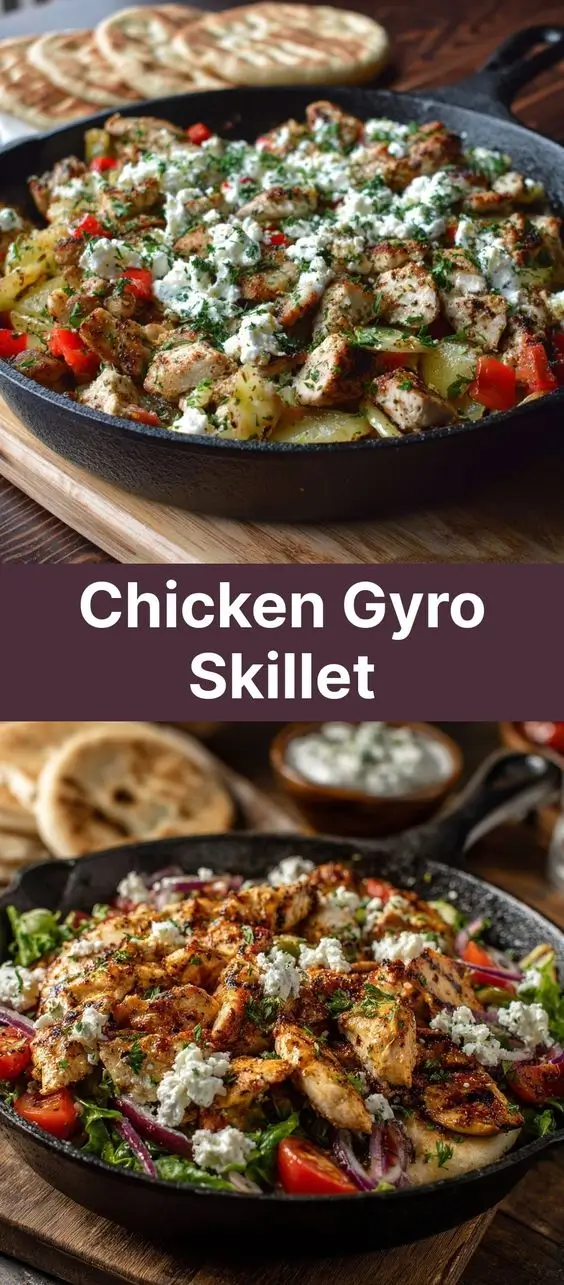
Chicken Gyro Skillet: A Flavorful One-Pan Mediterranean Delight
Introduction
If you’re craving the bold, zesty flavors of a classic gyro but don’t want to fuss with grilling or assembling individual wraps, then the Chicken Gyro Skillet is your new go-to dish. This one-pan wonder brings together tender chicken, aromatic Mediterranean spices, fresh vegetables, and creamy tzatziki in a sizzling skillet that’s perfect for weeknight dinners or weekend entertaining. Comforting, satisfying, and packed with flavor, this recipe captures everything we love about traditional Greek street food — now transformed into a cozy, shareable casserole-style meal that’s as easy to make as it is delicious.
Whether you’re feeding a hungry family or looking for a quick yet impressive dish to serve guests, the Chicken Gyro Skillet delivers restaurant-quality taste without the hassle. Plus, it’s highly customizable, making it ideal for picky eaters, dietary preferences, and even meal prep enthusiasts. Let’s dive deep into everything you need to know about creating the ultimate Chicken Gyro Skillet right in your own kitchen.
The History
To truly appreciate the Chicken Gyro Skillet, it helps to understand its roots in the beloved Greek gyro. The word “gyro” (pronounced YEE-ro) comes from the Greek word γύρος, meaning “turn” or “revolution,” a nod to how the meat was traditionally cooked on a vertical rotisserie — slowly turning and crisping to perfection. While lamb was originally the meat of choice in Greece, especially in Athens where gyros became popular in the 1960s, modern versions often feature beef, pork, or chicken, particularly outside of Greece.
In the United States, gyros gained popularity during the mid-to-late 20th century as Greek immigrants introduced their culinary traditions. Over time, American home cooks began adapting the dish for convenience, leading to oven-baked and skillet versions that mimic the juicy, spiced meat and tangy accompaniments of the original street food. The Chicken Gyro Skillet is a contemporary twist on this evolution — combining all the essential components of a gyro into a single pan for faster cooking, easier cleanup, and maximum flavor infusion.
This skillet version reflects today’s demand for fast, flavorful meals that don’t sacrifice authenticity. It honors traditional Greek seasoning while embracing modern cooking techniques, making Mediterranean comfort food accessible to anyone with a stove and a cast-iron pan.
Ingredients Breakdown
The magic of the Chicken Gyro Skillet lies in its harmonious blend of ingredients — each playing a crucial role in building layers of savory, tangy, and herbal notes. Here’s a detailed look at what goes into this dish and why:
- Chicken Breast or Thighs: Boneless, skinless chicken breasts are most commonly used for their lean texture and ability to absorb flavors. However, chicken thighs can be substituted for a juicier, more tender result due to their higher fat content.
- Olive Oil: High-quality extra virgin olive oil adds richness and helps sear the chicken while enhancing spice dispersion.
- Onion and Garlic: Yellow onion provides sweetness when sautéed, while fresh garlic brings pungency and depth — foundational aromatics in Mediterranean cuisine.
- Bell Peppers: Red, yellow, or green bell peppers add color, crunch, and mild sweetness. They also contribute vitamin C and fiber.
- Dried Oregano, Thyme, and Rosemary: These herbs are staples in Greek seasoning blends. Oregano offers earthiness, thyme adds subtle floral notes, and rosemary gives a pine-like aroma that elevates the entire dish.
- Paprika and Cumin: Smoked paprika introduces a gentle smokiness, while ground cumin adds warmth and complexity — both common in gyro meat marinades.
- Lemon Juice: Freshly squeezed lemon juice brightens the dish, cutting through the richness and balancing the spices.
- Salt and Black Pepper: Essential for seasoning and enhancing all other flavors.
- Tomatoes: Diced tomatoes (fresh or canned) add moisture and acidity, helping create a light sauce as they cook down.
- Spinach or Kale (optional): Leafy greens boost nutrition and add freshness without overpowering the dish.
- Feta Cheese: Crumbled feta adds salty, tangy creaminess — a signature element of Greek dishes.
- Tzatziki Sauce: A chilled yogurt-based sauce made with cucumber, garlic, dill, and lemon — served on top or on the side for cooling contrast.
- Pita Bread (for serving): Warm pitas are ideal for scooping or wrapping portions of the skillet.
Step-by-Step Recipe
- Prep the Chicken: Cut 1.5 pounds of boneless, skinless chicken breasts or thighs into bite-sized strips or cubes. Season generously with salt, black pepper, 1 teaspoon dried oregano, ½ teaspoon paprika, ½ teaspoon cumin, and 1 minced garlic clove. Let marinate for 15–30 minutes if time allows.
- Heat the Skillet: Place a large oven-safe skillet (preferably cast iron) over medium-high heat. Add 2 tablespoons of olive oil.
- Sear the Chicken: Once hot, add the chicken in a single layer. Cook undisturbed for 3–4 minutes until golden brown on one side, then flip and cook another 3–4 minutes until nearly cooked through. Remove and set aside temporarily.
- Sauté the Aromatics: In the same skillet, add 1 diced yellow onion and cook for 3–4 minutes until translucent. Stir in 2 more minced garlic cloves and cook for 30 seconds until fragrant.
- Add Vegetables: Toss in 1 sliced bell pepper (any color), cooking for 4–5 minutes until softened. If using spinach or kale, add now and stir until wilted.
- Return Chicken & Spices: Add the seared chicken back into the skillet. Sprinkle with additional oregano, thyme, rosemary, and a pinch of red pepper flakes (optional for heat). Stir well to combine.
- Incorporate Tomatoes: Pour in 1 cup of diced tomatoes (canned or fresh) along with their juices. Squeeze in juice from half a lemon. Stir and let simmer for 5–7 minutes, allowing flavors to meld and a light sauce to form.
- Finish with Feta: Sprinkle ½ cup of crumbled feta cheese over the top. For a golden finish, place the skillet under a preheated broiler for 2–3 minutes (watch closely to avoid burning).
- Garnish and Serve: Remove from heat. Garnish with chopped fresh parsley, extra lemon zest, and a generous drizzle of tzatziki sauce. Serve immediately with warm pita bread on the side.
Tips
- Use an Oven-Safe Skillet: Cast iron retains heat beautifully and transitions seamlessly from stovetop to broiler, giving your feta a slightly toasted, melty texture.
- Don’t Overcook the Chicken: Since the chicken returns to the pan after searing, residual cooking will continue. Aim for just shy of done during the initial sear.
- Bloom the Spices: After sautéing onions and garlic, add your dried spices and toast them for 30 seconds before adding liquids. This intensifies their flavor dramatically.
- Make Ahead Marinade: Marinate the chicken overnight for deeper flavor penetration. Store in an airtight container in the fridge.
- Control Moisture: If using very juicy tomatoes or adding spinach, let the mixture reduce slightly before finishing to prevent a watery skillet.
- Warm the Pitas: Lightly toast or warm pitas before serving — either wrapped in foil in the oven or heated on the stove — for optimal texture and pliability.
- Serve Family-Style: Bring the entire skillet to the table for a dramatic presentation. Let everyone serve themselves with tongs and pita wedges.
Variations and Customizations
The beauty of the Chicken Gyro Skillet lies in its flexibility. Feel free to tailor it to your taste buds or dietary needs with these creative variations:
- Vegan/Vegetarian Version: Replace chicken with chickpeas, grilled portobello mushrooms, or soy-based gyro strips. Use dairy-free feta and vegan tzatziki made with plant-based yogurt.
- Spicy Kick: Add sliced jalapeños, a dash of cayenne pepper, or harissa paste to the tomato mixture for a fiery twist.
- Different Proteins: Swap chicken for ground lamb, turkey, or even sliced gyro meat from the deli counter for a nostalgic touch.
- Grain-Inclusive Bowl: Turn it into a grain bowl by serving over couscous, quinoa, rice, or cauliflower rice for a heartier meal.
- Cooking Method Variants:
- Slow Cooker: Brown chicken and sauté veggies first, then transfer to a slow cooker with tomatoes and spices. Cook on low for 4–6 hours. Stir in feta and tzatziki before serving.
- Instant Pot: Use the sauté function to sear chicken and cook aromatics, then add remaining ingredients (except feta and garnishes). Pressure cook for 8 minutes, natural release, then finish under broiler.
- Low-Carb/Keto Option: Skip the pita and serve over zucchini noodles or a bed of romaine lettuce for a gyro-inspired salad.
- Kid-Friendly Tweaks: Reduce or omit strong spices like cumin and oregano. Increase mild bell peppers and serve with extra cheese and plain yogurt instead of tzatziki.
- Meal Prep Friendly: Divide cooled skillet mixture into containers. Reheat gently in the microwave and add fresh tzatziki and herbs just before eating.
Health Considerations and Nutritional Value
The Chicken Gyro Skillet isn’t just tasty — it can also be a nutritious addition to a balanced diet when prepared mindfully. Here’s a breakdown of its health profile per serving (assuming 4 servings, without pita):
| Nutrient | Amount Per Serving |
|---|---|
| Calories | ~320 kcal |
| Protein | 30g |
| Total Fat | 18g |
| Saturated Fat | 5g |
| Carbohydrates | 10g |
| Dietary Fiber | 3g |
| Sugars | 5g (natural from vegetables) |
| Sodium | ~600mg (varies based on feta and added salt) |
| Vitamin C | 90% DV |
| Calcium | 15% DV |
| Iron | 12% DV |
Key Health Benefits:
- High-Quality Protein: Chicken is rich in lean protein, supporting muscle repair and satiety.
- Antioxidant-Rich Vegetables: Bell peppers, tomatoes, and spinach provide vitamins A, C, and K, along with lycopene and beta-carotene.
- Healthy Fats: Olive oil contributes monounsaturated fats linked to heart health.
- Probiotics (with tzatziki): Yogurt-based tzatziki contains beneficial bacteria that support gut health.
Considerations:
- Sodium Content: Feta cheese and store-bought seasonings can increase sodium levels. Opt for reduced-sodium feta and control added salt to manage intake.
- Lactose Sensitivity: Traditional feta and tzatziki contain dairy. Use lactose-free alternatives if needed.
- Balanced Meal: When served with whole wheat pita or grains, this dish becomes a well-rounded meal with complex carbs, protein, and healthy fats.
Ingredients
- 1.5 lbs (680g) boneless, skinless chicken breasts or thighs, cut into strips
- 3 tbsp olive oil, divided
- 1 large yellow onion, thinly sliced
- 3 cloves garlic, minced
- 1 red bell pepper, sliced
- 1 yellow bell pepper, sliced
- 1 tsp dried oregano
- ½ tsp dried thyme
- ½ tsp dried rosemary
- 1 tsp smoked paprika
- ½ tsp ground cumin
- ½ tsp salt (or to taste)
- ¼ tsp black pepper
- Pinch of red pepper flakes (optional)
- Juice of 1 lemon (about 3–4 tbsp)
- 1 cup diced tomatoes (canned or fresh)
- 2 cups fresh baby spinach (optional)
- ½ cup crumbled feta cheese
- Fresh parsley, chopped (for garnish)
- Warm pita bread, for serving
- Tzatziki sauce, for serving
Directions
- In a bowl, toss chicken pieces with 1 tablespoon olive oil, 1 teaspoon oregano, ½ teaspoon paprika, ½ teaspoon cumin, 1 minced garlic clove, salt, and pepper. Set aside to marinate for 15–30 minutes.
- Heat a large oven-safe skillet over medium-high heat. Add 1 tablespoon olive oil.
- Add marinated chicken in a single layer and sear for 3–4 minutes per side until golden and almost cooked through. Remove and set aside.
- In the same skillet, add remaining 1 tablespoon olive oil. Sauté onion for 3–4 minutes until soft. Add remaining garlic and cook for 30 seconds.
- Stir in bell peppers and cook for 4–5 minutes until tender-crisp.
- If using spinach, add now and stir until wilted.
- Return chicken to the skillet. Add thyme, rosemary, red pepper flakes (if using), and remaining dried herbs. Stir to combine.
- Pour in diced tomatoes and lemon juice. Simmer for 5–7 minutes, stirring occasionally, until slightly reduced and fragrant.
- Sprinkle crumbled feta evenly over the top.
- Place skillet under a preheated broiler for 2–3 minutes, until feta is lightly golden and bubbly. Watch carefully to avoid burning.
- Remove from heat. Garnish with fresh parsley and extra lemon zest.
- Serve hot with warm pita bread and generous dollops of tzatziki sauce on the side or drizzled on top.
FAQ
Can I use frozen chicken?
It’s best to thaw chicken completely before cooking to ensure even searing and proper marination. Cooking frozen chicken may result in uneven texture and undercooked centers.
Can I make this ahead of time?
Yes! Prepare the skillet up to the point before adding feta. Refrigerate for up to 2 days. Reheat on the stove, then add feta and broil before serving.
Is this recipe gluten-free?
Yes, as long as you serve it without pita or use a certified gluten-free pita. All other ingredients are naturally gluten-free.
How do I store leftovers?
Cool completely and store in an airtight container in the refrigerator for up to 4 days. Reheat in a skillet or microwave until warmed through. Add fresh tzatziki after reheating.
Can I freeze Chicken Gyro Skillet?
While possible, freezing may affect the texture of the feta and vegetables. It’s best enjoyed fresh or refrigerated short-term. If freezing, omit feta and add fresh when reheating.
What can I substitute for tzatziki?
Greek yogurt mixed with lemon juice, grated cucumber, garlic, and dill makes a quick homemade version. Sour cream with herbs and lemon can work in a pinch, though less authentic.
Can I cook this entirely on the stovetop?
Absolutely. Skip the broiler step and simply sprinkle feta on top just before serving. It will melt slightly from the residual heat.
Why is my skillet too watery?
This usually happens if tomatoes are overly juicy or spinach releases too much liquid. Let the mixture simmer uncovered for a few extra minutes to reduce excess moisture.
Summary
The Chicken Gyro Skillet is a vibrant, one-pan fusion of Greek flavors featuring tender chicken, sautéed vegetables, aromatic spices, and creamy feta, all brought together with a squeeze of lemon and a dollop of tzatziki.
Easy to customize, packed with protein and nutrients, and perfect for busy weeknights, this hearty skillet brings the spirit of the Mediterranean straight to your dinner table — no rotisserie required.