Introduction
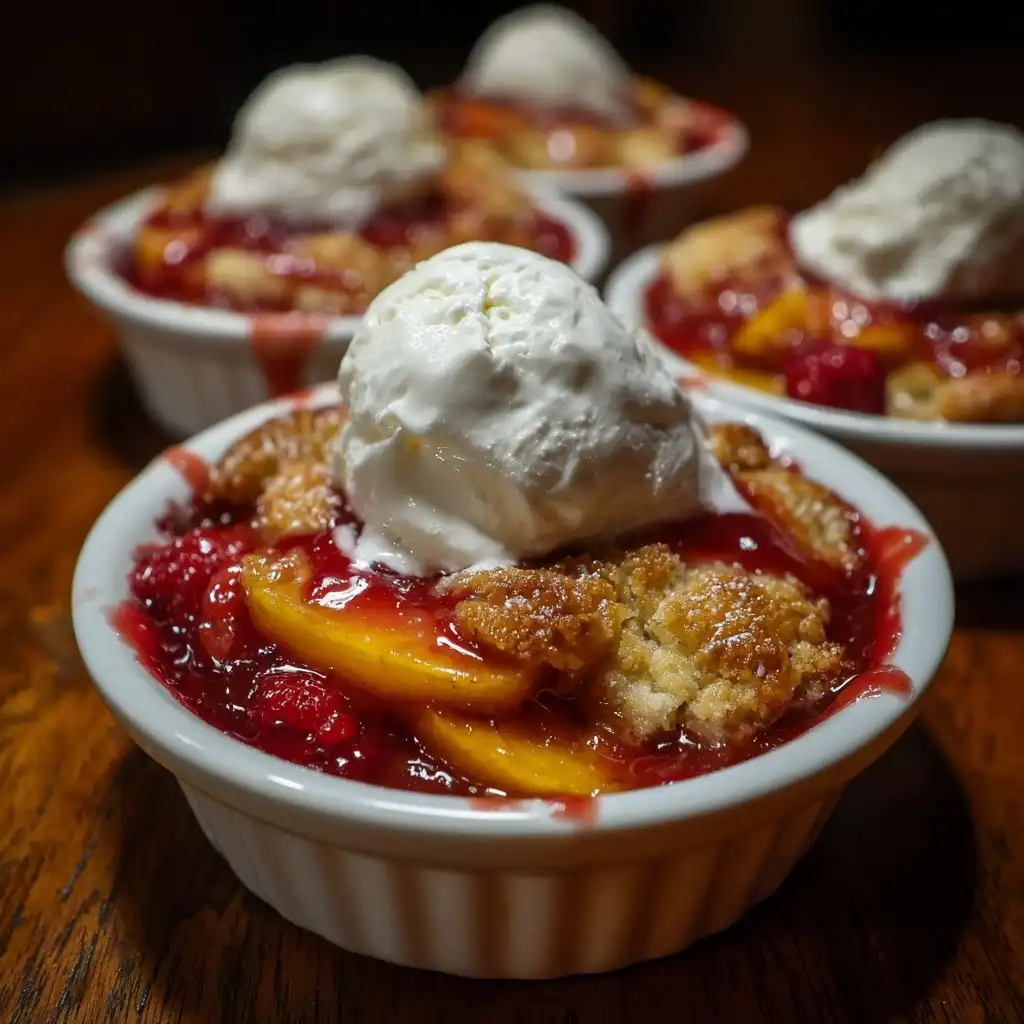
Peach Raspberry Cobbler is a beloved American dessert that marries the sun-ripened sweetness of summer peaches with the bright, tangy vibrancy of fresh or frozen raspberries. This comforting, rustic baked treat features tender fruit bubbling beneath a golden, buttery, biscuit-like or cakey topping—creating an irresistible contrast of textures and flavors. Whether served warm from the oven with a scoop of vanilla ice cream melting into its juicy base or enjoyed slightly cooled with a drizzle of honey-kissed whipped cream, Peach Raspberry Cobbler evokes nostalgia, hospitality, and the simple joy of seasonal abundance. Its versatility makes it equally at home on holiday tables, potluck spreads, backyard barbecues, or quiet weeknight indulgences—and its forgiving nature welcomes bakers of all skill levels.
The History
Cobbler’s roots trace back to 17th-century England, where early versions—known as “coble” or “cobeler”—were rustic fruit desserts baked with dumpling-like doughs or pastry crusts. When English settlers arrived in colonial America, they adapted the dish using locally available fruits and ingredients like cornmeal, biscuit dough, or dropped batter—leading to the uniquely American cobbler we know today. The term “cobbler” likely refers to the “cobbled” or irregular, stone-like appearance of the uneven topping when baked. While peach cobbler became iconic across the Southern U.S., especially with Georgia and South Carolina’s abundant orchards, raspberry cobbler gained popularity in Pacific Northwest and Mid-Atlantic regions known for bramble berries. The fusion of peach and raspberry emerged organically in the mid-20th century as home cooks sought ways to elevate classic cobblers with complementary acidity and complexity—raspberries adding structure, tartness, and depth to peaches’ lush sweetness. By the 1970s and ’80s, this hybrid appeared in regional cookbooks, church fundraisers, and women’s magazines, cementing its status as a modern heirloom dessert—one that honors tradition while embracing innovation and seasonal ingenuity.
Ingredients Breakdown
Understanding each ingredient’s role ensures consistent success and empowers thoughtful substitutions:
- Fresh Peaches (6–7 medium, ~2 lbs): Provide natural pectin, fiber, and floral-sweet flavor. Freestone varieties (e.g., Elberta, Red Haven) are ideal for easy pit removal. Ripe but firm peaches hold shape during baking; overly soft fruit turns mushy.
- Fresh or Frozen Raspberries (1½ cups): Deliver intense berry aroma, bright acidity, and anthocyanin-rich color. Frozen raspberries (unsweetened, unthawed) work exceptionally well—they release less liquid initially and help balance peach’s sweetness without diluting flavor.
- Granulated Sugar (¾ cup + 2 tbsp): Sweetens the filling and activates pectin for proper thickening. Adjust downward if peaches are very sweet or up slightly if using underripe fruit or tart raspberries.
- Light Brown Sugar (¼ cup, packed): Adds molasses depth, moisture retention, and caramel notes—critical for richness and preventing dryness in the topping.
- All-Purpose Flour (2 tbsp): Acts as the primary thickener for the fruit filling. Cornstarch or tapioca starch may be substituted (1 tbsp each), but flour contributes subtle nuttiness and reliable performance.
- Lemon Juice (1½ tbsp) & Zest (1 tsp): Brightens flavor, enhances fruit brightness, and prevents browning. Lemon’s acidity also helps preserve vibrant color in raspberries and balances peach’s natural sugars.
- Ground Cinnamon (½ tsp) & Pure Vanilla Extract (1 tsp): Warm spice and aromatic vanilla add complexity without overpowering—classic pairings that harmonize both fruits.
- Salted Butter (6 tbsp, cold & cubed): Essential for flakiness and richness in the biscuit-style topping. Cold temperature ensures steam pockets form during baking, yielding layers and lift.
- Whole Milk (⅔ cup): Provides moisture and tenderness. Buttermilk may be used for extra tang and tenderness; oat or soy milk works well for dairy-free versions.
- Baking Powder (1½ tsp) & Baking Soda (¼ tsp): Dual leaveners create optimal rise and airy texture—baking powder for general lift, baking soda to neutralize acidity from lemon and berries.
- Coarse Turbinado Sugar (2 tbsp): Sprinkled atop before baking for crunch, sparkle, and subtle caramelized notes.
Step-by-Step Recipe
- Preheat & Prep: Position oven rack in the lower third. Preheat oven to 375°F (190°C). Lightly grease a 9×13-inch ceramic or metal baking dish (or two 8-inch square dishes for portion control).
- Prepare the Fruit Filling: In a large bowl, gently combine sliced peaches (peeled or unpeeled, per preference), raspberries, granulated sugar, brown sugar, flour, lemon juice and zest, cinnamon, and vanilla. Stir just until evenly coated—avoid overmixing to prevent breaking raspberries. Let sit 15 minutes to macerate and release juices.
- Make the Topping Batter: In a food processor or large mixing bowl, whisk together flour, brown sugar, baking powder, baking soda, and salt. Add cold, cubed butter. Pulse (or cut in with a pastry cutter) until mixture resembles coarse crumbs with some pea-sized butter pieces remaining. Stir in milk just until a shaggy, slightly sticky dough forms—do not overmix. It should hold together when pinched but remain rustic and lumpy.
- Assemble the Cobbler: Pour fruit mixture into prepared baking dish, spreading evenly. Drop large spoonfuls (about 2-tbsp portions) of batter over the fruit in a single layer—no need to spread; gaps are welcome. Gently press down any overly tall mounds to encourage even baking.
- Finish & Bake: Sprinkle turbinado sugar evenly over the entire surface. Place dish on a parchment- or foil-lined baking sheet (to catch potential bubbles/overflow). Bake for 45–55 minutes, rotating halfway through, until topping is deeply golden brown, crisp at the edges, and springy to the touch—and fruit is bubbling vigorously around the sides with thick, glossy syrup.
- Cool & Serve: Let rest on a wire rack for *at least 30 minutes* before serving. This crucial step allows the filling to set and thicken fully. Serve warm—not piping hot—for ideal texture and flavor integration.
Tips
- Peach Prep Pro-Tip: To peel peaches effortlessly, blanch them: score an “X” on the bottom, submerge in boiling water for 30–45 seconds, then transfer to an ice bath. Skins will slip off cleanly.
- Fruit Consistency Matters: If using canned peaches (in juice, not syrup), drain thoroughly and reduce added sugar by ¼ cup. For frozen peaches, do not thaw—add directly to bowl to avoid excess water.
- Avoid Soggy Bottoms: Ensure your baking dish is properly greased and consider sprinkling 1 tsp of flour or cornstarch across the bottom before adding fruit to absorb initial moisture.
- Topping Texture Secret: For extra flaky, layered topping, freeze the butter cubes for 10 minutes before cutting in—or use a box grater to shred cold butter directly into the dry ingredients.
- Oven Accuracy is Key: Use an oven thermometer. Underbaked topping stays doughy; overheated filling boils over and darkens excessively. If topping browns too fast, tent loosely with foil after 30 minutes.
- Resting Is Non-Negotiable: Cutting in too soon releases scalding syrup and yields runny results. Patience = perfect consistency.
- Make-Ahead Friendly: Assemble unbaked cobbler up to 24 hours ahead; cover tightly and refrigerate. Add 5–8 minutes to bake time. Alternatively, bake completely, cool, and reheat individual portions at 325°F for 15 minutes.
Variations and Customizations
This recipe is a canvas for creativity—here are inspired, tested adaptations:
- Gluten-Free: Substitute 1:1 gluten-free all-purpose flour blend (with xanthan gum) for both filling and topping. Add ½ tsp psyllium husk to topping for improved binding and structure.
- Vegan: Use cold vegan butter (e.g., Miyoko’s or Earth Balance), unsweetened almond or soy milk, and flax “egg” (1 tbsp ground flax + 2½ tbsp water, mixed and rested 5 min) in place of milk for richer batter. Ensure sugars are vegan-certified.
- Spiced Chai Variation: Replace cinnamon with ½ tsp ground cardamom, ¼ tsp ginger, ⅛ tsp cloves, and a pinch of black pepper. Infuse milk with 1 chai tea bag (steeped 5 min, cooled) before adding to batter.
- Nutty Crumble Topping: Swap half the topping flour for toasted almond flour; fold in ⅓ cup chopped pecans or walnuts and 1 tbsp maple syrup into the batter.
- Herbal Elegance: Stir 1 tsp finely minced fresh basil or lemon thyme into the fruit filling—complements raspberry’s floral notes beautifully.
- Boozy Upgrade: Add 1 tbsp Amaretto, bourbon, or Chambord to the fruit mixture for nuanced depth. Reduce lemon juice by ½ tsp to maintain acid balance.
- Mini Individual Cobblers: Portion into six 6-oz ramekins. Reduce baking time to 32–38 minutes; check at 30 minutes. Perfect for dinner parties or portion-controlled servings.
- Low-Sugar/Keto-Friendly: Use monk fruit or erythritol blends (1:1 sugar substitute), swap flour for almond flour + 1 tsp glucomannan in filling, and top with crushed keto shortbread cookies instead of batter.
Health Considerations and Nutritional Value
A standard serving (1/12 of a 9×13-inch cobbler, approx. 1 cup with topping) contains approximately 285–310 calories, 42g carbohydrates (28g naturally occurring sugars), 4g protein, 11g fat (7g saturated), and 3g dietary fiber. Nutritionally, this dessert delivers meaningful benefits when enjoyed mindfully:
- Antioxidant Powerhouse: Raspberries provide ellagic acid, quercetin, and vitamin C; peaches offer beta-carotene (vitamin A precursor) and chlorogenic acid—compounds linked to reduced inflammation and cellular protection.
- Fiber-Rich Support: With ~3g fiber per serving (nearly 12% DV), this cobbler aids digestive regularity, promotes satiety, and supports healthy blood sugar response—especially when paired with protein (e.g., Greek yogurt).
- Natural Sugars vs. Refined: While sweetened, the majority of sugar comes from whole fruit—delivering vitamins, minerals, and phytonutrients absent in refined-sugar desserts. Using minimal added sugar highlights inherent fruit sweetness.
- Butter Considerations: Grass-fed butter contributes conjugated linoleic acid (CLA) and fat-soluble vitamins (A, D, K2); substituting part with olive oil or avocado oil reduces saturated fat without sacrificing moisture.
- Mindful Enjoyment: Pair with unsweetened plant-based yogurt or a dollop of crème fraîche instead of high-sugar ice cream to lower glycemic load. Serving smaller portions (¾ cup) helps align with balanced eating patterns.
- Notable Allergens: Contains wheat (gluten), dairy, and tree nuts (if using nut-based variations). Always verify labels on specialty flours or butter alternatives for cross-contamination concerns.
While not a “health food,” Peach Raspberry Cobbler shines as a nutrient-dense, minimally processed dessert rooted in whole foods—making it a nourishing choice within a varied, joyful diet.
Ingredients
- 6–7 medium ripe but firm freestone peaches (about 2 lbs), peeled, pitted, and sliced ½-inch thick
- 1½ cups fresh or unsweetened frozen raspberries (do not thaw if frozen)
- ¾ cup granulated sugar
- ¼ cup light brown sugar, firmly packed
- 2 tablespoons all-purpose flour
- 1½ tablespoons fresh lemon juice
- 1 teaspoon lemon zest
- ½ teaspoon ground cinnamon
- 1 teaspoon pure vanilla extract
- 6 tablespoons unsalted butter, cold and cubed
- ⅔ cup whole milk (or buttermilk for extra tenderness)
- 1½ teaspoons baking powder
- ¼ teaspoon baking soda
- ¼ teaspoon fine sea salt
- 2 tablespoons coarse turbinado sugar (for topping)
Directions
- Preheat oven to 375°F (190°C). Lightly grease a 9×13-inch baking dish and place it on a parchment- or foil-lined rimmed baking sheet.
- In a large bowl, combine peach slices, raspberries, granulated sugar, brown sugar, 2 tbsp flour, lemon juice, lemon zest, cinnamon, and vanilla. Gently fold until evenly coated. Let stand at room temperature for 15 minutes to macerate.
- Meanwhile, in a medium bowl or food processor, whisk together 1¼ cups all-purpose flour, brown sugar, baking powder, baking soda, and salt. Add cold cubed butter. Using a pastry cutter, fork, or pulse button, cut butter into dry ingredients until mixture resembles coarse crumbs with visible pea-sized butter pieces.
- Gradually stir in milk using a silicone spatula or wooden spoon—just until a shaggy, slightly sticky dough forms. Do not overmix; a few dry spots are okay.
- Pour fruit mixture into prepared baking dish, spreading evenly. Drop dough by generous 2-tablespoon portions evenly over fruit. Gently press down any tall mounds to encourage uniform baking.
- Sprinkle turbinado sugar evenly over entire surface.
- Bake for 45–55 minutes, rotating pan halfway through, until topping is deep golden brown, crisp at edges, and springs back when lightly pressed—and fruit is bubbling thickly around the perimeter.
- Remove from oven and let cool on a wire rack for at least 30 minutes before serving. This allows filling to fully thicken.
- Serve warm, optionally with vanilla ice cream, honey-whipped cream, or plain Greek yogurt.
FAQ
- Can I use canned peaches?
- Yes—but choose peaches packed in 100% fruit juice (not syrup), drain *very* well, and reduce granulated sugar by ¼ cup. Their softer texture means bake time may shorten by 5 minutes.
- Why did my cobbler turn out runny?
- Common causes: underbaking (filling needs full 45+ mins to activate thickener), skipping the 15-minute maceration (prevents sudden liquid surge), using overly juicy fruit, or stirring filling too vigorously before baking (breaks raspberries). Letting it rest 30+ minutes after baking also allows natural setting.
- Can I prepare this ahead of time?
- Absolutely. Assemble unbaked cobbler (fruit + topping), cover tightly, and refrigerate up to 24 hours. Add 5–8 minutes to bake time. Fully baked cobbler keeps covered in the fridge for 4 days—reheat portions at 325°F for 15 minutes.
- Is there a way to make it lower in sugar?
- Yes. Reduce granulated sugar to ½ cup and omit brown sugar in filling—rely on ripe fruit sweetness. Boost flavor with extra lemon zest, vanilla, and cinnamon. For topping, use 2 tbsp brown sugar only. Natural sweeteners like mashed banana or applesauce (2 tbsp) can replace some butter/milk for moisture.
- Can I freeze Peach Raspberry Cobbler?
- Unbaked cobbler freezes well for up to 3 months: assemble, wrap *tightly* in plastic + foil, label, and freeze. Thaw overnight in fridge before baking (add 10–15 minutes to time). Baked cobbler can be frozen for up to 2 months—thaw in fridge overnight, then reheat covered at 325°F until warmed through.
- What’s the best way to store leftovers?
- Cool completely, then cover tightly with plastic wrap or transfer to an airtight container. Refrigerate for up to 4 days. Reheat individual servings in microwave (45–60 sec) or oven (325°F for 12–15 min) for best texture.
- Can I use other berries?
- Yes! Blackberries, blueberries, or strawberries (hulled & quartered) work beautifully. For strawberries, reduce sugar by 1 tbsp and add ½ tsp balsamic vinegar for brightness. Mixed berry blends (¾ cup raspberries + ¾ cup blackberries) deepen complexity.
- My topping sank into the fruit—what went wrong?
- This usually happens if batter is overmixed (developing gluten), butter wasn’t cold enough (melting prematurely), or fruit was too hot when assembled. Also ensure you’re using baking *powder* (not soda alone) and that it’s fresh (replace every 6 months).
Summary
Peach Raspberry Cobbler is a timeless, adaptable dessert that celebrates summer’s finest fruits through a harmony of sweet peaches, tart raspberries, and a tender, golden biscuit topping—baked to bubbling perfection and best enjoyed warm with creamy accompaniments.
Rooted in American culinary heritage yet endlessly customizable for dietary needs and seasonal whims, it’s as nourishing for the body as it is comforting for the soul—proof that simple, whole-food ingredients, thoughtfully combined, create moments of pure, shared joy.