Introduction
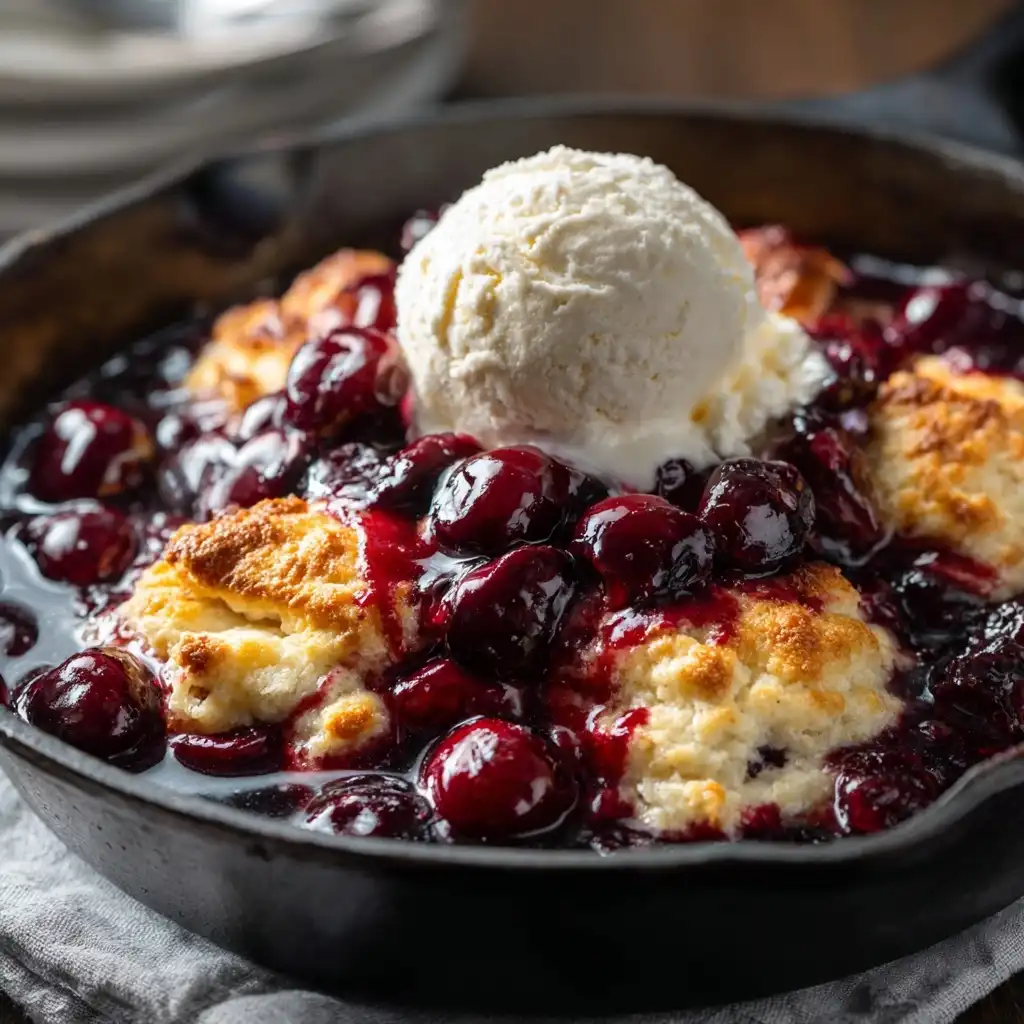
The Southern Skillet Cherry Cobbler is more than just a dessert—it’s a warm, buttery embrace of tradition, nostalgia, and down-home hospitality. Served straight from a cast-iron skillet with a golden, biscuit-like topping bubbling over ruby-red cherry filling, this cobbler evokes lazy summer afternoons on wide porches, church potlucks brimming with handwritten recipes, and generations gathered around the table for something simple, soul-satisfying, and deeply comforting. Unlike its pie or crisp cousins, the skillet cobbler boasts an unapologetically rustic charm: no lattice work, no blind-baking, no fussy crust—just honest ingredients, straightforward technique, and the unmistakable sizzle and aroma of caramelizing fruit meeting hot iron. Whether made with fresh, frozen, or high-quality canned tart cherries—and often elevated with a splash of bourbon, a whisper of almond extract, or a dusting of coarse turbinado sugar—the Southern Skillet Cherry Cobbler remains a cornerstone of regional dessert culture, embodying the essence of Southern cooking: resourceful, generous, and rich in story.
The History
The origins of the cobbler trace back to 18th-century British “cobbled” desserts—roughly assembled, uneven pastries baked over stewed fruit—but it was in the American South where the cobbler truly found its voice and identity. With limited access to refined pastry tools and ovens in early agrarian communities, settlers adapted using what they had: cast-iron skillets (often the only reliable baking vessel over open hearths or wood stoves), pantry staples like flour, lard or butter, sugar, and seasonal fruit. Cherries—particularly sour or tart varieties like Montmorency—thrived in parts of the South and Midwest, and were preserved as pies, jams, and cobblers for year-round enjoyment. By the late 19th century, Southern cookbooks like Housekeeping in Old Virginia (1877) and community church compilations began documenting “skillet cobblers,” emphasizing speed, simplicity, and communal appeal. The term “cobbler” itself likely refers to the irregular, “cobbled” appearance of the dropped or spooned biscuit topping—a visual hallmark that signaled authenticity and homegrown care rather than perfection. Over time, the skillet version gained prominence not only for its even heat distribution and dramatic presentation but also because the retained juices pooled beneath the crust created a luxurious, jammy syrup ideal for pairing with buttermilk ice cream or clotted cream. Today, the Southern Skillet Cherry Cobbler stands as both heirloom recipe and evolving canvas—honoring its roots while welcoming modern interpretations, dietary adaptations, and regional twists across the Carolinas, Georgia, Tennessee, and beyond.
Ingredients Breakdown
Every exceptional Southern Skillet Cherry Cobbler begins with intentionality—not just in measurement, but in understanding the role each ingredient plays in texture, flavor balance, and structural integrity:
- Tart Cherries (Fresh, Frozen, or Canned): The star. Montmorency or Balaton cherries provide essential acidity to cut through sweetness and prevent cloying richness. Fresh cherries offer vibrant floral notes; frozen retain peak tartness and convenience; high-quality canned (in water or light syrup, drained) deliver consistent results year-round. Avoid sweet cherries alone—they lack the bright backbone needed for balance.
- Granulated Sugar & Brown Sugar: Granulated sugar ensures clarity and controlled sweetness in the filling, while brown sugar contributes molasses depth, moisture retention, and subtle caramel complexity to both filling and topping.
- Lemon Juice & Zest: A non-negotiable duo. Lemon juice enhances cherry brightness and activates pectin for proper thickening; zest adds aromatic citrus lift that cuts through richness without adding liquid.
- Cornstarch (or Tapioca Starch): Acts as the filling’s thickener—cornstarch yields a glossy, clear gel; tapioca offers a slightly chewier, more resilient set ideal for longer baking or make-ahead applications.
- Unsalted Butter: Used in two ways: cold, cubed butter cut into the dry topping for flakiness and tenderness; and additional melted butter brushed over the batter before baking to encourage browning, crispness, and rich flavor.
- All-Purpose Flour: Provides structure to the biscuit-style topping. Southern bakers sometimes blend in a touch of soft-wheat pastry flour (up to 25%) for extra tenderness.
- Baking Powder & Baking Soda: Double-acting leaveners ensure lift and airiness. Baking soda also neutralizes excess acidity from cherries and lemon, promoting browning and balanced pH.
- Buttermilk (or Buttermilk Substitute): Adds tang, tenderness, and moisture while reacting with leaveners for optimal rise. For authenticity, cultured buttermilk is preferred—but a DIY version (1 cup milk + 1 tbsp white vinegar or lemon juice, rested 5–10 min) works beautifully.
- Vanilla Extract & Almond Extract (optional but traditional): Vanilla grounds the fruitiness; almond extract—used sparingly (<½ tsp)—echoes the natural benzaldehyde in cherry pits, deepening the classic “cherry-almond” profile beloved across Southern confections.
- Kosher Salt: Elevates all other flavors and balances sweetness. Never omit—even in desserts, salt is the quiet conductor of the flavor orchestra.
- Optional Enhancements: A splash of bourbon or brandy (1–2 tsp) added to the filling for warmth and sophistication; a pinch of freshly grated nutmeg or cinnamon for subtle spice nuance; chopped toasted pecans or slivered almonds folded into the topping for textural contrast and Southern flair.
Step-by-Step Recipe
- Preheat & Prep Skillet: Place a 10- to 12-inch oven-safe cast-iron skillet in the oven and preheat to 375°F (190°C) for at least 20 minutes. This step is critical—preheating the skillet ensures immediate sizzle and crust formation upon contact with batter, preventing soggy bottoms and encouraging caramelization.
- Prepare Cherry Filling: In a large bowl, gently combine 4 cups pitted tart cherries (fresh, thawed frozen, or well-drained canned), ¾ cup granulated sugar, ¼ cup packed light brown sugar, 3 tbsp cornstarch, 1½ tbsp fresh lemon juice, 1 tsp finely grated lemon zest, ¼ tsp kosher salt, and (if using) 1 tsp bourbon and ¼ tsp almond extract. Stir until evenly coated and let macerate 10–15 minutes to release juices.
- Make the Biscuit Topping: In a separate bowl, whisk together 1¼ cups all-purpose flour, 2 tsp baking powder, ¼ tsp baking soda, ¼ tsp salt, and 2 tbsp granulated sugar. Cut in 6 tbsp very cold unsalted butter (cut into ½-inch cubes) using a pastry cutter or fingers until mixture resembles coarse crumbs with some pea-sized pieces remaining. Stir in ¾ cup buttermilk just until a shaggy dough forms—do not overmix. Batter should be thick, slightly sticky, and just holding together.
- Assemble with Precision: Carefully remove the blazing-hot skillet from the oven using heavy oven mitts. Immediately pour the cherry filling into the skillet—it will sizzle vigorously. Quickly drop heaping ¼-cup portions of the biscuit batter evenly over the hot fruit in 6–8 mounds. Do not spread or flatten—let them rest naturally for rustic height and craggy edges.
- Finish & Bake: Brush the tops of each mound generously with 2 tbsp melted unsalted butter. Sprinkle evenly with 1 tbsp turbinado (raw) sugar for sparkle and crunch. Return skillet to oven and bake 40–48 minutes, rotating halfway, until topping is deeply golden brown, puffed, and springy to the touch, and filling is thick, glossy, and bubbling vigorously around the edges.
- Cool & Serve: Let cobbler rest in the skillet on a wire rack for *at least 25–30 minutes* before serving. This crucial resting period allows the filling to fully set, prevents scalding, and lets steam escape so toppings don’t turn gummy. Serve warm—not piping hot—with generous scoops of high-fat vanilla bean ice cream, a drizzle of reduced cherry syrup, or a spoonful of crème fraîche.
Tips
- Cherry Pitting Hack: Use a sturdy cherry pitter—or improvise with a chopstick and bottle: place cherry over bottle opening, press chopstick through stem end to pop pit out the bottom. Freeze pitted cherries on a tray first for easy portioning later.
- Skip the Soggy Bottom: Preheating the skillet isn’t optional—it jumpstarts evaporation and creates an instant crust barrier. If your kitchen runs cool, extend preheat to 25 minutes.
- Texture Control: For a more cake-like topping, add 1 large egg to the buttermilk before mixing into dry ingredients. For extra flaky layers, fold in 2 tbsp cold butter *after* adding buttermilk, then chill dough 15 minutes before dropping.
- Thickening Wisdom: If using frozen cherries, do *not* drain excess liquid—instead, add an extra ½ tsp cornstarch to compensate for higher water content. For canned cherries in heavy syrup, drain *thoroughly*, then reduce syrup separately and stir into filling for intensified flavor.
- Skillet Safety First: Always use oven mitts rated for high heat (cast iron retains heat for *over an hour*). Place hot skillet on a trivet or insulated pad—not directly on granite, wood, or laminate countertops.
- Golden Rule of Browning: Brush melted butter *before* baking—not after. Post-bake brushing leads to greasiness, not crispness. For deeper color, add 1 tsp honey to the melted butter wash.
- Resting Is Ritual: Cutting into cobbler too soon releases trapped steam and liquefies the filling. Set a timer—if serving à la mode, let ice cream soften *while* cobbler rests.
- Leftover Magic: Store covered in skillet at room temperature up to 2 days, or refrigerate up to 5 days. Reheat individual portions in a toaster oven or air fryer (350°F, 6–8 min) to revive crispness—microwaving makes topping rubbery.
Variations and Customizations
The Southern Skillet Cherry Cobbler thrives on thoughtful adaptation—respecting tradition while embracing personal preference, seasonality, and inclusivity:
- Black Cherry-Bourbon Swirl: Fold ¼ cup reduced bourbon (simmered 3 min with 1 tbsp brown sugar) into the cherry filling; swirl an additional 1 tbsp into the batter before dropping.
- Cherry-Pecan Streusel Twist: Replace biscuit topping with a Southern-style streusel: ½ cup flour, ⅓ cup brown sugar, ¼ cup cold butter, ½ cup chopped toasted pecans, ½ tsp cinnamon, pinch of salt—crumble over hot filling.
- Vegan Southern Style: Use plant-based butter (high-fat, European-style), full-fat coconut milk + 1 tbsp apple cider vinegar (for buttermilk), flax egg (1 tbsp ground flax + 2½ tbsp water), and maple syrup instead of brown sugar. Thicken with arrowroot instead of cornstarch.
- Gluten-Free Heritage: Substitute 1:1 gluten-free all-purpose flour blend (with xanthan gum); add 1 tsp psyllium husk powder to batter for elasticity. Ensure cornstarch is certified GF.
- Cherry-Lavender Infusion: Steep 1 tsp culinary-grade dried lavender in warm lemon juice for 10 min, strain, and use infused juice in filling. Garnish with edible lavender buds.
- Spiced Cherry-Cardamom: Add ½ tsp freshly ground cardamom + ¼ tsp ground ginger to dry topping ingredients; finish with candied ginger bits folded into batter.
- Brunch Cobbler: Add 2 tbsp orange marmalade and 1 tsp orange zest to filling; top with orange-scented biscuit batter and garnish with candied orange peel.
- Mini Skillet Versions: Divide filling and batter among six 6-inch seasoned cast-iron skillets. Reduce bake time to 22–26 minutes—ideal for dinner parties or portion-controlled servings.
Health Considerations and Nutritional Value
While undeniably indulgent, the Southern Skillet Cherry Cobbler can be mindfully enjoyed within a balanced diet—and its core ingredients offer surprising nutritional merit when prepared with awareness:
- Tart Cherries: Rich in anthocyanins (potent antioxidants linked to reduced inflammation and muscle recovery), melatonin (supporting sleep regulation), and vitamin C. Their natural tartness allows for up to 25% less added sugar versus sweet cherry versions.
- Whole Grain Option: Substituting up to ⅓ of the all-purpose flour with whole wheat pastry flour boosts fiber and B-vitamins without compromising tenderness—just increase buttermilk by 1 tbsp to offset dryness.
- Reduced-Sugar Strategy: Rely on ripe, in-season cherries at peak sweetness; enhance with spices (cinnamon, nutmeg) and extracts (vanilla, almond) to amplify perceived sweetness without added sugar. Many traditional recipes use 1 cup sugar—this version uses ¾ cup total with strategic brown sugar inclusion for depth over volume.
- Fat Quality Matters: Using grass-fed butter or organic, pasture-raised lard supports healthy fat intake (including CLA and vitamin K2) and avoids industrial seed oils common in commercial shortenings.
- Portion Mindfulness: A standard serving (⅙ of recipe) contains approximately 320–360 calories, 55–60g carbs (28–32g naturally occurring sugars from fruit), 6–8g fat, and 4–5g protein. Paired with ½ cup full-fat ice cream, total reaches ~520 calories—still reasonable as an occasional treat.
- Dietary Accommodations: Naturally free of nuts (unless added), soy-free (with butter instead of margarine), and easily dairy-free or gluten-free with substitutions—making it one of the most adaptable Southern desserts for diverse needs.
- What to Limit: Excessive added sugars (especially high-fructose corn syrup in canned cherries), highly processed thickeners (modified food starch), and hydrogenated fats (shortening) detract from nutritional integrity. Prioritize whole-food thickeners (cornstarch, tapioca) and real dairy or quality plant-based alternatives.
Ingredients
- 4 cups pitted tart cherries (fresh, thawed frozen, or well-drained canned—about 1 lb stemmed weight)
- ¾ cup granulated sugar
- ¼ cup packed light brown sugar
- 3 tablespoons cornstarch (or tapioca starch)
- 1½ tablespoons fresh lemon juice
- 1 teaspoon finely grated lemon zest
- ¼ teaspoon kosher salt
- 1 teaspoon pure vanilla extract
- ¼ teaspoon pure almond extract (optional but recommended)
- 1 teaspoon bourbon or brandy (optional)
- 1¼ cups all-purpose flour (plus extra for dusting, if needed)
- 2 teaspoons baking powder
- ¼ teaspoon baking soda
- ¼ teaspoon kosher salt
- 2 tablespoons granulated sugar (for topping batter)
- 6 tablespoons unsalted butter, very cold and cubed (plus 2 tablespoons melted, for brushing)
- ¾ cup well-shaken buttermilk (or DIY: ¾ cup whole milk + 1 tablespoon white vinegar, rested 5 min)
- 1 tablespoon turbinado (raw) sugar, for finishing
Directions
- Position oven rack in center position and preheat oven to 375°F (190°C). Place a 10- to 12-inch oven-safe cast-iron skillet inside to preheat for at least 20 minutes.
- In a large mixing bowl, combine cherries, ¾ cup granulated sugar, brown sugar, cornstarch, lemon juice, lemon zest, ¼ tsp salt, vanilla, almond extract (if using), and bourbon (if using). Gently stir until cherries are evenly coated. Let sit at room temperature for 15 minutes to release juices.
- In a medium bowl, whisk together flour, baking powder, baking soda, ¼ tsp salt, and 2 tbsp granulated sugar. Add cold cubed butter and cut in using a pastry blender or fingertips until mixture resembles coarse crumbs with visible pea-sized butter pieces.
- Pour buttermilk over flour mixture and stir with a fork or spatula *just until* a shaggy, slightly sticky dough forms—do not overmix. Batter should hold together when scooped but remain rustic and lumpy.
- Using heavy-duty oven mitts, carefully remove the blistering-hot skillet from oven. Immediately pour cherry mixture into skillet—it will sizzle loudly and begin bubbling at the edges.
- Quickly drop 6–8 heaping ¼-cup portions of biscuit batter evenly over hot cherry filling. Do not flatten—allow natural mounds to form.
- Brush tops of each mound generously with melted butter. Sprinkle evenly with turbinado sugar.
- Return skillet to oven and bake 40–48 minutes, rotating halfway through, until topping is deep golden brown, puffed, firm to gentle pressure, and filling is thick, glossy, and bubbling vigorously around the perimeter.
- Remove from oven and place on a wire cooling rack. Let rest *undisturbed* for 30 minutes to allow filling to fully set and steam to dissipate.
- Serve warm, directly from the skillet, with scoops of premium vanilla ice cream, a dollop of crème fraîche, or a drizzle of reduced cherry syrup.
FAQ
- Can I use sweet cherries instead of tart?
- Yes—but with adjustments. Sweet cherries lack acidity, so reduce total sugar by ¼ cup, add 1 extra tbsp lemon juice + ½ tsp lemon zest, and include ¼ tsp apple cider vinegar to the filling to restore balance and prevent cloying sweetness.
- Why does my cobbler have a soggy bottom?
- Most commonly due to skipping skillet preheating. Without thermal shock, the batter steams instead of searing. Also check for underbaking (filling must bubble *vigorously* at edges for 3+ minutes) or overmixing the batter, which develops gluten and traps moisture.
- Can I prepare this ahead of time?
- Absolutely. Assemble filling and refrigerate up to 24 hours. Make batter, cover tightly, and refrigerate up to 12 hours—let sit at room temp 10 min before dropping. For freezer prep: bake fully, cool completely, wrap in double foil + freezer bag; reheat covered at 325°F for 25 min, then uncover for 5 min to crisp.
- What’s the best skillet size—and does seasoning matter?
- A well-seasoned 10- or 12-inch skillet is ideal. Size affects thickness: smaller skillets yield deeper filling and taller topping; larger ones spread thinner and bake faster. Proper seasoning prevents sticking and imparts subtle umami—never use soap on cast iron; clean with stiff brush and hot water only.
- My topping isn’t browning—what’s wrong?
- Ensure oven is properly calibrated (use an oven thermometer). Brush *generously* with melted butter before baking—not after. Turbinado sugar aids browning; if omitted, add 1 tsp honey to butter wash. Also verify baking powder is fresh (test in hot water—it should fizz immediately).
- Can I make this dairy-free?
- Yes. Use high-fat coconut milk + 1 tbsp vinegar for buttermilk substitute; vegan butter sticks (like Miyoko’s or Melt) for both cold and melted butter; and ensure cornstarch is non-GMO and certified GF if needed. Flavor remains robust—just slightly richer and nuttier.
- How do I know when it’s done? Isn’t the toothpick test unreliable?
- Correct—don’t use a toothpick. Instead, look for three visual cues: (1) filling bubbling *thickly and continuously* around entire edge for ≥90 seconds, (2) topping deeply golden with visible cracks and firm, springy texture when lightly pressed, and (3) internal temperature of filling registering 212°F (100°C) on an instant-read thermometer inserted between mounds.
- Can I use a different fruit?
- Yes—this method shines with any tart fruit: blackberries, blueberries, peaches (peeled), or mixed berries. Adjust sugar ±2 tbsp and thickener ±½ tsp based on fruit’s natural pectin and juiciness. Always retain lemon juice/zest for brightness.
Summary
The Southern Skillet Cherry Cobbler is a masterclass in rustic elegance—where blistering-hot cast iron transforms humble tart cherries and tender biscuit batter into a bubbling, golden-hued celebration of Southern ingenuity and generosity.
Rooted in necessity yet elevated by instinct, it rewards patience in resting, reverence for quality ingredients, and joyful customization—proving that the most cherished desserts aren’t perfected in precision, but in presence, warmth, and the shared act of passing the skillet.