Introduction
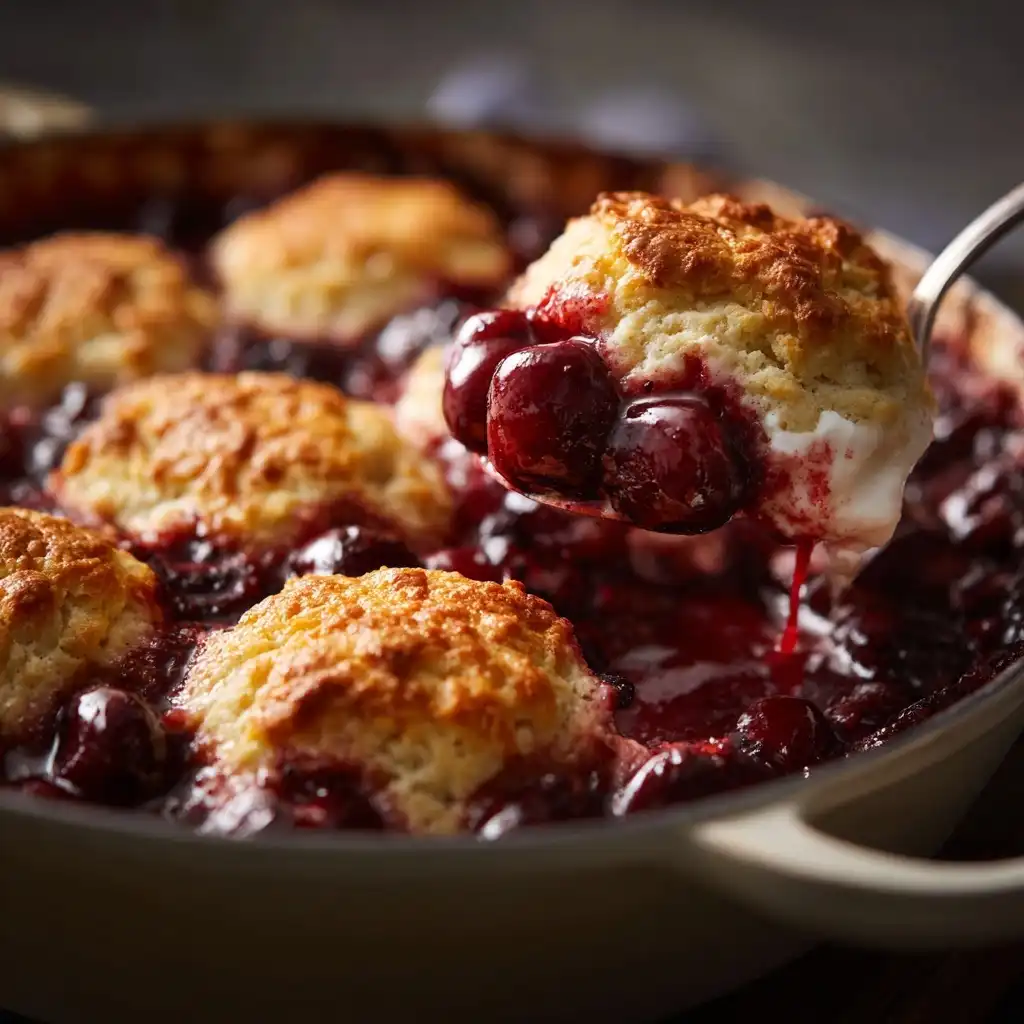
Imagine the sun-warmed sweetness of just-picked cherries bubbling beneath a golden, tender, buttery biscuit topping—each bite a harmonious blend of juicy fruit and flaky, slightly crisp-topped dough. Fresh Cherry Biscuit Cobbler is more than just a dessert; it’s a celebration of summer’s finest stone fruit, transformed into a comforting, rustic, home-baked classic that bridges the gap between pie and cobbler, cake and crisp. Unlike traditional cobblers with dropped batter or crisp toppings, this version features hand-cut, tender biscuits placed directly atop the fruit—baking into soft, cloud-like mounds with caramelized edges and a delicate crumb that soaks up the vibrant cherry syrup without turning soggy. It’s approachable enough for weeknight baking yet elegant enough to serve at Sunday brunch, holiday gatherings, or spontaneous summer potlucks. Whether you’re harvesting cherries from your backyard tree, selecting deep-red Bing or Rainier varieties at the farmers’ market, or simply craving a nostalgic, oven-warmed treat that fills your kitchen with the intoxicating aroma of vanilla, almond, and browned butter, this recipe delivers soul-satisfying warmth in every spoonful.
The History
The origins of the cobbler stretch back centuries—rooted in early American colonial kitchens where resourceful cooks adapted English fruit desserts using available ingredients and rudimentary cooking tools. While pies required precise pastry and rolling pins (often scarce on the frontier), cobblers offered flexibility: fruit was stewed or baked with a simple topping made from biscuit dough, cornmeal, or even cake batter—“cobbled” together in a rustic fashion, hence the name. By the mid-19th century, regional variations flourished across the U.S., with Southern bakers favoring buttermilk biscuit toppings and Midwestern cooks incorporating lard or cream for extra richness. Cherries—native to North America and widely cultivated by Indigenous peoples long before European settlement—became a beloved cobbler fruit due to their natural tart-sweet balance and abundant seasonal yield. The “biscuit cobbler” iteration gained prominence in the early 20th century, especially through community cookbooks and women’s magazines like Ladies’ Home Journal and Good Housekeeping, which championed accessible, comforting desserts for the growing middle-class household. Notably, the 1931 edition of The Joy of Cooking included a “Cherry Biscuit Pudding” that closely resembles today’s cobbler—highlighting how the dish evolved from humble hearth cooking into an enduring symbol of American culinary ingenuity, seasonal reverence, and intergenerational tradition. Today, fresh cherry biscuit cobbler remains a staple at orchard festivals, church suppers, and family reunions—its enduring appeal rooted in simplicity, adaptability, and the profound sensory joy of ripe cherries meeting warm, buttery dough.
Ingredients Breakdown
Every exceptional Fresh Cherry Biscuit Cobbler begins not with technique alone—but with thoughtful, high-intensity ingredient selection. Below is a detailed analysis of each component, including why it matters, what to avoid, and how substitutions impact texture and flavor:
- Fresh, Pitted Cherries (4–4.5 cups): Opt for firm, plump, deeply colored sweet cherries (Bing, Lapins, or Sweetheart) for balanced sugar content and structural integrity during baking. Tart cherries (Montmorency) can be used—but require ¼–⅓ cup additional sugar and benefit from a splash of lemon juice to brighten acidity. Avoid overripe, mushy cherries—they release excessive juice and turn the filling watery. Always pit thoroughly—even small pits left behind pose safety risks and disrupt mouthfeel. A dedicated cherry pitter saves time and minimizes juice loss compared to knife-pitting.
- Granulated Sugar (¾ cup base + optional 1–2 tbsp for topping): Provides sweetness, aids in syrup formation, and helps draw out cherry juices for optimal thickening. Adjust based on cherry ripeness: underripe cherries may need up to 1 cup; very sweet, sun-ripened ones may need as little as ½ cup. Never substitute raw sugar or coconut sugar here—their coarse crystals don’t dissolve fully and impart off-flavors.
- Light Brown Sugar (¼ cup, packed): Adds subtle molasses depth, moisture retention, and a warm, caramelized nuance that complements cherries beautifully. Its natural acidity also helps stabilize the fruit’s color. Dark brown sugar works but intensifies molasses notes—ideal for fall variations but potentially overwhelming in peak-summer versions.
- All-Purpose Flour (3 tbsp): Acts as the primary thickener for the cherry filling. Wondra or instant flour yields smoother results, but standard AP flour works perfectly when whisked thoroughly with sugar before adding to fruit. Cornstarch (2 tbsp) is a viable alternative for glossy, clear syrup—but lacks the same body and can thin upon standing.
- Unsalted Butter (6 tbsp, cold & cubed): Essential for both filling and topping. In the filling, cold butter adds richness and a velvety mouthfeel to the syrup. In the biscuit dough, cold butter creates steam pockets during baking—resulting in flaky, layered tenderness. Salted butter may be used, but reduce added salt in the biscuit portion accordingly.
- Heavy Cream (¾ cup, cold): The secret to ultra-tender, moist biscuits with minimal gluten development. Its high fat content inhibits toughness while contributing luxurious flavor and browning. Half-and-half or whole milk produce acceptable but drier, denser biscuits. Avoid ultra-pasteurized cream if possible—it can sometimes yield gummy textures.
- Baking Powder (2 tsp) & Baking Soda (¼ tsp): A dual-leavening system ensures maximum rise and airy crumb. Baking powder provides most lift; baking soda neutralizes the slight acidity from cherries and brown sugar while enhancing browning. Do not omit or reduce—this ratio is precisely calibrated for altitude-resilient rise.
- Sea Salt (¾ tsp fine sea salt): Enhances all other flavors—not just sweetness, but fruit brightness and butter richness. Use fine-grain (not flaky or kosher unless weight-adjusted) for consistent distribution. Omitting salt flattens the entire flavor profile.
- Pure Vanilla Extract (1 tsp) & Almond Extract (¼ tsp): Vanilla grounds the dessert in familiarity; almond extract—a classic cherry pairing—adds aromatic complexity and depth. Use only pure extracts; imitation versions taste medicinal and harsh. For elevated nuance, add 1 scraped vanilla bean pod (seeds + pod) to the cherry mixture and remove pod before baking.
- Lemon Zest (from ½ lemon) & Juice (1 tbsp): Brightens the filling, balances sweetness, preserves cherry color, and prevents cloying richness. Microplane zest is essential—avoid the bitter white pith. Bottled lemon juice lacks vibrancy and introduces preservatives that dull flavor.
- Coarse Turbinado Sugar (for sprinkling): Adds textural contrast, subtle caramel notes, and visual appeal. Regular granulated sugar melts too quickly; sanding sugar is acceptable but less flavorful.
Step-by-Step Recipe
- Preheat & Prep (15 minutes): Position oven rack in the lower third of the oven. Preheat to 375°F (190°C). Generously butter a 9×13-inch ceramic or glass baking dish (or two 8×8-inch dishes for faster bake time and deeper browning). Line a large baking sheet with parchment paper for biscuit cutting.
- Prepare the Cherry Filling (10 minutes): In a large non-reactive bowl (stainless steel or glass), combine pitted cherries, granulated sugar, brown sugar, flour, lemon zest, lemon juice, vanilla, almond extract, and 2 tbsp cold butter cut into ¼-inch cubes. Gently fold with a silicone spatula until evenly coated—avoid crushing cherries. Let macerate at room temperature for 15–20 minutes while you make the biscuits; this draws out juices and begins syrup formation.
- Make the Biscuit Dough (12 minutes): In a chilled medium bowl, whisk together flour, baking powder, baking soda, and salt. Add remaining 4 tbsp cold, cubed butter. Using a pastry cutter or two forks, cut butter into flour until mixture resembles coarse crumbs with some pea-sized pieces remaining. Gradually pour in cold heavy cream while stirring with a fork—just until a shaggy, slightly sticky dough forms (about 12–15 seconds). Do *not* overmix; streaks of flour are fine. Turn dough onto the parchment-lined baking sheet and gently pat into a 1-inch-thick rectangle (approx. 6×4 inches).
- Chill Dough (10 minutes): Place dough rectangle in freezer for exactly 10 minutes. This rechills the butter, prevents spreading, and makes clean cutting possible. Meanwhile, pour cherry mixture into prepared baking dish and spread evenly. Spoon any accumulated juices over top.
- Cut & Arrange Biscuits (5 minutes): Remove dough from freezer. Using a sharp chef’s knife or bench scraper, cut into 12 equal rectangles (or 9 larger squares). Carefully lift each piece and place directly on top of the cherries, leaving ½-inch gaps between biscuits to allow steam escape and syrup circulation. Gently press edges to slightly seal against the fruit surface—this helps prevent sliding during baking.
- Final Touches & Bake (45–50 minutes): Brush biscuit tops lightly with reserved heavy cream (or whole milk) and generously sprinkle with turbinado sugar. Place dish on center oven rack. Bake 45 minutes—then rotate pan 180°. Continue baking 5–10 more minutes, until biscuit tops are deeply golden brown, edges are crisp, centers spring back when lightly pressed, and cherry filling bubbles vigorously around the sides (195–200°F internal temp at center). If biscuits brown too quickly, loosely tent with foil for final 10 minutes.
- Cool & Set (30–45 minutes): Remove from oven and place on a wire rack. Let rest undisturbed for *at least* 30 minutes—ideally 45—to allow filling to thicken fully. Cutting too soon releases scalding syrup and yields a runny, separated dessert. The biscuits will continue to absorb residual moisture and firm up beautifully during this time.
Tips
- Cherry Pitting Hack: Freeze pitted cherries for 15 minutes before macerating—they hold shape better and release juice more gradually during baking.
- Altitude Adjustment: At elevations above 3,000 ft, increase flour in filling by 1 tsp and reduce baking powder by ¼ tsp to prevent over-rising and collapse.
- No-Stick Secret: Lightly dust biscuit-cutting surface with rice flour instead of AP—it absorbs less moisture and prevents sticking without adding gluten.
- Butter Temperature Precision: Cube butter and return to fridge for 5 minutes after cutting—it should feel cold but yield slightly to gentle pressure (like cold cheddar cheese), never greasy or crumbly.
- Steam Venting: Use a paring knife to poke 2–3 tiny holes in the center of *each* biscuit before baking—this allows controlled steam release and prevents domed, hollow biscuits.
- Oven Thermometer Essential: Most home ovens run hot or cold—verify actual temperature with an oven-safe thermometer for consistent results.
- Biscuit Thickness Matters: Keep dough exactly 1 inch thick before cutting—too thin yields dry biscuits; too thick leads to gummy centers.
- Syrup Clarity Trick: Stir 1 tsp apple cider vinegar into cherry mixture before baking—it clarifies the syrup and enhances fruit brightness without detectable acidity.
- Make-Ahead Friendly: Assemble filling and refrigerate up to 24 hours. Prepare biscuit dough, wrap tightly in plastic, and chill up to 48 hours—or freeze unbaked biscuits for up to 3 months (bake frozen, +5–7 min).
- Perfect Serving Temp: Serve warm—not hot—ideally at 120–130°F. Too hot = burnt tongue and diluted flavors; too cool = congealed syrup and dense biscuits.
Variations and Customizations
This recipe is a versatile canvas—easily adapted for dietary needs, seasonal shifts, flavor exploration, and pantry improvisation:
- Gluten-Free Version: Replace AP flour in both filling and biscuits with 1:1 GF blend (Bob’s Red Mill or King Arthur). Add ½ tsp xanthan gum to biscuit flour mix. Use GF-certified oats in streusel variation (see below).
- Vegan Adaptation: Substitute cherries with 4 cups mixed berries (blueberries + blackberries hold better); use cold coconut oil (refined for neutral taste) instead of butter; replace heavy cream with full-fat canned coconut milk (chilled, solid part only); bind biscuits with 1 tbsp ground flaxseed + 3 tbsp water. Skip almond extract (optional) or use maple extract.
- Streusel-Topped Variation: Skip biscuit dough. Mix 1 cup rolled oats, ½ cup brown sugar, ½ cup chopped pecans, 6 tbsp cold butter, ¼ tsp cinnamon, and pinch of salt. Sprinkle over cherry filling pre-bake. Reduce bake time to 35–40 minutes.
- Herbal Infusion: Steep 1 tbsp fresh thyme leaves or 1 tsp dried lavender in warm cream for 10 minutes before chilling and using in biscuits. Strain before mixing.
- Spiced Warmth: Add ½ tsp ground cardamom + ¼ tsp ground ginger to biscuit dry ingredients. Garnish with candied ginger.
- Boozy Depth: Stir 2 tbsp Kirsch, brandy, or amaretto into cherry mixture along with lemon juice. Reduce sugar by 1 tbsp to compensate.
- Double-Fruit Fusion: Replace 1 cup cherries with 1 cup diced ripe peaches or nectarines—add 1 tsp grated fresh ginger to filling.
- Mini Individual Cobblers: Divide filling among six 6-oz ramekins. Cut biscuit dough into rounds using a 2.5-inch cutter. Top each, bake 25–28 minutes.
- Breakfast Cobbler: Reduce sugar in filling to ⅓ cup. Add ¼ tsp cinnamon and 1 tbsp chopped crystallized ginger to biscuits. Serve with Greek yogurt instead of ice cream.
- Smoky-Sweet Twist: Rub ½ tsp smoked paprika into brown sugar before mixing into cherries. Pair with bourbon-vanilla ice cream.
Health Considerations and Nutritional Value
While Fresh Cherry Biscuit Cobbler is inherently a celebratory dessert, mindful preparation can enhance its nutritional profile without sacrificing pleasure:
- Nutrient Highlights: Fresh cherries deliver potent antioxidants—including anthocyanins (linked to reduced inflammation and improved sleep), vitamin C (immune support), potassium (blood pressure regulation), and melatonin (natural sleep regulator). One cup of raw cherries provides ~18% DV vitamin C and ~10% DV potassium.
- Refined Sugar Awareness: The recipe uses moderate sugar (1 cup total for 12 servings ≈ 14g per serving). To reduce further: decrease granulated sugar to ½ cup and rely on naturally sweet cherries; enhance perception of sweetness with vanilla, almond, and citrus zest rather than added sugar.
- Whole Grain Option: Substitute ½ cup of the AP flour in the biscuit dough with white whole wheat flour—adds fiber and B vitamins without compromising tenderness.
- Butter vs. Oil: Cold butter contributes short-chain fatty acids and fat-soluble vitamins (A, D, E, K). Replacing with neutral oil sacrifices flavor, browning, and texture—so butter is nutritionally and sensorially superior here.
- Glycemic Impact: Cherries have a low glycemic index (~22), meaning they cause slower, steadier blood sugar rises than many fruits. Paired with fiber-rich biscuits (especially whole grain), this dessert has relatively favorable metabolic effects compared to cakes or cookies.
- Portion Mindfulness: A standard serving is 1 biscuit + ¾ cup filling (≈320–360 calories). Serving alongside protein-rich accompaniments (Greek yogurt, cottage cheese, or whipped ricotta) slows digestion and increases satiety.
- Added Sodium Note: Total sodium is modest (~180mg/serving), primarily from baking soda and salt. No concern for most individuals—but those on sodium-restricted diets can omit added salt (relying on baking soda’s minimal contribution) and use unsalted butter exclusively.
- Allergen Transparency: Contains gluten (wheat), dairy (butter, cream), and tree nuts (almond extract). Almond extract can be omitted or substituted with ¼ tsp maple or vanilla for nut-free versions.
- No Artificial Additives: This recipe contains zero preservatives, artificial colors, or emulsifiers—making it cleaner than most store-bought desserts or boxed mixes.
- Homemade Advantage: You control ingredient quality—choosing organic cherries (lower pesticide load), grass-fed butter (higher omega-3s), and unrefined sugars—maximizing phytonutrient density and minimizing processing byproducts.
Ingredients
- 4 to 4½ cups fresh pitted sweet cherries (about 1 lb stemmed, pitted weight)
- ¾ cup granulated sugar (plus 1–2 tbsp for sprinkling, optional)
- ¼ cup light brown sugar, packed
- 3 tablespoons all-purpose flour
- 2 tablespoons cold unsalted butter, cut into ¼-inch cubes (for filling)
- 1 teaspoon pure vanilla extract
- ¼ teaspoon pure almond extract
- Zest of ½ lemon (about 1 tsp)
- 1 tablespoon fresh lemon juice
- 6 tablespoons cold unsalted butter, cubed (for biscuits)
- 2 cups (250g) all-purpose flour, plus more for dusting
- 2 teaspoons baking powder
- ¼ teaspoon baking soda
- ¾ teaspoon fine sea salt
- ¾ cup cold heavy cream (plus extra for brushing)
- Coom coarse turbinado sugar, for sprinkling
Directions
- Preheat oven to 375°F (190°C). Generously butter a 9×13-inch baking dish.
- In a large bowl, combine cherries, ¾ cup granulated sugar, brown sugar, 3 tbsp flour, lemon zest, lemon juice, vanilla, almond extract, and 2 tbsp cold butter. Gently fold until evenly coated. Let sit 15–20 minutes at room temperature.
- In another bowl, whisk 2 cups flour, baking powder, baking soda, and salt. Add 6 tbsp cold butter. Cut in with a pastry cutter until mixture resembles coarse crumbs with pea-sized butter pieces.
- Gradually stir in ¾ cup cold heavy cream with a fork until shaggy dough forms—do not overmix. Turn onto parchment-lined surface; pat into 1-inch-thick rectangle. Freeze 10 minutes.
- Pour cherry mixture into prepared dish. Cut chilled dough into 12 rectangles. Place evenly over cherries, leaving ½-inch gaps.
- Brush biscuit tops with extra cream. Sprinkle generously with turbinado sugar.
- Bake 45 minutes. Rotate pan. Bake 5–10 more minutes until biscuits are deep golden and filling bubbles vigorously at edges.
- Cool on wire rack for at least 30 minutes before serving.
FAQ
- Can I use frozen cherries?
- Yes—but thaw completely in a colander, then pat *very* dry with paper towels. Discard excess liquid (it dilutes flavor and prevents thickening). Increase flour in filling to 4 tbsp and add 1 extra minute to bake time.
- Why did my biscuits sink into the filling?
- Most commonly caused by warm butter in the dough, overmixing, or placing biscuits on hot (not room-temp) filling. Ensure butter stays cold, handle dough minimally, and let macerated cherries sit at room temp—not warm from stove.
- How do I prevent a runny filling?
- Avoid opening the oven early (steam loss disrupts thickening), ensure cherries macerate fully, use correct flour measurement (spoon-and-level, don’t scoop), and allow full 30+ minute rest post-bake. If still loose, stir 1 tsp arrowroot into cold water and simmer leftover syrup on stove.
- Can I prepare this the night before?
- Absolutely. Assemble filling and refrigerate covered overnight. Make biscuit dough, wrap tightly, and refrigerate up to 48 hours. Assemble cold—no need to bring to room temp—and bake as directed (add 3–5 minutes if dough is very cold).
- What’s the best ice cream pairing?
- Vanilla bean is timeless. For nuance: bourbon-vanilla, almond brittle, or black cherry sorbet. Avoid overly sweet or artificial flavors—they compete with the cherry’s natural complexity.
- My biscuits turned out tough. What went wrong?
- Overworking the dough, using warm cream or butter, substituting low-fat dairy, or letting dough sit too long before baking (gluten develops). Also verify your baking powder is fresh—test by mixing ½ tsp with ¼ cup hot water; it should bubble vigorously within 30 seconds.
- Can I double the recipe?
- Yes—use two 9×13-inch dishes. Bake on separate racks (middle and lower third), rotating halfway through. Do not stack pans. Total time remains ~45–50 minutes.
- Is there a way to make it lower-carb?
- Reduce sugar to ⅓ cup total and use 2 tbsp erythritol + 1 tbsp monk fruit blend (ensure it measures 1:1 like sugar). Replace flour in filling with 1½ tsp glucomannan powder. Biscuits will be denser—best enjoyed same-day.
- How long does it keep? Can I freeze it?
- Refrigerate covered up to 4 days. Reheat individual portions at 325°F until warmed through (12–15 min). Unbaked assembled cobbler freezes well for up to 3 months—wrap tightly in foil + freezer bag. Bake frozen, +8–10 minutes.
- What if I don’t have a cherry pitter?
- Use a sturdy paperclip opened into a hook shape, a chopstick, or the narrow end of a piping tip. Or slice cherries in half and pop pits out with your thumbnail—slower, but effective. Wear an apron; cherries stain!
Summary
From sun-drenched orchards to your oven’s golden embrace, Fresh Cherry Biscuit Cobbler transforms nature’s most vibrant summer fruit into a soul-warming, texturally transcendent dessert—where jewel-toned cherries bubble in a glossy, spiced syrup beneath tender, flaky, butter-kissed biscuits crowned with sparkling turbinado sugar.
It honors heritage through meticulous technique—cold butter, proper maceration, precise leavening—while inviting endless creativity, dietary adaptation, and heartfelt customization, making every batch a personal expression of seasonality, care, and shared joy.