Introduction
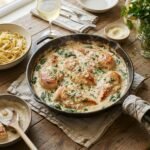
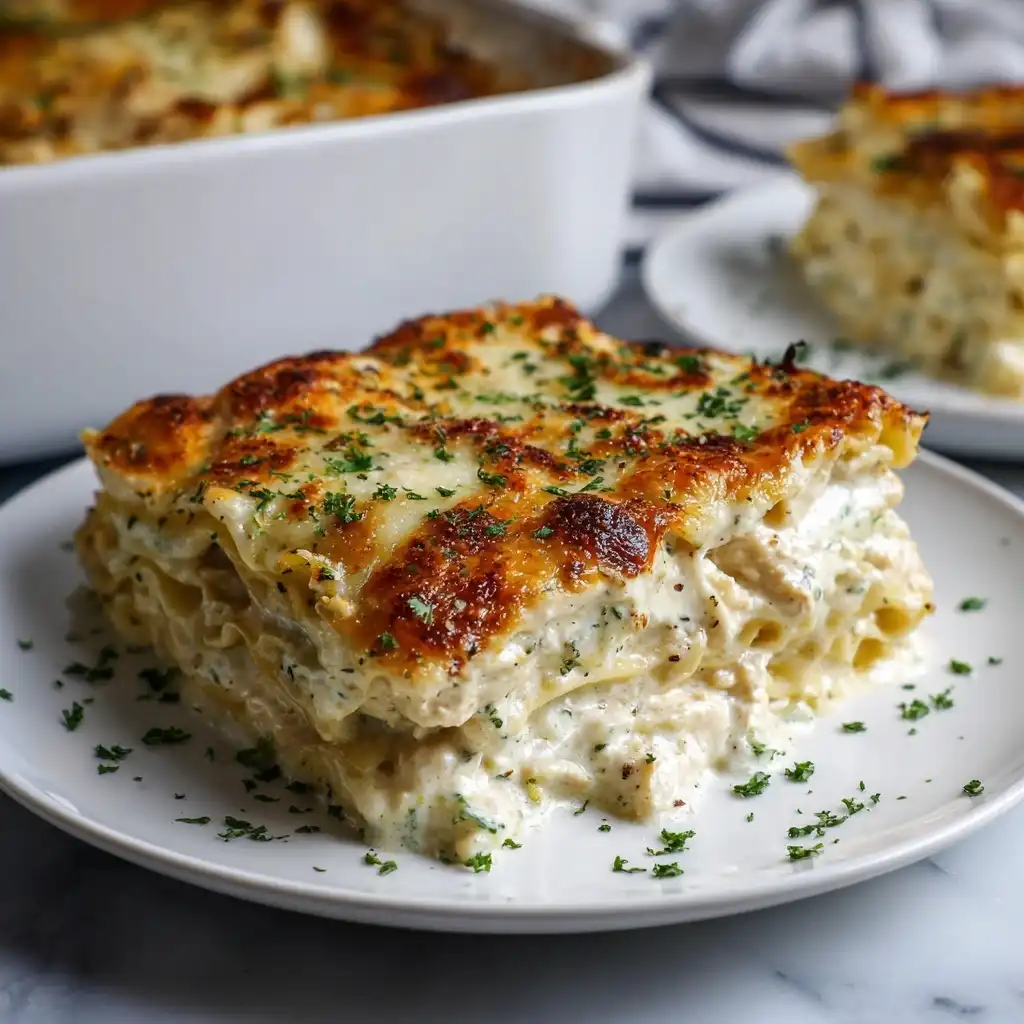
Creamy Garlic Chicken Alfredo Lasagna is a decadent, comforting fusion dish that masterfully bridges the rich traditions of Italian-American pasta bakes and classic American comfort food. Unlike traditional lasagna—which relies heavily on ricotta, mozzarella, and tomato-based marinara—this innovative variation swaps out the acidic tang for an ultra-luxurious, velvety garlic-infused Alfredo sauce, layered with tender herb-roasted chicken breast, oven-baked lasagna noodles, and a symphony of premium cheeses. It’s a hearty, restaurant-worthy casserole that delivers deep umami, aromatic garlic notes, and creamy mouthfeel in every forkful—perfect for weeknight family dinners, holiday gatherings, or meal-prep success. Whether you’re seeking a crowd-pleasing centerpiece for potlucks or a soul-soothing indulgence after a long day, this lasagna satisfies cravings while offering surprising versatility and room for thoughtful customization.
The History
The origins of Creamy Garlic Chicken Alfredo Lasagna lie at the intersection of culinary evolution, immigrant adaptation, and modern convenience culture. Traditional lasagna al forno traces back to medieval Italy—early versions from the 13th century featured sheets of dough layered with spices, cheese, and sometimes minced meats—but the tomato-based red lasagna most Americans recognize emerged later, particularly after tomatoes became widely accepted in Europe post-18th century. Meanwhile, Fettuccine Alfredo was born in early 20th-century Rome, invented by Alfredo di Lelio as a rich, butter-and-Parmigiano dish to nourish his pregnant wife. When Italian immigrants brought both traditions to the U.S., they adapted ingredients to local availability—substituting ricotta for less-accessible Italian cheeses, adding ground beef or sausage for protein density, and eventually embracing convenience items like no-boil noodles and pre-shredded cheese. The “Chicken Alfredo Lasagna” iteration gained traction in the 1990s and early 2000s through food magazines, cable cooking shows, and early recipe websites, as home cooks sought healthier (yet still indulgent) alternatives to meat-heavy red sauces. Garlic’s inclusion reflects both Mediterranean flavor wisdom and the American love affair with bold, aromatic seasonings—especially as roasted and sautéed garlic techniques surged in popularity thanks to chefs like Emeril Lagasse and Ina Garten. Today, this dish stands as a testament to culinary hybridity: a proudly American reinterpretation rooted in Old World technique, elevated by modern pantry staples, and endlessly refined through decades of home kitchen experimentation.
Ingredients Breakdown
Every element in Creamy Garlic Chicken Alfredo Lasagna serves a precise structural, textural, or flavor function—nothing is arbitrary. Let’s explore each component in depth:
- Lasagna Noodles: We recommend oven-ready (no-boil) noodles for ease and optimal moisture absorption, though traditional boiled noodles work beautifully if slightly undercooked. High-protein durum wheat noodles hold up best against the heavy sauce without turning mushy. Gluten-free brown rice or lentil-based noodles are excellent alternatives—just verify they’re labeled “oven-ready” or parboil them per package instructions to prevent disintegration.
- Chicken Breast: Boneless, skinless chicken breasts are chosen for their lean tenderness and neutral canvas—but don’t skip the brining or dry-brining step (1 tsp kosher salt per ½ lb, rested 30 min). This ensures juiciness despite prolonged baking. For deeper flavor, marinate in olive oil, lemon zest, thyme, and black pepper for 1–4 hours before cooking. Rotisserie chicken is a savvy shortcut, but shred it finely and gently fold into warm (not hot) sauce to avoid drying.
- Fresh Garlic: The aromatic heart of the dish. Use 8–10 large cloves—peeled and thinly sliced or minced—to build layers of pungency. Raw garlic burns easily, so we gently sauté it in butter until fragrant and golden (not brown), then deglaze with a splash of dry white wine (like Pinot Grigio) to lift fond and mellow sharpness. Roasted garlic (1 whole head, roasted at 400°F for 40 minutes) can be folded into the Alfredo for a caramelized, nutty depth—a pro-tier variation worth the extra step.
- Heavy Cream & Whole Milk: While many recipes rely solely on heavy cream, our balanced blend uses 1 cup heavy cream + ½ cup whole milk. The cream delivers unctuous body and fat-soluble flavor release; the milk adds subtle sweetness, lightens texture, and prevents sauce separation during baking. Ultra-pasteurized dairy is fine, but avoid non-dairy “creaming substitutes”—they lack casein structure and will curdle or thin unpredictably.
- Parmigiano-Reggiano vs. Grated Romano: Authenticity matters here. Use freshly grated Parmigiano-Reggiano (aged 24+ months) for its crystalline granules, umami punch, and natural thickening power. Avoid pre-grated “Parmesan” in shakers—it contains cellulose anti-caking agents that impede melting and create graininess. A 2:1 ratio of Parmigiano to Pecorino Romano adds salty, tangy complexity without overwhelming bitterness.
- Fontina & Mozzarella: Fontina Val d’Aosta contributes earthy, buttery notes and superior meltability due to its high moisture and fat content. Low-moisture part-skim mozzarella offers stretch and mild milky balance—but for luxury, upgrade to fresh mozzarella di bufala (drained well and torn, not shredded) or smoked mozzarella for a campfire nuance. Never use pre-shredded mozzarella—it contains starches that hinder melting.
- Fresh Herbs & Seasonings: Fresh parsley (flat-leaf) adds bright, grassy contrast to richness; stir in at the end of sauce prep. Dried oregano and basil are omitted intentionally—their dusty notes clash with creamy garlic profiles. Instead, finish with freshly cracked black pepper, a whisper of freshly grated nutmeg (¼ tsp max—it enhances dairy without tasting “spicy”), and flaky sea salt (Maldon or Jacobsen) sprinkled over top layers before baking for textural pop.
- Optional Umami Boosters: A 2 tsp paste of white miso stirred into warm Alfredo adds profound savoriness without detectable soy flavor. A tablespoon of sun-dried tomato paste (oil-packed, drained) lends subtle fruit-forward depth. For vegetarians, replace chicken with roasted cremini mushrooms and lentils—sautéed until deeply browned and seasoned with soy sauce and liquid smoke.
Step-by-Step Recipe
- Prep & Preheat: Position rack in center of oven. Preheat to 375°F (190°C). Lightly grease a 9×13-inch glass or ceramic baking dish (avoid dark metal pans—they promote over-browning on edges).
- Cook Chicken: Season 1.5 lbs boneless, skinless chicken breasts with 1 tsp kosher salt and ½ tsp black pepper. Heat 1 tbsp olive oil in large skillet over medium-high. Sear chicken 5–6 min per side until golden and internal temp reaches 155°F (carryover cooking will bring it to 165°F). Rest 10 min, then dice into ½-inch cubes. Reserve juices.
- Sauté Aromatics: In same skillet, reduce heat to medium-low. Melt 4 tbsp unsalted butter. Add 10 thinly sliced garlic cloves; cook 2–3 min, stirring constantly, until fragrant and pale gold (do not brown). Add ¼ cup dry white wine; simmer 1 min, scraping up browned bits. Remove from heat.
- Build Alfredo Sauce: In heavy-bottomed saucepan, combine 2 cups whole milk, 1 cup heavy cream, 1 tsp Dijon mustard (for emulsification), and reserved chicken pan juices. Warm over medium-low heat until steaming (do not boil). Whisk in 2 cups freshly grated Parmigiano-Reggiano and 1 cup grated Fontina, ¼ cup at a time, allowing each addition to fully melt before adding more. Stir constantly with a silicone whisk in slow figure-eights to prevent scorching. Once smooth and glossy (about 8–10 min), remove from heat. Fold in sautéed garlic-wine mixture, ¼ cup chopped fresh parsley, ¼ tsp freshly grated nutmeg, and ½ tsp black pepper. Taste and adjust salt sparingly—cheese is salty!
- Layer Thoughtfully: Spread ¾ cup Alfredo sauce evenly across bottom of baking dish. Place first layer of 4–5 oven-ready noodles (slightly overlapping if needed). Top with ⅓ of chicken, ⅓ of remaining sauce, and ⅓ of 2 cups shredded low-moisture mozzarella. Repeat for second layer. Final layer: noodles, remaining sauce, remaining mozzarella, and ½ cup extra Parmigiano-Reggiano. Dot surface with 2 tbsp cold butter, cut into small pieces—this promotes golden, blistered topping.
- Bake Covered: Cover dish tightly with aluminum foil (tent it to prevent cheese from sticking). Bake 25 min.
- Bake Uncovered: Remove foil. Rotate dish. Continue baking 15–20 min until top is bubbling vigorously at edges and cheese is deeply golden with slight lacy crispness. Internal temperature should read 165°F when checked at center with instant-read thermometer.
- Rest Imperatively: Remove from oven and let rest uncovered for full 25 minutes. This allows starches to set, sauce to reabsorb, and layers to firm—preventing a soupy collapse when sliced. Tent loosely with foil if cooling longer than 30 min.
- Final Touch: Just before serving, garnish with additional fresh parsley, lemon zest, and flaky sea salt. Serve with garlic-rubbed crostini or simple arugula salad dressed in lemon vinaigrette to cut richness.
Tips
- Garlic Control is Key: Burnt garlic turns bitter and dominates the dish. Keep heat low, stir constantly, and remove from heat the *second* it turns pale gold—not amber. If unsure, crush cloves instead of mincing—they release flavor slower and burn less readily.
- Sauce Consistency Mastery: Alfredo should coat the back of a spoon thickly but still flow slowly. If too thin after cheese incorporation, simmer 1–2 min longer off direct heat (residual warmth continues thickening). If too thick, whisk in warm milk, 1 tbsp at a time—never cold liquid, which causes seizing.
- No-Boil Noodle Hack: Even “oven-ready” noodles benefit from a quick dip. Briefly soak noodles in hot tap water (60 sec) before layering—this jumpstarts hydration and prevents gaps or chewy patches.
- Cheese Grating Matters: Use a microplane for Parmigiano—it creates feathery ribbons that melt instantly. For mozzarella, grate cold (straight from fridge) on large-holed box grater for even strands that stretch beautifully.
- Resting = Structure: Skipping the 25-minute rest guarantees runny slices. Set a timer. This pause lets proteins relax, starches retrograde, and fats redistribute—transforming “gooey” into “luxuriously cohesive.”
- Make-Ahead Magic: Assemble up to 24 hours ahead. Cover tightly and refrigerate unbaked. Add 10–15 min to covered bake time. For freezer storage: assemble, wrap in double layer plastic + foil, freeze up to 3 months. Thaw overnight in fridge before baking.
- Reheating Right: Individual portions reheat best in covered skillet over low heat with 1 tsp cream or broth, stirring gently until warmed through. Microwave reheating dries out cheese—only use at 50% power in 30-sec bursts, stirring between.
- Visual Doneness Cues: Don’t rely solely on time. Look for: 1) Sauce bubbling *vigorously* around all edges, 2) Cheese top deeply golden with defined, lacy edges, 3) Noodles tender when pierced with fork at center (no resistance).
Variations and Customizations
This lasagna is a brilliant canvas—here’s how to personalize it without compromising integrity:
- Vegetarian Delight: Replace chicken with 3 cups roasted vegetables: zucchini, bell peppers, eggplant, and red onion tossed in olive oil, rosemary, and balsamic glaze. Add 1 cup cooked green lentils for protein heft and earthy texture. Boost umami with 2 tbsp nutritional yeast in sauce.
- Seafood Sophistication: Swap chicken for 1.5 lbs lump crabmeat (picked over) and 1 cup jumbo shrimp, sautéed 2 min in garlic butter. Fold gently into warm sauce—never boil seafood. Finish with dill and lemon zest instead of parsley.
- Spicy Arrabbiata Twist: Infuse Alfredo with heat: Sauté 1 diced Fresno chili and ½ tsp crushed red pepper flakes with garlic. Stir in 2 tbsp tomato paste and 1 tsp smoked paprika before adding dairy. Balance with extra cream and a touch of honey.
- Truffle Luxury: Drizzle 1 tsp white truffle oil into finished sauce. Top baked lasagna with shaved black truffle and microgreens. Use truffle-infused fontina if available.
- Low-Carb/Keto Adaptation: Replace noodles with thin, blanched zucchini ribbons (salting and pressing removes water) or oven-baked eggplant slices (½-inch thick, salted 15 min, patted dry). Increase cheese ratio slightly to compensate for lost starch binding.
- Gluten-Free Precision: Use certified GF oven-ready noodles (Tinkyada or Barilla). Ensure all sauces, wines, and broths are GF-certified—many “natural flavors” hide gluten. Thicken sauce with 1 tsp xanthan gum whisked into cold cream before heating.
- Herb Garden Edition: Steep 2 tbsp fresh thyme, 1 tbsp sage, and 1 bay leaf in warm cream/milk for 15 min before straining. Fold into sauce with lemon-thyme infused olive oil drizzle before baking.
- Breakfast Lasagna Reinvention: Layer with scrambled eggs mixed with Gruyère, crumbled bacon, caramelized onions, and chives. Replace Alfredo with béchamel infused with Dijon and chervil.
Health Considerations and Nutritional Value
A single 1-cup serving (approx. 1/8 of 9×13 pan) delivers approximately 580–620 calories, with 38–42g protein, 32–36g fat (18–20g saturated), 34–38g carbohydrates, and 2–3g fiber. While undeniably rich, mindful preparation transforms this dish from occasional treat to nutrient-dense meal:
- Protein Powerhouse: Chicken breast provides complete, lean protein essential for muscle repair and satiety. Pairing with Parmigiano (rich in calcium, phosphorus, and bioactive peptides) enhances protein quality and bone health support.
- Smart Fat Strategy: Though high in saturated fat, the majority comes from dairy—naturally occurring short- and medium-chain fatty acids (like butyrate) linked to improved gut health and anti-inflammatory effects. Using grass-fed butter and cheese increases omega-3s and CLA (conjugated linoleic acid).
- Reducing Sodium Thoughtfully: Skip added table salt during cooking. Rely on naturally salty cheeses and finish with flaky sea salt for controlled dosing. Opt for low-sodium chicken broth if using in sauce base.
- Fiber & Phytonutrient Boost: Add 1 cup finely chopped spinach or kale to the chicken layer—it wilts invisibly and contributes folate, vitamin K, and lutein without altering texture. Sun-dried tomatoes add lycopene; roasted garlic offers allicin (antioxidant and cardiovascular support).
- Digestibility Notes: Lactose-intolerant? Use lactose-free milk and aged cheeses (Parmigiano has <0.1g lactose per oz). For dairy sensitivity, substitute cashew cream (soaked raw cashews blended with water, nutritional yeast, lemon juice) —though texture differs, it’s remarkably rich and allergen-friendly.
- Portion Wisdom: Serve smaller portions (¾ cup) alongside a large, vibrant salad (arugula, cherry tomatoes, cucumber, lemon-tahini dressing) to balance macros and increase volume with minimal calories.
- Notable Micronutrients: Per serving: ~30% DV calcium, 25% DV phosphorus, 20% DV vitamin B12, 15% DV zinc, and significant selenium—critical for thyroid function and antioxidant defense.
Ingredients
- 1.5 lbs boneless, skinless chicken breasts
- 1 tsp kosher salt (plus more to taste)
- ½ tsp freshly ground black pepper
- 1 tbsp extra-virgin olive oil
- 4 tbsp unsalted butter
- 10 large garlic cloves, peeled and thinly sliced
- ¼ cup dry white wine (e.g., Pinot Grigio or Sauvignon Blanc)
- 2 cups whole milk
- 1 cup heavy cream
- 1 tsp Dijon mustard
- 2 cups freshly grated Parmigiano-Reggiano (not pre-grated)
- 1 cup freshly grated Fontina Val d’Aosta
- 2 cups shredded low-moisture mozzarella
- ¼ cup finely chopped fresh flat-leaf parsley
- ¼ tsp freshly grated nutmeg
- 9–12 oven-ready lasagna noodles (depending on brand thickness)
- 2 tbsp cold unsalted butter, cut into small pieces
- Flaky sea salt (e.g., Maldon) and additional black pepper, for finishing
- Optional garnish: lemon zest, additional parsley, microgreens
Directions
- Preheat oven to 375°F (190°C). Grease a 9×13-inch baking dish.
- Season chicken with 1 tsp kosher salt and ½ tsp black pepper. Heat olive oil in large skillet over medium-high heat. Sear chicken 5–6 minutes per side until golden and internal temperature reaches 155°F. Transfer to cutting board; rest 10 minutes. Dice into ½-inch cubes. Reserve any pan juices.
- In same skillet over medium-low heat, melt 4 tbsp butter. Add garlic; cook 2–3 minutes, stirring constantly, until fragrant and pale gold. Add wine; simmer 1 minute, scraping up browned bits. Remove from heat.
- In saucepan, combine milk, cream, Dijon, and reserved pan juices. Warm over medium-low heat until steaming (do not boil). Gradually whisk in cheeses, ¼ cup at a time, allowing full melting before next addition. Cook 8–10 minutes, stirring constantly with silicone whisk, until thick and glossy. Remove from heat. Stir in garlic-wine mixture, parsley, nutmeg, and ½ tsp black pepper. Taste; adjust salt only if needed.
- Spread ¾ cup sauce in bottom of baking dish. Layer 4–5 noodles. Top with ⅓ chicken, ⅓ sauce, ⅓ mozzarella. Repeat twice. Top final noodle layer with remaining sauce, remaining mozzarella, and ½ cup Parmigiano. Dot with 2 tbsp cold butter pieces.
- Cover tightly with foil. Bake 25 minutes.
- Remove foil. Bake uncovered 15–20 minutes until edges bubble vigorously and top is golden and lacy.
- Let rest uncovered for 25 minutes. Garnish with flaky salt, lemon zest, and parsley. Slice and serve.
FAQ
- Can I use regular lasagna noodles instead of oven-ready?
- Yes! Cook noodles in salted boiling water until *al dente* (1–2 minutes less than package directs), drain well, and rinse briefly with cool water to stop cooking. Pat thoroughly dry with clean towels—excess water dilutes sauce.
- Why does my Alfredo sauce break or look grainy?
- Common causes: 1) Adding cheese to boiling liquid—always remove from heat first; 2) Using pre-grated cheese with anti-caking agents; 3) Whisking too vigorously or using cold cheese. Solution: Warm cheese slightly, add gradually off-heat, stir gently in figure-eights.
- Can I make this vegetarian without losing richness?
- Absolutely. Roast 3 cups mixed vegetables (zucchini, mushrooms, eggplant, onion) with olive oil and herbs until deeply caramelized. Add 1 cup cooked lentils and 2 tbsp nutritional yeast to sauce for savory depth and protein. Top with toasted pine nuts.
- How do I prevent soggy noodles?
- Ensure sauce isn’t overly thin before layering. Soak oven-ready noodles 60 seconds in hot water. Avoid over-layering sauce—stick to specified amounts. Resting after baking is non-negotiable for starch setting.
- Can I freeze this lasagna?
- Yes! Assemble unbaked, wrap tightly in plastic + foil, freeze up to 3 months. Thaw overnight in fridge. Bake covered 35 minutes, then uncovered 20–25 minutes until bubbly and golden.
- What wine pairs best with this dish?
- Opt for high-acid, low-oak whites: Vermentino, Grüner Veltliner, or unoaked Chardonnay cut richness beautifully. For red lovers, choose light-bodied, low-tannin options like chilled Frappato or Gamay.
- My garlic tasted bitter—what went wrong?
- Burning garlic is the culprit. Garlic must be cooked gently—golden, never brown. If you see color shifting toward amber, remove from heat immediately. Crushed cloves are more forgiving than minced.
- Can I add spinach? Will it make it watery?
- Yes—add 1 cup finely chopped raw spinach to the chicken layer. Its moisture evaporates during baking and adds nutrients without sogginess. For extra insurance, squeeze thawed frozen spinach *very* dry.
Summary
Creamy Garlic Chicken Alfredo Lasagna is a masterclass in luxurious comfort—layering perfectly tender roasted chicken, deeply aromatic sautéed garlic, and a velvety, slow-simmered Alfredo sauce enriched with three premium cheeses over oven-ready noodles.
With meticulous attention to texture, temperature control, and resting time—and endless options for customization—it transforms weeknight cooking into a celebration of flavor, tradition, and joyful abundance.