Introduction
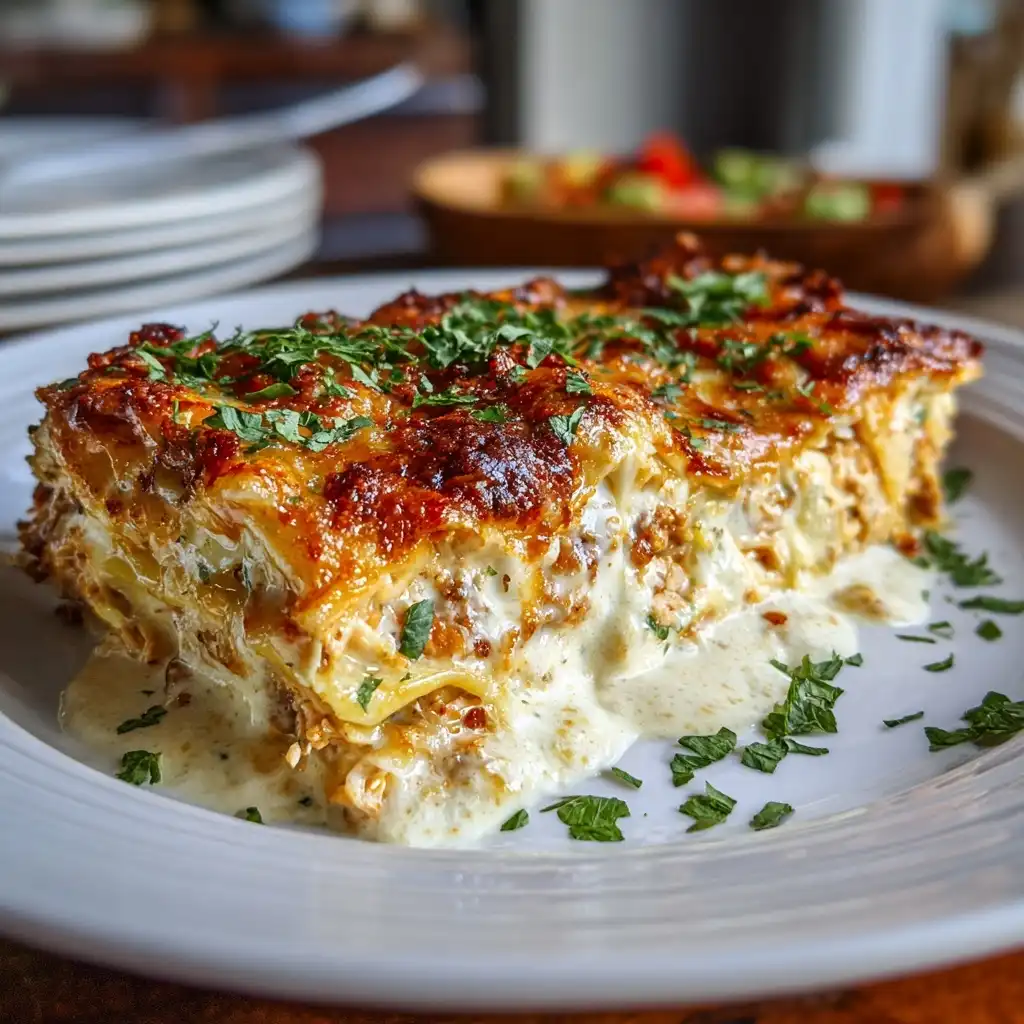
Million Dollar Chicken Lasagna is not just a dish—it’s a culinary phenomenon that redefines comfort food with its rich, layered indulgence and irresistible balance of creamy, cheesy, savory, and herbaceous notes. Unlike traditional lasagna built on tomato sauce and ground beef, this showstopping variation swaps pasta for tender, slow-braised chicken breast or thighs, layers it with velvety cream cheese and sour cream-based Alfredo, and crowns it with a golden mosaic of mozzarella, cheddar, and Parmesan. Its name—“Million Dollar”—is no hyperbole: it evokes luxury, decadence, and the kind of soul-warming satisfaction reserved for milestone dinners, holiday feasts, and “I need to impress my in-laws” moments. Yet despite its opulent reputation, it’s remarkably approachable, forgiving for home cooks of all skill levels, and endlessly adaptable to dietary preferences and pantry constraints. Whether served at a Sunday supper, potluck gathering, bridal shower brunch, or freezer-to-oven weeknight rescue, Million Dollar Chicken Lasagna delivers restaurant-quality elegance without requiring chef-level technique—just love, patience, and a generous hand with the cheese.
The History
The origins of Million Dollar Chicken Lasagna are delightfully murky—a testament to how beloved, community-driven recipes evolve organically across generations and geographies. While no single creator or debut date can be definitively traced, food historians and recipe archivists point to its emergence in the late 1990s and early 2000s within American church cookbooks, Midwest potluck circles, and Southern “covered dish” traditions. Its conceptual DNA draws from three key influences: First, the enduring popularity of “million dollar” monikers in mid-century American baking (e.g., Million Dollar Pie, Million Dollar Salad), which signaled richness, special occasion status, and crowd-pleasing appeal. Second, the rise of “deconstructed” or “pasta-less” casseroles during the low-carb and carb-conscious waves of the early 2000s—where noodles were replaced by proteins like chicken, turkey, or even cauliflower “noodles” to accommodate evolving dietary trends. Third, the widespread adoption of refrigerated and shelf-stable cream cheese and sour cream products, which empowered home cooks to build luxuriously thick, tangy, and stable sauces without roux or heavy reduction.
Early iterations appeared under names like “Creamy Chicken Casserole,” “Cheesy Chicken Bake,” and “Lasagna-Style Chicken Bake” before coalescing into the now-iconic “Million Dollar Chicken Lasagna” label—likely popularized through viral email chains, early food blogs (circa 2004–2007), and later Pinterest boards in the 2010s. Notably, the recipe gained traction in military families’ meal-planning guides for its freezer-friendliness and ability to feed large groups efficiently; in homeschool co-op newsletters for its make-ahead versatility; and in cancer support communities for its gentle, nutrient-dense profile suitable for recovering appetites. Over time, regional twists emerged: Tex-Mex versions with jalapeños and pepper jack; keto adaptations using almond flour “crusts”; dairy-free renditions with cashew-based “ricotta”; and gluten-free variations certified for celiac households. Today, it stands as a living heirloom recipe—constantly remixed, lovingly annotated in margins, and passed down with handwritten notes like “add extra garlic—Dad loves it” or “skip the parsley—kids pick it out.”
Ingredients Breakdown
Understanding each ingredient’s functional role—not just its flavor—is essential to mastering Million Dollar Chicken Lasagna. This isn’t a list to check off; it’s a symphony where every component has a purpose:
- Chicken Breast or Thighs (3–4 cups, cooked & shredded): The structural and savory foundation. Breast offers lean tenderness; thighs provide deeper umami and moisture retention. Poaching, slow-cooking, or rotisserie chicken ensures consistent texture and prevents dryness. Shredding against the grain maximizes tenderness.
- Cream Cheese (8 oz, full-fat, softened): The binding agent and primary source of unctuous richness. Softened (not melted) cream cheese blends smoothly into the sauce, preventing lumps and contributing tangy depth and mouth-coating body. Low-fat versions destabilize the emulsion and yield a grainy, watery result.
- Sour Cream (1 cup, full-fat): Adds bright acidity to cut through fat, improves sauce fluidity, and contributes subtle fermented complexity. Its lactic tang balances the sweetness of onions and richness of cheese. Avoid “light” or “fat-free” versions—they separate when baked and impart an artificial aftertaste.
- Heavy Cream or Half-and-Half (½–¾ cup): The luxurious finish that transforms the sauce from dense to silken. Heavy cream (36–40% fat) yields maximum stability and velvety texture; half-and-half (10.5–18% fat) offers lighter richness while still performing reliably. Never substitute milk—it lacks fat to emulsify and will curdle or thin the sauce excessively.
- Fresh Garlic (3–4 cloves, minced): The aromatic backbone. Raw garlic burns and turns bitter in high-heat baking; sautéing it gently in butter or olive oil first mellows its pungency and unlocks sweet, nutty undertones that permeate the entire dish.
- Yellow Onion (½ medium, finely diced): Provides aromatic sweetness and textural contrast. Sautéed until translucent (not browned), it dissolves into the sauce, adding depth without crunch—critical for seamless layering.
- Shredded Mozzarella (2 cups, low-moisture, whole-milk): The melt-and-stretch star. Low-moisture mozzarella melts evenly, browns beautifully, and forms that coveted stringy pull. Pre-shredded contains anti-caking starches that inhibit melting—always shred fresh.
- Sharp Cheddar (1½ cups, freshly shredded): Delivers bold, nutty, slightly salty complexity. Sharp or extra-sharp cheddar adds assertive flavor that cuts through richness; mild cheddar fades into blandness. Orange cheddar adds visual warmth; white cheddar offers subtler color contrast.
- Grated Parmesan (½ cup, real Parmigiano-Reggiano or domestic aged Parmesan): The umami amplifier and salty finisher. Its crystalline texture and deep, fermented savoriness elevate every bite. Avoid powdered “Parmesan” in green shakers—it contains cellulose, no real cheese, and imparts zero flavor.
- Garlic Powder & Onion Powder (½ tsp each): Background enhancers that reinforce the fresh aromatics without overwhelming. They add roundness and consistency, especially important if fresh garlic/onion quantities vary.
- Dried Italian Seasoning (1 tbsp): A balanced blend (typically oregano, basil, marjoram, thyme, rosemary) that provides herbal brightness without bitterness. Opt for a high-quality blend with visible leaf flecks—not dusty, oxidized powder.
- Fresh Parsley (¼ cup, finely chopped): Added *after* baking for vibrant color, clean grassy notes, and textural freshness. Heat destroys its volatile oils, so stirring it in pre-bake dulls its impact.
- Salt & Freshly Ground Black Pepper (to taste): Non-negotiable for seasoning layers individually—chicken, sauce, cheese blend—because undersalting leads to flat, one-dimensional flavor, even with abundant cheese.
- Butter (2 tbsp, unsalted): For sautéing aromatics. Unsalted allows precise sodium control; clarified butter adds nuttier depth if desired.
Optional but highly recommended enhancements include a splash of white wine (¼ cup, added while sautéing onions to deglaze and add acidity), a pinch of cayenne (⅛ tsp) for warmth, and a tablespoon of lemon zest stirred into the sauce for brightness that lifts the richness.
Step-by-Step Recipe
- Prep the Chicken (30–45 minutes, including cooling): Place 1.5 lbs boneless, skinless chicken breasts or thighs in a large saucepan. Cover with cold water or low-sodium chicken broth. Add 1 bay leaf, 2 sprigs fresh thyme, 1 halved lemon, 1 tsp black peppercorns, and 1 tsp kosher salt. Bring to a gentle simmer over medium-low heat—do not boil vigorously. Reduce heat to low, cover, and poach for 15–20 minutes (breast) or 25–30 minutes (thighs), until internal temperature reaches 165°F. Remove chicken, let rest 10 minutes, then shred finely with two forks. Discard cooking liquid or reserve for soup. Measure exactly 3.5–4 cups shredded chicken; set aside.
- Sauté the Aromatics (8–10 minutes): In a large nonstick skillet or Dutch oven over medium heat, melt 2 tbsp unsalted butter. Add ½ cup finely diced yellow onion; cook 4–5 minutes until soft and translucent. Add 3–4 cloves minced garlic and ¼ tsp red pepper flakes (optional); cook 1 minute more until fragrant—do not brown. Remove from heat and let cool slightly.
- Build the Sauce Base (5 minutes): In a large mixing bowl, beat 8 oz full-fat cream cheese (softened to room temperature) with an electric hand mixer on medium speed for 1 minute until smooth and creamy. Scrape down sides. Add the cooled onion-garlic mixture and mix 30 seconds. Next, add 1 cup full-fat sour cream, ½ cup heavy cream, 1 tbsp dried Italian seasoning, ½ tsp garlic powder, ½ tsp onion powder, 1 tsp kosher salt, and ½ tsp freshly ground black pepper. Beat on low speed just until fully combined—about 1 minute. Overmixing incorporates too much air and can cause separation during baking. Gently fold in the shredded chicken with a silicone spatula until evenly distributed. Taste and adjust salt/pepper.
- Layer the Casserole (7–10 minutes): Preheat oven to 375°F (190°C). Grease a 9×13-inch baking dish (glass or ceramic preferred for even heating) with butter or nonstick spray. Spread half the chicken-cream mixture (approx. 4–4.5 cups) evenly into the dish. Sprinkle evenly with 1 cup shredded mozzarella and ¾ cup sharp cheddar. Top with remaining chicken mixture, spreading gently to level. Sprinkle with remaining 1 cup mozzarella, ¾ cup cheddar, and ½ cup grated Parmesan. For optimal browning, dot the top surface lightly with 1 tbsp cold butter cut into small pieces.
- Bake to Golden Perfection (45–55 minutes): Cover dish tightly with aluminum foil (tent it slightly to prevent cheese from sticking). Bake for 30 minutes. Carefully remove foil and continue baking, uncovered, for 15–25 minutes—until the top is deeply golden, bubbling vigorously at edges, and internal temperature registers 165°F in the center (use an instant-read thermometer). If top browns too quickly, loosely tent again with foil. Rotate dish halfway through uncovered baking for even color.
- Rest and Finish (15–20 minutes): Remove from oven and let rest, undisturbed, for a full 15 minutes. This critical step allows the sauce to fully set, prevents runny slices, and lets residual heat finish cooking the center. After resting, sprinkle generously with ¼ cup finely chopped fresh parsley. Optional: drizzle with 1 tsp high-quality extra-virgin olive oil or a squeeze of fresh lemon juice for brightness.
Tips
- Texture Is Everything: Shred chicken finely—not roughly chopped—and ensure it’s fully cooled before mixing. Warm chicken melts cream cheese prematurely, causing greasiness and sauce separation.
- Cheese Matters More Than You Think: Always shred your own cheese. Pre-shredded contains cellulose and potato starch, which repel moisture and create a gritty, clumpy, non-melting mess. Invest in a box grater or food processor with shredding disc.
- Room-Temperature Ingredients Are Non-Negotiable: Cold cream cheese won’t incorporate smoothly. Take it out 2 hours ahead—or soften gently in 10-second microwave bursts (no melting!). Sour cream and heavy cream should also be cool, not fridge-cold.
- Don’t Skip the Rest: Cutting into the lasagna before it rests guarantees a soupy, collapsed mess. That 15-minute wait transforms it from “delicious casserole” to “restaurant-worthy sliceable masterpiece.” Set a timer—it’s worth it.
- Baking Dish Choice Impacts Results: Glass or ceramic dishes retain heat longer and bake more evenly than metal. If using metal, reduce initial covered bake time by 5 minutes and watch closely during uncovered phase—it may brown faster.
- Prevent Burnt Edges: If corners begin browning too fast, crimp small foil “shields” and tuck them over the exposed edges during the final 10 minutes of uncovered baking.
- Double Batch? Double the Love (and Strategy): To scale, use two 9×13 dishes—but do not double the sauce ingredients and bake in one oversized pan. It will steam instead of bake, resulting in soggy, uneven layers. Instead, make two separate batches of sauce and assemble separately.
- Freezer-Friendly Mastery: Assemble unbaked lasagna, cover tightly with foil + plastic wrap, and freeze up to 3 months. Bake from frozen: add 20 minutes covered, then uncover and bake as directed—no thawing needed. For best quality, freeze before adding the top cheese layer; add cheese just before baking.
- Leftovers Are Better Tomorrow: Refrigerated leftovers (up to 5 days) develop deeper flavor as herbs and cheeses meld. Reheat individual portions in a covered dish at 350°F for 20–25 minutes, or in the microwave at 50% power in 90-second intervals, stirring gently between.
- Thermometer > Guesswork: Visual cues alone aren’t reliable. An instant-read thermometer inserted into the center must read 165°F to ensure food safety and optimal texture. Underbaked = runny; overbaked = rubbery cheese and dry chicken.
Variations and Customizations
Million Dollar Chicken Lasagna is gloriously versatile—designed to adapt to seasons, pantries, diets, and moods. Here’s how to reimagine it thoughtfully:
Dietary Adaptations
- Keto/Low-Carb: Omit any starchy additions (like optional roasted red peppers or sun-dried tomatoes). Ensure all cheeses are carb-free (check labels on pre-shredded). Boost volume with sautéed spinach (10 oz, squeezed dry) or sliced mushrooms (8 oz, cooked until moisture evaporates).
- Gluten-Free: Naturally GF—but verify labels on broth (if used for poaching), seasonings, and pre-shredded cheese (some contain wheat starch). Use certified GF spices and tamari instead of soy sauce if adding umami depth.
- Dairy-Free: Substitute cream cheese with blended raw cashews (1 cup soaked + ¼ cup water + 1 tbsp lemon juice + ½ tsp salt), sour cream with coconut yogurt (unsweetened, full-fat), and cheeses with nutritional yeast–cashew “cheese” blends or high-quality vegan mozzarella shreds (Miyoko’s or Violife perform best).
- Lighter Version: Replace half the cream cheese with 4 oz Neufchâtel (⅓ less fat), use 2% sour cream, and swap heavy cream for whole milk + 1 tbsp cornstarch (whisked in cold). Increase herbs and lemon zest to compensate for reduced richness.
Flavor & Texture Twists
- Herb Garden Edition: Fold in ¼ cup chopped fresh dill + 2 tbsp chopped chives + 1 tbsp lemon zest into the sauce. Top with crumbled feta instead of cheddar for a Greek-inspired profile.
- Smoky Southwest: Add 1 tsp smoked paprika + 1 finely diced chipotle in adobo (minced) to the sauce. Layer with roasted corn (½ cup), black beans (½ cup, rinsed), and Monterey Jack cheese. Garnish with avocado crema and pickled red onions.
- Mushroom & Truffle: Sauté 8 oz sliced cremini mushrooms with 1 tbsp thyme until deeply browned; fold into chicken mixture. Stir 1 tsp white truffle oil into sauce before assembling. Top with Gruyère instead of cheddar.
- Buffalo Blue: Toss shredded chicken in ⅓ cup buffalo sauce before mixing. Replace cheddar with crumbled blue cheese and mozzarella with provolone. Drizzle with ranch or blue cheese dressing post-bake.
- Roasted Veggie Medley: Fold in 1.5 cups roasted vegetables (zucchini, bell peppers, eggplant, cherry tomatoes) into sauce. Add ¼ cup toasted pine nuts for crunch. Top with goat cheese crumbles.
Meal-Prep & Presentation Upgrades
- Individual Servings: Bake in six 8-oz ramekins. Reduce covered time to 20 minutes, uncovered to 12–15 minutes. Perfect for portion control, gifting, or elegant dinner parties.
- Make-Ahead Assembly: Fully assemble 1 day ahead; refrigerate covered. Add 5–10 minutes to initial covered bake time. Let sit at room temp 20 minutes before baking.
- Gourmet Garnishes: Elevate presentation with microgreens, edible flowers, flaky sea salt, crispy fried shallots, or a dusting of smoked paprika or sumac.
- Serving Pairings: Serve alongside a crisp arugula salad with lemon vinaigrette, roasted asparagus with lemon zest, or crusty artisan bread for scooping. For drinks: chilled Pinot Grigio, sparkling water with grapefruit, or a light IPA.
Health Considerations and Nutritional Value
While undeniably indulgent, Million Dollar Chicken Lasagna offers meaningful nutritional benefits when prepared mindfully—and understanding its composition empowers informed enjoyment:
Nutrient Highlights (Per Standard Serving, ~1⅓ cups)
- High-Quality Protein (38–42g): From lean chicken and dairy, supporting muscle maintenance, satiety, and metabolic health. Chicken breast provides all nine essential amino acids; dairy adds casein and whey for sustained release.
- Calcium & Vitamin D (30–35% DV): Mozzarella, cheddar, and Parmesan contribute bioavailable calcium for bone health. Fortified dairy products add vitamin D, enhancing calcium absorption.
- B-Vitamins (B12, B2, Niacin): Abundant in chicken and cheese—critical for energy metabolism, nervous system function, and red blood cell formation.
- Probiotics (Moderate): Full-fat sour cream and aged cheeses contain beneficial bacteria strains (e.g., Lactobacillus) that support gut microbiome diversity—especially when consumed regularly as part of a varied diet.
- Healthy Fats (18–22g): Primarily monounsaturated (from cheese, olive oil if used) and saturated fats (from dairy). Current research affirms that natural saturated fats from whole foods—when part of a balanced diet—do not inherently increase heart disease risk. Focus remains on limiting *added sugars* and *ultra-processed trans fats*, neither present here.
Considerations for Balanced Enjoyment
- Sodium Awareness: One serving contains ~680–850mg sodium—within USDA daily limits (2,300mg), but notable for those managing hypertension. Reduce salt by 25% and amplify herbs, citrus, and spice for flavor without sodium.
- Saturated Fat Context: At ~11–14g per serving, it fits comfortably within guidelines (≤10% of daily calories; ~22g for 2,000-calorie diet). Pair with fiber-rich sides (roasted vegetables, lentil salad) to support cholesterol metabolism.
- Not Low-Calorie—but Nutrient-Dense: At ~520–580 calories per serving, it’s calorie-rich but packed with macro- and micronutrients—making it far more satiating and nutritionally rewarding than ultra-processed alternatives of similar caloric value.
- Food Safety First: Because of its dairy-and-chicken composition, refrigerate leftovers within 2 hours. Reheat to 165°F throughout. Never leave at room temperature >2 hours (or >1 hour if above 90°F).
- For Special Populations: Excellent for pregnancy (rich in choline from eggs if added, protein, calcium); supportive for aging adults (muscle-preserving protein, bone-supporting nutrients); adaptable for post-illness recovery (gentle texture, calorie-dense, easily digested).
Ingredients
- 1.5 lbs boneless, skinless chicken breasts or thighs
- 4 cups low-sodium chicken broth or water (for poaching)
- 1 bay leaf
- 2 sprigs fresh thyme
- 1 small lemon, halved
- 1 tsp black peppercorns
- 1 tsp kosher salt (for poaching)
- 2 tbsp unsalted butter
- ½ cup yellow onion, finely diced
- 3–4 cloves garlic, minced
- ¼ tsp red pepper flakes (optional)
- 8 oz full-fat cream cheese, softened to room temperature
- 1 cup full-fat sour cream
- ½ cup heavy cream (or half-and-half)
- 1 tbsp dried Italian seasoning
- ½ tsp garlic powder
- ½ tsp onion powder
- 1 tsp kosher salt (plus more to taste)
- ½ tsp freshly ground black pepper
- 3.5–4 cups cooked, shredded chicken (from above)
- 2 cups low-moisture mozzarella cheese, freshly shredded
- 1½ cups sharp cheddar cheese, freshly shredded
- ½ cup grated Parmesan cheese (Parmigiano-Reggiano preferred)
- ¼ cup fresh parsley, finely chopped (for garnish)
- 1 tbsp cold unsalted butter, cut into small pieces (for topping, optional)
Directions
- Prepare chicken: In a large saucepan, combine chicken, broth (or water), bay leaf, thyme, lemon halves, peppercorns, and 1 tsp salt. Bring to a gentle simmer over medium-low heat. Reduce heat to low, cover, and poach 15–30 minutes (see note) until chicken reaches 165°F internally. Remove chicken, let rest 10 minutes, then shred finely. Discard poaching liquid or reserve. Measure 3.5–4 cups shredded chicken; set aside.
- Preheat oven to 375°F (190°C). Grease a 9×13-inch baking dish.
- In a skillet, melt 2 tbsp butter over medium heat. Sauté onion 4–5 minutes until soft. Add garlic and red pepper flakes; cook 1 minute more. Remove from heat; cool slightly.
- In a large bowl, beat cream cheese with hand mixer until smooth (~1 min). Add cooled onion-garlic mixture and mix 30 sec. Add sour cream, heavy cream, Italian seasoning, garlic powder, onion powder, 1 tsp salt, and ½ tsp pepper. Mix on low until combined (~1 min). Gently fold in shredded chicken.
- Spread half the mixture into prepared dish. Top with 1 cup mozzarella and ¾ cup cheddar. Spread remaining chicken mixture evenly. Top with remaining 1 cup mozzarella, ¾ cup cheddar, and ½ cup Parmesan. Dot with 1 tbsp cold butter (optional).
- Cover tightly with foil. Bake 30 minutes. Remove foil; bake uncovered 15–25 minutes until golden, bubbly, and center reads 165°F.
- Let rest 15 minutes. Garnish with fresh parsley. Slice and serve.
FAQ
- Can I use rotisserie chicken?
- Absolutely—and highly recommended for convenience! Use 3.5–4 cups shredded meat (remove excess skin/fat). Skip the poaching step and proceed directly to sautéing aromatics. Rotisserie chicken adds a subtle smoky depth.
- Why does my sauce look curdled or separated?
- Most often caused by using cold cream cheese or overmixing the sauce. Always soften cream cheese fully, and mix only until incorporated. Also avoid substituting low-fat dairy—it lacks the fat needed to stabilize the emulsion.
- Can I make this ahead and refrigerate overnight?
- Yes! Assemble completely (including cheese topping), cover tightly, and refrigerate up to 24 hours. Add 5–10 minutes to the initial covered bake time, and let sit at room temperature for 20 minutes before baking.
- What’s the best way to reheat leftovers?
- For best texture: Place portion in an oven