Introduction
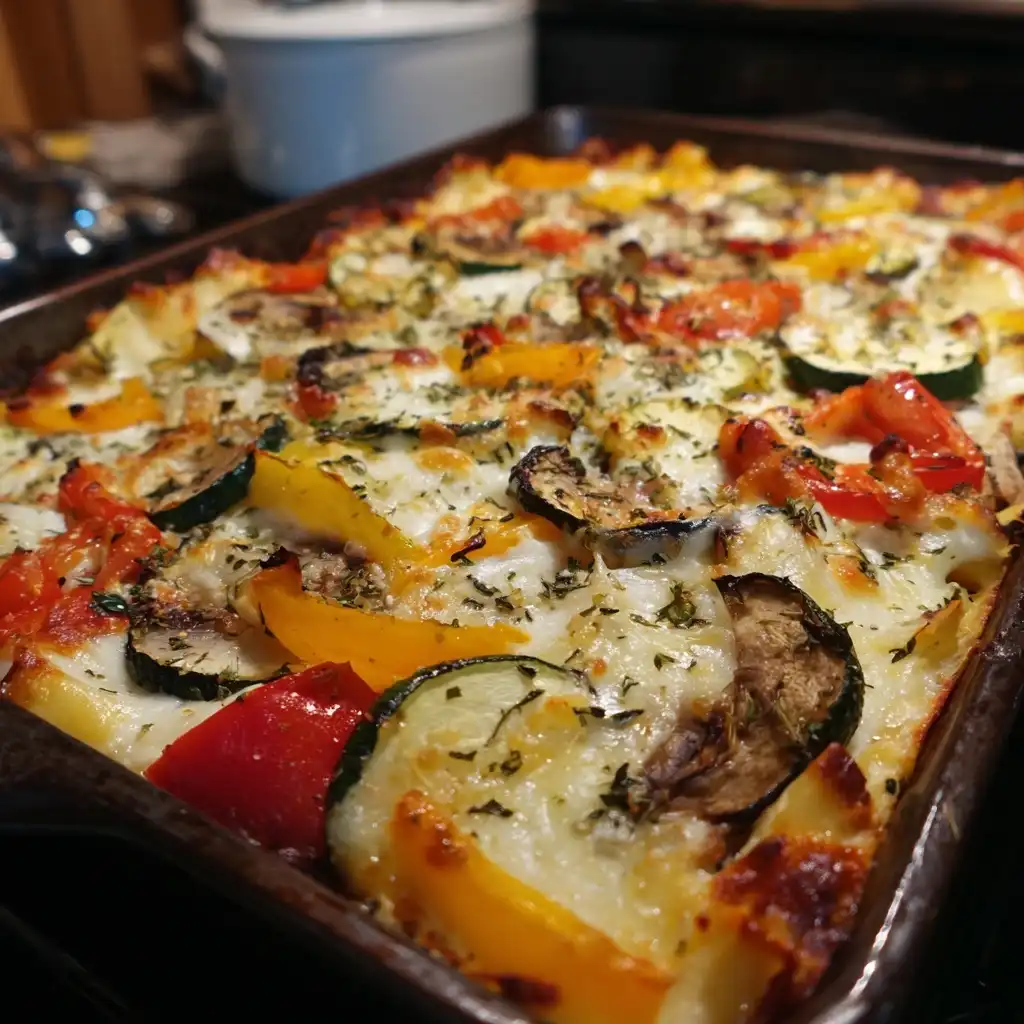
Roasted Vegetable Garden Lasagna is a vibrant, nutrient-dense, and deeply flavorful twist on the classic Italian comfort dish—reimagined for modern palates that cherish freshness, seasonality, and plant-forward cooking. Unlike traditional lasagnas laden with heavy meats and excessive cheeses, this version celebrates the natural sweetness, earthy depth, and textural complexity of garden-fresh vegetables enhanced by the transformative power of roasting. Each layer sings with caramelized notes—from golden zucchini and ruby-red bell peppers to tender-crisp eggplant and sweet roasted cherry tomatoes—harmonized by creamy ricotta, tangy marinara, and delicate ribbons of no-boil lasagna noodles. It’s a celebration of abundance, sustainability, and mindful indulgence: hearty enough to satisfy even the most devoted pasta lovers, yet light enough to feel nourishing and uplifting. Whether served at a summer potluck, a cozy family dinner, or as meal-prep magic for the week ahead, this lasagna bridges rustic charm and culinary sophistication—proving that wholesome can be decadent, and vegetarian need never mean compromise.
The History
Lasagna’s origins trace back over 700 years to medieval Italy, where layered pasta dishes known as “lasanum” (Latin for “cooking pot”) evolved into the baked, cheese-laden masterpieces we recognize today. Early versions featured sheets of dough layered with spices, herbs, and sometimes minced meats—but cheese, particularly ricotta and mozzarella, became central during the Renaissance, especially in Emilia-Romagna. The iconic “lasagna verde” (with spinach-infused noodles) and “lasagna alla bolognese” (featuring slow-simmered ragù) cemented its status as a regional treasure. Yet it wasn’t until the late 20th and early 21st centuries—amid rising interest in vegetarianism, farm-to-table ethics, and global flavor exploration—that chefs and home cooks began rethinking lasagna through a vegetable-forward lens. Roasting emerged as a pivotal technique: inspired by Mediterranean traditions (think Greek briam or Provençal ratatouille), American and Italian-American innovators discovered that roasting vegetables intensifies their sugars, deepens umami, reduces excess moisture (a common pitfall in veggie lasagnas), and adds structural integrity to each layer. The “Garden Lasagna” movement gained momentum with cookbooks like Deborah Madison’s Vegetarian Cooking for Everyone and viral social media recipes highlighting colorful, seasonal produce. Today, Roasted Vegetable Garden Lasagna stands not as a substitute for tradition—but as its thoughtful, joyful evolution: honoring heritage while embracing diversity, wellness, and the quiet poetry of sun-ripened vegetables.
Ingredients Breakdown
Every ingredient in this Roasted Vegetable Garden Lasagna plays a distinct, intentional role—contributing flavor, texture, moisture balance, nutrition, and structural cohesion. Let’s explore them in detail:
- No-Boil Lasagna Noodles (12–15 sheets): Engineered to absorb liquid and soften during baking, these eliminate pre-cooking steps and reduce mushiness. Opt for whole-grain or legume-based varieties (e.g., lentil or chickpea noodles) for added fiber and protein—just ensure they’re labeled “oven-ready.” Gluten-free options work beautifully too; verify compatibility with your sauce’s hydration level.
- Zucchini (2 medium, ~1 lb): Sliced lengthwise into ¼-inch planks, then roasted. High water content demands thorough salting and draining (15–20 minutes) to prevent sogginess. Roasting concentrates its mild sweetness and lends a silken-yet-substantial bite.
- Eggplant (1 large, ~1.5 lbs): Peeled or unpeeled (skin adds antioxidants and structure), cut into ½-inch half-moons. Salting draws out bitterness and excess moisture—critical for avoiding a watery lasagna. Its sponge-like flesh soaks up olive oil and herbs, becoming luxuriously creamy when roasted.
- Red Bell Pepper (2 large): Roasted until blistered and charred, then peeled. Adds vivid color, fruity sweetness, and a subtle smokiness. Rich in vitamin C and lycopene—especially potent when cooked with fat (like olive oil).
- Yellow Squash (2 medium): Complements zucchini with a slightly firmer texture and buttery nuance. Roasting mellows its mild flavor and enhances golden caramelization.
- Cherry Tomatoes (1 pint): Halved and roasted until shriveled and jammy. Their intense acidity and burst of sweetness cut through richness and add juicy contrast. Roasting concentrates lycopene bioavailability by up to 300%.
- Cremini Mushrooms (8 oz): Sliced and roasted until deeply browned. They contribute meaty umami, glutamic acid, and a satisfying chew—acting as the “savory anchor” in place of meat. Avoid washing; wipe clean to preserve texture.
- Red Onion (1 large): Thinly sliced and roasted until sweet and mellow. Contains quercetin (a potent anti-inflammatory flavonoid) and adds aromatic depth without sharpness.
- Fresh Garlic (6 cloves, smashed): Roasted whole in olive oil until soft and nutty. Transforms pungency into caramelized sweetness and infuses every vegetable layer with aromatic complexity.
- Extra-Virgin Olive Oil (½ cup + more for drizzling): Use high-quality, cold-pressed oil for roasting and finishing. Its polyphenols remain stable at roasting temps (~400°F), offering antioxidant protection and rich fruitiness.
- Fresh Herbs (2 tbsp each chopped rosemary, thyme, oregano): Added during roasting for aromatic penetration and post-bake garnish. Rosemary’s camphoraceous notes balance sweetness; thyme contributes earthy finesse; oregano lends Mediterranean warmth.
- Marinara Sauce (4 cups, homemade or high-quality store-bought): Choose low-sugar, no-added-preservative versions. Homemade allows control over sodium, herbs, and simmering time—deepening tomato flavor and thickening naturally. A splash of balsamic vinegar or red wine adds brightness and acidity.
- Ricotta Cheese (3 cups, full-fat, whole-milk): The creamy heart of the lasagna. Drain overnight in cheesecloth if watery. Full-fat ensures richness and prevents graininess. For vegan adaptation, blend soaked raw cashews with lemon juice, nutritional yeast, and garlic.
- Mozzarella (2 cups shredded, low-moisture, part-skim or whole-milk): Melts smoothly without excessive oil separation. Fresh mozzarella pearls can be torn and layered for gourmet texture—but shred for even coverage and reliable browning.
- Parmigiano-Reggiano (1 cup finely grated): Adds salty, nutty, crystalline umami. Authentic DOP-certified cheese delivers complex proteolysis-derived flavors unmatched by imitations.
- Fresh Spinach (5 oz baby, packed): Wilted gently in the residual heat of roasted veggies. Adds iron, folate, and vibrant green contrast without overwhelming flavor. No need to pre-cook—its moisture evaporates instantly.
- Lemon Zest (1 large lemon) & Juice (1 tbsp): Brightens the ricotta filling, cutting richness and enhancing vegetable sweetness. Citrus zest contains volatile oils that lift aromatics.
- Nutmeg (¼ tsp freshly grated): A whisper of warm spice that harmonizes dairy and vegetables—classic in Italian ricotta preparations.
- Sea Salt & Freshly Ground Black Pepper (to taste): Kosher or flaky sea salt ensures even distribution; freshly cracked pepper adds floral heat that blooms during baking.
Step-by-Step Recipe
- Preheat & Prep (15 min): Position oven racks in upper-middle and lower-middle positions. Preheat oven to 400°F (200°C). Line three large rimmed baking sheets with parchment paper. Gather all ingredients, measuring tools, and equipment (large mixing bowls, silicone spatulas, mandoline or sharp knife, fine-mesh strainer, 9×13-inch baking dish).
- Prepare Vegetables (25 min): Slice zucchini and yellow squash lengthwise into ¼-inch planks. Place in a colander, sprinkle generously with kosher salt (1 tsp per veg), and let drain over sink for 20 minutes. Meanwhile, peel eggplant (optional), cut into ½-inch half-moons, salt heavily, and drain separately. Core and seed red bell peppers; slice into 1-inch strips. Halve cherry tomatoes. Slice cremini mushrooms ¼-inch thick. Peel and thinly slice red onion. Smash garlic cloves (leave skins on for roasting).
- Roast Garlic (20 min): Toss smashed garlic cloves with 1 tbsp olive oil and a pinch of salt. Wrap tightly in foil. Roast on lower rack for 20 minutes until soft and golden. Remove, cool slightly, then squeeze pulp from skins into a small bowl. Reserve oil.
- Roast Vegetables (35–40 min): Pat zucchini, squash, and eggplant *very* dry with clean towels. In separate batches (to avoid steaming), toss each vegetable group with 1–2 tbsp reserved garlic oil or fresh EVOO, herbs, salt, and pepper. Spread evenly on parchment-lined sheets—no overlapping! Roast on upper and middle racks, rotating pans halfway, until deeply caramelized and tender but not mushy: zucchini/squash (20–22 min), eggplant (25–28 min), peppers/mushrooms/onion (28–32 min), tomatoes (15–18 min). Remove each sheet as done. Let cool 10 minutes.
- Make Ricotta Filling (10 min): In a large bowl, combine drained ricotta, roasted garlic puree, lemon zest and juice, nutmeg, ½ cup grated Parmigiano, ½ tsp salt, and ¼ tsp black pepper. Fold gently until uniform. Stir in wilted spinach just until distributed (do not overmix).
- Assemble Lasagna (15 min): Spread ¾ cup marinara in bottom of 9×13-inch dish. Layer 4 no-boil noodles (slightly overlapping). Spread ⅓ ricotta mixture (smooth, not gloppy). Top with ⅓ roasted zucchini/squash, ⅓ eggplant, ⅓ peppers, ⅓ mushrooms/onion, and ⅓ tomatoes. Drizzle with 2 tbsp marinara and 1 tbsp EVOO. Repeat layers twice more (noodles → ricotta → veggies → sauce/oil). Final noodle layer goes on top. Pour remaining marinara evenly over noodles. Sprinkle with remaining mozzarella and Parmigiano.
- Bake Covered (30 min): Cover tightly with greased aluminum foil (prevents drying and cheese scorching). Bake at 375°F (190°C) on middle rack for 30 minutes.
- Bake Uncovered (20–25 min): Remove foil. Continue baking until top is deeply golden, edges bubble vigorously, and center registers 185°F on an instant-read thermometer. If cheese browns too fast, tent loosely with foil.
- Rest & Set (35–45 min): This is non-negotiable. Remove from oven, place on wire rack, and let rest *undisturbed* for at least 35 minutes—ideally 45. This allows starches to set, layers to fuse, and residual heat to finish cooking noodles. Cutting too soon causes collapse and soupy layers.
- Serve (5 min): Garnish with fresh basil, extra lemon zest, and a final drizzle of high-quality EVOO. Cut into 12 generous squares using a sharp chef’s knife wiped clean between cuts.
Tips
- Moisture Is the Enemy—Control It Relentlessly: Salting and draining eggplant/zucchini isn’t optional—it’s foundational. Press drained veggies between clean towels before roasting. Roast tomatoes and mushrooms on a separate tray (they release more liquid) and pat dry before layering.
- Roast in Batches, Not All at Once: Overcrowding trays causes steaming instead of caramelizing. Use all oven racks simultaneously if needed—just rotate trays every 10 minutes for even browning.
- Layer Strategically for Texture Contrast: Place firmer veggies (eggplant, peppers) beneath softer ones (zucchini, tomatoes) so they don’t compress. Keep cherry tomatoes scattered—not clumped—to avoid localized sogginess.
- Underseason Every Component: Season vegetables *before* roasting (salt draws out water *and* enhances flavor), sauce *while simmering*, and ricotta *before assembling*. Remember: flavors mellow during baking, so initial seasoning should be bold but balanced.
- Use the Right Noodles: No-boil noodles require sufficient liquid to hydrate. Ensure your marinara is thick but not paste-like—if too thin, reduce it 10 minutes on stove. If too thick, stir in 2–3 tbsp vegetable broth or reserved roasting oil.
- Invest in Thermometer Precision: Don’t guess doneness. Insert an instant-read thermometer into the center: 185°F signals perfect noodle tenderness and safe internal temperature. Underbaked = chalky noodles; overbaked = dried-out layers.
- Resting Time Is Baking Time’s Silent Partner: That 45-minute rest transforms texture. It allows gluten in noodles to relax, cheeses to re-emulsify, and steam to redistribute—yielding clean, defined layers instead of slurry.
- Reheat Like a Pro: To revive leftovers, cover with damp parchment + foil and bake at 325°F for 25–30 minutes. Microwaving makes cheese rubbery and noodles gummy.
- Freeze Smart: Assemble unbaked lasagna (without final cheese topping), wrap *tightly* in 2 layers plastic + foil, freeze up to 3 months. Thaw overnight in fridge, add cheese, and bake as directed (add 10–15 min covered).
- Wine Pairing Wisdom: Serve with a chilled, high-acid white like Vermentino or a light, earthy red like Barbera d’Asti—both cut through richness and echo garden herbs.
Variations and Customizations
This recipe is a canvas—not a cage. Adapt it to seasons, pantries, dietary needs, and cravings:
- Seasonal Swaps: Spring: asparagus ribbons + fava beans + ramps. Summer: heirloom tomatoes + corn kernels + basil ribbons. Fall: roasted delicata squash + caramelized shallots + sage. Winter: roasted celeriac + braised kale + toasted walnuts.
- Protein Boosters: Add 1 cup crumbled goat cheese or feta with ricotta. Fold in ½ cup cooked lentils or white beans into marinara. Layer crispy tempeh “bacon” strips between noodles. For omnivores: top final layer with 1 cup herbed ground turkey or Italian sausage (pre-cooked and drained).
- Dietary Adaptations: Gluten-Free: Use certified GF no-boil noodles (Tinkyada or Barilla) and verify sauce is GF. Vegan: Replace ricotta with cashew-cashew cream (soaked cashews + lemon + nutritional yeast + garlic); use vegan mozzarella shreds (Miyoko’s or Violife) and omit Parmesan or use almond-based “Parm.” Low-Carb: Swap noodles for thinly sliced zucchini or eggplant “sheets” (blot well!)—reduce bake time by 10 minutes.
- Flavor Twists: Mediterranean: Add kalamata olives, capers, and oregano; finish with lemon-tahini drizzle. Indian-Inspired: Roast veggies with garam masala and ginger; swap ricotta for spiced paneer; top with cilantro-mint chutney. Smoky Southwest: Char corn and poblano peppers; layer black beans and chipotle-spiked sauce; top with cotija and avocado crema.
- Herb & Spice Elevations: Infuse roasting oil with star anise or fennel seeds. Stir saffron threads into ricotta. Add smoked paprika to marinara. Finish with sumac or za’atar.
- Texture Play: Sprinkle toasted pine nuts, pepitas, or crushed pistachios between layers. Add a layer of crispy fried shallots or garlic chips on top before baking.
- Global Noodle Alternatives: Use fresh Thai rice noodles (cut into lasagna-width strips) for a gluten-free, chewy twist. Or try Korean sweet potato glass noodles (soaked and blanched) for translucent, springy layers.
- Deconstructed Individual Servings: Layer components in ramekins or mason jars for portable, Instagram-worthy meals—bake 20–25 minutes uncovered.
Health Considerations and Nutritional Value
Roasted Vegetable Garden Lasagna is a nutritional powerhouse designed for sustained energy, cellular health, and digestive wellness—without sacrificing satisfaction. Per serving (1/12 of recipe), it delivers approximately:
- Calories: 385–420 kcal (moderate, satiating density)
- Protein: 18–22g (from ricotta, mozzarella, eggs if used in ricotta, and vegetables—supports muscle maintenance and satiety)
- Fiber: 9–12g (3–4x more than traditional lasagna—thanks to whole vegetables, no-boil noodles, and optional whole-grain versions; fuels gut microbiota and stabilizes blood sugar)
- Healthy Fats: 18–22g (predominantly monounsaturated from EVOO and nuts/seeds in variations; supports hormone health and nutrient absorption)
- Vitamins & Minerals: Exceptionally high in Vitamin A (from peppers, tomatoes, squash), Vitamin C (bell peppers, tomatoes, spinach), Vitamin K (spinach, herbs), Folate (spinach, asparagus), Potassium (all vegetables), Magnesium (spinach, squash), and Antioxidants (lycopene, quercetin, anthocyanins, lutein).
Key Health Advantages:
- Low Glycemic Impact: Roasting vegetables lowers their glycemic index compared to boiling, and the high fiber/fat/protein matrix slows glucose absorption—ideal for metabolic health.
- Anti-Inflammatory Profile: EVOO polyphenols (oleocanthal), garlic allicin, turmeric (if added), and anthocyanins in purple-hued veggies actively combat systemic inflammation.
- Gut-Friendly Fermentation Support: Raw garlic, onions, and leafy greens feed beneficial bifidobacteria. Adding fermented toppings (sauerkraut, kimchi) boosts probiotics.
- Sodium Consciousness: Using unsalted tomatoes, low-sodium cheese, and herb-forward seasoning keeps sodium under 500mg/serving—heart-healthy without blandness.
- No Refined Sugars: Marinara is naturally sweetened by roasted tomatoes and vegetables—zero added sugars unless specified in store-bought sauce.
- Phytonutrient Synergy: Fat-soluble nutrients (lycopene, beta-carotene) become significantly more bioavailable when roasted with EVOO—a science-backed pairing.
Considerations for Special Diets: Naturally low in saturated fat (vs. meat lasagna), cholesterol-free (vegan versions), and easily adaptable for diabetes management (high fiber, low glycemic load). Those with IBS may reduce FODMAPs by omitting garlic/onion (use infused oil) and limiting mushrooms. Always consult a dietitian for personalized guidance.
Ingredients
- 12–15 no-boil lasagna noodles (whole-grain, gluten-free, or legume-based)
- 2 medium zucchini (about 1 lb), sliced lengthwise into ¼-inch planks
- 1 large eggplant (about 1.5 lbs), peeled (optional), cut into ½-inch half-moons
- 2 large red bell peppers, cored, seeded, sliced into 1-inch strips
- 2 medium yellow squash, sliced lengthwise into ¼-inch planks
- 1 pint cherry tomatoes, halved
- 8 oz cremini mushrooms, sliced ¼-inch thick
- 1 large red onion, peeled and thinly sliced
- 6 cloves garlic, smashed (skins on)
- ½ cup extra-virgin olive oil (plus more for drizzling), divided
- 2 tbsp fresh rosemary, finely chopped
- 2 tbsp fresh thyme leaves
- 2 tbsp fresh oregano leaves
- Kosher salt and freshly ground black pepper (to taste)
- 4 cups robust marinara sauce (homemade preferred)
- 3 cups whole-milk ricotta cheese (well-drained)
- 2 cups low-moisture mozzarella cheese, shredded
- 1 cup Parmigiano-Reggiano cheese, finely grated
- 5 oz fresh baby spinach (packed)
- Zest and juice of 1 large lemon
- ¼ tsp freshly grated nutmeg
Directions
- Preheat oven to 400°F (200°C). Line three large rimmed baking sheets with parchment paper.
- Place zucchini and eggplant slices in separate colanders. Sprinkle generously with kosher salt (1 tsp each). Let drain over sink for 20 minutes. Rinse thoroughly and pat *extremely* dry with clean kitchen towels.
- In a small foil packet, toss smashed garlic cloves with 1 tbsp olive oil and a pinch of salt. Seal tightly. Roast on lower oven rack for 20 minutes. Cool slightly, then squeeze soft garlic pulp into a small bowl. Reserve garlic oil.
- Divide remaining olive oil among vegetables. Toss zucchini/squash with 2 tbsp garlic oil, 1 tbsp each rosemary, thyme, oregano, 1 tsp salt, and ½ tsp pepper. Spread on one sheet. Repeat for eggplant (2 tbsp oil, same herbs/spices). Toss peppers, mushrooms, and onion with 2 tbsp oil, remaining herbs, 1 tsp salt, and ½ tsp pepper—spread on second sheet. Toss tomatoes with 1 tbsp oil, ½ tsp salt, and ¼ tsp pepper—spread on third sheet.
- Roast vegetables on upper and middle racks (rotate pans halfway) until deeply caramelized and tender: zucchini/squash (20–22 min), eggplant (25–28 min), peppers/mushrooms/onion (28–32 min), tomatoes (15–18 min). Cool 10 minutes.
- In a large bowl, combine ricotta, roasted garlic, lemon zest/juice, nutmeg, ½ cup Parmigiano, ½ tsp salt, and ¼ tsp pepper. Gently fold in spinach until just incorporated.
- Reduce oven to 375°F (190°C). Spread ¾ cup marinara in bottom of 9×13-inch baking dish. Layer 4 noodles. Spread ⅓ ricotta mixture. Top with ⅓ zucchini/squash, ⅓ eggplant, ⅓ peppers, ⅓ mushrooms/onion, and ⅓ tomatoes. Drizzle with 2 tbsp marinara and 1 tbsp olive oil. Repeat layers twice. Top with final 4 noodles. Pour remaining marinara over noodles. Sprinkle with all mozzarella and remaining Parmigiano.
- Cover tightly with greased foil. Bake 30 minutes. Remove foil. Bake 20–25 minutes more until golden, bubbly, and center reaches 185°F.
- Let rest, uncovered, for 35–45 minutes. Garnish with fresh basil, lemon zest, and a final EVOO drizzle. Serve warm.
FAQ
- Can I make this lasagna ahead of time?
- Absolutely. Assemble up to 24 hours ahead, cover tightly, and refrigerate. Add 5–10 minutes to covered bake time. For longer storage, freeze unbaked (see Tips section). Fully baked lasagna keeps refrigerated for 5 days or frozen for 3 months.
- Why do I need to salt and drain the zucchini and eggplant?
- Both vegetables contain significant water. Salting draws out moisture via osmosis, preventing a watery, separated lasagna. Skipping this step risks soggy layers and diluted flavor—even with roasting.
- Can I use regular boiled lasagna noodles?
- Yes—but adjust hydration. Boil noodles until *al dente* (1 minute less than package directs), rinse in cold water, and pat dry. Reduce marinara by ½ cup to compensate for excess water released during baking.
- My ricotta is watery. How do I fix it?
- Line a fine-mesh strainer with cheesecloth or coffee filter. Add ricotta, refrigerate 2–4 hours (or overnight), and discard liquid. Never skip draining—especially