Introduction
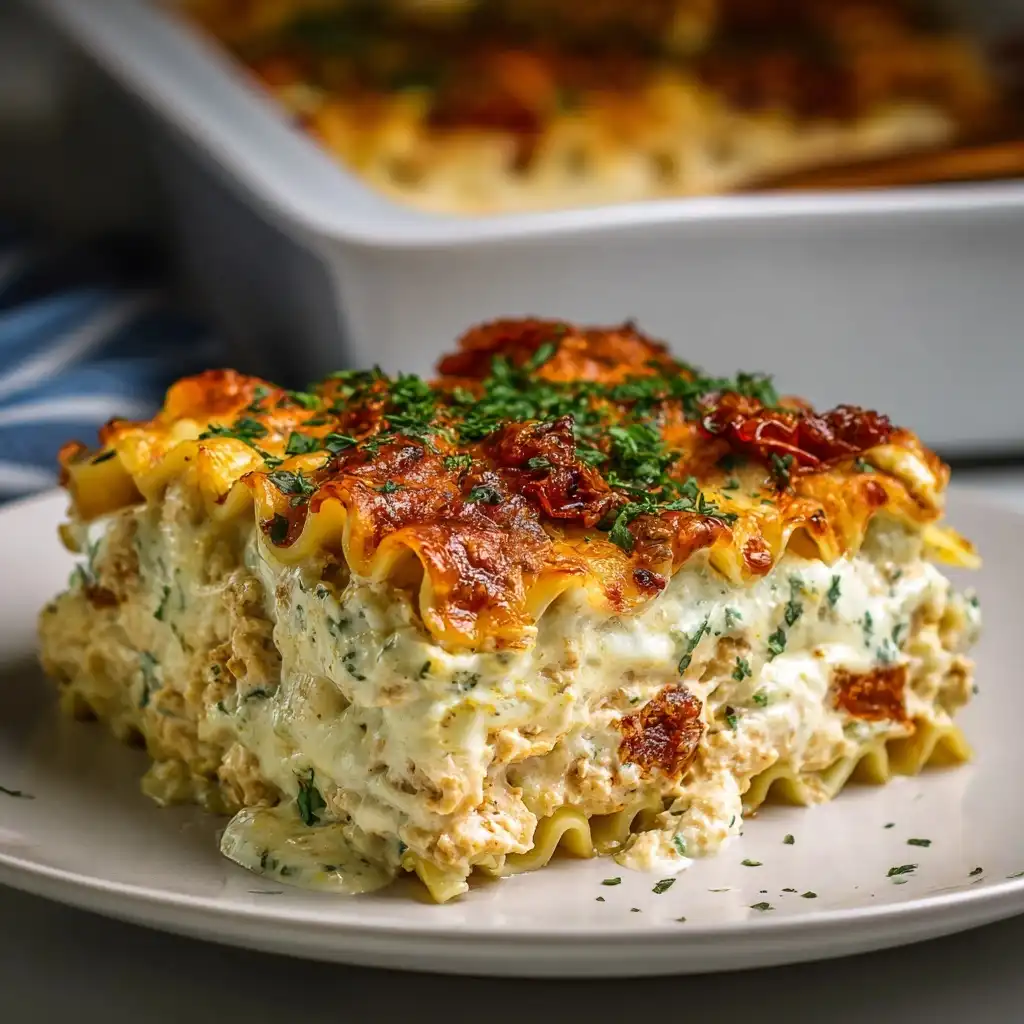
Creamy Tuscan Chicken Lasagna is a luxurious, restaurant-worthy comfort dish that masterfully bridges rustic Italian tradition with the vibrant, herbaceous soul of Tuscany. Unlike classic tomato-based lasagnas, this iteration embraces the region’s love for simplicity, high-quality dairy, and garden-fresh aromatics—featuring tender grilled or sautéed chicken breast, sun-dried tomatoes, baby spinach, roasted garlic, and a velvety, herb-infused creamy sauce built on a foundation of mascarpone, ricotta, and freshly grated Parmigiano-Reggiano. Every bite delivers a symphony of textures: the delicate chew of no-boil lasagna noodles, the lush silkiness of the cheese blend, the subtle sweetness of caramelized shallots, and the bright, earthy pop of fresh basil and oregano. Whether served at a Sunday family dinner, a holiday gathering, or as an elevated weeknight centerpiece, this lasagna exudes warmth, sophistication, and unmistakable Italian-American ingenuity—reimagined through a distinctly Tuscan lens.
The History
The origins of Creamy Tuscan Chicken Lasagna are not rooted in centuries-old Italian farmhouse kitchens—but rather in the creative evolution of Italian-American cuisine during the late 20th and early 21st centuries. Traditional lasagna alla bolognese hails from Emilia-Romagna and relies on slow-simmered ragù, béchamel, and layered pasta. Meanwhile, authentic Tuscan cooking (cucina povera) historically emphasized seasonal vegetables, beans, rustic breads, and simple grilled meats—rarely layered pasta casseroles. The “Tuscan” designation in this recipe reflects a flavor profile inspired by regional staples: extra-virgin olive oil from groves near Siena, sun-dried tomatoes from the coastal Maremma, wild oregano and rosemary harvested in the Apennine hills, and creamy cheeses like pecorino Toscano. The addition of chicken—a lean, versatile protein more commonly featured in Tuscan grigliate than baked pastas—signals a modern American adaptation. Culinary historians trace the rise of creamy, white-sauce lasagnas to the 1980s and ’90s, when chefs and home cooks began experimenting with ricotta-mascarpone hybrids, inspired by the popularity of fettuccine Alfredo and the growing availability of artisanal Italian cheeses in U.S. markets. This particular version gained traction through food blogs, cooking shows, and viral social media posts in the mid-2010s, praised for its balance of indulgence and approachability—proving that tradition need not be static, but can flourish through thoughtful, ingredient-driven reinterpretation.
Ingredients Breakdown
Every element in Creamy Tuscan Chicken Lasagna serves a precise culinary purpose—no ingredient is arbitrary. Below is a meticulous breakdown of each component, including its functional role, sourcing notes, and why substitutions (if used) must be considered carefully:
- Chicken Breast (1.5 lbs, boneless, skinless): Chosen for its mild flavor and ability to absorb herbs and wine without overpowering other components. Opt for air-chilled, antibiotic-free, or pasture-raised for superior texture and moisture retention. Brining (30 minutes in 4 cups water + ¼ cup kosher salt) is highly recommended to prevent dryness during baking.
- No-Boil Lasagna Noodles (12 sheets, oven-ready): Engineered to hydrate fully in the oven using only the liquid from the sauce and cheeses. Avoid “gluten-free” versions unless certified—they often release excess starch or disintegrate. Traditional durum wheat noodles yield optimal chew and structural integrity.
- Mascarpone Cheese (1 cup): The luxurious heart of the creamy sauce. Its high butterfat content (60–75%) and delicate sweetness provide unparalleled richness and mouth-coating silkiness. Do not substitute cream cheese—it lacks the subtle tang and airy texture; nor should you use ricotta alone, which is too grainy and watery.
- Ricotta Cheese (2 cups, whole-milk, drained): Adds lightness, slight acidity, and protein structure. Must be well-drained (place in fine-mesh strainer over bowl for 30+ minutes) to prevent pooling and sogginess. Avoid low-fat ricotta—it separates and turns rubbery when baked.
- Parmigiano-Reggiano (1.5 cups, freshly grated): Aged minimum 24 months for complex nuttiness and umami depth. Pre-grated “Parmesan” is coated in cellulose and will not melt properly—always grate yourself using a microplane.
- Fresh Spinach (10 oz, baby leaves, roughly chopped): Adds color, iron, and vegetal brightness. Wilted separately to remove excess water—critical to avoid a watery lasagna. Mature spinach may be substituted but requires longer wilting and tougher stems removed.
- Sun-Dried Tomatoes (½ cup, oil-packed, julienned): Provide concentrated sweetness, chewy texture, and deep umami. Oil-packed offer superior pliability and flavor versus dry-packed (which require rehydration). Reserve 2 tbsp of the oil for sautéing aromatics—it’s liquid gold.
- Roasted Garlic (1 whole head, cloves squeezed out): Transforms sharp raw garlic into mellow, caramelized sweetness that binds the sauce. Roasting is non-negotiable—raw garlic turns bitter and harsh under prolonged heat.
- Fresh Herbs (¼ cup packed basil + 2 tbsp oregano, both finely chopped): Basil contributes peppery sweetness; oregano adds woodsy, slightly medicinal complexity. Dried herbs lack volatile oils and burn easily—never substitute 1:1. Add basil at the end of sauce assembly to preserve aroma.
- Heavy Cream (¾ cup, full-fat, 36% butterfat): Stabilizes the emulsion, adds sheen, and prevents curdling. Half-and-half or milk will thin the sauce and cause separation. Ultra-pasteurized cream is acceptable, though pasteurized yields smoother results.
- Dry White Wine (½ cup, Sauvignon Blanc or Pinot Grigio): Deglazes the pan, lifts fond, and adds bright acidity to cut richness. Must be drinkable—cooking wine contains salt and preservatives that impart bitterness.
- Shallots (2 large, finely minced): Preferred over onions for their delicate sweetness and floral undertones—essential to the Tuscan profile. Yellow onions may be used but add sharper bite.
- Extra-Virgin Olive Oil (¼ cup, cold-pressed, robust Tuscan style preferred): Used for roasting garlic, searing chicken, and finishing. Look for DOP-certified oils from Lazio or Tuscany with grassy, artichoke, and peppery finish.
Step-by-Step Recipe
- Roast the Garlic: Preheat oven to 400°F (200°C). Slice ½ inch off the top of 1 whole garlic head to expose cloves. Drizzle generously with olive oil, wrap tightly in foil, and roast for 45–55 minutes until cloves are golden-brown and squishy. Cool completely, then squeeze softened cloves into a small bowl. Mash with a fork into a smooth paste. Set aside.
- Brine & Cook the Chicken: In a medium bowl, combine 4 cups cool water and ¼ cup Diamond Crystal kosher salt. Submerge chicken breasts and refrigerate 30 minutes. Remove, pat *extremely* dry with paper towels. Heat 2 tbsp olive oil in large skillet over medium-high heat. Season chicken with salt, pepper, 1 tsp dried oregano, and ½ tsp red pepper flakes. Sear 5–6 minutes per side until golden and internal temperature reaches 160°F. Transfer to cutting board, tent with foil, rest 10 minutes, then slice thinly against the grain. Reserve skillet.
- Sauté Aromatics: In the same skillet (do not wipe clean—fond is flavor), reduce heat to medium. Add 2 tbsp reserved sun-dried tomato oil and 2 finely minced shallots. Sauté 4–5 minutes until translucent and fragrant. Add 2 minced garlic cloves (not roasted—this is for aromatic base) and cook 1 minute until fragrant—not browned.
- Build the Creamy Sauce: Pour in ½ cup dry white wine. Scrape up all browned bits with wooden spoon. Simmer 2 minutes until reduced by half. Stir in roasted garlic paste, 1 cup heavy cream, and 1 cup mascarpone. Whisk vigorously over low heat until smooth and emulsified (~3 minutes). Remove from heat. Gently fold in 2 cups well-drained ricotta, 1 cup grated Parmigiano-Reggiano, ¼ cup chopped fresh basil, 2 tbsp chopped oregano, ½ tsp freshly grated nutmeg, and generous pinches of black pepper. Taste and adjust salt—remember noodles and cheese add saltiness.
- Prepare Vegetables: In a large sauté pan, heat 1 tbsp olive oil over medium heat. Add 10 oz baby spinach in batches, stirring constantly until just wilted (30–45 seconds). Transfer to fine-mesh strainer, press firmly with spatula to extract every drop of liquid. Chop coarsely. In same pan, warm ½ cup sun-dried tomatoes with 1 tbsp of their oil and 1 tsp balsamic vinegar for 2 minutes. Set aside.
- Assemble the Lasagna: Preheat oven to 375°F (190°C). Lightly grease a 9×13-inch glass or ceramic baking dish. Spread ¾ cup creamy sauce evenly across bottom. Layer 4 no-boil noodles (slightly overlapping if needed). Top with ⅓ of chicken slices, ⅓ of wilted spinach, ⅓ of sun-dried tomatoes, and ⅓ of remaining sauce (approx. 1¼ cups). Sprinkle with ¼ cup Parmigiano-Reggiano. Repeat layers twice more: noodles → chicken → spinach → tomatoes → sauce → cheese. Finish with final noodle layer, remaining sauce, and final ¼ cup Parmigiano-Reggiano. Dot surface with 1 tbsp cold butter cubes for golden crust.
- Bake & Rest: Cover tightly with greased aluminum foil (butter-side down to prevent sticking). Bake 30 minutes. Carefully remove foil. Continue baking uncovered 20–25 minutes until top is deeply golden, edges are bubbling vigorously, and internal temperature reaches 165°F when measured at center with instant-read thermometer. Crucially, let lasagna rest uncovered for 35–45 minutes before slicing—this allows starches to set, cheese to re-emulsify, and layers to hold cleanly.
Tips
- Resting is Non-Negotiable: Cutting too soon causes catastrophic layer collapse and sauce weeping. Set a timer—35 minutes minimum. The lasagna continues to cook gently while resting.
- Drain Ricotta Like Your Reputation Depends On It: Place ricotta in fine-mesh strainer lined with cheesecloth over bowl. Refrigerate overnight for best results. Even 30 minutes removes ~¼ cup excess whey—making the difference between creamy cohesion and soupy separation.
- Layer with Intention, Not Speed: Noodles expand vertically. Ensure each layer is flush—no gaps or overhangs—to promote even hydration and prevent dry, crunchy edges.
- Embrace the “Sauce-to-Noodle Ratio”: Aim for ~1¼ cups sauce per layer. Too little = dry noodles; too much = sliding, unstable stack. Use a ¼-cup measure for consistency.
- Prevent Foil Sticking: Lightly grease underside of foil—or better yet, use parchment paper under foil for foolproof removal.
- Golden Crust Hack: For extra browning, broil uncovered lasagna for 90 seconds at end—but watch like a hawk. Burnt cheese ruins everything.
- Make-Ahead Magic: Assemble up to 24 hours ahead. Cover tightly, refrigerate. Add 10 minutes to covered bake time. Or freeze unbaked lasagna for up to 3 months—thaw overnight in fridge before baking.
- Knife Choice Matters: Use a long, thin, sharp chef’s knife (8–10 inches). Saw gently—not press down—to preserve layers. Wipe blade clean between cuts.
Variations and Customizations
This recipe is a canvas—not a cage. Thoughtful adaptations maintain structural integrity and flavor harmony while accommodating preferences, seasons, and pantry constraints:
- Vegetarian Tuscan Lasagna: Omit chicken. Boost umami with 1 cup sautéed cremini mushrooms (cooked until deeply browned), ½ cup crumbled walnut halves toasted in olive oil, and 2 tbsp nutritional yeast folded into sauce. Add roasted zucchini ribbons and caramelized fennel for complexity.
- Seafood Tuscan Lasagna: Replace chicken with 1 lb lump crab meat (picked over) and ½ lb peeled, deveined shrimp (sautéed 1 minute, cooled). Fold seafood into sauce *just* before assembling—avoid overcooking. Garnish with lemon zest and dill instead of basil.
- Gluten-Free Version: Use certified GF no-boil lasagna noodles (Barilla or Jovial). Ensure all sauces, wines, and cheeses are GF-certified. Add 1 tbsp psyllium husk powder to ricotta-mascarpone mixture to improve binding.
- Low-Carb/Keto Adaptation: Replace noodles with 6 large, blanched eggplant slices (½-inch thick, salted 20 min, patted dry) or 12 thin zucchini ribbons (julienned with peeler, lightly salted and pressed). Reduce cheese slightly; increase healthy fats with pine nuts and extra EVOO drizzle.
- Herb Garden Variation: Swap oregano for 1 tbsp fresh thyme leaves and 1 tsp lemon zest. Add 2 tbsp chopped marjoram and 1 tsp crushed fennel seeds to sauce for aromatic depth.
- Spice-Forward Twist: Add 1 tsp Calabrian chili paste to sauce, ¼ tsp smoked paprika to chicken rub, and garnish with pickled Fresno chilies. Balance heat with dollops of lemon-ricotta.
- “White Truffle” Luxury Upgrade: Finish baked lasagna with 1 tsp white truffle oil (drizzled over top), shaved fresh black truffle, and micro basil. Use truffle-infused mascarpone if available.
- Weeknight Express Version: Use pre-cooked rotisserie chicken (shredded), jarred roasted garlic, and frozen thawed spinach (well-squeezed). Skip wine reduction—add 1 tbsp lemon juice and 1 tsp white wine vinegar to sauce for brightness.
Health Considerations and Nutritional Value
A single 1-cup serving (approx. 1/12th of recipe) provides approximately 485 calories, 32g protein, 28g fat (15g saturated), 26g carbohydrates (3g fiber, 4g sugars), and 620mg sodium. While undeniably rich, strategic modifications enhance its nutritional profile without sacrificing satisfaction:
- Protein Powerhouse: Chicken breast supplies complete, lean protein critical for muscle maintenance and satiety. Pairing with ricotta and Parmigiano boosts calcium and casein for sustained energy release.
- Smart Fat Profile: Olive oil contributes monounsaturated fats linked to cardiovascular health. Mascarpone and ricotta contain conjugated linoleic acid (CLA), studied for anti-inflammatory properties. Limiting added butter and choosing grass-fed dairy further optimizes fatty acid ratios.
- Fiber & Phytonutrients: Spinach delivers vitamins A, C, K, folate, magnesium, and lutein for eye health. Sun-dried tomatoes are concentrated sources of lycopene (enhanced by olive oil)—a potent antioxidant associated with reduced oxidative stress.
- Sodium Savvy: Most sodium comes from cheese and processed ingredients. Reduce salt in brine by 25%, skip added table salt on chicken, and choose low-sodium sun-dried tomatoes (packed in water). Rinsing them reduces sodium by ~30%.
- Gut-Friendly Notes: Fermented cheeses like Parmigiano-Reggiano contain beneficial bacteria. Adding 1 tbsp chopped fresh parsley (rich in apigenin) supports digestive enzyme activity.
- Considerations for Specific Diets: Naturally lactose-reduced due to aging of Parmigiano and straining of ricotta. For lactose sensitivity, replace mascarpone with cashew cream (soaked, blended, strained) and use lactose-free ricotta. Gluten-free options exist (see Variations). Low-FODMAP? Omit garlic, shallots, and onion; use garlic-infused oil and green onion tops only.
- Portion Perspective: Serve with a large arugula salad dressed in lemon-EVOO vinaigrette and sliced pear for fiber, vitamin C, and enzymatic digestion support. This balances richness and promotes mindful eating.
Ingredients
- 1.5 lbs boneless, skinless chicken breasts, brined 30 min (4 c water + ¼ c kosher salt)
- 12 no-boil lasagna noodles (regular durum wheat)
- 1 cup full-fat mascarpone cheese
- 2 cups whole-milk ricotta cheese, well-drained (min. 30 min)
- 1.5 cups freshly grated Parmigiano-Reggiano cheese (24+ month aged)
- 10 oz fresh baby spinach, washed and stemmed
- ½ cup oil-packed sun-dried tomatoes, julienned + 3 tbsp reserved oil
- 1 whole head garlic, roasted until tender (400°F, 45–55 min)
- ¼ cup high-quality extra-virgin olive oil (plus more for roasting garlic)
- 2 large shallots, finely minced
- 2 garlic cloves, finely minced (for aromatics, not roasted)
- ½ cup dry white wine (Sauvignon Blanc or Pinot Grigio)
- ¾ cup full-fat heavy cream (36% butterfat)
- ¼ cup fresh basil leaves, finely chopped (plus extra for garnish)
- 2 tbsp fresh oregano leaves, finely chopped
- 1 tsp freshly grated nutmeg
- 1 tsp red pepper flakes (optional)
- 1 tsp dried oregano
- ½ cup dry white wine (for deglazing)
- 1 tbsp unsalted butter, cubed (for topping)
- Kosher salt and freshly ground black pepper, to taste
Directions
- Preheat oven to 400°F (200°C). Prepare garlic: Slice top off garlic head, drizzle with olive oil, wrap in foil, roast 45–55 minutes until soft and golden. Cool, squeeze cloves into bowl, mash to paste. Set aside.
- Brine chicken: Dissolve ¼ cup kosher salt in 4 cups cool water. Submerge chicken, refrigerate 30 minutes. Pat *extremely* dry. Season with salt, pepper, 1 tsp dried oregano, ½ tsp red pepper flakes.
- Heat 2 tbsp olive oil in large skillet over medium-high. Sear chicken 5–6 min/side until 160°F. Rest 10 min, slice thinly against grain.
- In same skillet, reduce heat to medium. Add 2 tbsp reserved sun-dried tomato oil and minced shallots. Sauté 4–5 min until soft. Add 2 minced garlic cloves; cook 1 min until fragrant.
- Pour in ½ cup white wine. Scrape fond, simmer 2 min until reduced by half. Stir in roasted garlic paste, 1 cup heavy cream, 1 cup mascarpone. Whisk over low heat 3 min until smooth.
- Remove from heat. Fold in 2 cups drained ricotta, 1 cup Parmigiano, ¼ cup basil, 2 tbsp oregano, 1 tsp nutmeg, black pepper. Taste—adjust salt minimally.
- Wilt spinach: Heat 1 tbsp olive oil in pan. Add spinach in batches; wilt 30–45 sec. Drain in strainer; press hard to remove all liquid. Chop.
- Warm sun-dried tomatoes: In small pan, heat tomatoes + 1 tbsp oil + 1 tsp balsamic 2 min. Set aside.
- Preheat oven to 375°F (190°C). Grease 9×13″ baking dish. Spread ¾ cup sauce on bottom.
- Layer: 4 noodles → ⅓ chicken → ⅓ spinach → ⅓ tomatoes → 1¼ cups sauce → ¼ cup Parmigiano. Repeat 2x. Top with final noodles, remaining sauce, remaining Parmigiano, butter cubes.
- Cover tightly with greased foil. Bake 30 min. Uncover; bake 20–25 min until golden and bubbling (165°F center temp).
- REST 35–45 minutes uncovered before slicing. Serve with extra basil and cracked black pepper.
FAQ
- Can I use regular boiled lasagna noodles?
- Yes—but adjust hydration. Boil noodles 1 minute less than package directs (they’ll finish cooking in oven). Rinse under cold water, lay flat on oiled parchment to prevent sticking. Expect slightly softer texture and marginally longer bake time (add 5 min covered).
- Why does my sauce look curdled?
- Curdling occurs from overheating, acid shock (too much wine/vinegar), or cold dairy hitting hot liquid. Always add mascarpone and ricotta off-heat. Warm cream slightly before adding. If curdled, immediately whisk in 1 tbsp cold heavy cream and ½ tsp Dijon mustard—emulsifiers will rescue it.
- Can I make this vegetarian without tofu or mock meats?
- Absolutely. Elevate vegetables: roast 1 cup diced eggplant and 1 cup cherry tomatoes until caramelized; add ½ cup cooked lentils (French or black) for meaty texture and iron; fold in ¼ cup toasted pine nuts for richness and crunch.
- My lasagna is watery after baking. What went wrong?
- Top three culprits: 1) Undrained ricotta or spinach (most common); 2) Over-saucing—excess liquid overwhelms noodle absorption; 3) Skipping the essential rest period. Next time, strain ricotta overnight and press spinach for 5 full minutes.
- How do I reheat leftovers without drying them out?
- Individual portions: Cover tightly with damp paper towel, microwave on 50% power 90 seconds. Full pan: Cover with foil, bake at 325°F for 25–30 minutes until heated through. Drizzle with 1 tsp olive oil before reheating to restore moisture.
- Is there a way to lighten this without losing flavor?
- Yes—strategically. Replace ½ cup mascarpone with ½ cup full-fat Greek yogurt (adds tang and protein). Use part-skim ricotta (but still drain thoroughly). Increase spinach to 12 oz and add 1 cup roasted butternut squash for natural sweetness and fiber. Reduce cheese topping by 2 tbsp.
- Can I freeze this lasagna before baking?
- Highly recommended! Assemble completely (without butter dots). Wrap dish *tightly* in 2 layers plastic wrap + 1 layer foil. Freeze up to 3 months. Thaw overnight in fridge. Bake covered 40 min, uncovered 25–30 min. Add 5 min if still chilled at center.
- What wine pairs best with this dish?
- A crisp, mineral-driven Italian white: Vermentino from Sardinia, Soave Classico from Veneto, or a barrel-aged Pinot Grigio from Friuli. For red lovers, choose a lighter, high-acid option: Chianti Classico Riserva (with food-friendly tannins) or Barbera d’Asti. Avoid oaky, heavy reds—they overwhelm the cream.
Summary
Creamy Tuscan Chicken Lasagna is a masterclass in balanced indulgence—where velvety mascarpone and ricotta embrace tender herb-kissed chicken, earthy sun-dried tomatoes, and verdant spinach, all layered between perfectly hydrated no-boil noodles and crowned with nutty, aged Parmigiano-Reggiano. Rooted in Italian-American innovation yet deeply inspired by Tuscan terroir, it delivers restaurant elegance with weeknight practicality—especially when you honor its core principles: meticulous draining, patient roasting, intentional layering, and the sacred, non-negotiable rest.
Whether adapted for dietary needs, elevated with luxury touches, or simplified for busy evenings, this lasagna remains a testament to how tradition evolves—not by erasing roots, but by nurturing them with creativity, quality ingredients, and profound respect for texture, temperature, and time.