Introduction
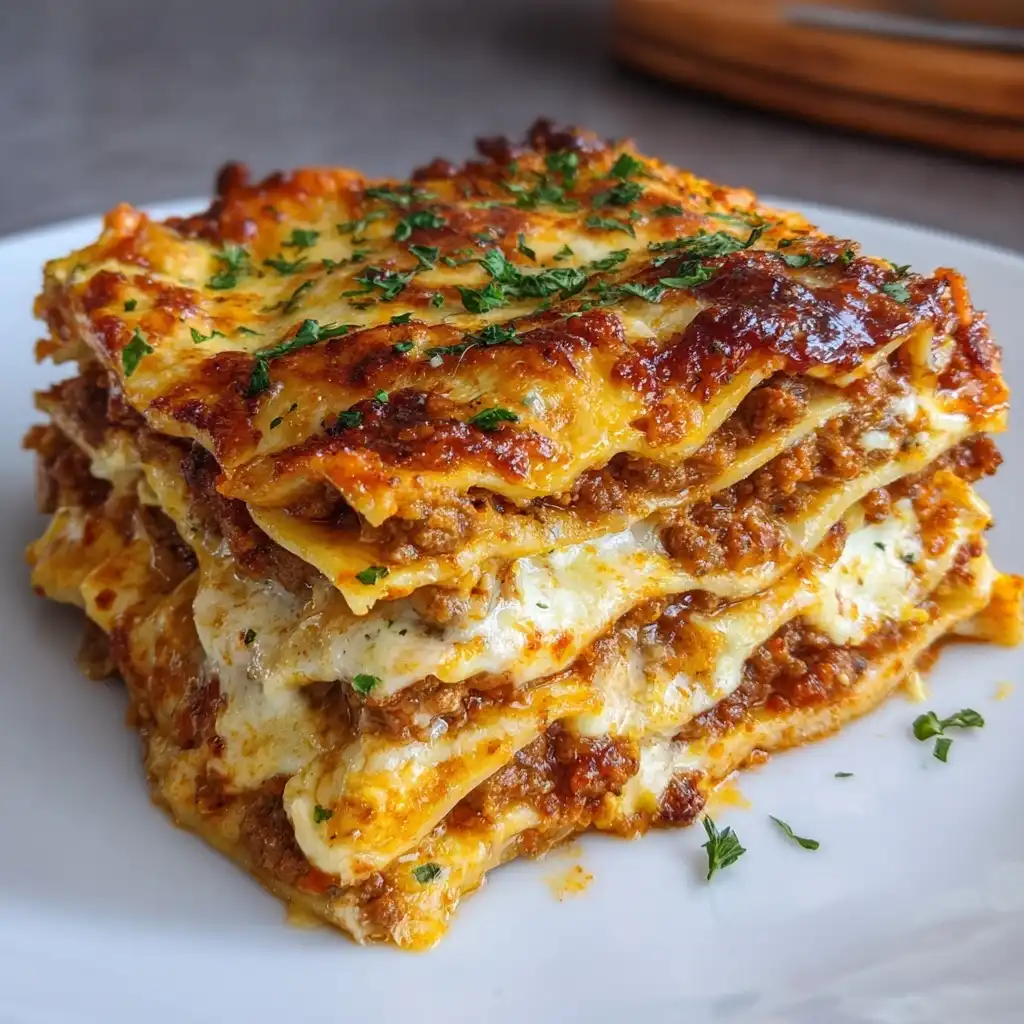
Classic Bolognese Lasagna with Beef is the quintessential Italian-American comfort dish — a rich, layered symphony of slow-simmered meat sauce, creamy béchamel, tender pasta sheets, and melted cheeses. Unlike simpler tomato-based lasagnas, this version honors the soulful depth and complexity of authentic ragù alla bolognese, traditionally served with tagliatelle but elevated here into an oven-baked, shareable masterpiece. Every bite delivers a harmonious balance: the savory umami of slow-cooked beef and pancetta, the subtle sweetness of caramelized vegetables and tomatoes, the velvety richness of house-made béchamel, and the gentle tang of aged Parmigiano-Reggiano and sharp Romano. Whether prepared for Sunday family dinners, holiday gatherings, or a deeply satisfying weeknight indulgence, this lasagna transcends mere sustenance — it’s culinary heritage, patience, and love, baked to golden perfection.
The History
The origins of lasagna trace back over 800 years to medieval Italy, with early references found in a 13th-century English cookbook (The Forme of Cury) describing layered pastries — though these bore little resemblance to today’s dish. The true genesis of modern lasagna lies in Emilia-Romagna, particularly Bologna, where lasagne verdi al forno (baked green lasagna) was a festive staple made with spinach-infused egg pasta, ragù, béchamel, and cheese. Meanwhile, the iconic ragù alla bolognese — the soul of this recipe — was codified in 1982 by the Accademia Italiana della Cucina and inscribed in the Registro delle Specialità Tradizionali Italiane. Its official recipe specifies minced beef and pork (sometimes veal), soffritto (onion, carrot, celery), tomato paste, dry white wine, whole milk, and a long, gentle simmer — never garlic, never herbs like oregano or basil (which are American additions), and absolutely no canned tomatoes alone. When Italian immigrants brought these traditions to the U.S. in the late 19th and early 20th centuries, adaptations emerged: ricotta replaced béchamel in many households (a practical, cost-effective choice), mozzarella became standard for its meltability, and robust tomato passata gained prominence. Our Classic Bolognese Lasagna pays homage to both lineages — respecting the authenticity of the ragù while embracing the generous, layered generosity of Italian-American baking traditions.
Ingredients Breakdown
Understanding each component is essential to mastering this dish. This isn’t a recipe of shortcuts — it’s built on foundational techniques and intentional pairings:
- Ragù Base: A dual-meat blend (80% lean ground beef + 20% pancetta or guanciale) provides depth, fat content for flavor, and textural contrast. Pancetta adds saltiness and aromatic richness that ground pork alone cannot replicate.
- Soffritto: Finely diced onion, carrot, and celery — sautéed slowly in olive oil until translucent and sweet — forms the aromatic backbone. This “holy trinity” of Italian cooking releases natural sugars and builds umami.
- Tomato Elements: Tomato paste is cooked until brick-red and fragrant (“blooming”) to deepen its flavor and remove raw acidity; high-quality crushed San Marzano tomatoes (DOP-certified if possible) lend balanced sweetness and low acidity; a splash of tomato passata adds body without excess water.
- Liquid & Deglazing: Dry white wine (e.g., Pinot Grigio or Soave) lifts fond from the pan and adds bright acidity; whole milk is added late in the simmer to tenderize proteins, mellow acidity, and enrich mouthfeel — a signature Bolognese technique.
- Béchamel Sauce: Made from scratch with butter, all-purpose flour, whole milk, fresh nutmeg, and a pinch of white pepper — not cream or heavy cream, which would overpower and destabilize. Its role is structural (binding layers) and textural (adding silkiness against the ragù’s heartiness).
- Pasta: No-boil lasagna noodles are convenient, but traditionalists use fresh or dried flat lasagna sheets (about 4″ x 7″) parboiled for 90 seconds to ensure tenderness and prevent gumminess. Gluten-free options (brown rice or lentil pasta) work well when pre-cooked per package instructions.
- Cheeses: A three-cheese blend ensures complexity: freshly grated Parmigiano-Reggiano (nutty, salty, granular), Pecorino Romano (sharper, saltier, cuts through richness), and low-moisture whole-milk mozzarella (for stretch and browning). Ricotta is omitted here to honor the Bolognese tradition — though it’s included in the Variations section for flexibility.
Step-by-Step Recipe
Prep time: 45 minutes | Cook time: 3 hours 45 minutes (including ragù simmer) | Rest time: 45 minutes | Total time: ~5 hours | Servings: 12–14
- Prepare the Soffritto: In a heavy-bottomed Dutch oven or large enameled cast-iron pot, heat 3 tbsp extra-virgin olive oil over medium-low heat. Add 1 finely diced yellow onion, 1 medium carrot (peeled, finely diced), and 1 medium celery stalk (finely diced). Sauté gently for 12–15 minutes, stirring frequently, until soft, fragrant, and pale gold — no browning. Season lightly with sea salt.
- Render the Pancetta: Increase heat to medium. Add 6 oz diced pancetta (or guanciale) and cook, stirring, until fat renders and edges begin to crisp — about 6–8 minutes. Use a slotted spoon to transfer pancetta to a paper-towel-lined plate, leaving rendered fat in the pot.
- Brown the Meats: Add 1.5 lbs 80/20 ground beef to the pot. Break up with a wooden spoon and cook until deeply browned (not gray), 8–10 minutes, allowing fond to develop. Avoid overcrowding — cook in batches if needed. Stir in 2 tbsp tomato paste and cook, stirring constantly, for 3–4 minutes until paste darkens and smells sweet and roasted.
- Build Flavor with Wine: Pour in ½ cup dry white wine. Scrape the bottom vigorously to release all browned bits (fond). Simmer until wine is nearly evaporated — about 4 minutes.
- Add Tomatoes & Simmer: Stir in 1 (28-oz) can crushed San Marzano tomatoes, ¼ cup tomato passata, 1 tsp dried oregano (optional, for American profile), and the reserved pancetta. Bring to a gentle simmer. Reduce heat to lowest possible setting (a bare bubble should break the surface). Partially cover with a lid, leaving a ½-inch gap for steam to escape. Simmer for 2 hours, stirring every 20–30 minutes and adjusting heat as needed to maintain a whisper of activity. Skim excess fat occasionally with a ladle.
- Incorporate Milk & Finish Ragù: After 2 hours, stir in ½ cup whole milk. Simmer uncovered for 30–45 more minutes, stirring often, until sauce is thick, glossy, and clings heavily to a spoon — it should mound slightly when dropped. Taste and adjust: add a pinch of sugar only if acidic; more salt if needed; a splash of milk if too dense. Cool slightly (20 minutes) before assembling.
- Make the Béchamel: While ragù simmers, prepare béchamel. Melt 6 tbsp unsalted butter in a heavy saucepan over medium heat. Whisk in 6 tbsp all-purpose flour. Cook, whisking constantly, for 2 minutes until pale blonde and fragrant (do not brown). Gradually whisk in 3 cups warm whole milk (warmed in microwave or small pot). Bring to a gentle simmer, whisking continuously. Cook 5–7 minutes until thickened to the consistency of heavy cream. Remove from heat; stir in ¼ tsp freshly grated nutmeg, ¼ tsp white pepper, and 1 tsp fine sea salt. Cover surface with parchment to prevent skin. Cool 15 minutes.
- Prep Pasta & Cheese: If using dried lasagna noodles, bring a large pot of salted water to boil. Cook noodles 90 seconds less than package directions — they’ll finish cooking in the oven. Drain, rinse under cold water, and lay flat on clean kitchen towels or parchment to prevent sticking. Grate cheeses: 2 cups finely grated Parmigiano-Reggiano, 1 cup Pecorino Romano, and 3 cups shredded low-moisture mozzarella.
- Assemble the Lasagna: Preheat oven to 375°F (190°C). Grease a 9×13-inch deep ceramic or stainless-steel baking dish (minimum 3-inch depth). Spread 1 cup cooled ragù evenly across the bottom. Layer 4–5 noodles (slightly overlapping, no gaps). Spread ⅓ of remaining ragù (approx. 1¾ cups) over noodles. Dollop 1 cup béchamel over ragù and spread gently with an offset spatula. Sprinkle with ⅓ of Parmigiano, ⅓ of Pecorino, and ⅓ of mozzarella. Repeat layers twice more (noodles → ragù → béchamel → cheese). Top final noodle layer with remaining béchamel, then remaining cheeses — finishing with extra Parmigiano for crust.
- Bake & Rest: Cover tightly with aluminum foil (tent slightly to prevent cheese sticking). Bake for 30 minutes. Remove foil and bake uncovered for 25–30 minutes, until top is deeply golden, bubbling at edges, and internal temperature reaches 165°F (74°C) when checked with an instant-read thermometer. Turn broiler to low for final 2–3 minutes if top needs deeper browning (watch closely!). Let rest, uncovered, for 45 minutes minimum — this allows layers to set, prevents sliding, and intensifies flavor integration.
Tips
- Chill Your Ragù Overnight: For even deeper flavor and easier handling, refrigerate the cooled ragù for 12–24 hours before assembling. Fat will solidify on top — skim off excess before reheating gently.
- Don’t Skip the Milk in Ragù: It’s non-negotiable for authentic texture and balance. It tenderizes collagen, neutralizes acidity, and contributes to the ragù’s signature velvety body.
- Use a Heavy Pot: A Dutch oven ensures even heat distribution and prevents scorching during the long simmer — thin pots create hot spots and burnt fond.
- Whisk Béchamel Constantly: Lumps form from uneven flour hydration. Warm milk + constant whisking = smooth sauce. If lumps appear, strain through a fine-mesh sieve.
- Layer with Intention: Always start and end with ragù — it binds the bottom and seals the top. Never place cheese directly on dry noodles — béchamel must separate cheese from pasta to prevent drying.
- Rest Is Non-Negotiable: Cutting too soon causes collapse and runny layers. The 45-minute rest allows starches to fully gel and fats to redistribute — resulting in clean, defined slices.
- Reheat Leftovers Properly: Cover with foil and bake at 350°F for 20–25 minutes until heated through. Microwaving makes noodles rubbery and separates layers.
- Freeze Smart: Assemble unbaked lasagna (without final cheese topping), wrap tightly in double layers of plastic + foil, freeze up to 3 months. Thaw overnight in fridge, add cheese, and bake as directed — add 10–15 minutes covered time.
Variations and Customizations
This recipe is a canvas — honoring tradition while welcoming thoughtful innovation:
- Vegetarian Bolognese Lasagna: Replace meat with 1 cup rinsed brown lentils (simmered until tender), 1 cup finely chopped cremini mushrooms (sautéed until dry), ½ cup walnuts (toasted & pulsed), and 2 tbsp soy sauce or tamari for umami. Proceed with soffritto, wine, tomatoes, and milk as written.
- Spicy ‘Nduja Lasagna: Stir 2–3 tbsp Calabrian nduja (fermented spicy salumi paste) into the finished ragù for smoky heat and luxurious fat. Reduce pancetta to 2 oz to balance.
- Green Lasagna (Lasagne Verdi): Substitute spinach pasta sheets (homemade or store-bought) and add 1 cup blanched, squeezed, and finely chopped spinach to the béchamel for color and nutrients.
- Ricotta Layer Option: For those who prefer the Italian-American classic: mix 2 cups whole-milk ricotta, 1 large egg, ½ cup grated Parmigiano, ¼ tsp nutmeg, and ½ tsp salt. Spread in place of béchamel — note: this yields a looser, more delicate structure and shorter shelf life.
- Gluten-Free Version: Use certified GF lasagna noodles (brown rice or lentil-based). Ensure all sauces are GF (check tomato paste labels). Thicken béchamel with GF flour blend (1:1 ratio) and extend cook time by 2 minutes.
- Lighter Protein Blend: Use 1 lb grass-fed ground beef + ½ lb ground turkey thigh (not breast) + 2 oz pancetta. Adds leanness without sacrificing moisture or flavor.
- Wine-Infused Béchamel: Replace ¼ cup of the milk with dry white wine — add with the milk and simmer 2 extra minutes to cook off alcohol.
- Herb-Forward Finish: Stir 2 tbsp chopped fresh basil or flat-leaf parsley into the final cheese layer just before baking for aromatic brightness.
Health Considerations and Nutritional Value
A single 2″x3″ serving (1/12th of the full recipe) contains approximately:
- Calories: 485 kcal
- Protein: 32 g (excellent source — supports muscle repair, satiety)
- Fat: 24 g (of which 11 g saturated — primarily from cheese and pancetta; balanced by monounsaturated fats from olive oil and pancetta)
- Carbohydrates: 33 g (mostly complex carbs from pasta; fiber ~2.5 g from soffritto vegetables)
- Sodium: 680 mg (moderate — reduce by omitting added salt in béchamel, using low-sodium tomato products, and skipping additional cheese sprinkles)
- Vitamins & Minerals: Rich in calcium (from dairy), iron (beef), vitamin A (carrots), lycopene (tomatoes — enhanced by olive oil), and B12 (beef, cheese). Contains gut-friendly fermented notes from aged cheeses.
Considerations for Dietary Needs:
- Heart Health: Opt for leaner beef (90/10), omit pancetta (add 1 tsp smoked paprika + 1 tbsp olive oil for depth), increase soffritto volume by 50%, and use part-skim mozzarella.
- Digestive Sensitivity: Fermented cheeses (Parmigiano, Pecorino) are naturally low-lactose. For lactose intolerance, substitute lactose-free milk in béchamel and use aged hard cheeses only.
- Low-Carb/Keto: Not suitable in traditional form, but can be adapted with low-carb “noodle” alternatives: thinly sliced zucchini ribbons (salted, pressed, and baked first), or shirataki rice noodles layered densely (requires extra béchamel binding).
- Food Safety Note: Ragù must reach 165°F internally and be held above 140°F for service. Refrigerate leftovers within 2 hours. Consume within 4 days or freeze.
Ingredients
For the Bolognese Ragù:
- 3 tbsp extra-virgin olive oil
- 1 medium yellow onion, finely diced (about 1 cup)
- 1 medium carrot, peeled and finely diced (about ½ cup)
- 1 medium celery stalk, finely diced (about ½ cup)
- 6 oz pancetta or guanciale, finely diced (about 1 cup)
- 1.5 lbs 80/20 ground beef (grass-fed preferred)
- 2 tbsp tomato paste
- ½ cup dry white wine (Pinot Grigio, Soave, or Vernaccia)
- 1 (28-oz) can whole San Marzano tomatoes, crushed by hand
- ¼ cup tomato passata (strained tomato purée)
- ½ cup whole milk
- 1 tsp sea salt (plus more to taste)
- ¼ tsp freshly ground black pepper
- 1 tsp dried oregano (optional, for American-style profile)
For the Béchamel Sauce:
- 6 tbsp unsalted butter
- 6 tbsp all-purpose flour (or gluten-free 1:1 blend)
- 3 cups whole milk, warmed
- ¼ tsp freshly grated nutmeg
- ¼ tsp white pepper
- 1 tsp fine sea salt
For Assembly:
- 12–14 dried lasagna noodles (or 12 fresh sheets, ~4″x7″)
- 2 cups finely grated Parmigiano-Reggiano (aged minimum 24 months)
- 1 cup finely grated Pecorino Romano
- 3 cups shredded low-moisture whole-milk mozzarella
- Optional garnish: fresh basil leaves, extra grated Parmigiano
Directions
See Step-by-Step Recipe section above for complete, detailed, chronologically ordered instructions — including timing benchmarks, visual cues (e.g., “brick-red tomato paste,” “bare bubble simmer”), temperature guidance, and troubleshooting notes for each phase from soffritto to resting.
FAQ
- Can I make this lasagna ahead of time?
- Absolutely. Assemble up to 24 hours in advance, cover tightly, and refrigerate. Add 5–10 minutes to covered bake time. Alternatively, freeze unbaked (see Tips) for up to 3 months.
- Why does my ragù taste too acidic?
- Acidity usually comes from low-quality tomatoes or insufficient simmering. Fix it by adding ½ tsp sugar *only after* simmering 2+ hours — or stir in 1 tbsp unsalted butter at the end to round flavors. Never add sugar early — it inhibits proper reduction.
- Can I use no-boil noodles?
- Yes — but hydrate them properly. Place noodles in a single layer in a baking dish; pour 2 cups hot broth or water over them; cover with plastic; let soak 15 minutes. Drain thoroughly before layering. They’ll absorb moisture from sauce during baking.
- My béchamel broke — what went wrong?
- “Breaking” means separation — usually caused by overheating, adding cold milk, or insufficient whisking. To fix: remove from heat, whisk in 1–2 tbsp cold milk or cream, then return to low heat while whisking constantly for 2 minutes.
- Can I substitute ground turkey or chicken?
- You can — but texture and flavor suffer. Use dark-meat ground turkey (thigh), add 2 oz pancetta for fat, and increase tomato paste to 3 tbsp. Simmer 30 minutes longer to compensate for lower collagen.
- Is it necessary to cool the ragù before assembling?
- Yes. Hot ragù will melt cheese prematurely, cause noodles to disintegrate, and create steam pockets that separate layers. Cool to lukewarm (about 90°F) — 20–30 minutes at room temp.
- What’s the best way to cut clean slices?
- Use a sharp chef’s knife dipped in hot water between cuts. Wipe blade clean after each slice. Let rest 45+ minutes — this is the single most important factor for neat portions.
- Can I make individual servings?
- Yes! Use 8-oz ramekins or oven-safe mason jars. Layer in order: ragù → noodle → béchamel → cheese. Bake covered at 375°F for 35 minutes, uncovered 10 minutes. Serve immediately.
Summary
Classic Bolognese Lasagna with Beef is a labor-of-love celebration of Italian culinary tradition — anchored by a deeply flavorful, slow-simmered ragù enriched with pancetta, soffritto, wine, and milk, then layered with silken béchamel, tender pasta, and a triumvirate of aged Italian cheeses.
It rewards patience with extraordinary depth, satisfies generously, and transforms humble ingredients into a timeless, shareable centerpiece — equally at home on a rustic farmhouse table or a polished holiday buffet.