Introduction
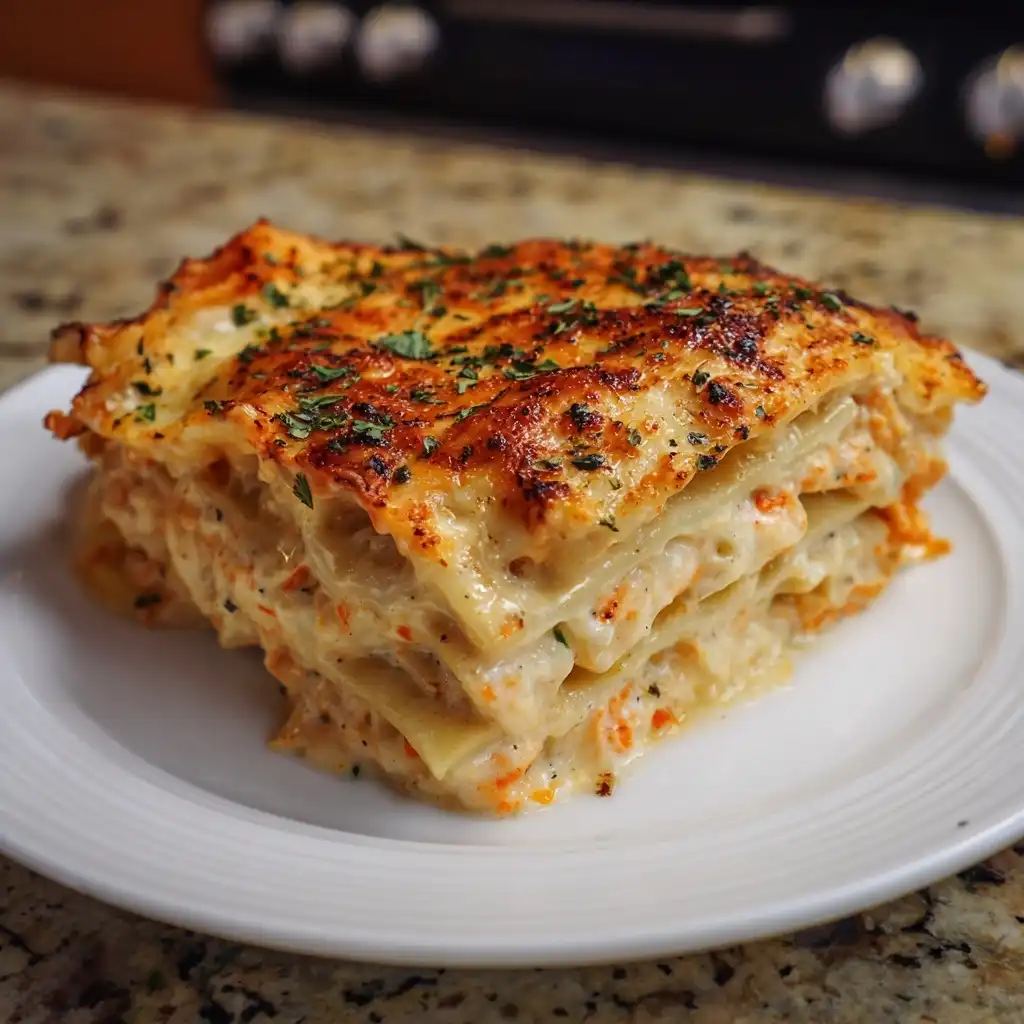
Roasted Red Pepper Alfredo Lasagna is a luxurious, restaurant-worthy twist on the classic Italian-American comfort dish—elevated with vibrant color, smoky-sweet depth, and velvety richness. Unlike traditional meat-heavy or tomato-based lasagnas, this version marries the creamy indulgence of homemade Alfredo sauce with the earthy sweetness of fire-roasted red peppers, layered between tender oven-ready lasagna noodles and a luscious blend of cheeses. It’s a harmonious fusion of rustic simplicity and gourmet flair—ideal for special dinners, holiday gatherings, or when you simply want to treat yourself (and your loved ones) to something deeply satisfying, visually stunning, and aromatically unforgettable. Whether you’re a seasoned home cook or an enthusiastic beginner, this recipe delivers impressive results without requiring professional techniques—just patience, quality ingredients, and a love for bold, layered flavor.
The History
Lasagna’s origins trace back to medieval Italy, with early versions documented in 13th-century texts like the Liber de Coquina, featuring layered pasta sheets, spices, and cheese—but no tomatoes (which hadn’t yet arrived from the Americas). The modern American-style lasagna—featuring ricotta, mozzarella, ground beef, and marinara—evolved in Italian-American communities during the early 20th century as immigrants adapted regional recipes using accessible New World ingredients. Alfredo sauce, meanwhile, hails from Rome: invented by Alfredo di Lelio in the early 1900s as a simple, butter-and-Parmigiano-rich accompaniment to fettuccine—later popularized in the U.S. by Hollywood stars who dined at his trattoria. Roasted red peppers entered global pantries more broadly after WWII, thanks to advances in canning and roasting technology, and their sweet, smoky profile quickly made them staples in Mediterranean and fusion cuisines. The marriage of roasted red pepper and Alfredo emerged organically in the late 1990s–early 2000s, pioneered by chefs seeking to add complexity and visual appeal to creamy pasta dishes—eventually finding its way into home kitchens through food magazines, cable cooking shows, and early food blogs. Today, Roasted Red Pepper Alfredo Lasagna stands as a beloved contemporary interpretation—honoring tradition while boldly embracing innovation, seasonality, and the growing appreciation for vegetable-forward, chef-inspired comfort food.
Ingredients Breakdown
Every exceptional dish begins with intentionality—and this lasagna is no exception. Below is a meticulous breakdown of each component, explaining not just *what* goes in, but *why* it matters:
- Oven-Ready Lasagna Noodles (12–15 sheets): Eliminates the need for boiling and reduces prep time significantly. These noodles absorb moisture from the sauce during baking, becoming tender and cohesive without turning mushy—ideal for layered dishes with rich, low-moisture sauces like Alfredo. Opt for high-quality, bronze-die extruded noodles for superior texture and sauce adhesion.
- Fresh Roasted Red Peppers (2 large, or 1 cup jarred, well-drained): Freshly roasted peppers offer unparalleled depth—charred skin removed, flesh blistered and sweetened by direct flame or broiler heat. Their natural sugars caramelize, lending fruity acidity and subtle smoke that cuts through the sauce’s richness. Jarred versions are acceptable (look for those packed in water or brine—not oil—to avoid greasiness), but always pat dry thoroughly to prevent watery layers.
- Unsalted Butter (½ cup / 1 stick): Provides foundational richness and emulsifying power. Unsalted allows precise control over sodium levels—critical when combining multiple cheeses and seasoned components. Clarified butter can be used for higher smoke point if sautéing aromatics, but whole butter contributes essential dairy notes to the sauce.
- Heavy Cream (2 cups): The backbone of authentic Alfredo’s silkiness. With 36–40% milk fat, it resists curdling, delivers luxurious mouthfeel, and carries fat-soluble flavors beautifully. Avoid ultra-pasteurized cream if possible—it can sometimes yield a slightly “cooked” taste; pasteurized (not ultra) is ideal.
- Garlic (4 cloves, minced): Adds aromatic pungency that mellows into savory-sweet warmth when gently cooked. Raw garlic would overpower; slow-sautéing in butter unlocks its full potential without bitterness.
- Freshly Grated Parmigiano-Reggiano (1½ cups, finely grated): Not pre-grated! Real Parmigiano provides umami depth, nuttiness, and crystalline texture that melts into the sauce, thickening and enriching it naturally. Its aging (24+ months) ensures complex flavor and optimal melting properties.
- High-Moisture Whole-Milk Mozzarella (2 cups, shredded): Provides stretch, melt, and milky sweetness. Low-moisture mozzarella (common in grocery bags) can become rubbery or oily—opt instead for fresh mozzarella di bufala (drained and torn) or high-moisture whole-milk mozzarella, shredded just before use and lightly patted dry.
- Ricotta Cheese (2 cups, whole-milk, small-curd): Acts as the creamy, cloud-like binder between layers. Small-curd ricotta has superior texture—less grainy, more delicate—while whole-milk ensures richness without excess whey. Drain overnight in cheesecloth if slightly watery.
- Grated Romano Cheese (½ cup): Adds a sharp, salty, tangy counterpoint to Parmigiano’s nuttiness. Pecorino Romano (sheep’s milk) is preferred for its assertive bite, which prevents the dish from tasting one-dimensionally sweet or bland.
- Fresh Basil & Oregano (2 tbsp each, finely chopped): Bright, herbal freshness that lifts the dish. Dried herbs lack volatile oils and intensity—fresh is non-negotiable here. Add basil at the end of sauce prep or as garnish to preserve its delicate aroma.
- Nutmeg (¼ tsp, freshly grated): A classic Alfredo accent—warm, slightly sweet, and aromatic. Pre-ground loses potency within weeks; freshly grating unlocks its full complexity and balances dairy richness.
- Sea Salt & Freshly Ground Black Pepper (to taste): Salt enhances every other flavor; pepper adds gentle heat and fragrance. Always season in layers—not just at the end—for dimensional depth.
- Optional Enhancements: A splash of white wine (¼ cup) deglazes the pan and adds brightness; a teaspoon of lemon zest brightens the sauce; a handful of baby spinach (wilted and squeezed) adds color and nutrients without altering flavor profile.
Step-by-Step Recipe
This method prioritizes precision, timing, and technique—ensuring structural integrity, even baking, and maximum flavor development. Follow each step carefully for flawless results.
- Prep the Roasted Red Peppers: If using fresh: Preheat broiler to high. Halve 2 large red bell peppers, remove stems/seeds, place skin-side up on a foil-lined baking sheet. Broil 8–12 minutes until skins are deeply blackened and blistered. Transfer to a covered bowl or paper bag; steam 15 minutes. Peel off skins, discard membranes, and finely dice flesh. If using jarred: Drain thoroughly in a fine-mesh strainer, then press gently with paper towels to remove all excess moisture—this is critical to prevent soggy layers.
- Prepare the Alfredo Sauce (Do NOT skip this step—homemade is transformative): In a heavy-bottomed stainless steel or enameled Dutch oven, melt ½ cup unsalted butter over medium-low heat. Add 4 minced garlic cloves; sauté gently for 1–2 minutes until fragrant but not browned. Reduce heat to low. Gradually whisk in 2 cups heavy cream—do not boil. Simmer uncovered, stirring frequently, for 5–7 minutes until slightly reduced and shimmering. Remove from heat. Gradually whisk in 1½ cups freshly grated Parmigiano-Reggiano, ½ cup grated Romano, ¼ tsp freshly grated nutmeg, 1 tsp sea salt, and ½ tsp black pepper. Stir until smooth and glossy—about 2 minutes. Let cool slightly (5 minutes), then stir in 2 tbsp fresh basil and 2 tbsp fresh oregano. Set aside—do not refrigerate; cooling too much causes separation.
- Prepare the Ricotta Layer: In a medium bowl, combine 2 cups whole-milk ricotta, 1 egg (for binding), ½ cup grated Parmigiano, ¼ tsp salt, ⅛ tsp black pepper, and 1 tbsp fresh basil. Mix gently with a spatula until just combined—overmixing makes it gummy. Fold in the diced roasted red peppers. Taste and adjust seasoning.
- Assemble with Precision: Preheat oven to 375°F (190°C). Lightly grease a 9×13-inch deep-dish baking dish (at least 3 inches deep). Spread ¾ cup Alfredo sauce evenly across the bottom—this prevents sticking and adds flavor to the first noodle layer. Place 4 oven-ready noodles side-by-side (slight overlap is okay). Spread ⅓ of the ricotta-pepper mixture (about 1 cup) evenly over noodles. Drizzle with ½ cup Alfredo sauce. Sprinkle with ⅓ of the shredded mozzarella (about ⅔ cup). Repeat layers twice: noodles → ricotta-pepper → Alfredo → mozzarella. Top final noodle layer with remaining Alfredo sauce (reserve ~¼ cup for finishing), then all remaining mozzarella. Finish with a final drizzle of reserved Alfredo and a generous dusting of extra Parmigiano-Reggiano and Romano.
- Bake Strategically: Cover tightly with aluminum foil (tent it slightly to prevent cheese from sticking). Bake for 35 minutes. Carefully remove foil. Continue baking uncovered for 20–25 minutes, until edges bubble vigorously, top is golden-brown and slightly blistered, and internal temperature reaches 165°F (74°C) when checked with an instant-read thermometer in the center. Rotate dish halfway through uncovered baking for even browning.
- Rest Imperatively: Remove from oven and let rest, uncovered, for a full 25–30 minutes. This allows starches to set, cheeses to re-emulsify, and layers to firm—preventing a soupy, collapsed slice. Cutting too soon releases steam and destabilizes structure.
- Serve with Intention: Use a sharp, thin-bladed knife dipped in hot water between cuts for clean slices. Garnish each portion with fresh basil ribbons, a sprinkle of flaky sea salt, and optional microgreens or lemon zest.
Tips
- Texture Control is Everything: Excess moisture is the #1 enemy of perfect lasagna. Always drain roasted peppers, ricotta, and even mozzarella if it seems weepy. A kitchen towel or triple-layered paper towel works best for pressing.
- Alfredo Sauce Consistency Check: Ideal Alfredo should coat the back of a spoon thickly but still drip slowly—like warm honey. If too thin, simmer 1–2 more minutes. If too thick, whisk in 1 tbsp warm cream. Never add cold cream to hot sauce—it risks breaking.
- Layering Logic: Always start and end with sauce—not noodles. This ensures every bite has flavor contact and prevents dry, gluey top/bottom layers.
- Noodle Alignment Matters: Slightly overlapping noodles (¼ inch) prevents gaps where sauce leaks out and creates structural support for vertical height.
- Cheese Temperature: Shred cheeses just before assembling. Cold cheese doesn’t melt evenly; room-temp cheese integrates smoothly and browns beautifully.
- Oven Thermometer Required: Most home ovens run hot or cold. An inexpensive oven thermometer ensures accurate baking temps—critical for proper set and browning.
- Broiler Finish (Optional but Recommended): For extra caramelization, switch to broil for the last 2–3 minutes—watch constantly! This deepens color and adds a delicate crust without drying.
- Make-Ahead Magic: Assemble up to 24 hours ahead. Cover tightly and refrigerate unbaked. Add 10–15 minutes to covered bake time if going straight from fridge to oven.
- Freezing Friendly: Bake, cool completely, wrap in double foil + plastic, freeze up to 3 months. Thaw overnight in fridge, then reheat covered at 350°F for 45 minutes, uncovered for 15 minutes.
- Leftover Sauce? Repurpose! Use extra Alfredo for garlic bread dipping, as a base for roasted vegetable gratin, or stirred into risotto.
Variations and Customizations
This recipe is a canvas—adaptable to dietary needs, seasonal produce, pantry availability, and personal taste. Here are inspired, tested variations:
- Vegetarian Delight: Add 1 cup sautéed cremini mushrooms, ½ cup wilted spinach (squeezed dry), and ¼ cup sun-dried tomatoes (chopped, oil-drained). Boost umami with 1 tsp white miso paste whisked into the Alfredo.
- Protein-Powered: Layer in 1½ cups cooked Italian sausage (fennel-forward), shredded rotisserie chicken, or pan-seared shrimp (added in last layer only to prevent overcooking). For plant-based protein, use 1 cup cooked lentils or crumbled tempeh bacon.
- Gluten-Free: Substitute certified GF oven-ready lasagna noodles (Barilla or Tinkyada work well). Ensure all cheeses and sauces are GF-certified (some Romano contains wheat enzymes).
- Dairy-Free/Vegan: Use cashew-based Alfredo (soaked raw cashews + nutritional yeast + garlic + lemon juice + almond milk), tofu-rice ricotta (blended silken tofu + lemon + herbs), and vegan mozzarella shreds (Miyoko’s or Daiya for melt). Note: texture differs but flavor remains compelling.
- Low-Carb/Keto: Replace noodles with thinly sliced zucchini or eggplant (salted, drained, and patted dry). Reduce ricotta to 1 cup and add 2 eggs + ¼ cup almond flour for binding. Increase cheeses for satiety.
- Spice It Up: Add ¼ tsp crushed red pepper flakes to Alfredo, or swirl in 1 tbsp harissa paste with roasted peppers for North African warmth.
- Herb Garden Edition: Swap basil/oregano for 1 tbsp fresh thyme leaves, 1 tsp lemon thyme, and 2 tbsp chopped chives. Finish with edible flowers.
- Truffle Elegance: Infuse Alfredo with 1 tsp white truffle oil (added off-heat) and top with shaved black truffle before serving.
- Smoky Chipotle Twist: Blend 1 canned chipotle in adobo (seeded) into roasted peppers for deep, complex heat.
- Breakfast Lasagna: Add 4 beaten eggs + ½ cup cottage cheese to ricotta mix; layer with crumbled cooked bacon and caramelized onions.
Health Considerations and Nutritional Value
While undeniably indulgent, this lasagna can be part of a balanced diet when approached mindfully. A standard serving (1/12 of the full recipe, approx. 1.5 cups) contains approximately:
- Calories: 485–520 kcal
- Protein: 28–32g (excellent source—supports muscle maintenance and satiety)
- Fat: 26–30g (primarily unsaturated from cheeses and peppers; includes beneficial CLA from dairy)
- Saturated Fat: 15–17g (within moderate limits for most adults; balance with lean proteins elsewhere in the day)
- Carbohydrates: 32–36g (mainly complex carbs from pasta; fiber ~3g per serving)
- Sodium: 680–750mg (moderate—reduce by using low-sodium cheeses or omitting added salt in ricotta)
- Vitamins & Minerals: Rich in calcium (45% DV), vitamin A (from peppers and dairy), vitamin C (from peppers), B12 (dairy), and antioxidants (lycopene, beta-carotene, lutein).
Health-Conscious Swaps:
- Lower Sodium: Use unsalted butter, low-sodium ricotta, and reduce added salt by 50%. Rely on herbs, lemon zest, and roasted pepper sweetness for flavor.
- Higher Fiber: Incorporate 1 cup finely chopped kale or spinach into ricotta layer—adds 2g fiber/serving and boosts folate, iron, and vitamin K.
- Heart-Healthy Fats: Replace 2 tbsp butter with extra-virgin olive oil when sautéing garlic—retains creaminess while adding polyphenols.
- Portion Mindfulness: Serve alongside a large arugula salad with lemon vinaigrette and roasted vegetables to increase volume, fiber, and micronutrients without excess calories.
- Allergen Notes: Contains gluten (noodles), dairy (multiple cheeses, butter, cream), and eggs (optional in ricotta). Nut-free, soy-free (if using traditional cheeses), and shellfish-free.
Note: Those managing hypertension, diabetes, or kidney disease should consult a registered dietitian for personalized modifications. While rich, this dish offers high-quality protein and bioactive compounds—making it nutritionally dense, not merely calorically dense.
Ingredients
- 12–15 oven-ready lasagna noodles (regular or whole wheat)
- 2 large red bell peppers, roasted, peeled, seeded, and finely diced (or 1 cup high-quality jarred roasted red peppers, thoroughly drained and patted dry)
- ½ cup (1 stick) unsalted butter
- 2 cups heavy cream (preferably pasteurized, not ultra-pasteurized)
- 4 garlic cloves, minced
- 1½ cups freshly grated Parmigiano-Reggiano cheese (finely grated, not pre-shredded)
- ½ cup freshly grated Pecorino Romano cheese
- 2 cups whole-milk ricotta cheese (small-curd, drained if watery)
- 2 cups high-moisture whole-milk mozzarella cheese, shredded
- 1 large egg (optional, for ricotta binding)
- 2 tablespoons fresh basil, finely chopped
- 2 tablespoons fresh oregano, finely chopped
- ¼ teaspoon freshly grated nutmeg
- 1 teaspoon sea salt (plus more to taste)
- ½ teaspoon freshly ground black pepper (plus more to taste)
Directions
- Preheat broiler to high. Roast red peppers (if using fresh) until blistered and blackened. Steam, peel, seed, and dice. If using jarred, drain thoroughly and pat dry with paper towels.
- In a heavy-bottomed pot, melt butter over medium-low heat. Add garlic; sauté 1–2 minutes until fragrant. Reduce heat to low. Whisk in heavy cream. Simmer gently 5–7 minutes until slightly reduced.
- Remove from heat. Whisk in Parmigiano-Reggiano, Romano, nutmeg, salt, and pepper until smooth. Stir in fresh basil and oregano. Let cool 5 minutes.
- In a bowl, combine ricotta, egg (if using), ½ cup Parmigiano, salt, pepper, and roasted red peppers. Mix gently until just combined.
- Preheat oven to 375°F (190°C). Grease a 9×13-inch baking dish (minimum 3″ depth). Spread ¾ cup Alfredo sauce on bottom.
- Layer: 4 noodles → ⅓ ricotta-pepper mixture → ½ cup Alfredo → ⅓ mozzarella. Repeat twice. Top with remaining noodles, remaining Alfredo, remaining mozzarella, and extra grated cheeses.
- Cover tightly with foil. Bake 35 minutes. Remove foil. Bake uncovered 20–25 minutes until bubbly and golden.
- Let rest 25–30 minutes before slicing. Garnish with fresh basil and flaky salt.
FAQ
- Can I use no-boil noodles?
- Yes—oven-ready (no-boil) noodles are specifically designed for this application and are recommended. Do not substitute regular noodles unless boiled and drained first, as they won’t absorb enough moisture and may remain chewy.
- Why did my Alfredo sauce break or look grainy?
- Most commonly caused by overheating (boiling cream), adding cold cheese to hot liquid, or using pre-grated cheese with anti-caking agents (which don’t melt smoothly). Always use freshly grated cheese, keep heat low, and whisk constantly off direct heat when incorporating cheese.
- Can I make this vegetarian or vegan?
- Absolutely—see the Variations section above for fully tested dairy-free and plant-based adaptations using cashew Alfredo, tofu ricotta, and vegan cheeses. Texture will differ, but flavor remains robust.
- How do I prevent watery lasagna?
- Three key steps: (1) Thoroughly drain roasted peppers and ricotta, (2) Use high-moisture—not low-moisture—mozzarella, and (3) Rest the baked lasagna for at least 25 minutes before cutting. Skipping any one invites soupiness.
- Can I prepare this ahead of time?
- Yes! Assemble up to 24 hours in advance, cover tightly, and refrigerate unbaked. Add 10–15 minutes to the covered bake time. Alternatively, bake fully, cool, wrap, and freeze for up to 3 months.
- What sides pair well with this lasagna?
- Keep it light and fresh: a crisp arugula salad with lemon-Dijon vinaigrette, roasted asparagus with garlic and lemon, garlic-herb roasted potatoes, or a chilled cucumber-dill yogurt soup.
- Can I use frozen roasted red peppers?
- Not recommended—they release excessive water when thawed, leading to sogginess. Jarred or fresh-roasted only.
- Is there a lighter Alfredo option?
- You can substitute half the heavy cream with full-fat coconut milk (for dairy-free) or evaporated milk (for lower fat), but expect texture and richness trade-offs. True lightening comes from portion control and nutrient-dense sides—not ingredient dilution.
- Why does my lasagna bubble over in the oven?
- Overfilling the dish or using too shallow a pan. Always use a true 3-inch-deep 9×13 dish. Also, ensure foil is tented—not flat—to allow steam escape.
- Can kids enjoy this?
- Absolutely—the natural sweetness of roasted peppers makes it kid-friendly, and the creamy texture appeals to young palates. Serve with a side of fruit and skip the black pepper if sensitive.
Summary
Roasted Red Pepper Alfredo Lasagna is a masterclass in balancing bold, smoky-sweet vegetables with luxuriously creamy, herb-kissed cheese sauce—layered thoughtfully over tender oven-ready noodles for an elegant, crowd-pleasing centerpiece that tastes far more complex than its preparation suggests.
With make-ahead flexibility, customizable variations for every diet, and nutritionally rich ingredients, it’s not just a special-occasion dish—it’s a versatile, deeply satisfying celebration of texture, color, and comfort, perfected through time-tested technique and intentional ingredient choices.