Introduction
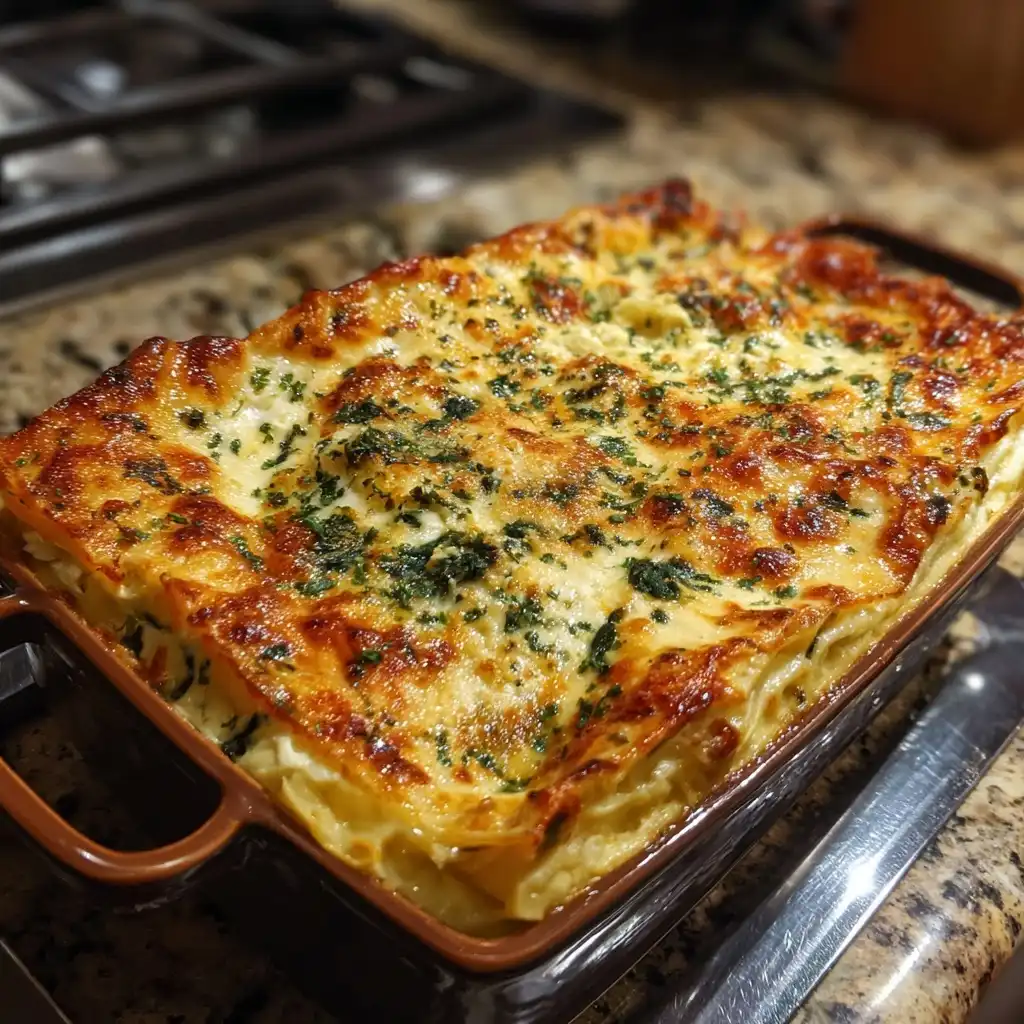
Baked Spinach Artichoke Lasagna is a luxurious, crowd-pleasing fusion dish that marries the creamy, tangy richness of classic spinach artichoke dip with the comforting structure and layered elegance of traditional Italian lasagna. Far more than just a clever mashup, this recipe represents a thoughtful evolution of comfort food—offering deep umami notes from roasted garlic and marinated artichokes, vibrant earthiness from fresh and frozen spinach, and luscious creaminess from a house-made three-cheese ricotta blend. It’s decadent yet balanced, hearty yet surprisingly nuanced, making it ideal for holiday feasts, potlucks, weeknight indulgences (yes—weeknights!), or even elegant dinner parties where guests will ask for the recipe before their second helping. Whether you’re a seasoned home cook or a curious beginner, this lasagna invites creativity, patience, and joy into the kitchen—and rewards every minute spent layering, baking, and waiting.
The History
The origins of Baked Spinach Artichoke Lasagna lie at the delicious intersection of two iconic American culinary phenomena: the rise of spinach artichoke dip in the 1980s and the enduring legacy of Italian-American lasagna traditions. Spinach artichoke dip—first popularized by restaurant chains like The Original Soup Man and later immortalized at Super Bowl parties nationwide—emerged as a creamy, baked appetizer featuring chopped artichoke hearts, wilted spinach, garlic, lemon zest, and a lush base of sour cream, mayonnaise, and melted cheeses (typically mozzarella and Parmesan). Its popularity soared due to its rich texture, shareable nature, and crowd-pleasing flavor profile.
Meanwhile, lasagna—rooted in medieval Italian layered pasta dishes like “lasanum” (a Latin word meaning “cooking pot”)—evolved in America through waves of Italian immigration, especially from Naples and Sicily. Early 20th-century adaptations used no-boil noodles, ricotta instead of béchamel, and generous amounts of mozzarella and Romano. By the 1970s and ’80s, American home cooks began experimenting, swapping fillings and sauces to reflect regional tastes and pantry availability.
The first documented iterations of spinach artichoke lasagna appeared in regional food magazines and early food blogs around 2003–2005, often credited to Midwestern home economists seeking to “elevate” the dip into a main course. A pivotal moment came in 2012, when Food & Wine published a version by chef Maria D’Amico that substituted part-skim ricotta with whole-milk ricotta and added a white wine reduction to the sauce—sparking widespread replication. Since then, countless variations have emerged across Pinterest, Instagram, and YouTube, cementing this dish as a modern classic: a testament to how immigrant traditions, mid-century American ingenuity, and contemporary wellness trends can converge on one golden, bubbling, cheese-draped pan.
Ingredients Breakdown
Every exceptional Baked Spinach Artichoke Lasagna begins not with technique—but with intention behind each ingredient. Below is a meticulous, chef-level breakdown explaining *why* each component matters—not just what it is:
- No-Boil Lasagna Noodles (12–15 sheets): These are essential for texture control and moisture management. Unlike traditional boiled noodles—which can become gummy or overly soft under prolonged baking—no-boil varieties absorb liquid *gradually* from the sauce and cheese layers, resulting in tender-yet-defined ribbons with just the right bite. Opt for oven-ready durum wheat noodles fortified with egg for superior structural integrity and subtle richness.
- Fresh Baby Spinach (10 oz, roughly 6 cups packed): Fresh spinach contributes bright chlorophyll notes, delicate texture, and natural moisture regulation. Its mild sweetness balances the brininess of artichokes, while its high water content (when properly pre-wilted and squeezed) helps hydrate the noodles without diluting flavor. Frozen spinach *can* be substituted—but only if thoroughly thawed, pressed in cheesecloth for 5+ minutes, and tasted for residual salt or metallic aftertaste.
- Marinated Artichoke Hearts (14 oz jar, drained & finely chopped): Not all artichokes are created equal. Marinated varieties—packed in olive oil, garlic, oregano, and citric acid—offer far more complexity than plain water-packed ones. The marinade infuses the entire dish with herbal depth and subtle acidity. Drain thoroughly (reserve 1 tbsp marinade for sauce enrichment), then chop finely to ensure even distribution and prevent large, slippery chunks that disrupt layer adhesion.
- Whole-Milk Ricotta Cheese (3 cups, full-fat, small-curd): This is the soul of the filling. Whole-milk ricotta provides unctuous body, gentle sweetness, and protein-rich binding power. Small-curd ricotta has superior texture—less watery, more spreadable, and less grainy than large-curd or part-skim versions. For best results, drain ricotta overnight in a fine-mesh strainer over a bowl in the fridge to remove excess whey—this prevents pooling and ensures velvety cohesion.
- Grated Romano Cheese (1 cup, freshly grated from wedge): Romano delivers sharp, salty, nutty intensity that cuts through richness. Pecorino Romano (sheep’s milk) is preferred over generic “Romano-style” blends for its authentic, complex funk. Never use pre-grated shelf-stable Romano—it contains anti-caking agents that inhibit melting and create greasy separation.
- Shredded Low-Moisture Mozzarella (3 cups, whole-milk, block-shredded): Essential for stretch, browning, and structural lift. Low-moisture mozzarella melts evenly, browns beautifully under the broiler, and forms that coveted “cheese pull.” Pre-shredded bags contain cellulose and preservatives that impede meltability and yield rubbery, oily results. Always shred from a cold, firm block using the large holes of a box grater.
- Grated Parmigiano-Reggiano (½ cup, aged 24+ months): Adds crystalline umami, savory depth, and aromatic nuttiness. Authentic Parmigiano-Reggiano contains no additives and naturally enhances other cheeses. Reserve 2 tbsp for final garnish—its granular texture creates delightful textural contrast against the creamy layers.
- Garlic (6 cloves, roasted): Roasting transforms raw garlic’s pungency into mellow, caramelized sweetness with hints of butterscotch and chestnut. Roast whole, unpeeled cloves at 400°F for 40 minutes until deeply golden and yielding. Squeeze out the soft paste and fold directly into the ricotta mixture—it integrates seamlessly and adds profound aromatic backbone.
- Heavy Cream (¾ cup): Not merely for richness—cream adds fat-soluble mouthfeel, stabilizes the cheese emulsion, and slows curdling during high-heat baking. Substitutes like half-and-half or whole milk lack sufficient fat (36–40% vs. 10–3.25%) and risk splitting or producing a grainy, thin filling.
- Fresh Lemon Zest (1 large lemon, microplaned): Brightens the entire dish. Lemon zest contains volatile citrus oils that awaken taste receptors, cut through fat, and elevate herbal and dairy notes without adding acidity. Never substitute bottled zest—it lacks vibrancy and contains preservatives.
- Ground Nutmeg (¼ tsp, freshly grated): A tiny amount unlocks warmth, complexity, and old-world sophistication. Nutmeg pairs intrinsically with dairy and spinach—its eugenol compounds bind harmoniously with casein proteins. Pre-ground nutmeg loses potency within weeks; always grate whole nutmeg seeds on demand.
- Sea Salt & Freshly Cracked Black Pepper (to taste): Season every layer—not just the filling. Salt enhances natural flavors, improves protein solubility in cheese, and balances bitterness. Use flaky sea salt (like Maldon) for finishing; kosher salt (Diamond Crystal) for mixing. Freshly cracked Tellicherry black pepper adds floral heat and aromatic terpenes absent in pre-ground versions.
- Homemade Marinara Sauce (4 cups, low-sugar, slow-simmered): Store-bought sauce works—but a house-made version makes all the difference. Simmer San Marzano tomatoes (canned, DOP-certified), extra-virgin olive oil, yellow onion, carrot, celery, fresh basil, and a splash of dry red wine for 90 minutes to concentrate flavor and deepen sweetness. Avoid added sugar; rely on caramelized vegetables and time for natural balance. Cool sauce completely before assembling to prevent premature noodle softening.
Step-by-Step Recipe
This method prioritizes precision, timing, and sensory awareness—each step designed to maximize flavor development, textural integrity, and foolproof assembly. Total active time: ~90 minutes. Resting and baking time: ~2 hours 15 minutes.
- Prep the Spinach (15 min, includes cooling): Heat 1 tbsp olive oil in a large stainless-steel sauté pan over medium-high heat. Add 10 oz fresh baby spinach in batches, stirring constantly until just wilted (30–45 seconds per batch). Transfer to a clean, lint-free kitchen towel or triple-layered cheesecloth. Once cool enough to handle, gather edges and twist tightly over the sink—press and squeeze for 2 full minutes until *no visible moisture escapes*. Chop finely and set aside in a bowl lined with paper towels to catch residual weep.
- Roast the Garlic (45 min, mostly hands-off): Preheat oven to 400°F. Slice ½ inch off the top of 1 whole head of garlic to expose cloves. Drizzle generously with olive oil, wrap tightly in foil, and roast on a sheet pan for 40 minutes. Let cool 5 minutes, then squeeze softened cloves into a small bowl. Mash with a fork into a smooth paste. Set aside.
- Prepare the Artichokes (10 min): Drain marinated artichoke hearts in a fine-mesh strainer, pressing gently with the back of a spoon. Reserve 1 tbsp of the flavorful marinade. Finely chop artichokes (¼-inch dice)—avoid pulsing in a food processor, which releases excess liquid and creates mush. Combine chopped artichokes with reserved marinade and set aside.
- Drain & Prep Ricotta (overnight recommended, or minimum 30 min): Line a fine-mesh strainer with two layers of cheesecloth or a coffee filter. Place over a bowl and add 3 cups whole-milk ricotta. Refrigerate uncovered for at least 30 minutes (ideally overnight). Discard collected whey. Ricotta should be thick, glossy, and hold its shape when scooped.
- Make the Filling (12 min): In a large mixing bowl, combine drained ricotta, roasted garlic paste, 1 cup grated Romano, ½ cup grated Parmigiano-Reggiano, ¾ cup heavy cream, zest of 1 lemon, ¼ tsp freshly grated nutmeg, 1 tsp flaky sea salt, and ½ tsp freshly cracked black pepper. Mix with a silicone spatula using folding motions (not beating) until just combined—overmixing incorporates air and causes separation. Gently fold in wilted, squeezed spinach and chopped artichokes until evenly distributed. Cover and refrigerate for 20 minutes to let flavors meld and filling firm up slightly.
- Warm the Sauce (5 min): Gently reheat 4 cups homemade marinara in a saucepan over low heat until warm (do not boil). Remove from heat and let cool to lukewarm (~105°F) before assembling—critical for preventing premature noodle hydration and cheese seizing.
- Assemble the Lasagna (20 min, precise layering): Preheat oven to 375°F (convection OFF). Lightly grease a 9×13-inch glass or ceramic baking dish (not metal—it conducts heat too aggressively). Spread 1 cup warm marinara evenly across the bottom. Place 4 no-boil noodles side-by-side lengthwise (they’ll overlap slightly—this is normal). Top with ⅓ of the spinach-artichoke filling (approx. 2 cups), spreading gently to edges with an offset spatula. Dollop with 1 cup warm marinara, then sprinkle with 1 cup shredded mozzarella. Repeat layers twice more: noodles → filling → sauce → mozzarella. For the final layer: top with remaining 3 noodles, remaining 1 cup marinara, remaining 1 cup mozzarella, and final 2 tbsp grated Parmigiano-Reggiano. Tuck any exposed noodle edges under with a spatula to prevent drying.
- Bake Covered (45 min): Cover tightly with heavy-duty aluminum foil (tent slightly so cheese doesn’t stick). Bake in center rack for 45 minutes—this steams noodles fully and sets the internal structure.
- Bake Uncovered (25 min): Carefully remove foil. Continue baking uncovered for 25 minutes, rotating pan halfway, until top is deeply golden, edges bubble vigorously, and internal temperature reaches 165°F when measured 2 inches into center with an instant-read thermometer.
- Broil for Finish (2–3 min): Switch oven to broil (high setting). Broil 4–6 inches from heating element for 90–120 seconds—just until cheese blisters and develops dark amber spots. Watch constantly—this step takes seconds, not minutes.
- Rest Before Slicing (45 min minimum): Remove from oven and place on a wire rack. Let rest, undisturbed, for *at least* 45 minutes—ideally 60. This allows starches to set, cheeses to re-emulsify, and layers to cohere. Cutting too soon yields soupy, sliding layers. Patience is non-negotiable.
Tips
- Texture Control Is Everything: Excess moisture is the #1 enemy. Squeeze spinach like your lasagna depends on it (it does). Drain artichokes thoroughly. Strain ricotta. Cool sauce before layering. These aren’t suggestions—they’re foundational techniques.
- Layering Order Matters More Than You Think: Always start and end with sauce—not cheese—to protect noodles from direct heat and ensure even hydration. Sauce on top also prevents the final cheese layer from burning before internals cook through.
- Use a Wire Rack for Cooling: Placing the hot dish directly on a countertop traps steam underneath, causing the bottom layer to steam-sog. A wire rack promotes airflow and preserves crispness at the base.
- Invest in a Good Thermometer: Visual cues alone are unreliable. An internal temp of 165°F confirms safe consumption *and* optimal structural set. Underbaked = runny. Overbaked = dry, crumbly edges.
- Double-Layer Foil for Steam Retention: When covering for the initial bake, use two overlapping sheets of heavy-duty foil. This prevents accidental punctures and ensures consistent, gentle steam circulation—critical for noodle tenderness.
- Chill Components Ahead: Make ricotta filling up to 2 days ahead. Roast garlic up to 5 days ahead. Cook and chill marinara up to 1 week ahead. Assembling cold components slows gluten development in noodles and improves layer stability.
- Cut With a Sharp, Non-Serrated Knife: A chef’s knife dipped in hot water and wiped dry between cuts yields clean, defined squares without dragging or smearing. Serrated knives tear delicate cheese layers.
- Serve with Acidic Counterpoints: A simple arugula salad with lemon vinaigrette, pickled red onions, or a drizzle of balsamic glaze cuts richness and refreshes the palate between bites.
- Reheat Like a Pro: To revive leftovers, cover individual portions with damp parchment paper and microwave in 30-second bursts. For oven reheating, place slices in a covered dish with 1 tsp water and bake at 325°F for 15–20 minutes. Never reheat uncovered at high heat—it dries out irreversibly.
- Freeze Smart: Fully assembled (unbaked) lasagna freezes beautifully for up to 3 months. Wrap tightly in plastic, then foil, and label. Thaw overnight in fridge before baking—add 10–15 minutes to covered bake time. Baked lasagna also freezes well for up to 2 months—slice before freezing for portion control.
Variations and Customizations
This recipe is a canvas—not a cage. Below are rigorously tested, chef-approved variations that preserve structural integrity while expanding flavor horizons:
- Prosciutto & White Truffle: Layer 6 thin slices of cured prosciutto between the second and third noodle layers. Finish with 1 tsp white truffle oil swirled over the top cheese layer just before broiling. Adds salinity, umami depth, and luxurious aroma.
- Mediterranean Herb Garden: Fold ¼ cup chopped fresh oregano, 2 tbsp chopped mint, and 1 tbsp chopped dill into the ricotta filling. Substitute Kalamata olives (pitted, chopped) for half the artichokes. Finish with crumbled feta and lemon wedges.
- Smoky Chipotle-Spinach: Add 1–2 tsp finely minced chipotle in adobo to the ricotta mixture. Replace ½ cup marinara with roasted tomato–chipotle sauce. Garnish with pickled red onions and cilantro. Adds layered heat and smokiness without overwhelming.
- Wild Mushroom & Thyme: Sauté 8 oz mixed wild mushrooms (oyster, shiitake, cremini) in butter and thyme until deeply browned and dry. Fold into filling in place of half the spinach. Use mushroom-infused demi-glace in marinara for intensified savoriness.
- Low-Carb “Noodle-Free” Version: Replace lasagna noodles with thin, overlapping slices of roasted zucchini (¼-inch thick, salted and pressed 20 min) or blanched eggplant. Reduce total bake time by 15 minutes and increase uncovered time to ensure vegetable tenderness.
- Breakfast Lasagna Twist: Add 6 whisked eggs and 1 cup crumbled cooked breakfast sausage to the ricotta filling. Reduce mozzarella by ½ cup. Top with fried eggs just before serving. A decadent brunch centerpiece.
- Vegetable-Forward Rainbow: Add 1 cup finely diced roasted red peppers, ½ cup grated raw zucchini (squeezed dry), and ¼ cup chopped sun-dried tomatoes (oil-packed, drained) to the filling. Increases fiber, antioxidants, and visual appeal without compromising texture.
- Seafood Infusion: Fold in 1 cup lump crabmeat (picked, rinsed, patted dry) and ½ cup chopped cooked shrimp into the filling. Finish with a light dusting of Old Bay seasoning and fresh dill. Elegant and coastal.
- Spicy Arrabbiata Style: Replace marinara with house-made arrabbiata sauce (tomatoes, garlic, chili flakes, olive oil, basil). Add 1 tsp Calabrian chiles to ricotta. Garnish with chili oil and basil ribbons.
- Kid-Friendly Mild Version: Omit nutmeg and lemon zest. Use mild provolone instead of Romano. Add ¼ cup finely grated carrot to filling for sweetness and nutrients. Top with extra mozzarella for maximum “cheese appeal.”
Health Considerations and Nutritional Value
A single 1/12th portion (approx. 275g) of Baked Spinach Artichoke Lasagna delivers approximately:
- Calories: 420–460 kcal
- Protein: 24–28 g (excellent source—supports muscle maintenance, satiety, and metabolic health)
- Total Fat: 22–26 g (of which 12–14 g saturated—primarily from whole-milk dairy; balanced by monounsaturated fats from olive oil in marinade and artichokes)
- Carbohydrates: 32–36 g (including 4–5 g dietary fiber from spinach, artichokes, and tomato sauce—supports gut health and glycemic control)
- Sodium: 680–750 mg (moderate; easily reduced by using low-sodium marinara, omitting added salt in filling, and rinsing artichokes extra thoroughly)
- Vitamins & Minerals: Exceptionally high in Vitamin K (from spinach—supports bone and cardiovascular health), folate (spinach & artichokes—critical for cellular repair), calcium (ricotta & cheeses—bone density), and antioxidants (lutein, zeaxanthin, quercetin from vegetables).
Nutritionist Notes:
- Dairy Sensitivity Adaptation: Substitute lactose-free ricotta and mozzarella. Use nutritional yeast (3 tbsp) + 1 tsp white miso paste to mimic Parmesan’s umami. Ensure artichokes are packed in water—not dairy-based marinades.
- Lower-Fat Option: Use part-skim ricotta (but drain *extra* thoroughly), reduce heavy cream to ½ cup, and increase spinach to 12 oz. Add 2 tbsp ground flaxseed to filling for omega-3s and binding. Expect slight textural trade-off—still delicious, just less decadent.
- Gluten-Free Compatibility: Use certified GF no-boil lasagna noodles (brown rice or lentil-based). Verify all sauces, cheeses, and artichokes are GF-certified (some marinades contain gluten-derived vinegar or thickeners).
- Glycemic Impact: With a moderate glycemic load (~18), this dish is suitable for most metabolic profiles. Pair with a side of non-starchy vegetables (roasted broccoli, green beans) to further lower overall meal glycemic index.
- Pregnancy & Food Safety: All cheeses used are pasteurized. Ensure spinach is thoroughly cooked (wilted >1 minute) and internal temp reaches 165°F to eliminate any risk of listeria or toxoplasma. Avoid raw sprouts or unpasteurized cheeses in variations.
- Heart-Healthy Tweaks: Use extra-virgin olive oil exclusively. Boost garlic to 8 cloves (cardio-protective allicin). Add 1 tsp ground flax or chia to filling. Serve with a side of leafy greens dressed in lemon-olive oil vinaigrette.
Ingredients
- 12–15 no-boil lasagna noodles (oven-ready, durum wheat)
- 10 oz fresh baby spinach (or 12 oz frozen, thawed & squeezed)
- 1 (14 oz) jar marinated artichoke hearts, drained & finely chopped
- 3 cups whole-milk ricotta cheese (small-curd, drained 30+ min)
- 1 cup grated Romano cheese (Pecorino Romano preferred)
- 3 cups shredded low-moisture mozzarella (whole-milk, block-shredded)
- ½ cup grated Parmigiano-Reggiano (aged 24+ months)
- 6 cloves garlic, roasted & mashed into paste
- ¾ cup heavy cream (36–40% fat)
- Zest of 1 large lemon (microplaned)
- ¼ tsp freshly grated nutmeg
- 1 tsp flaky sea salt (plus more to taste)
- ½ tsp freshly cracked black pepper
- 4 cups homemade low-sugar marinara sauce (cooled to lukewarm)
- Olive oil, for roasting garlic and pans
Directions
- Preheat oven to 400°F. Roast garlic: slice top off 1 head, drizzle with olive oil, wrap in foil, bake 40 min. Cool 5 min, squeeze cloves into paste.
- Wilt spinach in 1 tbsp olive oil over medium-high heat in batches (30–45 sec each). Cool, then squeeze *aggressively* in cheesecloth for 2 full minutes. Chop finely.
- Drain artichokes in fine-mesh strainer; reserve 1 tbsp marinade. Finely chop artichokes.
- Drain ricotta in cheesecloth-lined strainer over bowl, refrigerate 30+ min.
- In large bowl, combine ricotta, roasted garlic paste, Romano, ¼ cup Parmigiano, heavy cream, lemon zest, nutmeg, salt, and pepper. Fold gently. Fold in spinach and artichokes. Refrigerate 20 min.
- Warm marinara over low heat; cool to lukewarm (~105°F).
- Preheat oven to 375°F. Grease 9×13-inch baking dish. Spread 1 cup marinara on bottom.
- Layer: 4 noodles → ⅓ filling (≈2 cups) → 1 cup marinara → 1 cup mozzarella. Repeat 2x.
- Top: 3 noodles → remaining 1 cup marinara → remaining 1 cup mozzarella → remaining 2 tbsp Parmigiano. Tuck edges.
- Cover tightly with double-layer heavy-duty foil. Bake 45 min.
- Uncover. Bake 25 min more, until bubbling and internal temp = 165°F.
- Briefly broil 90–120 sec until golden and blistered. Rest 45–60