Introduction
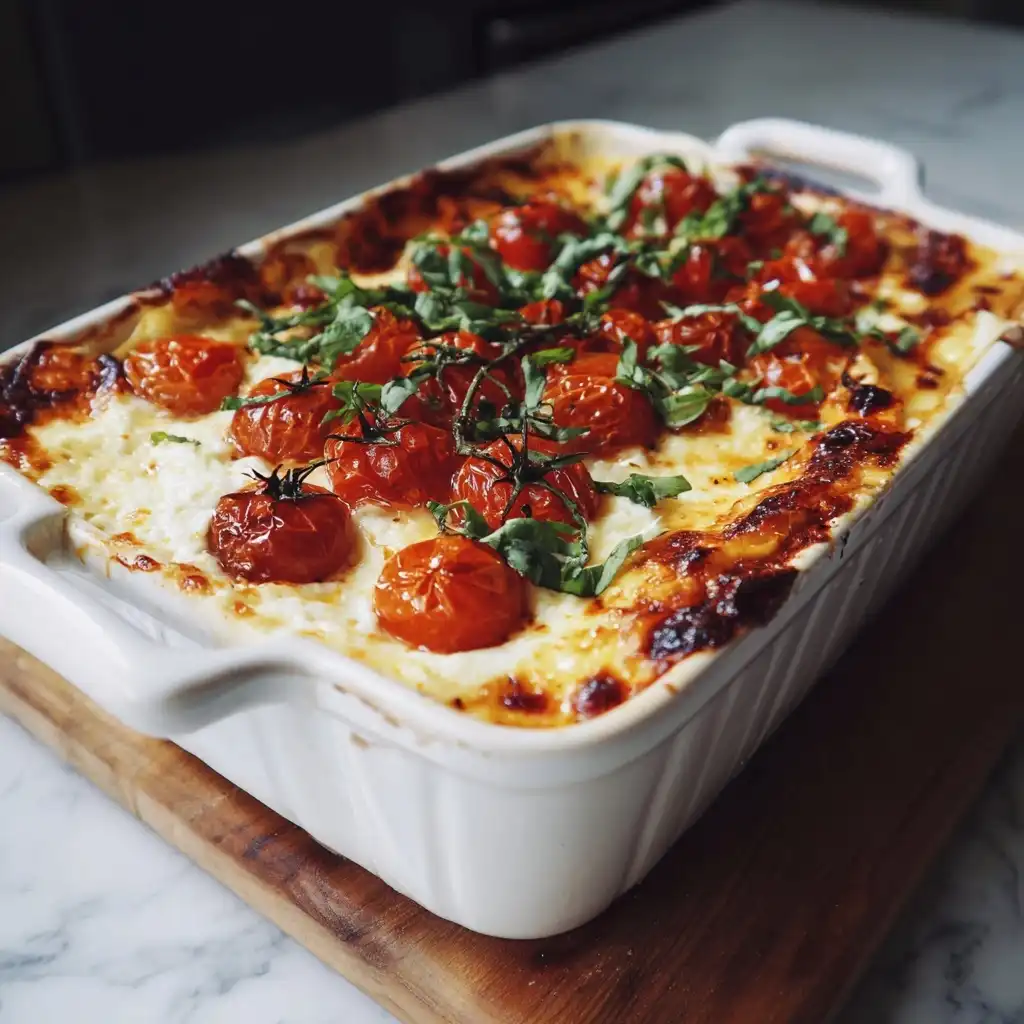
Burrata and Roasted Tomato Lasagna is a luxurious, modern twist on the beloved Italian classic—elevating comfort food with creamy sophistication and sun-ripened depth. Unlike traditional lasagnas anchored by ricotta or béchamel, this rendition centers on burrata’s luscious, stracciatella-filled center and slow-roasted tomatoes that concentrate sweetness, acidity, and umami into jewel-toned bursts of flavor. Every bite balances velvety richness with bright, earthy notes—making it ideal for special dinners, summer entertaining, or simply treating yourself to restaurant-quality elegance at home. This recipe honors Italian tradition while embracing contemporary sensibilities: minimal yet intentional layering, high-quality seasonal ingredients, and a reverence for texture contrast—creamy, tender, caramelized, and al dente all in harmony.
The History
Lasagna’s origins trace back over 700 years to medieval Italy, with early references found in the 13th-century English cookbook Libro de Arte Coquinaria by Martino da Como (though likely influenced by Arab pasta traditions introduced via Sicily). The word “lasagna” derives from the Greek laganon, meaning a flat sheet of dough—evolving through Latin lasanum (a cooking pot) into the layered baked dish we know today. Traditional versions varied regionally: Bolognese lasagna featured ragù and béchamel; Neapolitan included ricotta, mozzarella, and meatballs; while Southern variants often used hard cheeses like pecorino and fresh vegetables. Burrata, by contrast, is a relative newcomer—born in the 1920s in Andria, Puglia, when cheesemakers at Bianchini Dairy sought to repurpose leftover mozzarella scraps and cream. By enclosing soft, stringy curds (stracciatella) in a delicate pouch of fresh mozzarella, they created a cheese so decadent it was initially sold only locally. It wasn’t until the late 1990s—and especially the 2010s—that burrata gained global acclaim, thanks to artisanal importers and chefs championing its textural drama. The fusion of burrata and roasted tomatoes in lasagna reflects a broader culinary movement: reimagining heritage dishes through ingredient-driven storytelling—where heirloom San Marzano tomatoes meet hand-stretched burrata, and slow roasting becomes an act of reverence for time, terroir, and technique.
Ingredients Breakdown
Every component in this lasagna serves a precise sensory and structural purpose—no ingredient is merely decorative or conventional:
- Fresh Pasta Sheets: Made with “00” flour and eggs, these offer superior tenderness and silkiness compared to dried noodles. Their delicate nature ensures they soften perfectly without turning gummy—even with minimal liquid—while providing a supple canvas for rich fillings.
- Roma or San Marzano Tomatoes: Chosen for low moisture content and high sugar-acid balance. When roasted slowly at low heat, their flesh collapses into jammy, almost balsamic-like intensity—freeing the dish from needing heavy tomato sauce or added sugar.
- Fresh Burrata (High-Quality, Preferably Italian DOP): Not pre-shredded or pasteurized-in-brine varieties—true burrata must be fresh (ideally within 48 hours of production), chilled but not icy, with a taut, slightly glossy outer shell and a luxuriously fluid, milky-white center. Its fat content (typically 48–52%) delivers unctuous mouthfeel and subtle tang that cuts through richness.
- Extra-Virgin Olive Oil (Cold-Pressed, Early Harvest): Used both for roasting and finishing—its grassy, peppery notes amplify the tomatoes’ sweetness and lend aromatic complexity no neutral oil can replicate.
- Fresh Basil (Genovese or Purple Varieties): Added raw at the end to preserve volatile oils; its anise-laced brightness contrasts the deep savoriness and cools the palate between bites.
- Garlic & Shallots: Sautéed gently—not browned—to build foundational aroma without bitterness. Shallots add nuanced sweetness and silkiness missing in onions alone.
- Grana Padano (Aged 18–24 Months): Selected over Parmigiano-Reggiano for its slightly milder, nuttier profile and superior melting properties—grating it finely ensures even distribution and seamless integration without graininess.
- Sea Salt Flakes (Maldon or Sicilian): Applied in layers and as a final garnish for controlled salinity and textural pop—essential for balancing burrata’s mildness and enhancing tomato depth.
- Black Pepper (Freshly Cracked Tellicherry): Its floral, resinous heat complements burrata’s creaminess far better than pre-ground pepper, which loses volatility quickly.
Notably absent: ricotta (too dense and grainy), béchamel (unnecessary here—burrata provides all needed creaminess), ground meat (distracts from purity of vegetable and dairy focus), and canned tomato paste (roasting achieves deeper, cleaner flavor without artificial concentration).
Step-by-Step Recipe
- Prepare the Roasted Tomatoes (Start 24 Hours Ahead for Best Flavor): Preheat oven to 275°F (135°C). Halve 2 lbs Roma or San Marzano tomatoes lengthwise; gently squeeze out excess seeds and gel using your fingers or a small spoon. Arrange cut-side up on a parchment-lined rimmed baking sheet. Drizzle generously with ¼ cup extra-virgin olive oil; season with 1 tsp flaky sea salt, ½ tsp freshly cracked black pepper, and 2 smashed garlic cloves (peeled). Scatter 1 finely minced shallot over top. Roast uncovered for 3–3½ hours, rotating pan halfway, until tomatoes are deeply shriveled, caramelized at edges, and reduced by ~60%. Cool completely, then refrigerate overnight in their oil—this maceration deepens flavor and preserves moisture.
- Make Fresh Pasta (Optional but Highly Recommended): In a stand mixer with dough hook, combine 2 cups “00” flour, 3 large eggs, 1 tbsp olive oil, and ½ tsp fine sea salt. Mix on low until shaggy, then knead 8–10 minutes until smooth and elastic. Wrap tightly in plastic; rest at room temperature 1 hour. Divide into 4 portions; roll each through pasta machine from setting #1 to #7 (or until translucent and thin enough to see your hand through). Lay sheets on floured towels, dusting lightly with semolina to prevent sticking. Cover with damp cloth until assembly.
- Prepare the Cheese Layer: Gently tear 12 oz fresh burrata into rough 1-inch pieces—do not stir or mash. In a bowl, combine torn burrata, ¾ cup grated Grana Padano, 2 tbsp chopped fresh basil, and a generous grind of black pepper. Fold *very* gently with a silicone spatula just until combined—overmixing warms and breaks down the stracciatella. Refrigerate covered while assembling.
- Assemble with Precision: Preheat oven to 375°F (190°C). Lightly grease a 9×13-inch ceramic or stainless steel baking dish. Spread 3 tbsp roasted tomato oil (from step 1) across bottom. Layer 4 fresh pasta sheets, overlapping slightly to cover base. Dollop ⅓ of burrata mixture evenly; scatter ⅓ of roasted tomatoes (including oil and garlic/shallot bits) over top. Repeat layers twice more (pasta → burrata → tomatoes), ending with a final layer of 4 pasta sheets. For the top layer, brush very lightly with remaining roasted oil, then sprinkle with remaining ¼ cup Grana Padano and a final pinch of flaky salt.
- Bake with Care: Cover dish tightly with foil (tent to avoid touching pasta). Bake 25 minutes. Remove foil; bake uncovered 12–15 minutes more, until top is golden, edges bubble gently, and internal temperature reaches 165°F (74°C) when checked with instant-read thermometer inserted into center. Crucially: Do not overbake—pasta should retain slight chew, not become mushy.
- Rest and Finish: Remove from oven and let rest, uncovered, for 25 minutes minimum—this allows structure to set and prevents collapse when sliced. Just before serving, scatter ½ cup fresh basil leaves (whole or chiffonade) and drizzle with 1 tbsp high-quality extra-virgin olive oil. Serve warm—not hot—with additional flaky salt on the side.
Tips
- Tomato Selection Matters Profoundly: If San Marzano DOP tomatoes are unavailable, seek vine-ripened Romas from a farmers’ market—never green or underripe. Avoid beefsteak or cherry tomatoes; their high water content creates steam pockets and dilutes flavor.
- Roasting Temperature is Non-Negotiable: Going above 300°F causes rapid moisture loss and scorching rather than slow caramelization. Use an oven thermometer to verify accuracy—many home ovens run hot.
- Burrata Handling is Key: Always use burrata at cool room temperature (remove from fridge 15–20 min before tearing). Cold burrata resists blending; warm burrata weeps and separates. Never microwave or heat directly.
- Pasta Thickness Affects Texture: If using dried lasagna sheets, choose “no-boil” varieties—but soak them in warm milk for 2 minutes first to plump gently and prevent toughness. Fresh pasta should be rolled to ~1mm thickness—any thicker overwhelms the delicate filling.
- Layering Order Prevents Sogginess: Always start and end with pasta—not cheese or tomatoes. The bottom pasta layer absorbs oil and creates a barrier; the top layer crisps slightly and holds shape during slicing.
- Resting Is Structural, Not Optional: Cutting too soon releases trapped steam and causes layers to slide apart. Resting allows starches to fully set and fats to re-emulsify—resulting in clean, elegant slices.
- Oven Rack Position Impacts Browning: Place dish on middle rack for even heat. If top browns too fast, tent loosely with foil again for final 5 minutes.
- Reheating Without Ruin: To reheat leftovers, cover tightly with foil and warm in 325°F oven for 20–25 minutes. Avoid microwaving—it makes pasta rubbery and burrata greasy.
Variations and Customizations
Vegetarian & Vegan Adaptations
- Creamy Cashew “Burrata”: Blend 1 cup raw cashews (soaked 4 hrs), ½ cup coconut cream, 2 tbsp lemon juice, 1 tsp white miso, and ¼ tsp nutritional yeast until ultra-smooth. Chill 4+ hours; fold in 2 tbsp chopped fresh dill and 1 tbsp capers for briny lift.
- Roasted Vegetable Medley: Add layers of roasted zucchini ribbons, caramelized fennel slivers, or blistered shishito peppers alongside tomatoes for added texture and earthiness.
Protein Enhancements
- Herb-Roasted Chicken Sausage Crumbles: Brown 8 oz mild Italian chicken sausage with fennel seed and lemon zest; cool before layering beneath burrata for subtle savory depth.
- Pan-Seared Scallops: Top individual servings with 2 seared diver scallops finished with lemon-thyme butter—ideal for elevated dinner parties.
Regional Twists
- Sicilian-Inspired: Fold toasted pine nuts and golden raisins into burrata mixture; finish with crumbled pistachios and a drizzle of orange blossom honey.
- Puglian Rustic: Replace Grana Padano with aged caciocavallo; add a layer of sautéed bitter greens (escarole or broccoli rabe) blanched and squeezed dry.
- California Garden: Incorporate heirloom cherry tomatoes roasted whole, plus micro arugula and edible flowers (nasturtium, violas) for vibrant color and peppery nuance.
Dietary Accommodations
- Gluten-Free: Use certified GF lasagna sheets (Tinkyada or Jovial) and ensure burrata is processed in a GF facility (some brands use shared equipment).
- Lactose-Sensitive: Substitute burrata with lactose-free fresh mozzarella pearls and a dollop of mascarpone (naturally lower in lactose); omit Grana Padano or use lactose-free version.
- Low-Sodium: Reduce added salt by 50%; rely on roasted garlic, basil, and high-quality olive oil for flavor. Choose low-sodium Grana Padano if available.
Health Considerations and Nutritional Value
This lasagna prioritizes nutrient density over calorie counting—maximizing phytonutrients, healthy fats, and bioavailable minerals while minimizing refined carbs and inflammatory additives. A standard serving (1/8 of recipe) contains approximately:
- Calories: 425–470 kcal
- Protein: 18–21g (high-quality complete protein from eggs, dairy, and pasta)
- Fat: 26–29g (predominantly monounsaturated from EVOO and burrata; ~65% of fat is heart-healthy MUFA/PUFA)
- Carbohydrates: 32–36g (mostly complex, low-glycemic from whole-grain or “00” flour pasta; net carbs ~28g due to fiber)
- Fiber: 3.5–4.2g (enhanced by roasted tomato skins and whole-grain pasta options)
- Vitamins & Minerals: Exceptionally high in lycopene (bioavailability increased 300% by roasting + olive oil), vitamin C (from fresh basil and tomatoes), calcium (280mg/serving), and vitamin K2 (from aged Grana Padano—supports bone and vascular health)
Key Health Notes:
- Lycopene Powerhouse: Roasting tomatoes with olive oil dramatically increases lycopene absorption—a potent antioxidant linked to reduced risk of prostate cancer, cardiovascular disease, and UV-induced skin damage.
- Probiotic Potential: High-quality burrata contains live cultures (Lactococcus, Streptococcus thermophilus) if unpasteurized—supporting gut microbiome diversity when consumed fresh.
- No Added Sugars or Preservatives: Unlike commercial sauces or processed cheeses, every ingredient is whole-food-based and minimally processed.
- Mindful Fat Profile: While rich, the fat composition supports satiety, hormone synthesis, and fat-soluble vitamin absorption (A, D, E, K)—making it nutritionally regenerative, not empty-calorie indulgent.
- Considerations: Those managing hypertension should monitor sodium via salt selection (opt for low-sodium Grana Padano and sea salt flakes in moderation). Lactose-intolerant individuals may tolerate burrata well due to its low lactose content (<0.5g per 100g), but consult a healthcare provider if highly sensitive.
Ingredients
- 2 lbs (900g) Roma or San Marzano tomatoes, preferably vine-ripened
- ¼ cup (60ml) high-quality extra-virgin olive oil, plus 1 tbsp for finishing
- 1½ tsp flaky sea salt (such as Maldon), divided
- 1 tsp freshly cracked black pepper, divided
- 2 garlic cloves, peeled and smashed
- 1 medium shallot, finely minced
- 2 cups (250g) “00” flour, plus extra for dusting
- 3 large eggs, room temperature
- 1 tbsp olive oil (for pasta dough)
- ½ tsp fine sea salt (for pasta dough)
- 12 oz (340g) fresh burrata, chilled
- 1 cup (100g) finely grated Grana Padano (aged 18–24 months), divided
- ½ cup (15g) fresh basil leaves, plus extra for garnish
- Semolina flour, for dusting pasta
Directions
- Roast the Tomatoes: Adjust oven rack to middle position and preheat oven to 275°F (135°C). Line a rimmed baking sheet with parchment paper. Halve tomatoes lengthwise; gently squeeze out seeds and excess gel using fingers. Arrange cut-side up on sheet. Drizzle with ¼ cup olive oil; season with 1 tsp flaky salt and ½ tsp black pepper. Scatter smashed garlic and minced shallot over tomatoes. Roast uncovered for 3–3½ hours, rotating pan halfway, until deeply shriveled and caramelized. Cool completely on sheet, then transfer tomatoes and all accumulated oil to an airtight container. Refrigerate overnight (or up to 3 days).
- Make Fresh Pasta Dough: On a clean counter, mound flour and make a well in center. Add eggs, 1 tbsp olive oil, and ½ tsp fine salt. Using a fork, gradually incorporate flour from inner walls into wet ingredients until a shaggy dough forms. Knead by hand 8–10 minutes until smooth, elastic, and no longer sticky. Wrap tightly in plastic; rest at room temperature 1 hour.
- Roll Pasta Sheets: Divide dough into 4 equal portions. Keep unused portions covered. Flatten one portion; feed through pasta machine on widest setting (#1). Fold in thirds like a letter, rotate 90°, and repeat once. Continue rolling, decreasing settings incrementally to #7 (or until sheet is translucent and ~1mm thick). Dust sheets lightly with semolina; lay flat on floured towels. Repeat with remaining dough. Cover all sheets with damp cloth until ready to assemble.
- Prepare Filling: In a large bowl, gently tear burrata into 1-inch pieces. Add ¾ cup grated Grana Padano, 2 tbsp chopped basil, and remaining ½ tsp black pepper. Fold *just* until combined—do not overwork. Refrigerate covered.
- Assemble Lasagna: Preheat oven to 375°F (190°C). Grease a 9×13-inch baking dish. Spread 3 tbsp reserved roasted tomato oil across bottom. Layer 4 pasta sheets, overlapping slightly to cover base. Dollop ⅓ of burrata mixture evenly; scatter ⅓ of roasted tomatoes (with oil and aromatics) over top. Repeat layers twice more. Top with final 4 pasta sheets. Brush surface lightly with remaining roasted oil; sprinkle with remaining ¼ cup Grana Padano and a final pinch of flaky salt.
- Bake: Cover dish tightly with aluminum foil (tent to avoid contact). Bake 25 minutes. Remove foil; bake uncovered 12–15 minutes, until top is golden and edges bubble gently. Internal temp should read 165°F (74°C).
- Rest and Serve: Let lasagna rest uncovered for 25 minutes. Garnish with remaining fresh basil, drizzle with 1 tbsp olive oil, and serve warm with extra flaky salt on the side.
FAQ
- Can I make this lasagna ahead of time?
- Yes—roasted tomatoes can be prepared up to 3 days in advance and stored refrigerated in their oil. Assemble the lasagna up to 1 day ahead (cover tightly and refrigerate unbaked), then add 5–7 minutes to covered bake time. For best texture, do not assemble more than 24 hours ahead.
- Is there a substitute for burrata if I can’t find it?
- Fresh mozzarella di bufala (not low-moisture) is the closest alternative—tear it and mix with 2 tbsp mascarpone and 1 tsp lemon zest to mimic richness and tang. Avoid shredded mozzarella—it lacks moisture and structure.
- Why does the recipe specify Grana Padano instead of Parmigiano-Reggiano?
- Grana Padano has a slightly milder, sweeter, and more buttery profile with superior meltability—crucial for seamless integration into the creamy burrata layer. Parmigiano-Reggiano’s sharper, granular texture can dominate and create uneven pockets.
- My lasagna turned out watery—what went wrong?
- Most commonly: tomatoes weren’t properly deseeded before roasting, or roasted at too high a temperature (causing steam instead of caramelization). Also, skipping the overnight refrigeration of roasted tomatoes prevents oil separation and moisture control.
- Can I freeze this lasagna?
- We recommend freezing before baking: assemble completely, wrap tightly in plastic + foil, and freeze up to 2 months. Thaw overnight in fridge, then bake as directed (add 10 minutes to covered time). Freezing after baking compromises burrata’s texture significantly.
- What wine pairs best with this dish?
- A crisp, mineral-driven Italian white such as Falanghina from Campania or Vermentino from Sardinia cuts beautifully through richness while complementing tomato acidity. For red lovers, a light, low-tannin option like Schiava from Alto Adige works surprisingly well.
- Can I use store-bought pasta sheets?
- Absolutely—but choose fresh refrigerated sheets (not dried) for optimal tenderness. If using dried “no-boil” lasagna, soak in warm milk for 2 minutes before layering to prevent chewiness.
- How do I know when the burrata is high quality?
- Look for: a tight, slightly shiny outer shell (not dull or cracked), cool-to-the-touch temperature, and a label indicating “made within 48 hours.” When gently pressed, it should yield softly—not ooze liquid. Avoid any with sour or ammonia-like odors.
Summary
Burrata and Roasted Tomato Lasagna redefines Italian comfort food through meticulous ingredient curation, slow-cooked depth, and textural poetry—where sun-drenched tomatoes meet cloud-like burrata in delicate, handmade pasta layers.
It’s a celebration of simplicity done exquisitely: no béchamel, no meat, no shortcuts—just time, terroir, and the profound luxury of freshness, served warm with basil, olive oil, and quiet reverence.