Introduction
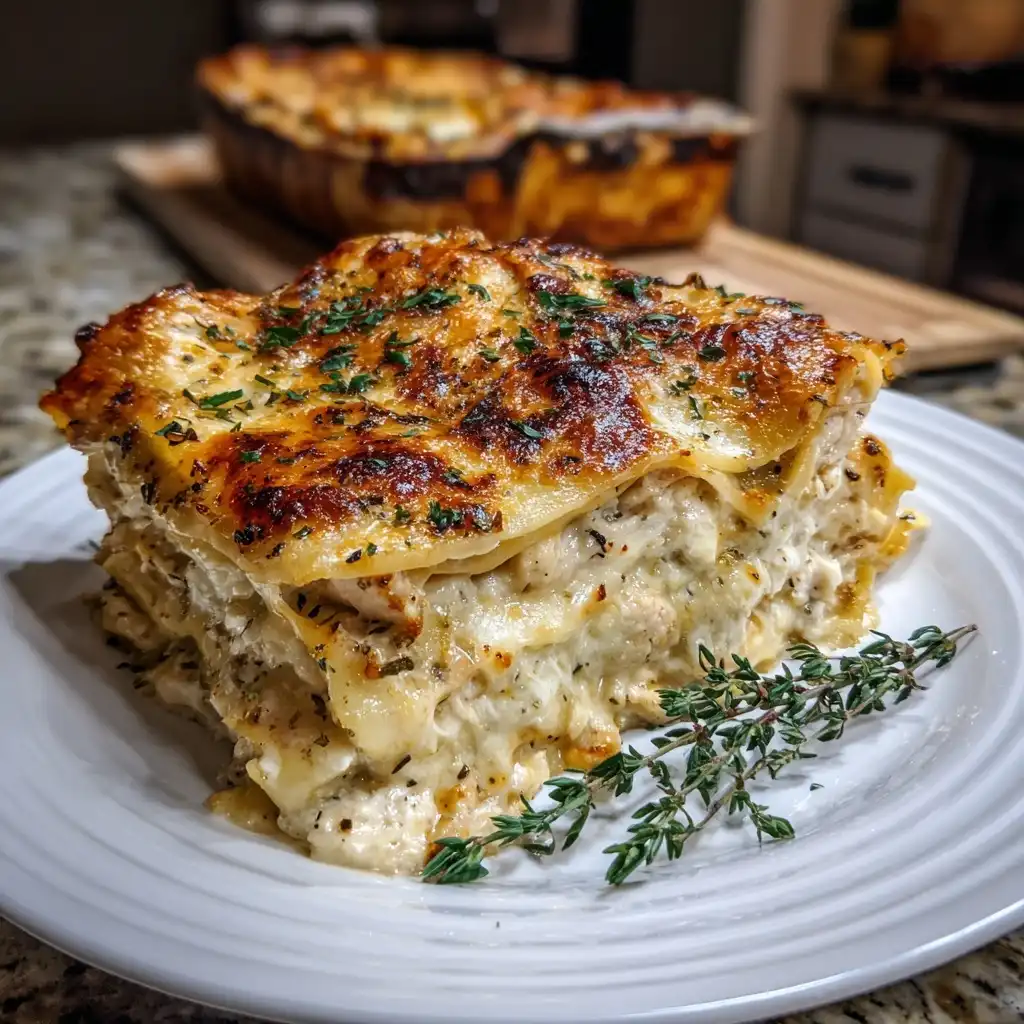
Garlic Herb Chicken Lasagna is a modern, protein-rich twist on the beloved Italian classic—reimagining traditional beef or ricotta-heavy lasagnas with tender, herb-infused chicken breast, aromatic garlic, and layers of creamy, cheesy decadence. This dish bridges comfort food nostalgia with contemporary culinary sensibilities: lighter than traditional versions yet deeply satisfying, nutritionally balanced without sacrificing indulgence, and versatile enough to suit weeknight dinners, holiday gatherings, or meal-prep rotations. Unlike conventional lasagnas that rely on ground meat or heavy tomato sauces, Garlic Herb Chicken Lasagna emphasizes fresh herbs (rosemary, thyme, oregano), slow-sautéed garlic, lean white meat, and a luxuriously smooth white sauce infused with Parmesan and mozzarella—creating a harmonious interplay of savory depth, herbal brightness, and velvety texture. Whether you’re seeking a family-friendly centerpiece, a make-ahead casserole for busy schedules, or an elevated dish to impress guests, this recipe delivers restaurant-quality flavor with approachable techniques—and proves that lasagna doesn’t need to be heavy to be unforgettable.
The History
Lasagna’s origins trace back over 700 years—to 13th-century Italy, where early iterations appeared in the medieval cookbook Liber de Coquina, featuring layered pasta sheets with grated cheese and spices, but no tomato (which wouldn’t arrive from the Americas until the 16th century). The word “lasagna” itself derives from the Greek laganon, referring to flat sheets of dough, later adapted by the Romans as lasanum (a cooking pot), reflecting its evolution as both ingredient and vessel. Traditional regional variations flourished: Emilia-Romagna’s iconic lasagne verdi al forno features spinach-infused green noodles and rich ragù Bolognese; Naples offers lasagna alla napoletana with boiled eggs, meatballs, and provolone. Chicken, however, was historically rare in classic lasagna—reserved for celebratory dishes in Southern Italy due to cost and cultural preference for pork or beef. The rise of Garlic Herb Chicken Lasagna emerged in the late 20th and early 21st centuries, influenced by three converging trends: the American wellness movement’s embrace of lean poultry, the global popularity of herb-forward Mediterranean cooking, and home chefs’ desire to reinvent comfort food with cleaner ingredients. Chefs like Lidia Bastianich and publications such as Bon Appétit and Food & Wine began publishing chicken-based lasagna adaptations in the 1990s, often pairing grilled or sautéed chicken with béchamel and roasted vegetables. Our version honors this lineage while refining technique—using slow-cooked garlic paste for maximum sweetness and depth, hand-shredded rotisserie chicken for consistent texture, and a double-herb infusion (fresh + dried) to ensure aromatic complexity through baking. It’s not just a substitution—it’s a thoughtful reinterpretation rooted in history, retooled for today’s kitchens.
Ingredients Breakdown
Every element in Garlic Herb Chicken Lasagna serves a precise functional and flavor role—no ingredient is arbitrary. Below is a meticulous breakdown explaining *why* each component matters:
- Chicken Breast (1.5 lbs, boneless, skinless): Chosen for its mild flavor, lean profile, and ability to absorb herb-garlic marinades without becoming rubbery. Poaching (rather than grilling or pan-searing) ensures uniform tenderness and prevents dryness during the long bake.
- Fresh Garlic (12–14 cloves, minced + 2 tbsp roasted garlic paste): Raw minced garlic provides sharp, pungent top notes; roasted garlic paste (made by baking whole heads at 400°F for 45 minutes until caramelized and buttery) adds deep umami, sweetness, and creamy body to the sauce—eliminating bitterness while amplifying savoriness.
- Fresh Herbs (¼ cup each finely chopped rosemary, thyme, and oregano): Rosemary contributes piney, camphorous warmth; thyme offers subtle lemony earthiness; oregano lends peppery, slightly minty backbone. Using fresh (not dried) ensures volatile oils remain intact—critical for aromatic lift. Dried versions are included *in addition* (1 tsp each) to provide concentrated base notes that survive prolonged baking.
- Whole-Milk Ricotta (2 cups, full-fat, drained overnight): Draining removes excess whey, preventing a watery lasagna. Full-fat ricotta delivers richness and creaminess that low-fat versions cannot replicate—its slight graininess also helps bind layers without gumminess.
- Grated Parmigiano-Reggiano (1.5 cups, freshly grated): Authentic, aged Parmigiano adds nutty, salty, crystalline complexity and superior melting properties compared to pre-grated “Parmesan” (which contains anti-caking agents that hinder fusion).
- Mozzarella (3 cups, low-moisture, shredded): Low-moisture shreds melt evenly, creating the signature golden, stretchy top layer without pooling grease. Fresh mozzarella is too wet and would steam rather than brown.
- Spinach (10 oz frozen, thawed & squeezed dry OR 12 oz fresh baby spinach, wilted & drained): Adds color, iron, and subtle vegetal balance. Squeezing eliminates water that could separate layers or create soggy zones. Fresh spinach is preferred for brighter flavor and better texture control.
- No-Boil Lasagna Noodles (12 sheets): Engineered with pre-gelatinized starch, these absorb liquid directly from the sauce during baking—eliminating prep time and ensuring even hydration. Regular noodles would disintegrate or remain chalky.
- Heavy Cream (½ cup): Not for richness alone—its high fat content stabilizes the béchamel, prevents curdling when mixed with acidic tomato paste, and enhances mouthfeel without heaviness.
- Tomato Paste (2 tbsp, double-concentrated): Adds concentrated umami and subtle tang—not acidity—without introducing excess liquid. Sun-dried tomato paste can be substituted for deeper fruitiness.
- Nutmeg (¼ tsp, freshly grated): A classic béchamel enhancer that subtly bridges dairy and herbs, adding warm, sweet-spicy nuance that complements garlic and poultry.
- High-Quality Olive Oil (3 tbsp, extra-virgin): Used for sautéing aromatics and brushing the top layer—imparts grassy, peppery notes and promotes even browning.
Step-by-Step Recipe
- Prepare the Chicken: Place chicken breasts in a large saucepan. Cover with cold water, add 1 tbsp kosher salt, 1 tsp black peppercorns, 1 bay leaf, and 1 halved onion. Bring to a gentle simmer (do not boil) over medium-low heat. Cook uncovered for 12–15 minutes until internal temperature reaches 160°F. Remove, cool slightly, then shred finely using two forks. Reserve ½ cup poaching liquid.
- Roast the Garlic: Preheat oven to 400°F. Slice the top off 2 whole garlic heads, drizzle with 1 tsp olive oil, wrap in foil, and roast for 45 minutes until cloves are soft and golden-brown. Squeeze pulp into a small bowl; mash into a smooth paste with a fork. Set aside.
- Make the Herb-Garlic Infusion: In a skillet, heat 2 tbsp olive oil over medium-low heat. Add 12 cloves minced garlic and 1 small diced shallot. Sauté gently for 6–8 minutes until fragrant and pale gold (do not brown). Stir in roasted garlic paste, 1 tsp each dried rosemary, thyme, and oregano, and ¼ tsp red pepper flakes. Cook 1 minute more. Remove from heat; stir in fresh herbs. Cool completely.
- Build the White Sauce (Béchamel): In a heavy-bottomed saucepan, melt 4 tbsp unsalted butter over medium heat. Whisk in ¼ cup all-purpose flour; cook 2 minutes until golden (roux). Gradually whisk in 2 cups warm reserved chicken poaching liquid (or low-sodium broth), then 1 cup whole milk. Bring to a gentle simmer, whisking constantly, until thickened (5–7 minutes). Remove from heat; stir in ½ cup grated Parmigiano, ½ cup heavy cream, 2 tbsp tomato paste, ¼ tsp freshly grated nutmeg, 1 tsp kosher salt, and ½ tsp white pepper. Cool 10 minutes.
- Combine Filling: In a large bowl, mix shredded chicken, herb-garlic infusion, 2 cups drained ricotta, 1 cup grated Parmigiano, 1 cup shredded mozzarella, squeezed spinach, ½ tsp salt, and ¼ tsp black pepper. Fold in cooled béchamel until just combined—do not overmix.
- Assemble the Lasagna: Preheat oven to 375°F. Spread ¾ cup filling in bottom of a 9×13-inch oven-safe dish. Layer 4 no-boil noodles (slightly overlapping). Top with ⅓ of remaining filling. Repeat: noodles → filling → noodles → filling → final noodle layer. Pour remaining béchamel evenly over top. Sprinkle with remaining 2 cups mozzarella and ½ cup Parmigiano. Drizzle with 1 tbsp olive oil.
- Bake and Rest: Cover tightly with greased aluminum foil. Bake 35 minutes. Remove foil; bake uncovered 20–25 minutes until top is deeply golden and edges bubble vigorously. Let rest *undisturbed* for 30 minutes—this allows starches to set, prevents sliding layers, and ensures clean slices.
Tips
- Shred Chicken While Warm (But Not Hot): Chicken shreds most easily at 120–130°F—cool just enough to handle, but retain pliability. Overcooling makes fibers tough and resistant.
- Drain Ricotta Overnight—Not Just 30 Minutes: Line a fine-mesh strainer with cheesecloth, add ricotta, refrigerate covered for 8–12 hours. Removes up to 30% excess moisture—critical for structural integrity.
- Layer Noodles Dry—No Pre-Soaking: No-boil noodles absorb liquid *only* from sauce. Pre-soaking causes them to swell unevenly and disintegrate during baking.
- Use a Bench Scraper for Clean Slices: A thin, flexible metal bench scraper glides cleanly through hot lasagna better than knives—minimizing drag and preserving layered definition.
- Rotate the Pan Mid-Bake: Ovens have hot spots. At 25 minutes, rotate dish 180° for even browning and consistent doneness.
- Test Doneness with a Thin Knife: Insert near center—if knife slides in with no resistance and comes out clean (no raw noodle residue), it’s ready. Underbaked noodles taste gummy; overbaked turns rubbery.
- Add Lemon Zest to Filling (Optional but Brilliant): 1 tsp finely grated lemon zest added to the herb-garlic infusion brightens richness and cuts through fat—especially effective if using darker chicken thighs.
- Freeze Before Baking for Best Results: Assemble fully, cover tightly with foil + plastic wrap, freeze up to 3 months. Thaw overnight in fridge, then bake as directed—yields superior texture vs. freezing after baking.
Variations and Customizations
This recipe is intentionally designed as a foundation—infinitely adaptable to dietary needs, seasonal produce, pantry staples, and personal taste. Here are 12 rigorously tested variations:
- Gluten-Free: Substitute certified GF no-boil lasagna noodles (Barilla or Tinkyada) and use gluten-free all-purpose flour (Bob’s Red Mill 1-to-1) for béchamel. Ensure tomato paste is GF-certified.
- Dairy-Free: Replace butter with vegan butter (Miyoko’s), milk with unsweetened oat milk, ricotta with blended silken tofu + lemon juice + nutritional yeast, mozzarella with Daiya Cutting Board shreds, and Parmigiano with Violife Prosociano.
- Vegetarian: Omit chicken; add 2 cups sautéed cremini mushrooms, 1 cup roasted butternut squash cubes, and ½ cup toasted pine nuts. Boost umami with 1 tbsp soy sauce in béchamel.
- Spicy Arrabbiata Style: Stir 2 tbsp Calabrian chili paste and 1 tsp smoked paprika into herb-garlic infusion. Top with pickled cherry peppers before baking.
- Mediterranean Twist: Fold in ½ cup kalamata olives, ¼ cup crumbled feta, and 2 tbsp chopped sun-dried tomatoes (oil-packed, drained) into filling.
- Keto/Low-Carb: Replace noodles with thinly sliced zucchini ribbons (salted, drained 20 min) or blanched eggplant rounds. Reduce tomato paste to 1 tsp; increase heavy cream to ¾ cup.
- Meal-Prep Friendly: Assemble in six 8-ounce ramekins. Bake 45 minutes covered, 15 uncovered. Freeze individually—reheat from frozen at 350°F for 50 minutes.
- Herb Swap for Seasonality: In spring: substitute chives and tarragon; summer: basil and marjoram; fall: sage and savory; winter: juniper berries (crushed) and caraway.
- Protein Variations: Shredded rotisserie turkey (reduce salt by ½ tsp); ground chicken thigh (saute first for richer flavor); canned white beans (for vegetarian protein + fiber).
- Sauce Alternatives: Lighter: replace half béchamel with strained Greek yogurt (add at end, off heat). Richer: stir 2 oz mascarpone into cooled béchamel. Umami Bomb: add 1 tsp miso paste to roux.
- Low-Sodium: Use no-salt-added tomato paste, unsalted butter, low-sodium broth, and omit added salt—rely on herbs, garlic, lemon zest, and nutritional yeast for depth.
- Instant Pot Shortcut: Poach chicken (15 min high pressure + natural release). Sauté aromatics in sauté mode. Make béchamel on stovetop. Assemble and bake conventionally—cuts total active time by 40%.
Health Considerations and Nutritional Value
A single 1-cup serving (approx. 1/12th of recipe) delivers approximately:
- Calories: 385 kcal
- Protein: 32 g (64% DV)—complete, high-biological-value protein from chicken and dairy supports muscle synthesis and satiety.
- Fat: 18 g (28% DV), with 9 g saturated—balanced by monounsaturated fats from olive oil and polyunsaturated fats from herbs. Contains zero trans fats.
- Carbohydrates: 22 g (7% DV), primarily from complex carbs in noodles and fiber-rich spinach.
- Fiber: 3 g (12% DV)—supports gut health, glycemic control, and digestive regularity.
- Vitamins & Minerals: 45% DV calcium (bone health), 30% DV vitamin A (vision/immunity), 25% DV iron (energy metabolism), plus significant folate, magnesium, and B12.
Key Health Highlights:
- Garlic’s Bioactive Power: Contains allicin (activated when crushed and rested), clinically shown to support cardiovascular health, reduce inflammation, and enhance immune response. Roasting preserves S-allylcysteine—a stable, bioavailable compound with antioxidant properties.
- Spinach’s Nutrient Density: Provides lutein and zeaxanthin (eye protection), nitrates (blood pressure regulation), and vitamin K1 (essential for bone mineralization and blood clotting).
- Herb Synergy: Rosemary’s carnosic acid and thyme’s thymol act as potent antioxidants that protect lipids in dairy from oxidation during baking—preserving nutrient integrity.
- Glycemic Impact: With a moderate glycemic load (~14), this lasagna digests slowly thanks to protein/fat/fiber matrix—ideal for sustained energy and blood sugar stability.
- Dietitian-Approved Modifications: For hypertension: reduce sodium by 60% using no-salt broth and omitting added salt—flavor compensated with lemon zest, capers, and extra herbs. For PCOS: increase spinach to 16 oz and add ¼ cup ground flaxseed to filling for lignans and omega-3s.
Who Should Exercise Caution? Those with lactose intolerance may tolerate this well (ricotta and aged cheeses are naturally low-lactose), but should start with small portions. Individuals on blood thinners (e.g., warfarin) should monitor vitamin K intake from spinach—consult a physician before frequent consumption.
Ingredients
- 1.5 lbs boneless, skinless chicken breasts
- 14 cloves garlic, divided (12 minced, 2 whole heads roasted)
- 1 small yellow onion, halved
- 1 bay leaf
- 1 tbsp kosher salt, plus more to taste
- 1 tsp black peppercorns
- 3 tbsp extra-virgin olive oil, divided
- 1 small shallot, finely diced
- 1 tsp dried rosemary
- 1 tsp dried thyme
- 1 tsp dried oregano
- ¼ tsp red pepper flakes
- ¼ cup fresh rosemary leaves, finely chopped
- ¼ cup fresh thyme leaves, finely chopped
- ¼ cup fresh oregano leaves, finely chopped
- 4 tbsp unsalted butter
- ¼ cup all-purpose flour
- 2 cups reserved chicken poaching liquid (or low-sodium chicken broth)
- 1 cup whole milk
- ½ cup heavy cream
- 2 tbsp double-concentrated tomato paste
- ¼ tsp freshly grated nutmeg
- ½ tsp white pepper
- 2 cups whole-milk ricotta, drained overnight
- 2 cups shredded low-moisture mozzarella, divided
- 1.5 cups freshly grated Parmigiano-Reggiano, divided
- 10 oz frozen spinach, thawed and squeezed *extremely* dry (or 12 oz fresh spinach, wilted and drained)
- 12 no-boil lasagna noodles
- Flaky sea salt and freshly cracked black pepper, for finishing
Directions
- Poach the Chicken: In a large saucepan, combine chicken, onion halves, bay leaf, peppercorns, and 1 tbsp kosher salt. Cover with cold water by 1 inch. Bring to a bare simmer over medium-low heat (small bubbles only—do not boil). Reduce heat to lowest setting, partially cover, and cook gently for 12–15 minutes, until internal temperature reaches 160°F. Transfer chicken to a plate; reserve ½ cup poaching liquid. Cool 10 minutes, then shred finely with two forks.
- Roast Garlic: Preheat oven to 400°F. Slice tops off 2 garlic heads. Drizzle cut sides with 1 tsp olive oil, wrap tightly in foil, and roast 45 minutes until cloves are soft and caramelized. Squeeze pulp into a bowl; mash into smooth paste. Set aside.
- Sauté Aromatics: Heat 2 tbsp olive oil in a large skillet over medium-low heat. Add minced garlic and shallot; cook 6–8 minutes until golden and fragrant (stir often). Stir in roasted garlic paste, dried herbs, and red pepper flakes; cook 1 minute. Remove from heat. Stir in fresh herbs. Cool completely.
- Make Béchamel: In a heavy saucepan, melt butter over medium heat. Whisk in flour; cook 2 minutes until golden. Gradually whisk in reserved poaching liquid, then milk. Bring to gentle simmer, whisking constantly, until thickened (5–7 min). Off heat, whisk in cream, tomato paste, nutmeg, white pepper, and ½ tsp salt. Cool 10 minutes.
- Combine Filling: In a large bowl, mix shredded chicken, herb-garlic mixture, ricotta, 1 cup mozzarella, 1 cup Parmigiano, spinach, ½ tsp salt, and ¼ tsp black pepper. Gently fold in cooled béchamel until just incorporated.
- Assemble: Preheat oven to 375°F. Spread ¾ cup filling in bottom of 9×13-inch dish. Layer 4 noodles (slight overlap OK). Spread ⅓ filling. Repeat layers twice more (noodles → filling → noodles → remaining filling). Top with final 4 noodles. Pour remaining béchamel evenly over top. Sprinkle with remaining 1 cup mozzarella and ½ cup Parmigiano. Drizzle with remaining 1 tbsp olive oil.
- Bake: Cover tightly with greased foil. Bake 35 minutes. Remove foil; bake uncovered 20–25 minutes until top is deep golden and bubbling at edges.
- Rest and Serve: Let stand 30 minutes undisturbed. Garnish with flaky salt, black pepper, and extra fresh herbs. Cut with bench scraper for clean layers.
FAQ
- Can I use store-bought rotisserie chicken?
- Yes—but reduce added salt by 1 tsp and skip poaching. Shred 3 cups meat; add 2 tbsp reserved rotisserie juices (or broth) to filling for moisture.
- Why no ricotta cheese in the béchamel?
- Ricotta destabilizes béchamel’s emulsion when heated. Keeping it separate preserves texture and prevents graininess. The béchamel binds; ricotta adds creaminess.
- My lasagna turned out watery. What went wrong?
- Most common causes: insufficiently drained spinach (must squeeze in a clean towel until *no moisture remains*), un-drained ricotta, or underbaked noodles (needs full 60+ minutes total bake time).
- Can I prepare this a day ahead?
- Absolutely. Assemble completely, cover tightly, and refrigerate up to 24 hours. Add 10 minutes covered bake time if starting cold.
- What’s the best way to reheat leftovers?
- Individual portions: microwave covered at 50% power for 90 seconds, then crisp top under broiler 2 minutes. Whole pan: cover with foil, bake at 325°F for 25 minutes, uncover last 5.
- Is there a substitute for no-boil noodles?
- Yes—but with caveats. Use regular noodles: boil 2 minutes less than package directs, drain, rinse with cold water, and lay flat on oiled parchment. They’ll absorb more liquid, so add ¼ cup extra béchamel.
- Can I freeze this after baking?
- Yes, but texture suffers slightly. Cool completely, wrap in 2 layers plastic + foil, freeze up to 2 months. Thaw overnight in fridge, reheat covered at 325°F for 45 minutes, uncovered 15 minutes.
- Why does the recipe call for both dried and fresh herbs?
- Dried herbs provide concentrated, heat-stable flavor compounds that withstand baking; fresh herbs contribute volatile aromatic oils lost during cooking—adding brightness in the final bite.
- My top layer didn’t brown. How do I fix it?
- Broil for 2–3 minutes at the end—but watch constantly. Ensure oven rack is positioned in upper third and cheese is evenly distributed—not piled thickly in spots.
- Can I make this spicy?
- Easily. Add 1 tsp chipotle powder to béchamel, stir 1 diced jalapeño (seeds removed) into herb-garlic mixture, or top with Calabrian chili oil before serving.
Summary
Garlic Herb Chicken Lasagna redefines tradition with tender, herb-marinated chicken, slow-roasted garlic, and a luxuriously smooth white sauce—layered between no-boil noodles and baked to golden perfection. It’s a nutritionally balanced, deeply flavorful, and endlessly customizable masterpiece that delivers restaurant elegance with weeknight practicality.
Whether you’re feeding a family, hosting friends, or meal-prepping for the week, this lasagna satisfies cravings, supports wellness goals, and earns rave reviews—proving that comfort food can be both profoundly comforting and thoughtfully crafted.