Introduction
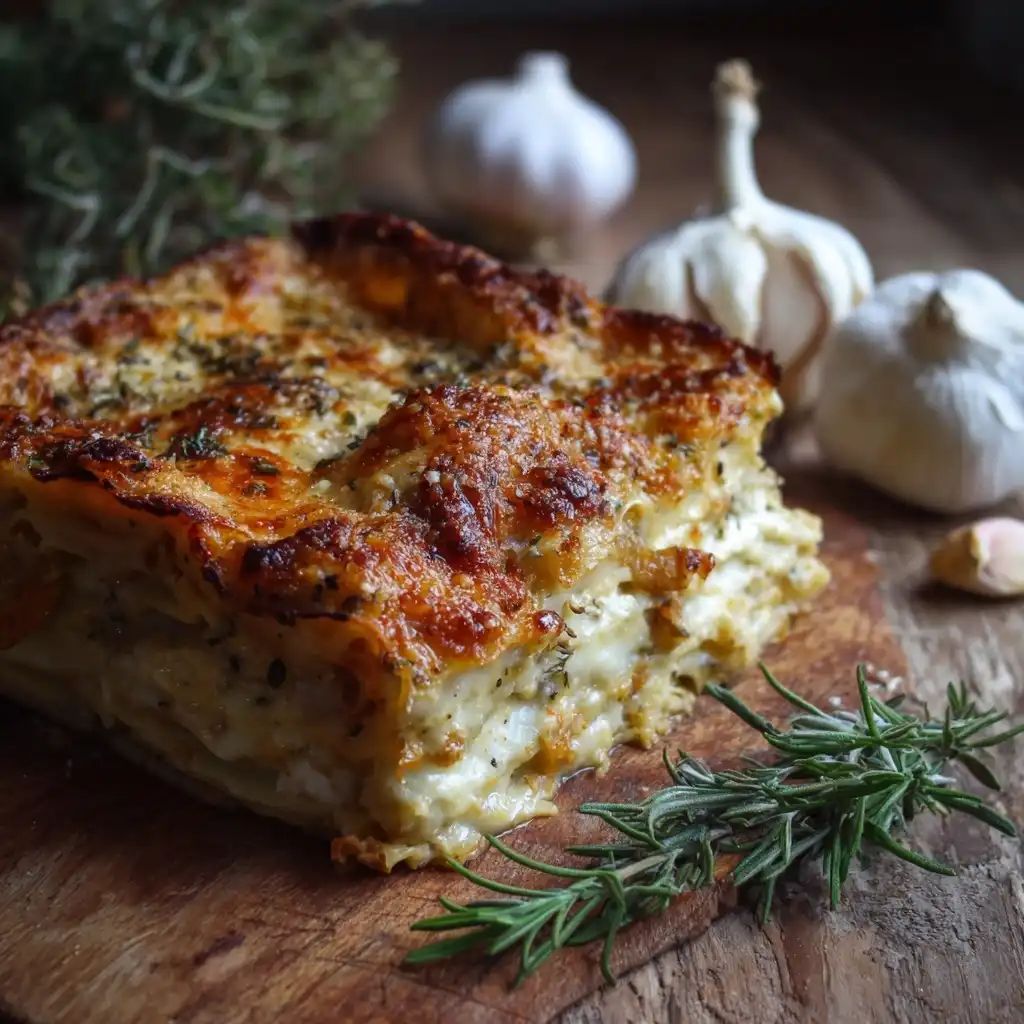
Step into the warm, aromatic embrace of Rustic Roasted Garlic Lasagna — a soul-satisfying evolution of the classic Italian favorite that marries farmhouse charm with deep, caramelized sophistication. Unlike traditional lasagnas that rely on raw or sautéed garlic, this version elevates the humble clove to star status through slow-roasting, unlocking its natural sweetness, nutty depth, and velvety texture. The result is a luxuriously layered casserole where every bite hums with mellow umami, herbaceous freshness, and golden-brown, bubbling richness. It’s comfort food reimagined: hearty enough for Sunday suppers and special enough for dinner parties — all while retaining an authentically rustic, handcrafted feel.
The History
Lasagna’s origins trace back over 700 years to medieval Italy, with early versions like *lasanum* (Latin for “cooking pot”) appearing in 13th-century texts such as the *Liber de Coquina*. These ancestral iterations featured stacked sheets of pasta layered with spices, cheeses, and sometimes minced meats — but notably lacked tomatoes, which only entered Italian cuisine after the Columbian Exchange in the 16th century. Garlic, long revered across Mediterranean cultures for both culinary and medicinal properties, was historically used sparingly in refined preparations due to its pungency. However, in rural *cucina povera* traditions — especially across Tuscany, Umbria, and Emilia-Romagna — resourceful cooks discovered that roasting garlic transformed it into a mellow, spreadable treasure ideal for enriching sauces and fillings. The fusion of roasted garlic with lasagna emerged organically in the late 20th century, gaining momentum in artisanal kitchens and farm-to-table movements that champion slow techniques and ingredient integrity. Today, Rustic Roasted Garlic Lasagna stands as a tribute to those time-honored methods — a bridge between ancient tradition and modern flavor science, where patience becomes flavor and simplicity becomes sublime.
Ingredients Breakdown
Every component in this recipe is chosen not just for taste, but for function, texture, and synergy — ensuring structural integrity, balanced richness, and layered complexity:
- Roasted Garlic: 2 whole heads (about 24 cloves), roasted until tender and golden-brown — provides foundational sweetness, umami depth, and creamy body without sharpness.
- Fresh Pasta Sheets: 12–15 no-boil or fresh egg lasagna noodles (approx. 3” x 9”) — tender yet resilient; allows for delicate layering without mushiness. Homemade is ideal, but high-quality store-bought fresh sheets work beautifully.
- Ricotta Blend: 2 cups whole-milk ricotta, ½ cup grated Pecorino Romano, ¼ cup grated Parmigiano-Reggiano, 1 large egg, 2 tbsp chopped fresh basil, 1 tbsp chopped fresh oregano, ½ tsp freshly grated nutmeg, 1 tsp sea salt, ¼ tsp white pepper — creates a luscious, herb-flecked, protein-rich filling with subtle tang and binding power.
- Tomato-Basil Sauce: 4 cups slow-simmered San Marzano tomato passata (or crushed tomatoes), 3 tbsp extra-virgin olive oil, 1 small yellow onion (finely diced), 4 garlic cloves (minced — *not* roasted, for aromatic base notes), ¼ cup dry red wine (e.g., Chianti), 2 tbsp tomato paste, ½ cup fresh basil leaves (torn), 1 tsp dried oregano, 1 tsp dried thyme, 1 bay leaf, 1 tsp sugar (to balance acidity), sea salt and black pepper to taste — builds a vibrant, herb-forward, slow-cooked foundation with bright acidity and savory depth.
- Béchamel Enrichment: 1½ cups full-fat béchamel (made with whole milk, butter, and flour) — adds silkiness, creaminess, and structural cohesion between layers; prevents dryness and enhances mouthfeel.
- Three-Cheese Topping: 1½ cups shredded mozzarella di bufala or high-moisture mozzarella, ½ cup grated Fontina Val d’Aosta (for meltability and earthy nuance), ⅓ cup grated aged provolone (for salty complexity), plus extra Parmigiano-Reggiano for finishing — ensures a deeply golden, blistered, stretchy, and flavorful crown.
- Finishing Accents: Flaky Maldon sea salt, freshly cracked black pepper, micro basil or chive blossoms, drizzle of high-quality aged balsamic glaze (optional but recommended), and a final brush of garlic-infused olive oil — adds brightness, contrast, and visual elegance.
Step-by-Step Recipe
- Roast the Garlic: Preheat oven to 400°F (200°C). Slice ¼” off the top of each garlic head to expose cloves. Drizzle generously with olive oil, wrap tightly in foil, and roast for 50–65 minutes until cloves are soft, golden, and fragrant. Cool slightly, then squeeze pulp into a small bowl. Mash with a fork until smooth and set aside.
- Prepare the Tomato Sauce: In a heavy-bottomed Dutch oven, heat olive oil over medium heat. Sauté onions until translucent (6–8 min). Add minced garlic; cook 1 minute until fragrant. Stir in tomato paste; cook 2 minutes to deepen flavor. Deglaze with red wine, scraping up browned bits. Add tomatoes, herbs, sugar, salt, and pepper. Simmer uncovered for 45–60 minutes, stirring occasionally, until thickened and rich. Stir in torn basil at the end. Cool slightly, then fold in ¼ cup of the roasted garlic purée. Reserve remaining garlic for ricotta layer.
- Make the Ricotta Filling: In a large bowl, combine ricotta, both hard cheeses, egg, herbs, nutmeg, salt, and white pepper. Gently fold in the remaining roasted garlic purée until evenly distributed. Do not overmix — preserve airiness.
- Assemble with Intention: Preheat oven to 375°F (190°C). Lightly grease a 9×13-inch ceramic or enameled cast-iron lasagna pan. Spread ¾ cup tomato sauce evenly across the bottom. Lay down 3–4 pasta sheets (slightly overlapping if needed). Spread ⅓ of ricotta mixture (about 1¼ cups) evenly. Drizzle with ¼ cup béchamel. Spoon 1 cup tomato sauce over top. Repeat layers two more times: pasta → ricotta → béchamel → sauce. Finish with a final layer of pasta, remaining tomato sauce, and all three cheeses. Sprinkle generously with extra Parmigiano-Reggiano.
- Bake with Care: Cover tightly with parchment-lined aluminum foil (to trap steam and prevent drying). Bake for 35 minutes. Remove foil, rotate pan, and bake uncovered for 20–25 minutes until top is deeply golden, edges bubble vigorously, and internal temperature reaches 165°F (74°C) in the center.
- Rest — This Is Non-Negotiable: Let lasagna rest for *at least 35 minutes* before slicing. This allows starches to set, cheese to re-emulsify, and layers to stabilize — ensuring clean, intact slices instead of a saucy slide.
- Finish & Serve: Just before serving, sprinkle with flaky salt, cracked pepper, and fresh herbs. Optional: artfully drizzle with balsamic glaze and a light brush of garlic-infused olive oil. Cut with a sharp chef’s knife dipped in hot water between slices.
Tips
- Garlic Roasting Mastery: For even roasting, place garlic heads on a bed of coarse sea salt in the foil packet — it stabilizes them and draws out moisture gently. Don’t rush the roast; underdone garlic lacks sweetness and won’t mash smoothly.
- Pasta Precision: If using dried no-boil noodles, ensure your sauce has ample liquid (add ¼ cup reserved pasta water or low-sodium broth to sauce if needed) to fully hydrate them during baking. For fresh pasta, avoid over-saucing — excess moisture causes sogginess.
- Ricotta Drainage Secret: Line a fine-mesh sieve with cheesecloth, add ricotta, and refrigerate uncovered for 2 hours before mixing. This removes whey and yields a denser, richer, non-watery filling.
- Sauce Consistency Check: Your tomato sauce should coat the back of a spoon and hold a clear line when you run your finger through it — too thin, and it’ll pool; too thick, and it’ll dry out layers. Adjust with a splash of water or simmer longer.
- Béchamel Bonus: Make it ahead and cool completely. A chilled béchamel incorporates more evenly and prevents curdling when folded into warm ricotta.
- Oven Thermometer Essential: Many home ovens run hot or cold. An accurate oven thermometer ensures consistent, reliable baking — critical for even cheese browning and proper layer setting.
- Cooling Rack Trick: Place the baked lasagna pan on a wire rack after removing from oven — airflow underneath prevents condensation buildup and soggy bottoms.
- Leftover Magic: Refrigerate covered for up to 5 days. Reheat individual portions in a skillet with a splash of milk and butter for crispy-edged, restaurant-quality revival.
Variations and Customizations
This recipe is gloriously adaptable — honoring its rustic roots while inviting creativity. Here are inspired, chef-tested variations:
- Vegetarian Rustic Garden: Fold 2 cups roasted seasonal vegetables (zucchini ribbons, caramelized fennel, blistered cherry tomatoes, and sautéed wild mushrooms) into the ricotta layer. Replace meat-based wine in sauce with dry vermouth or vegetable stock.
- Prosciutto & Fig Swirl: Layer thin ribbons of aged prosciutto between pasta and ricotta. Stir ½ cup finely chopped dried Calabrian figs and 1 tbsp balsamic vinegar into the tomato sauce for sweet-tart resonance.
- Smoky Lentil Bolognese: Brown 1 cup cooked French green lentils with pancetta, fennel seeds, and smoked paprika; fold into tomato sauce for a hearty, fiber-rich, plant-forward meatless “ragù.”
- Goat Cheese & Caramelized Onion: Swap half the ricotta for mild, creamy chèvre. Add 1½ cups slow-caramelized onions to the ricotta mixture and finish with crumbled goat cheese and thyme.
- Gluten-Free Heritage: Use certified GF oven-ready lasagna sheets (like Barilla or Jovial). Ensure all cheeses and sauces are GF-certified. Add 1 tbsp psyllium husk powder to ricotta mixture to enhance binding.
- Herb-Infused White Lasagna: Omit tomatoes entirely. Build a roasted garlic–sage béchamel with white wine, porcini-infused milk, and wilted spinach. Layer with fontina, taleggio, and lemon-zested ricotta.
- Breakfast Lasagna Reinvention: Substitute ricotta with herbed scrambled eggs + crème fraîche blend; layer with roasted potatoes, caramelized leeks, and gruyère. Bake at 350°F for 30–35 minutes.
- Make-Ahead Freezer Guide: Assemble unbaked lasagna, cover tightly in double-layer foil + plastic wrap, and freeze up to 3 months. Thaw overnight in fridge, then bake covered for 45 min, uncovered for 25–30 min — no need to adjust time significantly.
Health Considerations and Nutritional Value
While undeniably indulgent, Rustic Roasted Garlic Lasagna can be thoughtfully aligned with wellness goals through mindful preparation and portion awareness. A standard serving (1/12th of the full pan, approx. 1 ½ cups) contains approximately:
- Calories: 420–470 kcal (varies by cheese selection and pasta type)
- Protein: 24–28 g (primarily from ricotta, Parmigiano, mozzarella, and egg — complete, high-biological-value protein)
- Fat: 22–26 g (mostly unsaturated from olive oil and cheeses; includes conjugated linoleic acid [CLA] from grass-fed dairy options)
- Carbohydrates: 30–34 g (fiber-rich if using whole-wheat or legume-based pasta — adds 4–6 g dietary fiber per serving)
- Sodium: 580–690 mg (reduced by omitting added salt in sauce, using low-sodium cheeses, and increasing herb volume)
- Vitamins & Minerals: Excellent source of calcium (45% DV), vitamin B12 (35% DV), vitamin A (25% DV), and selenium (from garlic). Roasted garlic contributes allicin derivatives, quercetin, and antioxidants linked to cardiovascular and immune support.
Nutritionist Notes:
- Heart-Healthy Tweaks: Replace half the mozzarella with part-skim ricotta or cottage cheese blended with Greek yogurt. Use extra-virgin olive oil exclusively — rich in polyphenols and oleocanthal.
- Gut-Friendly Boost: Stir 2 tbsp chopped fermented garlic (or kimchi brine) into ricotta for probiotic support — complements roasted garlic’s prebiotic inulin.
- Blood Sugar Balance: Pair with a large arugula salad dressed in lemon, olive oil, and toasted walnuts — fiber and healthy fats slow glucose absorption.
- Allergy-Sensitive Swaps: Nut-free, soy-free, and corn-free by default. For dairy sensitivity, use cashew-based “ricotta” (soaked + blended cashews, lemon, nutritional yeast) and Miyoko’s mozzarella — though texture and browning will differ.
Ingredients
- 2 large heads garlic, unpeeled
- 3 tbsp extra-virgin olive oil, plus more for roasting and finishing
- 1 tbsp balsamic glaze (optional, for garnish)
- 1 small yellow onion, finely diced
- 4 garlic cloves, minced (for sauce base)
- 4 cups San Marzano tomato passata or high-quality crushed tomatoes
- ¼ cup dry red wine (Chianti or Sangiovese)
- 2 tbsp tomato paste
- ½ cup fresh basil leaves, torn (plus extra for garnish)
- 1 tsp dried oregano
- 1 tsp dried thyme
- 1 bay leaf
- 1 tsp organic cane sugar
- Sea salt and freshly ground black pepper, to taste
- 12–15 fresh lasagna noodles (no-boil or fresh egg sheets)
- 2 cups whole-milk ricotta cheese (drained)
- ½ cup grated Pecorino Romano
- ¼ cup grated Parmigiano-Reggiano
- 1 large egg
- 2 tbsp chopped fresh basil
- 1 tbsp chopped fresh oregano
- ½ tsp freshly grated nutmeg
- 1½ cups full-fat béchamel sauce (see note)
- 1½ cups shredded mozzarella di bufala or high-moisture mozzarella
- ½ cup grated Fontina Val d’Aosta
- ⅓ cup grated aged provolone
- Flaky sea salt (e.g., Maldon), for finishing
Directions
- Preheat oven to 400°F (200°C). Slice tops off garlic heads to expose cloves. Place on foil, drizzle with 1 tbsp olive oil, wrap tightly, and roast 50–65 minutes until soft and golden. Cool slightly; squeeze pulp into bowl and mash smooth.
- In a Dutch oven, heat 2 tbsp olive oil over medium heat. Sauté onion until soft (6–8 min). Add minced garlic; cook 1 minute. Stir in tomato paste; cook 2 minutes. Deglaze with wine, scraping bottom. Add tomatoes, herbs, sugar, salt, and pepper. Simmer uncovered 45–60 min until thick. Stir in ¼ cup roasted garlic and torn basil. Set aside.
- In a large bowl, combine ricotta, cheeses, egg, herbs, nutmeg, salt, and white pepper. Fold in remaining roasted garlic until uniform. Refrigerate 15 minutes.
- Preheat oven to 375°F (190°C). Grease 9×13-inch pan. Spread ¾ cup sauce. Layer 3–4 noodles. Spread ⅓ ricotta mix. Drizzle ¼ cup béchamel. Spoon 1 cup sauce. Repeat twice. Top with final noodles, remaining sauce, and cheeses.
- Cover tightly with parchment-lined foil. Bake 35 min. Uncover; bake 20–25 min until golden and bubbling. Rest 35 min.
- Garnish with flaky salt, pepper, fresh herbs, optional balsamic drizzle, and garlic oil.
FAQ
- Can I make this lasagna ahead of time?
- Absolutely — in fact, it improves! Assemble up to 24 hours ahead, cover tightly, and refrigerate. Add 5–10 minutes to covered baking time. For longer storage, freeze unbaked (up to 3 months) or baked (up to 2 months); thaw overnight before reheating.
- Why does my lasagna turn watery?
- Most often due to excess moisture in ricotta (skip draining = whey release), overly thin sauce, or cutting too soon. Always drain ricotta, reduce sauce properly, and rest at least 35 minutes. Also, avoid adding raw spinach — sauté and squeeze dry first.
- Can I use jarred roasted garlic?
- Technically yes — but texture and flavor suffer. Jarred versions are often brined, acidic, and lack the deep, sweet, nutty complexity of slow-roasted fresh garlic. For authenticity and depth, fresh roasting is strongly recommended.
- What’s the best cheese substitute for someone avoiding cow’s milk?
- For ricotta: blend 1½ cups soaked raw cashews + ¼ cup lemon juice + 2 tbsp nutritional yeast + ½ tsp salt + 2 tbsp water until ultra-smooth. For mozzarella: Miyoko’s Liquid Mozzarella or Violife Stretchy works well for melting. Note: browning and pull will be less pronounced.
- Is there a low-carb alternative to pasta sheets?
- Yes — thinly sliced zucchini or eggplant (salted, pressed, and roasted first), or blanched Swiss chard leaves. They require shorter bake times and yield a more delicate, vegetable-forward profile — still delicious, but structurally distinct.
- My top layer didn’t brown — what went wrong?
- Common causes: oven rack too low, insufficient uncover time, or cheese applied too thickly without surface exposure. Position rack in upper third, uncover for full 20–25 min, and distribute cheese evenly — consider broiling 1–2 minutes at the end (watch closely!).
- How do I reheat leftovers without drying them out?
- Individual portions: Place in oven-safe dish, add 1 tsp milk or broth, cover with damp parchment, and bake at 325°F for 15–18 min. Skillet method: Heat 1 tsp butter + 1 tsp olive oil, add slice, cover, and cook over medium-low 4–5 min per side until heated through and crisp-edged.
- Can I double this recipe for a crowd?
- Yes — use two 9×13 pans. Double all ingredients except baking time — bake covered 35 min, uncovered 22–27 min (check center temp). Rotate pans halfway through uncovered bake for even browning.
Summary
Rustic Roasted Garlic Lasagna is a labor-of-love homage to slow food philosophy — where caramelized garlic transforms humble layers into a rich, aromatic, deeply satisfying centerpiece that balances tradition and innovation. With its velvety ricotta, slow-simmered tomato-basil sauce, golden cheese crown, and essential 35-minute rest, it delivers restaurant-caliber elegance straight from your home kitchen.
Whether served at a holiday gathering, a cozy family dinner, or a thoughtful meal-prepped lunch, this lasagna doesn’t just feed the body — it warms the spirit, honors ingredient integrity, and reminds us that the most memorable meals are built on patience, care, and the quiet magic of roasted garlic.