Introduction
Italian Wedding Style Lasagna is a rich, soul-warming, and deeply flavorful interpretation of the classic Italian-American baked pasta dish—elevated with layers of tender meat, creamy ricotta, vibrant tomato sauce, and delicate hints of herbs and wine that evoke the celebratory spirit of an Italian wedding feast. Despite its evocative name, this lasagna isn’t traditionally served at Italian weddings in Italy (where regional baked pastas like lasagne al forno from Emilia-Romagna reign supreme), but rather pays homage to the festive abundance, generosity, and layered symbolism associated with matrimonial celebrations: unity (interwoven layers), prosperity (rich cheeses and slow-simmered ragù), and love (the care taken in every step). It’s a labor of love—crafted with patience, layered with intention, and designed to nourish not just the body, but the heart and community gathered around the table.
The History
The term “Italian Wedding Style Lasagna” is an American culinary invention rooted in mid-20th-century Italian-American immigrant kitchens, particularly in cities like New York, Philadelphia, and Boston. While traditional Italian lasagna varies dramatically by region—Bolognese versions feature béchamel and ragù, Neapolitan styles include boiled eggs and provolone, and Sicilian lasagne alla norma highlights eggplant and ricotta salata—the “wedding style” moniker emerged as a marketing and cultural shorthand. It reflects the opulence associated with wedding banquets, where families would prepare lavish, multi-layered dishes to honor guests. The inclusion of both ground beef and Italian sausage mirrors the “marriage” of meats—a symbolic union—and the addition of fresh mozzarella, ricotta, and Parmigiano-Reggiano represents the harmony of textures and traditions. Some food historians trace its stylistic roots to timballo or sformato preparations—baked, molded pasta dishes served at special occasions in Southern Italy—but the modern layered lasagna format was refined in U.S. home kitchens and church social halls, where recipes were passed down through mimeographed sheets, handwritten index cards, and generations of Sunday suppers. Over time, “wedding style” became synonymous with extra richness, herb-forward seasoning, a touch of sweetness (often from carrots or a splash of red wine), and a golden, blistered cheese crown—signifying celebration, completeness, and abundance.
Ingredients Breakdown
Every ingredient in Italian Wedding Style Lasagna serves a distinct purpose—textural, structural, aromatic, or emotional. Understanding their roles deepens both technique and appreciation:
- Lasagna Noodles: Traditional oven-ready (no-boil) noodles are convenient and reliably absorb moisture without turning mushy, while dried durum wheat noodles offer superior chew and structure. Authentic renditions often use fresh egg lasagna sheets (sfoglia) for silkier layering—but these require precise handling and pre-cooking to avoid tearing.
- Ground Meats: A dual-meat blend—typically 80/20 lean ground beef and mild Italian pork sausage—is foundational. The beef contributes deep umami and body; the sausage adds fat, fennel-forward aroma, and subtle heat. Some chefs add a small portion of ground veal for delicacy and richness, echoing Bolognese tradition.
- Aromatics & Mirepoix: Finely diced yellow onions, carrots, and celery form the flavor base (soffritto). Carrots lend natural sweetness that balances acidity; celery contributes herbal depth; onions build savory complexity. Sautéed slowly in olive oil until translucent—not browned—they create the aromatic foundation for the entire dish.
- Tomato Component: A hybrid approach is ideal: crushed San Marzano tomatoes (canned, DOP-certified when possible) for bright, sweet acidity and smooth texture, combined with a high-quality tomato passata or strained tomatoes for body, and a spoonful of double-concentrated tomato paste for depth and caramelized richness. A splash of dry red wine (Chianti or Sangiovese) deglazes the pan and adds tannic backbone.
- Ricotta Cheese: Whole-milk, small-curd ricotta is essential—creamy, slightly sweet, and grain-free. Low-moisture ricotta yields better layering; draining excess whey overnight in cheesecloth ensures no watery pockets develop during baking. Its mild lactic tang and luxurious mouthfeel contrast beautifully with the robust ragù.
- Mozzarella: Fresh mozzarella di bufala or high-moisture cow’s milk mozzarella (torn, not shredded) melts into delicate, stretchy ribbons. Low-moisture shredded mozzarella offers reliable browning and coverage—but combining both yields optimal texture: tender interior + crisp, golden top.
- Parmigiano-Reggiano: Aged minimum 24 months, finely grated by hand (not pre-grated), it delivers salty, nutty, crystalline umami that intensifies during baking. It’s non-negotiable for authentic depth.
- Fresh Herbs: Basil (added at the end for brightness), flat-leaf parsley (for earthy freshness), and a whisper of oregano (used sparingly to avoid bitterness) elevate aroma and balance richness. Dried herbs lack nuance here—fresh is mandatory.
- Seasonings: Sea salt and freshly cracked black pepper are foundational. A pinch of red pepper flakes adds quiet warmth; a grating of fresh nutmeg in the ricotta subtly enhances dairy notes without tasting “spicy.”
- Olive Oil: Extra-virgin, fruity, and peppery—used for sautéing aromatics and brushing the top layer before baking to encourage browning and sheen.
Step-by-Step Recipe
This method prioritizes flavor development, structural integrity, and even cooking—designed for consistent, restaurant-quality results in a home kitchen:
- Prep the Pan & Noodles: Lightly grease a heavy-duty 9×13-inch glass or ceramic baking dish with olive oil or softened butter. If using dried noodles, cook them 1–2 minutes shy of al dente in salted boiling water with 1 tbsp olive oil to prevent sticking; drain, rinse under cool water, and lay flat on oiled parchment. For no-boil noodles, ensure your sauce has sufficient liquid (see Step 4).
- Sauté the Mirepoix: In a large Dutch oven or heavy-bottomed pot, heat ¼ cup extra-virgin olive oil over medium-low heat. Add finely diced onion, carrot, and celery. Cook gently for 10–12 minutes, stirring frequently, until soft and fragrant—but never browned. This builds sweetness and depth without bitterness.
- Brown the Meats: Increase heat to medium. Add ground beef and sausage (casings removed). Crumble thoroughly with a wooden spoon. Cook, stirring constantly, until fully browned and no pink remains (8–10 min). Avoid overcrowding—let moisture evaporate for proper Maillard browning. Drain excess fat, reserving 2 tbsp for flavor.
- Build the Ragù: Stir in 3 tbsp tomato paste; cook 3–4 minutes, stirring constantly, until brick-red and aromatic. Deglaze with ½ cup dry red wine, scraping up all browned bits. Simmer 2 minutes until alcohol evaporates. Add crushed tomatoes, passata, 1 tsp sea salt, ½ tsp black pepper, ¼ tsp red pepper flakes, and 1 bay leaf. Reduce heat to lowest setting, cover partially, and simmer uncovered for 90 minutes—stirring every 15 minutes. Skim foam occasionally. The sauce should thicken to a velvety, cling-to-the-spoon consistency. Discard bay leaf. Cool slightly.
- Prepare the Ricotta Layer: In a large bowl, combine 2 cups whole-milk ricotta, 1 large egg (lightly beaten), 1 cup grated Parmigiano-Reggiano, ¼ cup chopped fresh basil, ¼ cup chopped flat-leaf parsley, ¼ tsp freshly grated nutmeg, 1 tsp sea salt, and ½ tsp black pepper. Mix gently with a spatula until just combined—overmixing makes it gluey. Taste and adjust seasoning.
- Assemble with Precision: Preheat oven to 375°F (190°C). Spread 1 cup warm ragù evenly across the bottom of the prepared dish. Place a single layer of noodles (slightly overlapping if needed) to cover completely. Spread ⅓ of the ricotta mixture evenly over noodles. Dollop 1⅓ cups ragù over ricotta and gently spread. Sprinkle with ⅓ of the shredded mozzarella and ⅓ of the remaining Parmigiano. Repeat layers two more times (noodles → ricotta → ragù → cheeses), ending with a final noodle layer. Top with remaining ragù, then a generous blanket of fresh mozzarella torn into pieces, followed by remaining Parmigiano. Drizzle surface with 1 tbsp olive oil.
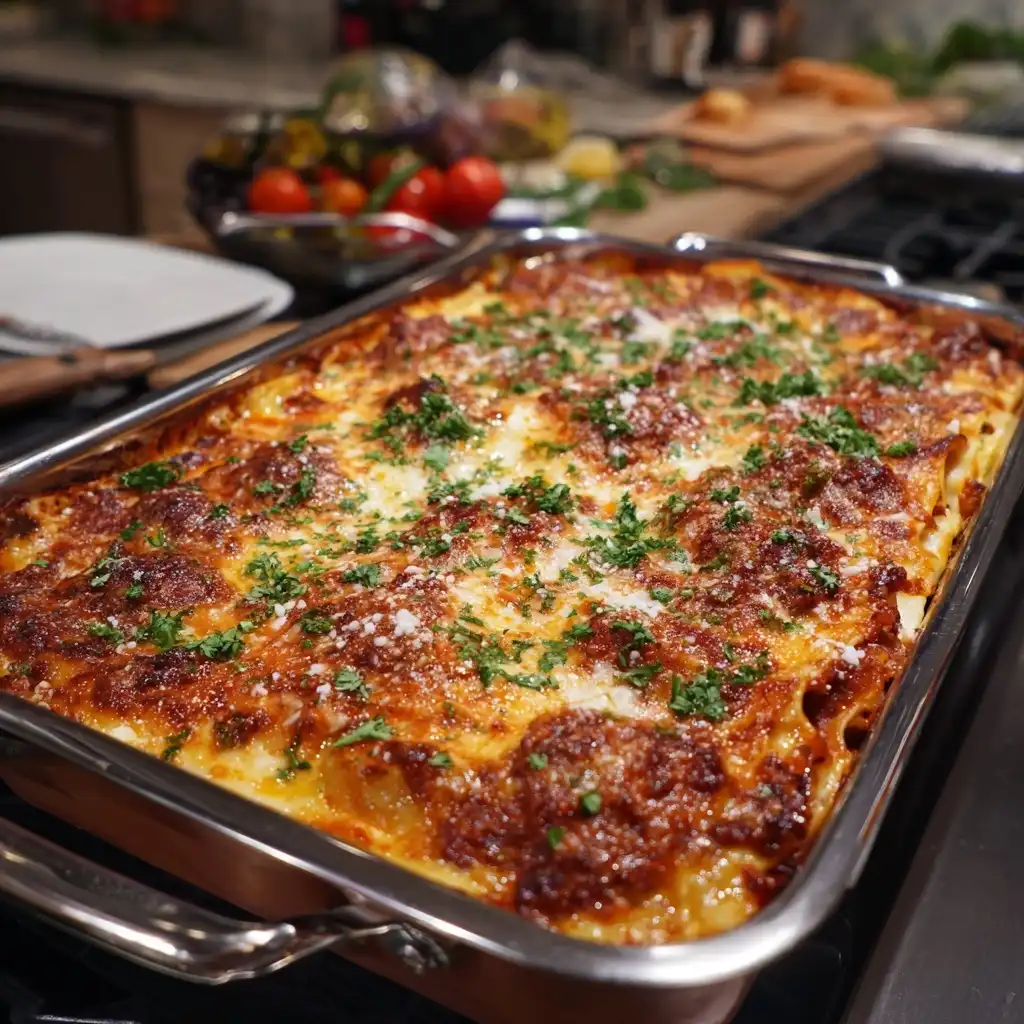
- Bake with Control: Cover tightly with greased aluminum foil (oil-side down). Bake for 30 minutes. Remove foil; rotate dish. Continue baking 25–30 minutes until top is bubbling vigorously at edges and cheese is deeply golden with crisp, lacy edges. Internal temperature should read 165°F (74°C) in center.
- Rest Imperatively: Remove from oven and let rest—undisturbed—for a full 35–45 minutes. This allows starches to set, layers to cohere, and residual heat to finish cooking the center. Cutting too soon causes collapse and soupy slices.
- Finish & Serve: Just before serving, scatter fresh basil ribbons and extra parsley over top. Optional: drizzle with high-quality olive oil or a balsamic reduction. Cut with a sharp chef’s knife dipped in hot water between slices for clean edges.
Tips
- Texture Is Everything: No-boil noodles work best when your sauce is slightly looser than usual—add ¼ cup reserved pasta water or low-sodium broth to the ragù if it seems thick after simmering. Under-hydrated noodles yield chalky, tough layers.
- Layer Order Matters: Always begin and end with sauce—not cheese—to prevent scorching and ensure moisture penetration. Cheese-only top layers can burn before interior is hot.
- Grate Your Own Cheese: Pre-grated cheeses contain anti-caking agents (like cellulose) that inhibit melting and create greasy pools. Freshly grated mozzarella and Parmigiano melt smoothly and brown evenly.
- Cool the Ragù Before Assembling: Hot sauce added to cold ricotta causes separation and curdling. Let ragù cool to lukewarm (about 100°F) before layering.
- Rotate the Pan Mid-Bake: Ovens have hot spots. Rotating 180° after removing foil ensures even browning and prevents one side from overcooking.
- Use a Thermometer: Insert an instant-read thermometer into the center of the lasagna before removing from oven. 165°F confirms food safety and ideal set.
- Make Ahead Smart: Assemble up to 24 hours ahead; refrigerate covered. Add 10–15 minutes to covered bake time. For freezing, assemble unbaked, wrap tightly in plastic + foil, freeze up to 3 months. Thaw overnight in fridge before baking.
- Resist the Rush: That 45-minute rest isn’t optional—it’s transformative. It allows gluten in noodles to relax, proteins in cheese to rebind, and flavors to marry. Patience yields perfect, sliceable portions.
Variations and Customizations
While tradition anchors this dish, thoughtful adaptations honor dietary needs, seasonal ingredients, and regional inspirations—without sacrificing soul:
- Vegetarian Wedding Lasagna: Replace meat with a hearty “soffritto trio”: sautéed cremini mushrooms, roasted eggplant cubes, and lentils simmered in vegetable broth and tomato. Add toasted pine nuts and sun-dried tomatoes for umami depth. Use spinach-infused ricotta (blanched, squeezed, and chopped) for color and iron.
- Seafood “Wedding” Lasagna: Inspired by coastal Campania, layer a white ragù of sautéed shrimp, calamari, clams (in shell), and scallops in a light garlic-white wine-tomato broth. Pair with lemon-zested ricotta and Pecorino Romano instead of Parmigiano.
- Gluten-Free Version: Use certified GF oven-ready lasagna noodles (brown rice or corn-based). Ensure all sauces, cheeses, and seasonings are GF-certified. Add 1 tsp xanthan gum to ricotta mixture to improve binding.
- Keto/Low-Carb Adaptation: Replace noodles with thin, blanched zucchini or eggplant planks (salted, pressed, and patted dry). Boost ricotta with cream cheese for richness and reduce tomato volume by half—replace with roasted red pepper purée for sweetness and color.
- Southern Italian Twist: Incorporate caciocavallo cheese (smoky, semi-firm) alongside mozzarella; stir chopped fresh mint into ricotta; add a layer of fried sweet peppers and capers for brightness and brine.
- “Green Wedding” Lasagna: Blend baby spinach, basil, parsley, and arugula into the ricotta. Add a layer of sautéed Swiss chard and artichoke hearts. Finish with lemon zest and pistachios.
- Breakfast Lasagna: For brunch gatherings: substitute ragù with a frittata-style layer of eggs, sautéed potatoes, pancetta, and Gruyère. Ricotta becomes herbed cottage cheese; top with crispy prosciutto.
- Mini Individual Lasagnas: Bake in 8-ounce ramekins or mason jars for portion control and elegant presentation. Reduce bake time to 25–30 minutes covered, then 10–12 uncovered. Perfect for bridal showers or dinner parties.
Health Considerations and Nutritional Value
A 1-cup serving (approx. 320g) of traditional Italian Wedding Style Lasagna contains roughly 420–480 calories, with nuanced nutritional contributions and mindful considerations:
- Protein Powerhouse: Provides ~28–32g high-quality protein from beef, sausage, ricotta, mozzarella, and Parmigiano—supporting muscle maintenance, satiety, and immune function. Sausage contributes B12, zinc, and selenium; dairy cheeses deliver calcium and vitamin K2.
- Fat Profile: Contains ~22–28g total fat, with a balanced mix: monounsaturated fats (olive oil, mozzarella), saturated fats (cheeses, meats), and minimal trans fats (none if made from scratch). Choosing leaner beef (90/10) and turkey sausage reduces saturated fat by ~30% without sacrificing flavor.
- Carbohydrates & Fiber: ~30–35g net carbs from pasta; fiber is modest (~2–3g) unless whole-grain or legume-based noodles are used (boosting to 6–8g). Adding spinach or zucchini layers increases fiber, potassium, and antioxidants.
- Sodium Awareness: Naturally moderate (≈650–850mg/serving), but rises significantly with canned tomatoes, pre-grated cheese, or processed sausage. Opt for low-sodium tomatoes, make-your-own sausage, and measure salt mindfully. Rinsing canned tomatoes reduces sodium by 40%.
- Vitamins & Minerals: Rich in lycopene (from cooked tomatoes), vitamin A (carrots, cheese), B vitamins (meats, dairy), calcium (35% DV), and phosphorus. Fresh herbs contribute flavonoids and volatile oils with anti-inflammatory properties.
- Dietary Accommodations: Easily adapted for lactose sensitivity (use lactose-free ricotta/mozzarella), nut-free (naturally), and egg-free (substitute flax or chia “eggs” in ricotta). Not inherently low-FODMAP due to garlic/onion—but use garlic-infused oil and green onion tops for flavor without fermentable carbs.
- Portion Mindfulness: Serve with a large arugula salad dressed in lemon vinaigrette and shaved Parmigiano to increase volume, fiber, and micronutrient density without added calories. A 1¼-cup portion satisfies most adults when paired with vegetables.
Ingredients
- 2 tbsp extra-virgin olive oil, plus more for greasing and finishing
- 1 large yellow onion, finely diced (about 1½ cups)
- 2 medium carrots, peeled and finely diced (about 1 cup)
- 2 celery ribs, finely diced (about 1 cup)
- 1 lb (450g) 80/20 ground beef
- 1 lb (450g) mild Italian pork sausage, casings removed
- 3 tbsp tomato paste
- ½ cup dry red wine (Chianti or Sangiovese)
- 1 (28 oz / 794g) can whole San Marzano tomatoes, crushed by hand
- 1 (17 oz / 480g) can tomato passata or strained tomatoes
- 1 bay leaf
- 1½ tsp sea salt, plus more to taste
- 1 tsp freshly ground black pepper
- ¼ tsp red pepper flakes
- 1 (15 oz / 425g) container whole-milk ricotta cheese
- 1 large egg
- 1½ cups freshly grated Parmigiano-Reggiano cheese (¾ cup for ricotta, ¾ cup for topping)
- ¼ cup fresh basil leaves, chopped (plus extra for garnish)
- ¼ cup fresh flat-leaf parsley, chopped
- ¼ tsp freshly grated nutmeg
- 1 (16 oz / 450g) package oven-ready lasagna noodles (or 12 fresh lasagna sheets)
- 16 oz (450g) fresh mozzarella, torn into 1-inch pieces (or 2 cups low-moisture shredded)
- Optional: 1 tbsp balsamic glaze or high-quality olive oil for finishing
Directions
- Preheat oven to 375°F (190°C). Lightly grease a 9×13-inch baking dish with olive oil.
- In a large Dutch oven over medium-low heat, warm 2 tbsp olive oil. Add onion, carrots, and celery. Sauté gently for 10–12 minutes until very soft and fragrant but not browned. Stir occasionally.
- Increase heat to medium. Add ground beef and sausage. Cook, crumbling with a wooden spoon, until no pink remains and edges begin to crisp (8–10 min). Drain excess fat, reserving 2 tbsp.
- Add tomato paste and cook, stirring constantly, for 3–4 minutes until darkened and aromatic. Pour in red wine, scraping up browned bits. Simmer 2 minutes until reduced by half.
- Add crushed tomatoes, passata, bay leaf, 1 tsp salt, ½ tsp black pepper, and red pepper flakes. Bring to a gentle simmer, then reduce heat to lowest setting. Partially cover and cook uncovered for 90 minutes, stirring every 15 minutes and skimming foam. Sauce should be thick, glossy, and coat the back of a spoon. Discard bay leaf. Cool 20 minutes.
- In a large bowl, combine ricotta, egg, ¾ cup Parmigiano, basil, parsley, nutmeg, ½ tsp salt, and ¼ tsp black pepper. Mix gently with spatula until just blended.
- To assemble: Spread 1 cup warm ragù in bottom of prepared dish. Layer 4 noodles (slightly overlapping). Spread ⅓ ricotta mixture evenly. Dollop and spread 1⅓ cups ragù. Sprinkle with ⅓ shredded mozzarella and ⅓ remaining Parmigiano. Repeat twice more. Top with final noodle layer, remaining ragù, fresh mozzarella, and remaining Parmigiano. Drizzle with 1 tbsp olive oil.
- Cover tightly with greased foil (oil-side down). Bake 30 minutes. Remove foil, rotate dish, and bake uncovered 25–30 minutes until golden, bubbly, and internal temp reaches 165°F.
- Remove from oven. Rest undisturbed for 45 minutes. Garnish with fresh basil and optional balsamic or olive oil. Cut into 12 squares with hot-water-dipped knife.
FAQ
- Can I make this lasagna ahead of time?
- Yes! Assemble up to 24 hours ahead, cover tightly, and refrigerate. Add 10–15 minutes to the covered bake time. For longer storage, freeze unbaked lasagna (wrapped in plastic + foil) up to 3 months. Thaw overnight in fridge before baking.
- Why does my lasagna turn out watery?
- Common causes: excess moisture in ricotta (always drain overnight), too-thin sauce (simmer longer to reduce), using pre-grated cheese (anti-caking agents release water), or cutting too soon (resting is essential for starches to set).
- Can I use cottage cheese instead of ricotta?
- You can—but texture and flavor differ significantly. Use small-curd, full-fat cottage cheese, drained well and blended until smooth. Add 1 tbsp lemon juice and extra Parmigiano to mimic ricotta’s tang and richness.
- What’s the best cheese for authentic flavor?
- Parmigiano-Reggiano (aged 24+ months) is irreplaceable for depth. For mozzarella, fresh mozzarella di bufala offers unparalleled creaminess; high-moisture cow’s milk is excellent. Avoid pre-shredded “pizza blend”—it won’t melt properly.
- Can I omit the wine?
- Yes—but don’t skip the depth it provides. Substitute with equal parts low-sodium beef broth + 1 tsp red wine vinegar for acidity and complexity.
- My noodles are still hard after baking. What went wrong?
- No-boil noodles need ample liquid contact. Ensure sauce fully covers each layer and isn’t overly reduced. Add ¼ cup reserved pasta water or broth to sauce before assembling if it looks thick.
- How do I reheat leftovers without drying them out?
- Individual portions: Cover with damp paper towel and microwave at 50% power for 90 seconds. Full pan: Cover with foil, bake at 350°F for 20–25 minutes until heated through. Add 1–2 tbsp water or broth to edges before reheating.
- Is there a way to lighten this recipe without losing flavor?
- Absolutely: Use 90/10 lean beef and turkey sausage; swap half the ricotta for low-fat cottage cheese (well-drained); add 2 cups finely chopped spinach to ricotta; use whole-wheat or legume-based noodles; and boost herbs and spices instead of salt.
Summary
Italian Wedding Style Lasagna is a masterclass in layered luxury—melding slow-simmered ragù, velvety ricotta, and golden, stretchy cheeses into a celebratory, family-sized centerpiece that honors Italian-American heritage while inviting endless creativity.
It demands patience, rewards precision, and delivers profound comfort—proving that the most meaningful meals aren’t just eaten, but shared, remembered, and passed down like heirlooms across generations.