Introduction
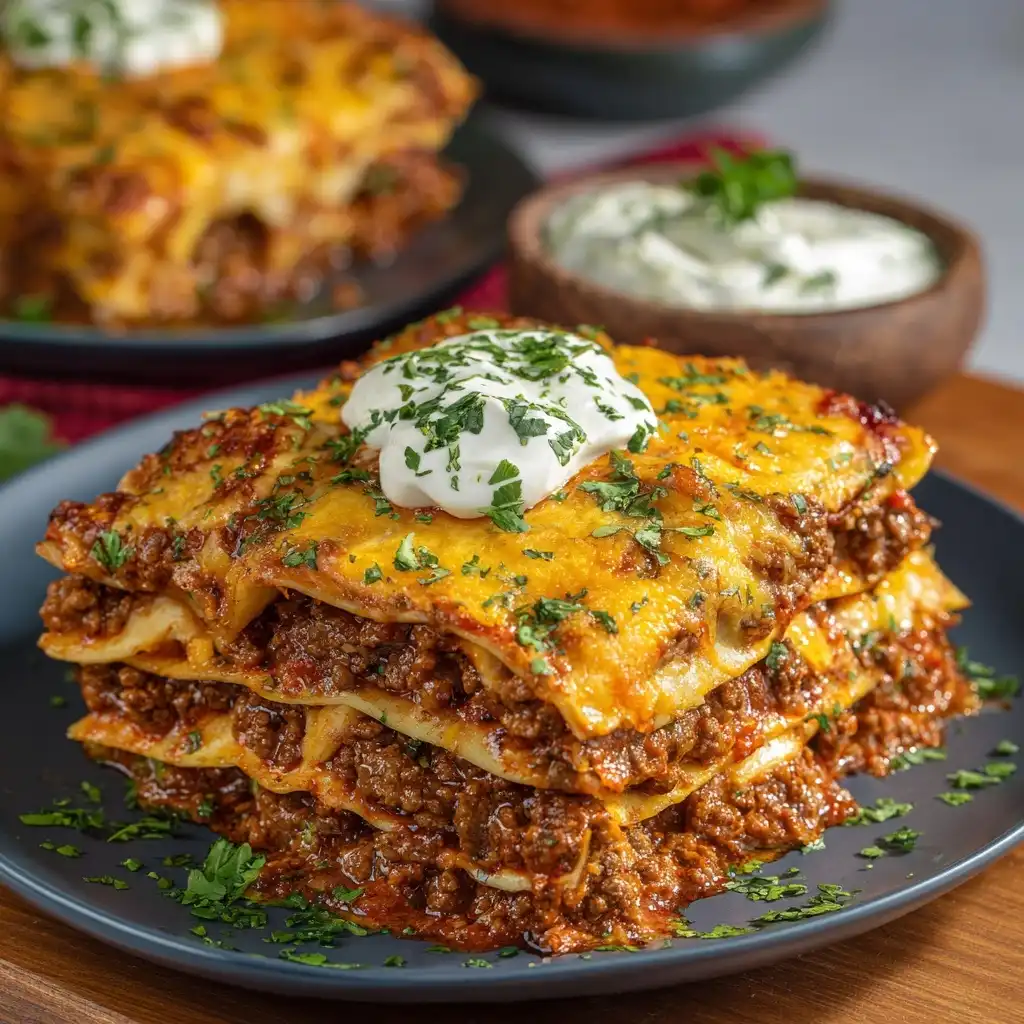
Tex-Mex Beef Lasagna is a bold, vibrant fusion dish that marries the comforting structure of traditional Italian lasagna with the fiery, zesty soul of Texan and Mexican cuisines. It’s not just a casserole—it’s a flavor-packed celebration of cultural crossover, where tender layers of pasta meet seasoned ground beef, melted cheese, smoky chipotle, tangy salsa, and fresh herbs. Whether served at a backyard BBQ, a weeknight family dinner, or a festive holiday gathering, this hearty, crowd-pleasing bake delivers maximum satisfaction with minimal pretense. Its versatility, make-ahead convenience, and deeply craveable profile have earned it a permanent spot in modern American home kitchens—and for good reason.
The History
The origins of Tex-Mex Beef Lasagna are rooted in culinary adaptation rather than ancient tradition. While classic lasagna traces its lineage to 13th-century Italy (with early references in the 1287 manuscript Liber de Coquina), Tex-Mex cuisine emerged much later—beginning in the late 19th and flourishing throughout the 20th century along the Texas–Mexico border. Early Tex-Mex dishes like chili con carne, nachos, and fajitas were born from necessity, resourcefulness, and cultural exchange between Tejanos, Mexican immigrants, and Anglo settlers.
Lasagna entered the Tex-Mex lexicon gradually—first as a novelty at mid-century supper clubs and community cookbooks, then evolving into a mainstream hybrid in the 1980s and ’90s as grocery chains expanded access to both ricotta and canned green chiles. Food writers like Diana Kennedy criticized early Tex-Mex for “Americanizing” authentic Mexican flavors—but home cooks embraced the freedom to reinterpret. The rise of food television, Pinterest culture, and viral recipe blogs further propelled layered, baked “Mexican-style lasagnas,” often substituting traditional béchamel with enchilada sauce and swapping mozzarella for Monterey Jack and pepper jack. Today’s Tex-Mex Beef Lasagna stands proudly as a testament to culinary pluralism: neither strictly Italian nor traditionally Mexican—but wholly, unapologetically Texan-American.
Ingredients Breakdown
Every element in Tex-Mex Beef Lasagna serves a distinct sensory and structural purpose. Let’s explore each component—not just what goes in, but why it matters:
- Ground Beef (85/15 or 80/20 lean-to-fat ratio): Provides rich umami depth and moisture retention. The slight fat content prevents dryness during baking and enhances spice absorption. Grass-fed or organic options add subtle mineral notes, while blending with 25% ground pork or chorizo amplifies complexity.
- Onion & Garlic: The aromatic foundation. Yellow onions offer sweetness when sautéed; white onions deliver sharper bite if used raw in garnishes. Fresh garlic—minced, not powdered—is non-negotiable for pungent, savory backbone.
- Jalapeños (fresh or pickled): Fresh jalapeños contribute bright, vegetal heat; roasted versions lend smokiness. Pickled jalapeños add vinegary brightness and acidity—crucial for cutting through richness. For deeper heat, incorporate one seeded serrano or a pinch of cayenne.
- Spice Blend (Chili Powder, Cumin, Smoked Paprika, Oregano, Garlic Powder, Onion Powder): This isn’t mere “taco seasoning.” Authentic Tex-Mex relies on toasted whole spices (cumin seeds, dried ancho chile flakes) freshly ground—but for consistency and convenience, high-quality commercial blends work well. Smoked paprika adds campfire nuance; Mexican oregano (more citrusy and less sweet than Mediterranean oregano) is ideal.
- Tomato Base (Crushed Tomatoes + Tomato Sauce + Salsa): Crushed tomatoes provide body and acidity; tomato sauce lends smoothness and cohesion; real restaurant-style or fire-roasted salsa (not picante sauce) contributes texture, herbaceous freshness, and nuanced heat. Avoid overly sweet or vinegar-heavy salsas—they destabilize the layering.
- Beans (Pinto or Black Beans, drained & rinsed): A Tex-Mex signature. Pintos offer creamy earthiness; black beans bring visual contrast and slightly sweeter, denser texture. They add fiber, protein, and help bind the meat layer without excess grease.
- Cheeses (Monterey Jack, Sharp Cheddar, Cream Cheese, Ricotta): Monterey Jack melts luxuriously and mildness balances heat; sharp cheddar adds tang and color; full-fat cream cheese enriches the ricotta layer with stability and subtle tartness; whole-milk ricotta provides airy lift and neutral canvas for seasonings. Low-moisture mozzarella can be added sparingly for stretch—but avoid pre-shredded (anti-caking agents inhibit melt).
- Pasta (No-Boil Lasagna Noodles or Traditional): No-boil noodles absorb liquid beautifully—ideal for saucy, wet preparations—but require sufficient moisture (at least 4 cups total liquid in sauce). Traditional noodles must be parboiled *al dente* and rinsed to halt cooking and remove excess starch. Gluten-free brown rice or lentil-based noodles work well for dietary adaptations.
- Fresh Garnishes (Cilantro, Lime Wedges, Diced Red Onion, Avocado): Added post-bake, these introduce volatile aromatics, cooling contrast, acidity, crunch, and healthy fats—essential for balance and freshness.
Step-by-Step Recipe
This detailed, chef-informed method ensures perfect texture, even layering, and deep flavor integration—no soggy noodles or separated cheese here.
- Prep & Preheat: Adjust oven rack to center position. Preheat oven to 375°F (190°C). Lightly grease a 9×13-inch glass or ceramic baking dish (avoid dark metal pans—they over-brown edges).
- Sauté Aromatics: In a large heavy-bottomed Dutch oven or skillet over medium heat, warm 2 tbsp avocado oil or vegetable oil. Add 1½ cups finely diced yellow onion and 1 minced jalapeño (seeds removed for milder heat). Sauté 5–6 minutes until translucent and fragrant. Stir in 4 cloves minced garlic and 1 tbsp grated fresh ginger (optional but recommended for brightness)—cook 60 seconds until aromatic. Do not brown.
- Brown the Beef: Increase heat to medium-high. Add 2 lbs 80/20 ground beef, breaking it apart with a wooden spoon. Cook 6–8 minutes, stirring frequently, until no pink remains and fond begins to form on pan bottom. Drain excess fat *only if pooling visibly*—a tablespoon of rendered fat enhances flavor and helps bloom spices.
- Bloom the Spices: Push meat to edges. In center, add 3 tbsp chili powder, 2 tsp ground cumin, 1½ tsp smoked paprika, 1 tsp dried Mexican oregano, 1 tsp garlic powder, 1 tsp onion powder, ½ tsp chipotle powder (or 1 tsp adobo sauce from canned chipotles), and 1 tsp kosher salt. Stir spices into hot fat for 45–60 seconds—this unlocks volatile oils and deepens flavor dramatically. Then mix thoroughly into beef mixture.
- Simmer the Sauce: Pour in 1 (28 oz) can crushed tomatoes, 1 (8 oz) can tomato sauce, 1 cup fire-roasted salsa (medium heat), and ½ cup water or low-sodium beef broth. Stir well, scraping up all browned bits. Bring to gentle simmer. Reduce heat to low, cover partially, and cook 20 minutes, stirring every 5 minutes. Uncover and continue simmering 10 more minutes to thicken—target consistency should coat the back of a spoon but still be fluid enough to spread easily. Stir in 1 (15 oz) can rinsed pinto beans and 1 tbsp fresh lime juice. Remove from heat. Cool slightly (5 minutes).
- Prepare Cheese Layer: In a medium bowl, combine 16 oz whole-milk ricotta, 8 oz full-fat cream cheese (softened), 1 cup shredded sharp cheddar, ½ cup shredded Monterey Jack, ¼ cup finely chopped fresh cilantro, 2 tbsp finely minced red onion, 1 tsp lime zest, 1 tsp kosher salt, and ¼ tsp black pepper. Beat with hand mixer or vigorous whisk until ultra-smooth and homogeneous—no lumps. Refrigerate while assembling.
- Assemble with Precision: Spread 1 cup meat sauce evenly across bottom of prepared dish. Place first layer of noodles (no-boil: 4–5 sheets overlapping slightly; boiled: 4 sheets, trimmed if needed). Press gently to adhere. Spread ⅓ of ricotta mixture (about 1½ cups) evenly over noodles—use an offset spatula for smoothness. Spoon ⅓ of remaining meat sauce (approx. 2 cups) over ricotta. Sprinkle with ½ cup shredded Monterey Jack. Repeat layers twice: noodles → ricotta → meat sauce → cheese. Final layer: noodles topped with remaining meat sauce, then generous 1½ cups mixed cheeses (¾ cup cheddar + ¾ cup Monterey Jack). Dot surface with 2 tbsp cold butter slices (optional—but yields golden, shatteringly crisp top crust).
- Bake Strategically: Cover tightly with aluminum foil (tent slightly to prevent cheese sticking). Bake 45 minutes. Carefully remove foil. Rotate dish front-to-back. Bake uncovered 15–20 minutes until top is bubbling vigorously at edges and cheese is deeply golden with light caramelized spots. Internal temperature should read 165°F (74°C) in center.
- Rest Imperatively: Remove from oven. Let stand, uncovered, for *full 25 minutes*. This allows starches to set, layers to cohere, and residual heat to finish cooking noodles. Cutting too soon guarantees soupy, sliding layers.
- Final Touches: Just before serving, sprinkle generously with fresh cilantro, diced red onion, sliced radishes, avocado slices or guac, and lime wedges. Offer hot sauce and sour cream on the side.
Tips
- Texture Control: If sauce seems too thin after simmering, stir in 1 tsp tomato paste and cook 2 minutes. If too thick, add broth 1 tbsp at a time. Ideal consistency = heavy cream.
- No-Boil Noodle Hack: For guaranteed tenderness, briefly soak no-boil noodles in warm milk (2 minutes) before layering—adds richness and jumpstarts hydration.
- Prevent Soggy Bottoms: Always spread a thin layer of sauce *before* first noodle layer—it creates a moisture barrier and prevents sticking.
- Cheese Melting Science: Shred your own cheese—it melts smoother than pre-shredded (which contains cellulose and anti-caking agents).
- Flavor Layering: Toast whole cumin seeds and dried ancho chiles in a dry skillet until fragrant, then grind. Use in place of ½ the chili powder for profound depth.
- Make-Ahead Magic: Assemble up to 24 hours ahead—cover tightly and refrigerate unbaked. Add 10–15 minutes to covered bake time. Or freeze assembled (unbaked) lasagna for up to 3 months—thaw overnight in fridge before baking.
- Reheating Right: Individual slices reheat best in a toaster oven or cast-iron skillet over medium-low heat (covered, 8–10 min) to revive crisp edges and creamy interior. Microwaving makes cheese rubbery and noodles gummy.
- Acid Is Your Ally: A final drizzle of lime juice or pickled red onion brine right before serving lifts the entire dish—don’t skip this brightening step.
- Batch Scaling: Double the recipe? Use two 9×13 dishes—or a 12×17-inch roasting pan. Increase bake time by only 5–8 minutes; rely on visual cues (bubbling, golden top) over strict timing.
- Leftover Reinvention: Crumble cooled leftovers into fried rice, fold into quesadillas, or layer into breakfast skillets with eggs and potatoes.
Variations and Customizations
This recipe is designed for adaptability—whether accommodating diets, regional preferences, or pantry limitations. Here are 12 thoughtfully developed variations:
- Vegetarian Tex-Mex Lasagna: Replace beef with 2 cups cooked lentils + 1 cup crumbled tempeh + ½ cup textured vegetable protein (TVP) rehydrated in chipotle broth. Boost umami with 1 tbsp soy sauce and 1 tsp nutritional yeast in sauce.
- Chicken Tinga Lasagna: Substitute shredded rotisserie chicken for beef. Simmer with 1 cup chipotle-in-adobo puree, ½ cup apple cider vinegar, and 1 tsp brown sugar for authentic tinga depth.
- Seafood Fusion: Use lump crabmeat and sautéed shrimp folded into a creamy jalapeño-corn bechamel instead of meat sauce. Top with cotija instead of cheddar.
- Green Chile Verde Lasagna: Swap red sauce for slow-simmered roasted tomatillo-green chile sauce (with serranos, onions, garlic, and epazote). Use Oaxaca cheese for stringy melt.
- Breakfast Lasagna: Layer scrambled eggs with chorizo, roasted potatoes, queso fresco, and green chile gravy. Bake at 350°F for 30 minutes.
- Gluten-Free Version: Use certified GF corn or brown rice lasagna noodles. Thicken sauce with 1 tsp xanthan gum stirred in at end of simmer.
- Keto/Low-Carb: Replace noodles with thinly sliced zucchini or eggplant planks (salted, pressed, and roasted first). Reduce beans; increase cheese and avocado garnish.
- Smoky Brisket Lasagna: Shred smoked beef brisket and fold into sauce with a splash of brisket drippings and 1 tsp espresso powder.
- Authentic Ranchero Style: Use homemade ranchero sauce (dried chiles ancho/guajillo blended with garlic, cumin, and cider vinegar) and add crumbled queso blanco.
- Southwestern Sweet Heat: Stir ¼ cup pureed roasted sweet potato and 1 tbsp maple syrup into meat sauce. Top with candied pecans and crumbled goat cheese.
- Instant Pot Hybrid: Brown beef and sauté aromatics in IP using Sauté mode. Add sauce ingredients and pressure cook 15 minutes. Cool, then assemble and bake conventionally.
- Sheet Pan “Lasagna”: For casual gatherings: layer sauce, noodles, cheese, and toppings on a rimmed sheet pan. Broil 5–7 minutes until bubbly and charred at edges—great for feeding crowds quickly.
Health Considerations and Nutritional Value
A single 1-cup serving (1/12th of standard 9×13 recipe) provides approximately:
- Calories: 425–480 kcal (varies with cheese/bean ratios and noodle type)
- Protein: 28–32g (excellent complete protein from beef + dairy + beans)
- Fat: 22–26g (predominantly unsaturated from avocado oil, cheese, and avocado garnish; saturated fat ~11g—reducible by using 93/7 beef and part-skim ricotta)
- Carbohydrates: 32–38g (including 6–8g dietary fiber from beans, tomatoes, onions, and whole-grain noodles if substituted)
- Sodium: 680–820mg (well within daily limit of 2,300mg; reduce by using no-salt-added tomatoes, low-sodium broth, and limiting added salt)
- Vitamins & Minerals: Rich in iron (beef), calcium (cheese, ricotta), vitamin C (tomatoes, lime, peppers), folate (beans), and antioxidants (smoked paprika, oregano, garlic).
Dietary Notes:
- Heart-Healthy Swaps: Use lean turkey or bison, replace half ricotta with mashed white beans, add spinach to cheese layer, and top with pumpkin seeds instead of extra cheese.
- Digestive Wellness: Beans and fiber-rich veggies support gut microbiota. Adding fermented garnishes (pickled red onions, jalapeños) introduces beneficial probiotics.
- Blood Sugar Balance: The combination of protein, fat, and fiber slows glucose absorption—making this more metabolically favorable than many pasta dishes. Pair with side salad for added volume and micronutrients.
- Allergen Awareness: Naturally nut-free and soy-free (if using soy-free cheese). For dairy-free, substitute cashew ricotta and vegan cheddar—but expect textural differences. Always verify spice blend labels for gluten or MSG.
- Portion Mindfulness: Serve with a large green salad dressed in lime vinaigrette and grilled vegetables to increase satiety and nutrient density without excess calories.
Ingredients
Makes 12 servings
- 2 tbsp avocado oil or vegetable oil
- 1½ cups finely diced yellow onion (1 large onion)
- 1–2 fresh jalapeños, seeded and finely minced (adjust to heat preference)
- 4 cloves garlic, minced
- 2 lbs (900g) 80/20 ground beef
- 3 tbsp high-quality chili powder (Ancho or New Mexico preferred)
- 2 tsp ground cumin
- 1½ tsp smoked paprika
- 1 tsp dried Mexican oregano
- 1 tsp garlic powder
- 1 tsp onion powder
- ½ tsp chipotle powder (or 1 tsp adobo sauce)
- 1 tsp kosher salt (plus more to taste)
- ¼ tsp freshly ground black pepper
- 1 (28 oz) can crushed tomatoes (preferably San Marzano)
- 1 (8 oz) can tomato sauce
- 1 cup fire-roasted medium salsa (restaurant-style)
- ½ cup low-sodium beef broth or water
- 1 (15 oz) can pinto beans, drained and rinsed
- 1 tbsp fresh lime juice
- 12 no-boil lasagna noodles (or 12 traditional noodles, parboiled and rinsed)
- 16 oz (2 cups) whole-milk ricotta cheese
- 8 oz full-fat cream cheese, softened
- 1 cup shredded sharp cheddar cheese
- 1 cup shredded Monterey Jack cheese
- ¼ cup finely chopped fresh cilantro
- 2 tbsp finely minced red onion
- 1 tsp lime zest
- ½ tsp black pepper
- 2 tbsp cold unsalted butter, sliced (optional, for topping)
- Garnishes: Fresh cilantro leaves, diced red onion, lime wedges, sliced avocado or guacamole, pickled jalapeños, sour cream or Mexican crema, hot sauce
Directions
- Preheat oven to 375°F (190°C). Lightly grease a 9×13-inch baking dish.
- In a large Dutch oven or deep skillet over medium heat, warm oil. Add onion and jalapeño; sauté 5–6 minutes until soft and fragrant. Stir in garlic and ginger (if using); cook 1 minute.
- Increase heat to medium-high. Add ground beef. Cook 6–8 minutes, breaking apart, until browned and no pink remains. Drain excess fat only if excessive.
- Push beef to sides. In center, add all spices and salt. Toast 45–60 seconds, stirring constantly. Mix thoroughly into beef.
- Pour in crushed tomatoes, tomato sauce, salsa, and broth. Stir well, scraping bottom. Bring to simmer, then reduce heat to low. Partially cover and cook 20 minutes, stirring every 5 minutes. Uncover; cook 10 more minutes until thickened. Stir in beans and lime juice. Remove from heat; cool 5 minutes.
- In a bowl, combine ricotta, cream cheese, cheddar, Monterey Jack, cilantro, red onion, lime zest, salt, and pepper. Beat until smooth. Refrigerate.
- Spread 1 cup meat sauce in bottom of dish. Layer 4–5 no-boil noodles (slightly overlapping). Spread 1½ cups ricotta mixture evenly. Spoon 2 cups meat sauce over ricotta. Sprinkle with ½ cup Monterey Jack. Repeat layers twice. Top final noodle layer with remaining meat sauce, then 1½ cups mixed cheeses. Dot with butter slices (optional).
- Cover tightly with foil. Bake 45 minutes. Remove foil; rotate dish. Bake uncovered 15–20 minutes until bubbling and golden.
- Let rest uncovered for 25 minutes before cutting.
- Garnish generously with cilantro, red onion, avocado, lime, and desired accompaniments. Serve warm.
FAQ
- Can I use regular lasagna noodles instead of no-boil?
- Yes—parboil them for 2 minutes less than package directions (they’ll finish cooking in the oven), rinse under cold water, and lay flat on clean towels to prevent sticking.
- Why does my lasagna turn out watery?
- Common causes: sauce too thin (simmer longer), excess moisture from undrained beans or ricotta, or slicing too soon. Always rest 25 minutes—and consider straining ricotta in cheesecloth for 30 minutes before mixing.
- Can I make this vegetarian without tofu or fake meat?
- Absolutely. Use a robust blend of black beans, roasted sweet potatoes, sautéed mushrooms, and walnuts for meaty texture—and boost umami with tamari, miso paste, and sun-dried tomatoes.
- What’s the best cheese substitute for dairy-free?
- For melting: Follow Your Heart Vegan Mozzarella or Daiya Cutting Board shreds. For ricotta layer: blend soaked cashews, lemon juice, nutritional yeast, garlic, and salt until ultra-creamy.
- How long does it keep? Can I freeze it?
- Refrigerate covered for up to 5 days. Freeze unbaked (up to 3 months) or baked (up to 2 months). Thaw overnight in fridge before baking or reheating.
- Is Tex-Mex lasagna spicy?
- Heat is fully customizable. Remove jalapeño seeds/membranes, omit chipotle, and choose mild salsa for family-friendly versions—or double the chipotle and add habanero for heat-seekers.
- Can I prepare components ahead?
- Yes! Sauce can be made 3 days ahead and refrigerated. Ricotta mixture keeps 2 days. Noodles can be soaked and layered the night before—just refrigerate covered.
- What wine pairs well?
- A bold Zinfandel, fruit-forward Malbec, or chilled Rosé with good acidity cuts richness and complements spice. For non-alcoholic: hibiscus agua fresca or lime-mint sparkling water.
- My cheese layer is grainy—what went wrong?
- Overmixing cold cream cheese or using low-fat dairy causes separation. Always soften cream cheese fully; blend ricotta and cream cheese first before adding other ingredients.
- Can I cook this in a slow cooker?
- Not recommended—the layered structure collapses and noodles become mushy. Stick to oven baking for integrity and texture.
Summary
Tex-Mex Beef Lasagna is a masterful, culturally resonant casserole that transforms humble pantry staples into a layered, boldly seasoned, deeply satisfying centerpiece—uniting Italian technique with Southwest soul, slow-simmered depth with bright, fresh finishes.
With make-ahead flexibility, endless customization, impressive nutrition, and universal appeal—from picky eaters to food enthusiasts—it’s not just a recipe, but a reliable, joyful expression of modern American comfort food at its most inventive and inclusive.