Introduction
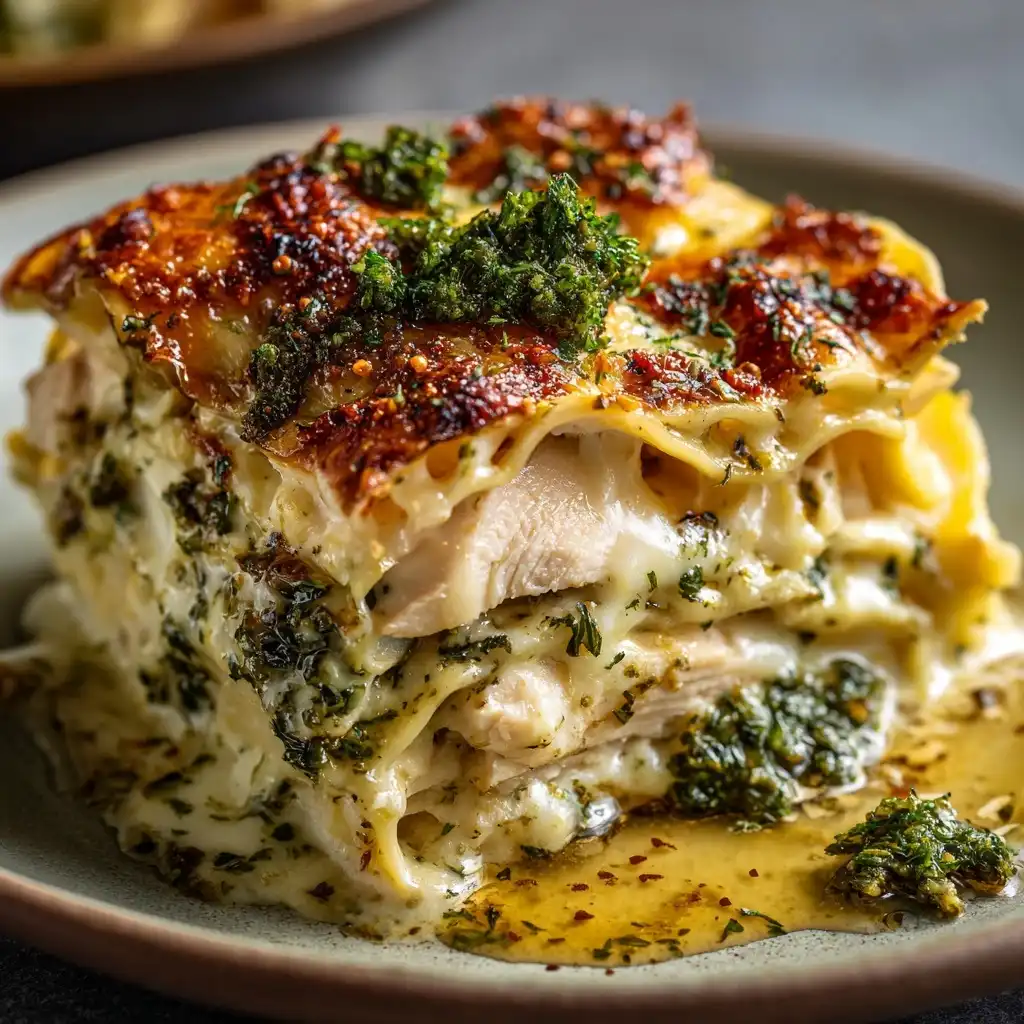
Pesto Alfredo Chicken Lasagna is a decadent, restaurant-worthy fusion dish that marries the creamy richness of classic Alfredo sauce with the vibrant, herbaceous brightness of fresh basil pesto—all layered between tender oven-baked lasagna noodles and savory, perfectly seasoned grilled or sautéed chicken. Unlike traditional lasagna, which relies heavily on ricotta, mozzarella, and tomato-based marinara, this modern interpretation swaps out acidity for umami depth and herb-forward freshness, resulting in a luxuriously smooth, aromatic, and deeply satisfying casserole-style pasta bake. It’s ideal for weeknight family dinners when you want to impress without fuss, holiday potlucks where bold flavors shine, or meal-prep Sundays—thanks to its excellent reheating qualities and make-ahead flexibility. Whether you’re a pesto purist, an Alfredo devotee, or simply someone who craves comfort food with a gourmet twist, this dish delivers layers of texture, temperature, and taste in every forkful.
The History
While lasagna itself traces its origins to 13th-century Italy—first documented in the medieval text De honesta voluptate et valetudine by Bartolomeo Sacchi (known as Platina)—the evolution of Pesto Alfredo Chicken Lasagna is a distinctly contemporary American-Italian culinary hybrid born from late-20th- and early-21st-century fusion trends. Traditional Genovese pesto, originating in Liguria, has been made since at least the 16th century using mortar-and-pestle–crushed basil, pine nuts, garlic, Parmigiano-Reggiano, and extra-virgin olive oil. Alfredo sauce, though often misattributed to Roman restaurateur Alfredo di Lelio, was popularized internationally in the 1920s and evolved significantly outside Italy—especially in the U.S.—where heavy cream, butter, and copious cheese replaced the original butter-and-cheese emulsion. The incorporation of grilled or roasted chicken into pasta bakes surged in popularity during the 1990s and early 2000s alongside the rise of “healthy-ish” comfort food marketing, diet-conscious home cooking, and Food Network–driven recipe innovation. The marriage of pesto and Alfredo emerged organically as chefs and home cooks sought ways to cut through the heaviness of cream-based sauces with bright, herbal notes—leading to countless blog posts, YouTube tutorials, and viral Pinterest pins by the mid-2010s. Today, Pesto Alfredo Chicken Lasagna stands as a hallmark of modern Italian-American cuisine: unapologetically indulgent yet thoughtfully balanced, rooted in tradition but unafraid to innovate.
Ingredients Breakdown
Understanding each component—and why it matters—is key to mastering this dish. Below is a detailed functional breakdown:
- Lasagna Noodles: Use no-boil (oven-ready) noodles for convenience and optimal texture absorption; they hydrate fully during baking without turning mushy. If using traditional boiled noodles, undercook by 2 minutes to prevent disintegration.
- Chicken Breast or Thighs: Boneless, skinless chicken breasts offer lean protein and neutral flavor that absorbs seasonings beautifully; thighs provide superior moisture and richer taste—especially beneficial in longer-baked versions. Uniform dicing or thin slicing ensures even cooking and seamless layering.
- Fresh Basil Pesto: The soul of the dish—not just garnish. Authentic pesto contributes volatile aromatic compounds (like linalool and eugenol), natural oils for mouth-coating richness, and chlorophyll-driven vibrancy that offsets the pale tones of Alfredo. Store-bought works in a pinch, but freshly made (with toasted pine nuts and high-quality cheese) yields dramatically brighter flavor and better emulsification.
- Homemade Alfredo Sauce: Far superior to jarred versions, which often contain stabilizers and excessive sodium. A true Alfredo begins with a roux (butter + flour), enriched with warm whole milk or half-and-half, then finished with freshly grated Parmigiano-Reggiano and Romano for nutty, salty complexity—and a touch of cream for silkiness. Garlic-infused butter or a whisper of nutmeg can deepen dimension.
- Garlic & Onion: Sautéed until translucent (not browned), they form the aromatic base—building foundational sweetness and depth without overpowering the pesto’s freshness.
- Heavy Cream: Adds fat stability, prevents curdling during prolonged baking, and contributes to the velvety mouthfeel. Substitutes like full-fat coconut milk (for dairy-free) or evaporated milk (lower-fat option) alter texture and richness significantly.
- Grated Cheeses: A triple-layered cheese strategy ensures both meltability and flavor: (1) Mozzarella (low-moisture, part-skim) for stretch and structure; (2) Parmigiano-Reggiano for salty, umami backbone; (3) Romano (or Asiago) for sharp, tangy contrast. Pre-grated cheeses contain anti-caking agents (like cellulose) that hinder melting—always grate fresh.
- Spinach (optional but recommended): Fresh baby spinach wilts seamlessly into layers, adding iron, folate, and subtle earthiness—plus visual green contrast against golden cheese. Frozen chopped spinach must be fully thawed and squeezed bone-dry to avoid watery layers.
- Seasonings: Beyond salt and black pepper, consider white pepper (for heat without specks), a pinch of red pepper flakes for quiet warmth, and dried oregano or marjoram to echo Italian herb gardens—used sparingly so as not to compete with fresh basil.
Step-by-Step Recipe
- Prep the Chicken: Pat 1.5 lbs boneless, skinless chicken breasts or thighs dry. Season generously with 1 tsp kosher salt, ½ tsp black pepper, 1 tsp garlic powder, and 1 tsp onion powder. Heat 2 tbsp olive oil in a large stainless steel or cast-iron skillet over medium-high heat. Cook chicken undisturbed for 5–6 minutes per side until golden and internal temperature reaches 165°F. Transfer to a cutting board; rest 5 minutes, then dice into ½-inch cubes. Set aside.
- Make the Alfredo Sauce: In the same skillet (or a clean heavy-bottomed saucepan), melt 4 tbsp unsalted butter over medium heat. Whisk in ¼ cup all-purpose flour; cook 1 minute until fragrant and pale blonde (do not brown). Gradually whisk in 2 cups warmed whole milk (or half-and-half), ½ cup heavy cream, and 2 minced garlic cloves. Bring to a gentle simmer, whisking constantly. Reduce heat to low; simmer 4–5 minutes until thickened enough to coat the back of a spoon. Remove from heat. Stir in 1 cup freshly grated Parmigiano-Reggiano, ½ cup grated Romano, ½ tsp freshly grated nutmeg, and ½ tsp white pepper. Taste and adjust salt. Set aside—sauce will thicken further as it cools.
- Prepare the Pesto: In a food processor, combine 2 packed cups fresh basil leaves (stems removed), ⅓ cup toasted pine nuts, 2 garlic cloves, ½ cup grated Parmigiano-Reggiano, ¼ tsp kosher salt, and a pinch of black pepper. Pulse until coarsely chopped. With motor running, slowly stream in ⅓ cup extra-virgin olive oil until smooth and glossy. Optional: add 1 tbsp lemon juice for brightness. Transfer to a bowl; cover and refrigerate until ready to use (prevents oxidation).
- Sauté Aromatics & Spinach (if using): In a medium skillet, heat 1 tbsp olive oil over medium heat. Add ½ small yellow onion (finely diced) and 2 minced garlic cloves; sauté 3 minutes until soft and fragrant. Stir in 3 cups fresh baby spinach; cook 1–2 minutes until wilted and moisture has evaporated. Cool slightly.
- Assemble the Lasagna: Preheat oven to 375°F. Lightly grease a 9×13-inch deep-dish baking dish (at least 3-inch depth). Spread ¾ cup Alfredo sauce evenly across the bottom. Layer 4 no-boil lasagna noodles (slightly overlapping if needed). Spread ⅓ of remaining Alfredo sauce (approx. 1 cup) over noodles. Dollop ⅓ of pesto (about ¼ cup) over sauce and gently swirl with a knife to create a marbled effect—do not fully mix. Sprinkle with ⅓ of cooked chicken, ⅓ of sautéed spinach-onion mixture (if using), and ⅓ of mozzarella (½ cup). Repeat layers two more times: noodles → Alfredo → pesto swirl → chicken → spinach → mozzarella. For the final layer: top with remaining 4 noodles, remaining Alfredo sauce, remaining pesto (swirled), and remaining mozzarella. Finish with an even blanket of ½ cup additional Parmigiano-Reggiano.
- Bake: Cover tightly with aluminum foil (tent slightly to prevent cheese from sticking). Bake for 25 minutes. Remove foil and bake uncovered for 20–25 minutes more, until edges are bubbling vigorously, top is deeply golden, and internal temperature reads 165°F in the center. Let rest uncovered for 20 minutes before slicing—this allows starches to set and prevents soupy layers.
- Final Touch: Just before serving, drizzle with 1 tbsp high-quality extra-virgin olive oil and scatter with reserved fresh basil ribbons and a final dusting of flaky sea salt.
Tips
- Texture Control: No-boil noodles require adequate liquid to rehydrate—ensure your Alfredo sauce isn’t overly reduced. If sauce seems too thick before assembling, stir in 2–3 tbsp warm milk to loosen.
- Pesto Timing: Stir pesto into the Alfredo *just before layering*, not ahead of time—this preserves its vivid green color and volatile aromas. Fully blending pesto into Alfredo dulls its brightness.
- Cheese Grating: Grate cheeses on the large holes of a box grater—not pre-shredded bags. Cold cheese grates cleaner and melts more evenly. For ultra-smooth Alfredo, let cheeses sit at room temperature 15 minutes before stirring in.
- Resting Is Non-Negotiable: Cutting too soon releases steam and trapped moisture, leading to separation and sliding layers. A full 20-minute rest firms the structure and improves slice integrity.
- Oven Variance: Convection ovens reduce baking time by ~15%. If using convection, lower temp to 350°F and check at 35 minutes total (covered + uncovered).
- Visual Doneness Cues: Look for deep golden-brown edges, visible bubbling around the perimeter, and a slight jiggle only in the very center when gently shaken—indicating perfect set.
- Make-Ahead Magic: Assemble up to 24 hours ahead, cover tightly, and refrigerate unbaked. Add 10–15 minutes covered baking time if starting cold. Alternatively, fully bake, cool completely, then freeze for up to 3 months—reheat covered at 325°F for 60 minutes, then uncovered for 15 minutes.
- Skillet Hack: Use the same skillet for chicken, aromatics, and Alfredo to build fond and layer flavor—deglaze with a splash of white wine or broth after chicken if desired.
- Herb Preservation: To keep basil vibrant, store stems in water (like flowers) and cover loosely with a plastic bag—refrigerate for up to 5 days. Never wash until ready to use.
- Acidity Balance: If final dish tastes overly rich, a tiny squeeze of lemon zest or juice over individual servings adds lift without watering down layers.
Variations and Customizations
This recipe is a canvas—adaptable to dietary needs, seasonal produce, pantry constraints, and global inspirations:
- Dairy-Free / Vegan Version: Replace Alfredo with a cashew-based sauce (soaked raw cashews, nutritional yeast, garlic, lemon juice, Dijon mustard, and plant milk); use dairy-free mozzarella shreds and vegan Parmesan; swap chicken for marinated and baked tofu or tempeh “bacon”; pesto made with walnuts and nutritional yeast instead of cheese.
- Gluten-Free: Use certified GF no-boil lasagna noodles (brown rice or quinoa-based) and ensure all cheeses, pesto, and seasonings are GF-certified. Thicken Alfredo with cornstarch slurry (1 tbsp cornstarch + 2 tbsp cold milk) instead of flour.
- Low-Carb / Keto: Substitute noodles with thinly sliced zucchini ribbons (salted, drained, and patted dry) or oven-roasted eggplant slices. Boost fat with extra olive oil in pesto and additional heavy cream in Alfredo. Increase cheese ratio and omit starchy thickeners.
- Mediterranean Twist: Add sun-dried tomatoes (oil-packed, chopped), kalamata olives, crumbled feta, and oregano to layers. Replace pine nuts in pesto with toasted almonds or walnuts.
- Spicy Arrabbiata Alfredo: Infuse Alfredo with 1 tsp Calabrian chile paste or ½ tsp crushed red pepper while warming. Top final bake with pickled cherry peppers.
- Seafood Upgrade: Swap chicken for seared scallops or flaked cooked salmon. Add lemon zest to pesto and finish with dill instead of basil for a coastal variation.
- Vegetarian Delight: Omit chicken; double spinach, add roasted butternut squash, sautéed mushrooms, and caramelized onions. Boost umami with miso paste (½ tsp) stirred into Alfredo.
- Breakfast Lasagna: Incorporate scrambled eggs or baked frittata layers, breakfast sausage crumbles, and cheddar-jack blend—swap pesto for chive-garlic cream sauce.
- Instant Pot / Pressure Cooker Adaptation: Layer ingredients in a 7-inch springform pan wrapped in foil. Place on trivet with 1 cup water. High pressure 25 minutes, natural release 10 minutes. Broil 3–5 minutes to brown top.
- Sheet Pan “Lasagna” (Weeknight Shortcut): Toss no-boil noodles with Alfredo, pesto, chicken, and cheese in a large bowl. Spread in a rimmed sheet pan. Bake at 425°F for 22–25 minutes until bubbly and golden.
Health Considerations and Nutritional Value
A single 1-cup serving (approx. 1/12th of the full 9×13 recipe) provides approximately:
- Calories: 485–520 kcal (varies based on cheese/fat choices)
- Protein: 32–36 g (excellent source—chicken + multiple cheeses)
- Fat: 28–33 g (primarily unsaturated from olive oil and nuts in pesto; saturated from dairy—moderate intake advised)
- Carbohydrates: 26–30 g (mostly from noodles; fiber ~2 g unless spinach or whole-wheat noodles used)
- Sodium: 620–780 mg (controllable by reducing added salt, using low-sodium cheeses, and skipping pre-seasoned chicken)
- Vitamins & Minerals: Rich in calcium (cheese), vitamin K (spinach & basil), B12 (chicken & dairy), iron (spinach), and antioxidants (basil’s eugenol, garlic’s allicin)
Key Health Notes:
- Sodium Awareness: Jarred pesto and pre-grated cheeses contribute significant hidden sodium. Making both from scratch cuts sodium by up to 40%.
- Healthy Fats: Pesto contributes heart-healthy monounsaturated fats (olive oil, pine nuts) and polyphenols with anti-inflammatory properties.
- Digestibility: Using lactose-free milk or aged cheeses (Parmigiano-Reggiano is naturally low-lactose) improves tolerance for many with mild lactose sensitivity.
- Fiber Boost: Opt for whole-grain or legume-based no-boil noodles (+3–5g fiber/serving) or add ½ cup cooked lentils to chicken mixture.
- Glycemic Impact: Moderate glycemic load due to pasta—pair with a side salad (vinegar-based dressing) to slow glucose absorption.
- Allergen Alert: Contains dairy, gluten (unless substituted), tree nuts (pine nuts), and potential soy (in some cheeses or pesto oils). Always verify labels for sensitive individuals.
- Portion Mindfulness: Though nutrient-dense, calorie density is high—serve with a generous arugula-lemon salad or roasted vegetables to increase volume and satiety without excess calories.
Ingredients
- 1.5 lbs boneless, skinless chicken breasts or thighs
- 2 tbsp extra-virgin olive oil (plus more for finishing)
- 1 tsp kosher salt (divided)
- ½ tsp freshly ground black pepper (divided)
- 1 tsp garlic powder
- 1 tsp onion powder
- 4 tbsp unsalted butter
- ¼ cup all-purpose flour (or GF 1:1 blend)
- 2 cups whole milk or half-and-half, warmed
- ½ cup heavy cream
- 2 garlic cloves, minced
- 1 cup freshly grated Parmigiano-Reggiano (plus extra for topping)
- ½ cup freshly grated Pecorino Romano or Asiago
- ½ tsp freshly grated nutmeg
- ½ tsp white pepper
- 2 packed cups fresh basil leaves, stemmed
- ⅓ cup toasted pine nuts
- ¼ cup extra-virgin olive oil (for pesto)
- ½ small yellow onion, finely diced
- 3 cups fresh baby spinach
- 12 no-boil lasagna noodles (regular or GF)
- 2 cups shredded low-moisture mozzarella
- Flaky sea salt and lemon zest (for garnish)
Directions
- Preheat oven to 375°F. Grease a 9×13-inch baking dish with olive oil or butter.
- Season chicken with ½ tsp salt, ¼ tsp black pepper, garlic powder, and onion powder. Heat olive oil in a large skillet over medium-high heat. Cook chicken 5–6 minutes per side until golden and 165°F internally. Rest 5 minutes; dice.
- In same skillet, melt butter. Whisk in flour; cook 1 minute. Gradually whisk in warm milk, cream, and minced garlic. Simmer 4–5 minutes until thickened. Off heat, stir in cheeses, nutmeg, and white pepper. Cool slightly.
- Make pesto: In food processor, pulse basil, pine nuts, ½ tsp salt, and ¼ tsp black pepper. Stream in olive oil until smooth.
- In medium skillet, heat 1 tsp olive oil. Sauté onion 3 minutes; add spinach and cook until wilted. Cool.
- Assemble: Spread ¾ cup Alfredo in dish. Layer 4 noodles. Spread 1 cup Alfredo, ¼ cup pesto (swirled), ⅓ chicken, ⅓ spinach mixture, ½ cup mozzarella. Repeat twice. Top with final 4 noodles, remaining Alfredo, remaining pesto (swirled), remaining mozzarella, and ½ cup Parmigiano-Reggiano.
- Cover tightly with foil. Bake 25 minutes. Uncover; bake 20–25 minutes until golden and bubbling.
- Rest 20 minutes. Garnish with olive oil, basil ribbons, lemon zest, and flaky salt. Slice with a sharp chef’s knife dipped in hot water for clean cuts.
FAQ
- Can I use jarred pesto?
- Yes—but choose high-quality, refrigerated varieties with minimal additives. Avoid shelf-stable pestos with preservatives or excessive oil separation. Taste first and adjust salt in Alfredo accordingly.
- Why does my Alfredo sauce break or look grainy?
- Common causes: overheating after cheese is added, using pre-grated cheese (cellulose inhibits melting), or adding cold cheese to hot sauce. Always remove from heat before stirring in cheese; let sauce cool slightly and use freshly grated, room-temp cheeses.
- Can I freeze this lasagna?
- Absolutely. Bake fully, cool completely, wrap tightly in foil + freezer-safe plastic, and freeze up to 3 months. Thaw overnight in fridge, then reheat covered at 325°F for 45–60 minutes, uncovering last 15 minutes to crisp top.
- What if I don’t have pine nuts for pesto?
- Walnuts, almonds, pistachios, or even sunflower seeds make excellent substitutes—each lending unique nuance. Toast them lightly first for maximum flavor.
- Can I prepare this entirely ahead of time and bake the next day?
- Yes! Assemble as directed, cover tightly, and refrigerate up to 24 hours. Add 10–15 minutes to covered baking time since it starts cold.
- Is there a way to lighten this dish without sacrificing flavor?
- Substitute half the heavy cream with evaporated milk; use part-skim mozzarella and reduce Parmigiano by ¼ cup; boost volume with extra spinach or zucchini ribbons; serve with a large side salad dressed in lemon vinaigrette.
- My lasagna turned out watery—what went wrong?
- Likely culprits: under-drained frozen spinach, over-sauced layers, or insufficient resting time. Always squeeze spinach *thoroughly*. Measure sauces precisely. And never skip the 20-minute rest—it’s essential for structural integrity.
- Can I use rotisserie chicken?
- Yes—save time by using 3 cups shredded rotisserie chicken (skin and excess fat removed). Skip step 2; add chicken directly to layers. Reduce added salt by ½ tsp.
- What wine pairs best with this dish?
- A crisp, high-acid white balances the richness: Pinot Grigio, Vermentino, or unoaked Chardonnay. For red lovers, try a lighter-bodied Barbera or chilled Lambrusco.
- How do I reheat leftovers without drying them out?
- Individual portions: Cover with damp paper towel and microwave at 50% power in 45-second intervals. Full pan: Cover with foil, bake at 325°F for 25–30 minutes until heated through. Drizzle with cream or olive oil before reheating.
Summary
Pesto Alfredo Chicken Lasagna is a masterclass in layered luxury—melding silken, garlicky Alfredo with vibrant, herbaceous pesto, tender chicken, and perfectly al dente no-boil noodles, all crowned with a golden, stretchy, umami-rich cheese crust. It’s a make-ahead marvel, endlessly customizable, nutritionally robust, and guaranteed to transform any ordinary evening into an unforgettable Italian-American celebration.