Introduction
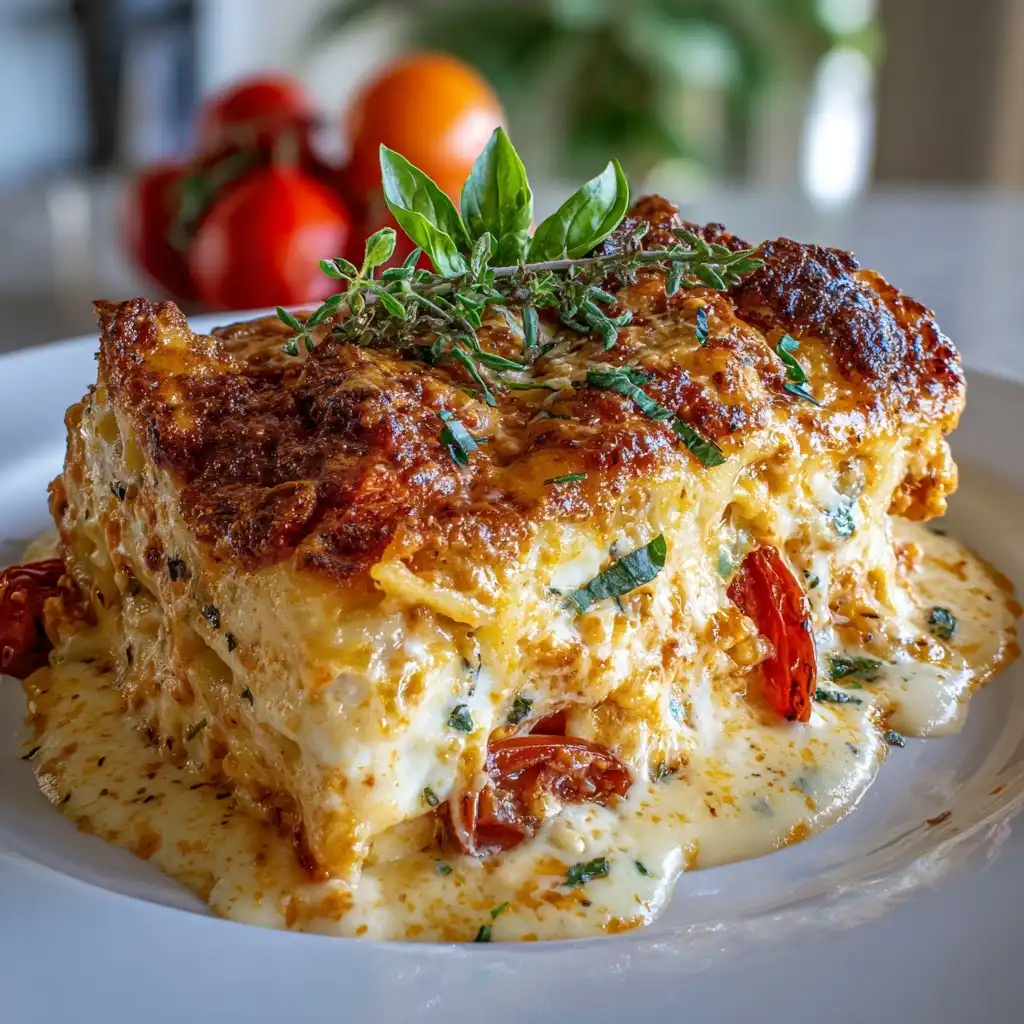
Welcome to the ultimate celebration of comfort, flavor, and Italian-American tradition: Tomato Basil Three Cheese Lasagna. This isn’t just another lasagna—it’s a layered symphony of vibrant San Marzano tomato sauce, fragrant fresh basil, creamy ricotta, sharp provolone, and rich mozzarella, all nestled between tender, no-boil lasagna noodles. Whether you’re preparing a Sunday family dinner, hosting a holiday gathering, or simply treating yourself to something deeply satisfying, this recipe delivers on every front—aroma, texture, balance, and heartwarming nostalgia. It marries rustic simplicity with gourmet depth, proving that extraordinary meals often begin with humble, high-quality ingredients and thoughtful layering.
The History
Lasagna’s roots stretch back over 700 years—to 13th-century Italy, where early versions appeared in the medieval cookbook Liber de Coquina, describing layered pasta sheets with grated cheese and spices. The word “lasagna” itself derives from the Greek laganon, referring to flat sheets of dough, later adopted by the Romans as lasanum (a cooking pot), which eventually gave its name to the dish prepared within it. While traditional Italian lasagna varies regionally—Emilia-Romagna favors lasagna verde (spinach-infused noodles) with ragù and béchamel—American adaptations evolved post-WWII with the rise of accessible dried pasta, canned tomatoes, and mass-produced cheeses. The “Three Cheese” iteration gained popularity in the 1960s–70s as home cooks sought richer, more approachable variations. Adding fresh basil—a hallmark of Southern Italian cuisine—elevates the classic red-sauce profile with aromatic brightness, transforming it into a modern staple that honors heritage while embracing freshness. Today, Tomato Basil Three Cheese Lasagna stands as a beloved bridge between authenticity and innovation—comfort food with intention.
Ingredients Breakdown
Every element in this lasagna serves a distinct purpose—flavor, texture, moisture control, and structural integrity. Let’s explore why each ingredient matters:
- San Marzano-style crushed tomatoes: Grown in Italy’s volcanic soil (or grown under similar conditions elsewhere), these DOP-certified tomatoes offer low acidity, high sweetness, and dense, velvety flesh—ideal for a rich, balanced sauce without excessive simmering.
- Fresh basil leaves (not dried): Essential for aromatic lift and herbal complexity. Dried basil lacks volatile oils and introduces bitterness when baked; fresh leaves added in layers and as garnish retain their bright, peppery-sweet essence.
- Ricotta cheese (whole-milk, well-drained): Provides creamy body and subtle tang. Draining removes excess whey, preventing a watery filling and ensuring each bite holds its shape.
- Mozzarella (low-moisture, whole-milk, shredded): Melts smoothly, forms delicate golden-brown blisters, and contributes stretch and mild milky richness.
- Provolone (aged, medium-sharp, grated): Adds depth, nuttiness, and umami backbone—its higher melting point ensures pockets of caramelized flavor rather than uniform melt.
- No-boil lasagna noodles: Engineered to absorb liquid and soften perfectly during baking—eliminating prep time while delivering consistent tenderness. (Note: Regular noodles *can* be substituted—but require pre-cooking and careful sauce hydration adjustment.)
- Garlic, onion, extra-virgin olive oil, and red pepper flakes: Build foundational aroma and warmth—not overpowering, but essential for dimension.
- Freshly grated Parmigiano-Reggiano (added to both sauce and topping): Salty, crystalline, and deeply savory—acts as a flavor catalyst and textural contrast.
- Sea salt, black pepper, and a splash of dry white wine (optional but recommended): Salt amplifies all flavors; freshly cracked pepper adds spice nuance; wine deglazes the pan and adds subtle acidity and fruitiness to the sauce.
Step-by-Step Recipe
- Prepare the Sauce Base: In a heavy-bottomed Dutch oven or large saucepan, heat 3 tbsp extra-virgin olive oil over medium heat. Add 1 finely diced yellow onion and 4 minced garlic cloves; sauté until translucent and fragrant (~5 minutes), stirring frequently to prevent browning. Stir in ½ tsp red pepper flakes and toast for 30 seconds. Deglaze with ¼ cup dry white wine (e.g., Pinot Grigio), scraping up browned bits. Simmer until nearly evaporated (~2 minutes).
- Build the Tomato Sauce: Add one 28-oz can San Marzano-style crushed tomatoes, one 15-oz can tomato puree, 2 tbsp tomato paste, 1 tsp sea salt, ½ tsp freshly ground black pepper, and 2 tbsp finely chopped fresh basil stems (reserve leaves for layering). Bring to a gentle simmer, then reduce heat to low. Partially cover and cook for 45–60 minutes, stirring every 10 minutes, until thickened to a spreadable consistency (it should mound slightly on a spoon). Remove from heat; stir in ¼ cup grated Parmigiano-Reggiano and 2 tbsp fresh basil leaves, torn. Cool to room temperature.
- Prepare the Cheese Filling: In a large bowl, combine 3 cups whole-milk ricotta, 1 large egg, ½ cup grated Parmigiano-Reggiano, ¼ cup finely chopped fresh basil leaves, 1 tsp sea salt, ½ tsp black pepper, and a pinch of freshly grated nutmeg. Mix gently with a spatula until just combined—do not overmix, or the filling will become gluey. Cover and refrigerate for 20 minutes to firm up.
- Assemble the Lasagna: Preheat oven to 375°F (190°C). Lightly grease a 9×13-inch deep-dish baking dish (at least 3 inches deep). Spread 1 cup cooled tomato sauce evenly across the bottom. Layer 4 no-boil lasagna noodles (slightly overlapping if needed). Top with ⅓ of the ricotta mixture (about 1¾ cups), spreading gently to edges. Sprinkle with ½ cup shredded mozzarella, ⅓ cup grated provolone, and 2 tbsp Parmigiano-Reggiano. Scatter ⅓ of remaining fresh basil leaves (about 10–12 leaves) over cheese. Repeat layers two more times: sauce → noodles → ricotta → cheeses → basil. For the final layer: top with remaining 1 cup sauce, remaining cheeses (½ cup mozzarella, ⅓ cup provolone, 2 tbsp Parmigiano), and a generous blanket of 15–20 fresh basil leaves.
- Bake with Precision: Cover tightly with aluminum foil (tent it slightly so it doesn’t touch the cheese). Bake for 35 minutes. Carefully remove foil and bake uncovered for 25–30 minutes more, until the top is deeply golden, bubbling at the edges, and internal temperature reaches 165°F (74°C) when checked with an instant-read thermometer inserted into the center. Rest for full 30 minutes before slicing—this allows starches to set, prevents sliding layers, and ensures clean cuts.
Tips
- Drain Ricotta Like a Pro: Line a fine-mesh strainer with cheesecloth or a coffee filter; add ricotta and refrigerate for 1–2 hours. Discard whey—you’ll gain creaminess and avoid sogginess.
- Sauce Consistency is Key: If your sauce seems too thin after simmering, stir in 1 tsp cornstarch slurry (1 tsp cornstarch + 1 tbsp cold water) and simmer 2 more minutes. Too thick? Add 1–2 tbsp reserved tomato juice or water.
- Noodle Placement Matters: Slightly overlap noodles by ¼ inch—they’ll expand while absorbing moisture. Don’t force them to fit perfectly; gentle pressure is enough.
- Cheese Grating Rule: Always grate your own cheese. Pre-shredded varieties contain anti-caking agents (e.g., cellulose) that inhibit melting and create graininess.
- Resting Is Non-Negotiable: Cutting too soon releases steam and destabilizes the structure—leading to soupy, separated layers. Set a timer. Trust the rest.
- Oven Thermometer Check: Many ovens run hot or cold. Use an oven thermometer to verify true temperature—especially critical for even cheese melt and noodle tenderness.
- Layering Order Logic: Always start and end with sauce—not cheese. Sauce on the bottom prevents sticking; sauce on top keeps the top layer moist and encourages browning without drying.
- Freeze Smart: Assemble unbaked lasagna (without fresh basil on top), wrap tightly in foil + plastic, freeze up to 3 months. Thaw overnight in fridge before baking—add 10 minutes covered time.
Variations and Customizations
This recipe is intentionally versatile—designed to adapt to dietary needs, seasonal produce, pantry availability, and personal taste. Here are thoughtfully tested options:
- Vegetarian Upgrade: Fold in 1½ cups roasted zucchini ribbons, 1 cup sautéed cremini mushrooms, or ¾ cup wilted baby spinach (squeezed dry) into the ricotta mixture for added earthiness and nutrients.
- Protein-Powered: Brown 1 lb grass-fed ground beef, Italian sausage (mild or hot), or plant-based crumbles with onions and garlic before building the sauce. Drain fat thoroughly and integrate into the tomato base.
- Gluten-Free: Use certified GF no-boil lasagna noodles (e.g., Barilla or Tinkyada). Ensure all cheeses and tomato products are GF-certified—some ricottas contain thickeners with hidden gluten.
- Dairy-Free / Vegan Option: Substitute cashew ricotta (soaked raw cashews + lemon juice + nutritional yeast + garlic + salt), coconut milk mozzarella shreds (e.g., Daiya Cutting Board Collection), and vegan provolone alternatives. Use olive oil instead of butter in sauce. Note: Texture and browning differ—expect creamier, less stringy results.
- Herb & Citrus Twist: Add 1 tsp lemon zest and 1 tbsp chopped oregano to the ricotta; swap half the basil for fresh marjoram or parsley. Finish with lemon-infused olive oil drizzle before serving.
- Spice Forward: Infuse sauce with 1 tsp fennel seeds (toasted and crushed), add 1 finely diced Calabrian chili, or finish with pickled cherry peppers and their brine.
- White Lasagna Variation (Rosé-Inspired): Replace tomato sauce with roasted red pepper–basil bechamel (roasted red peppers puréed into a light roux-based sauce), and use fontina instead of provolone for floral creaminess.
- Mini Individual Lasagnas: Layer in 8 oz ramekins or muffin tin cavities (lined with parchment). Reduce bake time to 25–30 minutes covered, then 10–12 uncovered. Perfect for portion control or elegant dinner parties.
Health Considerations and Nutritional Value
A single 1¼-inch slice (approx. 1/12 of the full recipe) contains approximately:
- Calories: 420–460 kcal
- Protein: 24–28 g (from ricotta, mozzarella, provolone, and eggs—supporting muscle maintenance and satiety)
- Fat: 22–26 g (mostly unsaturated from olive oil and dairy; includes conjugated linoleic acid [CLA] from grass-fed dairy options)
- Carbohydrates: 32–36 g (primarily complex carbs from whole-wheat or high-fiber noodles—if substituted)
- Fiber: 3–4 g (enhanced with whole-grain noodles or added vegetables)
- Sodium: 680–780 mg (moderated by using low-sodium tomato products and limiting added salt—Parmigiano contributes naturally occurring sodium)
- Vitamins & Minerals: Rich in calcium (45% DV), vitamin B12 (35% DV), vitamin A (25% DV), lycopene (a potent antioxidant increased by cooking tomatoes with olive oil), and basil-derived vitamin K and magnesium.
Dietary Notes:
- Heart-Healthy: Olive oil and tomato lycopene support cardiovascular function; moderate saturated fat when using part-skim cheeses.
- Gut-Friendly: Fermented cheeses like provolone contain beneficial bacteria; pairing with a side of arugula salad boosts prebiotic fiber.
- Blood Sugar Balanced: Low glycemic impact when served with non-starchy vegetables—avoid refined sugar in sauce (many commercial brands add it unnecessarily).
- Allergen Awareness: Contains dairy and gluten. For nut-free assurance, confirm ricotta and cheese labels—some artisanal ricottas are made in shared facilities with tree nuts.
- Pregnancy-Safe: Pasteurized cheeses used throughout; avoid raw-milk cheeses unless explicitly labeled safe for pregnancy.
Ingredients
- 3 tbsp extra-virgin olive oil
- 1 medium yellow onion, finely diced
- 4 garlic cloves, minced
- ½ tsp crushed red pepper flakes
- ¼ cup dry white wine (e.g., Pinot Grigio or Sauvignon Blanc)
- 1 (28-oz) can San Marzano-style crushed tomatoes (preferably DOP-certified)
- 1 (15-oz) can tomato puree
- 2 tbsp tomato paste
- 1 tsp sea salt (plus more to taste)
- ½ tsp freshly ground black pepper
- 2 tbsp finely chopped fresh basil stems (plus ¾ cup loosely packed fresh basil leaves, divided)
- ¼ cup grated Parmigiano-Reggiano (plus ⅓ cup for filling, ¼ cup for topping)
- 3 cups whole-milk ricotta cheese, well-drained
- 1 large egg
- ¼ tsp freshly grated nutmeg
- 4 no-boil lasagna noodles (regular or whole-wheat; approx. 12 sheets total)
- 2 cups low-moisture whole-milk mozzarella, shredded
- 1 cup aged provolone, finely grated
Directions
- Heat olive oil in a heavy-bottomed Dutch oven over medium heat. Add onion and sauté until soft and translucent, about 5 minutes. Add garlic and red pepper flakes; cook 1 minute more, stirring constantly.
- Pour in white wine and scrape up browned bits. Simmer until reduced by half, ~2 minutes.
- Add crushed tomatoes, tomato puree, tomato paste, salt, pepper, and basil stems. Stir well. Bring to a gentle simmer, then reduce heat to low. Partially cover and cook for 45–60 minutes, stirring occasionally, until thickened. Remove from heat. Stir in ¼ cup Parmigiano-Reggiano and 2 tbsp fresh basil leaves. Cool completely.
- In a large bowl, combine drained ricotta, egg, ⅓ cup Parmigiano-Reggiano, ¼ cup fresh basil leaves, salt, pepper, and nutmeg. Mix gently until just combined. Refrigerate 20 minutes.
- Preheat oven to 375°F (190°C). Grease a 9×13-inch baking dish (3-inch depth minimum).
- Spread 1 cup cooled sauce on bottom. Layer 4 noodles (slightly overlapping). Spread ⅓ ricotta mixture evenly. Sprinkle with ½ cup mozzarella, ⅓ cup provolone, 2 tbsp Parmigiano, and ⅓ of remaining basil leaves.
- Repeat layering twice more (sauce → noodles → ricotta → cheeses → basil).
- Top final noodle layer with remaining 1 cup sauce, then remaining cheeses (½ cup mozzarella, ⅓ cup provolone, 2 tbsp Parmigiano), and remaining basil leaves.
- Cover tightly with foil (tented). Bake 35 minutes. Remove foil; bake uncovered 25–30 minutes, until golden, bubbling, and internal temp reaches 165°F.
- Let rest, uncovered, for 30 minutes. Cut into 12 squares with a sharp chef’s knife wiped clean between cuts.
FAQ
- Can I use regular lasagna noodles instead of no-boil?
- Yes—but cook them 1–2 minutes shy of al dente, rinse under cold water, and lay flat on oiled parchment to prevent sticking. Reduce sauce liquid by ¼ cup to compensate for pre-hydration.
- Why does my lasagna turn out watery?
- Common causes: under-drained ricotta, overly thin sauce, skipping the resting period, or using low-fat cheeses with higher moisture content. Always drain ricotta, simmer sauce until thick, and rest 30+ minutes.
- Can I make this ahead?
- Absolutely. Assemble up to 2 days ahead, cover tightly, and refrigerate. Add 5–10 minutes to covered bake time. Or freeze unbaked (up to 3 months); thaw overnight before baking.
- What’s the best way to reheat leftovers?
- Individual slices: Microwave on medium power for 60–90 seconds, covered with damp paper towel. For full pan: Cover with foil, bake at 350°F for 25–35 minutes until heated through (165°F internal).
- Is there a substitute for provolone?
- Yes—try smoked gouda for depth, fontina for creaminess, or asiago for sharpness. Avoid mild cheddar—it separates and lacks the necessary melt structure.
- Can I omit the egg from the ricotta?
- You can—but the filling may be looser and less cohesive. For binding without egg, add 1 tbsp ground flaxseed mixed with 3 tbsp water (let sit 5 minutes) or 2 tsp psyllium husk powder.
- Why use whole-milk ricotta instead of part-skim?
- Whole-milk ricotta has superior fat content for richness and mouthfeel—and less free water. Part-skim often contains stabilizers and yields a grainier, drier texture.
- How do I store leftovers?
- Refrigerate in airtight container for up to 5 days. Freeze portions for up to 2 months—thaw overnight before reheating.
- Can I add spinach without making it watery?
- Yes—use 6 oz frozen chopped spinach, thawed and squeezed *extremely* dry in a clean kitchen towel (remove every drop of moisture), then fold into ricotta mixture.
- What wine pairs best with this lasagna?
- A medium-bodied Chianti Classico, Barbera d’Alba, or Nero d’Avola complements the acidity and herbs beautifully. For white lovers, try an oak-aged Vermentino or lightly chilled Rosso di Montalcino.
Summary
Tomato Basil Three Cheese Lasagna is a masterclass in layered harmony—where slow-simmered San Marzano sauce meets cloud-like ricotta, golden-browned mozzarella, deeply savory provolone, and the unmistakable perfume of fresh basil—all held together by tender, no-boil noodles. It’s a dish rooted in centuries of culinary evolution, yet feels utterly contemporary thanks to its vibrant, garden-fresh soul and customizable generosity.
Whether served at a festive table or enjoyed solo with a simple green salad and crusty bread, this lasagna doesn’t just feed the body—it evokes memory, invites connection, and reminds us that the most meaningful meals are built, quite literally, one intentional layer at a time.