Introduction
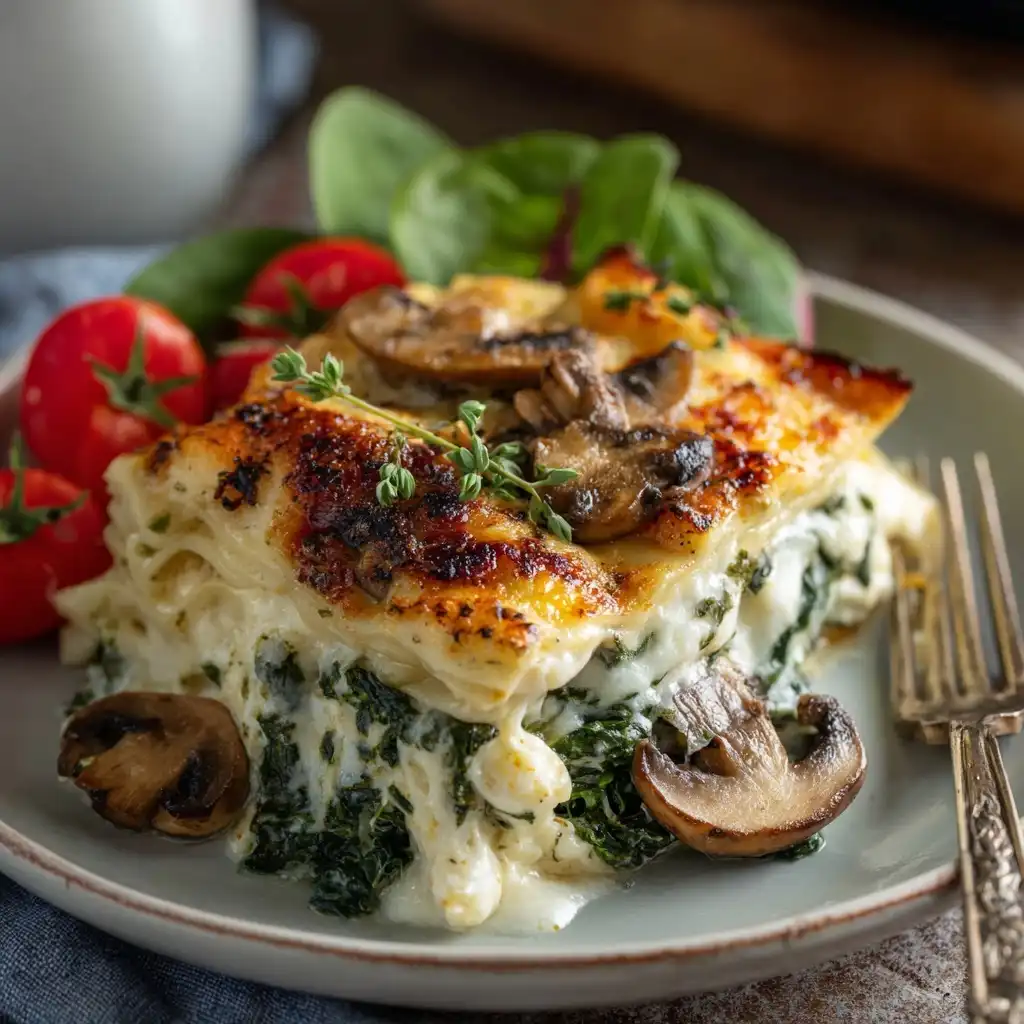
Welcome to the ultimate guide for Creamy Spinach Mushroom White Lasagna — a rich, velvety, and deeply comforting twist on the classic Italian favorite. Unlike traditional red-sauce lasagnas, this version embraces the elegance of a luscious béchamel-based white sauce, layered with earthy sautéed mushrooms, tender baby spinach, and creamy ricotta–mozzarella–Parmesan goodness. It’s decadent without being heavy, vegetarian-friendly (easily made vegan with substitutions), and sophisticated enough for dinner parties yet approachable enough for weeknight cooking. Whether you’re seeking a cozy family meal, an impressive potluck centerpiece, or a nourishing dish that satisfies both heart and palate, this lasagna delivers on every front — with layers of flavor, texture, and culinary care.
The History
Lasagna’s origins trace back over 700 years to medieval Italy, where early versions appeared in the 13th-century text Liber de Coquina, featuring sheets of dough layered with grated cheese and spices — no tomatoes, of course, as they hadn’t yet arrived from the Americas. The “white lasagna” tradition evolved alongside the development of béchamel in 17th-century France (credited to Louis XIV’s chef, François Pierre de La Varenne), which soon crossed the Alps into northern Italy, inspiring lasagne al forno alla besciamella. In Emilia-Romagna and Lombardy, white-sauced lasagnas became staples — often enriched with local cheeses like crescenza, taleggio, or mascarpone, and folded with seasonal foraged or cultivated mushrooms. Spinach entered the repertoire during the Renaissance, prized for its iron-rich nutrition and vibrant green hue, especially in monastic gardens across Tuscany and Umbria. The modern Creamy Spinach Mushroom White Lasagna is thus a harmonious fusion: Italian layering technique, French-inspired sauce craftsmanship, Northern Italian dairy traditions, and Mediterranean vegetable wisdom — refined over centuries and reimagined for today’s conscious, flavor-forward kitchens.
Ingredients Breakdown
Every element in this lasagna plays a distinct, intentional role — from structural integrity to umami depth, creamy balance, and nutritional synergy. Let’s explore each component in detail:
- No-Boil Lasagna Noodles: Engineered to soften perfectly in the oven’s moist heat, these eliminate pre-cooking hassle while delivering ideal chew and layer cohesion. Look for durum wheat semolina varieties with minimal additives — they absorb sauce without turning mushy.
- Fresh Cremini or Baby Bella Mushrooms: Chosen over button mushrooms for their deeper, woodsy umami and firmer texture. When properly caramelized (not steamed), they release moisture, then reabsorb pan juices, becoming meaty, savory nuggets that anchor the filling.
- Baby Spinach (not mature spinach): Delicate, sweet, and tender — it wilts evenly without bitterness or stringiness. Its high folate, vitamin K, and magnesium content adds vital phytonutrients without compromising texture. Avoid frozen spinach unless thoroughly thawed and *squeezed bone-dry*, as excess water sabotages sauce consistency.
- Whole-Milk Ricotta: The creamy, slightly grainy heart of the filling. Whole-milk ricotta provides fat-soluble vitamins (A & D), calcium, and a luxurious mouthfeel. Low-fat versions often yield a watery, chalky result — so splurge here. For extra silkiness, many chefs blend in a spoonful of mascarpone or full-fat Greek yogurt.
- High-Quality Mozzarella di Bufala or Fresh Fior di Latte: Not the pre-shredded grocery kind (which contains anti-caking starches and dries out). Fresh mozzarella brings milky sweetness, superior melt, and delicate stretch. Bufala offers richer fat content and tang; fior di latte is milder and more accessible.
- Aged Parmigiano-Reggiano (Grated Fresh): The flavor catalyst. Authentic, DOP-certified Parmigiano delivers complex nuttiness, crystalline crunch, and deep umami. Pre-grated “Parmesan” lacks enzymatic depth and often contains cellulose fillers — always grate it yourself using a microplane for maximum surface area and integration.
- Unsalted Butter & All-Purpose Flour: The foundation of the béchamel. Butter adds richness and roasting depth; flour thickens without gumminess when cooked to a pale roux. Never skip the “cook-out” step — raw flour taste is a dealbreaker.
- Whole Milk (or Half-and-Half Blend): Whole milk ensures creaminess without heaviness. For ultra-luxury, substitute up to ¼ cup of the milk with warmed heavy cream or crème fraîche — it adds subtle tang and velvety body.
- Freshly Grated Nutmeg: Not optional — it’s transformative. Just a pinch (⅛ tsp) enhances dairy sweetness and bridges earthy mushrooms with green spinach. Pre-ground nutmeg loses volatile oils within weeks; always use whole nutmeg and a grater.
- Garlic, Shallots, Fresh Thyme & Lemon Zest: A subtle aromatic trinity: minced shallots offer gentle allium sweetness (less harsh than onion), garlic adds depth (sautéed until fragrant, never browned), fresh thyme leaves lend woodland nuance, and lemon zest cuts richness with bright citrus oil — no juice needed, to avoid acidity that could curdle dairy.
- Sea Salt & Freshly Cracked Black Pepper: Season at every stage — mushrooms while sautéing, béchamel while whisking, ricotta mixture before assembling. This builds dimensional flavor rather than one-note saltiness.
Step-by-Step Recipe
- Prep & Preheat: Center rack in oven. Preheat to 375°F (190°C). Lightly grease a 9×13-inch glass or ceramic baking dish (avoid dark metal pans — they over-brown edges).
- Sauté the Aromatics: In a large stainless steel or enameled Dutch oven over medium heat, melt 2 tbsp unsalted butter. Add 1 finely minced shallot and 2 minced garlic cloves; sauté 2 minutes until translucent. Stir in 1 tsp fresh thyme leaves and cook 30 seconds until fragrant.
- Caramelize the Mushrooms: Increase heat to medium-high. Add 16 oz (450g) sliced cremini mushrooms in a single layer. Let sear untouched for 3 minutes — resist stirring! Then stir and continue cooking 6–8 minutes total, until deeply golden, shrunken, and dry (no liquid pooling). Season with ¾ tsp sea salt and ¼ tsp black pepper. Transfer to a bowl and set aside.
- Wilt the Spinach: In same pan (no additional fat needed), add 6 oz (170g) fresh baby spinach in batches. Stir constantly 1–2 minutes until just collapsed and vibrant green. Immediately transfer to a fine-mesh strainer over the sink; press firmly with a spatula to remove *every drop* of excess water. Cool 5 minutes, then chop coarsely.
- Make the Béchamel: Wipe pan clean. Melt 4 tbsp unsalted butter over medium-low heat. Whisk in ¼ cup all-purpose flour. Cook, whisking constantly, 2 minutes until pale blonde and nutty — do not brown. Gradually whisk in 3 cups warm whole milk (heated in microwave 1 min), ½ cup at a time, ensuring no lumps form. Bring to gentle simmer, whisking continuously. Cook 5–7 minutes until thick enough to coat the back of a spoon. Remove from heat; whisk in ¼ tsp freshly grated nutmeg, 1 tsp lemon zest, 1 tsp sea salt, and ½ tsp white pepper. Cover surface with parchment to prevent skin.
- Prepare the Ricotta Filling: In a large bowl, combine 2 cups whole-milk ricotta, 1 cup grated Parmigiano-Reggiano, ½ cup shredded mozzarella, 1 large egg (for binding), 1 tsp lemon zest, ½ tsp nutmeg, 1 tsp sea salt, and ¼ tsp white pepper. Fold in cooled mushroom mixture and chopped spinach until evenly distributed — avoid overmixing.
- Assemble with Precision: Spread ¾ cup béchamel thinly across bottom of baking dish. Place 4 no-boil noodles side-by-side (slight overlap OK). Top with ⅓ of ricotta-spinach-mushroom mixture, spreading gently. Drizzle with ¾ cup béchamel. Repeat layers twice more: noodles → filling → béchamel. Finish with final 4 noodles, then remaining béchamel (about 1 cup), smoothing evenly. Sprinkle top generously with ¾ cup mozzarella and ⅓ cup Parmigiano-Reggiano.
- Bake Covered, Then Uncovered: Cover tightly with aluminum foil (tent slightly to prevent cheese sticking). Bake 30 minutes. Remove foil; bake 25–30 minutes more until top is deeply golden, bubbling at edges, and internal temperature reaches 165°F (74°C) when checked with an instant-read thermometer inserted into center.
- Rest Imperatively: Remove from oven. Let stand, uncovered, for *full 30 minutes* — this allows starches to set, layers to stabilize, and steam to redistribute. Cutting too soon yields soupy, separated slices.
- Serve & Savor: Cut into 12 generous squares with a sharp chef’s knife dipped in hot water between cuts. Serve warm, garnished with extra lemon zest, fresh thyme, and a drizzle of high-quality extra-virgin olive oil.
Tips
- Texture Control is Key: Mushrooms must be *dry* before mixing — any residual moisture turns béchamel thin and causes lasagna to weep. Same for spinach: if water remains, squeeze again — even use cheesecloth for stubborn batches.
- Béchamel Temperature Matters: Always warm your milk before adding to the roux — cold milk shocks the butter-flour paste and causes lumps. Conversely, don’t let béchamel boil vigorously — it can break or separate.
- Noodle Alignment Trick: For flawless layers, lay noodles slightly overlapping lengthwise (not end-to-end) — this prevents gaps and creates seamless structure. Trim noodles with kitchen shears if needed to fit snugly.
- Prevent Browning & Drying: If top browns too quickly during uncovered bake, tent *loosely* with foil again for final 5–10 minutes. Alternatively, brush exposed noodle edges with melted butter before baking.
- Make-Ahead Magic: Assemble up to 24 hours ahead: cover tightly and refrigerate unbaked. Add 10–15 minutes to covered bake time. Or freeze assembled (unbaked) lasagna for up to 3 months — thaw overnight in fridge before baking.
- Resting Isn’t Optional — It’s Alchemy: That 30-minute rest transforms texture. Skipping it means loss of structure, sauce separation, and lukewarm centers. Set a timer — it’s part of the recipe.
- Knife Maintenance: Use a serrated knife for clean cuts — it glides through cheese without dragging. Wipe blade with hot, damp cloth after each slice for pristine presentation.
- Leftover Béchamel? Repurpose! Stir in herbs and lemon for a pasta sauce, blend into mashed potatoes, or fold into scrambled eggs — nothing goes to waste.
Variations and Customizations
This recipe is a canvas — adaptable for dietary needs, seasonal produce, pantry constraints, and bold creativity:
- Vegan Version: Replace butter with refined coconut oil or vegan butter; use cashew-based “ricotta” (soaked raw cashews + lemon juice + nutritional yeast + garlic); swap mozzarella for almond-milk shreds or Miyoko’s mozzarella; make béchamel with unsweetened oat or soy milk + cornstarch slurry (2 tbsp cornstarch + 2 tbsp cold water per cup milk); top with nutritional yeast instead of Parmesan.
- Gluten-Free: Use certified GF no-boil lasagna noodles (brown rice or quinoa-based). Ensure all flours and sauces are GF-certified. For béchamel, substitute GF all-purpose blend or 1 tbsp arrowroot per ¼ cup flour.
- Protein-Packed: Add 1 cup cooked lentils, crumbled tempeh “bacon,” or shredded rotisserie chicken to the ricotta mixture. For vegetarians, marinated baked tofu cubes add chew and umami.
- Wild Mushroom Upgrade: Swap half the cremini for foraged or gourmet varieties: oyster, shiitake (stemmed), hen-of-the-woods, or dried porcini (rehydrated in warm milk, then chopped — reserve soaking liquid for béchamel).
- Herb Garden Twist: Fold in 2 tbsp chopped fresh basil or dill with the ricotta. Or infuse béchamel with a sprig of rosemary (remove before assembling). Top with microgreens or edible flowers pre-service.
- Spice It Up: Add ¼ tsp red pepper flakes to the mushroom sauté, or stir 1 tsp smoked paprika into the béchamel for warmth and complexity.
- Lighter Option: Substitute ½ cup ricotta with low-fat cottage cheese (blended smooth); reduce cheese topping by ¼ cup; use part-skim mozzarella; replace 1 cup milk with unsweetened almond milk (add 1 tsp xanthan gum to béchamel to prevent thinning).
- “Deconstructed” Individual Servings: Layer components in ramekins: béchamel base → mushroom-spinach mix → noodles cut into strips → more béchamel → cheese. Bake 25 mins. Perfect for portion control or elegant dinner parties.
- Breakfast Lasagna: Add 2 more eggs to ricotta mixture, plus ¼ cup crumbled feta and sautéed leeks. Bake as directed — serve with poached eggs on top.
Health Considerations and Nutritional Value
A single 1-cup serving (approx. 1/12 of the full recipe) provides approximately:
- Calories: ~385 kcal (balanced energy from complex carbs, high-quality fats, and complete protein)
- Protein: 22g — primarily from ricotta, mozzarella, and Parmesan, offering all 9 essential amino acids
- Fat: 21g (12g saturated) — predominantly from dairy fats rich in CLA (conjugated linoleic acid), shown in studies to support metabolic health and anti-inflammatory pathways when consumed in moderation
- Carbohydrates: 26g (3g fiber, 4g natural sugars) — mostly from whole-grain–optional noodles and vegetables; low glycemic impact due to high fat/protein content slowing digestion
- Vitamins & Minerals: Exceptional source of calcium (45% DV), vitamin K (120% DV from spinach), vitamin A (65% DV), folate (40% DV), magnesium (25% DV), and selenium (30% DV from mushrooms). Spinach contributes nitrates linked to improved vascular function; mushrooms provide ergothioneine — a potent antioxidant not synthesized by humans.
Dietary Notes:
- Lactose Sensitivity: Aged Parmigiano contains negligible lactose (<0.1g/serving); ricotta and mozzarella are naturally low-lactose. Most sensitive individuals tolerate this well — but for strict avoidance, use lactose-free dairy or plant-based alternatives.
- Sodium Awareness: Total sodium ~580mg/serving — moderate and easily adjusted by reducing added salt and choosing low-sodium cheeses (though flavor may suffer). Rely more on herbs, lemon, and mushrooms for savoriness.
- Heart Health: Contains zero trans fats and no added sugars. Omega-3s from grass-fed dairy (if used) and antioxidants from spinach/mushrooms support endothelial function. Pair with a side salad dressed in olive oil and vinegar for synergistic cardiovascular benefits.
- Pregnancy-Safe: Pasteurized dairy, fully cooked eggs, and thoroughly wilted spinach make this compliant with prenatal nutrition guidelines — excellent for folate and iron needs (enhanced by vitamin C in lemon zest).
- Diabetic-Friendly: Low glycemic load due to balanced macros. Monitor portion size and pair with non-starchy vegetables to maintain steady glucose response.
Ingredients
- 1 (9 oz) box no-boil lasagna noodles (about 12 sheets)
- 16 oz (450g) cremini mushrooms, stems removed, thinly sliced
- 6 oz (170g) fresh baby spinach
- 4 tbsp unsalted butter, divided
- 1 large shallot, finely minced (about ½ cup)
- 2 garlic cloves, minced
- 1 tsp fresh thyme leaves (or ½ tsp dried)
- 1 tsp lemon zest (from 1 organic lemon)
- ¼ tsp freshly grated nutmeg (plus extra for finishing)
- Sea salt and freshly ground white & black pepper
- ¼ cup all-purpose flour
- 3 cups whole milk, warmed
- 2 cups whole-milk ricotta cheese
- 1 ½ cups fresh mozzarella, shredded (low-moisture, not pre-shredded)
- 1 ½ cups grated Parmigiano-Reggiano (DOP-certified preferred)
- 1 large egg
- Olive oil, for drizzling (optional, for finishing)
- Fresh thyme sprigs, for garnish (optional)
Directions
- Preheat oven to 375°F (190°C). Grease a 9×13-inch baking dish with butter or olive oil.
- In a large skillet or Dutch oven over medium heat, melt 2 tbsp butter. Add shallot and garlic; sauté 2 minutes until soft. Stir in thyme; cook 30 seconds. Increase heat to medium-high; add mushrooms in single layer. Cook undisturbed 3 minutes, then stir and cook 6–8 more minutes until deeply browned and dry. Season with ¾ tsp salt and ¼ tsp black pepper. Transfer to bowl; cool.
- In same pan, add spinach in batches. Cook 1–2 minutes until wilted. Drain in fine-mesh strainer; press *very firmly* to remove all water. Chop coarsely; cool 5 minutes.
- Wipe pan clean. Melt remaining 2 tbsp butter over medium-low heat. Whisk in flour; cook 2 minutes until pale blonde. Gradually whisk in warm milk, ½ cup at a time, until smooth. Simmer 5–7 minutes, whisking, until thickened. Off heat, whisk in lemon zest, nutmeg, 1 tsp salt, and ½ tsp white pepper. Cover surface with parchment.
- In large bowl, combine ricotta, 1 cup mozzarella, 1 cup Parmigiano, egg, 1 tsp lemon zest, ½ tsp nutmeg, 1 tsp salt, and ¼ tsp white pepper. Fold in cooled mushrooms and spinach until uniform.
- Spread ¾ cup béchamel in baking dish. Arrange 4 noodles. Top with ⅓ ricotta mixture, then ¾ cup béchamel. Repeat two more times. Top with final 4 noodles, remaining béchamel (≈1 cup), remaining mozzarella, and remaining Parmigiano.
- Cover tightly with foil. Bake 30 minutes. Remove foil; bake 25–30 minutes until golden, bubbling, and internal temp reaches 165°F.
- Let rest, uncovered, for 30 minutes before slicing. Garnish with extra lemon zest, thyme, and olive oil if desired.
FAQ
- Can I use regular boiled lasagna noodles?
- Yes — but adjust hydration. Boil according to package (usually 8–9 minutes), drain, rinse with cold water, and lay flat on oiled parchment to prevent sticking. Reduce total béchamel by ½ cup, as boiled noodles absorb less liquid than no-boil.
- Why does my lasagna turn out watery?
- Three most common causes: 1) Insufficient squeezing of spinach/mushrooms, 2) Undercooked béchamel (must coat spoon thickly), 3) Cutting too soon after baking. Resting is non-negotiable for starch gelatinization.
- Can I make this ahead and freeze it?
- Absolutely. Assemble unbaked, wrap *extremely* well in plastic + foil, and freeze up to 3 months. Thaw overnight in fridge. Bake covered 45 minutes, uncovered 35–40 minutes, or until bubbly and 165°F internally.
- What’s the best cheese substitute if I can’t find mozzarella di bufala?
- Fior di latte is ideal. If unavailable, use high-moisture fresh mozzarella packed in water (drained and patted dry) — avoid low-moisture “shredded mozzarella” meant for pizza.
- Can I add tomato sauce for a pink variation?
- You can swirl ¼ cup marinara into the ricotta mixture or layer 2 tbsp between noodles — but know it alters the “white” character and may affect texture. For balance, add 1 tsp balsamic glaze to the béchamel.
- Is there a way to reduce the calories without sacrificing creaminess?
- Substitute ½ cup ricotta with blended silken tofu or low-fat cottage cheese (blended until smooth). Use part-skim mozzarella and reduce cheese topping by 2 tbsp. Increase spinach to 8 oz for volume and nutrients.
- My béchamel has lumps — can I save it?
- Yes! Strain through a fine-mesh sieve while hot, pressing solids with a spatula. Whisk vigorously as it passes through. For future batches, always add warm milk gradually while whisking constantly.
- How do I store leftovers?
- Cool completely. Store covered in fridge up to 5 days. Reheat individual portions in oven at 350°F (175°C) for 15–20 minutes, covered with foil, or in microwave at 50% power in 60-second intervals until warmed through.
- Can I use frozen spinach?
- Only if thoroughly thawed and *squeezed until bone-dry* — use a clean kitchen towel or cheesecloth. Expect slightly denser texture and milder flavor than fresh.
- What wine pairs beautifully with this lasagna?
- An Italian Pinot Grigio (Alto Adige) for crisp acidity to cut richness, or a light, earthy Barbera d’Asti for mushroom harmony. Vegan? Try a barrel-aged Chardonnay alternative — unoaked, with bright apple notes.
Summary
Creamy Spinach Mushroom White Lasagna is a masterclass in layered luxury — marrying centuries-old techniques with modern nutritional wisdom, where caramelized mushrooms and vibrant spinach nestle into silken béchamel and house-made ricotta, all bound by tender, no-boil noodles and crowned with golden, nutty cheese.
It’s deeply satisfying yet thoughtfully balanced — rich without cloying, hearty without heaviness, and endlessly customizable for every diet, season, and celebration — proving that comfort food, at its finest, is both soul-nourishing and impeccably crafted.