Introduction
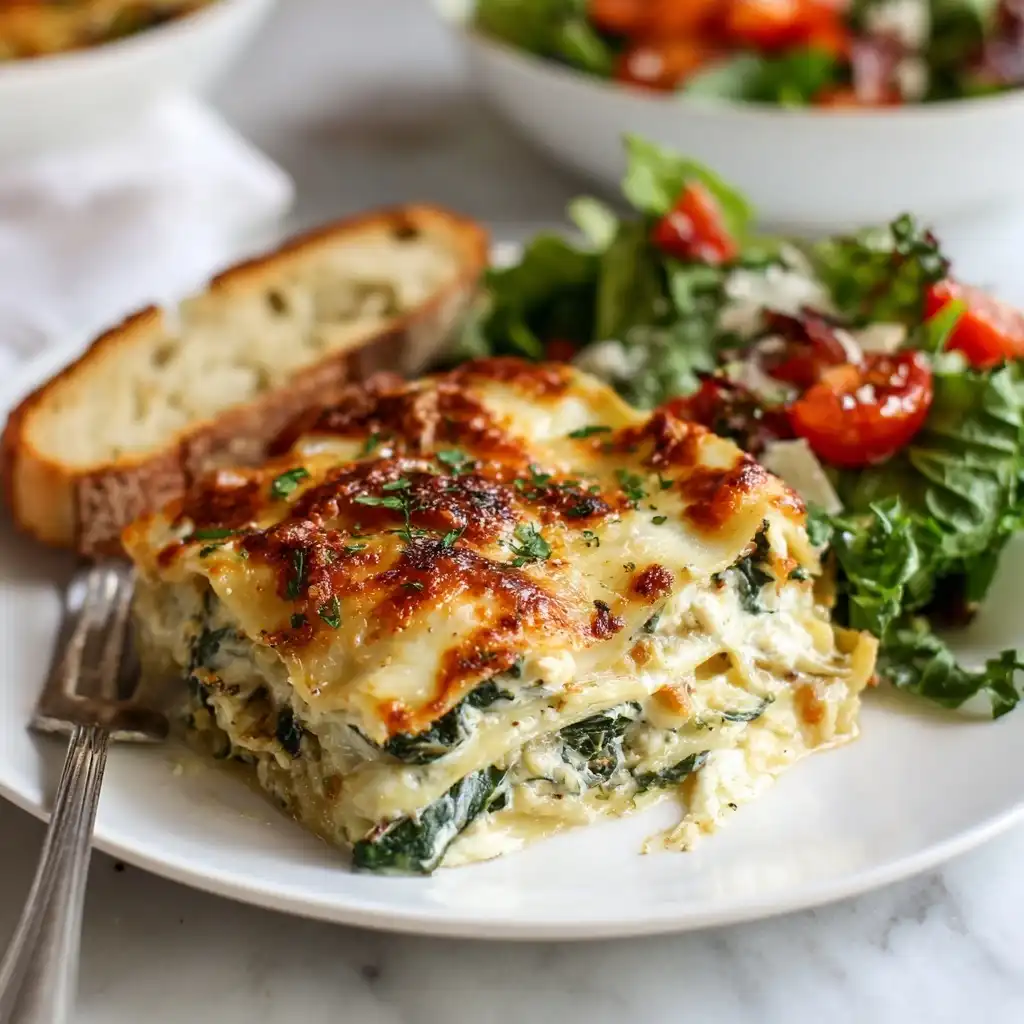
Creamy Swiss Chard Lasagna is a soul-warming, nutrient-dense reinvention of the classic Italian comfort dish—elevated with earthy, vibrant Swiss chard, velvety ricotta and béchamel layers, and rich Parmigiano-Reggiano. Unlike traditional lasagnas that rely heavily on meat or heavy tomato sauces, this version celebrates seasonal greens with elegant sophistication, offering layers of tender-crisp chard ribbons, creamy cheese fillings, and delicate pasta sheets baked to golden perfection. It’s a harmonious balance of rustic simplicity and refined flavor—ideal for weeknight dinners with gourmet appeal, vegetarian holiday feasts, or meal-prep-friendly casseroles that taste even better the next day. Whether you’re a lifelong Swiss chard enthusiast or discovering its mild, spinach-like sweetness for the first time, this lasagna transforms a humble leafy green into the star of an unforgettable, restaurant-worthy centerpiece.
The History
Lasagna’s origins trace back to 13th-century Italy, where early versions—documented in the medieval cookbook De honesta voluptate et valetudine—featured stacked dough sheets layered with grated cheese and spices, long before tomato-based sauces became standard. Swiss chard, meanwhile, has ancient roots across the Mediterranean and Middle East, cultivated by Greeks and Romans for both culinary and medicinal purposes; its Latin name, Beta vulgaris subsp. cicla, reflects its kinship with beets—and indeed, chard shares their deep-rooted nutritional legacy. Though not traditionally paired in historic Italian cuisine (where spinach was more common), the modern fusion of Swiss chard and lasagna emerged from late-20th-century farm-to-table movements and vegetarian culinary innovation—particularly in Northern Italy’s Emilia-Romagna and Liguria regions, where chefs began substituting seasonal greens for cost, sustainability, and health reasons. The “creamy” evolution arrived with the rise of béchamel-forward lasagna styles (popularized post-WWII as dairy became more accessible) and the American artisanal cheese renaissance, which spotlighted high-fat, small-batch ricottas and aged, nutty Swiss-style cheeses. Today, Creamy Swiss Chard Lasagna stands as a global testament to culinary adaptation—honoring tradition while boldly embracing plant-forward, nutrient-conscious cooking.
Ingredients Breakdown
Every component in this lasagna serves both functional and flavorful purpose—no ingredient is arbitrary:
- Fresh Swiss Chard: Choose deeply colored, crisp leaves with firm, unblemished ribs. Red, rainbow, and green varieties all work beautifully—red chard adds visual drama and subtle earthiness; green offers milder flavor. The stems are edible but require longer cooking—they’re finely diced and sautéed separately to prevent sogginess and add textural contrast.
- No-Boil Lasagna Noodles: Engineered to hydrate fully in the oven using moisture from sauces and cheeses, these eliminate pre-cooking hassle and reduce risk of mushiness. Opt for whole-grain or legume-based noodles (lentil, chickpea) for added fiber and protein without compromising texture.
- Ricotta Cheese: Use full-fat, whole-milk ricotta—preferably fresh, locally made, or imported from Calabria or Sicily—for optimal creaminess and tang. Low-moisture ricotta yields denser layers; draining excess whey (via cheesecloth-lined sieve for 30 minutes) ensures structural integrity.
- Béchamel Sauce: A French mother sauce adapted here with Italian sensibility—made with butter, flour, whole milk, and a whisper of freshly grated nutmeg. Its silkiness binds the layers, prevents dryness, and creates a luxurious mouthfeel unmatched by ricotta alone.
- Parmigiano-Reggiano & Pecorino Romano: Authentic DOP-certified cheeses are non-negotiable. Parmigiano delivers umami depth and crystalline crunch; Pecorino adds salty, sharp complexity. Grating them fresh—not pre-shredded—is essential, as anti-caking agents in store-bought shreds inhibit melting and browning.
- Aromatics & Herbs: Yellow onion and garlic build foundational sweetness and pungency; fresh sage and thyme echo Alpine herb gardens, complementing chard’s mineral notes. Lemon zest brightens the entire profile, cutting through richness without acidity.
- Olive Oil & Butter: Extra-virgin olive oil (fruity, medium-intensity) sautés the chard; European-style unsalted butter (82%+ fat) enriches the béchamel and lends golden sheen to the top layer.
Step-by-Step Recipe
- Prep the Swiss Chard: Rinse leaves thoroughly under cold running water, separating stems from leaves. Chop stems into ¼-inch dice; stack leaves, roll tightly, and slice crosswise into ½-inch ribbons. Pat both *very* dry with clean kitchen towels—excess water is the #1 cause of soggy lasagna.
- Sauté the Stems & Aromatics: Heat 2 tbsp olive oil in a large Dutch oven over medium heat. Add diced chard stems, 1 finely minced shallot, and 2 minced garlic cloves. Sauté 5–6 minutes until stems soften but retain slight bite. Stir in 1 tsp fresh thyme leaves and ¼ tsp freshly grated nutmeg.
- Wilt the Leaves: Increase heat to medium-high. Add chard leaves in batches, stirring constantly until each batch collapses (about 90 seconds per batch). Season with sea salt and black pepper. Remove from heat, cool slightly, then gently squeeze out *all* excess liquid using hands or a potato ricer—this step cannot be skipped.
- Make the Béchamel: In a heavy-bottomed saucepan, melt 4 tbsp unsalted butter. Whisk in ¼ cup all-purpose flour; cook 2 minutes until golden and fragrant (do not brown). Gradually whisk in 2½ cups warmed whole milk, ½ cup at a time, ensuring no lumps form. Simmer gently 8–10 minutes, whisking constantly, until thick enough to coat the back of a spoon. Off heat, stir in ¼ tsp freshly grated nutmeg, ½ tsp white pepper, and ½ tsp lemon zest. Cool 10 minutes.
- Prepare the Ricotta Mixture: In a large bowl, combine 2 cups drained ricotta, 1 cup grated Parmigiano-Reggiano, ½ cup grated Pecorino Romano, 1 large egg, 2 tbsp chopped fresh sage, ¼ tsp lemon zest, ½ tsp sea salt, and ¼ tsp black pepper. Fold in the cooled, squeezed chard mixture until evenly distributed—but do not overmix.
- Assemble the Lasagna: Preheat oven to 375°F (190°C). Lightly grease a 9×13-inch ceramic or glass baking dish. Spread ¾ cup béchamel evenly across bottom. Layer 4 no-boil noodles (slightly overlapping if needed). Top with ⅓ of ricotta-chard mixture, spreading gently. Drizzle with ½ cup béchamel. Repeat two more times (noodles → ricotta → béchamel), ending with a final noodle layer. Pour remaining béchamel over top, smoothing evenly. Sprinkle with ¾ cup reserved Parmigiano-Pecorino blend and 2 tbsp slivered fresh sage.
- Bake to Perfection: Cover tightly with parchment-lined aluminum foil (prevents sticking and steam-locking). Bake 35 minutes. Remove foil; bake uncovered 20–25 minutes until top is deeply golden, edges bubble vigorously, and internal temperature reaches 165°F (74°C) when checked with an instant-read thermometer. Rest *at least* 30 minutes before slicing—this allows starches to set and layers to cohere.
Tips
- Dry Your Greens Relentlessly: Swiss chard releases surprising amounts of water. After wilting, place it in a clean linen towel, twist tightly, and wring like a wet mop—even after squeezing, press between two plates weighted with canned goods for 10 minutes.
- Layer with Intention: Use a flexible offset spatula to spread ricotta filling—it glides smoothly without tearing noodles. For ultra-clean slices, dip your knife in hot water and wipe between cuts.
- Boost Umami Without Meat: Add 1 tbsp white miso paste to the béchamel or 2 tsp nutritional yeast to the ricotta mix—both deepen savoriness while staying vegan-friendly (if omitting cheese).
- Prevent Noodle Breakage: No-boil noodles absorb liquid unevenly if placed directly over thick ricotta. Always separate ricotta layers with a thin veil of béchamel to create a hydration buffer.
- Resting Is Non-Negotiable: Cutting too soon causes collapse and leakage. Let rest 30–45 minutes—cover loosely with foil to retain warmth. For make-ahead, cool completely, refrigerate overnight, then bake covered 45 minutes + uncovered 25 minutes.
- Golden Crust Hack: For extra caramelization, broil 2–3 minutes at the end—but watch constantly. Sprinkle top with toasted pine nuts or breadcrumbs mixed with melted butter and herbs during last 5 minutes.
- Freeze Like a Pro: Assemble unbaked lasagna, wrap tightly in double layers of plastic + foil, freeze up to 3 months. Thaw overnight in fridge, then bake as directed—add 10 minutes covered time.
Variations and Customizations
This recipe is a canvas—adaptable for dietary needs, seasonal produce, pantry constraints, and personal preference:
- Vegan Version: Replace ricotta with blended silken tofu + lemon juice + nutritional yeast; use cashew béchamel (soaked raw cashews, almond milk, garlic, turmeric); top with vegan Parmesan (almonds + nutritional yeast + white miso). Omit eggs; bind with 1 tbsp ground flaxseed + 3 tbsp water.
- Gluten-Free: Use certified GF no-boil lasagna noodles (brown rice or quinoa-based). Ensure béchamel flour is GF (tapioca or rice flour blend works best). Check cheese labels—some shredded cheeses contain gluten fillers.
- Protein-Forward: Add 1 cup cooked lentils (green or black) or crumbled tempeh to the ricotta mixture. For omnivores: fold in 1½ cups finely diced roasted mushrooms or 1 cup cooked Italian sausage (remove casing, brown well, drain fat).
- Herb Swaps: Substitute marjoram for oregano’s floral warmth, or tarragon for anise-kissed elegance. Fresh dill adds brightness; rosemary should be used sparingly (½ tsp max) due to potency.
- Seasonal Twists: In spring: add blanched asparagus tips and fava beans. Summer: fold in roasted cherry tomatoes and basil ribbons. Fall: incorporate caramelized onions and roasted delicata squash. Winter: add toasted walnuts and dried cranberries.
- Regional Inspirations: Ligurian Style: Add ¼ cup chopped preserved lemons and 2 tbsp pine nuts. Tuscan Style: Stir 2 tbsp chopped sun-dried tomatoes and 1 tsp fennel pollen into ricotta. Swiss-Alpine Style: Replace half the ricotta with Gruyère purée and top with caramelized onions.
- Low-Carb/Keto: Replace noodles with thinly sliced zucchini or eggplant (salted, pressed, and roasted first). Use full-fat dairy, increase cheese ratios, and omit flour from béchamel—thicken with xanthan gum (¼ tsp per cup milk) instead.
Health Considerations and Nutritional Value
Creamy Swiss Chard Lasagna is a nutritional powerhouse—strategically designed to deliver exceptional micronutrient density without sacrificing indulgence. A generous 1-cup serving (approx. 1/8 of recipe) provides approximately:
- Vitamin K (1,000+ mcg): Over 1,000% DV—critical for bone mineralization and blood clotting. Swiss chard is one of nature’s richest sources.
- Vitamin A (900+ mcg RAE): ~100% DV from beta-carotene in chard—supports immune function, vision, and skin health.
- Magnesium (120 mg): ~30% DV—essential for muscle relaxation, nerve transmission, and glucose metabolism.
- Folate (180 mcg): ~45% DV—vital for DNA synthesis and especially important during pregnancy and cellular repair.
- Calcium (320 mg): ~25% DV—enhanced by dairy cheeses and bioavailable from chard’s oxalate-free calcium fraction.
- Protein (18 g): High-quality, complete protein from ricotta, Parmigiano, and eggs supports satiety and muscle maintenance.
- Fiber (6 g): From whole-grain noodles and chard—promotes gut microbiome diversity and stabilizes blood sugar.
Dietary Notes: Naturally low in sodium (if using unsalted butter and low-sodium cheese), free of refined sugars, and rich in antioxidants (vitamin C, E, lutein, zeaxanthin). To optimize heart health, use grass-fed dairy (higher CLA and omega-3s) and limit added salt—relying on herbs, lemon, and aged cheeses for flavor. Those with kidney concerns should consult a dietitian regarding potassium content (~900 mg/serving), though chard’s potassium remains highly bioavailable and beneficial for most. For lactose sensitivity, choose aged cheeses (naturally lower in lactose) and lactose-free ricotta.
Ingredients
- 2 large bunches Swiss chard (about 1 lb / 450 g), stems and leaves separated
- 2 tbsp extra-virgin olive oil, plus more for drizzling
- 1 medium yellow onion, finely diced
- 3 garlic cloves, minced
- 1 tsp fresh thyme leaves, plus extra for garnish
- ¼ tsp freshly grated nutmeg
- Sea salt and freshly ground black pepper, to taste
- 12 no-boil lasagna noodles (regular, whole-grain, or gluten-free)
- 4 tbsp unsalted European-style butter
- ¼ cup all-purpose flour (or GF blend)
- 2½ cups whole milk, warmed
- 2 cups whole-milk ricotta cheese, drained overnight
- 1½ cups freshly grated Parmigiano-Reggiano (DOP)
- ½ cup freshly grated Pecorino Romano
- 1 large egg
- 2 tbsp fresh sage, finely chopped
- 1 tsp lemon zest
- ½ tsp white pepper
- 2 tbsp slivered fresh sage, for topping
Directions
- Preheat oven to 375°F (190°C). Grease a 9×13-inch baking dish with olive oil or butter.
- Rinse chard thoroughly. Separate stems from leaves. Dice stems into ¼-inch pieces. Stack leaves, roll, and slice into ½-inch ribbons. Pat both *extremely* dry with clean kitchen towels.
- In a large Dutch oven over medium heat, warm 2 tbsp olive oil. Add diced chard stems, onion, and garlic. Sauté 5–6 minutes until softened but still crisp. Stir in thyme and nutmeg.
- Increase heat to medium-high. Add chard leaves in 3 batches, stirring until wilted (≈90 sec/batch). Season with salt and pepper. Transfer to a colander; cool 5 minutes, then squeeze *all* moisture out using hands or a ricer.
- Make béchamel: In saucepan, melt butter. Whisk in flour; cook 2 min until golden. Gradually whisk in warm milk. Simmer 8–10 min, whisking constantly, until thickened. Off heat, stir in lemon zest, white pepper, and remaining nutmeg. Cool 10 min.
- In large bowl, combine ricotta, 1 cup Parmigiano, ½ cup Pecorino, egg, chopped sage, lemon zest, ½ tsp salt, and ¼ tsp black pepper. Gently fold in squeezed chard until just combined.
- Spread ¾ cup béchamel in prepared dish. Layer 4 noodles. Top with ⅓ ricotta mixture, then ½ cup béchamel. Repeat two more times. End with noodles. Pour remaining béchamel over top; smooth. Sprinkle with remaining ½ cup cheeses and slivered sage.
- Cover tightly with parchment-lined foil. Bake 35 min. Remove foil; bake uncovered 20–25 min until golden brown and bubbling at edges. Internal temp should read 165°F (74°C).
- Let rest 30–45 minutes before slicing. Serve warm, garnished with extra lemon zest, black pepper, and fresh thyme.
FAQ
- Can I use frozen Swiss chard?
- Yes—but thaw completely and squeeze *aggressively*. Frozen chard releases significantly more water than fresh; expect to remove 3–4x the volume. Reduce initial milk in béchamel by ¼ cup to compensate.
- Why does my lasagna turn out watery?
- Three main culprits: 1) Inadequate chard drying (most common), 2) Using low-fat or watery ricotta (always drain overnight), 3) Skipping the resting period. Also ensure noodles are fully covered with sauce—uncovered edges wick moisture upward.
- Can I prepare this ahead of time?
- Absolutely. Assemble up to 24 hours ahead; refrigerate covered. Add 10 minutes to covered baking time. For longer storage, freeze unbaked (see Tips section). Do not assemble and refrigerate longer than 24 hours—noodles may soften excessively.
- What’s the best cheese substitute for someone with dairy intolerance?
- For lactose sensitivity: aged Parmigiano and Pecorino contain negligible lactose—most tolerate them well. For full dairy allergy: use soaked cashew ricotta (cashews + lemon + nutritional yeast + garlic) and coconut-milk béchamel thickened with arrowroot. Avoid soy-based cheeses—they often fail to melt properly in layered dishes.
- My béchamel has lumps—how do I fix it?
- Strain immediately through a fine-mesh sieve while still warm. For future batches: whisk flour into melted butter *before* adding any milk, and always warm milk to near-simmering first. Use a balloon whisk and maintain steady, vigorous whisking during initial milk incorporation.
- Can I use spinach instead of Swiss chard?
- You can—but note key differences: spinach cooks down much more (use 2.5x volume), lacks chard’s sturdy stems (so skip stem-sauté step), and contains higher oxalates (which bind calcium). Chard offers superior texture, earthier flavor, and broader phytonutrient profile—including betalains absent in spinach.
- How do I reheat leftovers without drying them out?
- Individual portions: cover with damp paper towel, microwave at 50% power in 90-second intervals until heated through. Full pan: cover with foil, bake at 325°F (160°C) for 25–30 minutes. Drizzle top with 1 tbsp milk or béchamel before reheating to restore creaminess.
Summary
Creamy Swiss Chard Lasagna is a masterclass in vegetable-forward elegance—transforming nutrient-rich chard into a decadent, layered masterpiece balanced by silky ricotta, velvety béchamel, and deeply savory aged cheeses. With meticulous attention to moisture control, slow-simmered sauces, and intentional resting, it delivers restaurant-quality texture, profound umami depth, and vibrant wellness benefits in every forkful.
Whether served at a Sunday family supper, a holiday gathering, or as a nourishing solo meal, this lasagna proves that plant-centric cooking need never compromise on richness, comfort, or culinary sophistication—making it not just a recipe, but a timeless, adaptable celebration of earth, harvest, and hearth.