Introduction
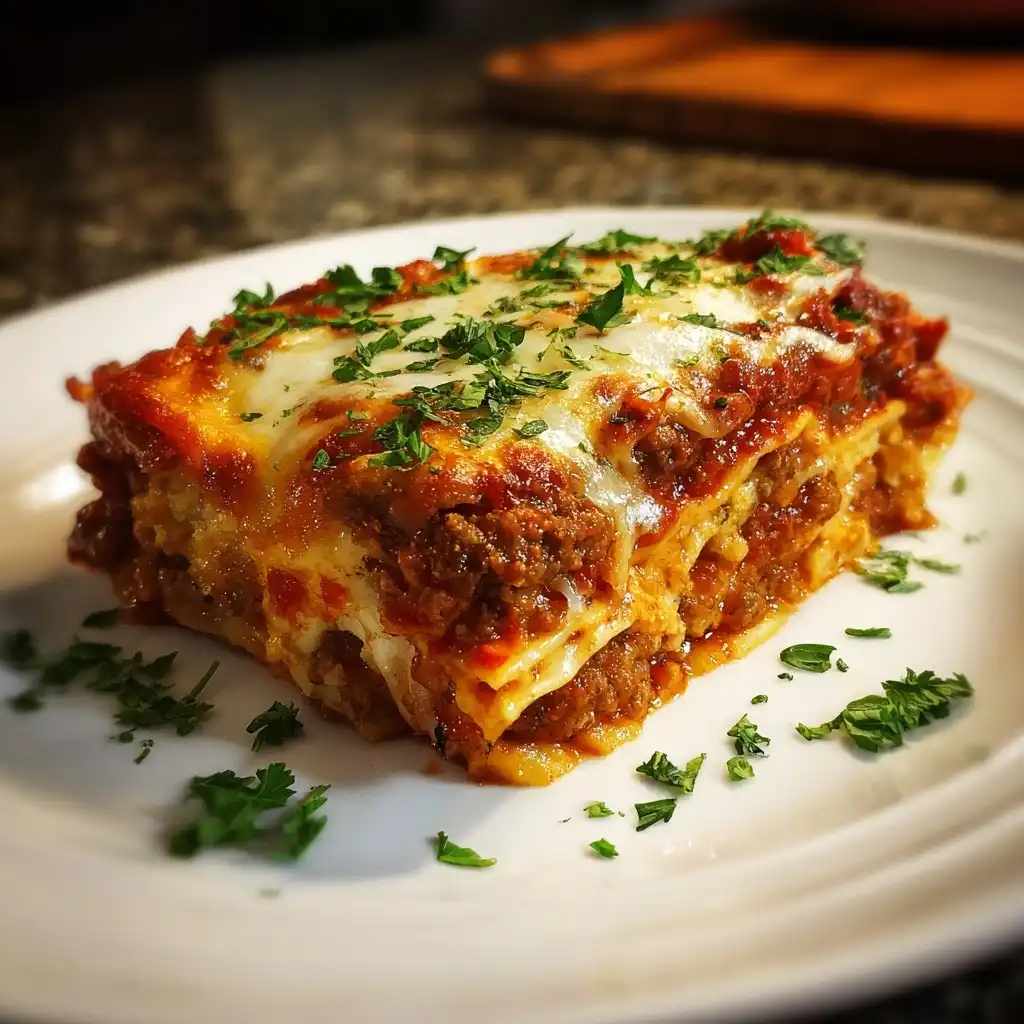
Italian Sausage-Free Classic Lasagna is a rich, comforting, and deeply flavorful baked pasta dish that honors the soul of traditional Italian-American cuisine—without relying on pork-based Italian sausage. This version celebrates the layered harmony of tender noodles, velvety ricotta and mozzarella cheeses, slow-simmered tomato sauce, and aromatic herbs—all while remaining accessible to those avoiding pork for dietary, religious, ethical, or health reasons. Whether you’re cooking for a family gathering, meal prepping for the week, or seeking a hearty vegetarian-adjacent (but not fully vegetarian) centerpiece, this lasagna delivers robust taste, satisfying texture, and culinary authenticity without compromise.
The History
Lasagna’s roots stretch back centuries—to medieval Italy, where early iterations featured layers of dough interspersed with cheese and spices, long before tomatoes arrived from the New World in the 16th century. The modern tomato-based lasagna as we know it began gaining prominence in the Emilia-Romagna and Campania regions of Italy, evolving further upon arrival in the United States with Italian immigrants in the late 19th and early 20th centuries. In American kitchens, lasagna became a beloved Sunday supper and holiday staple—often enriched with ground beef, Italian sausage, and generous amounts of cheese. However, regional variations have always existed: in Naples, lasagna al forno sometimes includes boiled eggs and provola; in Bologna, lasagne verdi features spinach-infused green noodles and rich meat ragù. The sausage-free adaptation reflects both practicality—many households didn’t regularly stock cured sausages—and inclusivity—catering to kosher, halal, or pork-averse eaters. Over time, chefs and home cooks alike discovered that depth of flavor need not rely on sausage; slow-cooked aromatics, umami-rich tomato paste, aged cheeses, and thoughtful layering could achieve equal complexity—and often greater balance.
Ingredients Breakdown
Every component in this sausage-free lasagna plays a distinct role in building flavor, texture, and structural integrity:
- Tomato Sauce Base: A double-layered foundation—starting with a soffritto of onions, carrots, and celery sautéed in olive oil, then enhanced with garlic, tomato paste (for concentrated sweetness and umami), crushed San Marzano-style tomatoes, and a splash of red wine for acidity and depth. Simmered for at least 45 minutes (ideally 2–3 hours), the sauce develops body, mellows sharpness, and deepens color.
- Protein Element: Instead of Italian sausage, we use high-quality 85/15 lean ground beef—rich enough to deliver savory mouthfeel but lean enough to prevent greasiness. Optional additions include finely minced pancetta (for pork-free umami without sausage) or plant-based crumbles (for fully pork-free and optionally vegetarian versions).
- Ricotta Mixture: Whole-milk ricotta forms the creamy, cloud-like middle layer. It’s blended with grated Parmigiano-Reggiano (aged minimum 24 months for nutty complexity), fresh mozzarella (torn, not shredded, for superior melt), egg (as binder), lemon zest (brightens richness), fresh basil and parsley (herbal lift), and a pinch of freshly grated nutmeg (a classic Italian secret for warmth and depth).
- Pasta Layers: No-boil oven-ready lasagna noodles are used for convenience and consistent texture—but they’re briefly soaked in warm milk before layering to hydrate gently and prevent chalkiness. Alternatively, traditional dried noodles can be parboiled until just pliable (al dente), drained well, and laid flat on clean kitchen towels to absorb excess moisture.
- Cheese Topping: A final crown of low-moisture whole-milk mozzarella (shredded fine for even browning) and extra Parmigiano-Reggiano ensures golden, blistered peaks and salty, caramelized edges—essential for that iconic lasagna finish.
- Aromatics & Seasonings: Freshly cracked black pepper, sea salt, dried oregano (sparingly—its potency intensifies when baked), and a bay leaf during sauce simmering round out the profile. All herbs are added at multiple stages—sautéed with vegetables, stirred into the sauce, and folded into the ricotta—for dimensional aroma.
Step-by-Step Recipe
- Prepare the Tomato-Meat Sauce: Heat 3 tbsp extra-virgin olive oil in a heavy-bottomed Dutch oven over medium heat. Add 1 finely diced yellow onion, 1 medium carrot (finely diced), and 1 rib celery (finely diced); cook 8–10 minutes until softened but not browned. Stir in 4 minced garlic cloves and cook 1 minute until fragrant. Push vegetables to the side, add 1 lb 85/15 ground beef, and break apart with a wooden spoon. Cook until no pink remains (~6 minutes), stirring occasionally. Drain excess fat if needed (leave ~1 tbsp for flavor). Stir in 3 tbsp tomato paste and cook 3 minutes, stirring constantly, until brick-red and slightly caramelized. Deglaze with ½ cup dry red wine (e.g., Chianti), scraping up browned bits. Simmer 2 minutes until alcohol evaporates. Add 28 oz canned whole San Marzano tomatoes (crushed by hand), 1 (15 oz) can tomato puree, 1 bay leaf, 1 tsp dried oregano, 1 tsp sea salt, and ½ tsp freshly ground black pepper. Bring to a gentle simmer, reduce heat to low, cover partially, and cook for 1 hour 30 minutes—stirring every 20 minutes and adjusting consistency with ¼ cup water if too thick. Remove bay leaf. Taste and adjust seasoning—add a pinch of sugar only if tomatoes taste overly acidic. Cool sauce completely (refrigerate overnight for best flavor integration).
- Make the Ricotta Cheese Filling: In a large bowl, combine 3 cups whole-milk ricotta, 1½ cups freshly grated Parmigiano-Reggiano, 1 cup fresh mozzarella (torn into small pieces), 1 large egg, 1 tbsp lemon zest, ¼ cup chopped fresh basil, 2 tbsp chopped fresh flat-leaf parsley, ¼ tsp freshly grated nutmeg, 1 tsp sea salt, and ½ tsp black pepper. Gently fold together with a spatula until homogenous—do not overmix or beat, or filling will become watery. Cover and refrigerate 30 minutes to firm.
- Prep the Noodles: If using no-boil noodles: Pour 4 cups warm whole milk into a 9×13-inch baking dish. Submerge 12 no-boil lasagna noodles (one at a time, to prevent sticking) for exactly 5 minutes. Remove with tongs, lay flat on clean kitchen towels, and pat gently to remove excess milk. If using traditional dried noodles: Bring 4 quarts salted water to boil. Cook 12 noodles 1 minute less than package directions. Drain, rinse under cold water, and lay flat on towels to dry thoroughly.
- Assemble the Lasagna: Preheat oven to 375°F (190°C). Lightly grease a 9×13-inch oven-safe baking dish (glass or ceramic preferred). Spread 1 cup cooled meat sauce evenly across bottom. Layer 4 soaked noodles (slightly overlapping if needed). Spread ⅓ of ricotta mixture (about 1¾ cups) evenly over noodles. Spoon 1¼ cups meat sauce over ricotta. Sprinkle with ⅓ cup shredded mozzarella and 2 tbsp Parmigiano-Reggiano. Repeat layers two more times (noodles → ricotta → sauce → cheese), ending with a fourth noodle layer. Top with remaining 1 cup meat sauce, spreading evenly. Finish with 1 cup shredded mozzarella and ¼ cup grated Parmigiano-Reggiano. Dot surface with 1 tbsp cold unsalted butter (optional, for extra richness and browning).
- Bake and Rest: Cover tightly with aluminum foil (tent slightly to prevent cheese from sticking). Bake 30 minutes. Remove foil and bake uncovered 20–25 minutes, until top is golden, bubbly at edges, and internal temperature reaches 165°F (74°C) when checked with an instant-read thermometer inserted into center. Let rest undisturbed for *at least 45 minutes*—this crucial step allows starches to set, prevents sliding layers, and yields clean, defined slices. For optimal texture, refrigerate assembled (unbaked) lasagna overnight, then bake covered for 45 minutes, uncovered for 25–30 minutes.
Tips
- Sauce Consistency Is Key: Your sauce should coat the back of a spoon—not run off, not clump. Too thin? Simmer uncovered longer. Too thick? Stir in 1–2 tbsp low-sodium beef or vegetable broth.
- Drain Ricotta (If Needed): If your ricotta seems watery, line a fine-mesh strainer with cheesecloth, add ricotta, and let drain in fridge 30 minutes. Discard liquid—this prevents soggy layers.
- Layer with Intention: Always spread sauces and fillings right to the edges—this seals noodle ends and prevents drying. Use an offset spatula for smooth ricotta application.
- Don’t Skip the Rest: Cutting too soon causes collapse and sauce seepage. Set a timer—it’s non-negotiable for structural integrity.
- Freeze Like a Pro: Assemble unbaked lasagna, wrap *tightly* in plastic wrap + heavy-duty foil, freeze up to 3 months. Thaw overnight in fridge before baking (add 10–15 minutes covered time).
- Reheat Without Drying: Individual portions: Cover with damp paper towel, microwave on medium power 60–90 seconds. Full pan: Cover with foil, bake at 325°F (163°C) for 25–35 minutes until heated through.
- Boost Umami Naturally: Stir 1 tsp soy sauce or ½ tsp mushroom powder into meat sauce during last 10 minutes of simmering—undetectable but deeply savory.
- Herb Timing Matters: Add delicate fresh herbs (basil, parsley) only to ricotta and final sauce layer—heat destroys their brightness. Dried oregano and bay leaf belong exclusively in the simmering sauce.
Variations and Customizations
This recipe is inherently adaptable—designed to reflect your pantry, preferences, and occasion:
- Vegetarian Lasagna: Omit beef entirely. Replace with 1½ cups cooked lentils (green or brown, simmered until tender but holding shape), 1 cup chopped cremini mushrooms (sautéed until golden), and ½ cup crumbled soft tofu (pressed and pan-seared). Boost umami with 1 tbsp nutritional yeast in ricotta.
- Gluten-Free Lasagna: Use certified GF oven-ready noodles (e.g., Barilla GF or Jovial). Soak in warm GF broth instead of milk. Ensure all sauces and cheeses are GF-certified (some ricottas contain stabilizers with gluten derivatives).
- Low-Carb/Keto Lasagna: Substitute no-boil noodles with thinly sliced zucchini or eggplant (salted, pressed 20 mins, patted dry). Reduce tomato puree by half; increase tomato paste and add 1 tbsp red wine vinegar for brightness. Use full-fat ricotta and extra cheese.
- Spicy Arrabbiata-Style: Add 1 tsp crushed red pepper flakes to soffritto. Stir in 1 tbsp Calabrian chile paste into finished sauce. Garnish baked lasagna with fresh chile oil.
- White Lasagna (Lasagna Bianca): Replace tomato sauce with a rich béchamel infused with roasted garlic, nutmeg, and white wine reduction. Use ground veal or chicken instead of beef. Fold sautéed spinach and caramelized leeks into ricotta.
- Seafood Lasagna: Swap beef for 1 cup finely chopped cooked shrimp and ½ cup chopped scallops. Use fish fumet instead of beef broth in sauce. Add dill and lemon juice to ricotta.
- Meal-Prep Friendly Mini Lasagnas: Assemble in 6 individual 8-oz ramekins. Bake covered 25 minutes, uncovered 10–12 minutes. Perfect for portion control and quick lunches.
- Gourmet Upgrade: Use house-made pasta sheets, hand-grated imported Pecorino Romano, fresh burrata in place of mozzarella in ricotta, and finish with micro basil and aged balsamic glaze.
Health Considerations and Nutritional Value
While lasagna is traditionally viewed as indulgent, this sausage-free version offers meaningful opportunities for balanced nutrition—especially when prepared mindfully:
- Reduced Saturated Fat: By omitting Italian sausage (which typically contains 15–20g saturated fat per 4 oz), total saturated fat drops significantly. Using 85/15 beef keeps flavor while limiting excess fat—further reduced by draining after browning.
- Protein Powerhouse: Each serving delivers ~24g high-quality complete protein—from beef, ricotta, mozzarella, and Parmigiano-Reggiano—supporting muscle maintenance, satiety, and metabolic health.
- Calcium & Vitamin D: Three dairy cheeses provide ~45% of daily calcium needs per serving. Opt for vitamin D-fortified ricotta or mozzarella to enhance absorption.
- Fiber & Phytonutrients: The soffritto base contributes prebiotic fiber (onion, garlic, carrots, celery) and antioxidants like lycopene (from tomatoes), especially bioavailable when cooked with olive oil.
- Sodium Awareness: Canned tomatoes and cheeses contribute sodium—control it by using no-salt-added tomatoes, low-sodium broth (if thinning sauce), and reducing added salt by 25%. Rinse canned tomatoes if needed.
- Digestibility: Soaking noodles in milk adds lactose-digestible enzymes (if using cultured buttermilk instead of plain milk) and reduces phytic acid in wheat—improving mineral absorption.
- Notable Considerations: Not suitable for strict vegetarians (contains beef), vegans, or those with dairy allergies. Gluten content depends on noodle choice. For low-FODMAP diets, substitute garlic-infused oil (remove solids) and limit onion to 1 tbsp per batch; use lactose-free ricotta and hard cheeses (Parmigiano is naturally low-lactose).
Nutrition Facts (per 1/9th of recipe, approx. 2 cups): Calories: 520 | Total Fat: 26g (Sat Fat: 13g) | Cholesterol: 115mg | Sodium: 680mg | Total Carbohydrates: 38g (Dietary Fiber: 4g, Sugars: 9g) | Protein: 24g | Calcium: 420mg | Iron: 3.2mg | Vitamin A: 18% DV | Vitamin C: 22% DV
Ingredients
- 3 tbsp extra-virgin olive oil
- 1 yellow onion, finely diced (about 1 cup)
- 1 medium carrot, finely diced (about ½ cup)
- 1 rib celery, finely diced (about ½ cup)
- 4 garlic cloves, minced
- 1 lb 85/15 lean ground beef
- 3 tbsp tomato paste
- ½ cup dry red wine (Chianti or Sangiovese)
- 1 (28 oz) can whole San Marzano tomatoes, hand-crushed
- 1 (15 oz) can tomato puree
- 1 bay leaf
- 1 tsp dried oregano
- 1 tsp sea salt (plus more to taste)
- ½ tsp freshly ground black pepper
- 4 cups whole milk (for soaking noodles)
- 12 no-boil oven-ready lasagna noodles (or 12 traditional dried noodles)
- 3 cups whole-milk ricotta cheese
- 1½ cups freshly grated Parmigiano-Reggiano (plus extra for topping)
- 1 cup fresh mozzarella, torn into small pieces (low-moisture, not fresh buffalo)
- 1 large egg
- 1 tbsp lemon zest (from 1 organic lemon)
- ¼ cup fresh basil leaves, finely chopped
- 2 tbsp fresh flat-leaf parsley, finely chopped
- ¼ tsp freshly grated nutmeg
- 1 cup shredded low-moisture mozzarella (for topping)
- ¼ cup grated Parmigiano-Reggiano (for topping)
- 1 tbsp cold unsalted butter, optional (for dotting)
Directions
- Heat olive oil in a heavy-bottomed Dutch oven over medium heat. Add onion, carrot, and celery; cook 8–10 minutes until softened. Stir in garlic; cook 1 minute.
- Add ground beef; cook until no pink remains (~6 minutes), breaking apart with spoon. Drain excess fat, leaving ~1 tbsp.
- Stir in tomato paste; cook 3 minutes until darkened and fragrant. Deglaze with red wine; simmer 2 minutes.
- Add crushed tomatoes, tomato puree, bay leaf, oregano, salt, and pepper. Bring to gentle simmer, reduce heat to low, cover partially, and cook 1 hour 30 minutes, stirring every 20 minutes. Remove bay leaf. Cool completely (preferably overnight).
- In large bowl, combine ricotta, 1½ cups Parmigiano, mozzarella, egg, lemon zest, basil, parsley, nutmeg, 1 tsp salt, and ½ tsp pepper. Fold gently. Refrigerate 30 minutes.
- Preheat oven to 375°F (190°C). Pour milk into 9×13-inch baking dish. Soak noodles 5 minutes, one at a time. Remove, lay flat on towels, pat dry.
- Grease baking dish. Spread 1 cup sauce on bottom. Layer 4 noodles. Spread ⅓ ricotta mixture. Top with 1¼ cups sauce, ⅓ cup mozzarella, 2 tbsp Parmigiano. Repeat two more times.
- Add final noodle layer. Top with remaining sauce, then 1 cup mozzarella and ¼ cup Parmigiano. Dot with butter (optional).
- Cover tightly with foil. Bake 30 minutes. Remove foil; bake 20–25 minutes until golden and bubbling.
- Rest 45 minutes before slicing. Serve with extra grated cheese and fresh basil.
FAQ
- Can I make this lasagna ahead of time?
- Absolutely. Assemble up to 24 hours ahead, cover tightly, and refrigerate. Bake as directed—add 5–10 minutes to covered time if starting cold. For longer storage, freeze unbaked (see Tips section).
- Why soak noodles in milk instead of water?
- Milk hydrates noodles more gently than water, enriching them with proteins and fats that improve tenderness and help bind layers. It also subtly enhances the dairy notes in the ricotta layer—creating a more cohesive flavor profile.
- My lasagna turned out watery—what went wrong?
- Common causes: sauce too thin (simmer longer next time), ricotta not drained, noodles not patted dry after soaking, insufficient resting time before cutting, or using fresh mozzarella with high moisture content. Always opt for low-moisture mozzarella for baking.
- Can I use cottage cheese instead of ricotta?
- Yes—with caveats. Blend 3 cups small-curd cottage cheese with ¼ cup cream cheese and 1 tbsp lemon juice until smooth. Strain through cheesecloth for 15 minutes to remove whey. Texture will be lighter, but flavor remains excellent.
- Is there a way to lighten this lasagna without sacrificing flavor?
- Try 90/10 ground beef, part-skim ricotta (drained well), and reduce cheese topping by 25%. Add 1 cup finely grated zucchini to ricotta mixture (squeeze dry first)—it adds moisture control and nutrients without detectable flavor.
- What wine pairs best with this lasagna?
- A medium-bodied, high-acid red such as Chianti Classico, Barbera d’Alba, or Montepulciano d’Abruzzo cuts through richness and complements tomato and herbs beautifully. For non-alcoholic pairing, try sparkling pomegranate-cranberry spritzer.
- Can I use a different cheese instead of Parmigiano-Reggiano?
- Pecorino Romano offers sharper saltiness; Grana Padano is milder and more affordable but still authentic. Avoid pre-grated “Parmesan” in shakers—it contains anti-caking agents and lacks depth. Always grate fresh.
- How do I prevent the top layer from burning before the center is hot?
- Ensure your oven is properly calibrated (use an oven thermometer). Tent loosely with foil again during last 10 minutes if browning too fast. Also, verify noodles are fully hydrated—under-soaked noodles absorb excessive moisture from sauce during baking, causing uneven heating.
- Can I add spinach to this lasagna?
- Yes! Sauté 10 oz fresh spinach with 1 tsp olive oil and 1 garlic clove until wilted. Squeeze *very* dry (press between towels), chop finely, and fold into ricotta mixture. Or layer thawed frozen spinach (squeezed dry) between noodles.
- What makes this “classic” rather than “authentic Italian”?
- True Italian lasagna varies by region—Bolognese uses béchamel and ragù, Neapolitan includes ricotta and mozzarella but rarely meat sauce. This version reflects Italian-American tradition: layered, cheese-forward, tomato-rich, and designed for feeding crowds—honoring heritage while embracing modern flexibility.
Summary
Italian Sausage-Free Classic Lasagna is a masterclass in layered comfort—featuring slow-simmered tomato-meat sauce, luxuriously spiced ricotta, perfectly hydrated noodles, and a golden, cheese-blistered crown—all without compromising depth, tradition, or satisfaction. Thoughtfully engineered for versatility, nutrition, and make-ahead ease, it stands as a timeless centerpiece that welcomes customization, respects dietary boundaries, and delivers unforgettable flavor in every forkful.