Introduction
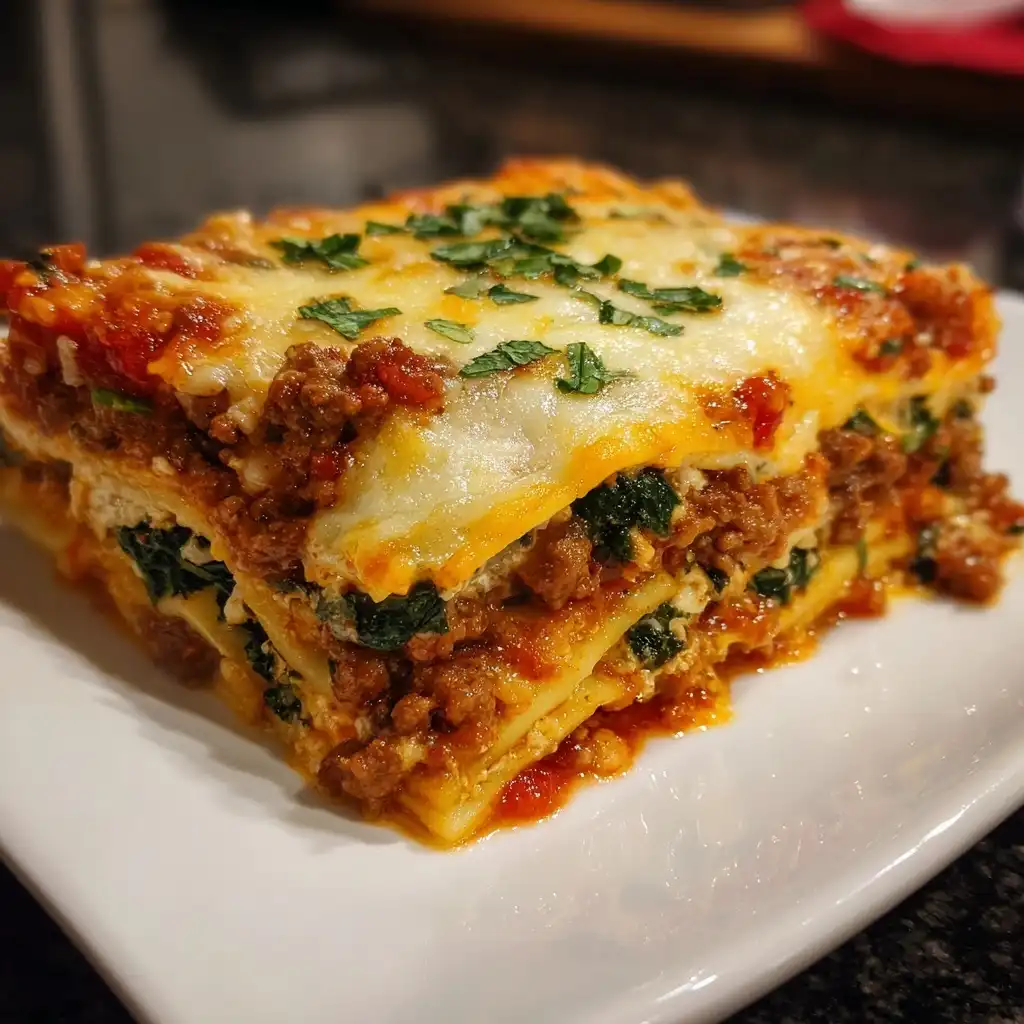
Beef and Spinach Layered Lasagna is a rich, hearty, and nutritionally balanced twist on the beloved Italian classic—elevating traditional lasagna with vibrant greens, savory ground beef, creamy ricotta, and layers of tender pasta. This dish marries rustic comfort food tradition with modern culinary sensibilities, offering depth of flavor, satisfying texture contrast, and a surprising boost of iron, folate, and antioxidants from fresh spinach. Whether served at a Sunday family dinner, a holiday gathering, or meal-prepped for weekday ease, this layered masterpiece delivers restaurant-quality satisfaction in every bite—without requiring professional kitchen skills. Its adaptability makes it equally suited for weeknight efficiency or celebratory indulgence, while its generous layers invite customization based on dietary preferences, seasonal produce, or pantry availability.
The History
Lasagna’s origins trace back to medieval Italy—specifically 13th-century Emilia-Romagna—where early versions featured sheets of dough layered with spices, cheese, and sometimes minced meats, baked in wood-fired ovens. The word “lasagna” itself derives from the Greek “laganon,” referring to flat sheets of pasta cut from rolled dough. While the iconic tomato-based red sauce didn’t appear until after tomatoes were introduced from the Americas in the 16th century—and only became widespread in Italian cooking by the late 18th century—the foundational concept of layered pasta endured. Spinach entered Italian pasta dishes more gradually, gaining popularity in the 19th and early 20th centuries as regional cooks in Liguria and Tuscany began incorporating wild and cultivated greens into fillings for ravioli, cannelloni, and baked pastas. The fusion of ground beef and spinach in lasagna reflects mid-20th-century American-Italian culinary evolution: post-WWII prosperity increased access to affordable ground beef, while home economists and cookbooks (like the 1950s-era Mastering the Art of French Cooking and later The Joy of Cooking) encouraged vegetable integration for nutritional balance. Today, Beef and Spinach Layered Lasagna stands as a transatlantic homage—honoring Italian technique, embracing American resourcefulness, and responding to contemporary wellness trends without sacrificing soul-warming decadence.
Ingredients Breakdown
Every component in this lasagna plays a deliberate role—not just in flavor, but in texture, moisture control, structural integrity, and nutritional synergy:
- Lasagna Noodles: Use oven-ready (no-boil) noodles for convenience and consistent absorption—or traditional dried noodles parboiled to al dente. Their starch helps bind layers and prevents dryness. Gluten-free or whole-wheat options are viable substitutes with minor hydration adjustments.
- Ground Beef (85/15 or 90/10): Provides rich umami, protein, and essential B12 and heme iron. Leaner blends reduce grease; fattier cuts enhance mouthfeel but require careful draining. Grass-fed or organic beef adds nuanced flavor and higher omega-3 content.
- Fresh Baby Spinach: Chosen over frozen for superior texture, vibrant color, and minimal added sodium or preservatives. Its high water content is mitigated by thorough wilting and squeezing—a critical step to avoid soggy layers. Rich in non-heme iron, vitamin K, lutein, and fiber.
- Ricotta Cheese: The creamy, slightly sweet backbone of the filling—its mild tang balances beef’s savoriness. Whole-milk ricotta yields optimal richness; part-skim works but may result in a drier, grainier texture. Draining excess whey ensures cohesion.
- Mozzarella (low-moisture, shredded): Melts evenly and develops a golden, stretchy crust. Fresh mozzarella di bufala can be used for luxury variation—but must be sliced and patted dry to prevent excess liquid.
- Parmigiano-Reggiano: Adds salty, nutty depth and umami complexity. Authentic DOP-certified cheese delivers unmatched crystalline texture and aroma—never substituted with pre-grated “Parmesan” (which often contains cellulose anti-caking agents).
- San Marzano Tomatoes (canned, whole or crushed): Grown in Italy’s volcanic soil, these tomatoes offer low acidity, natural sweetness, and dense flesh—ideal for slow-simmered, herb-infused sauce. Avoid generic “Italian-style” tomatoes with added citric acid or calcium chloride.
- Aromatics (onion, garlic, carrots, celery): The classic soffritto base builds aromatic foundation and subtle sweetness. Finely diced and gently sautéed, they soften the sharpness of raw onion and mellow garlic’s pungency.
- Fresh Herbs (basil, oregano, parsley): Basil adds bright, peppery sweetness; oregano lends earthy warmth; parsley contributes freshness and visual appeal. Dried herbs work in a pinch—but use ⅓ the volume (e.g., 1 tsp dried oregano = 1 tbsp fresh).
- Olive Oil (extra-virgin): Used for sautéing aromatics and finishing—its polyphenols and monounsaturated fats contribute heart-health benefits and aromatic complexity. Choose cold-pressed, early-harvest varieties for best flavor.
- Spices & Seasonings (red pepper flakes, black pepper, sea salt): Red pepper flakes add gentle heat and depth—not just spice. Coarse sea salt enhances all flavors; freshly cracked black pepper adds volatile oils that elevate aroma.
Step-by-Step Recipe
- Prep Work (30 minutes): Preheat oven to 375°F (190°C). Lightly grease a 9×13-inch deep-dish baking dish (at least 3 inches deep) with olive oil or butter. Finely dice 1 medium yellow onion, 2 cloves garlic, 1 medium carrot, and 1 rib celery. Rinse 10 oz fresh baby spinach thoroughly and spin dry in a salad spinner. Grate 1½ cups whole-milk ricotta (drain in cheesecloth if watery), shred 2 cups low-moisture mozzarella, and finely grate ¾ cup Parmigiano-Reggiano. Measure 2 tbsp fresh basil, 1 tbsp fresh oregano, and 2 tbsp fresh parsley—reserving parsley for garnish.
- Make the Sauce (25–30 minutes): Heat 2 tbsp extra-virgin olive oil in a large Dutch oven over medium heat. Add diced onion, carrot, and celery; sauté 6–8 minutes until softened but not browned. Stir in minced garlic and ¼ tsp red pepper flakes; cook 1 minute until fragrant. Add 1 lb ground beef; break apart with a wooden spoon and cook until no pink remains (8–10 minutes). Drain excess fat thoroughly using a fine-mesh strainer—do not skip. Stir in one 28-oz can San Marzano tomatoes (crushed by hand), 2 tbsp tomato paste, 1 tsp sea salt, ½ tsp black pepper, and 1 tsp dried oregano. Simmer uncovered 15–20 minutes, stirring occasionally, until thickened and deep red. Stir in 1 tbsp fresh basil and remove from heat. Cool slightly.
- Wilt & Dry the Spinach (5 minutes): In same Dutch oven (wiped clean), heat 1 tsp olive oil over medium-high. Add spinach in batches; toss constantly until fully wilted (1–2 minutes per batch). Transfer to a clean kitchen towel or cheesecloth; gather edges and squeeze *vigorously* until nearly all moisture is expelled (you’ll extract ~¼ cup liquid). Chop finely.
- Prepare the Ricotta Filling (5 minutes): In a large bowl, combine drained ricotta, 1 cup shredded mozzarella, ½ cup grated Parmigiano-Reggiano, 1 tsp sea salt, ½ tsp black pepper, 1 tbsp fresh oregano, and chopped spinach. Mix gently with a spatula until uniform—do not overmix or it will become gummy.
- Assemble the Lasagna (15 minutes): Spread 1 cup cooled meat sauce evenly across bottom of prepared dish. Place first layer of 4–5 oven-ready noodles (slightly overlapping to cover gaps). Spread ⅓ of ricotta-spinach mixture (about 1½ cups) evenly over noodles. Spoon 1¼ cups meat sauce over ricotta. Sprinkle with ⅓ of remaining mozzarella (⅔ cup) and ⅓ of remaining Parmigiano (¼ cup). Repeat layers twice more: noodles → ricotta-spinach → sauce → cheeses. Top final layer with remaining noodles, then remaining sauce (reserve ~½ cup for dotting top), followed by remaining mozzarella and Parmigiano. Dot reserved sauce over top for marbled effect.
- Bake (60–75 minutes): Cover tightly with aluminum foil (tent slightly to prevent cheese sticking). Bake 45 minutes. Remove foil; bake uncovered 15–25 minutes until top is deeply golden, bubbling at edges, and internal temperature reaches 165°F (74°C) when checked with an instant-read thermometer inserted into center. Rotate pan halfway through uncovered baking for even browning.
- Rest & Serve (20–30 minutes): Remove from oven and let rest *undisturbed* for full 20 minutes—this allows layers to set, prevents collapse, and improves slice integrity. Garnish with reserved fresh parsley before serving. Cut with a sharp chef’s knife dipped in hot water for clean edges.
Tips
- Prevent Sogginess: Squeeze spinach until bone-dry—even drier than you think necessary. Drain meat sauce well and simmer until thick enough to mound on a spoon. Let lasagna rest 20+ minutes before cutting.
- Noodle Perfection: If using traditional noodles, boil only 2 minutes less than package directions—al dente is crucial. Rinse under cold water and lay flat on parchment to prevent sticking.
- Cheese Strategy: Combine mozzarella and Parmigiano in the ricotta layer for creaminess *and* flavor depth. Reserve extra Parmigiano for topping—it browns beautifully and adds umami punch.
- Sauce Consistency: Too thin? Simmer longer or stir in 1 tsp cornstarch slurry (1 tsp cornstarch + 1 tbsp water). Too thick? Add 1–2 tbsp low-sodium broth or pasta water.
- Oven Variance: Convection ovens reduce bake time by ~15%. Check at 50 minutes covered. Glass dishes retain heat longer—reduce temp by 25°F if substituting.
- Flavor Boosters: Deglaze the meat pan with ¼ cup dry red wine before adding tomatoes. Stir 1 tsp balsamic vinegar into sauce at end of simmer for brightness. Add 1 anchovy fillet (melted into oil) for stealth umami.
- Cutting Clean Slices: Use a serrated knife for initial cut, then wipe blade between slices. For party presentation, serve with a metal cake server and offset spatula.
- Make-Ahead Magic: Assemble up to 24 hours ahead; refrigerate covered. Add 10–15 minutes to covered bake time. Or freeze unbaked lasagna (wrapped in foil + plastic) up to 3 months—thaw overnight before baking.
Variations and Customizations
- Vegetarian Version: Replace beef with 1½ cups cooked lentils (green or brown), 1 cup crumbled tempeh sautéed in tamari, or a blend of finely chopped portobello mushrooms + walnuts for “meaty” texture. Boost umami with 1 tbsp soy sauce or miso paste in sauce.
- Low-Carb/Keto: Substitute no-boil lasagna noodles with thinly sliced zucchini (salted, pressed, and blotted), eggplant (sliced, salted, grilled), or roasted cabbage leaves. Increase cheese and add heavy cream to ricotta for richness.
- Gluten-Free: Use certified GF oven-ready noodles (Barilla or Tinkyada). Ensure tomato sauce and seasonings are GF-certified (some brands use wheat-based thickeners).
- Mediterranean Twist: Swap spinach for chopped Swiss chard or kale; add crumbled feta, kalamata olives, and lemon zest to ricotta. Use oregano and mint instead of basil.
- Spicy Arrabbiata Style: Double red pepper flakes, add 1 tsp smoked paprika to sauce, and stir 1 tbsp harissa into ricotta mixture.
- Creamy White Lasagna: Omit tomatoes entirely. Build sauce with béchamel (made with whole milk, nutmeg, white pepper), caramelized onions, and roasted garlic. Pair with spinach-ricotta and fontina cheese.
- Weeknight Express: Use high-quality jarred marinara (look for <5g sugar/serving), pre-minced garlic, and frozen chopped spinach (thawed & squeezed). Reduce simmer time to 5 minutes. Assemble and bake same day.
- Gourmet Upgrade: Use house-made pasta sheets, grass-fed beef blended with veal and pork, house-preserved San Marzano tomatoes, and aged Pecorino Romano in place of half the Parmigiano.
- Kid-Friendly: Hide spinach in ricotta by blending it into a smooth purée. Add a layer of mild provolone between noodles. Serve with garlic bread and side salad.
- Vegan Option: Use tofu ricotta (blended firm tofu + lemon juice + nutritional yeast + garlic), cashew mozzarella shreds, and lentil-walnut “beef.” Replace cheese sauce with roasted red pepper and almond cream.
Health Considerations and Nutritional Value
A single 1-cup serving (approx. 1/12 of recipe) provides approximately:
- Calories: 385 kcal
- Protein: 24 g (excellent source—supports muscle repair, satiety, and metabolic health)
- Fat: 18 g (mostly unsaturated from olive oil and cheese; includes conjugated linoleic acid [CLA] from dairy)
- Carbohydrates: 32 g (complex carbs from whole-grain noodles optional; fiber ~4 g from spinach, tomatoes, and veggies)
- Fiber: 4 g (20% DV—supports gut microbiome, cholesterol management, and blood sugar stability)
- Iron: 3.2 mg (18% DV non-heme + 1.5 mg heme iron from beef—enhanced absorption when paired with vitamin C from tomatoes and herbs)
- Calcium: 320 mg (25% DV—critical for bone density, nerve signaling, and muscle contraction)
- Vitamin K: 120 mcg (100% DV—essential for blood clotting and bone metabolism; spinach is among richest dietary sources)
- Folate: 85 mcg (21% DV—vital for DNA synthesis and especially important during pregnancy)
- Lycopene: ~12 mg (bioavailable form enhanced by olive oil and cooking—potent antioxidant linked to reduced prostate cancer and cardiovascular risk)
Dietary Notes: Naturally low in added sugars (<1g/serving); moderate sodium (520mg—reduced by using low-sodium broth and limiting added salt). To lower saturated fat, opt for 93% lean beef and part-skim ricotta—but note flavor and texture trade-offs. For lactose sensitivity, aged Parmigiano contains negligible lactose; consider lactase enzyme supplements or small servings. Those with hypertension should monitor sodium via low-salt cheese options and omit added salt in sauce.
Ingredients
- 2 tbsp extra-virgin olive oil, plus more for greasing
- 1 medium yellow onion, finely diced
- 2 cloves garlic, minced
- 1 medium carrot, finely diced
- 1 rib celery, finely diced
- 1 lb 85/15 ground beef (grass-fed preferred)
- One 28-oz can San Marzano whole peeled tomatoes, hand-crushed
- 2 tbsp tomato paste
- 1 tsp sea salt (plus more to taste)
- ½ tsp freshly cracked black pepper
- 1 tsp dried oregano
- ¼ tsp red pepper flakes
- 10 oz fresh baby spinach, rinsed and spun dry
- 1½ cups whole-milk ricotta cheese, drained
- 2 cups low-moisture mozzarella cheese, shredded (divided)
- ¾ cup Parmigiano-Reggiano cheese, finely grated (divided)
- 1 tbsp fresh oregano, chopped
- 2 tbsp fresh basil, chopped (plus extra for garnish)
- 2 tbsp fresh parsley, chopped (for garnish)
- 12 oven-ready lasagna noodles (or 12 traditional noodles, boiled al dente)
Directions
- Preheat oven to 375°F (190°C). Grease a 9×13-inch baking dish (3-inch depth minimum) with olive oil.
- In a large Dutch oven, heat 2 tbsp olive oil over medium heat. Sauté onion, carrot, and celery until soft (6–8 min). Add garlic and red pepper flakes; cook 1 min.
- Add ground beef; cook until browned and crumbled. Drain fat thoroughly using a fine-mesh strainer.
- Stir in crushed tomatoes, tomato paste, 1 tsp salt, ½ tsp pepper, and 1 tsp dried oregano. Simmer uncovered 15–20 min until thickened. Stir in 1 tbsp fresh basil. Remove from heat; cool slightly.
- In same pot, heat 1 tsp oil. Wilt spinach in batches over medium-high heat (1–2 min each). Transfer to towel; squeeze *vigorously* until dry. Chop finely.
- In a bowl, combine ricotta, 1 cup mozzarella, ½ cup Parmigiano, 1 tsp salt, ½ tsp pepper, 1 tbsp fresh oregano, and chopped spinach. Mix gently.
- Spread 1 cup meat sauce in bottom of dish. Layer 4–5 noodles. Spread ⅓ ricotta mixture. Top with 1¼ cups sauce, then ⅓ each remaining mozzarella and Parmigiano. Repeat twice. Top with final noodles, remaining sauce (dot with extra), and remaining cheeses.
- Cover tightly with foil. Bake 45 min. Uncover; bake 15–25 min until golden and bubbling (165°F internal temp). Rest 20 min before slicing. Garnish with parsley.
FAQ
- Can I make this lasagna ahead of time?
- Yes! Assemble up to 24 hours in advance and refrigerate, covered. Add 10–15 minutes to covered bake time. For longer storage, freeze unbaked lasagna (wrap tightly in foil + plastic wrap) up to 3 months. Thaw overnight in fridge before baking.
- Why does my lasagna turn out watery?
- Most commonly due to insufficiently drained spinach or under-reduced sauce. Always squeeze wilted spinach until completely dry—and press firmly with both hands. Simmer sauce until thick enough to coat the back of a spoon and leave a clear trail when dragged with a finger. Also ensure noodles are not overcooked (if using traditional).
- Can I substitute cottage cheese for ricotta?
- You can—but texture and flavor differ significantly. Full-fat small-curd cottage cheese, blended until smooth with a splash of cream and a pinch of lemon juice, mimics ricotta best. Low-fat or large-curd versions yield a grainy, wet filling. Drain cottage cheese in cheesecloth for 30 minutes before blending.
- Is it okay to use frozen spinach?
- Yes—with caveats. Thaw completely, then squeeze *extremely* well—frozen spinach holds far more water than fresh. Use 10 oz frozen (thawed & squeezed) to replace 10 oz fresh. You may need to reduce sauce liquid slightly.
- How do I reheat leftover lasagna without drying it out?
- Individual portions: Cover with damp paper towel and microwave at 50% power in 60-second intervals until heated through. Full pan: Cover with foil and bake at 350°F for 20–25 minutes. Add 2 tbsp broth or water to pan before covering if dry.
- Can I use gluten-free noodles successfully?
- Absolutely—choose reputable oven-ready GF brands (like Barilla or Tinkyada). They absorb more liquid, so add ¼ cup extra sauce between layers or reduce bake time by 5 minutes. Let rest 30 minutes before cutting for best structure.
- What wine pairs well with this lasagna?
- A medium-bodied Italian red complements beautifully: Chianti Classico (bright acidity cuts richness), Barbera d’Asti (juicy cherry notes), or Nero d’Avola (earthy depth). For white lovers, try an oak-aged Vermentino or lightly chilled Rosso di Montalcino.
- My cheese didn’t brown on top—what went wrong?
- Common causes: Oven not hot enough, foil left on too long, or cheese applied too thinly. Ensure oven is fully preheated. Remove foil with at least 15 minutes remaining. Pat cheese dry before sprinkling, and use low-moisture mozzarella—not fresh. A brief broil (1–2 min) at end works—but watch closely!
- Can I add other vegetables?
- Yes! Roasted zucchini, sautéed mushrooms, caramelized onions, or grated butternut squash integrate seamlessly. Pre-cook high-moisture veggies and drain well. For kale or chard, blanch first to soften fibrous stems.
- How long does leftover lasagna last?
- Refrigerated (covered): Up to 5 days. Frozen (in airtight container): Up to 3 months. Reheat thoroughly to 165°F. Freeze individual portions for easy lunches.
Summary
Beef and Spinach Layered Lasagna is a masterful fusion of Italian tradition and nutrient-dense modernity—offering robust flavor, textural harmony, and wholesome nourishment in every layered bite. With meticulous attention to moisture control, balanced seasoning, and thoughtful ingredient selection, it transforms humble staples into a celebratory, family-centered centerpiece worthy of any occasion.