Introduction
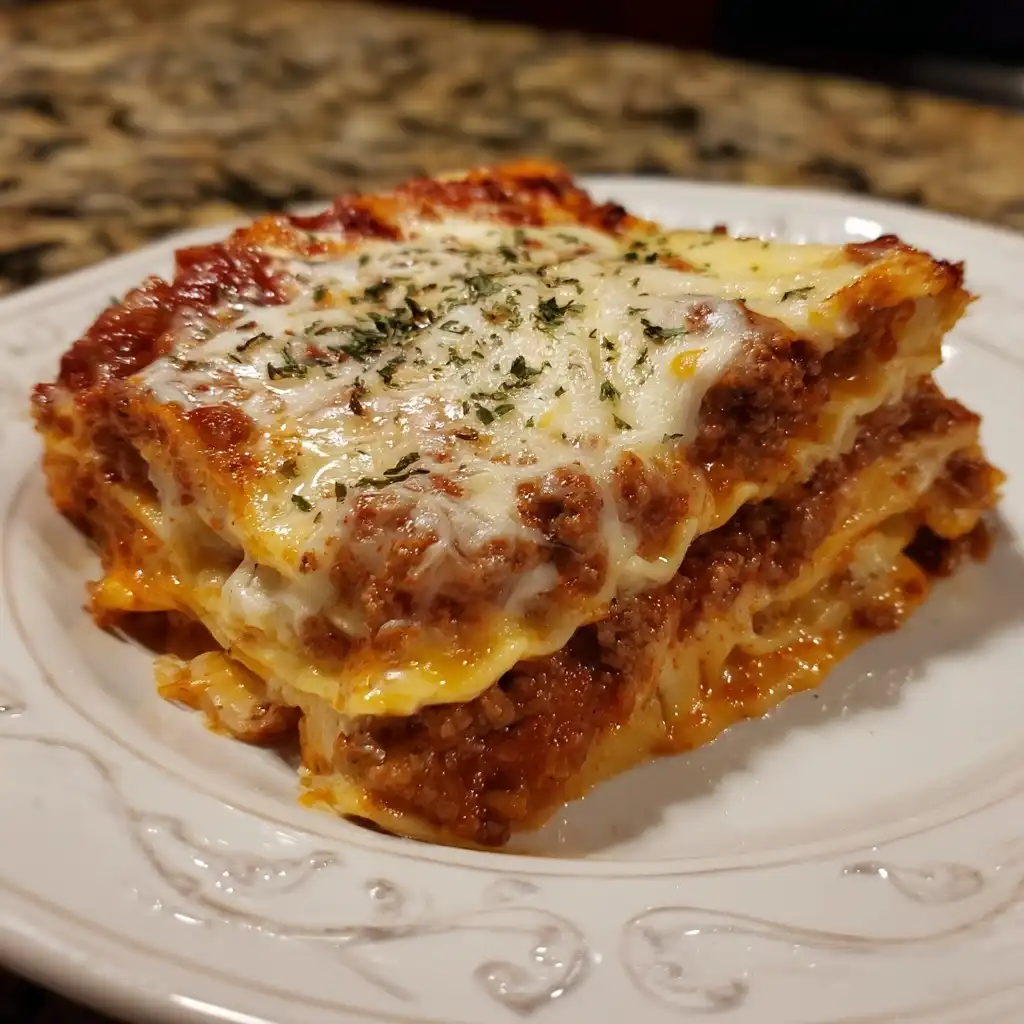
There’s a reason Italian Grandma Style Beef Lasagna isn’t just a dish—it’s a memory, a hug on a plate, a symphony of slow-simmered love and generations-old intuition. This isn’t the quick-weeknight lasagna you throw together with jarred sauce and no-boil noodles. No—this is the kind that fills your kitchen with the deep, caramelized aroma of onions sizzling in olive oil, the rich perfume of simmering tomatoes and herbs, and the comforting warmth of freshly grated Parmigiano-Reggiano melting into golden, bubbling layers. It’s the lasagna served at Sunday lunches where cousins argue over who gets the corner piece (crispy edges are non-negotiable), where Nonna tastes the sauce with her wooden spoon—and then adds *just one more pinch* of sugar—not because it needs sweetness, but because balance is sacred. This recipe honors the soul of Italian home cooking: unpretentious, generous, deeply flavorful, and built on patience, respect for ingredients, and the quiet confidence that comes from making something the same way, year after year, until it becomes part of your family’s DNA.
The History
Lasagna’s roots stretch back centuries—far beyond the red-and-white checked tablecloths of American pizzerias. Its earliest known ancestor appears in the 13th-century English cookbook Libellus de Arte Coquinaria, which features a layered pasta dish called “losenges” made with sheets of dough, cheese, and spices. But Italy truly claimed lasagna as its own during the Middle Ages, particularly in Emilia-Romagna—the fertile heartland of Bologna, Parma, and Modena. There, lasagne al forno evolved into a celebratory dish for feast days, weddings, and Easter, using locally abundant ingredients: fresh egg pasta ribbons (sfoglia), rich ricotta from pasture-fed cows, aged Parmigiano-Reggiano from mountain dairies, and slow-cooked ragù alla bolognese—a meat-based sauce so revered it earned Protected Geographical Indication (PGI) status from the European Union. The version we know today as “Italian Grandma Style Beef Lasagna” is an affectionate amalgamation—born in post-war Italian-American kitchens where scarcity gave way to abundance, and where resourceful grandmothers adapted traditional techniques using accessible ingredients like ground beef (rather than the classic mix of beef and pork), mozzarella for meltiness, and tomato passata enriched with a splash of whole milk for silkiness. It’s not “inauthentic”—it’s evolution with reverence. Every layer tells a story of migration, adaptation, and the enduring power of food to carry identity across oceans and decades.
Ingredients Breakdown
True Italian Grandma Style Lasagna doesn’t rely on shortcuts or mystery ingredients—it relies on *quality*, *balance*, and *intention*. Each component plays a precise role in texture, moisture control, umami depth, and aromatic harmony:
- Pasta Sheets: Freshly made sfoglia is ideal—but for authenticity *and* practicality, high-quality dried no-boil lasagna noodles (like Barilla or De Cecco) are used here. They absorb liquid without turning mushy, thanks to their durum wheat semolina content and proper thickness. Avoid ultra-thin “oven-ready” varieties—they disintegrate. Traditionalists may parboil fresh sheets for 90 seconds; we skip it for ease—but ensure your sauce is adequately hydrated.
- Beef & Pork Ragù: A 70/30 blend of lean ground beef and fatty ground pork delivers both robust flavor and essential fat for richness and moisture. The pork adds sweetness and depth that beef alone lacks. Never skip the soffritto base (onion, carrot, celery)—it’s the aromatic foundation. Tomato paste is toasted to deepen its umami and cut raw acidity. A splash of dry red wine (Chianti or Sangiovese) deglazes the pan and adds tannic complexity that mellows beautifully during the long simmer.
- Tomato Component: San Marzano DOP-certified crushed tomatoes provide the ideal balance of sweetness, acidity, and low seed-to-flesh ratio. We use both crushed tomatoes *and* a small amount of high-quality tomato passata (strained puree) for body and silkiness—never ketchup, paste-only sauces, or overly herbaceous marinara.
- Ricotta Mixture: Whole-milk ricotta is non-negotiable—low-fat versions separate and become grainy. It’s blended with eggs (for binding), freshly grated Parmigiano-Reggiano (not pre-grated—its cellulose coating prevents melting), a whisper of nutmeg (a classic Italian touch that enhances dairy without tasting “spicy”), and a handful of chopped fresh parsley for brightness and color contrast.
- Cheese Layer: Mozzarella di bufala is luxurious—but for reliable melt and browning, we use fresh mozzarella *fior di latte* (cow’s milk), torn by hand to preserve its delicate structure and release less water than shredded. A final snowfall of finely grated Parmigiano-Reggiano provides salt, crunch, and that unmistakable nutty finish.
- Herbs & Seasoning: Fresh basil is added only at the end—cooking it dulls its volatile oils. Bay leaves and a single sprig of rosemary simmer in the ragù for subtle earthiness but are removed before assembly. Salt is added in stages: to the soffritto, to the ragù as it simmers, and finally to the ricotta—never all at once. Black pepper is freshly cracked at the end, never cooked into the sauce.
Step-by-Step Recipe
- Prepare the Soffritto: In a heavy-bottomed Dutch oven or large saucepan, heat 3 tbsp extra-virgin olive oil over medium-low heat. Add 1 finely diced yellow onion, 1 finely diced medium carrot, and 1 finely diced medium celery stalk (the classic soffritto). Cook gently—stirring frequently—for 12–15 minutes until softened, translucent, and fragrant, but *not browned*. This slow sweat builds foundational sweetness.
- Bloom the Tomato Paste: Push vegetables to the edges. Add 3 tbsp double-concentrated tomato paste to the center. Cook, stirring constantly, for 4–5 minutes until it darkens to brick-red and smells sweet and roasted—not burnt. This step unlocks deep umami and eliminates raw tomato tang.
- Sear the Meats: Increase heat to medium-high. Add 1 lb 85% lean ground beef and ½ lb ground pork. Break apart with a wooden spoon and cook until no pink remains and fat begins to render (8–10 min). Stir frequently to prevent clumping. Season lightly with 1 tsp kosher salt and several grinds of black pepper.
- Deglaze & Build Flavor: Pour in ½ cup dry red wine. Scrape up all browned bits from the bottom. Simmer vigorously until wine is nearly evaporated (3–4 min). Add 2 minced garlic cloves; cook 30 seconds until fragrant.
- Simmer the Ragù: Stir in 28 oz San Marzano DOP crushed tomatoes, ½ cup tomato passata, 2 bay leaves, and 1 small rosemary sprig. Bring to a gentle simmer, then reduce heat to the lowest possible setting. Partially cover and cook for *at least 2 hours*, stirring every 20 minutes. For true depth, simmer up to 4 hours—adding splashes of water or low-sodium beef broth if it thickens too much. Discard bay leaves and rosemary. Taste and adjust seasoning: add up to 1 tsp sugar *only if needed* to balance acidity. Let cool slightly—ragù should be thick, glossy, and cling to a spoon.
- Prepare Ricotta Filling: In a large bowl, combine 3 cups whole-milk ricotta, 2 large eggs, 1 cup freshly grated Parmigiano-Reggiano, ¼ tsp freshly grated nutmeg, ¼ cup finely chopped fresh flat-leaf parsley, ½ tsp kosher salt, and several grinds of black pepper. Mix gently with a fork until just combined—do not overmix or whip air in.
- Assemble with Care: Preheat oven to 375°F (190°C). Grease a 9×13-inch deep baking dish (at least 3-inch sides) with olive oil or butter. Spread 1 cup ragù evenly on the bottom. Place 4 no-boil lasagna noodles side-by-side (slight overlap is fine). Top with ⅓ of remaining ragù (approx. 1¾ cups), spreading gently. Dollop ⅓ of ricotta mixture (about 1¼ cups) over sauce and spread *lightly* with an offset spatula—don’t press down. Sprinkle with ⅓ of 8 oz fresh mozzarella (torn, not shredded) and 2 tbsp grated Parmigiano-Reggiano. Repeat layers two more times (noodles → ragù → ricotta → mozzarella → Parmigiano). Finish with a final layer of 4 noodles, remaining ragù (reserve ½ cup for top), remaining ricotta mixture smoothed evenly, and remaining mozzarella and Parmigiano. Drizzle reserved ½ cup ragù over the very top in thin ribbons—it creates beautiful marbled browning.
- Bake with Patience: Cover tightly with greased aluminum foil (oil prevents sticking). Bake for 35 minutes. Remove foil. Rotate pan. Continue baking uncovered for 25–30 minutes until top is deeply golden, edges are bubbling vigorously, and internal temperature reaches 165°F (74°C) when checked with an instant-read thermometer inserted into the center. The surface should look set—not soupy—but still slightly jiggly beneath the crust.
- Rest—Non-Negotiable: Remove from oven and let rest *undisturbed* for a full 30 minutes. This allows starches to set, cheeses to re-emulsify, and layers to firm up enough to slice cleanly. Cutting too soon yields a beautiful, delicious, *runny* mess. Trust the rest.
- Serve with Soul: Garnish generously with fresh basil ribbons and an extra flourish of grated Parmigiano-Reggiano. Serve with a simple arugula salad dressed in lemon juice, olive oil, and shaved Parmigiano—and a bold Chianti Classico or Barbera d’Asti.
Tips
- Texture Control is Everything: If your ragù seems too thick before assembly, stir in 2–3 tbsp whole milk or low-sodium broth—it adds silkiness and prevents dryness. Too thin? Simmer uncovered 5–10 minutes more. The ideal consistency should mound on a spoon without dripping.
- No-Boil Noodle Hack: For foolproof tenderness, briefly soak no-boil noodles in warm (not hot) water for 15–20 seconds before layering—just enough to hydrate the surface. Pat dry with paper towels to prevent excess water in the pan.
- Prevent Soggy Bottoms: Always spread a thin, even layer of ragù on the bottom of the dish *before* the first noodle layer. This creates a barrier and infuses flavor into the base sheet.
- Grate Your Own Cheese: Pre-grated cheeses contain anti-caking agents (like cellulose) that inhibit melting and cause graininess. Grating Parmigiano-Reggiano and mozzarella fresh ensures creamy integration and superior browning.
- Oven Thermometer Required: Most home ovens run hot or cold. An inexpensive oven thermometer ensures accurate baking temps—critical for even cooking and preventing burnt tops or undercooked centers.
- Layering Order Matters: Always place ricotta *over* the ragù—not under it. Ragù’s acidity can curdle ricotta if direct contact occurs without a buffer. The noodle layer acts as that buffer.
- Cool Before Refrigerating: If making ahead, cool completely to room temperature (2 hours max), then refrigerate covered for up to 2 days—or freeze unbaked for up to 3 months. Thaw overnight in fridge before baking.
- The “Corner Piece” Secret: For extra-crispy edges, bake in a well-seasoned cast-iron lasagna pan—or line the corners of your baking dish with parchment paper folded into triangles before greasing. They lift slightly, maximizing surface exposure.
Variations and Customizations
While tradition is cherished, Italian home cooking has always welcomed thoughtful adaptation—especially when guided by seasonality, dietary needs, or regional pride. Here are beloved, tested variations that honor the spirit without compromising integrity:
- Vegetarian “Nonna’s Garden” Lasagna: Replace meat with 2 cups finely chopped cremini mushrooms (sautéed until golden), 1 cup cooked lentils (brown or green), and ½ cup crumbled aged Pecorino Toscano. Boost umami with 1 tbsp soy sauce or tamari in the ragù base. Add roasted zucchini ribbons and sautéed spinach to ricotta layer.
- Seafood Lasagna (Lasagna ai Frutti di Mare): Swap ragù for a light, garlicky white wine–tomato broth with shrimp, calamari, mussels, and clams. Use a delicate béchamel instead of ricotta, enriched with lemon zest and fresh dill. Layer with thin slices of firm white fish (halibut or cod).
- Gluten-Free Grandmother Style: Use certified GF no-boil lasagna noodles (Tinkyada or Jovial). Ensure all sauces and cheeses are GF-certified. Add 1 tbsp psyllium husk to ricotta mixture to improve binding and moisture retention.
- Keto-Friendly “Noodleless” Lasagna: Replace noodles with thinly sliced, roasted eggplant or zucchini (salted, pressed, and patted dry). Use a richer ragù (more pork fat) and increase cheese ratio. Bake longer to evaporate veggie moisture—up to 1 hour covered, 20 min uncovered.
- “Sunday Supper” Upscale Version: Substitute ragù with slow-braised short rib ragù (shredded meat + reduced braising liquid). Use house-made pasta sheets. Layer with burrata instead of mozzarella and finish with truffle oil and micro basil.
- Spicy Calabrian Twist: Add 1–2 finely minced Calabrian chiles (or 1 tsp crushed red pepper flakes) to the soffritto. Stir in 2 tbsp chopped preserved lemon rind to the ricotta for bright acidity.
- Make-Ahead Freezer Method: Assemble fully, wrap *tightly* in plastic wrap + foil, and freeze up to 3 months. To bake: thaw overnight in fridge, remove plastic, cover with fresh foil, and bake 15 minutes longer than directed—then uncover and finish as usual.
Health Considerations and Nutritional Value
Italian Grandma Style Beef Lasagna is inherently nutrient-dense—not “health food,” but *whole-food nourishment* rooted in Mediterranean principles. A typical serving (1/8 of a 9×13 pan, approx. 2 cups) contains approximately:
- Calories: 520–580 kcal (varies with cheese/meat ratios)
- Protein: 32–38g (high-quality complete protein from beef, pork, eggs, ricotta, and Parmigiano)
- Fat: 24–28g (predominantly monounsaturated from olive oil and saturated from cheese—balanced within context of a varied diet)
- Carbohydrates: 42–48g (complex carbs from durum wheat pasta; low glycemic impact due to high protein/fat content slowing digestion)
- Fiber: 4–6g (from vegetables in soffritto and tomatoes)
- Vitamins & Minerals: Rich in calcium (cheese), iron (beef), lycopene (cooked tomatoes—bioavailability increased by olive oil), vitamin A (carrots), and B12 (animal products). Ricotta contributes whey protein and selenium.
Dietary Notes:
- Sodium: Naturally moderate—most sodium comes from cheese and tomatoes. Reduce added salt by 25% and rely on herbs, garlic, and slow-simmered depth for flavor. Use low-sodium broth if extending ragù.
- Digestibility: The long simmer breaks down collagen into gelatin, aiding gut health and nutrient absorption. Using whole-milk ricotta (not low-fat) supports satiety and slows glucose response.
- Gluten Sensitivity: As noted above, easily adapted with certified GF noodles and verification of all packaged ingredients.
- Heart Health: Olive oil as the primary fat, lycopene-rich tomatoes, and leaner meat blends align with cardioprotective Mediterranean patterns. Portion control and pairing with leafy greens enhance benefits.
- For Diabetics: The high-protein, high-fat matrix significantly blunts blood sugar spikes compared to pasta dishes without cheese/meat. Monitor portion size and pair with non-starchy vegetables.
Remember: Nutrition is holistic. This lasagna shines not in isolation—but as part of a meal centered on connection, mindful eating, and joyful abundance.
Ingredients
- 3 tbsp extra-virgin olive oil (plus more for greasing)
- 1 medium yellow onion, finely diced
- 1 medium carrot, finely diced
- 1 medium celery stalk, finely diced
- 3 tbsp double-concentrated tomato paste
- 1 lb 85% lean ground beef
- ½ lb ground pork
- 1 tsp kosher salt (plus more to taste)
- Freshly ground black pepper
- ½ cup dry red wine (Chianti, Sangiovese, or Barbera)
- 2 garlic cloves, minced
- 28 oz (794 g) San Marzano DOP-certified crushed tomatoes
- ½ cup (120 ml) high-quality tomato passata (strained puree)
- 2 bay leaves
- 1 small rosemary sprig
- 1 tsp sugar (optional—only if needed for acidity balance)
- 12 no-boil lasagna noodles (high-quality durum wheat, e.g., Barilla or De Cecco)
- 3 cups (750 g) whole-milk ricotta cheese
- 2 large eggs
- 1 cup (100 g) freshly grated Parmigiano-Reggiano cheese (not pre-grated)
- ¼ tsp freshly grated nutmeg
- ¼ cup (10 g) finely chopped fresh flat-leaf parsley
- 8 oz (225 g) fresh mozzarella, torn into small pieces (not shredded)
- ¼ cup (25 g) additional freshly grated Parmigiano-Reggiano for topping
- Fresh basil leaves, for garnish
Directions
- Heat olive oil in a heavy-bottomed Dutch oven over medium-low heat. Add onion, carrot, and celery. Cook gently, stirring often, for 12–15 minutes until soft and fragrant but not browned.
- Add tomato paste to center of pot. Cook, stirring constantly, for 4–5 minutes until darkened and aromatic.
- Increase heat to medium-high. Add ground beef and pork. Cook, breaking apart with a wooden spoon, until no pink remains and fat renders (8–10 minutes). Season with 1 tsp salt and several grinds of black pepper.
- Pour in red wine. Scrape up browned bits. Simmer until wine nearly evaporates (3–4 minutes). Stir in garlic; cook 30 seconds.
- Add crushed tomatoes, passata, bay leaves, and rosemary. Bring to a gentle simmer, then reduce heat to lowest setting. Partially cover and simmer for 2–4 hours, stirring every 20 minutes. Add splashes of water or broth if too thick. Discard bay leaves and rosemary. Cool slightly. Taste and adjust seasoning—add sugar only if needed.
- In a large bowl, combine ricotta, eggs, 1 cup Parmigiano-Reggiano, nutmeg, parsley, ½ tsp salt, and several grinds of black pepper. Mix gently with a fork until just combined.
- Preheat oven to 375°F (190°C). Grease a 9×13-inch baking dish (3-inch depth) with olive oil.
- Spread 1 cup ragù on bottom of dish. Layer 4 no-boil noodles. Top with ⅓ of remaining ragù (≈1¾ cups), then ⅓ of ricotta mixture (≈1¼ cups), smoothed gently. Sprinkle with ⅓ of mozzarella and 2 tbsp Parmigiano.
- Repeat layering twice more (noodles → ragù → ricotta → mozzarella → Parmigiano).
- Top with final 4 noodles. Spread remaining ragù (reserve ½ cup), then remaining ricotta. Sprinkle with remaining mozzarella and Parmigiano. Drizzle reserved ½ cup ragù in ribbons over top.
- Cover tightly with greased aluminum foil. Bake 35 minutes.
- Remove foil. Rotate pan. Bake uncovered 25–30 minutes until top is deeply golden and bubbling at edges. Internal temp should read 165°F (74°C).
- Let rest, undisturbed, for 30 minutes before slicing.
- Garnish with fresh basil and extra Parmigiano. Serve immediately.
FAQ
- Can I make this lasagna ahead of time?
- Absolutely—and it’s highly recommended! Assemble up to 2 days in advance, cover tightly, and refrigerate. Let sit at room temperature for 30 minutes before baking. For longer storage, freeze unbaked (up to 3 months). Thaw overnight in the fridge before baking—add 15 minutes covered baking time.
- Why does my lasagna turn out watery?
- Three main causes: (1) Ragù too thin—simmer longer to reduce; (2) Ricotta not well-drained—opt for whole-milk, never low-fat; (3) Skipping the rest—cutting too soon releases trapped steam and liquid. Always rest 30 minutes.
- Can I use cottage cheese instead of ricotta?
- You can—but it changes the texture significantly. Cottage cheese is looser and tangier. For best results: drain full-fat cottage cheese in a fine-mesh strainer for 30 minutes, then blend with 1 tbsp cream cheese and 1 egg to mimic ricotta’s creaminess.
- What’s the best cheese for authentic flavor?
- Use real Parmigiano-Reggiano DOP (not “Parmesan”) and fresh mozzarella di bufala or fior di latte. Pre-grated cheeses contain anti-caking agents that prevent proper melting and cause graininess.
- Can I omit the pork?
- Yes—but don’t just replace it with more beef. Add 2 tbsp pancetta or guanciale (diced and rendered) for fat and depth, or substitute with ground veal for similar tenderness and mild sweetness.
- Is no-boil lasagna really foolproof?
- Yes—if you use quality noodles and ensure your ragù is sufficiently moist. Thin, cheap no-boil noodles will disintegrate. Our method (soaking briefly + proper sauce hydration) guarantees tender, al dente layers every time.
- My oven runs hot—how do I adjust?
- Invest in an oven thermometer. If your oven runs 25°F+ hot, reduce temperature to 350°F (175°C) and extend covered baking time by 5–10 minutes. Watch closely during uncovered phase.
- Can I make individual servings?
- Yes! Use 8-oz ramekins or oven-safe mason jars. Layer in this order: ragù → noodle (broken to fit) → ragù → ricotta → mozzarella → Parmigiano. Cover with foil. Bake at 375°F for 30 minutes covered, 10 minutes uncovered. Rest 10 minutes.
- What wine pairs best with this lasagna?
- A medium-bodied, high-acid red with moderate tannins: Chianti Classico, Barbera d’Asti, Montepulciano d’Abruzzo, or a young Nebbiolo. For non-alcoholic: sparkling water with lemon and a splash of pomegranate juice for acidity and fruit.
- How do I reheat leftovers without drying them out?
- Individual portions: Cover with damp paper towel and microwave at 50% power for 90 seconds. For full pan: Cover with foil, bake at 325°F for 20–25 minutes until heated through. Drizzle 1 tbsp broth or water over top before reheating.
Summary
Italian Grandma Style Beef Lasagna is a labor of love rooted in Emilia-Romagna’s culinary legacy—transformed with warmth and wisdom in Italian-American kitchens—featuring slow-simmered beef-and-pork ragù, creamy whole-milk ricotta infused with nutmeg and parsley, tender no-boil noodles, and layers of fresh mozzarella and authentic Parmigiano-Reggiano, all baked to golden perfection and rested to sublime tenderness.