Introduction
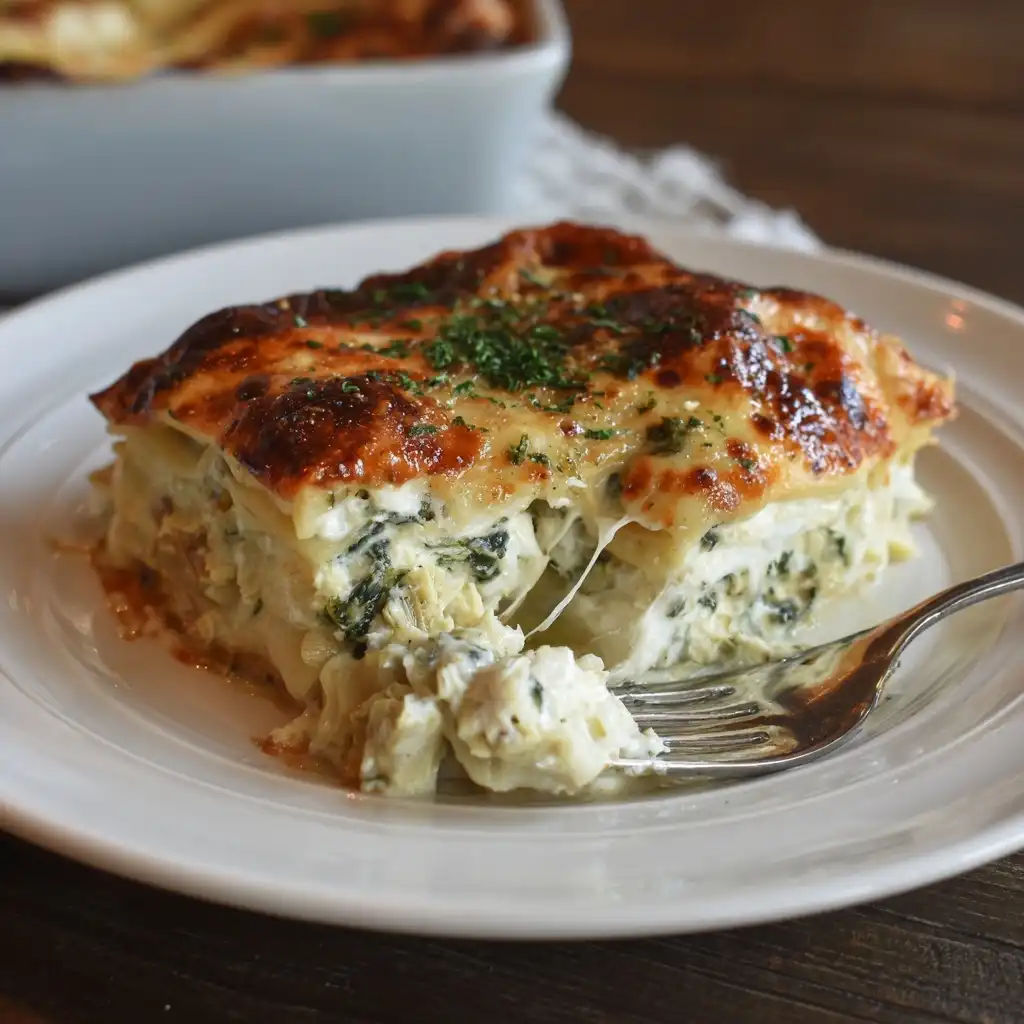
Welcome to a decadent, creamy, and utterly satisfying twist on a timeless classic—Cheesy Spinach Artichoke White Lasagna. This isn’t your grandmother’s traditional red-sauce lasagna; it’s a luscious, oven-baked masterpiece that marries the earthy depth of fresh spinach, the briny elegance of marinated artichoke hearts, and the rich, velvety embrace of a luxuriously spiced white sauce—all layered between tender, no-boil lasagna noodles and crowned with a golden, bubbling blanket of three-cheese goodness. Whether you’re hosting a holiday dinner, feeding a hungry family on a cozy Sunday night, or simply treating yourself to something extraordinary, this recipe delivers restaurant-quality flavor and texture with surprisingly approachable technique. It’s comfort food reimagined: elegant yet humble, indulgent yet balanced, and deeply flavorful without overwhelming heaviness.
The History
The origins of Cheesy Spinach Artichoke White Lasagna are rooted in culinary evolution—not ancient tradition, but modern American ingenuity. While classic Italian lasagna dates back centuries (with early versions appearing in 13th-century texts like the Liber de Coquina), the white lasagna variation emerged prominently in the mid-to-late 20th century as American home cooks began experimenting with béchamel-based layers instead of tomato sauce—inspired by northern Italian preparations like lasagne verdi alla bolognese (which often uses spinach-infused green noodles and rich meat ragù). The iconic spinach-artichoke dip—born in the 1980s at a New York City bar—became an instant sensation, and its creamy, cheesy, herb-flecked profile naturally migrated into baked pasta dishes. By the early 2000s, food magazines and blogs began fusing these two trends: swapping marinara for a garlicky, Parmesan-enriched béchamel, folding in wilted spinach and chopped artichokes, and adding layers of mozzarella, fontina, and sharp provolone for melty complexity. Today, this dish stands as a beloved staple of potlucks, bridal showers, and gourmet meal-prep services—a testament to how regional ingredients, cultural fusion, and home-kitchen creativity can transform humble components into something truly iconic.
Ingredients Breakdown
Every element in this Cheesy Spinach Artichoke White Lasagna serves a precise purpose—balancing moisture, texture, umami, acidity, and richness. Let’s explore each component in detail:
- No-Boil Lasagna Noodles (15 sheets): Engineered to hydrate fully during baking, these eliminate pre-cooking hassle while delivering consistent tenderness. Look for high-quality, durum wheat varieties—they absorb liquid without turning mushy and provide structural integrity to hold the dense, creamy filling.
- Fresh Baby Spinach (16 oz / ~10 cups loosely packed): Preferred over frozen for superior texture and vibrant color. Its mild sweetness and delicate stems cook down beautifully, adding nutrients and visual appeal without bitterness. Note: Do not substitute mature spinach—it’s tougher and more fibrous.
- Marinated Artichoke Hearts (14 oz jar, drained and finely chopped): Choose those packed in olive oil or water with herbs and garlic—not vinegar-heavy “grill-ready” varieties, which can impart unwanted tang. The marinade contributes subtle herbal notes and aromatic depth; reserve 1 tbsp of the liquid for the sauce.
- Full-Fat Ricotta Cheese (2 cups): Essential for creaminess and structure. Low-fat ricotta separates and weeps during baking. For optimal texture, drain excess whey by placing ricotta in a fine-mesh sieve over a bowl for 30 minutes—this prevents a watery layer in the finished lasagna.
- Grated Whole-Milk Mozzarella (3 cups, shredded): Provides stretch, melt, and milky sweetness. Avoid pre-shredded brands containing anti-caking agents (like cellulose), which inhibit melting and create graininess.
- Finely Grated Parmigiano-Reggiano (1 cup): Adds salty, nutty umami and helps brown the top. Authentic DOP-certified Parmigiano delivers unmatched depth—substitutes like domestic Parmesan or Romano lack the same enzymatic complexity.
- Fontina Val d’Aosta (1 cup, grated): A semi-soft Alpine cheese with buttery, earthy notes and exceptional melting properties. Its subtle nuttiness bridges the gap between mild mozzarella and sharp Parmesan—non-negotiable for nuanced flavor.
- Unsalted Butter (½ cup / 1 stick): Used in both the béchamel and the ricotta mixture. Unsalted allows precise control over sodium levels and ensures clean, rich dairy flavor.
- All-Purpose Flour (⅓ cup): Forms the roux base for the béchamel. Wondra flour is ideal for lump-free results, but standard AP flour works perfectly when whisked thoroughly and cooked long enough to remove raw taste.
- Whole Milk (3½ cups): Full fat ensures a velvety, stable sauce. Skim or 2% milk can cause separation and produce a thin, chalky texture. Warm the milk slightly before adding to the roux to prevent lumps.
- Heavy Cream (½ cup): Added at the end of béchamel preparation for luxurious mouthfeel and sheen. It also enhances browning and adds subtle sweetness.
- Freshly Ground Nutmeg (¼ tsp): A signature note in classic béchamel—warm, aromatic, and subtly sweet. Pre-ground nutmeg lacks potency and nuance; always grate fresh from the whole seed.
- Garlic (4 cloves, minced): Sautéed gently in butter to mellow pungency and build savory depth. Raw garlic would burn and turn bitter during baking.
- Shallots (1 large, finely diced): Offers delicate onion sweetness without harshness—superior to yellow onions here for subtlety and balance.
- Fresh Lemon Zest (from 1 lemon) + Juice (1 tbsp): Brightens the entire dish, cutting through richness and enhancing the artichokes’ natural brightness. Never skip—the citrus lift is transformative.
- Freshly Cracked Black Pepper (1½ tsp): Used generously in both sauce and filling. Heat activates its volatile oils, contributing warmth and complexity.
- Sea Salt (to taste, approx. 1¼ tsp total): Adjusted carefully—remember that cheeses, artichokes, and marinade contribute salt. Always season in layers, not just at the end.
- Fresh Flat-Leaf Parsley (¼ cup, finely chopped): Stirred into the ricotta mixture for freshness and color. Adds a grassy counterpoint to the richness.
- Red Pepper Flakes (¼ tsp, optional): For gentle heat—adds dimension without dominating. Toast lightly in butter before adding to the sauce to bloom flavor.
Step-by-Step Recipe
- Prep Work & Preheat: Position oven rack in the center position. Preheat oven to 375°F (190°C). Lightly grease a 9×13-inch glass or ceramic baking dish (avoid dark metal pans—they promote over-browning on edges).
- Wilt the Spinach: In a large stainless-steel skillet over medium heat, warm 1 tbsp olive oil. Add 1 minced garlic clove and 1 tsp red pepper flakes (if using); sauté 30 seconds until fragrant. Add all spinach in batches, stirring constantly until completely wilted and reduced to ~2 cups. Transfer to a clean kitchen towel or paper-towel-lined colander; squeeze *very firmly* to extract every drop of excess water. Chop finely and set aside.
- Prepare Artichokes: Drain marinated artichokes thoroughly in a fine-mesh strainer, pressing gently with the back of a spoon. Reserve 1 tbsp marinade. Finely chop artichokes (aim for pea-sized pieces) and combine with wilted spinach.
- Make the Béchamel Sauce: In a heavy-bottomed Dutch oven or saucepan, melt ½ cup (1 stick) unsalted butter over medium-low heat. Add diced shallots and 3 minced garlic cloves; cook 4–5 minutes until soft and translucent—but do *not* brown. Whisk in flour and cook, stirring constantly, for 2 full minutes to eliminate raw taste. Gradually whisk in warm whole milk, ½ cup at a time, ensuring each addition is fully incorporated before adding more. Bring to a gentle simmer, then reduce heat to low. Cook, stirring constantly with a flat-edged wooden spoon or silicone spatula, for 8–10 minutes until thickened to a pourable custard consistency (it should coat the back of a spoon and hold a clear line when you run your finger across it). Remove from heat. Whisk in heavy cream, lemon zest, lemon juice, freshly grated nutmeg, 1 tsp black pepper, and reserved artichoke marinade. Taste and adjust seasoning—add salt sparingly at this stage.
- Prepare the Ricotta Filling: In a large mixing bowl, combine drained ricotta, 1 cup mozzarella, ½ cup Parmigiano-Reggiano, ½ cup fontina, chopped parsley, remaining 1 minced garlic clove, ½ tsp black pepper, and ¼ tsp salt. Fold in the spinach-artichoke mixture until evenly distributed. Do *not* overmix—gentle folding preserves airiness.
- Assemble the Lasagna: Spread ¾ cup of the warm béchamel evenly across the bottom of the prepared baking dish. Place 5 no-boil lasagna noodles side-by-side (slight overlap is fine). Top with ⅓ of the ricotta-spinach-artichoke mixture, spreading gently to edges. Drizzle with ¾ cup béchamel. Repeat layers twice more: noodles → ricotta mixture → béchamel. For the final layer: place last 5 noodles, then spread remaining béchamel evenly over top. Sprinkle remaining cheeses—1 cup mozzarella, ½ cup Parmigiano-Reggiano, and ½ cup fontina—in an even, generous layer.
- Bake Covered: Cover tightly with heavy-duty aluminum foil (tent slightly to prevent cheese from sticking). Bake for 45 minutes.
- Bake Uncovered: Carefully remove foil. Continue baking for 20–25 minutes, until top is deeply golden, edges are bubbling vigorously, and internal temperature reaches 165°F (74°C) when checked with an instant-read thermometer inserted into the center.
- Rest Before Serving: Remove from oven and let stand, uncovered, for *full 30 minutes*. This critical step allows starches to set, prevents sliding layers, and lets flavors meld. Cutting too soon releases steam and causes structural collapse.
- Garnish & Serve: Just before serving, sprinkle with additional fresh parsley and a light dusting of lemon zest. Cut into 12 generous squares using a sharp chef’s knife dipped in hot water between cuts for clean edges.
Tips
- Drain Everything—Relentlessly: Excess moisture is the #1 cause of soggy lasagna. Squeeze spinach *until your hands ache*, press artichokes dry, drain ricotta for 30 minutes, and even pat noodles lightly with paper towels if they feel overly damp from packaging.
- Warm Your Milk: Cold milk added to hot roux creates lumps. Heat milk gently in the microwave (1½ minutes) or on the stovetop until steaming but not boiling (~110°F).
- Whisk Like Your Reputation Depends On It: Use a balloon whisk for the first 5 minutes of béchamel cooking. Switch to a flat-edged spatula afterward to scrape the bottom and corners—this prevents scorching and ensures even thickness.
- Layer with Intention: Spread fillings *beyond* the noodle edges slightly—they’ll shrink and settle. Keep béchamel layers thin and even; too much on top will pool and make the crust greasy.
- Use a Glass Dish: Ceramic and glass distribute heat more evenly than metal, yielding uniform doneness and preventing burnt bottoms. If using metal, reduce oven temp by 25°F and add 5 minutes to covered baking time.
- Double the Batch Smartly: To freeze unbaked: assemble completely, cover tightly with foil + plastic wrap, freeze up to 3 months. Thaw overnight in fridge, then bake as directed—add 10–15 minutes to covered time.
- Revive Leftovers Perfectly: Reheat individual portions in a toaster oven at 350°F for 12–15 minutes (covered with foil), or in a skillet over medium-low heat with a splash of milk—cover and stir gently until warmed through. Avoid microwaving solo—it makes noodles rubbery.
- Season in Stages: Salt the béchamel lightly, season the ricotta mixture, and finish with flaky sea salt on top before baking. Layered seasoning builds dimensional flavor far better than one big salt dump.
- Don’t Skip the Rest: That 30-minute rest isn’t optional—it’s chemistry. The béchamel’s starches retrograde, binding liquids and transforming the texture from loose to sliceable perfection.
- Golden Crust Hack: For extra browning, broil uncovered for the final 2–3 minutes—but watch *constantly*. Or brush top layer lightly with melted butter before the final bake.
Variations and Customizations
This recipe is a canvas—elegant, adaptable, and endlessly inspiring. Here are thoughtfully tested variations that maintain structural integrity and flavor harmony:
- Protein-Powered: Add 1½ cups cooked, crumbled Italian sausage (mild or hot), 1 cup shredded rotisserie chicken, or ¾ cup finely chopped grilled portobello mushrooms (sautéed first to remove moisture). Fold into ricotta mixture *after* cooling completely.
- Gluten-Free: Substitute certified GF no-boil lasagna noodles (like Barilla GF or Tinkyada) and use gluten-free all-purpose flour (Bob’s Red Mill 1-to-1 works flawlessly) for the béchamel. Ensure artichoke marinade is GF-certified.
- Dairy-Free & Vegan: Replace butter with vegan butter (Miyoko’s), milk with full-fat canned coconut milk (shaken well), and cheeses with high-quality cashew-based ricotta (blended soaked cashews + lemon + nutritional yeast) and almond-mozzarella shreds (Violife melts best). Omit fontina; boost umami with 1 tsp white miso paste whisked into sauce.
- Low-Carb/Keto: Swap noodles for thinly sliced zucchini or eggplant planks (salted, pressed, and roasted 10 min at 425°F to remove water). Reduce milk to 2 cups and increase heavy cream to 1 cup for richer sauce. Use full-fat cheeses only.
- Herb-Forward: Add 2 tbsp chopped fresh dill + 1 tbsp chives to ricotta mixture. Replace lemon zest with orange zest for a surprising floral-citrus lift.
- Smoky Depth: Add 1 tsp smoked paprika + ½ tsp chipotle powder to the béchamel. Garnish with crumbled crispy pancetta before baking.
- Extra-Veggie Boost: Fold in 1 cup finely grated carrots (sautéed 3 min) or ½ cup chopped sun-dried tomatoes (oil-packed, patted dry) with the spinach-artichoke mix.
- Decadent Upgrade: Add ½ cup truffle oil to the béchamel *off heat*, or top with shaved black truffle before serving. For luxury, replace ¼ cup mozzarella with burrata torn over hot lasagna just before garnishing.
- Spice Lover’s Version: Infuse the milk with 2 dried arbol chiles (removed before whisking in) and add ½ tsp ground cumin + ¼ tsp ground coriander to the roux.
- Breakfast Lasagna Twist: Replace 1 cup ricotta with 4 whisked eggs + 2 tbsp cream. Add 1 cup cooked crumbled bacon and ½ cup caramelized onions. Bake as directed—slice and serve with poached eggs on top.
Health Considerations and Nutritional Value
While undeniably indulgent, this Cheesy Spinach Artichoke White Lasagna offers meaningful nutritional benefits when enjoyed mindfully—and several smart tweaks can elevate its wellness profile without sacrificing satisfaction:
- Nutrient Highlights: Spinach provides vitamin K (100% DV per serving), folate, magnesium, and plant-based iron; artichokes are among the highest-antioxidant vegetables (rich in cynarin and silymarin, supporting liver health); garlic and shallots deliver allicin (immune-modulating) and quercetin (anti-inflammatory).
- Calcium & Protein Powerhouse: One serving (1/12th of recipe) contains ~420 mg calcium (42% DV) and 28 g high-quality protein—supporting bone density and satiety. The combination of dairy proteins (casein + whey) provides sustained amino acid release.
- Smart Fat Profile: Though rich, the fats come predominantly from whole-food sources—monounsaturated fats from olive oil and artichoke marinade, conjugated linoleic acid (CLA) from grass-fed dairy (if used), and omega-3s from pasture-raised eggs (if added). These support cardiovascular health when balanced within overall diet.
- Lower-Sodium Options: Reduce salt by 50% and boost flavor with lemon zest, fresh herbs, garlic, and nutritional yeast. Choose low-sodium artichokes (packed in water) and unsalted butter. Avoid pre-grated cheeses—block cheeses contain no added sodium.
- Digestibility Notes: The béchamel’s gentle cooking breaks down dairy proteins, making it easier to digest than raw cheese-heavy dishes. Adding digestive-friendly elements like fennel seeds (¼ tsp toasted in butter) or ginger (½ tsp grated into ricotta) further supports gut health.
- Glycemic Considerations: With no added sugar and complex carbs from whole-grain noodles (if substituted), this dish has a moderate glycemic load. Pair with a side salad dressed in apple cider vinegar to further stabilize blood sugar.
- Mindful Portioning: Serve 1 square (approx. 1 ½ cups) alongside 2 cups massaged kale salad with lemon-tahini dressing. This balances richness, adds fiber (12g per serving), and increases micronutrient density.
- Allergen Awareness: Naturally nut-free and soy-free. For dairy sensitivity, see vegan variation above. Always verify gluten-free status of noodles and cheeses if needed.
- Meal-Prep Friendly: High-protein, high-fiber, and portion-controlled—ideal for weight management when reheated properly. Studies show consistent intake of calcium-rich dairy correlates with improved body composition over time.
- Not Medical Advice: Consult a registered dietitian or physician for personalized guidance, especially with conditions like hypertension, kidney disease, or lactose intolerance. This dish fits beautifully within Mediterranean, DASH, or flexitarian dietary patterns.
Ingredients
- 15 no-boil lasagna noodles (regular or gluten-free)
- 16 oz fresh baby spinach, washed and dried
- 14 oz jar marinated artichoke hearts, drained and finely chopped (reserve 1 tbsp marinade)
- 2 cups full-fat ricotta cheese, drained
- 3 cups whole-milk mozzarella, shredded (not pre-shredded)
- 1 cup finely grated Parmigiano-Reggiano
- 1 cup grated Fontina Val d’Aosta
- ½ cup (1 stick) unsalted butter
- ⅓ cup all-purpose flour (or gluten-free 1:1 blend)
- 3½ cups whole milk, warmed
- ½ cup heavy cream
- 4 cloves garlic, minced (divided)
- 1 large shallot, finely diced
- ¼ tsp freshly grated nutmeg
- Zest and juice of 1 lemon
- 1½ tsp freshly cracked black pepper, divided
- 1¼ tsp sea salt, divided (adjust to taste)
- ¼ cup fresh flat-leaf parsley, finely chopped
- ¼ tsp red pepper flakes (optional)
- Olive oil, for sautéing
Directions
- Preheat oven to 375°F (190°C). Grease a 9×13-inch baking dish.
- In a large skillet, heat 1 tbsp olive oil over medium heat. Sauté 1 minced garlic clove and red pepper flakes (if using) 30 sec. Add spinach in batches; cook until wilted (3–4 min). Transfer to towel; squeeze *extremely* dry. Chop finely.
- Drain artichokes thoroughly; reserve 1 tbsp marinade. Finely chop and combine with spinach.
- In a Dutch oven, melt butter over medium-low heat. Add shallots and 3 garlic cloves; cook 4–5 min until soft. Whisk in flour; cook 2 min. Gradually whisk in warm milk, ½ cup at a time. Simmer 8–10 min, stirring constantly, until thickened. Off heat, whisk in cream, lemon zest/juice, nutmeg, 1 tsp pepper, and reserved marinade. Season lightly with salt.
- In a bowl, combine ricotta, 1 cup mozzarella, ½ cup Parmigiano, ½ cup fontina, parsley, remaining 1 garlic clove, ½ tsp pepper, and ¼ tsp salt. Fold in spinach-artichoke mixture.
- Spread ¾ cup béchamel in dish. Layer 5 noodles. Top with ⅓ ricotta mixture, then ¾ cup béchamel. Repeat twice. Top with final 5 noodles, remaining béchamel, and remaining cheeses.
- Cover tightly with foil. Bake 45 min.
- Remove foil. Bake 20–25 min more, until golden and bubbling (165°F internal temp).
- Let rest 30 minutes. Garnish with parsley and lemon zest. Serve.
FAQ
- Can I use frozen spinach?
- Yes—but thaw completely, then squeeze *aggressively* in a towel until no water remains (you’ll need ~10 oz frozen, yielding ~1 cup cooked). Frozen spinach is higher in oxalates, so blanching first reduces bitterness.
- Why does my lasagna taste bland?
- Most often due to under-seasoning. Béchamel needs salt *and* acid (lemon juice) to shine. Also ensure cheeses are freshly grated—pre-shredded versions contain starches that mute flavor.
- Can I make this ahead?
- Absolutely. Assemble up to 24 hours ahead; refrigerate covered. Add 10 min to covered baking time. For longer storage, freeze unbaked (up to 3 months) or baked (up to 2 months)—thaw overnight before reheating.
- What if my béchamel is lumpy?
- Strain through a fine-mesh sieve *before* assembling. To prevent: whisk constantly while adding milk, use warm milk, and avoid high heat. A handheld immersion blender works wonders for smoothing post-cooking.
- Can I omit the nutmeg?
- You can—but you’ll lose a defining layer of warmth. Substitute with ⅛ tsp ground mace or a pinch of cardamom for similar aromatic depth.
- Why did my noodles stay hard?
- Insufficient liquid. Ensure béchamel fully covers noodles—even slightly overflowing helps hydration. Also verify noodles aren’t past their expiration date (starch degrades over time).
- Is there a lighter version?
- Yes: swap half the ricotta for low-fat cottage cheese (blended smooth), use part-skim mozzarella, and replace 1 cup milk with unsweetened almond milk. Increase lemon zest to 1½ tsp for brightness.
- Can I cook this in a slow cooker?
- Yes—with adjustments: Layer in a 6-quart slow cooker (noodles first, then fillings, ending with cheese). Pour ½ cup water around edges. Cook on LOW 4 hours—no preheating needed. Rest 20 min before serving.
- What wine pairs best?
- A crisp, high-acid white like Vermentino, Soave Classico, or unoaked Chardonnay cuts the richness. For red lovers, choose a light-bodied, low-tannin option like Pinot Noir or Frappato.
- How do I store leftovers?
- Cool completely. Store in airtight container for up to 5 days refrigerated, or freeze portions for up to 3 months. Reheat covered at 350°F until 165°F internally.
Summary
Cheesy Spinach Artichoke White Lasagna is a harmonious symphony of velvety béchamel, garden-fresh spinach, briny artichokes, and a triumvirate of premium cheeses—all layered with precision and baked to golden, bub