Introduction
Butter shortbread cookies are the quintessential embodiment of timeless British baking—elegant in their simplicity, rich in tradition, and irresistibly tender in texture. With just a few pantry staples and minimal technique, these delicate, buttery squares deliver profound flavor and melt-in-your-mouth luxury. Revered for centuries as a celebratory treat—especially during holidays like Christmas and Hogmanay—they evoke nostalgia, comfort, and refined indulgence. Whether served with afternoon tea, gifted in a beautifully lined tin, or enjoyed as a quiet moment of self-care, butter shortbread remains unmatched in its ability to transform humble ingredients into something extraordinary. This guide dives deep into every facet of the classic recipe—from historical roots and scientific principles to modern adaptations and nutritional insights—ensuring you master not just *how* to bake them, but *why* each step matters.
The History
Shortbread’s origins trace back to medieval Scotland, where it evolved from “biscuit bread”—a twice-baked, dry rusk made from leftover bread dough. By the 12th century, enriched versions using butter, sugar, and fine wheat flour began appearing among the Scottish aristocracy. The word “short” refers to the crumbly, tender texture achieved by the high fat content—“shortening” being the historical term for any solid fat used to inhibit gluten development. In the 16th century, Mary, Queen of Scots, famously favored shortbread, particularly in decorative forms such as “petticoat tails”—large, segmented rounds resembling petticoats, often flavored with caraway seeds. As sugar became more accessible in the 18th century, shortbread transitioned from a luxury reserved for royalty and nobility to a beloved staple across Scottish households. The iconic triangular “fingers” format gained popularity in the Victorian era, while commercial production took off in the late 19th century with brands like Walkers Shortbread (founded in 1898 in Aberlour, Speyside), which helped standardize the traditional 1:2:3 ratio (sugar:butter:flour) and elevate shortbread to global recognition. Today, protected geographical indication (PGI) status in the UK ensures authentic Scottish shortbread must be produced in Scotland using traditional methods—underscoring its cultural significance and culinary heritage.
Ingredients Breakdown
Every ingredient in classic butter shortbread plays a precise, non-negotiable role—not merely for flavor, but for structure, texture, and chemistry:
- Unsalted Butter (high-fat, European-style preferred): The heart and soul—ideally 82–84% butterfat. Its rich dairy solids contribute flavor, while its crystalline fat structure creates flakiness and tenderness. Unsalted butter grants full control over sodium levels and prevents unintended salt interference with leavening (though shortbread is unleavened, salt affects gluten and fat behavior). Cold butter yields cleaner cuts and less spreading; softened (not melted) butter ensures even creaming and proper air incorporation without greasiness.
- Granulated Sugar: Provides sweetness, aids in aeration during creaming, and contributes to browning (via caramelization) and crispness. Fine granules dissolve more readily; caster sugar is ideal for ultra-smooth texture. Avoid powdered sugar (it contains cornstarch, altering moisture balance) or liquid sweeteners (they introduce excess water, encouraging gluten formation and toughness).
- All-Purpose Flour (or Pastry Flour): Supplies gluten-forming proteins—but shortbread relies on *minimal* gluten development. AP flour (10–11% protein) strikes the ideal balance: enough structure to hold shape, yet low enough to stay tender. Pastry flour (8–9% protein) yields even more delicate results. Sifting is essential—not only to aerate but to break up clumps and ensure uniform distribution of fat-coated particles, preventing pockets of dry flour.
- Sea Salt or Fine Kosher Salt: A small amount (typically ¼ tsp per cup of flour) enhances all other flavors, balances sweetness, and subtly tightens gluten strands for improved cohesion without toughness. It also slows butter oxidation, extending freshness.
- (Optional) Vanilla Extract or Almond Extract: Pure, alcohol-based extracts add aromatic complexity without adding moisture. Avoid imitation versions or vanilla paste with seeds unless desired for visual appeal—seeds can create speckled texture inconsistencies.
- (Optional) Rice Flour or Cornstarch (up to 10% of total flour weight): Used in some heritage recipes to further inhibit gluten formation and increase crumbliness—ideal for ultra-traditional, “sandy” shortbread.
Crucially, authentic shortbread contains *no eggs, no leaveners (baking soda/powder), no milk, and no flavorings beyond salt and optional pure extracts.* Any deviation moves it into the realm of shortbread-inspired cookies—not true shortbread.
Step-by-Step Recipe
- Prepare Equipment & Ingredients: Line a 9×9-inch metal baking pan with parchment paper, leaving 2-inch overhangs on two opposite sides for easy removal. Measure all ingredients by weight (grams) for precision—volume measurements vary significantly and compromise texture. Allow unsalted butter to soften at room temperature (65–68°F / 18–20°C) for 60–90 minutes until yielding to gentle fingertip pressure but still cool to the touch—never greasy or shiny.
- Cream Butter and Sugar: In a stand mixer fitted with the paddle attachment (or using a hand mixer and large bowl), beat softened butter on medium speed for 1 minute until smooth and pliable. Gradually add granulated sugar (and salt) and beat on medium-high for 3–4 minutes until pale, fluffy, and nearly doubled in volume. Scrape down bowl thoroughly halfway through. This step incorporates microscopic air cells critical for lift and tenderness—do not rush or undermix.
- Incorporate Dry Ingredients: Whisk together sifted flour (and optional rice flour/cornstarch) in a separate bowl. With mixer on low speed, gradually add flour mixture in three additions, mixing only until *just combined* after each—about 15–20 seconds per addition. Overmixing activates gluten and causes toughness. The dough will appear shaggy and slightly crumbly—not smooth or cohesive.
- Press Dough Evenly: Transfer dough to prepared pan. Use an offset spatula or the bottom of a flat measuring cup to press firmly and evenly into the pan, smoothing the top meticulously. To prevent air pockets and ensure uniform thickness (critical for even baking), gently tap pan on counter 4–5 times. Chill dough in freezer for 20 minutes (or refrigerator for 45 minutes)—this solidifies butter, prevents excessive spreading, and relaxes gluten.
- Score Before Baking: Preheat oven to 325°F (163°C)—a lower temperature ensures slow, even cooking without browning too quickly. Remove chilled dough and score surface deeply (⅛-inch) into desired shapes—fingers (1×3 inches), triangles, or rounds—using a sharp knife or bench scraper. Do *not* cut all the way through; shallow scoring allows clean separation after baking while maintaining structural integrity during oven spring.
- Bake with Precision: Place pan on center oven rack. Bake for 45–55 minutes—timing varies by oven accuracy and dough temperature. Shortbread is done when edges are pale gold and center appears *set and matte*, not shiny or wet. A toothpick inserted near center should emerge with fine, dry crumbs—not wet dough nor clean. Avoid overbaking: color should remain light golden; deep browning signals excessive caramelization and potential bitterness.
- Cool Completely Before Cutting: Remove pan from oven and place on wire rack. Let cool in pan for 15 minutes—this allows residual heat to finish setting structure. Then, using parchment overhangs, carefully lift entire slab onto rack. Cool completely (minimum 1.5 hours)—cutting while warm causes crumbling. Once fully cooled, re-cut along scored lines with a sharp, serrated knife using gentle sawing motion.
- Aging for Optimal Flavor (Optional but Recommended): Store cooled shortbread in an airtight container at room temperature for 2–3 days before serving. This “aging” period allows residual moisture to redistribute, resulting in enhanced flavor depth, improved snap, and ideal crumb consistency.
Tips
- Butter Temperature is Non-Negotiable: Too cold → dough won’t cream properly; too warm → greasy, spread-out cookies. Test with finger: slight indentation that holds, no oil pooling.
- Weigh Everything: Flour alone can vary 20–30% by volume (scooped vs. spooned). A digital scale eliminates guesswork—critical for replicable results.
- Chill Twice: Chill after mixing (to relax gluten and firm butter) AND after pressing (to prevent oven spread). Skipping either compromises texture.
- No Substitutions for Butter: Margarine, shortening, or oil lack dairy solids and crystalline structure—resulting in greasy, bland, or tough cookies. Vegan alternatives require complete recipe reformulation.
- Sift Flour Every Time: Even “pre-sifted” flour compacts in storage. Sifting + whisking ensures uniformity and prevents dense pockets.
- Rotate Pan Midway (If Needed): Convection ovens may require rotating at 30 minutes for even browning—though conventional ovens usually bake evenly at 325°F.
- Freeze Dough for Future Baking: Pressed, uncut dough freezes beautifully for up to 3 months. Thaw overnight in fridge before scoring and baking—no need to adjust time.
- Revive Stale Shortbread: Place in 300°F oven for 3–5 minutes—moisture evaporates, restoring crispness.
- Use Heavy-Gauge Pans: Thin pans cause scorching on bottoms. Aluminum or stainless steel with rolled edges distribute heat evenly.
- Keep It Simple: Resist adding mix-ins pre-bake—chocolate, nuts, or dried fruit introduce moisture, fat variability, and uneven baking. Add post-bake (e.g., dipped in chocolate) instead.
Variations and Customizations
While purists champion the unadorned classic, thoughtful variations honor tradition while expanding versatility—always respecting shortbread’s core principles of butter-forwardness and delicate crumb:
- Lemon Verbena Shortbread: Infuse softened butter with 2 tbsp fresh lemon verbena leaves (or 1 tsp dried) for 2 hours; strain. Add 1 tsp finely grated lemon zest and ½ tsp lemon extract with sugar. Garnish baked cookies with edible candied lemon peel.
- Smoked Sea Salt & Dark Chocolate-Dipped: Use flaky Maldon or smoked sea salt in dough. After cooling, dip one-third of each finger in tempered 70% dark chocolate; chill until set. Adds savory contrast and glossy elegance.
- Earl Grey Infused: Steep 2 tbsp loose-leaf Earl Grey in ¼ cup warm heavy cream for 10 minutes; strain, cool, and substitute for 2 tbsp of butter (reduce butter accordingly). Imparts bergamot perfume without added liquid.
- Oat & Honey (Scottish-Inspired): Replace 25g of flour with certified gluten-free rolled oats (finely ground); add 1 tbsp raw local honey *with the sugar* (reduces butter slightly to compensate). Yields rustic, wholesome notes—still tender if oats are ultra-fine.
- Rosemary & Black Pepper: Finely mince 1 tsp fresh rosemary + ¼ tsp coarsely ground black pepper; fold in after flour incorporation. Sophisticated, aromatic, and perfect with cheese.
- Matcha Green Tea: Sift 1 tbsp ceremonial-grade matcha with dry flour. Adds earthy bitterness and vibrant color—balance with extra 1 tsp sugar if desired.
- Spiced “Hogmanay” Edition: Add ½ tsp ground cardamom, ¼ tsp ground ginger, and a pinch of ground cloves with dry ingredients—evoking festive Scottish spice traditions.
- Gluten-Free Adaptation: Use 1:1 GF flour blend *certified gluten-free* (with xanthan gum included); add 1 tsp psyllium husk powder to mimic gluten elasticity. Chill dough 1 hour longer pre-bake.
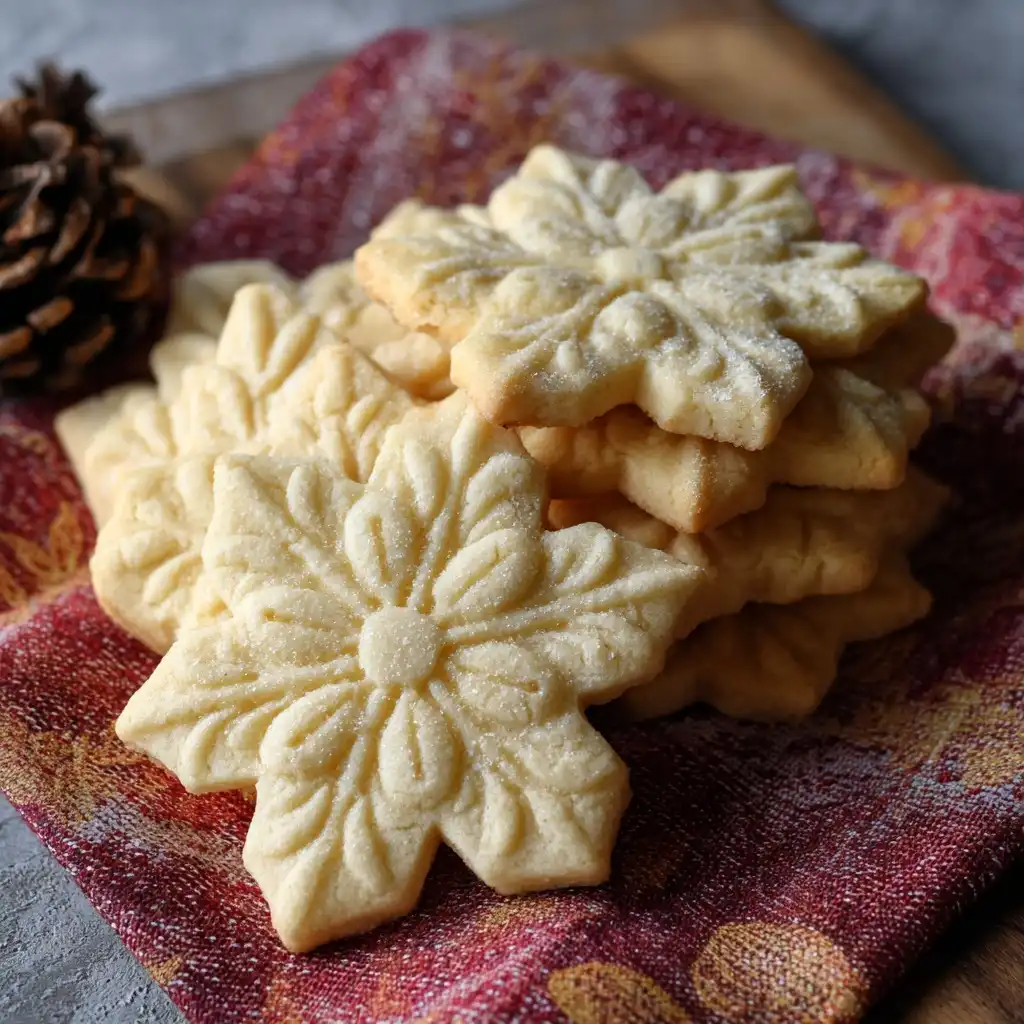
- Decorative Techniques: Press whole toasted almonds or demerara sugar onto surface before chilling. Use embossed rolling pins for patterned tops. Pipe royal icing borders post-bake for holiday gifting.
Note: All variations maintain the foundational 1:2:3 ratio by adjusting *only* within the flour/sugar/butter framework—never adding liquids or leaveners unless explicitly reformulating.
Health Considerations and Nutritional Value
Traditional butter shortbread is inherently calorie-dense and low in micronutrients—but understanding its composition supports mindful enjoyment:
- Caloric Profile (per 15g finger cookie, approx.): ~85–95 kcal; 6–7g fat (4–5g saturated), 8–9g carbohydrate (5–6g sugars), <1g protein, 0g fiber.
- Butter Benefits: Contains vitamins A, D, E, and K2; conjugated linoleic acid (CLA) linked to anti-inflammatory properties; butyrate (a short-chain fatty acid) supporting gut health—when consumed in moderation as part of a balanced diet.
- Refined Carbohydrates: Granulated sugar provides quick energy but lacks fiber or nutrients. For blood sugar management, pair shortbread with protein (e.g., cheese) or healthy fats (e.g., nuts) to slow glucose absorption.
- No Artificial Additives: Authentic shortbread contains zero preservatives, emulsifiers, or artificial flavors—making it a “clean label” treat compared to many commercial cookies.
- Dietary Modifications:
- Lower-Sugar Option: Reduce sugar by 15% (e.g., ¾ cup → ⅔ cup) and add 1 tsp inulin or allulose for bulk/sweetness without glycemic impact.
- Higher-Fiber Version: Substitute 15g of flour with golden flaxseed meal (adds omega-3s and soluble fiber).
- Lactose Sensitivity: Use lactose-free butter (milk solids removed)—nutritionally identical to regular butter.
- Mindful Indulgence Guidelines: Enjoy 1–2 fingers (30–40g) as part of a balanced meal or snack. Store in airtight containers to prevent moisture absorption (which softens texture and encourages rancidity). Consume within 2 weeks for peak freshness—butter can oxidize over time, developing off-flavors.
Ingredients
- 1 cup (227g) unsalted butter, cold then softened to 65–68°F (18–20°C)
- ⅔ cup (135g) granulated sugar (caster sugar preferred)
- ¼ tsp fine sea salt (or ½ tsp kosher salt)
- 2 cups (250g) all-purpose flour (or 225g AP + 25g rice flour for ultra-tender crumb), sifted
- (Optional) 1 tsp pure vanilla extract or almond extract
Directions
- Line a 9×9-inch metal baking pan with parchment paper, leaving overhangs on two sides.
- In a stand mixer with paddle attachment, beat butter on medium for 1 minute until smooth.
- Add sugar and salt; beat on medium-high for 3–4 minutes until pale, fluffy, and voluminous. Scrape bowl thoroughly.
- Whisk together sifted flour(s) in a separate bowl.
- With mixer on low, add flour in three parts, mixing only until no dry streaks remain (15 sec per addition). Do not overmix.
- Transfer dough to prepared pan. Press firmly and evenly with offset spatula or flat-bottomed cup. Tap pan sharply 4–5 times on counter.
- Freeze dough for 20 minutes (or refrigerate 45 minutes).
- Preheat oven to 325°F (163°C). Score chilled dough into 1×3-inch fingers (or desired shape) with sharp knife—cut ⅛-inch deep.
- Bake 45–55 minutes until edges are pale gold and center looks set and matte (not shiny).
- Cool in pan 15 minutes, then lift out using parchment. Cool completely on wire rack (≥1.5 hours).
- Cut along scored lines with serrated knife. Store airtight at room temperature up to 2 weeks.
FAQ
- Why did my shortbread spread too much?
- Likely causes: butter too warm, insufficient chilling, under-measured flour, or pan placed too close to heating element. Always chill pressed dough and verify oven temperature with an oven thermometer.
- Can I use salted butter?
- You can—but reduce added salt to ⅛ tsp and taste dough before baking. Salted butter varies widely in sodium content, risking oversalting.
- My shortbread is crumbly—did I do something wrong?
- Some crumbliness is authentic! But excessive crumbling suggests overmixing (activated gluten), too much sugar (weakens structure), or underbaking (moisture not fully set). Ensure full cooling before cutting.
- How do I get clean cuts every time?
- Chill fully, use a sharp serrated knife, and apply gentle sawing motion—not downward pressure. Warm knife under hot water, dry thoroughly, and repeat between cuts for pristine edges.
- Can I make shortbread vegan?
- Yes—with caveats: use high-fat (80%+) European-style vegan butter, add 1 tsp apple cider vinegar to mimic acidity, and include ½ tsp xanthan gum to replace gluten’s binding. Expect textural differences—true “shortbread” requires dairy butter.
- Why does my shortbread taste bland?
- Low-quality butter, expired sugar, or skipping the salt. Use premium, grass-fed butter and always include salt—even if “unsalted” butter is used.
- Can I add chocolate chips?
- Not in traditional shortbread—it changes texture, melting point, and moisture. Instead, dip cooled cookies in tempered chocolate or drizzle with ganache post-bake.
- What’s the best way to store shortbread long-term?
- Airtight container at room temperature (2 weeks), freezer (3 months vacuum-sealed). Never refrigerate—condensation causes sogginess.
- Why do some recipes use cornstarch?
- Cornstarch dilutes gluten-forming proteins, increasing tenderness. Use sparingly (max 10% of flour weight) to avoid chalkiness.
- Can I double the recipe?
- Yes—but mix in batches. Doubling creaming time or flour incorporation risks overworking. Use two pans for consistent results.
Summary
Butter shortbread cookies are a masterclass in minimalist baking—where the purity of high-fat butter, precise ratios, controlled technique, and patient chilling converge to create a cookie defined by its luxurious crumbliness, subtle sweetness, and profound dairy richness.
Honoring centuries of Scottish tradition while inviting thoughtful customization, this iconic treat rewards attention to detail, celebrates ingredient integrity, and delivers timeless satisfaction—one perfectly golden, melt-in-your-mouth bite at a time.