Introduction
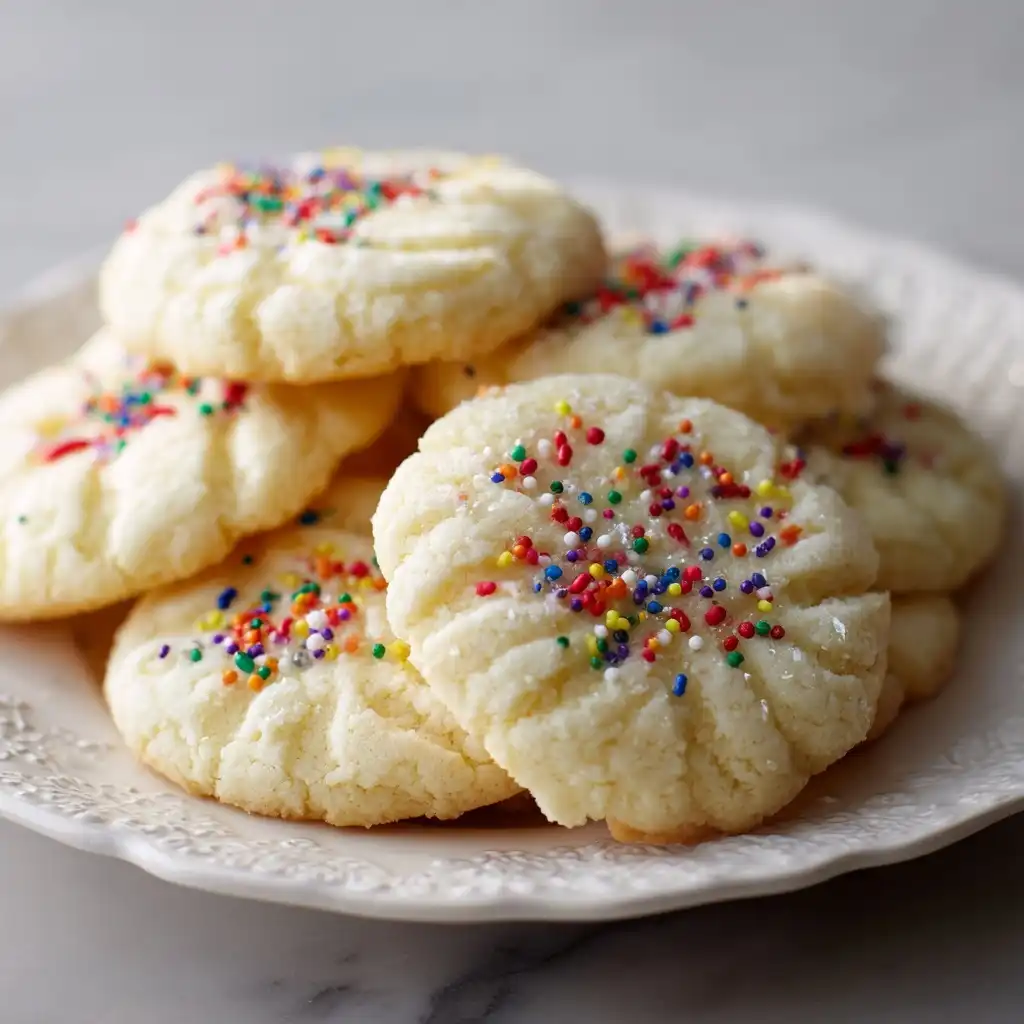
Whipped Butter Cookies are a beloved classic—delicate, tender, and luxuriously rich with an unmistakable buttery aroma and melt-in-your-mouth texture. Unlike traditional drop cookies that rely on leavening agents for lift, these cookies achieve their signature airy lightness through the meticulous process of whipping softened butter with sugar until it’s pale, voluminous, and almost mousse-like. This aeration step is the cornerstone of the recipe, transforming simple pantry staples into elegant, sophisticated treats perfect for holiday platters, afternoon tea, or gifting in decorative tins. Their understated elegance—often finished with a delicate dusting of powdered sugar, a single flake of sea salt, or a whisper of vanilla bean specks—belies their depth of flavor and refined technique. Whether you’re a seasoned baker seeking precision or a home cook drawn to comforting nostalgia, Whipped Butter Cookies offer both accessibility and artistry in every bite.
The History
The origins of Whipped Butter Cookies trace back to early 19th-century European confectionery traditions, particularly in France and Germany, where bakers began experimenting with air incorporation as a leavening alternative to yeast or pearlash. Before modern electric mixers, these cookies were laboriously prepared using wooden spoons and sheer arm strength—a testament to patience and culinary devotion. The technique gained prominence in Victorian-era England, where “butter cakes” and “whipped shortbreads” appeared in elite household cookbooks like Eliza Acton’s Modern Cookery for Private Families (1845), which emphasized “beating the butter well with sugar until it is white and light.” In America, the recipe evolved alongside technological advances: the invention of the hand-cranked rotary beater in the 1870s and later the stand mixer in the 1910s democratized the process, making these ethereal cookies accessible beyond aristocratic kitchens. By the mid-20th century, variations appeared in iconic American publications such as Betty Crocker’s Picture Cookbook (1950) and The Joy of Cooking, often labeled “Butter Puffs,” “Cloud Cookies,” or “Viennese Butter Cookies”—names reflecting their featherlight crumb and continental inspiration. Today, they endure as a benchmark of baking mastery, frequently featured in culinary schools and competitive baking circles for their unforgiving sensitivity to ingredient temperature, mixing time, and oven calibration.
Ingredients Breakdown
Every ingredient in Whipped Butter Cookies plays a precise, non-negotiable role—not just in flavor, but in structure, texture, and chemical interaction:
- Unsalted Butter (1 cup / 227g, room temperature): Must be truly room temperature (65–68°F)—cool enough to hold its shape but soft enough to indent easily with gentle pressure. Too cold, and it won’t whip; too warm, and it collapses, releasing water and causing greasiness. Unsalted butter ensures full control over sodium levels and highlights pure dairy sweetness.
- Granulated Sugar (¾ cup / 150g): Provides sweetness, aids aeration during creaming, and contributes to crisp edges and slight caramelization. Fine granulation ensures smooth incorporation without graininess.
- Powdered Sugar (¼ cup / 30g, sifted): Adds tenderness and subtle sweetness while enhancing the whipped volume and silkiness of the batter. Its cornstarch content also slightly inhibits gluten formation, yielding a more delicate crumb.
- Pure Vanilla Extract (2 tsp) or Vanilla Bean Paste (1½ tsp): Imparts aromatic complexity. Real vanilla—not imitation—is essential; its alcohol content also helps emulsify the batter. For elevated depth, scrape seeds from 1 whole Madagascar bourbon vanilla bean.
- Almond Extract (¼ tsp, optional but highly recommended): A tiny amount amplifies butter’s nuttiness and adds a haunting floral note—traditional in Viennese iterations. Use sparingly; too much becomes medicinal.
- All-Purpose Flour (2¼ cups / 280g, spooned & leveled, then sifted twice): Sifting aerates the flour and removes lumps, ensuring even distribution and preventing dense pockets. The protein content (~10–11%) provides just enough structure without toughness. Avoid bread flour (too high in gluten) or cake flour (too low—causes spreading).
- Sea Salt (½ tsp fine, non-iodized): Balances sweetness, enhances all other flavors, and strengthens gluten bonds at a microscopic level—critical for holding the whipped air cells.
- Heavy Cream or Whole Milk (1–2 tbsp, chilled): Added only if needed to adjust consistency—never as a standard ingredient. Used sparingly to loosen overly stiff dough *after* chilling, never before whipping. Too much liquid destabilizes the emulsion.
Note: Eggs are deliberately omitted—this is a defining feature. Their absence eliminates moisture-driven spread and ensures structural integrity rooted solely in the butter-sugar foam. This makes the recipe naturally gluten-free adaptable (with certified GF flour) and ideal for those avoiding eggs due to allergy or preference.
Step-by-Step Recipe
- Prepare Your Workspace: Line two large baking sheets with parchment paper or silicone baking mats. Chill them in the freezer for 10 minutes. Preheat oven to 325°F (163°C)—a lower temperature ensures slow, even baking without browning or spreading. Position racks in the upper and lower thirds of the oven.
- Whip the Butter-Sugar Mixture: In the bowl of a stand mixer fitted with the paddle attachment (or using a hand mixer with sturdy beaters), combine softened butter, granulated sugar, powdered sugar, salt, and extracts. Beat on medium-low speed for 1 minute to combine. Increase to medium-high and whip for 5–7 minutes—scraping down the bowl every 90 seconds—until the mixture is dramatically increased in volume (nearly tripled), pale ivory in color, and has the consistency of thick, glossy whipped cream. It should cling to the paddle and hold soft peaks when lifted. *Do not under-whip—this is the single most critical step.*
- Incorporate the Flour Gradually: Reduce mixer speed to low. Add sifted flour in three equal portions, beating on low for just 15–20 seconds after each addition—only until no dry streaks remain. Overmixing develops gluten and causes toughness. The dough will appear shaggy and slightly crumbly—that’s correct. Do not add any liquid yet.
- Assess & Adjust Dough Consistency: Pinch a small amount (½ tsp) of dough between thumb and forefinger. It should hold together without crumbling *and* without feeling wet or sticky. If it crumbles, add chilled heavy cream—½ tsp at a time—mixing on low for 5 seconds after each addition, until cohesion is achieved. If sticky, refrigerate for 5 minutes and reassess.
- Chill the Dough Thoroughly: Divide dough into two equal portions. Shape each into a 1½-inch-thick disc, wrap tightly in parchment-lined plastic wrap, and refrigerate for *at least 2 hours*, preferably overnight. This solidifies the butter, relaxes gluten, and prevents spreading. For best results, freeze for 30 minutes before scooping if short on time.
- Scoop & Shape: Using a 1-tbsp cookie scoop (or a heaping tablespoon measure), portion chilled dough. Roll each portion gently between palms into a smooth, compact 1-inch ball. Place 2 inches apart on the chilled, lined baking sheets. For uniformity, use a kitchen scale—each dough ball should weigh 22–24g.
- Flatten Slightly (Optional but Recommended): Lightly press the top of each ball with the tines of a fork dipped in granulated sugar (to prevent sticking), or use the bottom of a glass lightly dusted with powdered sugar. Press just enough to create a ¼-inch thickness—do not flatten completely. This promotes even baking and creates a subtle decorative pattern.
- Bake with Precision: Bake one sheet at a time in the center of the preheated oven for 13–15 minutes. Rotate the sheet front-to-back halfway through. Cookies are done when edges are set and barely beginning to turn golden, and centers appear puffed, matte, and just *slightly* soft to the touch—not shiny or wet. They will firm up as they cool. Avoid opening the oven door before the 12-minute mark.
- Cool Completely: Let cookies rest on the baking sheet for 5 minutes to finish setting. Then, carefully transfer with a thin spatula to a wire rack. Cool completely—minimum 30 minutes—before storing or serving. Warm cookies are fragile and prone to breaking.
Tips
- Butter Temperature is Non-Negotiable: Test with the “thumbprint test”: press your thumb gently into the butter block. It should yield slowly, leaving a clean, smooth indentation—not a sinkhole (too warm) or resistance (too cold). If rushed, cut butter into ½-inch cubes and let sit at room temp for 25–30 minutes.
- Whipping Time Varies: Ambient humidity and butter brand affect whip time. Watch for visual cues—not the clock. Stop immediately once the mixture achieves a ribbon-like trail that holds for 2–3 seconds when the beater is lifted.
- Sift Flour Twice: First sifting breaks up clumps; second incorporates air. Skipping this leads to dense, uneven cookies.
- No Overmixing After Flour: Once flour is added, count seconds—not minutes. If using a stand mixer, stop the moment the last trace of flour disappears. Use a flexible spatula to fold any stubborn bits by hand.
- Chill Between Batches: If baking multiple sheets, return unbaked dough balls to the fridge for 10 minutes while the first sheet bakes. Warm dough spreads aggressively.
- Oven Thermometer Required: Most home ovens run hot or cold. An accurate oven thermometer is essential—±5°F deviation can mean the difference between delicate and collapsed cookies.
- Cooling Surface Matters: Wire racks allow airflow underneath, preventing steam buildup that softens bottoms. Never cool on a solid surface or stacked.
- Storage Secret: Store cooled cookies in an airtight container with parchment layers between tiers. Include a slice of plain white bread to maintain optimal moisture—replace every 24 hours. They stay fresh for up to 1 week at room temperature, or freeze for 3 months.
Variations and Customizations
While the classic version is sublime, these thoughtfully engineered adaptations preserve the signature texture while introducing new dimensions:
- Lemon Verbena & White Chocolate: Add 1 tbsp finely grated lemon zest + 1 tsp dried lemon verbena (crushed) with the extracts; fold in ½ cup finely chopped high-quality white chocolate *after* flour is incorporated.
- Rosewater & Pistachio: Replace vanilla with 1 tsp culinary-grade rosewater (add last, after whipping); fold in ⅔ cup finely chopped roasted unsalted pistachios and 1 tbsp dried edible rose petals.
- Earl Grey Infused: Steep 2 Earl Grey tea bags in 2 tbsp boiling water for 5 minutes; cool completely, squeeze dry, and add liquid with extracts. Omit almond extract. Optional: finish with a dusting of bergamot sugar (½ cup sugar + 1 tsp bergamot oil, blended).
- Dark Chocolate Sea Salt: Fold in ¾ cup 65% dark chocolate chunks *after* flour. Immediately after baking, sprinkle each cookie with Maldon sea salt flakes while still warm.
- Gluten-Free: Substitute AP flour 1:1 with a premium GF blend containing xanthan gum (e.g., King Arthur Measure for Measure or Bob’s Red Mill 1-to-1). Increase chill time to 3 hours—GF dough is more sensitive to warmth.
- Vegan Adaptation: Use high-fat, cultured vegan butter (e.g., Miyoko’s or Forager Project), replace powdered sugar with GF powdered sugar (check for bone char), and add 1 tsp apple cider vinegar to mimic acidity. Chill dough for 4 hours—vegan butter softens faster.
- Decorative Techniques: Pipe dough using a star tip for elegant rosettes; stamp with food-safe embossed rolling pins before baking; or brush cooled cookies with tempered white chocolate and drizzle with gold luster dust.
Health Considerations and Nutritional Value
Per standard 24g cookie (recipe yields ~48 cookies):
- Calories: 115 kcal
- Total Fat: 7.2g (4.3g saturated)
- Carbohydrates: 11.8g (9.2g sugars)
- Protein: 0.8g
- Sodium: 58mg
- Cholesterol: 18mg
While inherently indulgent, mindful modifications can enhance nutritional alignment without sacrificing authenticity:
- Reduced Sugar Option: Decrease granulated sugar to ½ cup (100g) and increase powdered sugar to ⅓ cup (40g)—maintains volume and tenderness while lowering glycemic load.
- Whole Grain Integration: Substitute ¼ cup (30g) of AP flour with finely ground oat flour or white whole wheat flour. Adds fiber (0.5g per cookie) and subtle nuttiness—no additional liquid needed.
- Butter Quality Matters: Grass-fed butter contains higher levels of conjugated linoleic acid (CLA), vitamin K2, and omega-3s—making each bite nutritionally richer.
- Portion Control Built-In: The recipe’s natural 1-inch sizing encourages mindful consumption. Pair with herbal tea or fresh berries to balance richness.
- Allergen Notes: Naturally egg-free and easily adaptable for nut-free (omit almond extract) or dairy-free (see vegan variation). Always verify flour and sugar certifications for celiac safety.
These cookies are best enjoyed as an occasional treat within a balanced diet—not as a source of macronutrients, but as a celebration of craft, quality ingredients, and sensory joy.
Ingredients
- 1 cup (227g) unsalted butter, room temperature (65–68°F)
- ¾ cup (150g) granulated sugar
- ¼ cup (30g) powdered sugar, sifted
- ½ teaspoon fine sea salt
- 2 teaspoons pure vanilla extract
- ¼ teaspoon pure almond extract (optional but recommended)
- 2¼ cups (280g) all-purpose flour, spooned, leveled, and sifted twice
- 1–2 tablespoons chilled heavy cream or whole milk (only if needed for consistency)
Directions
- Line two large baking sheets with parchment paper or silicone baking mats. Place sheets in freezer for 10 minutes.
- In the bowl of a stand mixer fitted with paddle attachment, combine butter, granulated sugar, powdered sugar, salt, vanilla, and almond extract. Beat on medium-low for 1 minute to combine.
- Increase speed to medium-high and whip for 5–7 minutes, scraping bowl every 90 seconds, until mixture is pale, voluminous, and holds soft peaks.
- Reduce speed to low. Add sifted flour in three equal additions, beating 15–20 seconds after each until just incorporated and no dry streaks remain.
- Assess dough: pinch ½ tsp—if crumbly, add chilled cream ½ tsp at a time, mixing 5 seconds after each. If sticky, refrigerate 5 minutes.
- Divide dough in half. Shape each into 1½-inch-thick disc. Wrap tightly in parchment-lined plastic wrap. Refrigerate minimum 2 hours (overnight preferred).
- Preheat oven to 325°F (163°C). Position racks in upper and lower thirds.
- Using 1-tbsp scoop, portion chilled dough. Roll into smooth 1-inch balls. Place 2 inches apart on chilled sheets.
- Lightly press tops with sugar-dusted fork or glass to ¼-inch thickness.
- Bake one sheet at a time for 13–15 minutes, rotating halfway, until edges are set and barely golden, centers matte and slightly soft.
- Cool on sheet 5 minutes, then transfer to wire rack. Cool completely (30+ minutes) before storing.
FAQ
- Why did my cookies spread flat?
- Most commonly caused by butter that was too warm during whipping or insufficient chilling. Also check oven temperature—excess heat melts butter before structure sets. Ensure flour is properly measured (spooned & leveled) and not packed.
- Can I make the dough ahead?
- Absolutely. Chilled dough keeps for 5 days in the refrigerator or 3 months frozen. Freeze portioned, unshaped dough balls on a tray, then transfer to freezer bag. Bake straight from frozen—add 1–2 minutes to bake time.
- My dough is crumbly—even after adding cream. What now?
- Over-chilling is likely. Let dough sit at room temperature for 3–5 minutes, then re-knead gently by hand until cohesive. Alternatively, pulse in food processor 2–3 times.
- Can I use salted butter?
- Not recommended. Salt content varies by brand and disrupts precise sodium control. If necessary, omit added salt and reduce butter by 1 tsp to compensate for water content.
- Why no eggs? Isn’t that unusual?
- Eggs introduce excess moisture and proteins that encourage spread and density. The whipped butter-sugar foam provides all necessary lift and binding—making these cookies uniquely delicate and rich.
- How do I get perfectly round, uniform cookies?
- Use a cookie scoop, weigh portions, and roll between palms with light, even pressure. Chill shaped cookies for 10 minutes before baking for sharp edges.
- Can I double the batch?
- Yes—but whip butter-sugar in two separate batches. Doubling risks under-whipping and overheating the mixer motor. Chill all dough thoroughly before proceeding.
- What’s the best way to store for gifting?
- Layer cooled cookies in a tin with parchment between tiers. Include a silica gel packet to absorb ambient moisture. Seal tightly and store in cool, dark place. Best consumed within 5 days for peak texture.
Summary
Whipped Butter Cookies are a masterclass in minimalist baking—where just six core ingredients, precise temperature control, and disciplined aeration yield ethereal, butter-forward delights with a tender, cloud-like crumb and delicate golden edges. Their enduring legacy lies not in complexity, but in reverence for quality, patience, and the transformative power of air.
Whether honoring tradition with a dusting of powdered sugar or reimagining with botanical infusions and artisanal inclusions, these cookies invite both reverence and creativity—proving that true luxury resides in simplicity, skill, and the quiet magic of perfectly whipped butter.