Introduction
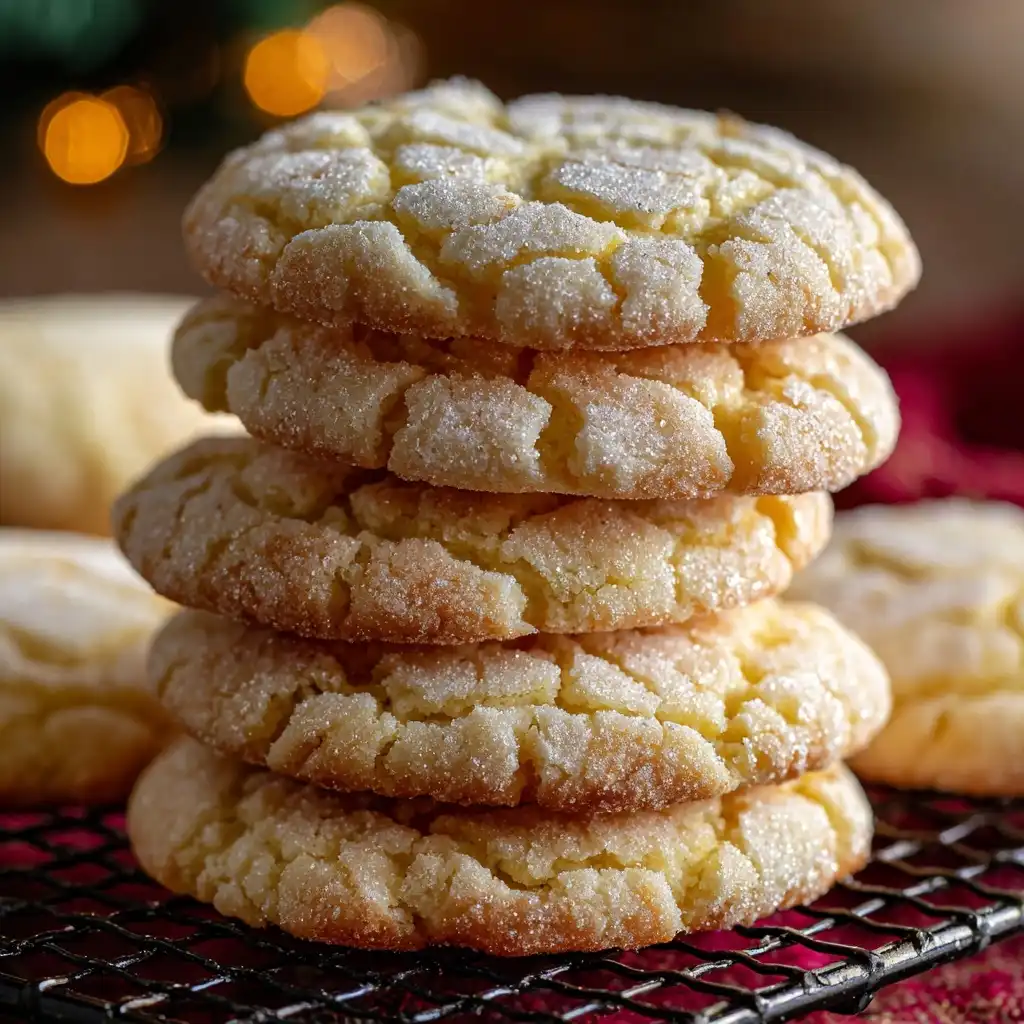
Crinkle sugar cookies are a beloved classic—soft, chewy, and irresistibly festive with their signature cracked, powdered-sugar-dusted exteriors. These cookies evoke nostalgia: think holiday cookie exchanges, childhood baking adventures, and cozy winter afternoons filled with the warm, buttery aroma of vanilla and brown sugar wafting from the oven. Their visual appeal is as captivating as their taste—the dramatic “crinkles” form naturally during baking as the outer layer dries and contracts, revealing delicate fissures dusted generously in snowy confectioners’ sugar. Unlike crisp shortbread or cakey drop cookies, crinkles strike the perfect balance: tender yet substantial, sweet but not cloying, with a subtle depth from brown sugar and a hint of warmth from pure vanilla extract. Whether served at Christmas cookie platters, birthday dessert tables, or as an everyday treat with a tall glass of cold milk, crinkle sugar cookies remain a timeless favorite across generations—and for good reason. Their simplicity belies their sophistication, and their humble ingredients yield extraordinary results when handled with care and attention to detail.
The History
The origins of crinkle cookies trace back to mid-20th-century American home baking culture, flourishing alongside the post-war rise of convenience ingredients and widespread access to electric mixers, reliable ovens, and standardized measuring tools. While sugar cookies themselves date back centuries—evolving from medieval spiced gingerbread traditions—the distinctive “crinkle” variation emerged as a deliberate technique-driven innovation. Early versions appeared in community cookbooks and women’s magazines like Good Housekeeping and Ladies’ Home Journal in the 1940s and 1950s, often titled “Snow Cap Cookies,” “Crackled Sugar Cookies,” or “Powdered Sugar Drop Cookies.” The method—rolling dough balls in confectioners’ sugar before baking—was likely inspired by similar techniques used in Mexican polvorones or Middle Eastern ma’amoul, though adapted for American pantry staples and preferences. The crackled surface wasn’t merely aesthetic; it was a functional indicator of proper hydration, fat ratio, and leavening balance. As refrigerated dough became more common (thanks to improved home refrigeration), bakers discovered that chilling the dough not only prevented overspreading but also intensified the crinkle effect—leading to the now-essential step of overnight chilling. By the 1970s, crinkle cookies had secured a permanent place in holiday baking lore, appearing in iconic cookbooks such as The Joy of Cooking (1975 edition) and Betty Crocker’s Picture Cookbook. Today, they’re celebrated globally—not just as seasonal staples but as versatile canvases for creative flavor infusions, dietary adaptations, and artistic presentation—proving that a century-old technique can continually reinvent itself without losing its soul.
Ingredients Breakdown
Every exceptional crinkle sugar cookie begins with intentionality—not just in measurement, but in understanding the functional role each ingredient plays in texture, structure, flavor, and appearance:
- All-Purpose Flour (2 ¾ cups, spooned & leveled): Provides gluten structure and bulk. Spooning (not scooping) prevents compaction and over-flouring, which leads to toughness. For optimal crinkles, avoid bread flour (too much gluten) or cake flour (too little structure); all-purpose strikes the ideal balance.
- Unsweetened Cocoa Powder (¼ cup, natural or Dutch-process): Adds rich depth and color contrast—especially vital for chocolate crinkles. Natural cocoa is acidic and reacts well with baking soda; Dutch-process is milder and yields a smoother, less bitter profile. Both work, but consistency matters: stick with one type per batch.
- Baking Powder (1 tsp) & Baking Soda (½ tsp): A dual-leavening system ensures lift *and* spread control. Baking powder provides gradual, heat-activated rise, while baking soda neutralizes acidity (from brown sugar, cocoa, or buttermilk if used) and encourages surface drying—key for crack formation.
- Salt (½ tsp fine sea salt or kosher salt): Enhances sweetness, balances bitterness (especially in cocoa), and strengthens gluten slightly. Never omit—even in sweet cookies, salt is the silent conductor of flavor harmony.
- Unsalted Butter (¾ cup / 1 ½ sticks, room temperature): Room temperature (65–68°F) is non-negotiable: too cold = poor creaming; too warm = greasy, flat cookies. Creaming incorporates air, creating tenderness and aiding rise. Unsalted butter gives precise salt control and cleaner flavor.
- Granulated Sugar (1 ¼ cups): Adds sweetness, aids in creaming, and contributes to crispness at the edges. Its finer crystals dissolve more readily than coarse sugars, promoting even texture.
- Packed Light Brown Sugar (1 cup): Moisture-rich molasses content adds chewiness, caramel notes, and acidity (which activates baking soda). Packing ensures accurate volume and prevents dry, crumbly dough.
- Large Eggs (2, room temperature): Bind ingredients, add moisture and richness, and contribute to structure via proteins. Room-temperature eggs emulsify better into the creamed butter-sugar mixture, preventing curdling and ensuring uniform batter.
- Pure Vanilla Extract (2 tsp): Real vanilla—not imitation—adds complex floral, woody, and creamy notes that elevate the entire cookie. Alcohol content also helps carry volatile flavor compounds.
- Confectioners’ Sugar (1 ½ cups, for rolling): The star of the crinkle effect. Its fine particles adhere to damp dough and form a brittle, sugar-rich crust that cracks dramatically as the interior puffs and sets. Sift before use to remove lumps and ensure even coating. Do *not* substitute granulated sugar—it won’t create the same thermal contraction or visual effect.
Optional—but highly recommended—additions include ½ tsp instant espresso powder (to deepen chocolate flavor without bitterness) or a pinch of ground cinnamon (for warmth). Each ingredient is a deliberate note in a symphony—alter one, and the harmony shifts.
Step-by-Step Recipe
- Prep & Preheat: Line two large baking sheets with parchment paper or silicone baking mats. Position oven racks in the upper and lower thirds. Preheat oven to 350°F (175°C). Ensure all ingredients are at proper temperature—especially butter and eggs.
- Whisk Dry Ingredients: In a medium bowl, sift together flour, cocoa powder (if making chocolate version), baking powder, baking soda, and salt. Whisk thoroughly for 30 seconds to aerate and evenly distribute leaveners. Set aside.
- Cream Butter & Sugars: In a large stand mixer fitted with the paddle attachment (or using a hand mixer), beat room-temperature butter on medium speed until smooth and creamy (~1 minute). Add granulated and brown sugars. Beat on medium-high for 3–4 minutes until light, fluffy, and pale in color—scraping down the bowl twice. This step incorporates air critical for texture and rise.
- Add Wet Ingredients: Add eggs one at a time, beating on medium speed for 30 seconds after each addition until fully incorporated and glossy. Add vanilla and mix for another 15 seconds. Batter should be homogeneous and slightly thickened.
- Incorporate Dry Ingredients: Reduce mixer speed to low. Gradually add dry ingredients in three additions, mixing just until no streaks of flour remain—about 20–30 seconds per addition. Do *not* overmix; overdevelopment of gluten causes toughness. Use a flexible spatula to scrape bottom and sides, folding gently if needed.
- Chill Dough (Non-Negotiable Step): Cover bowl tightly with plastic wrap and refrigerate for *at least 2 hours*, preferably 4–24 hours. Chilling solidifies butter, prevents excessive spread, enhances flavor development (sugars and cocoa meld), and crucially—allows surface moisture to migrate inward, leaving the exterior slightly tacky and ideal for confectioners’ sugar adhesion.
- Portion & Coat: Using a 1.5-tablespoon cookie scoop (or level tablespoon), portion chilled dough into 1.5-inch balls. Place 1 ½ cups confectioners’ sugar in a shallow bowl. Gently roll each ball in sugar until fully coated, pressing lightly to adhere. Place coated balls at least 3 inches apart on prepared baking sheets.
- Bake Strategically: Bake one sheet at a time for 10–12 minutes—rotating pan halfway through. Cookies are done when edges appear set and tops are cracked and dull (not shiny), with slight puffing. They will look underbaked in the center—that’s intentional; they firm up as they cool. Avoid opening the oven door before 9 minutes to prevent temperature shock and uneven cracking.
- Cool Completely: Let cookies cool on baking sheets for 5 minutes—this allows structure to set. Then transfer carefully to wire racks using a thin spatula. Cool completely (20+ minutes) before storing or serving. Warm cookies are fragile and prone to breaking along crinkles.
Tips
- Measure Flour Accurately: Use the spoon-and-level method—fluff flour in bag, spoon into measuring cup, level with straight edge. Too much flour = dry, dense, overly crinkled (but tough) cookies.
- Chill Time Is Sacred: Skipping or shortening the chill leads to flat, greasy, minimally crinkled cookies. Overnight chilling yields the deepest cracks and most nuanced flavor.
- Roll While Chilled, Not Frozen: Dough should be firm but pliable. If too cold, let sit at room temp 5–10 minutes before rolling. If too soft, return to fridge 10 minutes.
- Replenish Confectioners’ Sugar: As you roll, sugar absorbs moisture and clumps. Sift fresh sugar into the bowl every 8–10 cookies for consistent coating.
- Uniform Sizing = Uniform Baking: Use a cookie scoop for identical size—critical for even bake time and appearance. Irregular sizes bake at different rates, causing some to over-crack and others to stay smooth.
- Oven Thermometer Required: Most home ovens run hot or cold. An oven thermometer ensures your 350°F is truly 350°F—temperature accuracy directly affects spread, set time, and crack formation.
- Don’t Overbake: Remove cookies when centers still look soft and slightly underdone. Carryover cooking completes the set. Overbaked crinkles become brittle and lose their tender-chewy interior.
- Cool on Sheets First: Letting them rest 5 minutes on the hot pan continues gentle setting without over-hardening. Transferring too soon causes breakage; waiting too long makes them stick.
- Freeze Dough Balls for Future Baking: Portion, roll in sugar, and freeze unbaked cookies on a tray. Once solid, store in airtight freezer bags for up to 3 months. Bake frozen—add 1–2 minutes to bake time. No thawing required.
- Revive Stale Cookies: Place in a sealed container with a slice of apple or piece of plain bread overnight. Moisture migrates, restoring softness without sogginess.
Variations and Customizations
The crinkle cookie’s adaptable base welcomes endless creativity—while preserving its iconic texture and appearance. Here are rigorously tested, bakery-worthy variations:
- Double Chocolate Crinkles: Add ½ cup mini semi-sweet chocolate chips *after* incorporating dry ingredients. Chips melt slightly during baking, creating pockets of gooey contrast beneath the crackled surface.
- Mocha Crinkles: Stir in 1 tsp instant espresso powder with dry ingredients + ¼ tsp cinnamon. Optional: drizzle cooled cookies with dark chocolate ganache and a sprinkle of flaky sea salt.
- Lemon Crinkles: Omit cocoa. Replace vanilla with 1 tbsp finely grated lemon zest + 1 tsp lemon extract. Add 2 tbsp lemon juice with eggs. Roll in confectioners’ sugar mixed with 1 tsp lemon zest.
- Gingerbread Crinkles: Replace ¼ cup flour with ¼ cup ground ginger + 1 tsp ground cinnamon + ½ tsp ground cloves + ¼ tsp black pepper. Add 2 tbsp molasses with wet ingredients. Dust with sugar-cinnamon blend.
- Peanut Butter Crinkles: Replace ¼ cup butter with ¼ cup creamy peanut butter. Add 1 tsp peanut butter powder to dry ingredients. Roll in sugar-peanut butter powder mix (1 ½ cups sugar + 2 tbsp PB powder).
- Gluten-Free Crinkles: Substitute 1:1 gluten-free all-purpose flour blend (with xanthan gum). Add ½ tsp xanthan gum if blend doesn’t include it. Chill dough 3+ hours—GF dough benefits from extra hydration time.
- Vegan Crinkles: Use vegan butter (stick form, not tub), flax eggs (2 tbsp ground flax + 6 tbsp water, rested 10 mins), and dairy-free chocolate chips. Ensure confectioners’ sugar is vegan (some brands use bone char—look for “organic” or “vegan-certified”).
- Funfetti Crinkles: Fold in ⅓ cup rainbow sprinkles *after* mixing dough. Use white confectioners’ sugar for rolling. Note: Sprinkles may bleed slightly—use jimmies (rod-shaped) rather than nonpareils for best results.
- Spiced Chai Crinkles: Infuse ½ cup milk with 2 chai tea bags (or 1 tbsp loose leaf) for 10 mins, cool completely. Replace egg with this milk + 1 extra tbsp vegan butter or oil for binding. Add 1 tsp ground cardamom + ½ tsp ground ginger to dry ingredients.
- Black Forest Crinkles: Add ¼ cup finely chopped dried cherries + 1 tbsp Kirsch (cherry brandy) or cherry extract. Roll in sugar-chocolate shavings blend.
Pro Tip: When experimenting, keep one variable constant (e.g., always chill 24 hours, always bake at 350°F) to isolate how your customization affects outcome. Document notes—you’ll build your own crinkle cookie science lab!
Health Considerations and Nutritional Value
While crinkle sugar cookies are undeniably indulgent, mindful preparation allows for thoughtful enjoyment within a balanced diet. A standard 2.5-inch crinkle cookie (recipe yields ~36 cookies) contains approximately:
- Calories: 140–160 kcal
- Total Fat: 7–8g (4–5g saturated)
- Carbohydrates: 20–22g (16–18g sugars)
- Protein: 1.5–2g
- Fiber: 0.5–1g (higher with added cocoa or whole wheat flour)
- Sodium: 90–110mg
Key Considerations:
- Sugar Content: Confectioners’ sugar coating contributes significantly to total sugar. To reduce, roll in a 50/50 blend of confectioners’ sugar and cornstarch—maintains texture with ~25% less sugar. Or use monk fruit–sweetened confectioners’ sugar (check label for fillers).
- Butter vs. Alternatives: While unsalted butter delivers unmatched flavor and texture, substituting half the butter with unsweetened applesauce or mashed banana reduces fat and calories—but expect denser, less crinkled results. Coconut oil (refined, for neutral taste) works well in vegan versions but imparts a subtle coconut note.
- Cocoa Benefits: Natural cocoa powder contains flavonoids linked to cardiovascular health and antioxidant activity. Opt for unsweetened, non-alkalized cocoa for maximum polyphenol retention.
- Portion Awareness: The visual impact of crinkles can encourage larger portions. Stick to one cookie with tea or coffee—or pair half a cookie with Greek yogurt and berries for balanced macros.
- Allergen Notes: Contains dairy (butter, eggs), wheat (gluten), and soy (in most commercial vanilla and chocolate). Always verify labels for hidden allergens, especially in pre-made confectioners’ sugar or extracts.
- Dietary Adaptations: Lower-sugar versions exist (using erythritol blends), but texture suffers—erythritol doesn’t caramelize or retain moisture like sucrose. Best approach: enjoy authentically, mindfully, and occasionally—honoring both pleasure and nourishment.
Remember: Nutrition is not just about numbers—it’s about context, culture, joy, and sustainability. A homemade crinkle cookie made with love, shared with someone special, and savored slowly holds immeasurable value beyond its macronutrient profile.
Ingredients
- 2 ¾ cups (345g) all-purpose flour, spooned & leveled
- ¼ cup (20g) unsweetened natural or Dutch-process cocoa powder (optional, for chocolate version)
- 1 teaspoon baking powder
- ½ teaspoon baking soda
- ½ teaspoon fine sea salt
- ¾ cup (170g) unsalted butter, room temperature
- 1 ¼ cups (250g) granulated sugar
- 1 cup (200g) packed light brown sugar
- 2 large eggs, room temperature
- 2 teaspoons pure vanilla extract
- 1 ½ cups (180g) confectioners’ sugar, plus more for rolling (sifted)
Directions
- Line two large baking sheets with parchment paper or silicone baking mats. Preheat oven to 350°F (175°C) with racks in upper and lower thirds.
- In a medium bowl, whisk together flour, cocoa powder (if using), baking powder, baking soda, and salt. Set aside.
- In the bowl of a stand mixer fitted with paddle attachment, beat butter on medium speed until creamy (~1 minute). Add granulated and brown sugars; beat on medium-high for 3–4 minutes until light, fluffy, and pale. Scrape bowl.
- Add eggs one at a time, beating 30 seconds after each until fully incorporated. Add vanilla; mix 15 seconds.
- Reduce speed to low. Gradually add dry ingredients in three parts, mixing just until no flour streaks remain—about 20 seconds per addition. Do not overmix.
- Cover bowl tightly with plastic wrap. Refrigerate dough for at least 2 hours, or up to 24 hours.
- When ready to bake, place 1 ½ cups confectioners’ sugar in a shallow bowl. Scoop chilled dough using a 1.5-tablespoon cookie scoop. Roll each portion firmly into a smooth ball, then coat thoroughly in confectioners’ sugar, pressing gently to adhere. Place 3 inches apart on prepared sheets.
- Bake one sheet at a time for 10–12 minutes, rotating pan halfway through, until edges are set and tops are deeply cracked and dull-looking. Centers will appear soft.
- Cool cookies on baking sheets for 5 minutes, then carefully transfer to wire racks to cool completely (20+ minutes).
- Store cooled cookies in an airtight container at room temperature for up to 1 week—or freeze baked cookies for up to 3 months.
FAQ
- Why didn’t my cookies crack?
- Most common causes: dough not chilled long enough, oven too cool (use thermometer), confectioners’ sugar clumpy or insufficiently applied, or overmixing after adding flour. Also check expiration dates on baking powder/soda—old leaveners fail silently.
- Can I make these ahead?
- Absolutely. Chilled dough keeps refrigerated for 5 days or frozen (unrolled) for 3 months. Baked cookies freeze beautifully for up to 3 months—thaw at room temperature in airtight container.
- Why do my cookies spread too much?
- Butter too warm, insufficient chilling, too much sugar (especially brown), or using melted butter instead of creamed. Also verify your flour measurement—under-flouring is a frequent culprit.
- Can I use oil instead of butter?
- Not recommended. Oil lacks the emulsifying properties and water content of butter needed for proper creaming, structure, and crinkle formation. Results will be greasy, flat, and minimally cracked.
- How do I get deeper, more dramatic cracks?
- Ensure dough is very cold before rolling, use slightly more confectioners’ sugar (press firmly), bake on preheated heavy-duty baking sheets (not thin pans), and avoid opening the oven before 9 minutes. Higher cocoa content also enhances crack depth.
- Are crinkle cookies the same as whoopie pies?
- No—though both use similar dough bases. Whoopie pies are sandwich-style cakes with filling; crinkles are drop cookies defined by their cracked, sugar-dusted surface and chewy-crisp texture contrast.
- Can I add nuts or chocolate chips?
- Yes—but fold in *after* mixing dough to prevent overworking. Chop nuts finely so they don’t interfere with rolling or cracking. Mini chips integrate better than full-size chips.
- Why does my confectioners’ sugar disappear during baking?
- Either the dough wasn’t cold enough (sugar melts into surface), sugar wasn’t sifted (lumps fall off), or you rolled too gently. Press firmly and re-sift sugar frequently.
- Can I make these gluten-free or vegan?
- Yes—with caveats. See Variations section for tested GF and vegan methods. Texture and crack formation differ subtly, but delicious results are absolutely achievable with precise substitutions.
- What’s the best way to ship crinkle cookies?
- Layer between parchment in rigid tins or boxes with tight-fitting lids. Include parchment or wax paper between layers. Ship via 2-day service. Avoid stacking more than 3 layers. Add a silica gel packet to prevent moisture absorption.
Summary
Crinkle sugar cookies are a masterclass in simple ingredients transformed by technique—chilled dough, precise creaming, generous confectioners’ sugar coating, and controlled baking yielding irresistibly soft, deeply cracked, and nostalgically festive treats.
With roots in mid-century American kitchens and endless modern variations—from vegan mocha to lemon-zested—they remain a joyful, forgiving, and endlessly customizable canvas for bakers of all levels.