Introduction
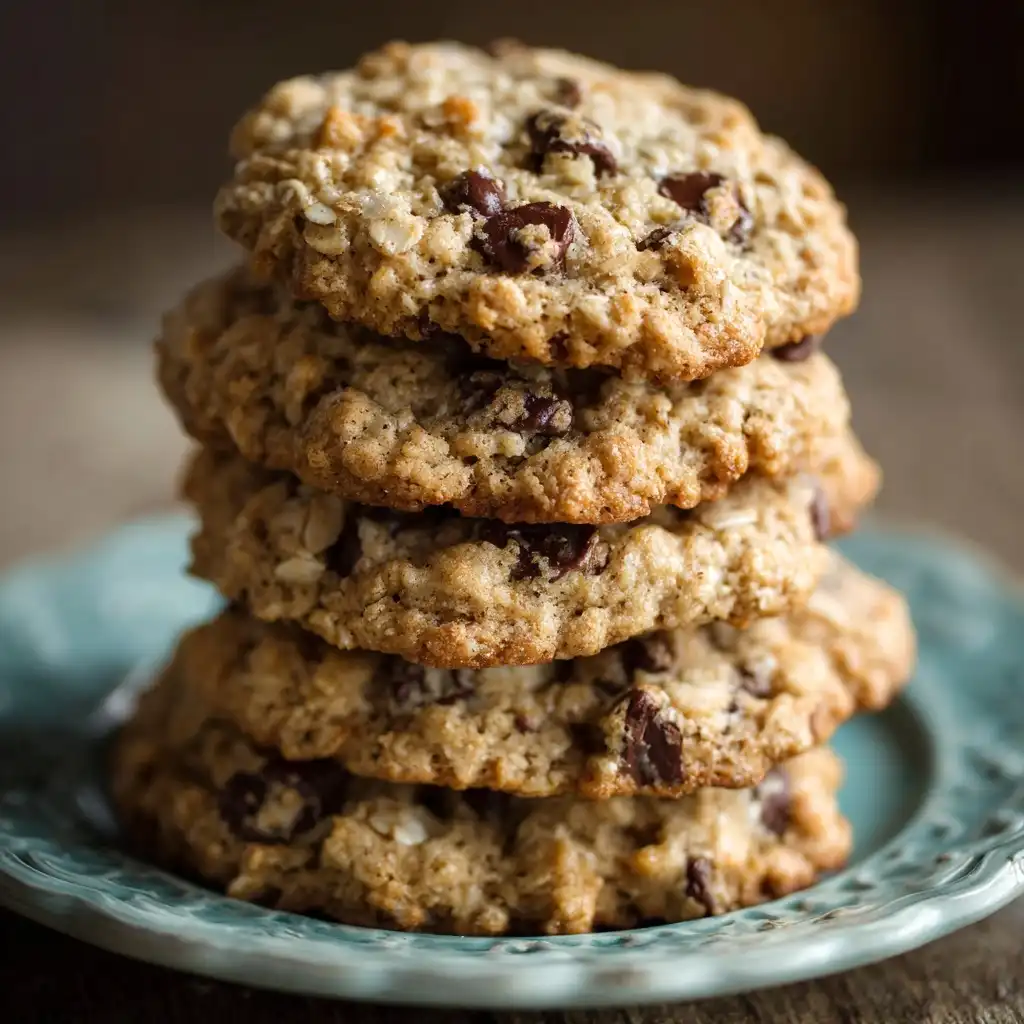
Oatmeal chocolate chip cookies are a beloved American classic—a warm, chewy, comforting fusion of hearty whole grains and rich, melty chocolate. More than just a dessert, they embody nostalgia, home baking, and wholesome indulgence all in one golden-brown bite. Whether enjoyed fresh from the oven with a glass of cold milk, packed into lunchboxes, or gifted in festive tins, these cookies strike the perfect balance between rustic texture and sweet satisfaction. Their enduring popularity lies not only in their approachable ingredients and forgiving technique but also in their remarkable versatility—adaptable for dietary needs, seasonal twists, and creative flavor experiments—making them a timeless staple in kitchens across generations.
The History
The origins of oatmeal chocolate chip cookies trace back to the early 20th century, rooted in culinary ingenuity and resourceful home economics. While the iconic chocolate chip cookie was famously invented by Ruth Wakefield at the Toll House Inn in Whitman, Massachusetts, around 1938, the oatmeal variation emerged shortly thereafter as bakers sought heartier, more nutritious alternatives. Oats had long been valued in Scottish, Irish, and New England cooking for their satiating fiber and shelf-stable nature; by the 1940s, wartime rationing further encouraged substitutions—oats replaced some flour to stretch scarce wheat supplies, while brown sugar (more readily available than white) contributed moisture and caramel depth. Early cookbook editions—including the 1943 edition of The Joy of Cooking and regional church and community cookbooks—began featuring “Oatmeal Chocolate Cookies” with variations in spice, fat source (lard, butter, or shortening), and chocolate format (chopped bars vs. chips). The rise of Quaker Oats’ marketing campaigns in the 1950s and 1960s cemented oats as a symbol of wholesome family baking, and by the 1970s, oatmeal chocolate chip cookies appeared regularly in supermarket bakery sections and national food magazines. Today, they stand as a cultural touchstone—featured in holiday traditions, school bake sales, dietitian-recommended snacks, and even gourmet artisanal lines—proving that simplicity, integrity of ingredients, and soul-warming texture can sustain legacy across a century.
Ingredients Breakdown
Every ingredient in oatmeal chocolate chip cookies plays a precise functional and sensory role—far beyond mere measurement. Understanding their contributions empowers bakers to troubleshoot, substitute wisely, and elevate results:
- Old-Fashioned Rolled Oats (not instant or quick-cooking): Provide signature chew, structure, and nutty, toasted flavor. Their intact groats absorb moisture slowly, yielding tender yet resilient texture. Instant oats disintegrate and create pasty, flat cookies; steel-cut oats won’t soften sufficiently without pre-soaking.
- All-Purpose Flour: Adds gluten structure for lift and spread control. Too little leads to excessive spreading; too much yields dense, dry cookies. For gluten-free versions, a 1:1 certified GF blend (with xanthan gum) is essential—not just almond or coconut flour alone.
- Baking Soda (not baking powder): Reacts with the acidity in brown sugar and any molasses content to produce carbon dioxide *during baking*, encouraging lift and spread. It also promotes browning via Maillard reaction—critical for that deep amber crust and caramelized edges.
- Ground Cinnamon & Salt: Cinnamon enhances warmth and complements both oats and chocolate; salt isn’t just for seasoning—it sharpens sweetness, balances bitterness in dark chocolate, and strengthens gluten networks for improved chew.
- Unsalted Butter (softened, not melted): Delivers richness, flakiness in layers, and emulsified structure. Softened (65–68°F / 18–20°C) butter creams optimally with sugars to trap air—key for lightness. Melted butter causes rapid spread and greasy texture; cold butter won’t cream and yields crumbly dough.
- Brown Sugar (packed): Contains molasses, which adds moisture, acidity (for leavening), deep caramel notes, and hygroscopic properties—meaning it attracts and retains water, ensuring chewiness for days. Dark brown sugar intensifies flavor and softness; light brown offers milder balance.
- Granulated Sugar: Contributes crispness, promotes spreading, and aids in caramelization on the surface. Its lower moisture content contrasts with brown sugar to create the ideal chew-crisp duality.
- Large Eggs (room temperature): Act as binders, emulsifiers, and sources of moisture and structure. Room-temperature eggs incorporate more evenly into creamed butter-sugar, preventing curdling and ensuring stable aeration. Cold eggs can harden fat and cause separation.
- Pure Vanilla Extract: Not imitation—real vanilla contains hundreds of flavor compounds that enhance complexity and round out chocolate’s bitterness. Alcohol-based extract also helps distribute fat-soluble flavors uniformly.
- Chocolate Chips or Chunks (semi-sweet or bittersweet, 52–68% cacao): High-quality chocolate with cocoa butter (not vegetable oil) ensures proper melt, glossy sheen, and nuanced flavor. Chips hold shape better for defined pockets; chopped bars offer irregular, artisanal pools and superior mouthfeel. Mini chips increase distribution; dark chocolate adds antioxidant depth; milk chocolate lends creaminess (but may oversweeten).
Optional—but highly recommended—additions include a tablespoon of molasses (for intensified chew and old-fashioned depth) or a splash of espresso powder (to amplify chocolate without adding coffee taste).
Step-by-Step Recipe
- Prep & Preheat: Position oven racks in upper and lower thirds. Preheat oven to 350°F (175°C). Line two large baking sheets with parchment paper or silicone baking mats—*never grease directly*, as excess fat encourages uncontrolled spread.
- Toast the Oats (Highly Recommended Step): Spread 3 cups old-fashioned rolled oats on a rimmed baking sheet. Bake for 10–12 minutes, stirring halfway, until fragrant and lightly golden. Cool completely—this step deepens nuttiness, reduces raw oat flavor, and removes ambient moisture that could affect dough consistency.
- Cream Butter & Sugars: In a large bowl using a stand mixer fitted with paddle attachment (or hand mixer), beat 1 cup (2 sticks / 227g) unsalted butter, 1 cup (200g) packed light brown sugar, and ½ cup (100g) granulated sugar on medium speed for 3–4 minutes until pale, fluffy, and well-aerated. Scrape bowl thoroughly. This step is non-negotiable for texture—under-creamed butter yields dense cookies; over-creamed can cause greasiness.
- Incorporate Wet Ingredients: Add 2 large room-temperature eggs, one at a time, beating for 30 seconds after each addition until fully incorporated and glossy. Beat in 2 tsp pure vanilla extract. Mixture should be smooth, homogenous, and slightly thickened.
- Whisk Dry Ingredients: In a separate medium bowl, whisk together 1¾ cups (220g) all-purpose flour, 1 tsp baking soda, 1 tsp ground cinnamon, and 1 tsp fine sea salt. Sift if flour has been compacted—ensures even distribution and prevents pockets of leavener.
- Combine Dry & Wet: On low speed, gradually add dry mixture to wet mixture in three additions, mixing *just until no dry streaks remain*. Overmixing develops gluten and causes toughness. Pause to scrape bowl and beater.
- Fold in Oats & Chocolate: Using a sturdy silicone spatula, gently fold in the cooled toasted oats and 2 cups (340g) semi-sweet chocolate chips or chopped chocolate. Fold until evenly distributed—no vigorous stirring. For marbled effect or extra chocolate intensity, reserve ¼ cup chips to press onto tops of dough balls before baking.
- Chill Dough (Essential for Texture & Flavor): Cover bowl tightly and refrigerate for *minimum 2 hours, ideally 24–72 hours*. Chilling solidifies butter (preventing runaway spread), allows flour to fully hydrate (improving tenderness), and concentrates flavors through slow enzymatic activity. Dough will firm but remain scoopable.
- Portion & Shape: Using a 2-tablespoon ice cream scoop or heaping tablespoon, portion chilled dough into 16–18 equal balls (about 1.75 oz / 50g each). Roll gently between palms to smooth—do not compress. Place at least 3 inches apart on prepared sheets. For thicker, cake-like cookies, slightly flatten tops; for classic domed shape, leave rounded.
- Bake Strategically: Bake one sheet at a time in center of preheated oven for 11–13 minutes. Rotate sheet front-to-back at 7 minutes. Cookies are done when edges are deeply golden and set, centers appear *slightly underdone* and soft (they’ll firm as they cool), and surface looks matte—not shiny or wet. Avoid overbaking: even 30 extra seconds causes dryness.
- Cool Properly: Let cookies rest on baking sheet for 5 minutes—this allows structure to set and prevents breakage. Then carefully transfer to wire racks to cool completely (≈20–30 minutes). They continue to cook slightly from residual heat. Enjoy warm with melty centers—or wait for optimal chewiness at room temperature.
Tips
- Weigh Your Ingredients: Volume measurements (cups) for flour and oats vary wildly by scooping method. A kitchen scale ensures precision—especially critical for flour (125g per cup) and oats (90g per cup).
- Butter Temperature Matters: Test with fingertip—softened butter should yield slightly under gentle pressure, leaving an indentation but not collapsing or greasing your finger. If too soft, chill for 10 minutes; if too cold, cut into small cubes and let sit 5 minutes.
- Don’t Skip the Toast: Toasted oats contribute up to 30% more flavor complexity and improve dough cohesion. You can toast in a skillet over medium-low heat for 5–7 minutes, stirring constantly, if oven space is limited.
- Chill Time Is Non-Negotiable: Skipping chill guarantees thin, greasy, overly crisp cookies. For same-day baking, freeze dough portions for 45 minutes before baking—still yields excellent results.
- Rotate & Swap Racks: Home ovens have hot spots. Rotating halfway ensures even browning. When baking multiple batches, swap top/bottom rack positions between batches.
- Underbake Intentionally: Pull cookies when centers look soft and just barely set—they’ll carry over cook during cooling. If edges are golden but centers jiggle slightly, you’ve nailed it.
- Cool on Sheet First: That 5-minute rest lets the cookies finish setting structurally. Moving too soon causes cracks or collapse.
- Store Smart: Keep cooled cookies in an airtight container at room temperature for up to 5 days. Add a slice of plain white bread to maintain chewiness—the cookies absorb its moisture. For longer storage, freeze baked cookies for 3 months or dough balls for 6 months (bake frozen—add 1–2 minutes).
- Revive Stale Cookies: Place in a 300°F oven for 3–4 minutes—they’ll regain crisp edges and soft centers.
- Use Quality Chocolate: Avoid “chocolatey chips” with palm oil. Look for cocoa butter as the only fat—and check for bean origin if possible (Ghana, Ecuador, Madagascar offer distinct fruit, nut, or floral notes).
Variations and Customizations
Oatmeal chocolate chip cookies serve as a brilliant canvas for creativity—nutritionally, culturally, seasonally, and aesthetically:
- Gluten-Free: Substitute flour with 1¾ cups (220g) certified gluten-free 1:1 baking blend (e.g., King Arthur or Bob’s Red Mill). Ensure oats are certified GF (regular oats risk cross-contamination). Add ½ tsp xanthan gum if blend doesn’t include it.
- Vegan: Replace butter with 1 cup (227g) vegan butter (Miyoko’s or Earth Balance); eggs with 2 flax eggs (2 tbsp ground flax + 6 tbsp water, rested 10 min); use dairy-free chocolate. Add 1 tsp apple cider vinegar to batter for lift enhancement.
- Lower-Sugar: Reduce granulated sugar to ¼ cup and brown sugar to ¾ cup. Boost flavor with 1 tsp molasses, ½ tsp espresso powder, and ¼ tsp cardamom. Use 70% dark chocolate for richer taste perception.
- Protein-Packed: Add ¼ cup unflavored or vanilla whey or plant-based protein powder (reduce flour by 2 tbsp). Stir in 2 tbsp chia or hemp seeds with oats.
- Nutty & Toasted: Fold in ¾ cup toasted walnuts, pecans, or almonds (chopped medium-fine). For extra crunch, sprinkle tops with flaky sea salt *before* baking.
- Spiced & Seasonal: Add ¼ tsp ground ginger + ⅛ tsp cloves for fall; 1 tbsp orange zest + ¼ tsp allspice for winter; 1 tsp matcha powder + white chocolate chips for spring freshness.
- Double-Chocolate: Replace ¼ cup flour with unsweetened cocoa powder (Dutch-process preferred). Use dark chocolate chunks and add 2 tbsp mini chocolate chips to dough.
- Overnight Oatmeal Style: Soak 1 cup oats in ½ cup buttermilk or oat milk + 1 tsp lemon juice for 1 hour before adding to dough—creates ultra-tender, almost custardy crumb.
- Mini & Bite-Sized: Scoop with a teaspoon for delicate 1-inch cookies—bake 7–9 minutes. Ideal for parties, gifts, or portion control.
- Gourmet Swirl: After portioning dough balls, press a ½ tsp dollop of salted caramel, dulce de leche, or raspberry jam into center, then seal and roll. Creates molten surprise core.
- Breakfast Cookie Adaptation: Reduce brown sugar to ½ cup, omit chocolate, add ¼ cup dried cranberries, 2 tbsp pumpkin seeds, 1 tsp pumpkin pie spice, and 1 mashed ripe banana (reduce butter by 2 tbsp). Bake same temp—yields nutrient-dense morning treat.
Health Considerations and Nutritional Value
While oatmeal chocolate chip cookies are a treat—not a health food—their foundation offers notable nutritional advantages over many other cookies, especially when mindfully prepared:
- Oats: The Heart-Healthy Anchor – Rich in beta-glucan, a soluble fiber clinically proven to reduce LDL (“bad”) cholesterol and support healthy blood sugar response. One serving (2 cookies ≈ 50g oats) delivers ~2g of beta-glucan—the amount shown in studies to significantly benefit cardiovascular health.
- Whole Grain Potential: Substitute up to half the all-purpose flour with whole wheat pastry flour or white whole wheat flour to boost fiber, B vitamins, magnesium, and antioxidants—without sacrificing tenderness.
- Antioxidant Powerhouse: Dark chocolate (70%+ cacao) contributes flavonoids like epicatechin, linked to improved endothelial function, reduced inflammation, and cognitive support. Opt for minimally processed chocolate with low added sugar.
- Smart Fat Choices: Butter provides fat-soluble vitamins (A, D, E, K2), but substituting half the butter with virgin coconut oil or avocado oil adds lauric acid or monounsaturated fats—supporting metabolic and cellular health.
- Sugar Awareness: Brown sugar’s molasses offers trace minerals (calcium, potassium, iron), but total added sugar remains significant. The American Heart Association recommends ≤25g added sugar/day for women and ≤36g for men—two standard cookies contain ~14–18g. Mindful portioning and high-cocoa chocolate help satisfy with less.
- Protein & Satiety: Eggs and oats provide modest protein (2–3g per cookie), supporting fullness. Adding nuts/seeds increases plant-based protein and healthy fats—enhancing satiety and slowing glucose absorption.
- Considerations for Special Diets: Naturally lower in sodium than many packaged sweets (≈120mg per cookie), they’re adaptable for low-FODMAP (use lactose-free chocolate, certified GF oats), diabetic-friendly (low-glycemic swaps like erythritol-blend brown sugar), and nut-free (ensure facility-safe chocolate).
- Balance Perspective: These cookies shine as part of a balanced pattern—not isolation. Paired with Greek yogurt, berries, or a handful of almonds, they become a nourishing, joyful component of sustainable wellness—honoring both pleasure and physiology.
Approximate Nutrition Per Cookie (based on 18 cookies per batch, using semi-sweet chocolate): Calories: 185 | Total Fat: 9g (5g saturated) | Carbohydrates: 24g (16g sugars, 1.5g fiber) | Protein: 2g | Sodium: 125mg.
Ingredients
- 3 cups (270g) old-fashioned rolled oats, toasted and cooled
- 1¾ cups (220g) all-purpose flour (spooned & leveled)
- 1 teaspoon baking soda
- 1 teaspoon ground cinnamon
- 1 teaspoon fine sea salt
- 1 cup (227g / 2 sticks) unsalted butter, softened to 65–68°F
- 1 cup (200g) packed light brown sugar
- ½ cup (100g) granulated sugar
- 2 large eggs, room temperature
- 2 teaspoons pure vanilla extract
- 2 cups (340g) semi-sweet chocolate chips or chopped chocolate (52–60% cacao)
Directions
- Preheat oven to 350°F (175°C). Line two large baking sheets with parchment paper or silicone baking mats.
- Toast oats: Spread oats on a rimmed baking sheet. Bake 10–12 minutes, stirring once, until fragrant and golden. Cool completely (≈20 minutes).
- In a stand mixer with paddle attachment, beat butter, brown sugar, and granulated sugar on medium speed 3–4 minutes until light, fluffy, and pale. Scrape bowl.
- Add eggs one at a time, beating 30 seconds after each. Beat in vanilla until combined and glossy.
- In a separate bowl, whisk flour, baking soda, cinnamon, and salt.
- On low speed, gradually add dry ingredients to wet in three parts, mixing until *just* incorporated. Scrape bowl.
- Fold in cooled oats and chocolate with a silicone spatula until evenly distributed.
- Cover dough tightly and refrigerate *minimum 2 hours, up to 72 hours*.
- Portion 16–18 dough balls (≈1.75 oz / 50g each) onto prepared sheets, spaced 3″ apart.
- Bake one sheet at a time for 11–13 minutes, rotating halfway, until edges are deep golden and centers look soft-set.
- Cool on sheet 5 minutes, then transfer to wire racks to cool completely.
FAQ
- Can I use quick oats instead of old-fashioned?
- No—quick oats are cut finer and steam-rolled thinner, causing them to absorb liquid too rapidly and break down, resulting in mushy, dense, or greasy cookies. Stick with old-fashioned rolled oats for ideal chew and structure.
- Why did my cookies spread too much?
- Most common causes: butter too warm/melted, insufficient chilling time, too little flour (if measured by volume), or expired baking soda. Always chill dough ≥2 hours and weigh ingredients.
- Can I freeze the dough?
- Absolutely! Portion dough balls onto a parchment-lined tray, freeze until solid (2 hours), then transfer to freezer bag. Bake straight from frozen—add 1–2 minutes to bake time. Dough keeps 6 months.
- Why do my cookies harden after cooling?
- Overbaking is the #1 culprit. Pull them when centers still look soft. Also, storing without an airtight container or moisture source (like bread) accelerates drying. Add bread slice to container to restore chew.
- Can I make them nut-free?
- Yes—these are naturally nut-free. Just ensure your chocolate chips and oats are processed in nut-free facilities if allergies are a concern. Double-check labels.
- What’s the best chocolate for these cookies?
- High-cocoa semi-sweet or bittersweet chocolate with cocoa butter as the only fat (e.g., Ghirardelli 60%, Guittard Semi-Sweet, or Valrhona Inspiration). Avoid “chocolatey chips” with palm or soybean oil—they don’t melt properly or taste as rich.
- Can I use honey or maple syrup instead of sugar?
- Not 1:1. Liquid sweeteners add excess moisture and alter chemistry. For honey substitution, reduce other liquids by ¼ cup and add ¼ tsp extra baking soda to neutralize acidity—but expect softer, cakier texture. Best reserved for tested alternative recipes.
- How do I get crinkly, crackled tops?
- Ensure your dough is well-chilled, and roll balls smoothly—not too tight. A higher ratio of brown sugar to granulated (e.g., 1¼ cup brown to ¼ cup white) also encourages cracking due to increased moisture and surface tension during baking.
- Are these cookies suitable for kids’ lunchboxes?
- Yes—especially when made with whole grain flour, reduced sugar, and dark chocolate. They travel well, stay chewy for days, and provide sustained energy. Pair with fruit or cheese for balanced nutrition.
- Can I make them egg-free for allergies?
- Yes—substitute each egg with ¼ cup unsweetened applesauce + ½ tsp baking powder (for lift), OR 1 tbsp ground flaxseed + 2.5 tbsp water per egg (rest 5 min). Texture will be slightly denser but still delicious.
Summary
Oatmeal chocolate chip cookies are a masterclass in humble elegance—where toasted oats lend earthy chew, brown sugar ensures caramelized tenderness, and quality chocolate delivers luxurious melt-in-your-mouth reward—all elevated by precise technique, thoughtful chilling, and respect for ingredient science.
Whether baked for comfort, customized for wellness, shared in celebration, or reimagined across seasons and diets, they remain a timeless testament to how deeply nourishing joy, tradition, and mindful baking can truly be.