Introduction
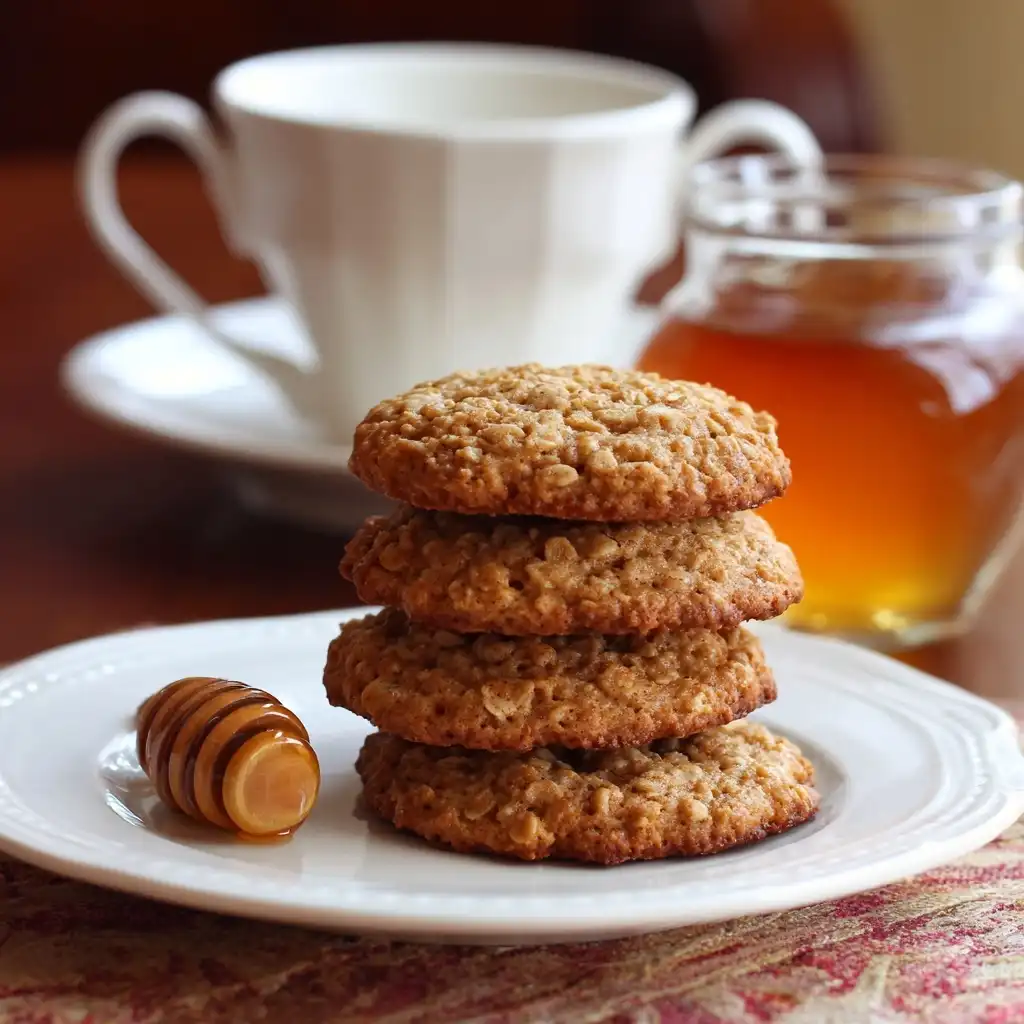
Honey Oatmeal Cookies are a timeless classic—warm, wholesome, and deeply comforting. Blending the natural sweetness of raw honey with the hearty chew of rolled oats and the rich depth of brown sugar, these cookies strike the perfect balance between rustic simplicity and refined flavor. Unlike many traditional cookie recipes that rely heavily on granulated sugar and butter alone, honey oatmeal cookies offer a more nuanced profile: floral, slightly tangy, warmly caramelized, and gently spiced—making them ideal for breakfast, afternoon tea, school lunches, or cozy dessert moments. Their soft-center-with-crisp-edge texture, coupled with their wholesome reputation, has earned them enduring love across generations—and for good reason. Whether you’re baking for health-conscious loved ones, seeking a naturally sweetened treat, or simply craving the nostalgic aroma of oats toasting in the oven, honey oatmeal cookies deliver soul-satisfying satisfaction in every bite.
The History
The origins of oatmeal cookies trace back to the 18th and 19th centuries in Scotland and Northern England, where oats were a dietary staple due to their hardiness in cool, damp climates. Early versions were rustic “oat cakes” — unleavened, flat, and baked on griddles — but as leavening agents like pearl ash and later baking soda became available, softer, cake-like oat-based cookies emerged. In the United States, oatmeal cookies gained widespread popularity in the early 1900s, notably after the introduction of Quaker Oats’ standardized rolled oats in 1877 and the publication of their first official oatmeal cookie recipe in 1913. Honey, long revered as nature’s original sweetener (used for over 8,000 years across ancient Egyptian, Ayurvedic, and Indigenous healing traditions), was historically substituted for scarce or expensive cane sugar—especially during wartime rationing periods like World War II. The marriage of honey and oats thus evolved not only from practicality but also from intuitive culinary wisdom: honey’s humectant properties enhance moisture retention, while oats provide structure and fiber—creating a uniquely resilient, shelf-stable, and nourishing cookie. Over time, regional adaptations flourished—from New England’s maple-honey variations to Southern iterations with pecans and clove, and modern vegan and gluten-free reinterpretations—yet the foundational harmony of honey, oats, and warm spices remains culturally resonant and universally cherished.
Ingredients Breakdown
Every ingredient in honey oatmeal cookies plays a functional and flavorful role—not merely as filler, but as an intentional contributor to texture, browning, moisture, binding, and complexity:
- Old-Fashioned Rolled Oats (not instant or quick-cooking): Provide signature chew, bulk, and soluble fiber (beta-glucan). Their intact groats absorb liquid slowly, lending structure without gumminess. Toasting them lightly before mixing deepens nuttiness and reduces raw grain taste.
- Raw, Unfiltered Honey (e.g., wildflower, clover, or orange blossom): Acts as both sweetener and natural humectant—drawing and retaining moisture for soft, pliable cookies that stay fresh for days. Its enzymatic activity (invertase, diastase) subtly breaks down starches during baking, enhancing tenderness and contributing to complex Maillard reactions that yield golden-brown edges and caramelized notes.
- Brown Sugar (dark or light): Adds molasses-derived moisture, acidity (to activate baking soda), and rich toffee-like depth. Dark brown sugar intensifies color and flavor; light offers milder sweetness and a more delicate crumb.
- Unsalted Butter (preferably European-style, 82–84% fat): Provides flakiness, richness, and steam-driven lift. Creaming with sugars incorporates air; melting slightly before creaming yields denser, fudgier cookies, whereas cooler, softened butter creates more lift and spread control.
- Large Eggs (room temperature): Emulsify fat and water, add structure via proteins, and contribute to chew and rise. The yolk’s lecithin improves dough cohesion and mouthfeel; whites add slight elasticity.
- All-Purpose Flour (or whole wheat pastry flour for added nutrition): Supplies gluten for structure—but used sparingly to avoid toughness. A blend of AP and whole wheat flour (up to 50%) adds nutty depth and fiber without compromising spread.
- Baking Soda (not powder): Reacts with honey’s natural acidity and molasses in brown sugar to produce carbon dioxide—critical for lift, spread, and browning. Too little = dense cookies; too much = soapy aftertaste and excessive spread.
- Ground Cinnamon & Nutmeg: Warm, aromatic spices that complement honey’s floral notes and enhance perceived sweetness without added sugar. Freshly grated nutmeg is exponentially more potent and fragrant than pre-ground.
- Fine Sea Salt: Not just for seasoning—it sharpens all other flavors, balances sweetness, and strengthens gluten network for better dough integrity.
- Pure Vanilla Extract (or vanilla bean paste): Adds creamy, floral-woody complexity that rounds out honey’s brightness and grounds the spice profile.
- Optional Add-Ins: Toasted walnuts or pecans (for crunch and omega-3s), dark chocolate chips (70%+ cacao for antioxidant synergy with honey), dried cranberries or chopped apricots (for tart contrast), flax or chia seeds (for fiber and binding), or even a tablespoon of ground ginger or cardamom for global flair.
Step-by-Step Recipe
- Prep & Preheat: Position oven racks in upper and lower thirds. Line two large baking sheets with parchment paper or silicone baking mats. Preheat oven to 350°F (175°C). Allow all ingredients—especially butter and eggs—to reach room temperature (68–72°F) for optimal emulsion and even baking.
- Toast the Oats (Highly Recommended): Spread 3 cups old-fashioned rolled oats evenly on a dry rimmed baking sheet. Bake for 8–10 minutes, stirring halfway, until fragrant and lightly golden. Cool completely—this step deepens flavor, removes raw starch taste, and improves texture stability.
- Cream Butter, Sugars & Honey: In a large bowl of a stand mixer fitted with paddle attachment (or using a hand mixer), beat 1 cup (227g) unsalted butter, ¾ cup (150g) packed dark brown sugar, and ½ cup (170g) raw honey on medium speed for 3–4 minutes until pale, fluffy, and well combined. Scrape bowl thoroughly. Avoid over-creaming—honey’s viscosity can cause separation if beaten too long.
- Incorporate Eggs & Flavorings: Add 1 large egg and 1 large egg yolk (reserving the white for possible egg wash or discard), 2 tsp pure vanilla extract, and 1 tsp fine sea salt. Mix on low speed just until fully incorporated—about 30 seconds. Overmixing at this stage develops excess gluten.
- Whisk Dry Ingredients Separately: In a medium bowl, whisk together 1¼ cups (160g) all-purpose flour, ½ tsp baking soda, 1½ tsp ground cinnamon, ¼ tsp freshly grated nutmeg, and ¼ tsp ground cloves (optional). Sift if lumps are present.
- Combine Wet & Dry Gradually: With mixer on low, gradually add dry mixture to wet in three additions, mixing just until no dry streaks remain after each addition—approximately 15–20 seconds per addition. Do not overmix.
- Fold in Oats & Add-Ins: Using a sturdy silicone spatula, gently fold in cooled toasted oats, followed by 1 cup chopped toasted walnuts and ¾ cup dark chocolate chips (or your preferred mix-ins). Fold just until evenly distributed—about 12–15 turns. Dough will be thick, glossy, and slightly sticky.
- Chill for Optimal Texture (Non-Negotiable Step): Cover bowl tightly and refrigerate dough for *minimum 2 hours*, preferably 4–24 hours. Chilling solidifies butter, slows spread, enhances flavor development (honey and spices meld), prevents overspreading, and improves browning. For best results, scoop chilled dough into portions *before* chilling—or chill as a mass and scoop cold.
- Scoop & Space: Using a 2-tablespoon cookie scoop (or #30 scoop), portion dough into 1.5-inch balls. Place 3 inches apart on prepared sheets—cookies will spread significantly. Optional: Gently flatten each ball to ¾-inch thickness for more even baking and consistent edges.
- Bake Strategically: Bake one sheet at a time in center of oven for 11–13 minutes. Rotate sheet halfway through. Cookies are done when edges are deeply golden and set, centers appear *just* puffed and slightly soft to the touch (they’ll firm up as they cool). Underbaked centers yield gloriously chewy cookies; overbaked leads to dryness. For crispier cookies, bake 1–2 minutes longer.
- Cool Completely on Sheet: Remove from oven and let cookies rest on baking sheet for 5 full minutes—this allows carryover cooking and structural setting. Then transfer carefully to wire racks using a thin spatula. Cool completely (at least 20 minutes) before storing or serving. They continue to steam-set internally during this phase.
Tips
- Measure Honey Accurately: Lightly coat your measuring cup or spoon with neutral oil or nonstick spray before adding honey—it’ll slide right out without waste or residue.
- Use a Kitchen Scale: Weighing ingredients—especially oats, flour, and honey—ensures consistency and eliminates packing discrepancies that cause dry or greasy batches.
- Don’t Skip the Toast: Untoasted oats can lend a pasty, underdeveloped flavor and contribute to sogginess. Toasting unlocks their inherent sweetness and adds textural dimension.
- Chill Dough in Portions: Scoop dough into balls, place on parchment-lined tray, freeze 1 hour, then transfer to freezer bag. Bakes straight from frozen—add 1–2 minutes to bake time. Perfect for spontaneous baking.
- Rotate Oven Racks Mid-Bake: Home ovens have hot spots. Rotating ensures even browning—especially crucial for honey’s high sugar content, which can scorch on bottom heat.
- Watch the Clock Relentlessly: Honey browns faster than granulated sugar. Set timers for 10 minutes—even if your oven runs cool—then check every 30 seconds thereafter.
- Understand Your Honey: Raw, unfiltered honey varies in water content and enzyme activity. If your batch spreads excessively, reduce honey by 1 tbsp next time—or increase flour by 1 tbsp. Keep notes!
- Cooling Is Part of Baking: Never rush cooling. Removing cookies too soon causes breakage and loss of shape. That 5-minute rest on the sheet is where structural magic happens.
- Store Thoughtfully: Keep in airtight container at room temperature for up to 1 week. Layer with parchment to prevent sticking. For longer storage: freeze baked cookies for 3 months, or freeze unbaked dough balls for 6 months.
- Revive Stale Cookies: Place hardened cookies on a parchment-lined sheet and bake at 300°F for 3–5 minutes—they’ll regain softness and aroma.
Variations and Customizations
Honey oatmeal cookies are a masterclass in adaptability—ideal for dietary needs, seasonal ingredients, global flavors, and pantry creativity:
- Gluten-Free Version: Substitute flour blend (e.g., Bob’s Red Mill 1-to-1 Baking Flour + 1 tsp xanthan gum) and ensure certified GF oats. Add 1 tbsp ground flaxseed to aid binding.
- Vegan Adaptation: Replace butter with cultured vegan butter (Miyoko’s or Forager); use flax egg (1 tbsp ground flax + 2.5 tbsp warm water, rested 5 min) instead of eggs; choose vegan chocolate and verify honey substitute (e.g., date syrup or brown rice syrup—but note flavor shift).
- Protein-Powered: Stir in ¼ cup unflavored whey or plant-based protein powder + 1 tbsp extra milk to compensate for absorption. Reduce flour by 1 tbsp.
- Overnight Oats-Inspired: Soak 1 cup oats overnight in ½ cup almond milk + 1 tbsp chia seeds + 1 tsp honey. Drain well and fold into dough for ultra-moist, pudding-like centers.
- Spiced Chai Variation: Add 1 tsp finely ground ginger, ½ tsp cardamom, ¼ tsp black pepper, and 1 star anise pod (steeped in warm honey, then strained) for aromatic warmth.
- Apple-Cinnamon Harvest: Fold in ¾ cup finely diced, peeled tart apple (tossed in lemon juice) and 1 tbsp apple butter for autumnal depth.
- Maple-Honey Swirl: Drizzle 2 tbsp pure maple syrup over dough before final fold—creates subtle ribbons and layered sweetness.
- Everything Bagel Twist: Add 2 tbsp everything bagel seasoning + 1 tbsp minced onion powder + 1 tsp garlic powder for savory-sweet intrigue (surprisingly delicious with sharp cheddar chunks).
- Matcha-Honey Zen: Whisk 1 tsp ceremonial-grade matcha into dry ingredients for earthy bitterness and antioxidant synergy.
- Mini Cookie Bites: Use a #60 scoop for 1-inch cookies—bake 7–9 minutes. Ideal for lunchboxes, parties, or portion control.
Health Considerations and Nutritional Value
While cookies are inherently indulgent, honey oatmeal cookies offer meaningful nutritional advantages over conventional sugar-heavy counterparts—when made mindfully:
- Glycemic Impact: Raw honey has a lower glycemic index (GI ≈ 58) than table sugar (GI ≈ 65) and contains trace enzymes, antioxidants (pinocembrin, catalase), and prebiotics (oligosaccharides) that may support gut microbiome diversity and moderate glucose response—especially when paired with high-fiber oats.
- Oats: Nature’s Soluble Fiber Champion: One serving (2 medium cookies) delivers ~3g beta-glucan—the FDA-approved heart-healthy fiber shown to lower LDL cholesterol, improve insulin sensitivity, and promote satiety. Steel-cut or old-fashioned oats retain more intact fiber than instant varieties.
- Healthy Fats & Micronutrients: Walnuts or pecans contribute plant-based omega-3s (ALA), vitamin E, magnesium, and polyphenols. Dark chocolate (>70% cacao) adds flavanols linked to improved endothelial function and cognitive support.
- No Artificial Additives: Homemade versions avoid preservatives, emulsifiers (like polysorbate 80), artificial flavors, and high-fructose corn syrup commonly found in commercial cookies.
- Considerations & Moderation: Honey is still sugar—1 tbsp = ~17g carbs—and should be limited for those with diabetes, insulin resistance, or fructose malabsorption. Portion awareness matters: two cookies (~160–190 calories) fits within balanced snacking; ten exceeds reasonable intake. Those with bee pollen allergies should consult allergists before consuming raw honey.
- Nutrition Snapshot (Per Cookie, Approx.): Calories: 155 | Fat: 7.5g (4g sat) | Carbs: 20g (2g fiber, 11g sugars) | Protein: 2.5g | Iron: 5% DV | Magnesium: 8% DV | Zinc: 4% DV | Antioxidants: High (polyphenols from honey, oats, cinnamon, cocoa)
Ingredients
- 3 cups (270g) old-fashioned rolled oats (certified gluten-free if needed)
- 1 cup (227g) unsalted butter, room temperature
- ¾ cup (150g) packed dark brown sugar
- ½ cup (170g) raw, unfiltered honey (e.g., wildflower or clover)
- 1 large egg + 1 large egg yolk (room temperature)
- 2 teaspoons pure vanilla extract
- 1 teaspoon fine sea salt
- 1¼ cups (160g) all-purpose flour (or ¾ cup AP + ½ cup whole wheat pastry flour)
- ½ teaspoon aluminum-free baking soda
- 1½ teaspoons ground cinnamon
- ¼ teaspoon freshly grated nutmeg
- ¼ teaspoon ground cloves (optional)
- 1 cup (120g) coarsely chopped toasted walnuts or pecans
- ¾ cup (135g) 70% dark chocolate chips or chunks
Directions
- Preheat oven to 350°F (175°C). Line two large baking sheets with parchment paper or silicone baking mats.
- Spread oats evenly on a rimmed baking sheet. Toast in preheated oven for 8–10 minutes, stirring once halfway, until fragrant and golden. Transfer to a cool plate or bowl and allow to cool completely—about 15 minutes.
- In the bowl of a stand mixer fitted with paddle attachment, combine butter, brown sugar, and honey. Beat on medium speed for 3–4 minutes until light, fluffy, and fully homogenized. Scrape bowl thoroughly.
- Add egg, egg yolk, vanilla, and salt. Mix on low for 20–30 seconds until just combined. Do not overmix.
- In a separate medium bowl, whisk together flour, baking soda, cinnamon, nutmeg, and cloves (if using).
- With mixer on low, gradually add dry ingredients to wet in three parts, mixing only until no dry flour remains—about 15 seconds per addition. Stop immediately when uniform.
- Using a silicone spatula, gently fold in cooled toasted oats, toasted nuts, and chocolate chips until evenly distributed—do not overfold.
- Cover dough tightly and refrigerate for at least 2 hours—or up to 72 hours—for optimal flavor and texture control.
- When ready to bake, scoop 2-tbsp portions (about 40g each) onto prepared sheets, spacing 3 inches apart. Gently flatten each mound to ¾-inch thickness with palm or bottom of glass.
- Bake one sheet at a time in center rack for 11–13 minutes, rotating halfway through, until edges are deeply golden and set, and centers look softly puffed but not shiny or wet.
- Let cookies rest on baking sheet for exactly 5 minutes—then carefully transfer to wire racks to cool completely before storing or serving.
FAQ
- Can I use quick oats or instant oats instead of old-fashioned?
- No—quick and instant oats are cut finer and pre-steamed, resulting in mushy, overly dense, or greasy cookies with poor structure and diminished flavor. Old-fashioned rolled oats provide essential chew and absorbency. Steel-cut oats are too coarse and won’t soften sufficiently—avoid unless cooked first.
- Why did my cookies spread too much?
- Most common causes: butter too warm or melted, insufficient chilling time, expired baking soda, too much honey (especially high-moisture varieties), or omitting the oat toast step. Also verify oven temperature with an oven thermometer—many run hot or cold.
- Can I make these nut-free?
- Absolutely. Simply omit nuts and increase oats by ¼ cup—or add ¼ cup sunflower seeds or pumpkin seeds for crunch and nutrients. Ensure chocolate chips are nut-free if allergy-sensitive.
- How do I store these cookies to keep them soft?
- Store in an airtight container at room temperature with a slice of plain white bread or apple wedge—its moisture migrates into cookies, keeping them tender for up to 1 week. Replace bread/apple every 2 days.
- Can I freeze the dough?
- Yes—and it’s highly recommended! Scoop chilled dough onto parchment, freeze solid (1 hr), then transfer to labeled freezer bag. Bakes straight from frozen: add 1–2 minutes to bake time and expect slightly thicker, softer cookies.
- Is raw honey safe to bake with?
- Yes. While heating above 118°F deactivates some enzymes (like diastase), raw honey retains its antioxidants, minerals, and distinctive flavor profile even after baking. Pasteurized honey loses more nuance—so raw is preferred for taste, even if some bioactivity diminishes.
- Can I double this recipe?
- You can—but mix in two separate batches. Overloading a mixer bowl compromises creaming and folding. Doubling dry ingredients risks inaccurate measurement; scaling wet ingredients precisely is also harder. Better to make two consecutive single batches.
- What’s the best honey for baking?
- Choose robust, floral honeys: buckwheat (deep molasses notes), wildflower (complex and balanced), or tupelo (mild, buttery, slow-crystallizing). Avoid ultra-light, filtered clover if you want pronounced flavor—though it works for subtlety. Never use “honey blends” with added corn syrup.
- Why do you use both egg and egg yolk?
- The yolk adds fat, emulsifiers, and richness for chew and tenderness; the whole egg contributes structure, lift, and moisture balance. Egg white alone would create drier, crumblier cookies—this ratio yields ideal soft-yet-substantial texture.
- Can I make these dairy-free?
- Yes—with careful substitutions: use high-fat vegan butter (e.g., Miyoko’s), ensure chocolate is dairy-free, and optionally add 1 tsp apple cider vinegar to mimic buttermilk acidity for better soda activation. Coconut oil alone is not recommended—it lacks emulsifying power and yields greasy texture.
Summary
Honey Oatmeal Cookies are a masterful fusion of ancient nourishment and modern baking science—where raw honey’s enzymatic richness meets the hearty fiber of toasted oats, all elevated by warm spices and mindful technique.
With customizable nutrition, adaptable formats, and soul-warming flavor, they’re far more than a cookie: they’re a ritual of care, a canvas for creativity, and a testament to how simple, whole ingredients—thoughtfully treated—can deliver extraordinary comfort, one golden, chewy bite at a time.