Introduction
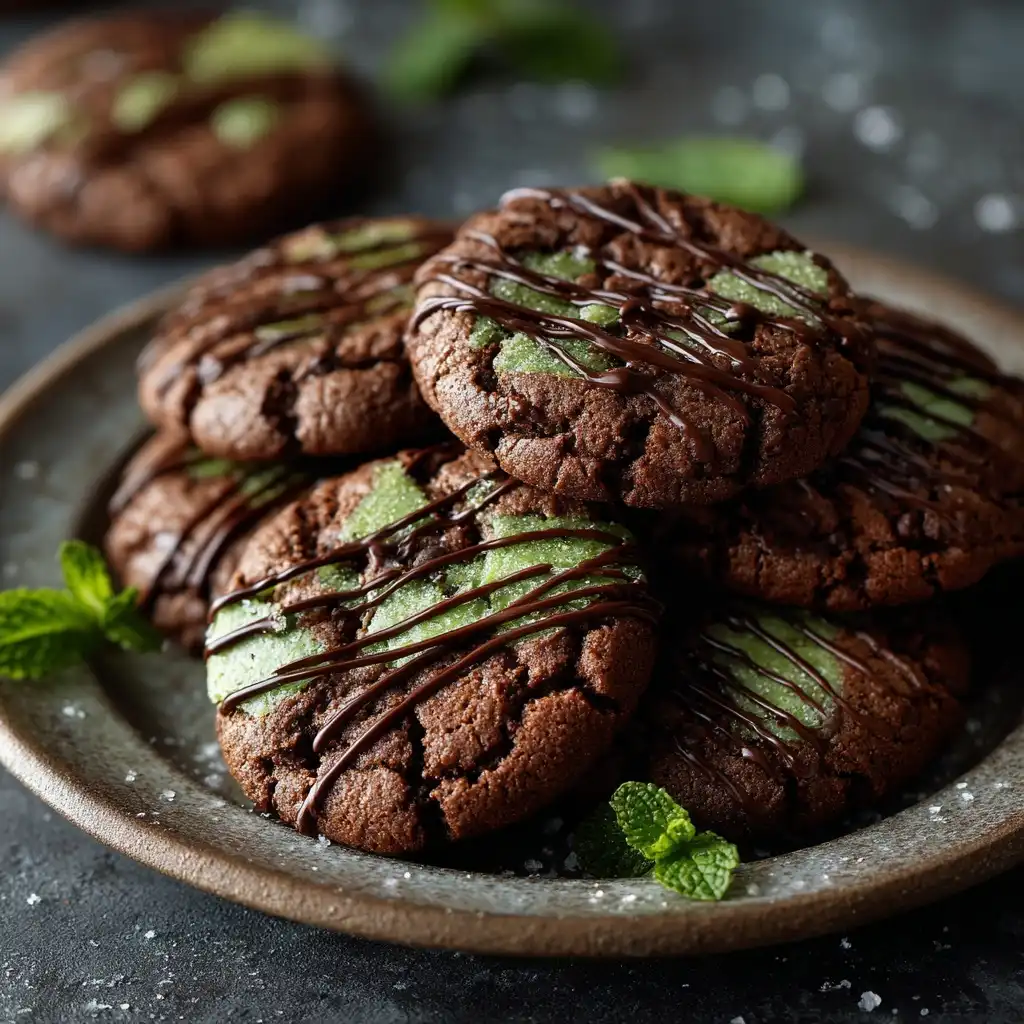
Chocolate Mint Cookies are a timeless classic—a harmonious marriage of rich, deep cocoa and cool, refreshing peppermint that evokes nostalgia, holiday cheer, and sophisticated dessert elegance all at once. Whether enjoyed with afternoon tea, crumbled over ice cream, gifted in festive tins, or served as the crowning touch to a gourmet dessert platter, these cookies strike the perfect balance between indulgence and refinement. Their signature contrast—intense chocolate bitterness softened by mint’s bright, clean finish—makes them universally beloved across generations and occasions. More than just a treat, Chocolate Mint Cookies represent a sensory experience: crisp edges yielding to a tender, slightly chewy center; the subtle crackle of sugar crystals; the faint, invigorating aroma of crushed peppermint rising as the cookies warm from oven heat. This guide is crafted not only to help you bake exceptional cookies but to deepen your appreciation for their craft—from historical roots and ingredient science to modern adaptations and mindful nutrition.
The History
The origins of Chocolate Mint Cookies trace back to the confluence of two powerful culinary traditions: the 19th-century European fascination with chocolate confections and the longstanding medicinal and culinary use of mint. While chocolate arrived in Europe after the Spanish conquest of Mesoamerica—and was initially consumed as a spiced, bitter beverage—its transformation into solid form began in earnest with Joseph Fry’s 1847 chocolate bar in England. Meanwhile, peppermint (Mentha × piperita), long used in ancient Egyptian, Greek, and Roman herbal remedies for digestion and breath freshening, became widely cultivated in England by the 1700s, especially in the Mitcham region, which dominated global peppermint oil production through the 19th century.
The first documented fusion of chocolate and mint appears not in cookies—but in candies. In the 1860s, English confectioner Joseph Terry developed “Terry’s Chocolate Orange,” and later, in 1915, his company launched “Terry’s All Gold,” which included mint-filled chocolates. However, it was the American baking boom of the early 20th century—fueled by widespread access to refined sugar, commercial cocoa powder (like Hershey’s, founded 1894), and home electric ovens—that catalyzed the rise of mint-chocolate baked goods. The iconic “Thin Mints” Girl Scout Cookie debuted in 1953 (originally as “Patties” before rebranding in 1959), cementing the flavor pairing in the national consciousness. Home bakers soon followed suit, adapting recipes from community cookbooks, church fundraisers, and women’s magazines like Good Housekeeping and Ladies’ Home Journal. By the 1970s, chocolate mint cookies appeared regularly in holiday editions, often enriched with crushed candy canes or spearmint extract for seasonal flair. Today, they stand as a benchmark of balanced flavor engineering—a testament to how two seemingly disparate notes can achieve profound synergy when thoughtfully composed.
Ingredients Breakdown
Every exceptional Chocolate Mint Cookie begins with intentionality—not just measurement, but understanding *why* each component matters. Below is an in-depth analysis of core ingredients, including functional roles, quality recommendations, and common pitfalls:
- All-Purpose Flour (2 ¼ cups / 280g): Provides gluten structure. Opt for unbleached, unbromated flour with ~10–11.5% protein for optimal tenderness without toughness. Sift before measuring to prevent compaction—1 cup should weigh ~125g. Too much flour yields dry, crumbly cookies; too little causes excessive spread.
- Unsweetened Cocoa Powder (¾ cup / 75g): Use natural (non-alkalized) cocoa for brighter acidity that complements mint, or Dutch-process for deeper, smoother chocolate notes (adjust leavening accordingly—see Tips). Avoid “cocoa mix” or sweetened varieties. High-fat cocoa (22–24% cocoa butter) enhances richness and mouthfeel.
- Baking Soda (1 tsp): Reacts with acidic components (cocoa, brown sugar, vinegar if added) to create lift and spread control. Essential for achieving that signature crisp edge and airy crumb. Replace every 6 months for potency.
- Salt (1 tsp fine sea salt): Not just for seasoning—salt suppresses bitterness, heightens sweetness perception, and strengthens gluten bonds. Use finely ground salt for even distribution; flaky salt may create uneven pockets.
- Unsalted Butter (1 cup / 227g, room temperature): Room temp (65–68°F / 18–20°C) is non-negotiable for proper creaming. Cold butter won’t aerate; melted butter causes greasy, flat cookies. European-style butter (82–86% fat) adds superior flavor and browning. Salted butter introduces inconsistent sodium levels—always use unsalted and adjust salt separately.
- Granulated Sugar (¾ cup / 150g): Contributes to crispness, caramelization, and structural stability. Its finer crystals dissolve more readily than coarse sugars during creaming.
- Packed Light Brown Sugar (1 cup / 200g): Adds moisture (via molasses), chewiness, and nuanced caramel notes. Dark brown sugar intensifies molasses flavor but may mute mint brightness—light is preferred for balance.
- Large Eggs (2, room temperature): Emulsify fat and water, trap air during creaming, and set structure during baking. Room-temp eggs incorporate more evenly and reduce batter temperature shock.
- Pure Vanilla Extract (2 tsp): A flavor enhancer and aromatic bridge—vanilla’s phenolic compounds bind volatile mint oils and cocoa aromatics, preventing them from evaporating too quickly during baking.
- Pure Peppermint Extract (1½ tsp): The soul of the cookie. Use only alcohol-based, *pure* extract—imitation versions contain synthetic menthol and lack complexity. Start with 1 tsp, then taste batter (raw egg risk permitting) and adjust. For layered depth, combine 1 tsp peppermint + ½ tsp spearmint extract.
- Mini Semi-Sweet Chocolate Chips (1 ¼ cups / 210g): Provide melty pockets and textural contrast. Mini chips distribute more evenly than regular chips and resist sinking. Opt for 55–60% cacao for balanced bitterness/sweetness. Vegan? Use certified dairy-free dark chocolate chips.
- Optional: Crushed Peppermint Candies (¼ cup): Added *after* scooping dough for visual appeal and burst-of-freshness crunch. Use candy canes crushed in a zip-top bag with a rolling pin—avoid pre-ground “peppermint bits” with anti-caking agents that dull flavor.
Step-by-Step Recipe
- Prep & Preheat: Line two large baking sheets with parchment paper or silicone baking mats. Position oven racks in upper and lower thirds. Preheat oven to 350°F (175°C) for *at least 20 minutes*—an accurate, stabilized temperature is critical for consistent spread and browning.
- Whisk Dry Ingredients: In a medium bowl, sift together flour, cocoa powder, baking soda, and salt. Whisk vigorously for 30 seconds to fully aerate and eliminate lumps—this ensures even leavening and prevents cocoa streaks.
- Cream Butter & Sugars: In a large bowl using a stand mixer fitted with paddle attachment (or hand mixer), beat butter on medium speed until creamy and lightened in color (~1 minute). Add granulated and brown sugars. Beat on medium-high for 3–4 minutes until fluffy, pale, and noticeably increased in volume. Scrape bowl thoroughly halfway through. Proper creaming incorporates air—key for lift and delicate texture.
- Add Wet Ingredients: Add eggs one at a time, beating on medium speed for 30 seconds after each addition until fully incorporated and glossy. Add vanilla and peppermint extract; beat 15 seconds until just combined. Overmixing at this stage develops gluten prematurely—stop as soon as uniform.
- Incorporate Dry Mixture: Reduce mixer speed to low. Gradually add dry ingredients in three additions, mixing *just until no flour streaks remain* after each (about 15–20 seconds per addition). Overmixing = tough cookies. Use a flexible spatula to scrape bottom and sides—unincorporated flour often hides there.
- Fold in Chocolate: Using a spatula, gently fold in mini chocolate chips until evenly distributed. If using crushed candy, reserve until step 8.
- Chill Dough (Non-Negotiable Step): Cover bowl tightly and refrigerate for *minimum 2 hours, ideally 24–48 hours*. Chilling solidifies butter, slows spread, concentrates flavors, allows cocoa to fully hydrate, and relaxes gluten—resulting in thicker, more flavorful, evenly baked cookies with defined edges. Do not skip.
- Portion & Garnish: Scoop chilled dough using a 1.5-tablespoon cookie scoop (≈30g per ball). Roll firmly between palms into smooth balls. Place 3 inches apart on prepared sheets. Gently press 4–5 tiny crushed peppermint pieces onto top of each dough ball—press just enough to adhere, not embed.
- Bake Strategically: Bake one sheet at a time in center of oven for 11–13 minutes. Rotate sheet front-to-back at 7 minutes. Cookies are done when edges are set and lightly cracked, centers look *slightly underdone* and soft to the touch (they’ll firm as they cool), and surface has a subtle matte sheen (not wet or shiny). Underbaked centers yield chewy interiors; overbaked = dry and brittle. Note: Baking time varies significantly by oven—use visual cues over timer.
- Cool Completely: Let cookies cool on baking sheet for 5 minutes—this finishes cooking internally and sets structure. Then transfer carefully to wire racks to cool completely (20+ minutes). Skipping full cooling leads to crumbling and muted mint aroma.
Tips
- Peppermint Precision: Peppermint extract is potent and volatile. Add half during mixing, then reserve the rest to brush *lightly* over warm cookies (1–2 minutes out of oven) for amplified top-note freshness. Never add all at once—heat degrades delicate mint oils.
- Chill Depth Matters: Dough chilled 24+ hours develops complex, almost fudgy depth as cocoa solids bloom and sugars partially invert. For ultra-gourmet results, freeze scooped dough balls (ungarnished) up to 3 months—bake straight from freezer, adding 1–2 minutes to bake time.
- Oven Thermometer Required: Most home ovens run 25–50°F off calibration. An inexpensive oven thermometer placed on the center rack ensures accuracy—critical for the narrow window between under- and overbaking.
- Butter Temperature Hack: Cut cold butter into ½-inch cubes. Let sit at room temp 15–20 minutes. It’s ready when pressing a finger leaves a slight, clean indentation—not squishy nor resistant.
- No Spread Fix: If cookies spread too thin, chill dough longer (up to 72 hrs) or add 1 tbsp extra flour to next batch. If too thick/pale, ensure baking soda is fresh and oven is hot enough.
- Flavor Layering Technique: Steep 1 tsp dried organic peppermint leaf in 2 tbsp hot cream for 10 minutes, strain, cool, and substitute for part of the liquid in the recipe (e.g., replace 1 tbsp of egg wash or milk if used) for botanical nuance beyond extract.
- Storage Wisdom: Store cooled cookies in an airtight container with parchment between layers at room temp up to 5 days. For longer shelf life (up to 2 weeks), add a slice of plain white bread—it releases moisture to keep cookies chewy. Freeze baked cookies for 3 months; thaw at room temp in container to retain crispness.
Variations and Customizations
These foundational cookies invite endless creativity—whether adapting for dietary needs, seasonal themes, or gourmet experimentation:
- Gluten-Free: Substitute 1:1 gluten-free all-purpose flour blend (with xanthan gum) + 1 tsp psyllium husk powder (for elasticity). Increase chill time to 3 hours. Expect slightly denser, more fudge-like texture.
- Vegan: Replace butter with refined coconut oil (solid at room temp) or vegan butter stick; eggs with flax eggs (2 tbsp ground flax + 6 tbsp water, rested 10 min); ensure chocolate chips are dairy-free. Add 1 tsp apple cider vinegar to react with baking soda for lift.
- Protein-Powered: Add 2 scoops (60g) unflavored or chocolate whey/collagen protein powder; reduce flour by 3 tbsp. Increase brown sugar by 1 tbsp to offset dryness. Chill dough 3+ hours.
- Double-Chocolate Mint: Replace ¼ cup flour with ¼ cup finely grated high-quality dark chocolate (70%). Fold in after chips for intense, melty ribbons.
- Espresso-Mint Fusion: Add 1 tbsp instant espresso powder to dry ingredients. Enhances chocolate depth and creates a sophisticated mocha-mint profile—ideal for adult palates.
- Spiced Mint: Add ¼ tsp ground cinnamon + ⅛ tsp ground cardamom to dry ingredients. Warm spices echo mint’s herbal qualities and add complexity without sweetness.
- Sea Salt Finish: Sprinkle cookies with flaky Maldon sea salt *immediately* after removing from oven. Salt’s minerality lifts both chocolate and mint, creating addictive contrast.
- Stuffed Surprise: Flatten dough balls, place 1 small square of dark chocolate + 1 tiny mint chocolate truffle in center, seal, and reshape. Results in molten, luxurious centers.
- Seasonal Twists: For holidays—add crushed candy cane to dough (reduce extract by ½ tsp); for spring—infuse extract with edible lavender; for summer—add 1 tsp orange zest for mint-chocolate-orange brightness.
Health Considerations and Nutritional Value
While Chocolate Mint Cookies are inherently indulgent, mindful preparation can enhance their nutritional profile without sacrificing pleasure. A standard 3-inch cookie (approx. 32g) made with the base recipe contains roughly:
- Calories: 145–160 kcal
- Total Fat: 8–9g (5–6g saturated)
- Carbohydrates: 18–20g (12–14g sugars)
- Protein: 2g
- Fiber: 1g (from cocoa and whole-grain flour substitutions)
- Key Micronutrients: Iron (8% DV), Magnesium (6% DV), Copper (12% DV), and antioxidants (flavanols from cocoa)
Positive Aspects: High-quality cocoa is rich in polyphenols—particularly epicatechin—which support endothelial function and antioxidant defense. Peppermint contains rosmarinic acid and menthol, studied for digestive soothing and mild anti-inflammatory effects. Using minimally processed sugars and real extracts avoids artificial additives and hyper-palatable synthetic flavors.
Mindful Modifications:
- Reduce Sugar: Decrease granulated sugar by 2 tbsp (not brown sugar) — maintains moisture while cutting 24g sucrose. Compensate with ½ tsp pure monk fruit extract for perceived sweetness.
- Boost Fiber: Substitute ¼ cup flour with unsweetened cocoa-dusted almond flour or oat fiber—adds satiety and slows glucose absorption.
- Healthy Fats: Replace 2 tbsp butter with cold-pressed avocado oil (added after cooling creamed mixture) for monounsaturated fats and neutral flavor.
- Lower Glycemic Impact: Use coconut sugar (lower GI, retains minerals) blended 50/50 with regular sugar—note: it browns faster, so reduce oven temp by 10°F.
Considerations: Peppermint oil in high concentrations may trigger reflux in sensitive individuals; those with GERD or IBS should moderate intake. Cocoa contains caffeine and theobromine—limit to 1–2 cookies daily if sensitive. Always verify allergen status (nuts, dairy, soy) when sharing or gifting.
Ingredients
- 2 ¼ cups (280g) unbleached all-purpose flour
- ¾ cup (75g) natural unsweetened cocoa powder (not Dutch-process unless adjusting leavening)
- 1 teaspoon baking soda
- 1 teaspoon fine sea salt
- 1 cup (227g) unsalted butter, cubed and at room temperature (65–68°F)
- ¾ cup (150g) granulated sugar
- 1 cup (200g) packed light brown sugar
- 2 large eggs, room temperature
- 2 teaspoons pure vanilla extract
- 1 ½ teaspoons pure peppermint extract (plus extra for optional finishing)
- 1 ¼ cups (210g) mini semi-sweet chocolate chips
- ¼ cup crushed peppermint candies (optional, for garnish)
Directions
- Preheat oven to 350°F (175°C). Line two large baking sheets with parchment paper or silicone baking mats.
- In a medium bowl, sift together flour, cocoa powder, baking soda, and salt. Whisk for 30 seconds until fully combined and aerated.
- In the bowl of a stand mixer fitted with paddle attachment, beat butter on medium speed until creamy and lightened (~1 minute). Add granulated and brown sugars. Beat on medium-high for 3–4 minutes until pale, fluffy, and significantly increased in volume. Scrape bowl thoroughly.
- Add eggs one at a time, beating for 30 seconds after each until fully incorporated and glossy. Add vanilla and 1 tsp of the peppermint extract; beat 15 seconds until just combined.
- Reduce mixer speed to low. Gradually add dry ingredients in three equal additions, mixing just until no flour streaks remain after each (15–20 seconds). Scrape bowl well between additions.
- Using a flexible spatula, fold in mini chocolate chips until evenly distributed.
- Cover bowl tightly and refrigerate dough for minimum 2 hours, preferably 24–48 hours.
- When ready to bake, scoop dough using a 1.5-tablespoon scoop (≈30g). Roll into smooth balls and place 3 inches apart on prepared sheets. Gently press crushed peppermint candies onto tops.
- Bake one sheet at a time in center rack for 11–13 minutes, rotating sheet at 7 minutes. Cookies are done when edges are set and lightly cracked, centers appear soft and slightly underdone, and surface has a matte finish.
- Let cookies cool on baking sheet for 5 minutes, then transfer to wire racks to cool completely (20+ minutes) before serving or storing.
FAQ
- Can I use peppermint oil instead of extract?
- No—peppermint *oil* is highly concentrated (10x stronger) and intended for aromatherapy, not food. It can cause burning sensations and overpowering bitterness. Only use food-grade *peppermint extract*, which is diluted in alcohol and formulated for culinary use.
- Why did my cookies spread too much?
- Most common causes: butter too warm, insufficient chilling, expired baking soda, or excess sugar. Ensure butter is cool-room-temp (not soft/melting), chill dough ≥2 hours, verify leavener freshness, and measure flour accurately (spoon-and-level method).
- Can I make these ahead for holidays?
- Absolutely. Baked cookies freeze beautifully for 3 months in airtight containers. Unbaked dough balls freeze for up to 4 months—bake frozen, adding 1–2 minutes. Flavor often improves with freezing and slow thawing.
- My mint flavor is weak—how can I boost it?
- Three proven methods: (1) Use freshly opened, high-quality extract; (2) Brush warm cookies with remaining ½ tsp extract mixed with 1 tsp warm water; (3) Add 1/8 tsp food-grade crystallized menthol (available online) to dry ingredients—use sparingly!
- Are these safe for kids?
- Yes—with caveats. Peppermint extract is safe in culinary amounts. However, avoid giving whole candy cane pieces to children under 4 due to choking risk. For toddlers, omit garnish and reduce extract to 1 tsp.
- Can I use Dutch-process cocoa?
- Yes—but omit the baking soda and substitute 1 ¼ tsp baking powder + ¼ tsp salt. Dutch-process cocoa is neutral pH and won’t activate soda; using it as-is with soda causes soapy taste and poor rise.
- How do I prevent cracks on top?
- Crisp, delicate cracks are intentional and desirable! They form from rapid steam release during initial oven spring. To minimize *deep* cracking: chill dough thoroughly, avoid overmixing, and don’t flatten dough balls before baking.
- What’s the best way to store to keep them soft?
- Room-temperature airtight container with parchment between layers + one slice of plain white bread. Replace bread every 2 days. The bread’s moisture migrates slowly, keeping cookies chewy without sogginess.
Summary
Chocolate Mint Cookies are a masterclass in contrast and harmony—where bold, earthy cocoa meets bright, cooling peppermint in a tender, chewy-yet-crisp package perfected by precise technique, patient chilling, and premium ingredients.
From their 19th-century confectionery roots to modern dietary adaptations, these cookies transcend trendiness, offering timeless delight, customizable wellness, and endless creative expression—one perfectly balanced bite at a time.