Introduction
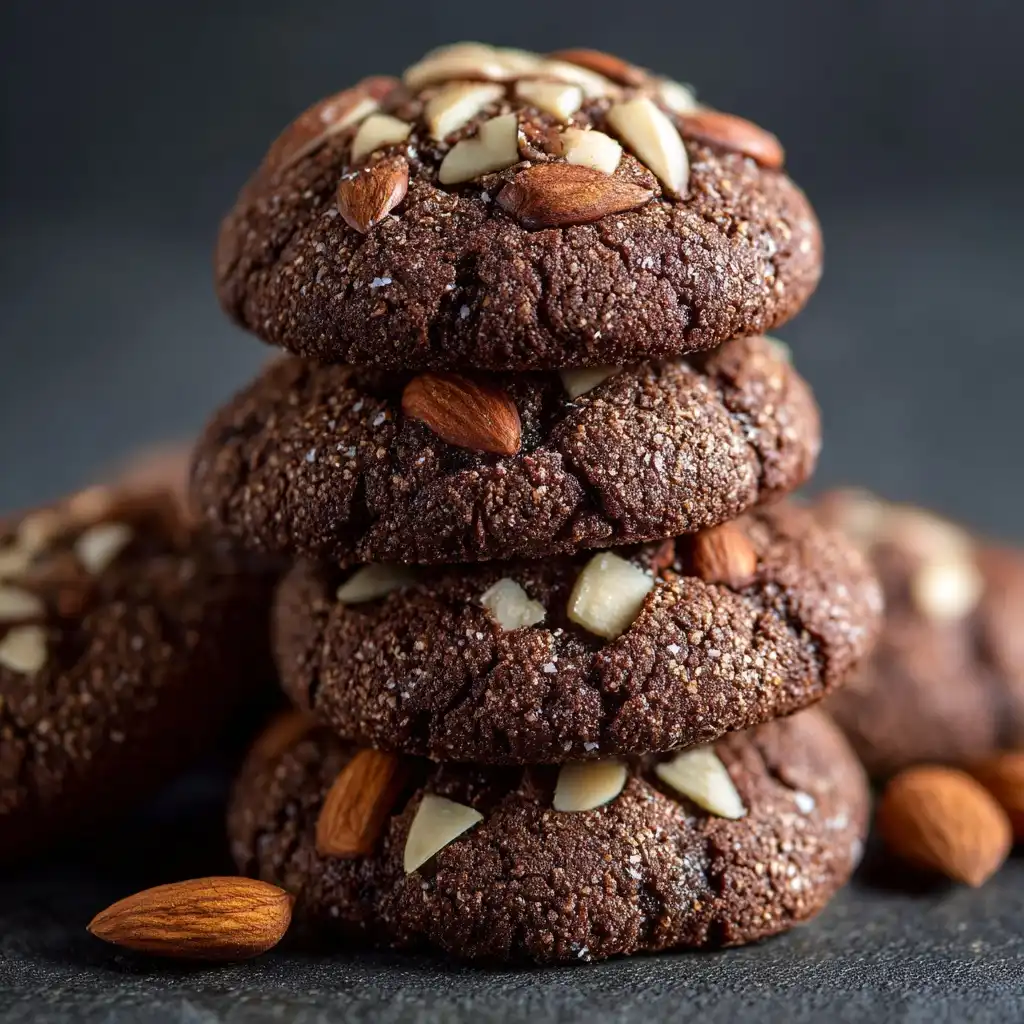
Chocolate Almond Cookies are a beloved classic—a perfect marriage of rich, velvety chocolate and the warm, nutty depth of toasted almonds. Crisp at the edges yet tender and slightly chewy in the center, these cookies deliver an irresistible balance of sweetness, texture, and sophistication. Whether served alongside a steaming cup of coffee, gifted in a festive tin, or enjoyed as an indulgent afternoon treat, they evoke nostalgia while remaining endlessly adaptable. Their elegant simplicity belies their gourmet appeal—making them equally suitable for holiday baking marathons, casual weekend projects, or even upscale dessert platters at dinner parties.
The History
The origins of Chocolate Almond Cookies trace back to early 20th-century American home baking, where resourceful cooks began incorporating affordable, shelf-stable nuts into chocolate-based treats to enhance flavor, texture, and nutritional value. Almonds—long prized in Mediterranean and Middle Eastern confections—gained popularity in U.S. kitchens following increased domestic cultivation in California beginning in the 1920s. The iconic “chocolate chip cookie” debuted in 1938, and soon bakers began experimenting with nut variations; almond quickly rose to prominence due to its mild sweetness, delicate crunch, and natural affinity for cocoa. By the 1950s, recipes featuring ground or slivered almonds appeared regularly in women’s magazines and community cookbooks, often labeled “European-style” or “gourmet.” Over time, regional adaptations emerged: Italian-inspired versions use almond paste and dark chocolate; Sephardic Jewish traditions incorporate orange blossom water and blanched slivers; and modern artisanal bakers elevate the cookie with single-origin cocoa, house-toasted Marcona almonds, and flaky sea salt finishes. Today, Chocolate Almond Cookies stand as a testament to culinary cross-pollination—honoring tradition while inviting innovation with every batch.
Ingredients Breakdown
Understanding each ingredient’s role is essential to mastering this cookie—not just for flavor, but for structural integrity and sensory harmony:
- All-Purpose Flour: Provides the foundational gluten network that supports rise and chew. Too much leads to toughness; too little yields spread and fragility. A precise 1¾ cups (210g) ensures ideal structure without heaviness.
- Unsweetened Cocoa Powder (Dutch-processed preferred): Delivers deep, nuanced chocolate flavor without acidity. Dutch-processed cocoa is alkalized, yielding smoother bitterness and superior solubility—critical for even distribution and rich color. Natural cocoa works but may require slight leavening adjustments.
- Baking Soda: Reacts with acidic components (like brown sugar’s molasses) to create carbon dioxide bubbles, encouraging lift and airy tenderness. It also enhances browning via Maillard reaction—deepening both color and caramelized complexity.
- Salt (fine sea salt or kosher): Not merely for seasoning—salt suppresses bitterness, heightens sweetness perception, and strengthens gluten elasticity. A full teaspoon may sound high, but most is lost to evaporation and balances intense chocolate notes.
- Unsalted Butter (room temperature, not melted): Creams with sugars to trap air—creating pockets that expand during baking for lightness. Its milk solids caramelize at high heat, contributing golden edges and nutty aroma. Using unsalted butter gives precise control over sodium levels.
- Granulated Sugar: Adds sweetness and crispness. Its fine crystals cut cleanly through fat during creaming, promoting optimal aeration. Also draws moisture from flour proteins, slowing gluten formation for tenderness.
- Packed Light Brown Sugar: Brings moisture (thanks to molasses), chewiness, and butterscotch-like depth. The acidity in molasses activates baking soda and contributes to spread control and caramelization.
- Large Eggs (room temperature): Act as emulsifiers—binding fat and water into a stable batter—and provide structure via coagulating proteins. Yolks add richness and tenderness; whites lend stability. Cold eggs can cause butter to seize, leading to curdled batter and uneven texture.
- Pure Vanilla Extract: A complex aromatic enhancer—its 200+ compounds amplify chocolate’s volatile esters and round out almond’s raw edge. Imitation vanilla lacks nuance and can taste medicinal under heat.
- Roasted, Sliced or Slivered Almonds (not raw or oil-roasted): Toasting unlocks enzymatic oils, transforming bland nuttiness into deep, toasted-marzipan richness. Slicing maximizes surface area for crunch and visual appeal. Raw almonds retain grassy tannins; pre-oiled varieties can bleed excess fat into dough, causing greasiness and poor adhesion.
- High-Quality Semi-Sweet or Bittersweet Chocolate Chips or Chopped Chocolate (60–70% cacao): Real chocolate—not “chocolatey chips”—contains cocoa butter, which melts smoothly and resolidifies with a glossy sheen. Lower cacao percentages add excessive sweetness; higher percentages (above 72%) risk overwhelming bitterness unless balanced with extra brown sugar or almond extract.
- (Optional Enhancers): ¼ tsp almond extract (intensifies nuttiness without artificiality), 1 tbsp instant espresso powder (boosts chocolate’s depth without tasting like coffee), or flaky Maldon salt (sprinkled post-bake for contrast).
Step-by-Step Recipe
- Prep & Preheat: Position oven racks in upper and lower thirds. Line two large baking sheets with parchment paper or silicone baking mats—never greased surfaces, which encourage excessive spread. Preheat oven to 350°F (175°C). Allow all ingredients—especially butter and eggs—to reach true room temperature (68–72°F); cold components disrupt emulsion and cause lumps.
- Toast the Almonds: Spread 1 cup raw sliced almonds evenly on a dry, unlined baking sheet. Toast in preheated oven for 8–10 minutes, stirring halfway, until deeply golden and fragrant. Cool completely on a wire rack—warm almonds will melt chocolate and soften dough.
- Whisk Dry Ingredients: In a medium bowl, sift together 1¾ cups (210g) all-purpose flour, ¾ cup (75g) Dutch-process cocoa powder, ½ tsp baking soda, and 1 tsp fine sea salt. Sifting prevents cocoa clumps and aerates flour for lighter texture. Set aside.
- Cream Butter & Sugars: In a large bowl using a stand mixer fitted with paddle attachment (or hand mixer), beat 1 cup (227g) unsalted butter on medium speed for 1 minute until smooth and shiny. Add ¾ cup (150g) granulated sugar and 1 cup (200g) packed light brown sugar. Beat on medium-high for 3–4 minutes until pale, fluffy, and nearly doubled in volume—scraping bowl and beater frequently. This step is non-negotiable for lift and crumb.
- Incorporate Eggs & Vanilla: Add 2 large room-temperature eggs one at a time, beating for 45 seconds after each addition until fully absorbed and glossy. Add 2 tsp pure vanilla extract and beat 30 seconds more. Batter should be homogeneous, thick, and slightly ribbony.
- Gradually Add Dry Mixture: Reduce mixer speed to low. Add dry ingredients in three equal portions, mixing only until *just* incorporated after each addition—do not overmix. Overbeating develops excess gluten, resulting in tough, cakey cookies. Scrape bowl thoroughly between additions.
- Fold in Mix-Ins: Using a sturdy silicone spatula, gently fold in cooled toasted almonds and 1¼ cups (210g) chopped semi-sweet chocolate (or high-quality chips), rotating bowl ¼-turn with each fold. Stop when no dry streaks remain and almonds/chocolate are evenly distributed—about 12–15 folds. Over-folding warms dough and encourages gluten relaxation, leading to flat cookies.
- Chill Dough (Critical Step): Cover bowl tightly with plastic wrap and refrigerate for *at least 2 hours*, preferably 24–48 hours. Chilling solidifies butter, preventing runaway spread; allows flour to fully hydrate for improved flavor development; and concentrates flavors via slow enzymatic reactions. Skipping this yields thin, greasy, overly crisp cookies.
- Portion & Bake: Scoop chilled dough using a 1.5-tablespoon cookie scoop (≈35g per ball). Roll firmly between palms into smooth spheres. Place 3 inches apart on prepared sheets—cookies triple in size. Optional: Press 2–3 extra whole toasted almond slices onto each dough ball for visual elegance. Bake 11–13 minutes, rotating sheets top-to-bottom and front-to-back at 7-minute mark, until edges are set and centers appear soft but no longer glossy-wet. Underside should be lightly golden—not dark brown.
- Cool & Set: Let cookies rest on baking sheets for 5 minutes—this allows internal steam to redistribute and structure to stabilize. Then carefully transfer to wire racks using a thin spatula. Cool completely (20+ minutes) before storing. They firm up significantly as they cool; eating warm yields molten centers but compromised texture.
Tips
- Measure Flour Accurately: Use the “spoon-and-level” method—fluff flour in bag, spoon into measuring cup, then level with straight edge. Scooping directly compresses flour, adding up to 25% excess and yielding dense, dry cookies.
- Butter Temperature Is Everything: Ideal butter should hold an indent when pressed but not collapse or leave oily residue. If too soft, chill 5–10 minutes; if too cold, grate and let sit 3 minutes before creaming.
- Don’t Skip the Toast: Raw almonds taste bland and can turn bitter when baked. Toasting transforms them—enhancing sweetness, aroma, and crunch. For deeper flavor, toss cooled almonds with ½ tsp maple syrup and a pinch of cinnamon before final cooling.
- Use a Timer—Religiously: Oven temperatures vary wildly. Set timers for 10, 11, and 12 minutes—and check visually. Perfect doneness is subtle: edges matte and set, centers still slightly puffed and soft to gentle touch.
- Rotate Sheets Mid-Bake: Home ovens have hot spots. Rotating ensures even browning and prevents one side from over-baking while the other remains underdone.
- Cool on Racks Immediately: Trapped steam beneath cookies causes sogginess. Wire racks allow airflow underneath for crisp, consistent texture.
- Freeze Dough Balls Ahead: Portion and freeze unbaked dough balls on a tray for 1 hour, then transfer to airtight freezer bag for up to 3 months. Bake frozen—add 1–2 minutes to bake time. No thawing needed.
- Revive Stale Cookies: Place in a 300°F oven for 3–4 minutes, or microwave 5 seconds per cookie atop a damp paper towel. Restores crispness and aroma.
- Scale Precisely for Consistency: Invest in a digital kitchen scale. Volume measurements vary up to 30%—weight ensures reproducible results batch after batch.
- Rest Dough Between Batches: If baking multiple sheets, return dough to fridge for 10 minutes between scooping. Warmed dough spreads aggressively.
Variations and Customizations
These cookies are a canvas for creativity—each variation preserves core texture and balance while introducing new dimensions of flavor, dietary alignment, or cultural inspiration:
- Gluten-Free Chocolate Almond Cookies: Substitute 1:1 gluten-free all-purpose flour blend (with xanthan gum included) and add 1 tsp psyllium husk powder to mimic gluten’s binding power. Increase chilling time to 3 hours to prevent crumbliness.
- Vegan Adaptation: Replace butter with refined coconut oil (for neutral taste) or vegan butter stick (not spread); use flax “eggs” (2 tbsp ground flax + 5 tbsp water, rested 10 min); opt for dairy-free chocolate and ensure cocoa is vegan-certified. Add 1 tbsp almond milk if dough feels too stiff.
- Almond Paste Swirl: After portioning dough, press a ½-teaspoon dollop of sweet almond paste into center of each ball, then seal and roll smooth. Creates a moist, marzipan-like core that contrasts beautifully with crisp exterior.
- Mocha Espresso Version: Add 1 tbsp instant espresso powder + ¼ tsp cinnamon to dry ingredients. Swap ¼ cup chocolate chips for finely ground espresso beans for textural intrigue and aromatic punch.
- Orange-Chocolate-Almond: Add 1 tbsp finely grated orange zest + ½ tsp orange extract to batter. Fold in ½ cup dried candied orange peel with chocolate and almonds for bright, zesty counterpoint.
- Sea Salt & Dark Chocolate Luxe: Use 72% dark chocolate, reduce granulated sugar to ½ cup, and finish each cookie with a flake of Maldon salt immediately after baking. Elegant, sophisticated, and intensely chocolate-forward.
- Spiced Chai Almond: Infuse butter by melting with 2 chai tea bags for 5 minutes, then straining and cooling. Add 1 tsp ground cardamom, ½ tsp ginger, and ¼ tsp black pepper to dry ingredients.
- Protein-Powered Fitness Cookies: Add ¼ cup unflavored plant-based protein powder + 2 tbsp oat fiber. Reduce flour by 2 tbsp. Include 2 tbsp chia seeds and increase almond content to 1¼ cups for sustained energy.
- Mini Bite-Sized Cookies: Use a 1-teaspoon scoop and bake 7–9 minutes. Ideal for parties, lunchboxes, or portion-controlled snacking—yields ~60 delicate morsels.
- Stuffed & Sandwiched: Flatten two cookies, sandwich with almond butter ganache (melted chocolate + warmed almond butter + splash of cream), then chill 20 minutes. Drizzle with white chocolate and crushed toasted almonds.
Health Considerations and Nutritional Value
While undeniably indulgent, Chocolate Almond Cookies offer meaningful nutritional benefits when made thoughtfully—and understanding their composition helps integrate them mindfully into balanced eating patterns:
- Almonds: A nutrient-dense tree nut providing 6g of plant-based protein, 3.5g of fiber, vitamin E (a potent antioxidant), magnesium (supports muscle/nerve function), and heart-healthy monounsaturated fats per ¼-cup serving. Research links regular almond consumption to improved LDL cholesterol, glycemic control, and satiety.
- Dark Chocolate (70%+): Rich in flavanols—bioactive compounds shown to support endothelial function, blood flow, and cognitive health. Also contains iron, zinc, and polyphenols with anti-inflammatory properties. Note: Benefits diminish significantly below 60% cacao and vanish entirely in highly processed “chocolate-flavored” coatings.
- Whole-Grain Option: Substituting up to ½ cup of flour with whole wheat pastry flour adds B vitamins, selenium, and additional fiber without compromising tenderness—ideal for digestive wellness.
- Sugar Awareness: Total sugar per cookie averages 12–15g (depending on size and add-ins). To reduce: decrease granulated sugar by ¼ cup and increase brown sugar slightly for moisture retention; or use coconut sugar (lower glycemic index) though it imparts caramel notes.
- Butter vs. Alternatives: Grass-fed butter provides conjugated linoleic acid (CLA) and vitamin K2. For reduced saturated fat, replace half the butter with unsweetened applesauce or mashed banana—but expect denser, moister texture and shorter shelf life.
- Allergen Notes: Naturally nut-free alternatives are not possible without sacrificing identity—but sunflower seed butter and roasted pumpkin seeds offer similar crunch and nutrition for tree-nut allergies. Always label clearly for guests with sensitivities.
- Portion Mindfulness: A standard 35g cookie contains ~180–210 calories. Pairing with Greek yogurt, berries, or green tea enhances satiety and nutrient synergy—transforming dessert into a nourishing, intentional experience.
- No Artificial Additives: Homemade versions avoid preservatives (TBHQ, BHA), artificial colors, and hydrogenated oils common in commercial cookies—supporting long-term metabolic and gut health.
Ingredients
- 1¾ cups (210g) all-purpose flour, spooned & leveled
- ¾ cup (75g) Dutch-processed unsweetened cocoa powder
- ½ teaspoon baking soda
- 1 teaspoon fine sea salt
- 1 cup (227g / 2 sticks) unsalted butter, room temperature
- ¾ cup (150g) granulated sugar
- 1 cup (200g) packed light brown sugar
- 2 large eggs, room temperature
- 2 teaspoons pure vanilla extract
- 1 cup (120g) roasted, sliced or slivered almonds, cooled completely
- 1¼ cups (210g) high-quality semi-sweet or bittersweet chocolate (60–70% cacao), chopped or chips
- (Optional) Flaky sea salt for finishing
Directions
- Preheat oven to 350°F (175°C). Line two large baking sheets with parchment paper or silicone baking mats.
- Spread 1 cup raw sliced almonds on an unlined baking sheet. Toast in preheated oven for 8–10 minutes, stirring once halfway, until deeply golden and fragrant. Transfer to a wire rack and cool completely—minimum 20 minutes.
- In a medium bowl, whisk together flour, cocoa powder, baking soda, and salt. Set aside.
- In the bowl of a stand mixer fitted with paddle attachment, beat butter on medium speed for 1 minute until smooth. Add granulated and brown sugars; beat on medium-high for 3–4 minutes until light, fluffy, and pale. Scrape bowl and beater thoroughly.
- Add eggs one at a time, beating for 45 seconds after each until fully incorporated and glossy. Add vanilla and beat 30 seconds more.
- Reduce mixer speed to low. Gradually add dry ingredients in three parts, mixing only until just combined after each addition. Do not overmix.
- Using a silicone spatula, fold in cooled toasted almonds and chopped chocolate until evenly distributed—about 12–15 folds. Dough will be thick and shaggy.
- Cover bowl tightly with plastic wrap and refrigerate for at least 2 hours—or up to 48 hours for optimal flavor and texture.
- When ready to bake, scoop 1.5-tablespoon portions (≈35g) of dough. Roll firmly into smooth balls and place 3 inches apart on prepared sheets. Optional: Press 2–3 extra toasted almond slices onto each cookie.
- Bake 11–13 minutes, rotating sheets top-to-bottom and front-to-back at 7 minutes, until edges are set and centers look soft but no longer wet-shiny.
- Let cookies cool on baking sheets for 5 minutes, then carefully transfer to wire racks to cool completely—minimum 20 minutes—before storing or serving.
FAQ
- Can I use natural cocoa powder instead of Dutch-process?
- Yes—but reduce baking soda to ¼ tsp and add ½ tsp baking powder to compensate for acidity. Natural cocoa yields a sharper, fruitier chocolate note and slightly lighter color.
- Why did my cookies spread too much?
- Most commonly: butter was too warm, dough wasn’t chilled sufficiently, or flour was under-measured. Also check expiration dates—old baking soda loses leavening power.
- Can I make these nut-free?
- Almonds are integral to the name and texture. For allergy-safe alternatives, try roasted sunflower seeds or pepitas—but rename to “Chocolate Seed Cookies” for accuracy and safety.
- How long do they stay fresh?
- Stored in an airtight container at room temperature: 5 days. Refrigerated: up to 10 days (may firm up; refresh in oven 2 min at 300°F). Frozen (baked or unbaked): 3 months.
- Can I substitute almond extract for some of the vanilla?
- Absolutely—add ¼–½ tsp almond extract with the vanilla. It amplifies nuttiness but use sparingly: too much tastes artificial or like cherry cough syrup.
- My dough is crumbly—what went wrong?
- Over-mixing after adding dry ingredients or insufficient chilling time. If caught early, add 1 tsp milk or cream and mix briefly. Otherwise, chill 30 minutes and re-roll.
- Are these suitable for mailing or gifting?
- Yes—they travel well! Layer between parchment in a rigid tin or box. Include a small silica gel packet to absorb ambient moisture and preserve crispness.
- Can I double the recipe?
- Yes—with caveats: cream butter/sugars in two batches to avoid overloading mixer; chill dough in divided portions; and bake one sheet at a time for consistent results.
- What’s the best chocolate for maximum flavor?
- Look for couverture chocolate (e.g., Valrhona, Callebaut, Guittard) with >60% cacao and minimal added soy lecithin. Chop bars yourself for superior melt and mouthfeel versus pre-chipped alternatives.
- Can kids help make these?
- Absolutely! Assign age-appropriate tasks: measuring dry ingredients (with supervision), folding in mix-ins, scooping dough, or decorating with extra almonds. Teaches math, food safety, and patience.
Summary
Chocolate Almond Cookies are a timeless, versatile, and deeply satisfying treat—where premium cocoa, toasted almonds, and thoughtful technique converge to create cookies that are simultaneously crisp-edged and tender-centered, rich yet balanced, nostalgic yet endlessly reinventable.
Whether you’re honoring decades-old family traditions, accommodating modern dietary needs, or simply seeking a moment of mindful indulgence, this recipe delivers exceptional flavor, texture, and joy—one perfectly golden, deeply chocolatey, nut-kissed bite at a time.