Introduction
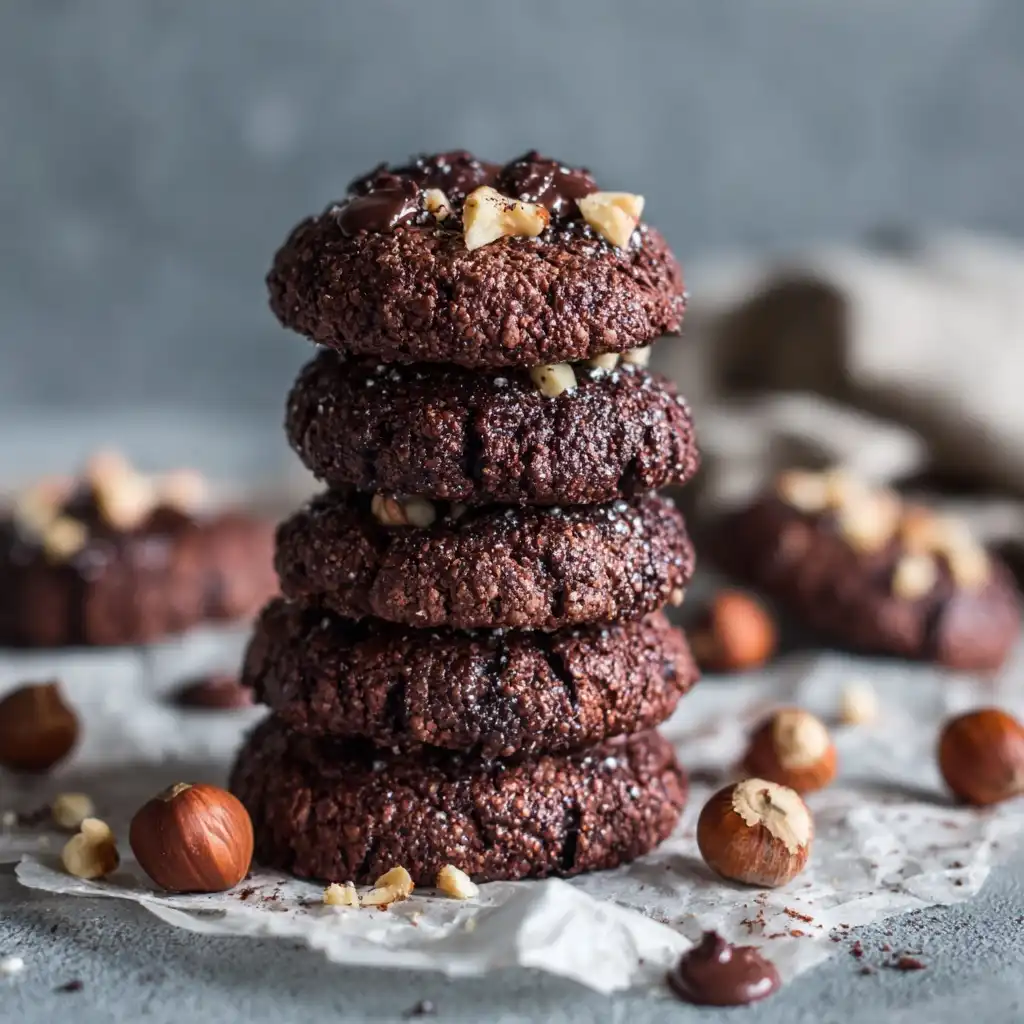
Indulge in the luxurious marriage of rich, velvety chocolate and toasted, nutty hazelnuts with these exquisite Chocolate Hazelnut Cookies — a sophisticated twist on the classic chocolate chip cookie that elevates every bite with depth, texture, and aromatic elegance. Far more than just a sweet treat, these cookies embody artisanal baking at its finest: crisp-edged yet tender-centered, generously studded with roasted hazelnuts and high-quality dark or semi-sweet chocolate, and infused with subtle notes of vanilla, brown sugar warmth, and a whisper of sea salt that amplifies every flavor. Whether served alongside a steaming cup of espresso, gifted in a hand-tied tin for holidays, or enjoyed as a weekend ritual with loved ones, Chocolate Hazelnut Cookies offer an unforgettable sensory experience — one that balances decadence with balance, tradition with innovation, and simplicity with sophistication.
The History
The origins of the Chocolate Hazelnut Cookie are deeply rooted in two distinct culinary traditions — Italian confectionery and American home baking — which converged over decades to produce this now-iconic hybrid. Hazelnuts have been cherished in European baking for centuries, particularly in Piedmont, Italy, where they’re celebrated in gianduja (a smooth blend of roasted hazelnuts, cocoa, and sugar) and the world-famous Nutella® spread, first created in the 1940s by Pietro Ferrero as a cocoa-hazelnut paste during post-war cocoa shortages. Meanwhile, the American chocolate chip cookie was born in 1938 when Ruth Wakefield chopped up a Nestlé semi-sweet chocolate bar and added it to her buttery drop cookie dough — sparking a national obsession. It wasn’t until the 1980s and ’90s, amid the rise of gourmet grocery stores, farm-to-table awareness, and renewed interest in European ingredients, that bakers began deliberately incorporating whole or chopped toasted hazelnuts into chocolate-based cookies. Early iterations appeared in influential cookbooks like Baking Illustrated (2001) and The Perfect Scoop (2007), often highlighting the textural contrast and flavor synergy between dark chocolate and roasted nuts. Today, Chocolate Hazelnut Cookies appear on menus at Michelin-starred patisseries, feature in viral baking TikToks, and grace holiday cookie swaps from Portland to Prague — a testament to their cross-cultural appeal and timeless deliciousness.
Ingredients Breakdown
Every exceptional Chocolate Hazelnut Cookie begins not with technique alone, but with thoughtfully selected, high-integrity ingredients — each playing a precise role in structure, flavor development, moisture retention, leavening, and mouthfeel. Below is a meticulous breakdown of why each component matters:
- All-Purpose Flour (2 ¼ cups / 280g): Provides gluten structure for chewiness without toughness. A small amount of bread flour (up to ¼ cup) can be substituted for extra chew; cake flour yields a more delicate, shortbread-like crumb.
- Unsalted Butter (1 cup / 227g, room temperature): The backbone of richness and tenderness. Room-temperature butter creams smoothly with sugar, trapping air for lift and ensuring even distribution. European-style butter (82–86% fat) adds superior flavor and a silkier melt-in-the-mouth quality.
- Brown Sugar (1 cup packed / 220g): Both light and dark varieties contribute molasses notes, acidity (which enhances chocolate flavor), and hygroscopic properties — meaning it attracts and retains moisture for soft, chewy centers that stay fresh for days.
- Granulated Sugar (½ cup / 100g): Adds sweetness and promotes spreading and crisp edges via caramelization during baking. Its lower moisture content helps create that coveted contrast between crunchy perimeter and tender interior.
- Eggs (2 large, room temperature): Act as emulsifiers, binders, and sources of moisture and structure. The yolks add fat and richness; whites contribute protein for slight lift. Cold eggs can cause batter to seize — always bring them to room temperature.
- Pure Vanilla Extract (2 tsp): Not optional — it’s a flavor amplifier that rounds out bitterness and deepens the complexity of both chocolate and hazelnuts. Madagascar bourbon vanilla is ideal; avoid imitation extract.
- Baking Soda (1 tsp): Reacts with the acidity in brown sugar and any natural acids in chocolate or cocoa to produce carbon dioxide gas — essential for lift and spread. Too much causes soapy bitterness; too little yields dense, flat cookies.
- Fine Sea Salt (1 tsp + flaky salt for finishing): Critical for balancing sweetness and enhancing all other flavors. Fine salt dissolves evenly in dough; flaky Maldon or fleur de sel sprinkled pre-bake delivers bursts of salinity and textural intrigue.
- High-Quality Dark or Semi-Sweet Chocolate (12 oz / 340g, finely chopped): Use bars—not chips—for superior cocoa butter content, richer flavor, and irregular shards that melt beautifully. 60–70% cacao offers ideal balance: deep chocolate notes without excessive bitterness. Avoid “chocolate-flavored” products containing vegetable oils.
- Toasted Hazelnuts (1 ½ cups / 180g, skinless & coarsely chopped): Toasting unlocks volatile aromatic compounds (like filbertone, responsible for that signature nutty-sweet scent). Removing skins eliminates bitter tannins and astringency — crucial for refined flavor. Chop just before mixing to prevent oil release and greasiness.
- (Optional but Recommended) Espresso Powder (1 tsp): A stealth ingredient that doesn’t make cookies taste like coffee — instead, it intensifies chocolate’s inherent depth and bitterness, making the overall flavor profile more resonant and complex.
Step-by-Step Recipe
This meticulously tested method ensures consistent, professional-grade results — from perfectly golden edges to centers that yield with gentle resistance and cool into a sublime, fudgy-chewy texture. Follow each step with intention:
- Toast & Skin the Hazelnuts: Preheat oven to 350°F (175°C). Spread raw, skin-on hazelnuts in a single layer on a parchment-lined baking sheet. Roast for 10–12 minutes, shaking pan halfway, until fragrant and skins blistered. Transfer immediately to a clean kitchen towel, fold towel over nuts, and rub vigorously for 30–60 seconds to loosen and remove most skins (don’t obsess over perfection — 90% removal is ideal). Cool completely, then coarsely chop with a chef’s knife or pulse briefly in a food processor (avoid over-processing into paste).
- Prepare Chocolate: Finely chop chocolate bars using a serrated knife on a stable cutting board. Aim for shards roughly ¼” to ½” in size — uniform enough for even melting, varied enough for textural interest. Refrigerate until ready to use (prevents premature melting during mixing).
- Cream Butter & Sugars: In the bowl of a stand mixer fitted with the paddle attachment, beat room-temperature unsalted butter, brown sugar, and granulated sugar on medium-high speed for 3–4 minutes — until light, fluffy, pale in color, and free of graininess. Scrape bowl thoroughly with a silicone spatula halfway through. This step incorporates vital air and fully dissolves sugar crystals.
- Incorporate Eggs & Flavorings: Add eggs one at a time, beating on medium speed for 30 seconds after each addition until fully emulsified and glossy. Beat in vanilla extract and (if using) espresso powder until homogenous. Batter should look smooth and slightly thickened.
- Dry Ingredients & Leavening: In a separate medium bowl, whisk together flour, baking soda, and fine sea salt until fully aerated and evenly distributed. Sifting is optional but recommended for ultra-light texture.
- Combine Wet & Dry: Reduce mixer speed to low. Gradually add dry ingredients in three additions, mixing only until *just* incorporated after each — about 15–20 seconds per addition. Overmixing develops excess gluten, resulting in tough, cakey cookies. Stop while a few streaks of flour remain visible.
- Fold in Mix-Ins: Using a silicone spatula, gently fold in cooled, chopped hazelnuts and chilled chocolate shards in two additions. Rotate bowl 90° and fold with deliberate, sweeping motions — lifting from bottom and folding over — until evenly dispersed and no dry pockets remain. Do not stir or overwork.
- Chill Dough (Non-Negotiable): Cover bowl tightly with plastic wrap and refrigerate for *at least 2 hours*, preferably 24–48 hours. This critical step hydrates the flour, solidifies the butter (preventing overspreading), concentrates flavors, and allows starches and proteins to relax — yielding thicker, more flavorful, better-textured cookies. For optimal results, portion dough *before* chilling (see Tips).
- Portion & Prep for Baking: Line two large baking sheets with parchment paper or silicone baking mats. Using a 2-tbsp cookie scoop (or #30 scoop), portion chilled dough into 24 equal mounds (approx. 1.5 oz each). Roll each into a smooth ball, then flatten slightly into 1.5″ discs. Place at least 3″ apart on sheets. Sprinkle tops generously with flaky sea salt.
- Bake with Precision: Preheat oven to 375°F (190°C) — *not higher*, as excessive heat causes rapid spread and burnt edges before centers set. Bake sheets one at a time on center rack for 11–13 minutes. Cookies are done when edges are deeply golden and set, centers appear puffed and *just* beginning to crackle on the surface, and bottoms are lightly browned. They will look underbaked — this is intentional; carryover cooking finishes them as they cool.
- Cool Completely: Remove from oven and let cookies rest on baking sheets for 5 minutes — this sets their structure. Then, carefully transfer with a thin metal spatula to wire racks. Cool for *at least 20 minutes* before eating. This allows residual heat to redistribute, chocolate to re-set, and textures to harmonize. Warm cookies are fragile and overly soft; fully cooled ones boast perfect chew and nuanced flavor.
Tips
- Toast Nuts in Batches: Never overcrowd the baking sheet — steam prevents even browning. If making double batches, toast in two rounds for maximum aroma and crunch.
- Skin Removal Hack: After rubbing in a towel, place warm hazelnuts in a blender jar and pulse 2–3 times on low — the blades help dislodge stubborn skins without pulverizing nuts.
- Butter Temperature Matters: Ideal butter should hold an indent when pressed but not feel greasy or shiny. If too soft, chill for 10 minutes; if too cold, cut into small cubes and beat 30 seconds longer.
- Room-Temperature Eggs Are Essential: To warm cold eggs quickly, submerge in warm (not hot) tap water for 5–7 minutes before cracking.
- Measure Flour Correctly: Spoon flour into measuring cup and level with straight edge — never scoop directly from bag (causes compaction and up to 25% excess flour).
- Chill Dough in Portions: Scoop dough balls onto parchment, freeze for 1 hour, then transfer to freezer bags. This allows for spontaneous baking — just add 1–2 minutes to bake time for frozen dough.
- Rotate & Swap Racks: For even baking, rotate sheet front-to-back halfway through. If baking two sheets, swap top and bottom racks midway.
- Use an Oven Thermometer: Built-in oven thermostats are notoriously inaccurate. An analog or digital oven thermometer ensures precise temperature control — critical for consistent spread and browning.
- Don’t Skip the Salt Finish: Flaky sea salt applied *before* baking melts partially into the surface, creating savory-sweet pockets that elevate every bite. Kosher salt works, but flaky varieties provide superior visual and textural impact.
- Cooling Is Part of Baking: Rushing this step compromises texture. Letting cookies cool fully on wire racks prevents trapped steam and soggy bottoms.
- Freeze for Longevity: Baked cookies freeze beautifully for up to 3 months in airtight containers with parchment between layers. Thaw at room temperature or warm gently in a 300°F oven for 3–4 minutes.
- Revive Stale Cookies: Place in a sealed container with a slice of plain white bread overnight — the cookies will absorb moisture and regain softness.
Variations and Customizations
These Chocolate Hazelnut Cookies serve as a versatile canvas — adaptable to dietary needs, seasonal ingredients, global inspirations, and personal preferences — without sacrificing integrity or indulgence. Explore these curated variations:
- Gluten-Free: Substitute certified GF all-purpose flour blend (like King Arthur Measure for Measure or Bob’s Red Mill 1-to-1) + ¼ tsp xanthan gum. Add 1 tbsp ground psyllium husk to improve elasticity and prevent crumbliness.
- Vegan: Replace butter with vegan butter (Miyoko’s or Earth Balance) and eggs with flax eggs (2 tbsp ground flaxseed + 5 tbsp water, rested 10 mins). Use dairy-free dark chocolate and ensure hazelnuts are processed in a nut-only facility if allergy-sensitive.
- Lower-Sugar: Reduce granulated sugar to ¼ cup and brown sugar to ¾ cup. Boost flavor with 1 tsp cinnamon, ½ tsp cardamom, and 1 tbsp blackstrap molasses (adds minerals and robust depth).
- White Chocolate & Toasted Hazelnut: Swap dark chocolate for high-cocoa-content white chocolate (32–35% cocoa butter) and add 1 tsp orange zest to brighten richness. Garnish with candied orange peel.
- Espresso-Hazelnut Crunch: Add 2 tbsp finely ground espresso beans + ¼ cup crushed praline (caramelized hazelnuts) for intense coffee-nut complexity and shattering texture.
- Spiced Chai Variation: Infuse melted butter with 1 tbsp chai spice blend (cinnamon, ginger, cardamom, cloves, black pepper) for 10 minutes off-heat; strain before creaming. Fold in 2 tbsp crystallized ginger.
- Sea Salt & Caramel Swirl: Before baking, press a ½ tsp dollop of thick, high-quality caramel sauce (like D.L. Jolly or homemade) into center of each dough ball and gently swirl with a toothpick. Finish with extra flaky salt.
- Mini Cookie Bites: Portion using a #60 scoop (1 tbsp) and bake for 7–9 minutes. Perfect for parties, lunchboxes, or portion-controlled treats.
- Stuffed Cookies: Flatten dough balls, place 1 small square of dark chocolate and 3–4 hazelnut pieces in center, fold dough over, and seal tightly. Yields decadent molten centers.
- Seasonal Twists: In fall, add ¼ cup apple butter and ½ tsp nutmeg; in winter, fold in 2 tbsp crushed amaretti cookies and 1 tsp almond extract; in spring, incorporate lemon zest and 2 tbsp dried lavender (culinary grade); in summer, add ¼ cup fresh raspberries (pat dry first) and 1 tsp rosewater.
Health Considerations and Nutritional Value
While Chocolate Hazelnut Cookies are undeniably a treat — not a health food — understanding their nutritional composition empowers mindful enjoyment and informed customization. Per standard cookie (based on 24 cookies per batch, approx. 1.5 oz each):
- Calories: ~240–270 kcal — moderate for a premium baked good, driven primarily by healthy fats (hazelnuts, butter) and complex carbohydrates (flour, sugars).
- Fats: ~14–16g total fat, with ~7–9g monounsaturated fats (MUFA) from hazelnuts — clinically shown to support heart health, reduce LDL cholesterol, and improve insulin sensitivity. Saturated fat (~7g) comes mainly from butter and chocolate; choosing dark chocolate (70%+) lowers saturated fat versus milk chocolate.
- Protein: ~3–4g per cookie — modest but meaningful, enhanced by hazelnuts’ plant-based protein (4.3g per ¼ cup) and egg contribution.
- Fiber: ~2g per cookie — significantly higher than standard chocolate chip cookies due to hazelnuts (2.7g fiber per ¼ cup) and whole-grain flour substitutions (see Variations). Fiber supports satiety, gut microbiome diversity, and stable blood sugar.
- Sugars: ~14–16g added sugar — aligns with FDA’s recommended limit of <25g added sugar per day for women and <36g for men. Brown sugar’s molasses adds trace minerals (calcium, potassium, iron, magnesium), though amounts per cookie are minimal.
- Antioxidants & Phytonutrients: Hazelnuts contain vitamin E (a potent antioxidant), folate, and proanthocyanidins; dark chocolate contributes flavanols linked to improved endothelial function and cognitive performance. Roasting enhances bioavailability of some compounds.
- Dietary Considerations: Naturally free of soy and corn (if using pure vanilla and non-GMO chocolate); easily adapted for nut allergies (substitute toasted sunflower or pumpkin seeds); contains gluten and dairy unless modified. Always verify labels for cross-contamination if managing celiac disease or severe allergies.
- Mindful Enjoyment Tips: Pair with green tea (enhances flavanol absorption); savor slowly — it takes ~20 minutes for satiety signals to reach the brain; store in airtight container to maintain freshness without preservatives; enjoy 1–2 cookies as part of a balanced meal or snack, not in isolation.
Ingredients
- 2 ¼ cups (280g) all-purpose flour, spooned & leveled
- 1 tsp baking soda
- 1 tsp fine sea salt
- 1 cup (227g) unsalted butter, room temperature
- 1 cup (220g) packed light or dark brown sugar
- ½ cup (100g) granulated sugar
- 2 large eggs, room temperature
- 2 tsp pure vanilla extract
- 1 tsp instant espresso powder (optional but recommended)
- 12 oz (340g) high-quality dark or semi-sweet chocolate (60–70% cacao), finely chopped
- 1 ½ cups (180g) toasted, skinless hazelnuts, coarsely chopped
- Flaky sea salt (e.g., Maldon), for finishing
Directions
- Preheat oven to 350°F (175°C). Line a baking sheet with parchment paper. Spread hazelnuts in a single layer and roast for 10–12 minutes, until fragrant and skins blistered. Transfer to a clean kitchen towel, fold over, and rub vigorously to remove skins. Cool completely, then coarsely chop. Set aside.
- Line two additional baking sheets with parchment or silicone mats. Adjust oven to 375°F (190°C) and place oven thermometer inside.
- In a medium bowl, whisk together flour, baking soda, and fine sea salt. Set aside.
- In the bowl of a stand mixer fitted with paddle attachment, beat butter, brown sugar, and granulated sugar on medium-high speed for 3–4 minutes, until light, fluffy, and pale. Scrape bowl thoroughly.
- Add eggs one at a time, beating 30 seconds after each until fully incorporated. Beat in vanilla and espresso powder until combined.
- Reduce mixer speed to low. Gradually add dry ingredients in three additions, mixing only until just combined after each. Stop while faint streaks of flour remain.
- Using a silicone spatula, gently fold in chopped hazelnuts and chocolate until evenly distributed.
- Cover bowl tightly with plastic wrap and refrigerate for at least 2 hours, or up to 48 hours.
- When ready to bake, portion chilled dough into 24 equal mounds (about 1.5 oz each) using a 2-tbsp scoop. Roll into balls, flatten slightly into 1.5″ discs, and place 3″ apart on prepared sheets. Sprinkle generously with flaky sea salt.
- Bake one sheet at a time on center rack for 11–13 minutes, until edges are deeply golden and set, centers are puffed and lightly cracked, and bottoms are lightly browned. Rotate sheet front-to-back at 6 minutes.
- Let cookies cool on sheet for 5 minutes, then transfer to wire racks to cool completely (at least 20 minutes) before serving.
FAQ
- Can I use Nutella or hazelnut spread instead of whole nuts?
- No — Nutella contains palm oil, skim milk, and added sugars that destabilize dough structure, cause excessive spread, and inhibit proper browning. Whole toasted, skinless hazelnuts are essential for authentic flavor, crunch, and texture integrity.
- Why do my cookies spread too much?
- Most common causes: butter too warm (should be cool to touch), insufficient chilling time (<2 hours), using melted or softened butter instead of creamed, measuring flour incorrectly (too little), or baking on warm sheets. Also check oven temperature — many ovens run hot.
- Can I substitute oil for butter?
- Not recommended. Butter provides unique water content, milk solids, and fat structure critical for browning, flavor, and texture. Oil creates greasy, flat, cakey cookies lacking complexity.
- How do I know when hazelnuts are properly toasted?
- They’ll emit a warm, sweet, nutty aroma (like toasted marshmallows and caramel), turn light golden-brown, and the skins will visibly blister and curl away from the kernel. Avoid dark browning — that introduces bitterness.
- Can I make these ahead for holidays?
- Absolutely. Baked cookies stay fresh in airtight containers at room temperature for 5 days, refrigerated for 10 days, or frozen for 3 months. Unbaked dough freezes exceptionally well for up to 3 months — bake straight from frozen, adding 1–2 minutes.
- What’s the best chocolate to use?
- High-cocoa-content dark chocolate bars (Valrhona Guanaja 64%, Ghirardelli 60%, Callebaut 66%) or semi-sweet (Scharffen Berger 52%). Avoid chips — they contain stabilizers that resist melting and create waxy texture. Look for “cocoa butter” as the only fat listed.
- Can I add oats or coconut?
- You can, but it changes the identity and texture. For best results, replace *no more than* ½ cup flour with old-fashioned rolled oats (toasted first), or add ⅓ cup unsweetened shredded coconut (toasted). Expect softer, less chewy cookies.
- Why do you recommend chilling for up to 48 hours?
- Extended chilling allows enzymatic activity to break down starches into simple sugars, intensifying caramelized notes. It also improves gluten hydration for superior chew and enables deeper flavor melding — especially noticeable in the hazelnut-chocolate interplay.
- My cookies turned out cakey — what went wrong?
- Likely causes: overmixing after adding flour (develops gluten), using too much baking soda, substituting cake flour without adjustment, adding extra egg or liquid, or chilling dough *after* mixing in chocolate/hazelnuts (causing chocolate to sweat and seize).
- Are these suitable for people with nut allergies?
- No — hazelnuts are tree nuts and pose serious risk. For nut-free versions, substitute toasted sunflower seeds or pumpkin seeds (pepitas), but note flavor and texture will differ significantly. Always label clearly and verify all ingredients for cross-contact.
Summary
Chocolate Hazelnut Cookies represent the pinnacle of intentional baking — where the deep, earthy luxury of toasted, skinless hazelnuts meets the bold, velvety intensity of premium dark chocolate, all enveloped in a buttery, brown sugar–spiced dough that bakes up with crisp edges, chewy centers, and an unforgettable aroma of caramelized nuts and warm vanilla.
With roots in Italian confectionery tradition and American ingenuity, perfected through precise technique, quality ingredients, and patient chilling, these cookies are more than dessert — they’re an invitation to savor craftsmanship, celebrate seasonal abundance, and share moments of pure, unadulterated joy — one perfectly balanced, soul-warming bite at a time.