Introduction
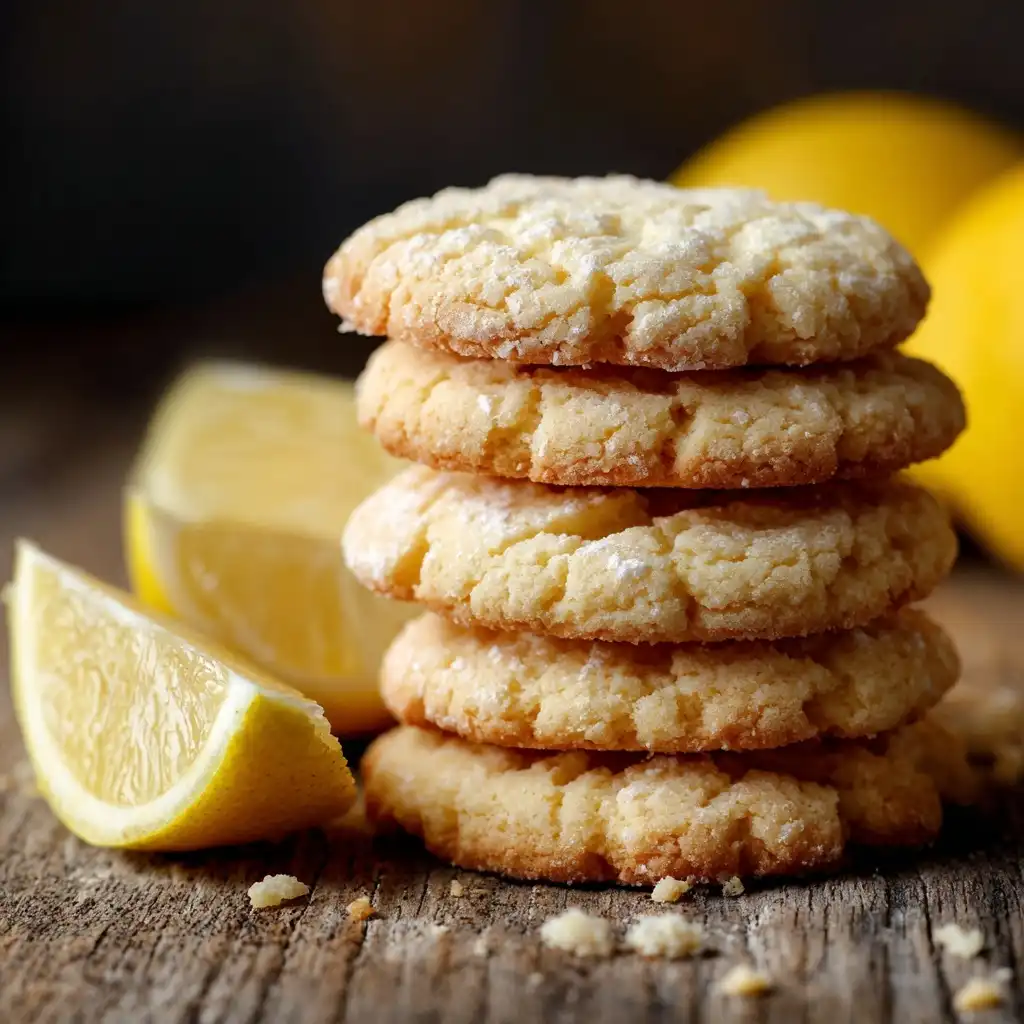
Lemon Butter Cookies are a timeless classic — bright, buttery, tender, and irresistibly fragrant with the zesty essence of fresh lemons. These delicate shortbread-style cookies strike the perfect balance between rich, creamy sweetness and vibrant citrus tang, making them an ideal treat for afternoon tea, holiday platters, summer gatherings, or even as a sophisticated dessert pairing. Unlike overly sweet lemon cookies that rely on heavy glazes or artificial flavorings, authentic Lemon Butter Cookies celebrate simplicity: high-quality butter, real lemon zest and juice, a touch of vanilla, and just enough sugar to enhance—not overpower—the natural brightness of the fruit. Their melt-in-your-mouth texture, golden edges, and aromatic lemon perfume evoke nostalgia while remaining refreshingly modern. Whether you’re a seasoned baker or a curious beginner, mastering this recipe unlocks a versatile foundation for endless creativity in flavor, texture, and presentation.
The History
The lineage of Lemon Butter Cookies traces back to the broader evolution of European shortbread and butter cookie traditions, particularly rooted in 18th- and 19th-century British and Dutch baking practices. Early butter-rich cookies—often called “butter cakes” or “rich biscuits”—were luxury items reserved for special occasions due to the expense and perishability of butter. As citrus cultivation expanded across Mediterranean regions and trade routes brought lemons to Northern Europe, bakers began incorporating lemon zest and juice not only for preservation (the acidity helped inhibit spoilage) but also to cut through richness and add festive brightness. By the late Victorian era, lemon-flavored butter cookies appeared in household cookbooks like Mrs. Beeton’s Book of Household Management (1861), where they were described as “light, crisp, and delicately perfumed.” In America, the recipe evolved further during the mid-20th century, influenced by wartime rationing adaptations (using powdered milk or egg substitutes) and later by post-war abundance—leading to richer, more tender versions with higher butter content and refined techniques like chilling dough for enhanced structure. Regional interpretations flourished: Italian lingue di gatto (cat’s tongues) sometimes feature lemon; Greek kourabiedes occasionally include lemon zest alongside rosewater; and Scandinavian smørkager often use lemon as a counterpoint to cardamom or almond. Today’s Lemon Butter Cookie stands as a global heirloom—a testament to culinary cross-pollination, seasonal ingenuity, and the universal love for citrus-infused comfort.
Ingredients Breakdown
Every ingredient in Lemon Butter Cookies plays a precise functional and sensory role. Understanding their purpose elevates both consistency and flavor:
- Unsalted Butter (1 cup / 227g, softened to 65–68°F): The structural and flavor backbone. Unsalted ensures control over sodium levels; softened (not melted or greasy) allows optimal creaming with sugar to trap air for tenderness. High-fat European-style butter (82–84% fat) yields superior richness and flakier crumb.
- Powdered Sugar (1¼ cups / 150g, sifted): Preferred over granulated sugar for its fine particles, which dissolve seamlessly into butter without creating graininess—and crucially, its cornstarch content contributes to a delicate, crumbly-yet-cohesive texture. Sifting prevents lumps and aerates the mixture.
- Granulated Sugar (¼ cup / 50g): Adds subtle crunch and slight caramelization at the edges during baking. Its coarser crystals help create micro-air pockets when creamed, enhancing lift without compromising density.
- Fresh Lemon Zest (from 2–3 medium lemons, ~2 tbsp finely grated): The soul of the cookie. Contains aromatic citrus oils (limonene, citral) concentrated in the yellow peel—never the bitter white pith. Microplane grating maximizes surface area and oil release. Zesting before juicing prevents accidental pith contamination.
- Fresh Lemon Juice (2 tbsp, strained): Provides bright acidity and moisture. Must be freshly squeezed—bottled juice lacks volatile top notes and contains preservatives that dull flavor. Straining removes pulp and seeds that could cause uneven baking or bitterness.
- Pure Vanilla Extract (1 tsp): Acts as a flavor bridge—rounding out sharp citrus notes and deepening buttery warmth. Madagascar Bourbon vanilla is ideal for its creamy, floral complexity.
- All-Purpose Flour (2½ cups / 315g, spooned & leveled): Provides gluten structure. Too much leads to toughness; too little causes spreading. Spooning (not scooping) into the measuring cup and leveling with a knife ensures accuracy. For ultra-tender results, substitute up to ¼ cup with cake flour (lower protein).
- Cornstarch (2 tbsp / 16g): A secret weapon—it inhibits gluten formation, yielding unparalleled tenderness and a velvety mouthfeel. Also improves shelf life by reducing moisture migration.
- Finely Ground Sea Salt (½ tsp): Not just for seasoning—salt enhances sweetness perception, balances acidity, and strengthens gluten bonds just enough to support the dough without chewiness.
- Optional Additions: A pinch of cream of tartar (¼ tsp) stabilizes the dough’s pH for whiter, brighter cookies; a drop of lemon oil (food-grade) can intensify aroma without adding liquid.
Step-by-Step Recipe
- Prep & Chill Equipment: Place mixing bowl, whisk attachment (or paddle), and baking sheets in the refrigerator for 15 minutes. Cold tools prevent premature butter softening during mixing.
- Zest & Juice Lemons: Using a microplane, zest lemons over parchment paper (to catch oils). Then juice lemons, strain, and measure. Set both aside.
- Cream Butter & Sugars: In chilled bowl, beat softened butter on medium-low for 1 minute until smooth. Add powdered sugar and granulated sugar. Beat 3–4 minutes on medium until pale, fluffy, and nearly doubled in volume—scraping bowl twice. Proper creaming is non-negotiable for texture.
- Incorporate Wet Flavorings: Reduce speed to low. Add lemon zest, lemon juice, and vanilla. Mix 30 seconds until just combined—overmixing introduces excess air or warms butter.
- Whisk Dry Ingredients: In separate bowl, whisk together flour, cornstarch, and salt until fully homogenous—no streaks of white visible.
- Gradual Dry Incorporation: With mixer on lowest speed, add dry ingredients in three equal portions, mixing only until each is *just* absorbed (5–8 seconds per addition). Stop immediately when no dry patches remain—even if dough looks shaggy. Overmixing develops gluten = tough cookies.
- Form Dough Discs: Gather dough into a cohesive mass. Divide into two equal portions. Shape each into a 1½-inch-thick disc. Wrap tightly in parchment-lined plastic wrap (parchment prevents sticking and absorbs excess surface moisture).
- Chill Strategically: Refrigerate discs for *minimum* 2 hours—or ideally, 24 hours. This hydrates flour, firms butter, relaxes gluten, and concentrates flavors. For same-day baking, freeze 45 minutes (but refrigeration yields superior flavor depth).
- Preheat & Prep: Position oven racks in upper and lower thirds. Preheat to 325°F (163°C)—a lower temp ensures even baking without browning too fast. Line baking sheets with parchment (not silicone mats—they retain too much heat and cause over-browning).
- Roll & Cut: Lightly flour work surface and rolling pin. Remove one disc from fridge. Roll to ¼-inch uniform thickness (use dowel guides: ¼” wooden rods on either side of dough). Dip 2-inch round cutter in flour, stamp cookies, and gently reroll scraps once only.
- Chill Cut Shapes: Transfer cut cookies to parchment-lined sheet. Refrigerate unbaked cookies 15 minutes—this re-chills butter, preventing spread and preserving sharp edges.
- Bake with Precision: Bake 12–14 minutes, rotating sheets top-to-bottom and front-to-back halfway. Cookies are done when edges are set and faintly golden, centers still look soft and slightly puffed—not browned or cracked. They firm as they cool.
- Cool Completely: Let cookies rest on sheet 5 minutes, then transfer to wire racks. Cool fully (at least 45 minutes) before storing—trapping steam makes them soggy.
Tips
- Butter Temperature Mastery: Ideal butter yields to gentle thumb pressure with slight indentation—no greasy sheen or crumbling. If too soft, chill diced butter 5 minutes; if too cold, grate frozen butter directly into mixer.
- Zest Efficiency: Freeze lemons 20 minutes before zesting—they’re firmer and yield finer, drier zest with maximum oil retention.
- No-Spread Guarantee: Always chill cut cookies before baking. For high-humidity days, add 1 tsp extra flour to dough—humidity weakens gluten networks.
- Oven Thermometer Essential: Built-in oven thermostats vary by ±25°F. An oven thermometer prevents under/over-baking—especially critical for delicate butter cookies.
- Uniform Thickness = Uniform Baking: Use rolling pin guides or measure thickness with a ruler. Even 1/16-inch variance causes uneven doneness.
- Resting Dough Beyond Chilling: After chilling, let dough sit at room temperature 5–7 minutes before rolling—too cold cracks when rolled; too warm spreads.
- Storing for Freshness: Keep cooled cookies in airtight container with parchment layers. Add a slice of bread to maintain softness (replace every 2 days); for crispness, include a silica gel packet.
- Reviving Stale Cookies: Place in 300°F oven for 3–4 minutes—moisture redistributes, restoring tenderness.
- Freezing Flexibility: Freeze unbaked dough discs up to 3 months. Thaw overnight in fridge before rolling. Or freeze baked cookies—thaw at room temperature, then refresh in oven.
- Batch Consistency: Weigh ingredients. Volume measurements of flour vary by up to 25%—a kitchen scale ensures repeatable results.
Variations and Customizations
Lemon Butter Cookies serve as a luminous canvas for creative expression—each variation honors the core while introducing new dimensions of flavor, texture, and visual appeal:
- Lemon Lavender: Add 1½ tsp culinary-grade dried lavender buds (crushed) with dry ingredients. Pair with lemon glaze infused with ¼ tsp lavender honey.
- Lemon Poppy Seed: Fold in 3 tbsp blue or white poppy seeds with dry ingredients. Optional: brush tops with egg wash and sprinkle extra seeds pre-bake.
- Lemon Cardamom: Toast and grind 12 green cardamom pods; add 1 tsp ground spice with dry ingredients. Complement with cardamom-sugar dusting.
- Lemon Almond: Replace ¼ cup flour with almond flour. Add ½ tsp almond extract with wet ingredients. Top with toasted slivered almonds before baking.
- Lemon Rosemary: Finely mince 1 tbsp fresh rosemary; steep in warm lemon juice 10 minutes, then strain. Use infused juice in recipe. Garnish with tiny rosemary sprigs.
- Lemon Ginger: Add 1 tbsp finely grated fresh ginger (squeezed dry) + ½ tsp ground ginger to wet ingredients. Finish with candied ginger bits pressed into centers.
- Lemon Matcha: Sift 1 tbsp ceremonial-grade matcha with dry ingredients. Balance with 1 tsp honey in lemon glaze to offset bitterness.
- Lemon Coconut: Substitute 3 tbsp flour with unsweetened shredded coconut (toasted first). Add ¼ tsp coconut extract. Dip cooled cookies halfway in white chocolate.
- Lemon Chocolate Drizzle: Melt ½ cup high-cacao white or dark chocolate with 1 tsp coconut oil. Drizzle artfully over cooled cookies; chill 10 minutes to set.
- Lemon Glazed & Dipped: Make glaze with 1 cup powdered sugar, 2–3 tbsp lemon juice, and ¼ tsp salt. Dip cooled cookies halfway, then roll edges in crushed pistachios, edible flowers, or lemon sugar.
- Savory-Lemon Herb: Omit sugar; increase salt to 1 tsp. Add 1 tbsp finely chopped thyme, 1 tsp lemon thyme, and 2 tbsp grated Parmesan. Bake as savory shortbread.
- Gluten-Free Lemon Butter: Use 1:1 GF flour blend (with xanthan gum) + 1 tbsp psyllium husk powder for elasticity. Add 1 extra tbsp cold water if dough feels crumbly.
- Vegan Lemon Butter: Substitute butter with cultured vegan butter (e.g., Miyoko’s) + 1 tsp apple cider vinegar. Use aquafaba (2 tbsp whipped) instead of egg wash for shine.
- Mini Lemon Butter Bites: Use 1-inch cutter; bake 8–10 minutes. Perfect for wedding favors or party platters—glaze with pastel-colored lemon icing.
- Lemon Butter Sandwich Cookies: Fill two cookies with lemon curd, mascarpone-lemon cream, or stabilized lemon Swiss meringue buttercream.
Health Considerations and Nutritional Value
While Lemon Butter Cookies are a delightful indulgence, mindful preparation allows for thoughtful nutritional awareness and inclusive enjoyment:
- Nutrition Snapshot (per standard 2-inch cookie, ~28g): Approximately 125–140 kcal; 7–8g total fat (4–5g saturated); 16–18g carbohydrates (9–11g sugars); 1–1.5g protein; <1g fiber. Naturally cholesterol-containing (from butter) and sodium-modest (~65mg). Contains vitamin C (from lemon zest/juice), trace B vitamins, and antioxidants (limonene, hesperidin).
- Sugar Consciousness: Reduce granulated sugar by 1 tbsp without sacrificing texture. Replace 2 tbsp powdered sugar with monkfruit-erythritol blend (1:1 ratio) for lower glycemic impact—note: may yield slightly drier texture; add ½ tsp extra lemon juice to compensate.
- Butter Alternatives: Grass-fed butter offers higher CLA (conjugated linoleic acid) and vitamin K2. Ghee (clarified butter) removes milk solids—ideal for lactose sensitivity while retaining rich flavor.
- Flour Modifications: Whole wheat pastry flour adds fiber and B vitamins (substitute up to ½ cup); oat flour lends mild sweetness and beta-glucan—but requires 1 extra tsp cornstarch to prevent gumminess.
- Allergen Notes: Naturally nut-free and soy-free (verify butter brand). For dairy-free, use certified vegan butter; for egg-free, no modification needed (recipe is inherently eggless). Gluten-free options detailed above.
- Portion Mindfulness: The small size and intense flavor encourage savoring—not overconsumption. Serving 2–3 cookies with herbal tea enhances satiety and slows sugar absorption.
- Lemon’s Functional Benefits: Citrus bioflavonoids support collagen synthesis and antioxidant defense. Lemon zest contains significantly more polyphenols than juice alone—making generous zesting a health-forward choice.
- Storage & Food Safety: Due to high butter content, avoid room-temperature storage beyond 3 days. Refrigeration extends freshness to 10 days; freezing preserves quality for 3 months. Always use clean, dry utensils to prevent moisture contamination.
- For Diabetics: Consult dietitian before consumption. Lower-sugar versions with resistant starch flours (e.g., banana flour) show promise in clinical studies for attenuating glucose spikes—though palatability varies.
- Child-Friendly Adaptations: Reduce lemon zest by half for milder flavor; add 1 tbsp freeze-dried strawberry powder for natural pink hue and vitamin C boost without added sugar.
Ingredients
- 1 cup (227g) unsalted butter, softened to 65–68°F
- 1¼ cups (150g) powdered sugar, sifted
- ¼ cup (50g) granulated sugar
- Zest of 2–3 medium lemons (about 2 tablespoons, finely grated)
- 2 tablespoons (30ml) freshly squeezed lemon juice, strained
- 1 teaspoon pure vanilla extract
- 2½ cups (315g) all-purpose flour, spooned and leveled
- 2 tablespoons (16g) cornstarch
- ½ teaspoon finely ground sea salt
Directions
- Place mixing bowl and whisk/paddle attachment in refrigerator for 15 minutes. Zest lemons using a microplane, then juice and strain. Set both aside.
- In chilled bowl, beat softened butter on medium-low for 1 minute until smooth. Add powdered and granulated sugars. Beat 3–4 minutes on medium until pale, fluffy, and nearly doubled in volume—scraping bowl twice.
- Reduce speed to low. Add lemon zest, lemon juice, and vanilla. Mix 30 seconds until just combined.
- In separate bowl, whisk together flour, cornstarch, and salt until fully homogenous.
- With mixer on lowest speed, add dry ingredients in three equal portions, mixing only until each is *just* absorbed (5–8 seconds per addition). Stop immediately when no dry patches remain.
- Gather dough into a cohesive mass. Divide into two equal portions. Shape each into a 1½-inch-thick disc. Wrap tightly in parchment-lined plastic wrap.
- Refrigerate discs for minimum 2 hours—or ideally, 24 hours.
- Preheat oven to 325°F (163°C) with racks in upper and lower thirds. Line baking sheets with parchment paper.
- Lightly flour work surface and rolling pin. Roll one disc to ¼-inch uniform thickness using dowel guides. Stamp with 2-inch round cutter. Gently reroll scraps once only.
- Transfer cut cookies to parchment-lined sheet. Refrigerate unbaked cookies 15 minutes.
- Bake 12–14 minutes, rotating sheets top-to-bottom and front-to-back halfway, until edges are set and faintly golden and centers appear soft.
- Let cookies rest on sheet 5 minutes, then transfer to wire racks. Cool completely (45+ minutes) before storing.
FAQ
- Why did my cookies spread too much?
- Most commonly: butter too warm, insufficient chilling (of dough or cut cookies), or inaccurate flour measurement (too little). Humidity and high-altitude baking also contribute—add 1 tsp extra flour if recurring.
- Can I make these ahead for a party?
- Absolutely. Baked cookies stay fresh in airtight containers for 5 days at room temperature, 10 days refrigerated, or 3 months frozen. Dough discs freeze beautifully for 3 months—thaw overnight in fridge before rolling.
- My cookies taste bland—what went wrong?
- Likely under-zesting (lemon oil is key), old or low-quality vanilla, or using bottled lemon juice. Always zest before juicing, and verify your vanilla is pure and within 12 months of opening.
- Can I use lemon extract instead of fresh lemon?
- Not recommended as a full substitute—it lacks nuance and can taste artificial or medicinal. Use only ¼ tsp lemon extract *in addition to* fresh zest and juice for amplified aroma.
- Why do you use both powdered and granulated sugar?
- Powdered sugar ensures tenderness and dissolves completely; granulated adds subtle textural contrast and promotes light browning at edges—creating depth both in mouthfeel and flavor.
- How do I get perfectly smooth, crack-free tops?
- Avoid overmixing after adding flour, chill cut cookies thoroughly, and never press dough down after cutting. Let cookies relax on the sheet pre-bake—no flattening!
- Can I make these gluten-free?
- Yes—with a trusted 1:1 gluten-free flour blend containing xanthan gum. Add 1 tbsp psyllium husk powder and increase lemon juice by ½ tsp for optimal cohesion.
- What’s the best way to store lemon glaze on cookies?
- Apply glaze only to fully cooled cookies. Store glazed cookies in single layers separated by parchment in an airtight container at room temperature for up to 3 days. Refrigeration causes condensation and dulls glaze shine.
- Why does the recipe call for chilling overnight?
- Overnight chilling allows flour to fully hydrate, butter to re-firm for clean cutting, gluten to relax (preventing toughness), and lemon oils to infuse deeply—resulting in superior flavor, texture, and appearance.
- Can I double the batch?
- Yes—but mix in two separate batches. Doubling risks overloading the mixer, inconsistent creaming, and overheating the butter. Two smaller batches guarantee professional results every time.
Summary
Lemon Butter Cookies are a masterclass in balanced simplicity—where premium butter, vibrant lemon zest and juice, and meticulous technique converge to create cookies that are simultaneously rich and refreshing, tender and structured, nostalgic and inventive. They reward attention to detail, honor seasonal ingredients, and invite endless personalization without compromising their elegant, sunlit soul.
Whether enjoyed plain with tea, elevated with artisanal glazes, or reimagined with global spices and textures, these cookies are more than a dessert—they’re a celebration of brightness, craftsmanship, and the quiet joy found in a perfectly crisp, lemon-kissed bite.