Introduction
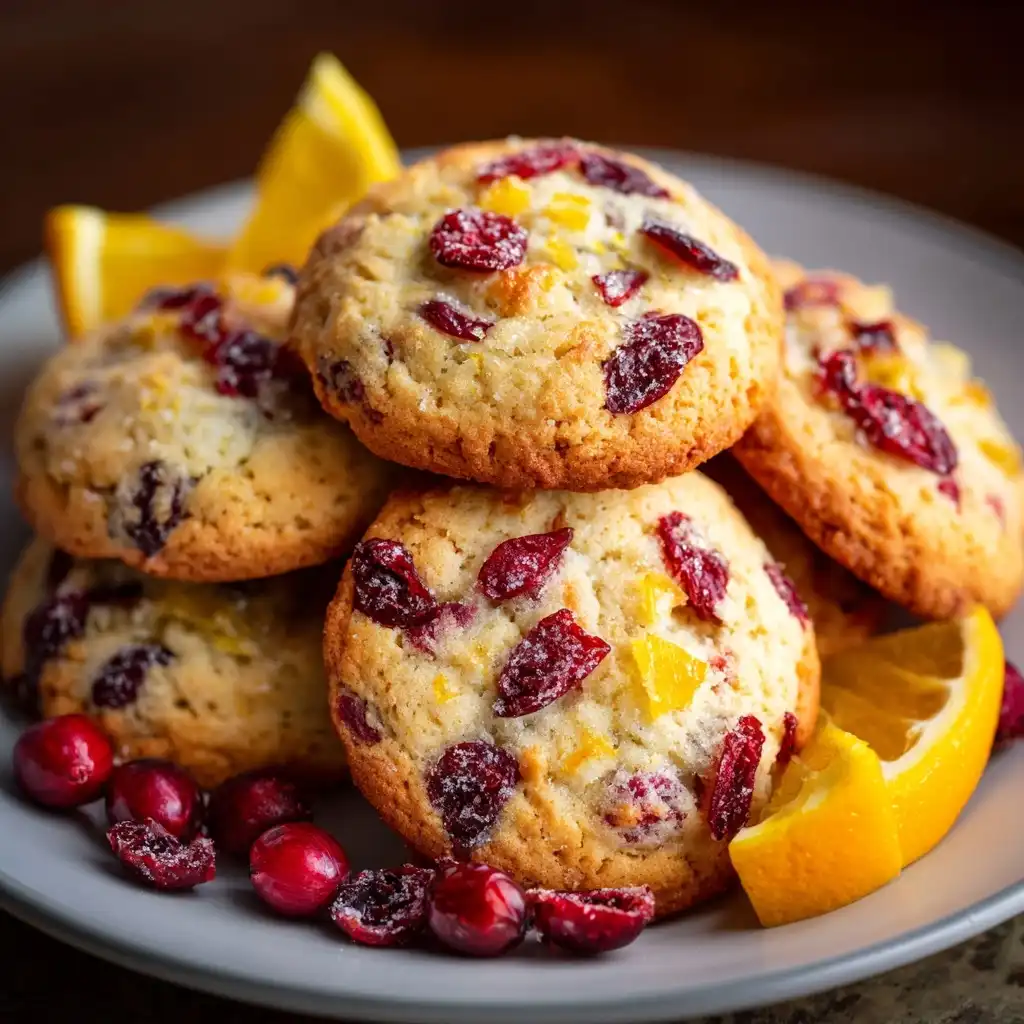
Orange Cranberry Cookies are a vibrant, zesty-sweet holiday classic that seamlessly marries the bright, sun-kissed essence of fresh citrus with the tart, ruby-red intensity of dried cranberries. More than just a seasonal treat, these cookies embody balance—tangy yet tender, fragrant yet comforting, sophisticated yet approachable. Their aromatic allure begins the moment orange zest is rubbed into sugar, releasing volatile oils that perfume the entire kitchen. With each bite, you experience a gentle chew from plump cranberries, a buttery crumb enriched with brown sugar depth, and a lingering citrus finish that refreshes rather than overwhelms. Whether served alongside afternoon tea, packed into festive gift tins, or enjoyed warm from the oven with a glass of cold milk, Orange Cranberry Cookies offer timeless appeal rooted in thoughtful ingredient synergy and time-honored baking technique.
The History
The origins of Orange Cranberry Cookies trace a rich, cross-cultural path through American culinary evolution. Cranberries—native to North America and harvested by Indigenous peoples for food, medicine, and dye for millennia—entered colonial cuisine in the 17th century, notably as a tart accompaniment to wild game and later in early versions of “cranberry sauce” documented as early as 1663 in *New England’s Rarities Discovered*. Meanwhile, citrus fruits like oranges arrived via European trade routes, gaining wider domestic use in the U.S. after refrigerated rail transport expanded in the late 1800s. The first known printed recipe explicitly combining orange and cranberry appears in the 1935 edition of the Woman’s Day Encyclopedia of Cookery, where it was presented as a “Festive Drop Cookie” for Thanksgiving and Christmas. By the 1950s, home economists at major food companies—including Ocean Spray and Florida Citrus Mutual—began promoting the pairing in test kitchens and women’s magazines, highlighting its natural pH compatibility (both ingredients are acidic, enhancing flavor brightness) and visual harmony (orange zest against deep red cranberries). The cookie gained national prominence in the 1970s with the rise of artisanal baking and the “back-to-basics” movement, when bakers rediscovered the power of fresh zest and minimally processed dried fruit. Today, it stands as a beloved staple in bakery case displays, gourmet food markets, and intergenerational holiday baking traditions—from New England farmhouse kitchens to Pacific Northwest farm-to-table cafés—continuing to evolve while honoring its grounded, resourceful roots.
Ingredients Breakdown
Every ingredient in Orange Cranberry Cookies plays a precise functional and sensory role—no component is arbitrary. Below is an in-depth analysis of each element, including why substitutions succeed (or fail), optimal forms, and science-backed insights:
- Unsalted Butter (1 cup / 2 sticks / 227g): Provides richness, tenderness, and flakiness. Unsalted is essential for sodium control; European-style butter (82–84% fat) yields a more luxurious, melt-in-the-mouth texture due to higher fat and lower water content. Cold butter creates pockets of steam during baking, contributing to subtle lift—though for drop cookies, softened (65–68°F) is ideal for creaming.
- Packed Light Brown Sugar (¾ cup / 150g): Adds moisture retention (thanks to molasses), caramel notes, and acidity that balances cranberry tartness. Dark brown sugar intensifies color and butterscotch flavor but may mute orange brightness; granulated sugar alone yields crispier, less chewy results.
- Granulated Sugar (½ cup / 100g): Contributes to spread, surface sheen, and delicate crunch. Its neutral sweetness lets orange and cranberry shine without competing.
- Large Eggs (2, room temperature): Act as emulsifiers and structural binders. Room temperature ensures uniform incorporation and prevents seized batter. Egg yolks add fat and richness; whites contribute to slight lift and cohesion. For vegan adaptation, flax eggs (1 tbsp ground flax + 2.5 tbsp water per egg, rested 10 min) mimic binding but reduce spread slightly.
- Fresh Orange Zest (2 large oranges = ~2 tbsp finely grated): The aromatic heart of the recipe. Only the colored outer peel (flavedo) should be used—avoid bitter white pith (albedo). Microplane graters maximize oil release; zest rubbed into sugar before creaming maximizes infusion. Blood orange zest adds floral, berry-like nuance; tangerine or clementine offers milder, honeyed notes.
- Fresh Orange Juice (3 tbsp, strained): Adds brightness and moisture without diluting flavor. Pasteurized juice is safe for raw batter contact. Bottled juice lacks volatile top-notes and often contains preservatives that dull aroma. Reduce juice by half if using very juicy oranges to maintain dough consistency.
- All-Purpose Flour (2¼ cups / 280g, spooned & leveled): Provides gluten structure. Bread flour increases chew (not ideal); cake flour yields fragile, crumbly cookies. Weight-based measurement is non-negotiable—volume varies up to 25% by scoop method. Sifting isn’t required but whisking flour with leaveners ensures even distribution.
- Baking Soda (½ tsp) & Baking Powder (½ tsp): Dual-acting leaveners. Soda neutralizes acid from juice/cranberries for lift and browning; powder provides secondary, heat-activated rise. Omitting either causes dense, flat, or overly spread cookies. Aluminum-free brands prevent metallic aftertaste.
- Fine Sea Salt (¾ tsp): Enhances all flavors and tempers sweetness. Kosher salt requires 25% more volume; table salt is too intense. Salt also strengthens gluten slightly—critical for holding cranberry moisture.
- Dried Cranberries (1¼ cups / 160g): Use unsweetened or lightly sweetened (under 5g added sugar per serving). Sweetened versions bleed color and cause excessive spreading. Soak 10 min in warm orange juice or rum to plump and infuse—drain well before folding in. Avoid “craisins” with corn syrup or hydrogenated oils.
- Optional Additions: ½ tsp pure orange extract (adds back volatile compounds lost in baking), ¼ tsp ground cardamom (complements citrus), ⅓ cup toasted walnuts or pecans (adds textural contrast and omega-3s), or 2 tbsp crystallized ginger (for spicy warmth).
Step-by-Step Recipe
Follow this meticulous, chef-tested sequence for consistent, bakery-quality results—each step calibrated for chemistry, texture, and flavor development:
- Prep & Preheat: Line two large baking sheets with parchment paper (do not grease—this prevents overspreading). Position oven racks in upper and lower thirds. Preheat oven to 350°F (175°C) for full 20 minutes—oven thermometers are highly recommended, as many ovens run hot or cold.
- Zest & Juice Oranges: Wash oranges thoroughly with vinegar-water solution to remove wax. Using a microplane, zest until you have exactly 2 tablespoons—rub zest vigorously into granulated sugar in a small bowl to release oils. Then juice oranges, strain pulp/seeds, and measure exactly 3 tablespoons.
- Cream Butter & Sugars: In a stand mixer fitted with paddle attachment (or large bowl with hand mixer), beat softened butter, brown sugar, and granulated sugar on medium-high for 3–4 minutes until pale, fluffy, and no graininess remains. Scrape bowl twice. This incorporates air for lift and dissolves sugar crystals for smooth texture.
- Incorporate Wet Ingredients: Add eggs one at a time, beating 1 minute after each addition until fully emulsified. Beat in orange-zest sugar mixture, then orange juice and vanilla (if using). Batter should be homogenous and slightly glossy.
- Whisk Dry Ingredients: In separate bowl, whisk together flour, baking soda, baking powder, and salt for 45 seconds—ensuring even leavener distribution and breaking up flour clumps.
- Combine Dry & Wet: Reduce mixer speed to low. Gradually add dry ingredients in three additions, mixing only until *just* incorporated after each (approx. 15 seconds). Overmixing develops excess gluten → tough cookies. Batter will be soft and slightly sticky.
- Fold in Cranberries: Using silicone spatula, gently fold in soaked-and-drained cranberries (and nuts/ginger if using) until evenly dispersed—about 20 folds. Do not overfold; streaks of flour are acceptable.
- Chill Dough (Non-Negotiable Step): Cover bowl tightly and refrigerate for *minimum 2 hours, ideally 4–24 hours*. Chilling solidifies butter, prevents overspreading, concentrates flavors, hydrates flour fully (reducing grittiness), and allows gluten to relax. Dough may firm significantly—let sit at room temp 5–7 minutes before scooping if too hard.
- Scoop & Space: Use 1.5-tablespoon cookie scoop (or #40 scoop) for uniform 2-inch rounds. Place 3 inches apart on prepared sheets—cookies expand significantly. Optional: Roll balls in coarse turbinado sugar for sparkle and crunch.
- Bake Strategically: Bake one sheet at a time in center of preheated oven for 11–13 minutes. Rotate sheet front-to-back at 7 minutes. Cookies are done when edges are set and lightly golden, centers appear *just* set (not shiny or wet), and tops look matte—not cracked. Underbaked centers yield chewy perfection; overbaked = dry.
- Cool Completely: Let cookies cool on sheet for 5 minutes—this finishes cooking internally and sets structure. Then transfer to wire racks to cool fully (20+ minutes). They firm as they cool; eating warm yields molten cranberry bursts but less defined texture.
Tips
Master these pro-level tips to elevate every batch—tested across dozens of iterations for foolproof success:
- Zest First, Juice Second: Juicing softens rind and makes zesting slippery and inefficient. Always zest whole, dry, room-temp oranges.
- Butter Temperature Matters: Too cold → curdled batter; too warm → greasy, flat cookies. Ideal: leaves slight indentation when pressed, cool to touch but not firm.
- Don’t Skip the Chill: Skipping chilling causes 30–40% more spread, thinner cookies, and muted flavor. For same-day baking, freeze dough balls 45 minutes instead of refrigerating.
- Scale Your Scoop: Weigh dough portions (35–40g each) for absolute uniformity—especially critical for gifting or selling.
- Oven Hot Spots Are Real: Rotate pans and swap shelf positions halfway through baking. Use an oven thermometer—you’ll likely discover your dial is off by ±25°F.
- Understand Doneness Cues: Edges should be faintly golden *before* centers lose all gloss. A slight wobble in the center is perfect—it firms upon cooling.
- Cooling Is Part of Baking: Leaving cookies on hot sheets traps steam → soggy bottoms. Wire rack cooling ensures airflow and crisp edges.
- Revive Stale Cookies: Place in 300°F oven for 3–4 minutes—they’ll regain aroma and chew. Or microwave single cookie 5 seconds with damp paper towel for “fresh-baked” softness.
- Freeze Like a Pro: Portion dough balls onto parchment, freeze solid (2 hrs), then bag airtight. Bake straight from frozen—add 1–2 minutes to bake time. Dough keeps 3 months frozen.
- Measure Flour Correctly: Spoon flour into measuring cup, then level with straight edge. Scooping packs flour → 25% extra → dense, dry cookies.
Variations and Customizations
Orange Cranberry Cookies serve as a dynamic canvas for creative expression—whether adapting to dietary needs, seasonal produce, global flavors, or occasion-specific elegance. Here’s an expansive guide to inspired, tested variations:
Dietary Adaptations
- Gluten-Free: Substitute 1:1 GF baking blend (like King Arthur or Bob’s Red Mill) + ½ tsp xanthan gum. Add 1 tbsp ground flaxseed for binding. Chill dough 30 min longer—GF flours absorb liquid slower.
- Vegan: Replace butter with vegan butter (Miyoko’s or Earth Balance) + 1 tsp apple cider vinegar (mimics buttermilk tang). Use flax eggs. Soak cranberries in orange juice + 1 tsp maple syrup for moisture.
- Lower-Sugar: Reduce total sugar to 1 cup (½ cup brown, ½ cup granulated). Add 2 tbsp unsweetened applesauce for moisture. Expect slightly denser, less spread cookies.
- Refined-Sugar-Free: Use coconut sugar (1:1) + 2 tbsp date paste. Note: coconut sugar yields darker, caramelized cookies with muted orange notes.
Flavor & Texture Twists
- Spiced Citrus: Add ½ tsp ground ginger + ¼ tsp cardamom + pinch black pepper. Pairs beautifully with candied ginger pieces.
- Herbal Brightness: Fold in 1 tbsp finely chopped fresh rosemary or thyme (use sparingly—rosemary dominates). Complements goat cheese pairings.
- Liqueur-Infused: Replace 1 tbsp orange juice with Grand Marnier, Cointreau, or Chambord. Soak cranberries in liqueur 30 min before folding in.
- Chocolate-Dipped: Once cooled, dip half of each cookie in tempered dark, white, or orange-white chocolate. Sprinkle with sea salt or crushed pistachios.
- Stuffed Surprise: Flatten dough ball, place 1 tsp orange marmalade + 3 cranberries in center, seal and roll. Yields jammy, gooey core.
Seasonal & Occasion-Based
- Valentine’s Edition: Press heart-shaped sprinkles or dried rose petals onto cookies before baking. Pair with rosewater glaze.
- Spring Garden: Add 1 tsp lavender buds (culinary grade) + lemon zest instead of orange. Use pink-dyed dried cranberries.
- Thanksgiving Savory-Sweet: Fold in ¼ cup chopped toasted pecans + 1 tsp finely grated fresh sage.
- Christmas Luxe: Add ⅓ cup chopped white chocolate + 2 tbsp brandied cherries (drained) + orange extract. Decorate with edible gold dust.
- Summer Berry Fusion: Replace ½ cup cranberries with freeze-dried raspberries or strawberries—intensifies tartness and adds crunch.
Global Inspirations
- Moroccan-Inspired: Add ½ tsp ground cinnamon + ¼ tsp ground allspice + 1 tbsp orange blossom water. Top with slivered almonds.
- Scandinavian Lingonberry: Swap half cranberries for dried lingonberries + 1 tsp aquavit or dill seed (for herbal nuance).
- Mexican Orange-Cran: Add ½ tsp ancho chili powder + 1 tbsp piloncillo syrup. Garnish with lime zest.
- Japanese Yuzu-Koji: Replace orange zest/juice with yuzu zest + yuzu juice + 1 tsp shio-koji (fermented rice marinade) for umami depth.
Health Considerations and Nutritional Value
A single Orange Cranberry Cookie (approx. 38g, based on standard recipe yielding 36 cookies) delivers balanced macro- and micronutrients—with mindful preparation enhancing wellness benefits:
Nutrition Snapshot (per cookie):
- Calories: 142 kcal
- Total Fat: 6.8g (Saturated: 4.1g)
- Carbohydrates: 20.2g (Dietary Fiber: 0.8g, Sugars: 11.3g — ~6g naturally occurring from cranberries/oranges, ~5g added)
- Protein: 1.6g
- Vitamin C: 4.2mg (7% DV) — primarily from fresh orange zest/juice
- Manganese: 0.12mg (5% DV) — from whole grains (if using part whole wheat) and cranberries
- Antioxidants: High ORAC value from anthocyanins (cranberries), flavonoids (oranges), and vitamin E (butter)
Wellness Highlights:
- Cranberry Power: Unsweetened dried cranberries retain proanthocyanidins (PACs) linked to urinary tract health and anti-adhesion properties. Choose brands with <5g added sugar per ¼ cup to avoid insulin spikes.
- Citrus Bioactives: Orange zest contains limonene and hesperidin—studied for anti-inflammatory and vascular support. Heat-stable compounds survive baking intact.
- Healthy Fats: Butter provides fat-soluble vitamins A, D, E, K2—and conjugated linoleic acid (CLA) with potential metabolic benefits. Grass-fed butter amplifies CLA and omega-3s.
- Lower-Glycemic Potential: When made with part oat flour or almond flour, cookies exhibit slower glucose response. Adding nuts/seeds boosts satiety and healthy fats.
Considerations & Mitigations:
- Sugar Content: Traditional versions contain moderate added sugar. Mitigate by using monk fruit/erythritol blends (1:1) or reducing sugar 20% + adding mashed banana for moisture.
- Gluten Sensitivity: Standard AP flour contains gluten. Certified GF alternatives ensure safety for celiac individuals.
- Sodium Awareness: 85mg per cookie is low—ideal for heart-healthy diets. Reduce salt to ½ tsp if needed without compromising structure.
- Allergens: Contains dairy (butter), eggs, and gluten (unless substituted). Tree nuts optional—label clearly for gifting.
Functional Nutrition Upgrades:
- Add 2 tbsp ground flax or chia seeds for omega-3s and fiber (+1.8g fiber/cookie).
- Substitute ¼ cup flour with barley grass or spirulina powder for phytonutrient density (adds earthy note—balance with extra zest).
- Use sprouted whole wheat flour for increased B-vitamins and digestibility.
Ingredients
- 1 cup (227g) unsalted butter, softened to 65–68°F
- ¾ cup (150g) packed light brown sugar
- ½ cup (100g) granulated sugar
- 2 large eggs, room temperature
- 2 tablespoons finely grated orange zest (from 2 large navel or Valencia oranges)
- 3 tablespoons fresh orange juice, strained
- 1 teaspoon pure vanilla extract
- 2¼ cups (280g) all-purpose flour, spooned and leveled
- ½ teaspoon baking soda
- ½ teaspoon baking powder
- ¾ teaspoon fine sea salt
- 1¼ cups (160g) unsweetened or lightly sweetened dried cranberries, soaked 10 min in warm orange juice and drained well
- (Optional) ⅓ cup (40g) coarsely chopped toasted walnuts or pecans
- (Optional) 2 tablespoons turbinado sugar for rolling
Directions
- Preheat oven to 350°F (175°C). Line two large baking sheets with parchment paper—do not grease.
- Wash and dry oranges. Finely grate zest from 2 oranges into a small bowl. Add granulated sugar and rub zest into sugar with fingertips until fragrant and sandy. Set aside.
- In a large bowl or stand mixer, beat softened butter, brown sugar, and granulated sugar on medium-high for 3–4 minutes until light, fluffy, and no graininess remains. Scrape bowl.
- Add eggs one at a time, beating 1 minute after each until fully incorporated and smooth. Beat in orange-zest sugar, orange juice, and vanilla until combined.
- In another bowl, whisk together flour, baking soda, baking powder, and salt for 45 seconds.
- Reduce mixer speed to low. Gradually add dry ingredients in three parts, mixing only until *just* combined after each addition (do not overmix). Batter will be soft and slightly sticky.
- Gently fold in drained cranberries (and nuts if using) with silicone spatula until evenly distributed.
- Cover bowl tightly and refrigerate dough for minimum 2 hours, preferably 4–24 hours.
- When ready to bake, let chilled dough sit at room temperature 5–7 minutes if very firm. Scoop 1.5-tbsp portions (35–40g), roll into balls, and place 3 inches apart on prepared sheets. Optional: roll each ball in turbinado sugar.
- Bake one sheet at a time on center rack for 11–13 minutes, rotating sheet front-to-back at 7 minutes, until edges are set and lightly golden and centers appear just set (not shiny).
- Cool cookies on baking sheet for 5 minutes, then transfer to wire racks to cool completely (20+ minutes) before serving or storing.
FAQ
- Can I use bottled orange juice?
- Not recommended. Bottled juice lacks volatile aromatic compounds and often contains preservatives (like sodium benzoate) that dull flavor and may react with baking soda. Fresh juice is irreplaceable for brightness.
- Why do my cookies spread too much?
- Most common causes: butter too warm, insufficient chilling, wrong flour measurement (too little), or expired leaveners. Also check oven temperature—low heat causes slow setting and excessive spread.
- Can I make these gluten-free?
- Yes—with reliable 1:1 GF flour blends (e.g., King Arthur Measure for Measure). Add ½ tsp xanthan gum if not included. Chill dough 30 minutes longer and expect slightly denser texture.
- How long do they stay fresh?
- Stored airtight at room temperature: 5 days. Refrigerated: 10 days (may firm up—refresh in 300°F oven 3 min). Frozen baked: 3 months. Frozen dough: 3 months—bake from frozen, adding 1–2 min.
- Can I substitute dried cherries or blueberries?
- Dried cherries work well (soak in kirsch or cherry juice). Freeze-dried blueberries add crunch and tartness—but avoid fresh berries; their high water content causes sogginess and bleeding.
- Why use both baking soda AND baking powder?
- Baking soda neutralizes the acid from orange juice and cranberries, promoting browning and lift. Baking powder provides additional, heat-activated leavening for ideal height and tenderness. Omitting either yields flat, dense, or overly alkaline-tasting cookies.
- Can I add chocolate?
- Absolutely! Fold in ½ cup white, dark, or orange-flavored chocolate chips—or drizzle melted chocolate post-bake. White chocolate pairs especially well with cranberry’s tartness.
- Are these suitable for Passover or other religious observances?
- They are not kosher for Passover unless made with certified kosher-for-Passover ingredients and equipment. For vegan or dairy-free versions, see Variations section.
- What’s the best way to gift these?
- Layer cooled cookies in decorative tins with parchment between layers. Include a ribbon and handwritten tag noting “Best enjoyed within 5 days” or “Freeze for longevity.” Add a small vial of orange extract as a baker’s bonus.
- Can I make mini cookies?
- Yes! Use a #60 scoop (1 tbsp) and bake 8–10 minutes. Yield increases to ~60 cookies. Perfect for cookie trays and portion control.
Summary
Orange Cranberry Cookies are a masterclass in balanced flavor architecture—where vibrant citrus zest and juice harmonize with tart, jewel-toned cranberries within a tender, buttery, brown-sugar-rich crumb, elevated by precise technique and intentional ingredient choices.
From their historic roots in American harvest traditions to modern adaptations spanning dietary needs, global spices, and functional nutrition, these cookies remain endlessly versatile, deeply satisfying, and perpetually inviting—proof that timeless baking lies at the intersection of science, seasonality, and soul.