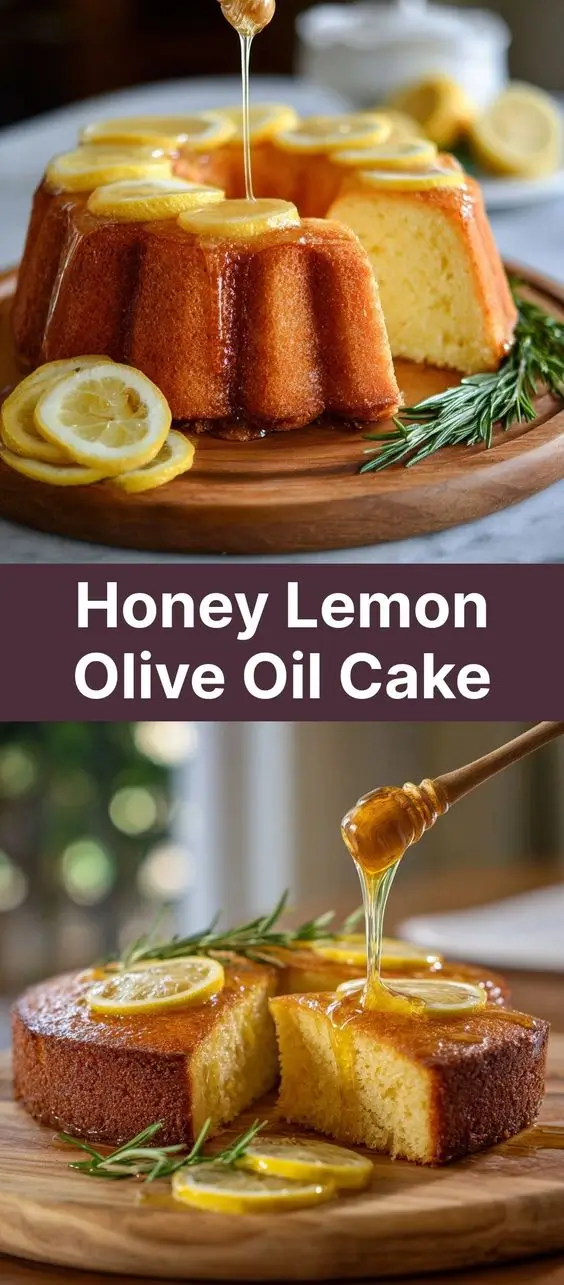
Honey Lemon Olive Oil Cake: A Moist, Zesty Delight from the Mediterranean
The History
The Honey Lemon Olive Oil Cake is a modern culinary gem rooted deeply in ancient Mediterranean baking traditions. Historically, olive oil has been a staple fat in regions like Greece, Italy, and southern France, where butter was either scarce or too costly for everyday use. Bakers in these areas long ago discovered that high-quality extra virgin olive oil could produce cakes with an incomparable moistness and rich, fruity depth of flavor. The use of honey as a sweetener predates refined sugar by millennia—ancient Greeks and Romans often used honey to sweeten breads, pastries, and simple cakes, especially during religious festivals and celebrations.
Lemons, originally native to Southeast Asia, made their way into Mediterranean cuisine through trade routes by the first century AD. Their bright acidity and aromatic zest quickly became prized ingredients in both savory and sweet dishes. By combining lemon zest, fresh juice, honey, and olive oil, bakers created a cake that was not only delicious but also symbolized health, purity, and simplicity. This cake evolved over centuries, influenced by local customs, seasonal availability, and regional preferences. In modern times, chefs and home bakers alike have revived this rustic dessert, celebrating its natural ingredients, gluten-free adaptability, and elegant balance of flavors. Today, the Honey Lemon Olive Oil Cake stands as a testament to slow food philosophy—a celebration of quality ingredients prepared with care.
Ingredients Breakdown
To truly appreciate the magic of this cake, it’s essential to understand the role each ingredient plays in creating its signature texture and taste:
- Extra Virgin Olive Oil: The star of the show. Unlike neutral oils, high-quality extra virgin olive oil brings a grassy, peppery, and sometimes fruity note that enhances the overall complexity. It contributes to a tender crumb and a moist, velvety texture that lasts for days. Always choose a reputable brand with a fresh, clean taste—avoid any oil with rancid or musty notes.
- Honey: Acts as both a sweetener and a humectant, helping retain moisture in the cake. Its floral notes pair beautifully with lemon and olive oil. Use raw, unfiltered honey for the most robust flavor, though mild varieties like clover work well if you prefer subtlety.
- Fresh Lemons: Both zest and juice are crucial. The zest contains aromatic essential oils that infuse the batter with intense citrus fragrance, while the juice adds brightness and balances the sweetness. Always use organic lemons when zesting to avoid pesticides.
- Eggs: Provide structure, richness, and help emulsify the oil and liquids. Room-temperature eggs blend more smoothly into the batter, preventing curdling.
- Flour: All-purpose flour gives the cake its structure. For a gluten-free version, a blend of rice flour, almond flour, and tapioca starch can be substituted with excellent results.
- Baking Powder & Baking Soda: These leavening agents ensure the cake rises properly and achieves a light, airy texture without being dense.
- Salt: Enhances all the other flavors, balancing sweetness and acidity.
- Vanilla Extract: Adds warmth and depth, rounding out the sharpness of the lemon.
- Optional Add-ins: Almond flour (for nuttiness), Greek yogurt (for tang and moisture), or poppy seeds (for texture) can elevate the cake further.
Step-by-Step Recipe
- Preheat and Prepare: Preheat your oven to 350°F (175°C). Generously grease a 9-inch round cake pan or loaf pan with olive oil and dust with flour, or line with parchment paper for easy removal.
- Zest and Juice Lemons: Zest two large lemons to yield about 2 tablespoons of zest. Juice the lemons to get 1/3 cup (about 80ml) of fresh juice. Set both aside.
- Mix Wet Ingredients: In a large mixing bowl, whisk together 3 large eggs until smooth. Add 1 cup of honey and whisk vigorously until the mixture becomes pale and slightly thickened—about 2 minutes. Slowly drizzle in 1/2 cup of extra virgin olive oil while continuing to whisk, creating a smooth emulsion. Stir in 1/4 cup of milk or almond milk (optional, for added moisture), 1 teaspoon of vanilla extract, and the lemon juice.
- Combine Dry Ingredients: In a separate bowl, sift together 1 1/2 cups of all-purpose flour, 1 1/2 teaspoons of baking powder, 1/4 teaspoon of baking soda, and 1/2 teaspoon of fine sea salt. Whisk to combine evenly.
- Incorporate Dry into Wet: Gradually add the dry ingredients to the wet mixture, folding gently with a spatula until just combined. Do not overmix—this prevents gluten development and ensures a tender crumb. Fold in the lemon zest at the end.
- Pour and Smooth: Pour the batter into the prepared pan, spreading it evenly with the spatula. Tap the pan gently on the counter to release air bubbles.
- Bake: Place in the center of the preheated oven and bake for 35–45 minutes, or until a wooden skewer inserted into the center comes out clean or with a few moist crumbs. The top should be golden brown and spring back when lightly pressed.
- Cool: Let the cake cool in the pan for 15 minutes, then carefully invert it onto a wire rack to cool completely.
- Optional Glaze: While cooling, prepare a simple glaze by mixing 1/2 cup of powdered sugar with 1–2 tablespoons of lemon juice and 1/2 teaspoon of honey. Drizzle over the cooled cake for extra shine and flavor.
- Serve: Slice and serve at room temperature. Pairs beautifully with whipped cream, Greek yogurt, or a scoop of vanilla ice cream.
Tips
- Use Quality Olive Oil: This cake highlights the flavor of olive oil, so don’t skimp. Choose a mild to medium-intensity extra virgin olive oil—not too peppery, but with a clean, fruity profile.
- Room Temperature Ingredients: Ensure eggs and any dairy are at room temperature to create a smooth, homogeneous batter.
- Don’t Overmix: Once flour is added, mix only until incorporated. Overmixing leads to a tough, chewy texture.
- Check Doneness Early: Ovens vary, so start checking at 30 minutes. Insert a toothpick—if it comes out clean, it’s done.
- Cool Properly: Cooling in the pan for 15 minutes sets the structure, but leaving it too long can cause condensation and sogginess.
- Store Correctly: Keep the cake covered at room temperature for up to 4 days. It often tastes better the next day as flavors meld.
- Freeze for Later: Wrap tightly in plastic and freeze for up to 3 months. Thaw at room temperature before serving.
- Add Texture: For a delightful crunch, sprinkle turbinado sugar on top before baking.
Variations and Customizations
The beauty of this cake lies in its versatility. Here are some creative twists to suit different tastes and dietary needs:
- Gluten-Free Version: Substitute the all-purpose flour with a gluten-free flour blend (ensure it contains xanthan gum or add 1/2 teaspoon). Almond flour (1 cup) mixed with 1/2 cup tapioca starch also works wonderfully, adding richness and density.
- Vegan Option: Replace eggs with flax eggs (3 tablespoons ground flaxseed + 9 tablespoons water, let sit for 10 minutes). Use plant-based milk and ensure the sugar in your honey substitute is vegan (though true honey isn’t vegan, maple syrup or agave can be used).
- Lemon Poppy Seed Olive Oil Cake: Add 2–3 tablespoons of poppy seeds to the dry ingredients for a classic twist with delightful crunch.
- Orange or Lime Variation: Swap lemons for oranges or limes. Orange pairs beautifully with cardamom; lime works well with coconut flour and toasted coconut flakes.
- Herb-Infused: Add a teaspoon of finely chopped rosemary or thyme for a sophisticated, aromatic touch—perfect for dinner parties.
- Nutty Upgrade: Fold in 1/2 cup of finely chopped toasted walnuts, pistachios, or almonds for added texture and flavor.
- Yogurt Enriched: Replace 1/4 cup of the milk (or oil) with plain Greek yogurt for a denser, tangier crumb.
- Polenta Cake Style: Replace 1/2 cup of flour with fine cornmeal or polenta for a rustic, slightly gritty texture reminiscent of Italian ciambellone.
- Dessert Parfait: Crumble the cake and layer with whipped cream and macerated berries for a deconstructed version.
Health Considerations and Nutritional Value
While undeniably a dessert, the Honey Lemon Olive Oil Cake offers several nutritional advantages over traditional butter-and-sugar-laden cakes:
- Heart-Healthy Fats: Extra virgin olive oil is rich in monounsaturated fats and antioxidants like oleocanthal and polyphenols, which may reduce inflammation and support cardiovascular health.
- Natural Sweetener: Honey has a lower glycemic index than refined sugar and contains trace enzymes, vitamins, and antibacterial properties. However, it is still high in calories and should be consumed in moderation, especially by diabetics.
- Lower Saturated Fat: Replacing butter with olive oil significantly reduces saturated fat content, making this cake a smarter indulgence.
- Vitamin C and Antioxidants: Fresh lemon juice and zest provide vitamin C, flavonoids, and limonene, which support immune function and may have anticancer properties.
- Gluten-Free Potential: With proper substitutions, this cake can be made gluten-free, suitable for those with celiac disease or gluten sensitivity.
- Protein and Probiotics (with modifications): Adding Greek yogurt boosts protein and introduces beneficial probiotics for gut health.
A typical slice (1/8 of the cake) contains approximately:
- Calories: 280–320
- Fat: 14–18g (mostly unsaturated)
- Carbohydrates: 40–45g
- Sugars: 25–30g (natural sources)
- Protein: 4–6g
- Fiber: 1–2g (more if using whole grain or almond flour)
Note: Nutritional values vary based on specific ingredients and portion size. Those managing blood sugar should monitor intake and consider reducing honey or using low-glycemic alternatives.
Ingredients
- 3 large eggs, room temperature
- 1 cup (340g) honey (preferably raw and unfiltered)
- 1/2 cup (120ml) extra virgin olive oil, plus extra for greasing
- 1/3 cup (80ml) fresh lemon juice (from 2–3 lemons)
- 1/4 cup (60ml) milk or almond milk (optional)
- 1 teaspoon pure vanilla extract
- 1 1/2 cups (190g) all-purpose flour (or gluten-free blend)
- 1 1/2 teaspoons baking powder
- 1/4 teaspoon baking soda
- 1/2 teaspoon fine sea salt
- 2 tablespoons lemon zest (from 2 organic lemons)
- Powdered sugar, lemon juice, and honey (for optional glaze)
Directions
- Preheat oven to 350°F (175°C). Grease a 9-inch round or loaf pan with olive oil and dust with flour, or line with parchment paper.
- Zest and juice lemons. Measure out 2 tablespoons zest and 1/3 cup juice.
- In a large bowl, whisk eggs until smooth. Add honey and whisk for 2 minutes until pale and slightly thickened.
- Slowly drizzle in olive oil while whisking continuously to emulsify. Stir in lemon juice, milk (if using), and vanilla extract.
- In another bowl, sift together flour, baking powder, baking soda, and salt. Whisk to combine.
- Gradually fold dry ingredients into wet mixture until just combined. Do not overmix.
- Fold in lemon zest gently.
- Pour batter into prepared pan and smooth the top. Tap pan lightly to remove air bubbles.
- Bake for 35–45 minutes until golden and a skewer comes out clean.
- Cool in pan for 15 minutes, then transfer to a wire rack.
- Prepare glaze: Mix 1/2 cup powdered sugar, 1–2 tbsp lemon juice, and 1/2 tsp honey. Drizzle over cooled cake.
- Slice and serve with tea, coffee, or dessert accompaniments.
FAQ
Can I make this cake without honey?
Yes, though it won’t be the same. Maple syrup or agave nectar can be substituted in equal amounts, but the flavor will be less floral and complex.
Why did my cake turn out dense?
Overmixing the batter or using cold ingredients can lead to a dense texture. Also, expired leavening agents may fail to lift the cake properly.
Can I use bottled lemon juice?
Freshly squeezed is always best—the flavor is brighter and lacks preservatives. Bottled juice can taste flat or metallic.
How do I store leftover cake?
Cover and keep at room temperature for up to 4 days. Refrigeration is not recommended as it can dry out the cake.
Can I freeze this cake?
Absolutely. Wrap tightly in plastic wrap and foil, then freeze for up to 3 months. Thaw overnight at room temperature.
Is this cake naturally gluten-free?
Not unless you use a gluten-free flour blend. Always check labels if cross-contamination is a concern.
Can I make cupcakes?
Yes! Fill lined muffin tins 2/3 full and bake at 350°F for 20–25 minutes.
What kind of pan should I use?
A 9-inch round cake pan, springform pan, or loaf pan all work well. Dark metal pans may require reducing baking time by 5 minutes.
Summary
The Honey Lemon Olive Oil Cake is a harmonious blend of Mediterranean tradition and modern baking wisdom—moist, fragrant, and bursting with sunny citrus notes balanced by floral honey and silky olive oil.
Elegant yet simple, this cake is perfect for brunches, afternoon tea, or as a wholesome dessert that feels indulgent without the guilt.