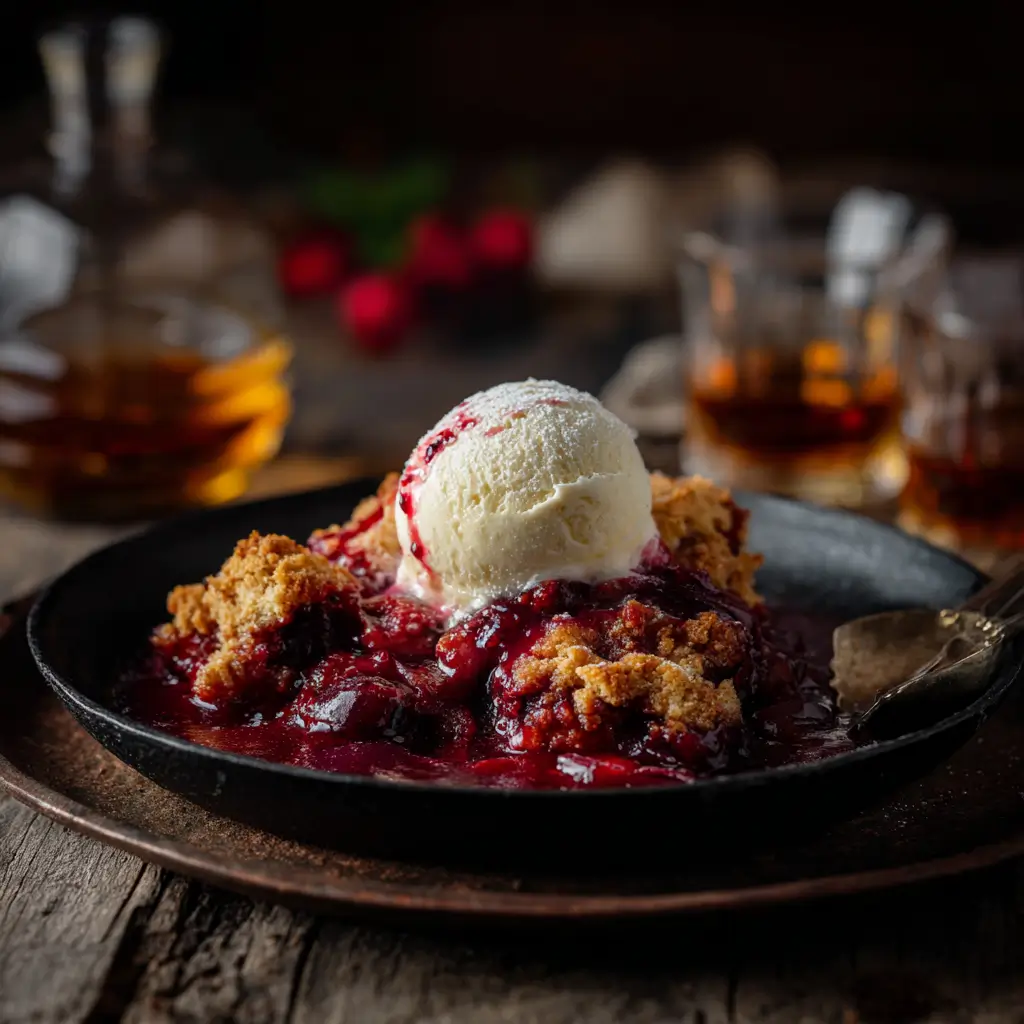
Honey-Rose Plum Cobbler (with Booze)
There’s something deeply comforting about a warm fruit cobbler fresh from the oven—its bubbling juices, golden crust, and intoxicating aroma filling the kitchen. But when you elevate that classic dessert with the floral elegance of rose water, the natural sweetness of honey, and a bold splash of booze, you don’t just have a cobbler—you have an experience. The Honey-Rose Plum Cobbler with Booze is a luscious fusion of old-world charm and modern indulgence, where tart plums meet fragrant rose essence, all kissed by the warmth of spirits like brandy or bourbon. This isn’t just dessert; it’s poetry in a baking dish.
The History
Cobblers have long been a staple of American home cooking, dating back to colonial times when settlers lacked the proper tools for making pies. Instead of a top crust, they covered fruit fillings with dropped biscuits or pie dough, creating what became known as “cobbled” toppings—hence the name “cobbler.” Over time, cobblers evolved regionally, embracing local fruits and flavors. Plums, native to various parts of Europe and Asia, were brought to North America and quickly found their way into rustic desserts.
The addition of floral notes like rose water can be traced to Middle Eastern and Persian culinary traditions, where rose water has been used for centuries to perfume sweets and beverages. Honey, too, has ancient roots, prized across civilizations not only for its sweetness but also its preservative and healing qualities. By blending these global elements—American cobbler technique, European plums, Persian rose water, and natural sweeteners—we create a dessert that transcends borders. The inclusion of alcohol, such as brandy or amaretto, further deepens the flavor profile, a nod to European methods of macerating fruit in spirits to enhance richness and complexity.
Ingredients Breakdown
The magic of this Honey-Rose Plum Cobbler lies in the thoughtful combination of ingredients that balance tartness, sweetness, floral aroma, and warmth. Here’s a detailed breakdown:
- Plums: Choose ripe but firm red or black plums—they offer the perfect balance of tartness and juiciness. When baked, they break down slightly, forming a jammy base without turning mushy.
- Honey: Preferably raw, unfiltered honey adds depth and floral undertones that complement both the plums and rose water. Avoid strongly flavored honeys like buckwheat; opt for orange blossom, clover, or wildflower.
- Rose Water: A few drops go a long way. Authentic rose water imparts a delicate perfume without overpowering. Be cautious—too much can taste soapy. Always use food-grade rose water, preferably from brands like Cortas or Nielsen-Massey.
- Booze: Brandy, bourbon, or amaretto work beautifully. Brandy enhances the plum’s natural stone-fruit character, while bourbon adds a smoky warmth. Amaretto brings nutty sweetness, pairing well with almonds in the topping.
- Lemon Juice and Zest: Brightens the filling, cutting through the sweetness and balancing the floral notes.
- Cinnamon and Cardamom: Warm spices that deepen the complexity without dominating. Cardamom, in particular, complements rose water exquisitely.
- Flour and Butter: For the biscuit topping, all-purpose flour gives structure, while cold butter creates flakiness.
- Baking Powder: Ensures the topping rises into soft, tender mounds.
- Heavy Cream or Buttermilk: Adds richness and tenderness to the cobbler topping. Buttermilk provides a slight tang that contrasts nicely with the sweet filling.
- Turbinado Sugar: Sprinkled on top before baking for a crunchy, caramelized finish.
Step-by-Step Recipe
Ingredients
Filling:
- 6 medium red or black plums, pitted and sliced into ½-inch wedges (~5 cups)
- ⅓ cup raw honey
- 1½ tablespoons brandy, bourbon, or amaretto
- 1 teaspoon rose water
- Zest and juice of 1 lemon
- 1 tablespoon cornstarch (or arrowroot powder for grain-free)
- ½ teaspoon ground cinnamon
- ¼ teaspoon ground cardamom
- Pinch of sea salt
Topping:
- 1 cup all-purpose flour (or gluten-free 1:1 blend)
- ¼ cup granulated sugar
- 1 tablespoon turbinado sugar (plus more for sprinkling)
- 1½ teaspoons baking powder
- ¼ teaspoon salt
- 6 tablespoons cold unsalted butter, cubed
- ⅓ cup heavy cream or buttermilk
- 1 teaspoon vanilla extract
- Optional: 2 tablespoons sliced almonds or chopped crystallized ginger
Directions
- Preheat Oven: Set your oven to 375°F (190°C). Place a rimmed baking sheet on the middle rack to catch any potential drips.
- Prepare Filling: In a large bowl, combine plum slices, honey, brandy, rose water, lemon zest, lemon juice, cornstarch, cinnamon, cardamom, and salt. Gently toss until plums are evenly coated. Let sit for 15–20 minutes to allow flavors to meld and juices to release.
- Transfer to Baking Dish: Pour the plum mixture into a 9-inch cast-iron skillet, ceramic pie dish, or square baking pan. Spread evenly.
- Make the Topping: In a separate bowl, whisk together flour, granulated sugar, turbinado sugar, baking powder, and salt. Add cold butter cubes and use a pastry cutter or fingers to work the butter into the flour until the mixture resembles coarse crumbs with some pea-sized pieces remaining.
- Add Liquids: Stir in heavy cream and vanilla extract until just combined. Do not overmix—batter should be shaggy and slightly sticky. Fold in optional almonds or ginger if using.
- Top the Filling: Drop spoonfuls of the biscuit dough over the plum filling. Don’t spread it—leave gaps for steam to escape and for the fruit to bubble through.
- Sprinkle & Bake: Generously sprinkle extra turbinado sugar over the top for crunch. Place the dish on the preheated baking sheet and bake for 40–45 minutes, or until the topping is golden brown and the filling is thick and bubbling around the edges.
- Cool Slightly: Remove from oven and let rest for at least 15–20 minutes before serving. This allows the filling to set slightly.
- Serve: Enjoy warm, ideally with a scoop of vanilla bean ice cream, a drizzle of extra honey, or a dollop of whipped cream infused with a hint of rose water.
Tips
- Use Cold Ingredients: For the flakiest topping, ensure your butter and cream are cold. Warm ingredients melt too quickly, leading to dense biscuits.
- Don’t Overmix the Dough: Overworking the topping leads to tough, chewy biscuits. Mix only until the dough comes together.
- Adjust Sweetness: Taste your plums first. If they’re very tart, add an extra tablespoon of honey. If sweet, reduce slightly.
- Rose Water Caution: Start with ¾ tsp if you’re unsure. You can always add more next time. High-quality rose water is essential—cheap versions often taste artificial.
- Alcohol Substitute: If avoiding alcohol, replace the booze with apple cider, peach nectar, or strong brewed green tea for depth.
- Thickening Options: Cornstarch works best, but tapioca starch or even a bit of instant clearjel can substitute. Flour will thicken but may leave a cloudy appearance.
- Baking Vessel Matters: Dark metal or cast iron conducts heat well and promotes browning. Glass dishes are fine but may require an extra 5 minutes.
- Rest Before Serving: Letting the cobbler sit ensures a saucier texture. Cutting in too soon results in a runny mess.
Variations and Customizations
This cobbler is wonderfully adaptable. Consider these creative twists:
- Fruit Swaps: Try apricots, peaches, cherries, or a mix of berries. For a deeper flavor, combine plums with figs or blackberries.
- Gluten-Free: Use a high-quality gluten-free flour blend and ensure your cornstarch is certified GF.
- Vegan Version: Replace butter with chilled coconut oil or vegan butter, use almond milk with 1 tsp vinegar instead of buttermilk, and choose maple syrup instead of honey.
- Nutty Topping: Add chopped pistachios, almonds, or hazelnuts to the biscuit mix for added crunch and flavor contrast.
- Spice It Up: Add a pinch of cayenne or freshly grated nutmeg for a surprising warmth.
- Orange Blossom Twist: Swap rose water for orange blossom water for a brighter, citrus-floral note.
- Dry White Wine: Replace brandy with a dry white wine like Sauvignon Blanc for a lighter, more aromatic filling.
- Individual Cobblers: Divide the filling and topping among ramekins for personal-sized desserts—perfect for dinner parties.
- Overnight Soak: Marinate the plums in honey, booze, and rose water overnight for deeper flavor infusion.
Health Considerations and Nutritional Value
While undeniably decadent, this cobbler does offer some redeeming qualities when enjoyed in moderation:
- Plums: Rich in antioxidants, particularly vitamin C and polyphenols, which support heart health and reduce inflammation. They also contain dietary fiber, aiding digestion.
- Honey: Contains trace enzymes, amino acids, and antioxidants. Though still a sugar, it has a lower glycemic index than refined sugar and offers antimicrobial properties.
- Rose Water: Traditionally used in herbal medicine for calming effects and digestive support. While used in small amounts, it contributes no significant calories.
- Alcohol: In moderation, certain spirits like brandy contain antioxidants. However, excessive intake negates benefits. For non-alcoholic versions, skip the booze or replace with fruit juice.
- Portion Control: Serve in smaller portions (½ cup filling + small scoop topping) paired with Greek yogurt instead of ice cream to reduce fat and sugar.
- Butter and Cream: High in saturated fat. For a lighter version, use reduced-fat cream and less butter, or try plant-based alternatives.
- Allergens: Contains gluten, dairy, and nuts (if added). Always label accordingly when serving guests.
Estimated per serving (1/6th of cobbler, with ice cream): ~380 kcal, 18g fat, 52g carbs, 5g fiber, 35g sugar, 4g protein.
FAQ
Can I make this cobbler ahead of time?
Yes! Assemble the filling up to one day in advance and store covered in the fridge. Prepare the topping just before baking for best texture. You can also fully assemble and refrigerate, then add 5–10 minutes to baking time.
Can I freeze Honey-Rose Plum Cobbler?
The filling freezes well for up to 3 months. The topping is best baked fresh. Freeze unbaked assembled cobbler tightly wrapped, then bake from frozen—add 15–20 minutes and cover edges with foil to prevent burning.
Why did my cobbler turn out soggy?
This usually happens if the fruit wasn’t thickened enough or the cobbler wasn’t baked long enough. Ensure you use cornstarch and bake until the filling bubbles vigorously and the topping is fully cooked.
Can I use dried plums (prunes)?
Not recommended—they lack the moisture and texture needed. Stick to fresh or frozen plums (thawed).
Is there a non-alcoholic substitute that tastes similar?
Yes! Try a splash of grape juice with a drop of vanilla extract, or steep a tea bag of chai or rooibos in warm juice and use that to macerate the plums.
Can I double the recipe?
Absolutely. Use a larger baking dish (9×13 inch) and increase baking time by 10–15 minutes, checking for doneness as usual.
How do I store leftovers?
Cover and refrigerate for up to 4 days. Reheat in the oven at 325°F for 15 minutes or microwave briefly. The topping will soften but still taste delicious.
Summary
The Honey-Rose Plum Cobbler with Booze is a sophisticated twist on a timeless dessert, marrying the tartness of plums with floral honey, fragrant rose water, and a splash of spirited warmth. Elegant yet humble, it’s the perfect finale to any meal—best served warm, with love, and a scoop of melting ice cream.