Creamy Tomato Basil Chicken: A Comforting Culinary Delight
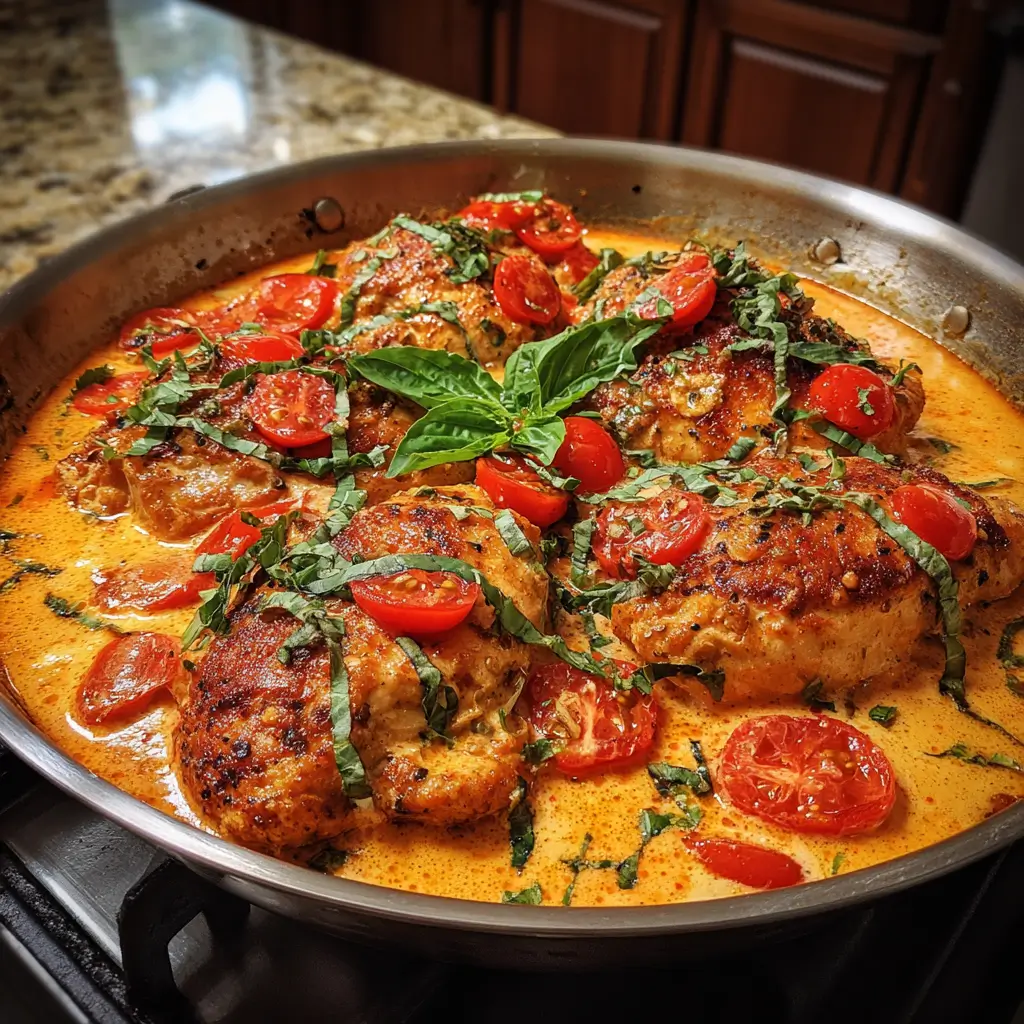
Creamy Tomato Basil Chicken is a luscious, comforting dish that brings together the bright acidity of tomatoes, the earthy sweetness of fresh basil, and the rich savoriness of tender chicken, all enveloped in a velvety cream sauce. This one-pan wonder has become a favorite among home cooks and food lovers for its bold Mediterranean-inspired flavors and effortless preparation. Whether served over pasta, rice, or alongside crusty bread, this dish strikes the perfect balance between elegance and simplicity—ideal for weeknight dinners or impressing guests at a weekend gathering.
The History
While Creamy Tomato Basil Chicken as we know it today doesn’t trace back to a single historical origin, it draws deep inspiration from Italian culinary traditions, particularly Southern Italian cuisine, where tomatoes, olive oil, garlic, and fresh herbs form the foundation of countless dishes. The combination of tomato and basil dates back centuries in Italy, often seen in classic sauces like marinara. Over time, northern European and American adaptations introduced dairy elements such as heavy cream and Parmesan cheese, transforming simple tomato-based sauces into richer, creamier versions. The addition of chicken likely emerged in mid-20th century home cooking, when protein-centric meals gained popularity in Western households. Today, Creamy Tomato Basil Chicken stands as a modern fusion of rustic Italian flavors and contemporary comfort food sensibilities, celebrated for its warmth, aroma, and satisfying depth.
Ingredients Breakdown
The magic of this dish lies in the harmony of its ingredients. Here’s a detailed look at each component:
- Chicken Breasts or Thighs: Boneless, skin-on or skinless chicken breasts are most commonly used for their lean texture and quick cooking time. Chicken thighs offer a more succulent, flavorful alternative due to their higher fat content.
- Olive Oil: Used for searing the chicken, extra virgin olive oil adds a fruity depth and helps develop a golden-brown crust.
- Garlic: Freshly minced garlic infuses the sauce with aromatic pungency, mellowing as it cooks into the tomato base.
- Onion: Yellow or white onion provides a sweet, savory backbone. Finely diced, it softens into the sauce, enhancing complexity.
- Canned Diced Tomatoes: High-quality fire-roasted diced tomatoes add tangy sweetness and vibrant color. They form the acidic base that balances the cream.
- Tomato Paste: Concentrated tomato paste intensifies the umami and deepens the red hue of the sauce.
- Chicken Broth: Enhances moisture and layers savory notes without overpowering the other ingredients.
- Heavy Cream: The star of the creamy texture, heavy cream lends richness and smoothness, blending seamlessly with the tomatoes.
- Fresh Basil: Added both during cooking and as a garnish, fresh basil imparts a fragrant, slightly peppery note essential to the dish’s character.
- Dried Oregano and Red Pepper Flakes: These seasonings contribute subtle herbal warmth and a hint of heat, rounding out the flavor profile.
- Salt and Black Pepper: Crucial for seasoning throughout the cooking process.
- Parmesan Cheese (optional): Grated Parmesan can be stirred in at the end for an extra layer of nutty, salty umami.
- Flour (optional): Sometimes used to lightly dust chicken before searing to aid browning and thicken the sauce slightly.
Step-by-Step Recipe
- Prepare the Chicken: Pat 4 boneless, skinless chicken breasts dry with paper towels. Season both sides generously with salt, pepper, and a pinch of dried oregano. For a thicker sauce, lightly dust with all-purpose flour.
- Sear the Chicken: Heat 2 tablespoons of olive oil in a large skillet or Dutch oven over medium-high heat. Once shimmering, add the chicken and cook for 5–6 minutes per side until golden brown and cooked through (internal temperature should reach 165°F). Remove and set aside on a plate.
- Sauté Aromatics: In the same pan, reduce heat to medium. Add 1 finely diced onion and cook for 4–5 minutes until translucent. Stir in 4 cloves of minced garlic, ½ teaspoon dried oregano, and ¼ teaspoon red pepper flakes; cook for 1 minute until fragrant.
- Build the Tomato Base: Stir in 2 tablespoons of tomato paste and cook for 1–2 minutes to deepen the flavor. Pour in one 14.5 oz can of diced tomatoes (with juices) and use a wooden spoon to scrape up any browned bits from the bottom of the pan—this adds incredible flavor.
- Simmer the Sauce: Add ½ cup of chicken broth, bring to a gentle simmer, and let it cook for 8–10 minutes, allowing the sauce to reduce slightly and meld.
- Add Cream and Herbs: Reduce heat to low and stir in ¾ cup of heavy cream. Do not boil vigorously—gentle heat prevents curdling. Tear ½ cup of fresh basil leaves and stir most of them into the sauce.
- Return Chicken to Pan: Nestle the seared chicken breasts back into the sauce, spooning some over the top. Simmer gently for 5–7 minutes to reheat and allow flavors to absorb.
- Final Touches: Taste and adjust seasoning with salt and pepper. Optionally, stir in ¼ cup of grated Parmesan cheese for added richness. Garnish with remaining fresh basil.
- Serve: Slice the chicken or serve whole, ladling plenty of sauce over the top.
Tips
- Don’t Overcook the Chicken: To keep it juicy, avoid over-searing. Use a meat thermometer to ensure you hit 165°F without going beyond.
- Use Full-Fat Cream: Lower-fat substitutes like half-and-half or milk may curdle when combined with acidic tomatoes. If using lighter dairy, temper it by slowly adding warm sauce before stirring in.
- Reserve Pan Drippings: Those browned bits left after searing the chicken are flavor gold—deglaze thoroughly with broth or wine.
- Fresh Basil is Key: Dried basil lacks the vibrant aroma. Add most of it at the end to preserve its freshness.
- Let It Rest: Allow the dish to sit for 5 minutes before serving so the sauce settles and flavors harmonize.
- Low and Slow Simmer: After adding cream, keep heat low to prevent separation.
Variations and Customizations
This recipe is highly adaptable to different tastes and dietary needs:
- Creamier Version: Add an extra ¼ to ½ cup of heavy cream or a splash of mascarpone for indulgence.
- Dairy-Free Option: Replace cream with full-fat coconut milk and omit Parmesan. Cashew cream also works well for a plant-based richness.
- Wine-Infused Sauce: Deglaze the pan with ½ cup of dry white wine (like Pinot Grigio or Sauvignon Blanc) after sautéing onions, before adding tomatoes.
- Vegetarian Twist: Swap chicken for hearty portobello mushrooms, cauliflower steaks, or chickpeas for a plant-powered version.
- Spicier Kick: Increase red pepper flakes or add a dash of hot sauce like Calabrian chili paste.
- Herb Variations: Try adding fresh thyme or rosemary along with basil for a woodsy note.
- Seafood Adaptation: Use seared scallops or shrimp instead of chicken for a luxurious twist.
- Freezer-Friendly Batch: Freeze portions (without pasta) in airtight containers for up to 3 months. Reheat gently on the stove with a splash of broth.
Health Considerations and Nutritional Value
Creamy Tomato Basil Chicken offers a balanced mix of macronutrients, though it leans rich due to the cream. Here’s a general nutritional breakdown per serving (assuming 4 servings, chicken breast used, full-fat cream):
- Calories: ~450–550 kcal
- Protein: 35–40g (excellent source from chicken)
- Fat: 30–35g (mostly from cream and olive oil; includes healthy monounsaturated fats)
- Saturated Fat: ~15–18g (moderate; consider reducing cream or using Greek yogurt substitution for lower levels)
- Carbohydrates: 8–12g (primarily from tomatoes and onions)
- Fiber: 2–3g
- Vitamins & Minerals: Rich in vitamin C (from tomatoes), vitamin K, potassium, and antioxidants like lycopene.
Healthy Swaps:
- Replace heavy cream with blended silken tofu or low-fat evaporated milk for fewer calories.
- Use skinless chicken thighs sparingly for flavor, but opt for breasts for leaner protein.
- Add spinach or kale during the last few minutes of cooking to boost fiber and nutrients.
- Serve over quinoa, whole wheat pasta, or zucchini noodles instead of regular pasta to increase fiber and reduce glycemic load.
Dietary Notes: Naturally gluten-free if no flour is used. Can be adapted for keto (serve over cauliflower mash), low-carb, or dairy-free diets with substitutions.
Ingredients
- 4 boneless, skinless chicken breasts (about 1.5 lbs / 700g)
- Salt and freshly ground black pepper (to taste)
- 1 tsp dried oregano
- 2 tbsp olive oil (divided)
- 1 medium yellow onion, finely diced
- 4 cloves garlic, minced
- 2 tbsp tomato paste
- 1 (14.5 oz) can diced tomatoes (fire-roasted preferred)
- ½ cup low-sodium chicken broth
- ¾ cup heavy cream (or substitute)
- ½ cup fresh basil leaves, torn (plus extra for garnish)
- ¼ tsp red pepper flakes (optional)
- ¼ cup grated Parmesan cheese (optional)
- All-purpose flour (optional, for dredging)
Directions
- Season chicken breasts with salt, pepper, and dried oregano. Lightly coat with flour if desired.
- In a large skillet over medium-high heat, warm 1 tablespoon olive oil. Sear chicken for 5–6 minutes per side until golden and cooked through. Transfer to a plate.
- Reduce heat to medium. Add remaining olive oil, then sauté onion for 4–5 minutes until soft. Stir in garlic, oregano, and red pepper flakes; cook 1 minute.
- Add tomato paste and cook, stirring, for 1–2 minutes until darkened slightly.
- Pour in diced tomatoes with juice and chicken broth. Scrape the bottom of the pan and simmer 8–10 minutes.
- Stir in heavy cream and most of the fresh basil. Keep heat low to prevent boiling.
- Return chicken to the skillet, spoon sauce over tops, and simmer gently 5–7 minutes.
- Optional: Stir in Parmesan cheese until melted. Adjust seasoning.
- Garnish with reserved basil. Serve immediately over pasta, rice, or polenta.
FAQ
Can I make this ahead of time?
Yes! Assemble the sauce and store separately from cooked chicken. Reheat gently and combine before serving to maintain texture.
Can I use frozen chicken?
It’s best to thaw chicken first for even cooking and proper searing. Cooking from frozen may result in uneven doneness.
Why did my sauce curdle?
This usually happens when cream is exposed to high heat or too much acidity. Always add cream off-boil and consider tempering with warm sauce if using lower-fat alternatives.
What pairs well with this dish?
Excellent with fettuccine, penne, mashed potatoes, risotto, or garlic bread. A crisp green salad or roasted vegetables balance the richness.
Can I use sun-dried tomatoes?
Yes! Chopped sun-dried tomatoes (oil-packed) can be added for intense flavor—use about ⅓ cup and reduce canned tomatoes accordingly.
Is this freezer-friendly?
Yes, though dairy-based sauces may separate slightly upon thawing. Reheat slowly on the stove with a splash of broth and whisk well.
How long does leftovers last?
Store in an airtight container in the refrigerator for up to 3–4 days.
Summary
Creamy Tomato Basil Chicken is a sumptuous, aromatic dish that blends tender chicken with a rich tomato-cream sauce infused with fresh basil and garden herbs. Easy to prepare and endlessly customizable, it’s a weeknight favorite that feels gourmet and nourishing with every bite.